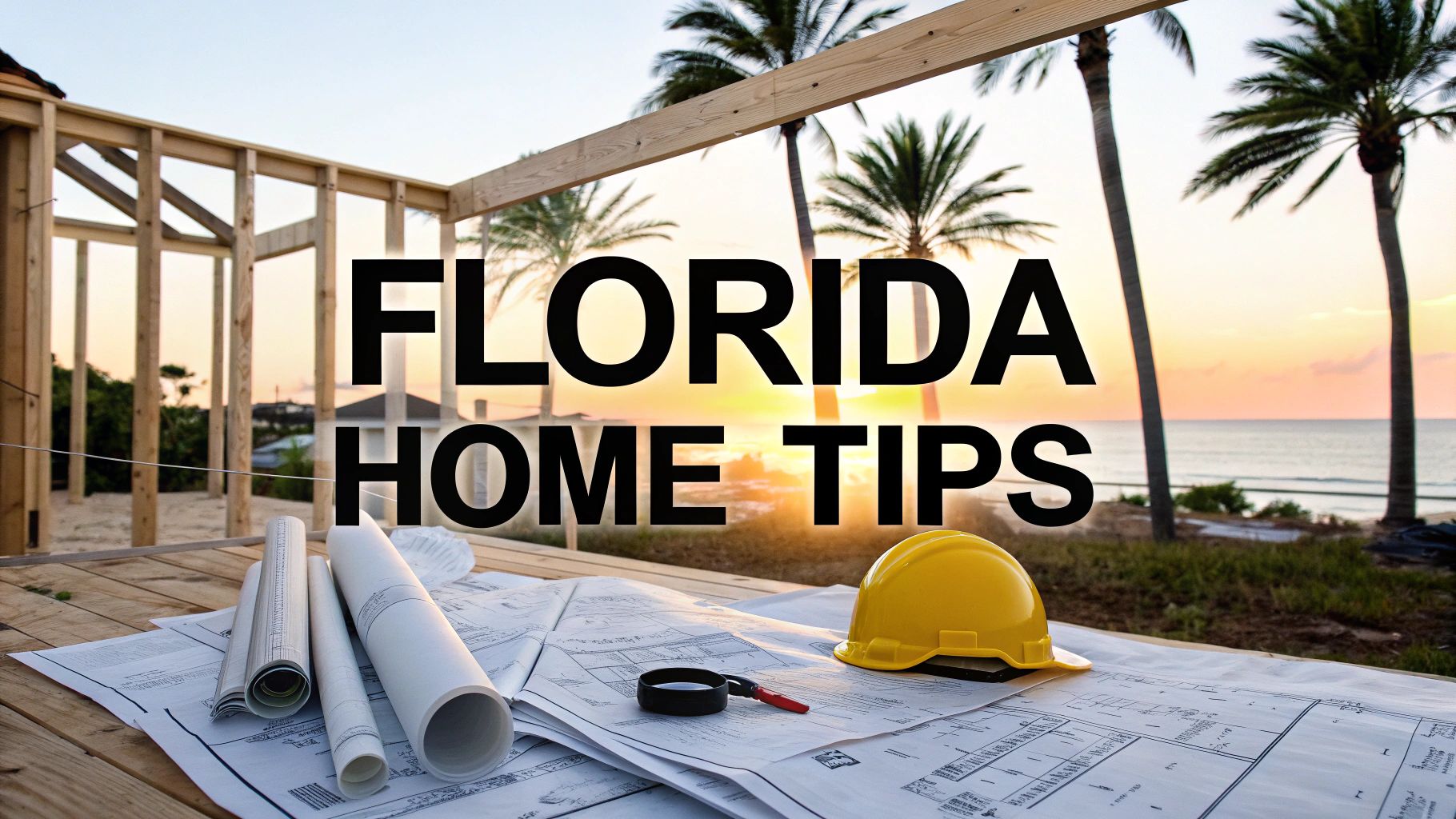
Building a custom home in Southwest Florida is more than just construction; it's about creating a personal sanctuary resilient enough to withstand the unique coastal environment. From navigating the latest building codes post-hurricane Ian to embracing new design trends like expansive outdoor living spaces and smart home integration, the journey is complex and filled with critical decisions. This guide cuts through the noise to provide essential new home construction tips specifically tailored for the Florida market.
We will focus on the details that matter most in this region, such as selecting robust hurricane impact features, integrating reliable generator systems for storm season, and understanding crucial elevation requirements that protect your investment. The goal is to move beyond generic advice and offer actionable strategies for budgeting, planning, and builder communication, reflecting new builder trends and design features shaping custom homes in Southwest Florida today.
Whether you're building on your lot in Cape Coral, Fort Myers, or Fort Myers Beach, these insights will empower you to make informed decisions. By focusing on quality, resilience, and smart design from the very beginning, you can ensure your vision becomes a durable, efficient, and beautiful reality. Let's explore the blueprint for building your dream home with confidence.
1. Secure the Right Leader: Choosing a Qualified General Contractor
In Southwest Florida, your General Contractor is the most critical asset for a successful new home construction project. They are not just project managers; they are your expert navigators through complex local building codes, the science of hurricane-resistant construction, and the unique challenges posed by coastal environments like Fort Myers and Cape Coral. The right leader ensures your vision is executed with precision, managing budgets and timelines while upholding the highest standards of quality.
A top-tier builder’s commitment is visible in their direct involvement. A GC like Matthew Sinclair of Sinclair Custom Homes, who is physically present on your job site daily, exemplifies the hands-on approach necessary for true custom quality. This on-site presence ensures immediate problem-solving and meticulous oversight, a key differentiator from volume builders. To ensure you secure the most suitable professional for your custom build, refer to an ultimate contractor hiring checklist for a structured approach.
Actionable Steps for Vetting Your Builder:
- Ask About Resilience: Inquire how they "over-engineer" their homes for Florida's weather, discussing specifics like impact windows, roof strapping, and foundation elevation.
- Verify Insurance: Confirm their general liability and workers' compensation policies cover the full value of your project, including crucial flood and windstorm riders.
- Assess On-Site Philosophy: Ask pointedly about their supervision strategy. How often is the lead builder personally on-site versus a project manager?
- Check Recent References: Request to speak with clients whose homes were completed within the last 24 months to get a current picture of their performance and process.
- Review the Change Order Process: A professional builder will have a clear, fair, and documented process for any changes made after the contract is signed.
Choosing the right contractor is the foundational step that dictates not just your home's structural integrity, but your peace of mind. To dive deeper into this crucial decision, explore these great questions you should ask a potential custom home builder.
2. Obtain All Required Permits Before Starting Construction
In Southwest Florida, building permits are not just bureaucratic hurdles; they are your home's first line of defense. These legal documents ensure that every aspect of your new construction, from the foundation's elevation to the electrical wiring, meets the stringent local codes designed to protect against hurricanes and coastal flooding. Bypassing this critical step is a costly mistake that can lead to significant fines, forced demolition, project shutdowns, and even the inability to insure or sell your property in the future.
An experienced local builder understands that navigating the permitting process in jurisdictions like Cape Coral or Fort Myers is a foundational part of the project timeline. They handle the complex paperwork and coordinate with municipal departments, ensuring every plan is compliant from the outset. This foresight prevents the costly delays that can occur when permit applications are incomplete or submitted incorrectly, keeping your project on track and ensuring it's built to withstand Florida's unique environmental demands.
Actionable Steps for Managing Your Permits:
- Integrate Permitting into Your Timeline: Ask your builder how they account for permit approval times. In many Southwest Florida municipalities, this can take several weeks or months, so it must be factored into the initial schedule.
- Verify All Necessary Permits: Confirm with your contractor the full list of required permits. This often includes building, electrical, plumbing, mechanical, and specific coastal construction permits.
- Schedule Inspections Proactively: Work with your builder to schedule required municipal inspections at key construction milestones without delay. Passing these inspections is necessary to proceed to the next phase.
- Maintain a Digital and Physical Record: Keep copies of all submitted applications, approved permits, and completed inspection reports. This documentation is vital for your records and for securing your Certificate of Occupancy.
- Understand the Scope: Recognize that any significant change to your plan, like adding a generator or altering a sea wall, will likely require a permit amendment, so communicate changes early.
Properly managing the permitting process is a non-negotiable step in providing new home construction tips for building a safe, legal, and resilient home. For a more detailed look into this process, you can explore the specifics of Cape Coral building permits.
3. Create and Follow a Detailed Construction Timeline
A detailed construction timeline is the strategic blueprint for your new home build, transforming an ambitious vision into an organized, step-by-step process. In Southwest Florida, where seasonal weather patterns and hurricane preparations are non-negotiable, this roadmap is not just about scheduling; it’s about risk management. It meticulously outlines every phase from site prep and foundation pouring to final inspections, ensuring all parties, from your GC to subcontractors, are synchronized and accountable.
This schedule is your primary tool for managing expectations and tracking progress against a realistic backdrop. A well-crafted timeline accounts for critical local factors like the rainy season, permitting delays with municipalities like Cape Coral or Fort Myers, and potential supply chain disruptions for specialized materials like hurricane impact windows. It provides a clear framework for anticipating milestones and identifying potential bottlenecks before they escalate, which is a key component of effective home construction project management. This foresight is essential for keeping the project on track and within budget.
Actionable Steps for Managing Your Timeline:
- Insist on a Phase-Based Plan: Ensure your builder provides a detailed schedule broken into major phases: foundation, framing, MEP (mechanical, electrical, plumbing), drywall, and finishes.
- Build in a Weather Buffer: A realistic timeline for Florida construction should include a contingency of at least 15-20% to account for tropical storms, hurricanes, and daily summer downpours.
- Schedule Regular Check-ins: Establish weekly on-site or virtual meetings with your General Contractor to review progress against the planned schedule and address any deviations immediately.
- Track Critical Path Items: Identify key dependencies, such as the arrival of custom windows or cabinetry, and confirm order lead times early in the process to prevent downstream delays.
- Document Everything: Use a shared digital tool or simple log to track progress, note any changes, and document communication regarding timeline adjustments.
4. Plan for Energy Efficiency and Sustainability
Integrating energy efficiency into the blueprint of your new Florida home is one of the most impactful new home construction tips for long-term savings and comfort. In Southwest Florida, this means designing a home that actively combats the intense sun and humidity, reducing your reliance on air conditioning and lowering utility bills. By focusing on sustainability from the outset, you not only decrease your environmental footprint but also significantly increase your property’s future market value.
A forward-thinking builder will approach this as a complete system, where insulation, windows, HVAC, and even appliance selection work in harmony. An ENERGY STAR certified new home, for example, is designed to be about 10% more energy efficient than homes built to the standard code. This isn't just about adding solar panels; it's about building a smarter, more resilient structure from the ground up, ensuring your home is a sanctuary of comfort and efficiency for years to come. A key trend is planning for a whole-home generator, which not only provides power during storms but can also be integrated with solar and battery systems for ultimate energy independence.
Actionable Steps for Building an Efficient Home:
- Prioritize the Building Envelope: Start with high-performance insulation (like spray foam) and meticulous air sealing to prevent conditioned air from escaping and humid air from entering.
- Select High-Impact Windows and Doors: Choose ENERGY STAR certified, impact-rated windows with a low Solar Heat Gain Coefficient (SHGC) to block solar heat while still allowing light in.
- Install a Right-Sized, High-SEER HVAC: An oversized air conditioner is inefficient and poor at dehumidifying. Ensure your contractor performs a "Manual J" load calculation for a properly sized, high-SEER unit.
- Consider Backup Power Strategically: Power outages are a reality during hurricane season. When considering backup power, it's vital to evaluate battery backup vs. generator options for storm preparedness to find the right fit for your home’s needs.
- Plan for Smart Technology: Integrate a smart thermostat, LED lighting throughout the home, and ENERGY STAR certified appliances to minimize daily energy consumption.
5. Establish a Contingency Budget (10-20% Reserve)
A contingency budget is your project's essential financial safety net, and it’s one of the most vital new home construction tips for Southwest Florida. This is not "extra" money; it is a dedicated fund set aside to cover unforeseen but common issues. In coastal areas like Fort Myers and Cape Coral, surprises can range from discovering poor soil conditions that require expensive remediation to sudden material price surges for hurricane-rated products following a major storm event elsewhere. Without this buffer, your project can stall or force compromises on quality.
The industry standard is to reserve 10-20% of your total construction cost. For a $500,000 custom home, this means having a contingency fund of $50,000 to $100,000. This fund addresses challenges that are impossible to predict, such as uncovering muck during excavation which could cost $10,000-$50,000 to correct, or a mid-project change to a higher-efficiency HVAC system. Having this reserve ensures that unexpected costs are manageable rather than catastrophic, allowing the build to proceed without financial stress.
Actionable Steps for Managing Your Contingency Fund:
- Calculate at the Outset: Before finalizing your loan, calculate 15-20% of the total project cost and treat this as a non-negotiable part of your overall budget.
- Insist on Written Change Orders: Never approve extra work or a change verbally. Require a formal, written change order that details the cost and deducts it from your contingency balance before work begins.
- Track Every Dollar: Keep a meticulous ledger of all contingency expenditures. This transparency helps you understand where the money is going and how much remains.
- Prioritize Essential Issues: Use the fund first for non-negotiable items like structural requirements, unforeseen code updates, or critical site work.
- Protect the Remainder: If you have funds left near the end of the project, you can then choose to allocate them toward upgrades, but avoid dipping into it for cosmetic changes early on.
A well-managed contingency budget is the difference between a smooth construction journey and a stressful, delayed one. It provides the flexibility to handle the unique challenges of building in Florida with confidence.
6. Conduct Regular Site Inspections and Maintain Quality Control
A hands-off approach during construction is one of the most significant risks a future homeowner can take. Regular site inspections are your primary mechanism for quality control, ensuring that the work performed matches your approved plans, meets rigorous Florida building codes, and upholds the highest quality standards. This proactive oversight is crucial for identifying potential issues early, such as improper installation of hurricane straps or foundation discrepancies, when they are significantly easier and less costly to correct.
This process is not about micromanaging your builder but about collaborative verification. Professional home inspectors find an average of 10-15 significant issues even on well-managed new construction sites. Catching a framing error before drywall is installed, for example, prevents a major structural problem from being hidden away, ensuring the long-term integrity of your home. A committed general contractor will welcome these inspections as an extra set of eyes that helps guarantee a superior final product.
Actionable Steps for Effective Site Inspections:
- Schedule at Key Milestones: Plan your inspections at critical phases: pre-pour foundation, framing and sheathing, MEP (mechanical, electrical, plumbing) rough-in, pre-drywall, and the final walkthrough.
- Hire a Third-Party Inspector: For crucial stages like framing and final inspection, engage an independent, licensed inspector who works solely for you. Their unbiased assessment provides an invaluable layer of protection.
- Document Everything: Take extensive photos and videos during each visit. Maintain a detailed log of your observations and any questions you have for your contractor.
- Communicate in Writing: If an issue is identified, document it in writing (email is sufficient) and request a formal response from your builder outlining the proposed correction and timeline.
- Verify the Punch List: During the final walkthrough, meticulously check every item on your "punch list." Do not sign off on final payment until all agreed-upon corrections are completed to your satisfaction.
7. Choose Quality Materials and Finishes Strategically
The materials and finishes you select are the tangible elements that define your home's character, durability, and long-term value. In Southwest Florida, this choice extends beyond aesthetics; it's a critical decision for resilience and maintenance. Strategic selection involves investing in high-quality, weather-resistant materials for critical areas while managing costs effectively elsewhere, a key component of smart new home construction tips. This ensures your home withstands the coastal climate and retains its beauty for years.
A forward-thinking approach prioritizes the home's protective envelope and high-traffic zones. Opting for architectural shingles over standard 3-tab versions, for example, provides superior wind resistance vital for hurricane season. Similarly, selecting quartz countertops and luxury vinyl plank flooring for kitchens and baths ensures longevity against moisture and heavy use. Your builder’s contract should explicitly detail material grades and brands, moving beyond vague terms like "standard tile" to ensure you receive the quality you expect and have paid for. A current builder trend is designing expansive indoor-outdoor living spaces, which requires durable, weather-resistant flooring and finishes that can seamlessly transition between environments.
Actionable Steps for Smart Material Selection:
- Prioritize the Exterior: Invest in the best roofing, impact-rated windows, and exterior cladding your budget allows. These are your home’s first line of defense against storms and the intense Florida sun.
- Compare Lifetime Costs: Look beyond the initial purchase price. A more expensive, low-maintenance material can save thousands in repairs and replacements over the home's lifespan.
- Demand Specificity: Ensure your contract lists exact product names, model numbers, and warranties for all key materials, from plumbing fixtures to insulation.
- Test in Real-World Conditions: Obtain samples of flooring, paint, and exterior finishes. View them on-site at different times of the day to see how they react to natural light.
- Consider Maintenance: In our coastal environment, some materials require more upkeep. Discuss the maintenance needs of different options with your builder to align with your lifestyle.
Strategically choosing your materials is fundamental to building a home that is not only beautiful but also a durable, lasting investment. For a closer look at how finishes come together, see how we integrate them into our custom home projects.
8. Plan for Proper Site Preparation and Foundation Work
The long-term integrity of your custom Florida home begins long before the first wall is raised; it starts with the ground it's built on. Proper site preparation and a robust foundation are non-negotiable elements critical for structural longevity, especially in Southwest Florida’s unique coastal environment. This initial phase involves far more than just leveling dirt; it includes professional soil analysis, meticulous grading, strategic drainage planning, and building to the correct elevation to combat the region's high water table and intense rainfall.
In coastal areas like Fort Myers Beach, neglecting this step can lead to catastrophic failures. For instance, improper grading or failing to elevate the home pad adequately can result in severe water intrusion during a storm surge, leading to foundation cracks and costly structural damage. A well-executed plan ensures your home’s foundation can withstand soil shifts, hydrostatic pressure, and the demanding Florida climate, safeguarding your investment for decades.
Actionable Steps for a Solid Foundation:
- Insist on a Geotechnical Report: Before finalizing design plans, have a professional soil test conducted to identify soil composition and stability, which dictates the necessary foundation engineering.
- Plan for Positive Drainage: Ensure your construction drawings detail a grading plan that slopes away from the foundation on all sides for a minimum of six feet to prevent water pooling.
- Elevate Above Flood Levels: Verify your home's finished floor elevation meets or exceeds local requirements and FEMA flood maps, a critical hurricane-resilience feature. This not only protects against storm surge but also significantly impacts flood insurance rates.
- Install Robust Moisture Barriers: A high-quality vapor barrier should be installed directly beneath the concrete slab to prevent moisture from wicking up from the ground, which can damage flooring and promote mold.
- Verify Foundation Inspections: Do not allow framing to begin until the foundation has passed all municipal inspections, confirming that rebar placement, formwork, and dimensions meet stringent building codes.
9. Implement Effective Communication and Documentation Systems
In Florida’s complex building environment, clear communication is as crucial as the concrete in your foundation. Establishing robust communication and documentation systems from day one prevents costly misunderstandings, budget overruns, and timeline delays. It creates a transparent record of every decision, change, and approval, protecting both you and your builder. This is especially vital when coordinating details like hurricane-rated window specifications or generator integration, where a small miscommunication can have significant consequences.
A disciplined documentation process transforms potential disputes into simple clarifications. Imagine a disagreement over a tile selection; a quick check of the signed change order or project management software log provides an immediate, indisputable answer. This system ensures every party, from the homeowner to the subcontractor laying the rebar, is working from the same set of plans and expectations. Among the many new home construction tips, this one acts as your project’s official memory, ensuring accountability and a smooth workflow.
Actionable Steps for Clear Communication:
- Use Project Management Software: Leverage tools like Buildertrend or CoConstruct to centralize all communications, photos, and documents, creating a single source of truth.
- Mandate Written Change Orders: Insist that any deviation from the original plan, no matter how small, is documented in a formal change order that you must sign before work proceeds.
- Schedule Weekly On-Site Meetings: Conduct regular walk-throughs with your General Contractor to review progress, ask questions, and address issues in real-time. Document the key takeaways in a follow-up email.
- Establish a Single Point of Contact: Designate one person on your side (and one on the builder’s side) as the official channel for all major decisions to avoid conflicting instructions.
- Maintain a Digital Photo Log: Take weekly photos and videos of the construction progress. This visual record is invaluable for tracking work and verifying installations.
10. Plan for Utility Connections and Infrastructure Early
Overlooking utility infrastructure is a rookie mistake that can halt a multi-million dollar Southwest Florida custom home project for weeks or even months. Coordinating with providers for electricity, water, sewer or septic, natural gas, and high-speed internet is not a last-minute task. It involves lead times, permits, and significant costs that must be integrated into your project plan from the very beginning to avoid devastating delays and budget overruns.
In areas like Cape Coral or more rural parts of Lee County, simply assuming services are readily available can be a costly error. A property might require a lengthy and expensive water main extension or a complex septic system design, while securing a timely FPL transformer can take longer than anticipated. These are not minor details; they are foundational requirements that dictate when your home can actually become habitable. Proactive planning ensures all necessary services are scheduled, permitted, and installed in sync with your construction timeline.
Actionable Steps for Utility Planning:
- Initiate Contact Early: Reach out to all relevant utility companies (FPL, local water/sewer departments, TECO, internet providers) at least 90 days before you plan to break ground to understand their specific timelines, fees, and requirements.
- Call Before You Dig: Before any excavation, including initial site clearing or foundation work, you or your contractor must call 811. Striking an underground utility line can cause dangerous outages and result in fines exceeding $10,000.
- Plan for Modern Data Needs: Don't treat fiber optic or high-speed cable as an afterthought. Plan for conduit and wiring during the framing stage to avoid expensive and invasive retrofitting later.
- Budget for Connection Fees: Utility connection and impact fees are often overlooked. These can range from a few thousand to tens of thousands of dollars combined, so get written estimates and include them in your initial budget.
- Verify Service Capacity: Confirm that the existing infrastructure can support the demands of your new home, including any high-draw features like a pool heater, EV charger, or a whole-home generator.
New Home Construction: 10-Point Comparison
| Item | Implementation complexity | Resource requirements | Expected outcomes | Ideal use cases | Key advantages |
|---|---|---|---|---|---|
| Hire a Qualified General Contractor | Medium — vetting, contracts, oversight | Moderate–high: contractor fees, time for interviews | Coordinated build, code compliance, managed schedule | Full-home builds, owners preferring turnkey management | Reduces mistakes, provides warranties, subcontractor coordination |
| Obtain All Required Permits Before Starting Construction | Low–Medium — paperwork and inspections | Time and fees (permits, application support) | Legal compliance, inspection records, avoids fines | Any regulated construction, resale or refinancing plans | Prevents fines, preserves insurability and saleability |
| Create and Follow a Detailed Construction Timeline | Medium — planning and active updates | Time, PM tools, regular meetings | Predictable milestones, earlier delay detection | Complex projects, multiple trades or builders | Improves accountability, reduces overlaps and downtime |
| Plan for Energy Efficiency and Sustainability | Medium–High — design integration, specialist trades | Higher upfront cost, specialized materials and installers | Lower operating costs, increased home value, incentives | Long-term owners, buyers seeking green certification | Reduces utilities, qualifies for rebates, better comfort |
| Establish a Contingency Budget (10–20% Reserve) | Low — budgeting and monitoring | Additional capital reserve set aside | Financial resilience, fewer project stoppages | Projects with unknown site conditions or scope risk | Prevents overruns, enables emergency fixes and changes |
| Conduct Regular Site Inspections and Maintain Quality Control | Medium — scheduled checks and reporting | Homeowner time, third‑party inspector fees | Early defect detection, verified workmanship | High‑value builds, owners wanting tight oversight | Catches problems early, enforces contractor accountability |
| Choose Quality Materials and Finishes Strategically | Medium — selection, sourcing, specification | Higher material costs, lead‑time planning | Improved durability, aesthetics, resale appeal | High‑traffic areas, long‑term ownership | Longer lifespan, lower maintenance, better market value |
| Plan for Proper Site Preparation and Foundation Work | High — geotechnical tests, drainage design | Significant cost: soil tests, excavation, waterproofing | Structural integrity, reduced future repair risk | New builds on variable soils or wet climates | Prevents foundation failure, improves long‑term stability |
| Implement Effective Communication and Documentation Systems | Low–Medium — setup and discipline | Time, project management tools, meeting cadence | Clear records, faster issue resolution, fewer disputes | Multi‑stakeholder projects, contractors with teams | Prevents scope creep, provides legal documentation, transparency |
| Plan for Utility Connections and Infrastructure Early | Medium — coordination with providers and permits | Permits, connection fees, scheduling with utilities | On‑time utility availability, avoided strikes/relocations | Rural builds, new developments, high capacity needs | Reduces construction delays, prevents costly relocations |
Building Your Florida Legacy with Confidence
Embarking on a custom home build in Southwest Florida is more than a construction project; it's the creation of a personal legacy. The journey from an empty lot in Fort Myers or a waterfront property in Cape Coral to a finished, resilient home is complex, but the tips outlined in this guide are your strategic roadmap to success. By embracing these principles, you shift from simply building a house to engineering a sanctuary designed for the unique coastal environment.
The process is a detailed tapestry woven from crucial decisions. It begins with selecting a qualified general contractor who understands the nuances of local building codes and hurricane-resistant construction. It continues with meticulous planning, from creating a detailed timeline and establishing a vital contingency fund to navigating the labyrinth of permits and inspections. Each step is a building block toward a successful outcome.
Key Pillars for a Successful Build
Recapping the most critical takeaways, your focus should remain on these core areas:
- Proactive Planning: Success is born in the details. This means early and thorough planning for utility connections, comprehensive site preparation, and a robust, documented communication system with your builder. Don't wait for problems to arise; anticipate them.
- Financial Prudence: A well-defined budget with a 10-20% contingency reserve is non-negotiable. This financial cushion is your primary defense against unexpected challenges, supply chain disruptions, or the desire to upgrade finishes mid-project.
- Resilience and Quality: In areas like Fort Myers Beach, building for resilience is paramount. This involves choosing strategic, high-quality materials like impact-resistant windows and doors, considering proper site elevation to mitigate flood risk, and planning for essentials like a whole-home generator. Quality control, enforced through regular site inspections, ensures these critical elements are executed flawlessly.
From Blueprint to Reality
Mastering these new home construction tips transforms what can be an overwhelming process into a structured and rewarding experience. You are not just following a checklist; you are actively participating in the creation of a home that is energy-efficient, technologically current, and structurally sound enough to withstand Florida's demanding climate. This approach ensures your investment is protected and your home will serve your family for generations.
Ultimately, building your dream home is about confidence. Confidence in your plan, in your builder, and in the final product. By prioritizing diligent preparation, transparent communication, and a commitment to quality, you are laying the foundation for a home that is not only beautiful and functional but a lasting testament to your vision in the heart of Southwest Florida.
Ready to translate these tips into a tangible reality with a team that embodies quality and integrity? At Sinclair Custom Homes Inc, we specialize in crafting exceptional custom homes built to withstand the tests of time and nature in Southwest Florida. Contact us today to begin your journey with a premier builder who is as committed to your vision as you are.