
Getting your building permits in Cape Coral is a whole different ballgame. It’s a process shaped by the city’s unique landscape, its explosive growth, and some seriously strict standards for resilience. This isn't just bureaucratic red tape; it's a system designed to make sure every new custom home can handle everything Southwest Florida throws at it, from the waterfront lifestyle to hurricane season, incorporating the latest in new builder trends and design.
Why Cape Coral Permitting Is Unique
If you think building a custom home in Cape Coral is like building anywhere else in Florida, think again. The city’s very identity—defined by its 400+ miles of canals, constant exposure to tropical weather, and a population that just keeps growing—creates a complex web of regulations that directly impacts custom home design.
The permitting process here is far more than just paperwork. It’s a critical checkpoint to guarantee every new home is safe, tough, and built to last. It’s about respecting the power of nature and the needs of a booming community. The city's Building Department works hand-in-hand with other agencies, scrutinizing every detail from the foundation up, especially regarding hurricane impact features.
The Influence of Water and Weather
That beautiful water that makes Cape Coral a boater’s paradise? It also dictates a huge chunk of the building requirements for the custom home industry. Living on or near a canal brings a whole set of permitting needs that you just don't see on inland properties.
- Seawalls and Docks: These aren't optional extras. They are fundamental parts of a waterfront lot, and each requires its own permit and a separate environmental review.
- Elevation Requirements: To handle potential flooding and storm surge, new homes have to be built to specific base flood elevations (BFE). This news directly affects building in Southwest Florida, driving the trend of elevated home designs. This impacts everything from foundation plans and site work to the overall aesthetic of the home.
- Drainage and Site Plans: You have to know where the water is going. Permit applications demand detailed drainage calculations to prove stormwater runoff won't flood your neighbors or overwhelm the canal system.
The constant focus on water management and storm readiness is what truly sets the Cape Coral building permit process apart. It’s a proactive approach to protect both individual homes and the community's infrastructure.
Building for Resilience in a Hurricane Zone
Southwest Florida has a long history with hurricanes, and that history is written directly into our building codes. Cape Coral is at the forefront of enforcing these life-saving standards. Every single permit application for a new custom home gets a thorough review for compliance with the latest hurricane resiliency codes.
This means certain features are no longer "upgrades" but are now mandatory, essential parts of building a home here:
- Impact-Rated Windows and Doors: Every single opening on the exterior must be protected. This is a non-negotiable hurricane impact feature.
- Reinforced Roof-to-Wall Connections: Inspectors are laser-focused on ensuring the roof is securely fastened to the walls to withstand high winds.
- Whole-Home Generators: Once a luxury, now a common feature for uninterrupted power during and after storms. These systems need their own electrical permits and have to follow strict placement and safety rules, a key consideration for anyone building in a storm-prone area.
Responding to Rapid Growth and New Trends
It's no secret that everyone wants to live in Cape Coral. This has triggered a massive building boom, making the city's permitting department one of the busiest in the state. The Cape Coral-Fort Myers area has become a major hub for residential construction, which you can see in the sheer volume of new housing developments.
All this activity puts a ton of pressure on the system. What does that mean for you? It means your initial submission has to be perfect. Any mistake or missing document can cause significant delays. The city is constantly trying to balance this incredible growth with its non-negotiable standards for quality and safety in the custom home world.
The Essential Permits for Your Custom Home

When you decide to build a custom home in Cape Coral, you aren't just applying for one single, all-encompassing permit. It’s more like putting together a portfolio of approvals. Each permit is a critical piece of the puzzle, ensuring every part of your new home—from the foundation right up to the roof—is built to the city's strict safety and quality standards.
The whole process starts with the master building permit. This is the big one, the primary green light for the main structure of your house. But this master permit doesn't work alone. Think of it as an umbrella that covers a whole family of sub-permits, and each one is absolutely vital to keep your project moving forward.
The Core Sub-Permits for Every Home
No matter what your dream home looks like, every new build in Cape Coral needs a standard set of sub-permits for its essential systems. Your builder will be the one handling the applications, but knowing what they are helps you understand the construction timeline and why certain things happen in a specific order.
To give you a clearer picture, here’s a look at the common permits involved in a new residential build.
Common Cape Coral Building Permits for Custom Homes
| Permit Type | Purpose and Scope | Key Considerations |
|---|---|---|
| Electrical Permit | Covers all wiring, from the main panel to outlets and switches. Includes specialized systems like smart home automation and generator hookups. | Crucial for safety and meeting modern electrical demands, especially for generators in storms. |
| Plumbing Permit | Ensures all water supply lines, drains, and fixtures are installed to code to prevent leaks and ensure proper function. | Required for kitchens, bathrooms, laundry rooms, and any outdoor water features. |
| HVAC (Mechanical) Permit | Governs the installation of your heating, ventilation, and air conditioning systems. | Essential for energy efficiency and comfort in the Florida heat. |
| Roofing Permit | Focuses on the roof's structural integrity, ensuring it can withstand hurricane-force winds and prevent water damage. | Sometimes bundled with the master permit, but always a critical inspection point. |
A real-world example: Let's say you’ve designed a beautiful outdoor kitchen—a popular new design feature—with a high-end gas grill, a sink, and a mini-fridge. That one feature alone will require separate electrical, plumbing, and gas permits, all of which fall under the main building permit.
Waterfront and Lifestyle-Specific Permits
Living in Cape Coral is all about the waterfront lifestyle, and that brings another layer of very specific permitting rules. These aren't just minor details; they are central to the planning process for any home on a canal. If you miss one, your entire project could grind to a halt.
For a waterfront lot, you'll almost certainly need to plan for:
- Seawall Permit: Building a new seawall or even just repairing an old one is a big deal. This is often one of the first permits you'll need, and it can involve working with environmental agencies.
- Dock and Boat Lift Permits: These structures jut out into the waterway, so they have their own set of regulations about size, materials, and placement to make sure they don’t interfere with navigation or the local ecosystem.
And it’s not just about the water. Modern home designs often come with their own permit needs. An infinity-edge pool, for example, is a much more complex build than a standard one and will demand more detailed engineering plans and its own separate permit.
Just as important as the permits is making sure your investment is protected. For any major construction project, securing the right builders risk insurance is an absolute must-have.
Getting a handle on this permit landscape is a huge first step. You can dive deeper into the entire journey of building a custom home in our complete guide. This knowledge empowers you and your builder to map out a realistic schedule, plan for reviews, and make sure every single part of your vision is properly approved. It’s the roadmap that turns your blueprint into a beautiful, fully compliant reality.
Preparing A Bulletproof Permit Application
If there’s one surefire way to stall your custom home project in Cape Coral, it’s submitting a sloppy or incomplete permit application. I've seen it happen time and time again. Getting it right from the very beginning isn't just a good idea—it's absolutely essential. This means you, your builder, your architect, and your engineer need to be perfectly in sync, making sure every single document is flawless before it even touches a city reviewer's desk.
This goes way beyond just a pretty set of architectural plans. While those are the starting point, the real meat of a successful application lies in the details. You'll need a set of clear and high-quality construction drawings, which are the foundation of the city's review. But that's just the beginning. Several other critical documents must be perfect to avoid costly revisions and the kind of delays that can push your timeline back by weeks, or even months.
This image gives you a bird's-eye view of the permit process, and you'll notice one part is often longer than all the others: the review period.
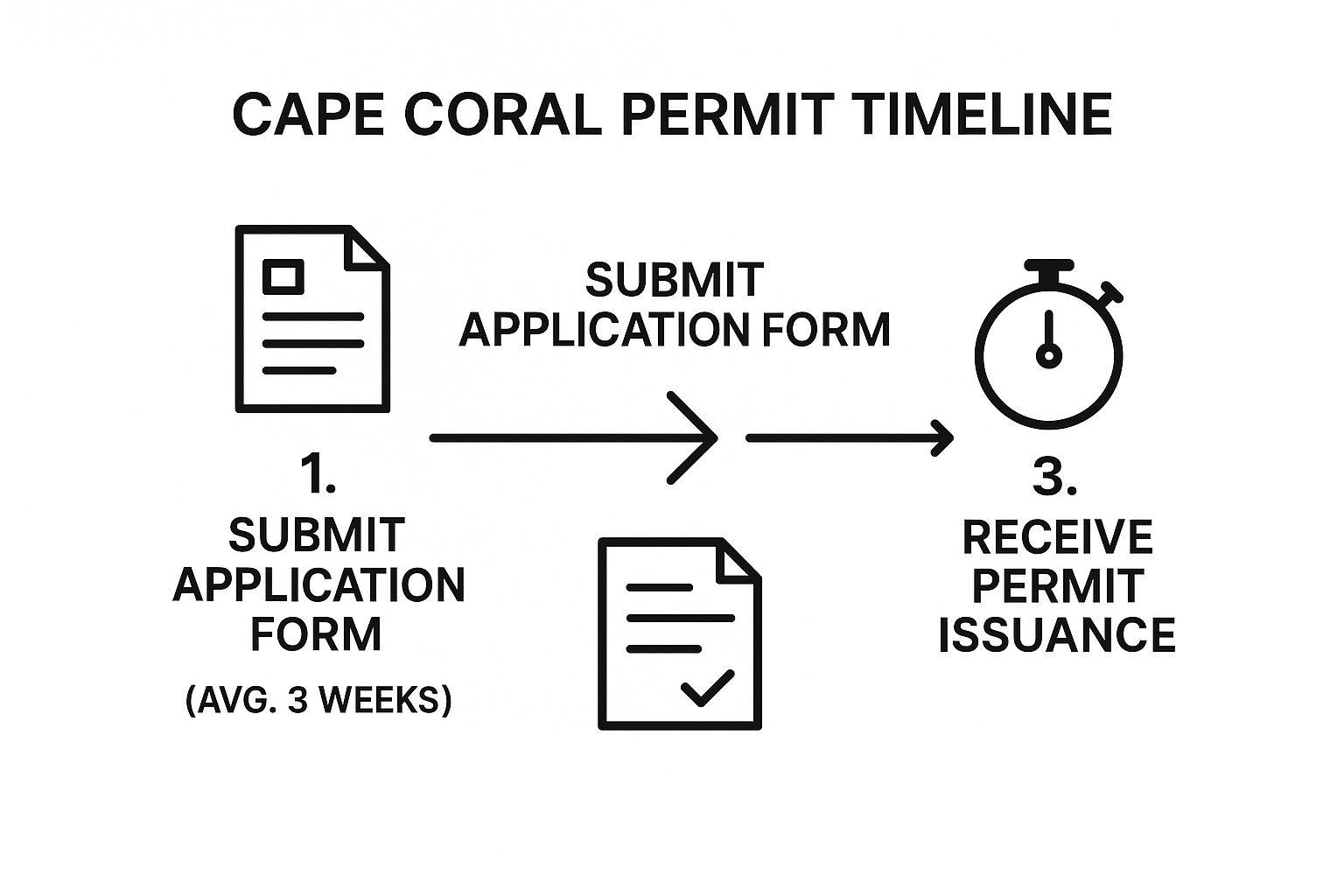
As you can see, the time your application spends under review is a huge chunk of the process. That’s precisely why a complete, "bulletproof" submission is your best tool for keeping the project on schedule.
Beyond The Blueprints: What You Really Need
Think of it this way: the architectural drawings show what your home will look like, but all the supporting documents prove it will perform safely and correctly according to Florida's demanding building codes. Each report is there to answer a specific question for the city reviewers, from how you'll manage stormwater to whether the foundation can handle our unique soil conditions.
Your builder will need to assemble a complete package that includes these key engineering and site-specific reports:
- Comprehensive Site Plan: This is the master map. It shows the exact placement of your home on the lot, including property line setbacks, the driveway, and all the critical elevations—a key factor affected by recent flood map news.
- Drainage Calculations: Here in Cape Coral, a city defined by its canals, managing water is everything. These calculations are non-negotiable proof that your property won't flood your neighbors or overwhelm the public drainage system.
- Soil Boring Tests: We can't see what's underground, so a soil test does it for us. It reveals the composition of the ground your home will sit on, giving engineers the data they need to design a stable foundation specifically for your lot.
- Energy Calculations: Florida has some of the strictest energy efficiency standards in the country. This report proves your home's insulation, windows, and HVAC system are up to code, which ultimately saves you a lot of money on your power bills.
Insider Tip: A great builder doesn’t just collect these documents; they ensure they all tell a cohesive story. For example, the results of the soil boring test directly inform the structural engineer’s foundation design. That design, in turn, is reflected on the final site plan. It all has to connect.
Sourcing and Documenting Florida Product Approvals
One of the most tedious but critical steps is documenting the Florida Product Approval for every single exterior component of your home. We live in a high-velocity hurricane zone, which means any product on the outside of your house must be rigorously tested and proven to withstand intense wind and rain. This is a crucial step for any hurricane impact feature.
This isn't a guideline; it's a hard-and-fast rule. Your builder must provide the specific state approval numbers for:
- Windows and Skylights: Every single one must be impact-rated.
- Exterior Doors: This includes everything from your beautiful front entry door to the garage door and sliders.
- Roofing Materials: The entire system—from the underlayment to the final tile or metal panel—needs an approval number.
- Soffit and Siding: These must be certified to resist powerful wind uplift forces.
Forgetting this documentation is a guaranteed way to get your application kicked back for revision. An experienced local builder will have a system in place to gather and organize these approvals from day one, so there are no last-minute scrambles. This kind of meticulous prep is one of the key tips to follow for a successful custom home build and can make all the difference in your experience.
At the end of the day, a bulletproof permit application tells a story. It tells the city reviewer not just what you want to build, but how you're going to build it safely, efficiently, and in full compliance with every code. It shows your team has done its homework, from understanding the ground you're building on to choosing the storm-ready materials that will protect your family for decades.
Navigating the City Review and Inspection Process

Hitting "submit" on your permit application is a huge milestone, but it's really just the beginning of the next critical phase. Your plans now enter the City of Cape Coral's review and inspection process—a detailed journey designed to make sure every part of your new custom home meets our region's high standards for safety and resilience.
This isn't just one person checking a box. It's a coordinated effort across multiple city departments. A complete and accurate submission from your builder is the key that unlocks the whole thing. From there, your project moves through a sequence of plan reviews followed by a series of on-site inspections. Understanding this journey helps set realistic expectations for the construction timeline and shows why every step matters.
The Plan Review Gauntlet
Once your application is in, it doesn't just land in a single inbox. It’s immediately routed to several specialized city departments, each responsible for scrutinizing a different part of the project. This multi-layered review is what guarantees your home is compliant from every possible angle.
- Zoning Review: This team looks at your home’s size, height, and placement on the lot to ensure it follows local zoning rules. They’re checking setbacks from property lines and canals, making sure the design fits perfectly within the legal boundaries.
- Engineering Review: This is where the technical details get a close look. The engineering department analyzes your site plan for proper drainage, elevation, and utility connections. In a city built on water like ours, this review is especially rigorous.
- Fire Department Review: Safety is always the top priority. The fire department reviews plans to confirm proper access for emergency vehicles, check fire hydrant proximity, and ensure the home’s design adheres to all fire safety codes.
How long does this take? It's heavily influenced by the volume of Cape Coral building permits currently in the system. The local market's activity directly impacts your timeline.
For example, the Cape Coral-Fort Myers metro area has seen major swings in new home construction. In 2021, monthly permits for single-family homes peaked at 1,178 but dropped to 707 by the end of the year. This trend continued into 2022, with permit numbers falling as low as 398 in a single month. This news that affects building in Southwest Florida gives you a real-world picture of the building department's workload and can help set realistic expectations for your review period. You can explore more data on Southwest Florida's housing market trends on the St. Louis Fed's data site.
Key On-Site Inspections
After your plans get the green light and the permit is issued, the real work begins. But the city's oversight doesn't stop. It continues through a series of mandatory on-site inspections. A city inspector has to visit your job site at specific milestones to verify that the work being done matches the approved plans and meets code.
Passing these inspections is non-negotiable if you want to move on to the next construction phase. Here are some of the most critical inspections for any custom home:
- Foundation Inspection: Before a single drop of concrete is poured, an inspector checks the footing excavations, the steel reinforcement (rebar), and any in-slab plumbing or electrical conduits. This confirms the very base of your home is built exactly to the engineered specifications, considering its required elevation.
- Framing and Systems Rough-In Inspection: Once the "bones" of the house are up, this inspection happens before any drywall is installed. The inspector is looking at the framing, roof-to-wall connections, hurricane straps, and the rough installation of all your electrical, plumbing, and HVAC systems.
- Insulation Inspection: This takes place after the rough-in passes and right before the drywall goes up. The inspector verifies that the right type and amount of insulation have been installed, ensuring your home meets Florida’s strict energy efficiency requirements.
- Final Inspection: This is the big one—a comprehensive last look. The inspector will walk through the entire completed home to check everything from electrical outlet function and plumbing fixtures to handrail stability and smoke detector placement.
A failed inspection means a correction notice and, in some cases, a stop-work order. That can be a seriously costly delay. An experienced builder knows how to prepare the site meticulously for each inspection, making sure everything is clean, accessible, and ready for review. It’s the single best way to keep a project on schedule.
Permitting for Hurricane Resiliency and Modern Designs
Here in Southwest Florida, building a custom home isn't just about aesthetics; it's about building for resilience. This principle is baked right into the Cape Coral building permits system, and it's something we take very seriously. When we submit your permit application, we're not just showing the city your floor plan. We're providing undeniable proof that your new home is a modern fortress, engineered to withstand our unique weather from the moment you get the keys.
This intense focus on strength has completely reshaped modern home design in our area. Features that might have been high-end upgrades a decade ago are now the baseline, and each one comes with its own set of documentation and inspection hurdles. Your builder’s job is to prove, on paper and on-site, that every exterior component can handle the immense stress of a hurricane.
Mandated Hurricane-Impact Features and Their Permits
The Florida Building Code is, frankly, one of the toughest in the country—and for good reason. For any new custom home in Cape Coral, a whole suite of hurricane-rated features isn't optional, it's mandatory. The building permit application is the city's primary checklist to confirm everything is up to snuff.
When inspectors walk your job site, they are laser-focused on finding the product approvals and correct installation details for these non-negotiable items:
- Impact-Rated Glass and Doors: Every single window, sliding glass door, and exterior entry door must come with a Florida Product Approval number. This number is the official proof that it has survived brutal testing against high-velocity winds and flying debris.
- Reinforced Garage Doors: Your garage door is often the biggest weak spot on a house. That's why they now require specialized bracing and an impact rating to prevent a catastrophic blowout during a major storm.
- Advanced Roof-to-Wall Connections: This is a huge deal for inspectors. Your blueprints have to spell out the exact hurricane straps, clips, and bolting systems that lash the roof trusses down to the walls, fighting against powerful wind uplift.
In Cape Coral, resilience isn't just about passing an inspection; it's about peace of mind. A meticulously prepared permit application that clearly documents every hurricane-rated feature is the first step toward building a home that protects your family and your investment.
Permitting for New Builder Trends and Modern Amenities
It’s not just the safety codes driving the permit process. The way people want to live today is also adding new layers of complexity. Modern homebuyers are looking for homes that are not only gorgeous but also highly functional and self-sufficient, especially when a storm is brewing. These popular features all demand their own specific permits and a good deal of foresight.
A whole-home generator is a perfect example. What was once a luxury item is now practically a necessity for many homeowners in Southwest Florida, a key new builder trend. But you can't just drop one on a concrete pad and call it a day. Installing a generator requires a separate electrical permit, detailed site plans showing its precise location relative to windows and property lines, and often a gas permit if it’s fueled by propane or natural gas.
Other new design features and trends add their own wrinkles to the permitting process:
- Elevated Foundations: To combat flood risk, more and more new custom homes are built on elevated foundations. This design choice has a massive impact on the permit application, demanding far more extensive engineering and detailed site plans to account for fill, grading, and proper drainage.
- Complex Outdoor Living Spaces: Those incredible lanais with full summer kitchens, fire pits, and custom lighting systems are fantastic new design features, but they introduce a lot of moving parts. Each utility—the gas for the grill, the electricity for the lights, and the plumbing for the sink—has to be permitted and inspected individually.
Getting through this maze of requirements comes down to one thing: experience. A seasoned builder knows exactly how these modern features and strict city codes intersect. They can weave your dream amenities into a compliant design from the very start, avoiding costly delays.
To see how all these pieces—resilience, design, and modern features—come together, it's worth seeing the finished product. Looking through the portfolio of a top-tier custom home builder in Cape Coral can give you some incredible insight and inspiration for what’s possible. At the end of the day, a successful permit process is what ensures every exciting feature in your new home is not only safe but built to last.
Common Questions About Cape Coral Building Permits
Even when you're working with a top-notch builder, it's completely natural to have questions pop up during your custom home journey. The permitting process, with all its specific rules and paperwork, can definitely feel like a maze. Let's cut through the official jargon and get straight to the practical, real-world answers for the most common concerns we hear from homeowners in the custom home industry.
Getting a handle on these details helps you have smarter, more productive conversations with your construction team. It’s all about knowing what to expect, understanding potential hurdles, and appreciating the critical work happening behind the scenes.
How Long Does It Typically Take to Get a Building Permit in Cape Coral?
This is the million-dollar question, isn't it? While the city works hard to be efficient, the honest answer is that the timeline for a new custom home permit can really vary. You should realistically plan for several weeks, and sometimes a few months.
The two biggest factors are the city's current workload—which can surge during building booms as news that affects building in Florida spreads—and the quality of your application. A complete, accurate, and professionally prepared permit package will sail through the system much more smoothly. On the flip side, applications with missing documents or engineering conflicts are what cause those frustrating delays, as they get kicked back for revisions. A builder who is meticulous with the initial paperwork is your best bet for shortening this waiting game.
Can I Make Changes to My Plans After a Permit Is Issued?
Yes, you can, but it’s not as simple as just telling your builder to move a wall. Any meaningful change to the approved plans requires a formal permit revision. This is a non-negotiable step to make sure the new plans still meet all building codes.
For example, deciding you want to add a window, change the roofline, or shift a load-bearing wall means your builder has to submit updated drawings to the city. This revision has to be reviewed and approved before the new work can start. It's a process that will add both time and cost to your project, which is why we always stress how important it is to lock in your design before that first permit is submitted.
We see this all the time. A client might decide to move their whole-home generator after the plans are approved. That single change can require revised electrical plans and new site plans to ensure it still meets the mandatory safety setbacks from windows and property lines, a crucial detail for generators in storms.
Do I Need a Separate Permit for a Pool or Seawall?
Absolutely. This is a big one that often catches homeowners by surprise. Your swimming pool, seawall, or boat dock are all considered separate structures from the main house. Each one needs its own, distinct permit. You can't just bundle them into your primary home permit.
Here’s why that’s so important for your project's timeline:
- Pool Permits: These come with their own set of critical safety requirements, from fencing and alarms to specific electrical bonding inspections. These are often part of new design features for outdoor living.
- Seawall and Dock Permits: These are often the most complex. They need extra sign-offs from environmental and zoning departments to ensure they comply with all the rules for waterfront construction.
It’s crucial that you and your builder apply for these permits at the same time as the main house permit. A coordinated approach like this makes sure the site work for the pool and seawall can happen in the right order, preventing major headaches and delays down the road.
What Happens If Work Starts Without a Permit?
Starting construction before a permit is secured is one of the most serious mistakes you can make. If the City of Cape Coral finds unpermitted work, they will immediately issue a stop-work order, bringing every single activity on your property to a grinding halt.
The fallout is significant. The builder will be hit with hefty fines, and you, the homeowner, will have to go through the difficult process of permitting the work after the fact. This usually involves paying double the normal permit fees. Even worse, if the uninspected work can't be proven to meet code, it might have to be torn out and completely rebuilt. Always, always confirm with your builder that all necessary Cape Coral building permits are approved and in hand before the first shovel ever touches the dirt.
At Sinclair Custom Homes Inc, we handle the complexities of the permitting process for you, ensuring every detail is managed with the honesty, integrity, and quality our name is built on. Matthew Sinclair is on your job site, guaranteeing your vision is brought to life correctly and efficiently. Learn more about building your over-engineered dream home with us at https://sinclaircustomhome.com.