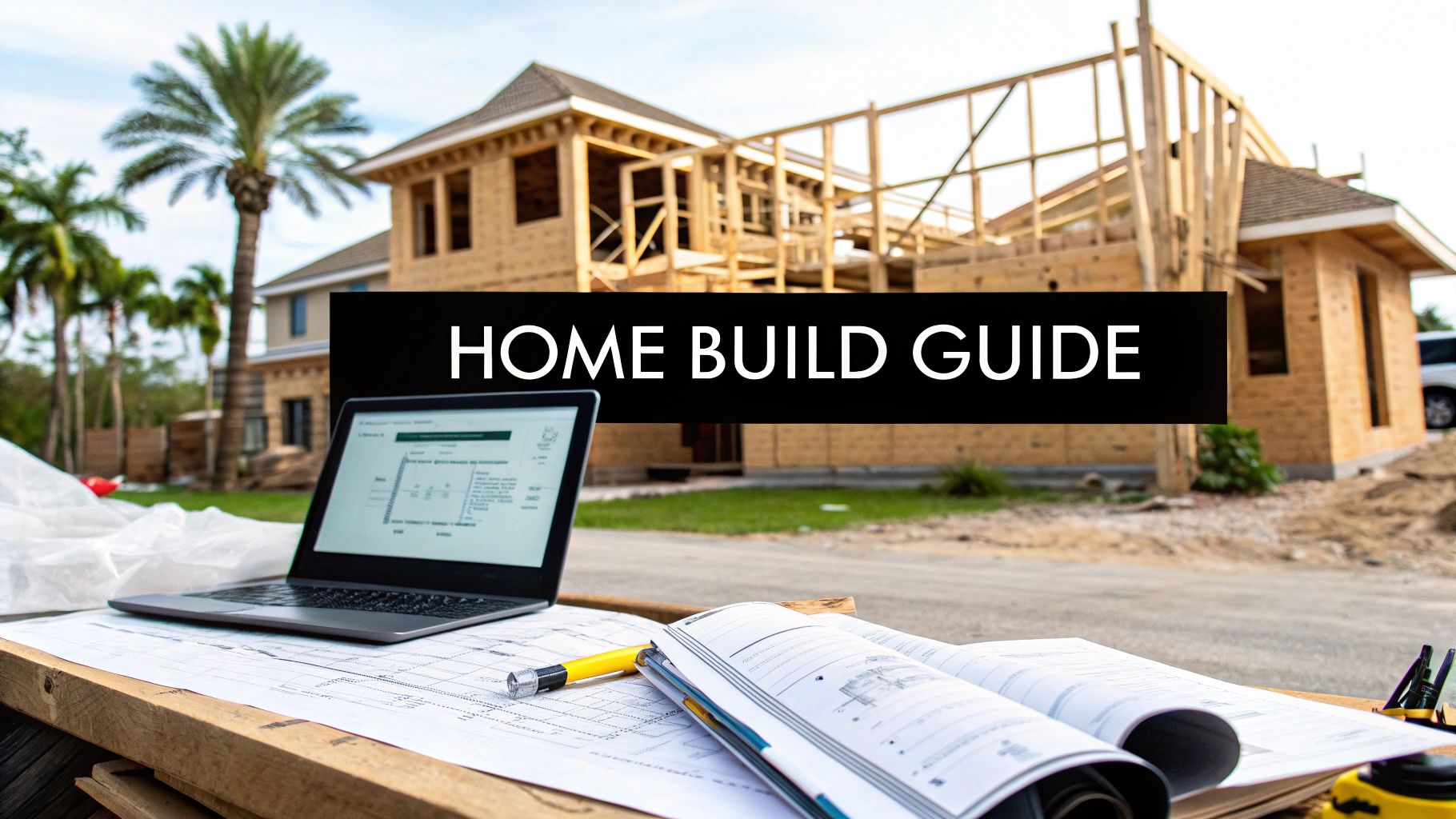
Effective home construction project management is so much more than just ordering materials and managing crews. It's really about taking that dream in your head and turning it into a detailed, actionable blueprint. This is the single most important stage, especially here in Southwest Florida where our unique environment, hurricane risks, and evolving design trends influence every choice you make long before a single shovel hits the ground.
Your Blueprint for a Successful Florida Custom Home
Kicking off a custom home build in Southwest Florida always starts with a crystal-clear vision. This isn't about vague ideas; it's the phase where we get into the nitty-gritty of how you actually live your life. It's where your day-to-day needs meet the practical realities of building in a coastal, storm-prone environment, laying a rock-solid foundation for everything that follows.
This goes way beyond just picking a floor plan from a book. We're designing a space that not only fits your life today but also anticipates what you'll need down the road. I've seen a major shift in what homeowners are asking for—they're moving toward features that boost both comfort and real-world resilience against Florida's challenges.
Defining Your Lifestyle and Integrating New Trends
Before you can even think about a budget or a lot, you have to define what "home" truly means to you and your family. Are you the life of the party, always hosting, and in desperate need of a seamless indoor-outdoor living area? Or maybe you're planning for the future and need a multi-generational suite for aging parents or adult kids moving back home.
Think about some of the design elements that are quickly becoming must-haves in new Southwest Florida custom homes:
- Dedicated Wellness Spaces: A home gym is one thing, but people are thinking bigger. We’re now designing and building dedicated yoga studios, quiet meditation rooms, and even private saunas to create a personal sanctuary for well-being.
- Flexible Home Offices: A desk tucked into a corner of the guest room just doesn't cut it anymore. Today's designs feature acoustically treated offices or even dual-office layouts to comfortably accommodate two people working from home.
- Hurricane-Resilient Features: This is about more than just meeting building codes. Smart planning means designing for things like a whole-home generator right from the start, ensuring your home is a true safe haven during Florida's intense storm seasons.
This deep dive into your lifestyle is what the custom home building experience is all about. If you want to learn more about this crucial first phase, feel free to explore our detailed guide on what to expect when building a custom home.
A home's blueprint isn't just a set of drawings; it's the physical manifestation of your family's needs, habits, and aspirations. Getting this right is the most important step in the entire construction process.
Creating a Realistic Budget for Southwest Florida
Once your vision is clear, it’s time to talk numbers and build a comprehensive budget. Here in Southwest Florida, the total cost is shaped by factors that go way beyond the standard line items for materials and labor. A huge part of successful project management is getting a handle on these costs from day one. Learning how to achieve accurate job costing is key to creating a budget that doesn't fall apart halfway through the build.
A truly thorough budget needs to account for a few key regional costs:
- Land Acquisition and Preparation: The price you pay for the lot is only the beginning. You absolutely have to factor in the costs for clearing the land, grading it properly, and performing soil tests. In coastal areas, this may also include bringing in fill dirt to achieve proper elevation.
- Impact and Permitting Fees: These are fees charged by the local government, and they can vary dramatically between counties like Lee and Collier. They can easily add a significant chunk to your total project cost.
- Material Selections for Coastal Environments: Choosing materials that can stand up to our salt, sun, and humidity isn't optional—it's a necessity. This includes specifying hurricane-impact windows, reinforced roofing systems, and salt-tolerant landscaping.
The Critical Role of Site Selection and Elevation
Finally, that blueprint has to be grounded in a smart site selection. In coastal towns like Cape Coral or Fort Myers, the land itself dictates a huge part of the design. Elevation is paramount. The height of your lot above sea level has a direct impact on your flood risk, what kind of foundation you'll need, and your flood insurance premiums. News about changing FEMA flood maps directly affects these decisions.
Cutting corners on local zoning or ignoring elevation standards isn't just a mistake; it's a recipe for disaster down the line. A properly selected site, chosen with a deep understanding of local regulations and future climate projections, ensures your home is not only beautiful but also safe, compliant, and built to last for generations. This initial strategic thinking is the very essence of effective home construction project management.
Building Your Florida Construction Dream Team
Once you have a solid plan in hand, the next critical step in home construction project management is putting together the right group of pros. The success of your custom home doesn't just ride on the quality of the materials; it hinges on the expertise, communication, and local know-how of the team you hire. This is especially true here in Southwest Florida, where a builder's experience with our unique climate, storm risks, and regulations can honestly make or break a project.
Finding the right partners is less like hiring employees and more like forming a long-term alliance. You'll be working closely with these people for a year or more, trusting them with one of the biggest investments of your life. It’s a process that calls for real diligence and a clear eye for what separates an average builder from a great one.
Identifying Your Key Players
A custom build is a true team effort involving several key roles. While the builder is front and center, other professionals are absolutely vital to bringing your vision to life. Knowing who you need from the very beginning is a core part of managing the project effectively.
Your primary team will almost always include:
- The Architect or Designer: This is the professional who translates your lifestyle, your needs, and your aesthetic taste into a set of buildable plans. Look for someone whose portfolio is full of Florida-specific designs that prioritize both beauty and resilience.
- The Custom Home Builder: Think of the builder as the conductor of the orchestra. They manage every single aspect of construction, from subcontractors and timelines to the budget itself. Their experience with the custom home industry in Southwest Florida is the lynchpin holding the entire project together.
- The Structural Engineer: This expert ensures your home's framework can stand up to Florida’s high winds and unique soil conditions. This is a non-negotiable part of building safely in our region.
Vetting Builders for the Southwest Florida Market
Not all builders are created equal, especially when you consider the unique demands of building in places like Cape Coral or Fort Myers. You need a builder whose resume is packed with successful projects in this specific environment. When you're looking at a builder's portfolio, look past the pretty pictures and focus on the substance.
Ask them pointed questions about their experience with:
- Hurricane Impact Features: Do their homes consistently include high-rated impact windows and doors? Can they clearly explain the different types of reinforced roofing systems they prefer to use? Do they have experience with new design features that incorporate storm safety?
- Local Supply Chains: A well-connected builder has strong, established relationships with local suppliers. This can prevent costly delays, especially when certain materials, like generators or impact glass, are hard to come by.
- Elevation and Flood Zone Construction: Have they built homes on lots similar to yours? They should be able to speak confidently about foundation requirements and building to specific Base Flood Elevation (BFE) levels, especially with recent news about changing flood maps.
The best builders in Florida don't just build homes; they build fortresses designed for longevity. Their portfolios should demonstrate a deep, practical understanding of how to construct a home that stands up to hurricanes, not just meets the minimum code.
Checking references is a crucial step that far too many homeowners rush. Don't just ask if the past client was happy with the final product. You need to dig deeper with specific questions about the building process itself.
Questions to Ask a Builder's References
When you get a past client on the phone, you have a golden opportunity to learn what it's really like to work with that builder. Try asking questions that reveal their true project management style and how they respond when things don't go according to plan.
- "How did the builder handle communication during a storm or hurricane warning?" This tells you everything about their preparedness and commitment to protecting your investment before it's even finished.
- "Can you describe their process for handling change orders?" A great builder will have a clear, transparent system. A disorganized one can lead to absolute budget chaos.
- "Were there any unexpected issues with permitting, and how did they resolve them?" This gives you valuable insight into their working relationships with the local building departments.
- "How often was the main builder or project manager physically on-site?" Direct, hands-on oversight is a hallmark of a quality builder. It’s a non-negotiable for someone like Matthew Sinclair, who believes in being present to personally ensure excellence.
Assembling your dream team is a foundational piece of successful home construction project management. Taking the time to properly vet each professional for their specific, relevant experience in Southwest Florida will pay off again and again throughout the build, ensuring your home is not only beautiful but also resilient and masterfully built.
Navigating Florida’s Design and Permitting Maze
This is where the magic really starts. Your ideas, sketches, and dreams begin their journey into a full-blown set of architectural plans. But it's not just about drawing lines on a page. In Florida, every single design decision has to satisfy both your vision for a beautiful home and the state’s rigorous, ever-evolving building codes.
This is a delicate balancing act, and it’s where sharp home construction project management becomes your greatest asset. We're not just designing a house; we're engineering a fortress that can stand up to Southwest Florida's demanding coastal climate without looking like a bunker. It's about weaving safety and resilience into the very fabric of the design from day one, not tacking it on as an afterthought.
Weaving Resilience into Your Home's Design
In Florida, a truly exceptional design is as strong as it is beautiful. The great news? Modern building science and new builder trends let us achieve incredible resilience without forcing you to live in a windowless concrete box. The trick is to make hurricane-rated features foundational elements of the architectural style itself.
Here are a few ways we blend world-class safety with stunning new design features:
- Advanced Window and Door Systems: Forget the days of clunky, ugly storm shutters. Today’s hurricane-impact windows use multi-layer laminated glass and heavily reinforced frames to provide 24/7 protection that’s completely invisible. We can integrate these into breathtaking floor-to-ceiling glass walls or massive pocket sliding doors that create a seamless flow to your lanai.
- Modern Roofing Systems: Metal roofs have become a hot design trend, offering clean, contemporary lines. More importantly, when installed as a complete system—from the sheathing and underlayment to the specialized fasteners—they provide far superior resistance to wind uplift compared to traditional shingles.
- Integrated Generator Placement: A whole-home generator shouldn't be an eyesore. Thoughtful design accounts for it from the very beginning. Instead of an awkward metal box plunked down in your yard, we can enclose it in a purpose-built, sound-dampened structure that matches your home's exterior and is hidden by strategic landscaping.
The ultimate goal is to make safety invisible. Your guests should admire the beautiful, expansive views and modern rooflines, never realizing those very features are the core of your home's hurricane defense system.
Conquering the Permitting Process
Once your architectural plans are locked in, they head to the local building department for approval. For homeowners, this part of the process can feel like wandering through a maze blindfolded. This is where a builder's local experience isn't just helpful—it's essential.
Every county in Southwest Florida, from Lee to Collier, has its own unique submission quirks, review timelines, and inspection schedules. An experienced project manager knows how to navigate this bureaucracy efficiently. It’s about more than just dropping off a set of plans; it’s about meticulously ensuring every required document, from structural engineering calculations to energy audits and site plans showing correct elevation, is present and formatted perfectly.
The sheer complexity of this stage is why the Construction Project Management Services industry is a massive global market, hitting revenues around $239.6 billion in 2023. That number shows just how critical skilled professionals are for keeping complex projects on schedule and on budget.
A single mistake on a permit application can trigger weeks, or even months, of delays, completely derailing the construction timeline. Knowing the specific nuances for projects in an area like Cape Coral is vital. You can get a much better sense of what's involved by reading our detailed guide on navigating Cape Coral building permits.
A seasoned project manager anticipates these hurdles, maintains open lines of communication with the plan reviewers, and quickly handles any questions that arise. This proactive approach is what keeps your project moving from paper to reality without getting bogged down in red tape.
Managing Your Build With Modern Technology
Once the plans are finalized and the dust starts to fly, we enter the most dynamic phase of the project: overseeing the day-to-day rhythm of the build. This is where effective home construction project management really shines, moving from paper plans to tangible progress on your homesite. Here in Southwest Florida, using the right strategies and tools is absolutely essential to keep your custom home on track, within budget, and built to the highest possible standard.
The days of builders relying on messy spreadsheets and endless phone tag are long gone. Today, the most organized and transparent custom home builders use specialized software to manage the complex dance of construction. This gives you, the client, a crystal-clear window into your project's status at all times. It's the modern way to handle everything from subcontractor schedules to unexpected weather delays with total clarity.
This simple diagram shows the core loop that technology helps us manage, making sure every part of your build is properly planned, executed, and reviewed.
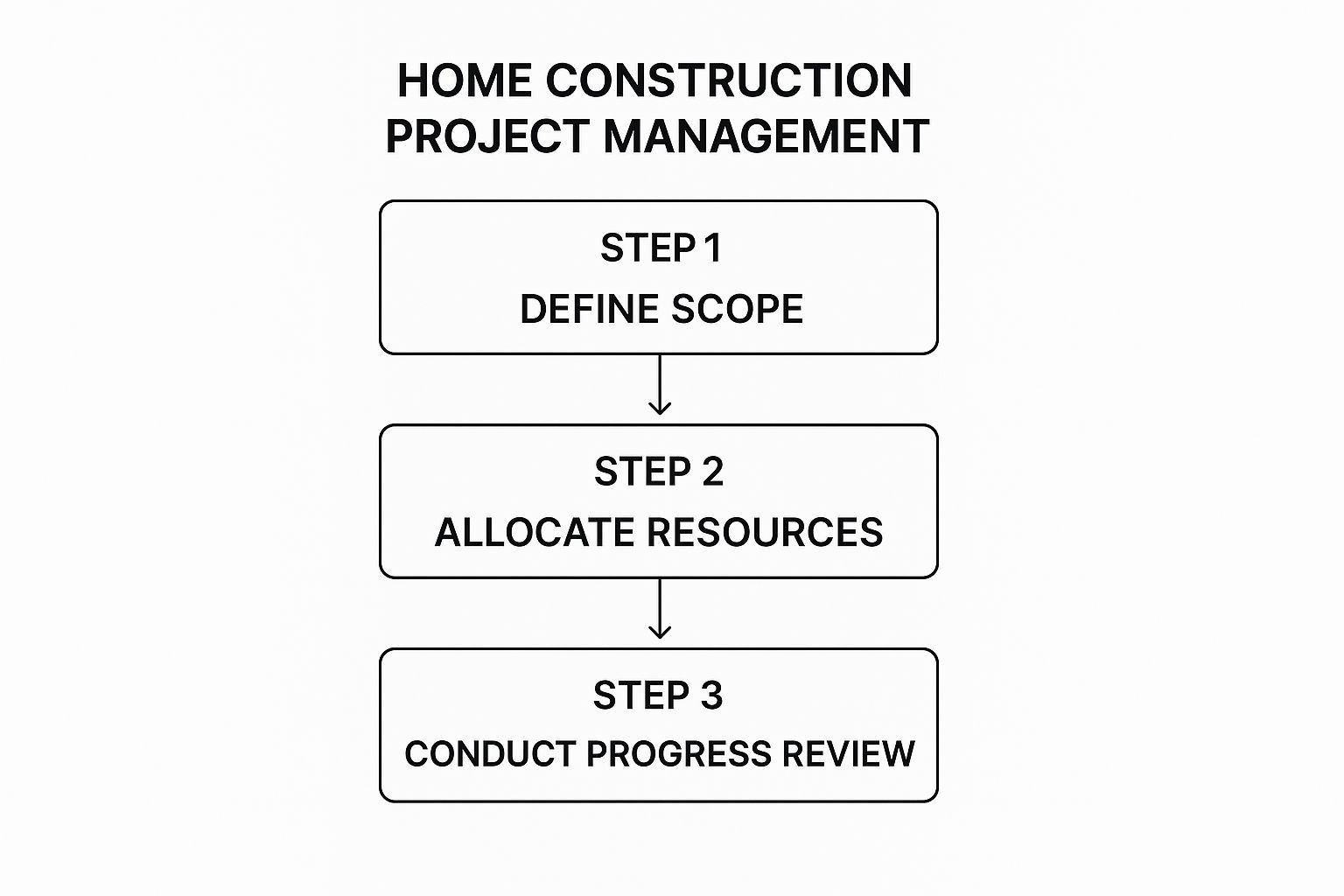
It’s a perfect illustration of how a successful project isn't just a straight line to a finish date, but a continuous cycle of planning, building, and checking our work.
The Power Of Project Management Software
The adoption of project management software has completely changed how custom homes are built for the better. This technology becomes the central command center for the entire project, connecting you, your builder, and every trade partner in one organized digital space. It’s a massive leap forward from the old days of scattered emails and missed voicemails.
A great builder will provide you with your own client portal where you can see real-time updates. Imagine being able to view daily photo logs from the job site, check the construction schedule to see what’s happening next week, and approve your kitchen faucet selection with a simple click. This kind of access keeps you empowered and holds everyone on the team accountable.
A builder's investment in modern project management tools is a huge tell. It shows they are committed to transparency and communication, proving they value keeping you in the loop every step of the way.
The growth in this field is undeniable. The project management software market is projected to soar from $7.24 billion in 2025 to over $12 billion by 2030. And while a whopping 82% of companies see greater efficiency with these tools, there’s a catch: juggling too many different platforms can create chaos. This is why it’s so important to partner with a builder who uses a single, integrated system to keep things simple and clear.
Quality Control And Site Management In Florida
Technology isn't just for scheduling and paperwork; it's also transforming how we manage quality and safety on the job site itself, especially in a demanding climate like Southwest Florida. Top-notch oversight ensures your home is built not just to code, but to a far higher standard. For a complete picture of the entire building journey, you can review your guide to the custom home building process.
One of the biggest game-changers has been the drone use in construction. Builders are now using drones to:
- Conduct Site Surveys: Get hyper-accurate measurements and assess land elevation, which is critical for proper drainage and flood mitigation in places like Cape Coral and Fort Myers.
- Monitor Progress: Capture high-resolution photos and videos of the build. This allows us to track milestones and share exciting visual updates with you, no matter where you are in the world.
- Perform Safety Inspections: Safely inspect roofing, second-story work, and other hard-to-reach areas to ensure every single detail meets our quality standards.
To help you think about what features make a home truly exceptional in our area, here is a quick checklist of essentials and popular upgrades we see clients requesting.
Florida Custom Home Feature Checklist
This checklist covers some of the most important and sought-after features for a new custom home in Southwest Florida, balancing hurricane resilience with the comfort and style of modern living.
| Feature Category | Essential Features | Trending Upgrades |
|---|---|---|
| Structure & Resilience | Impact-rated windows and doors | Whole-home generator with auto-transfer |
| Hip roof design for wind resistance | Reinforced safe room | |
| Elevated foundation (per FEMA maps) | Metal roofing | |
| Energy Efficiency | High-SEER HVAC system | Solar panel array |
| Open-cell spray foam insulation | Tankless water heater | |
| Low-E glass coatings | Smart thermostat integration | |
| Outdoor Living | Covered lanai with screen enclosure | Outdoor kitchen with built-in grill |
| Pool with basic water features | Sun shelf and bubblers in pool | |
| Basic landscape package | Custom landscape lighting | |
| Interior & Tech | Tile flooring in main living areas | Smart home hub (lighting, security) |
| Solid wood cabinetry | Whole-home audio system | |
| Quartz or granite countertops | Luxury appliance package |
Having these features in mind from the start helps ensure your home is not only beautiful but also perfectly suited for the Florida lifestyle for years to come.
Staying Ahead Of Challenges
Even on the most meticulously planned projects, challenges can pop up. The mark of a great builder is how they handle them. Here in Florida, weather is a constant consideration. A well-organized builder uses technology to monitor storm forecasts, allowing them to secure the job site well in advance to protect your investment from high winds and rain.
Change orders are another common part of the custom build journey. When you decide to add a feature or change a finish, a modern project management system makes it painless. The builder can generate a formal change order right in the software, clearly outlining the cost and any schedule adjustments. You review and approve it digitally, which means no misunderstandings or surprise costs on your final invoice.
This structured, tech-powered approach to daily oversight is what truly sets apart exceptional home construction project management. It gives you peace of mind, knowing your vision for a new Florida home is being brought to life with precision, care, and complete transparency.
Building for Resilience Against Florida Storms
When you build a custom home in Florida, you're not just building for sunny days—you're preparing for Mother Nature’s toughest moments. A core part of your home construction project management plan must be about turning your house into a personal fortress, a safe haven for your family when a storm hits. This goes way beyond just meeting the bare minimum of building codes. It’s about making smart, strategic investments that deliver real peace of mind.
This isn't just about getting through a storm; it's about living through it with as little disruption as possible. A properly built home in Southwest Florida should feel secure and comfortable, making the transition from everyday life to storm-ready mode feel effortless. To get this right, you need a builder who truly understands how all the different hurricane impact features need to work in harmony.
The Non-Negotiables: Hurricane-Rated Products
Your first line of defense is your home's exterior shell, and that starts with hurricane-rated windows and doors. It's so important to understand that not all "impact" products are created equal. They are graded with different Design Pressure (DP) ratings, which is a measure of how well they can handle intense wind pressure and block water from getting in. A higher DP rating means better protection, and it's a detail any experienced local builder will insist on.
Garage doors are another critical weak point that, frankly, get overlooked far too often. An entire home can be blown open if the garage door fails during a major hurricane. Today's reinforced garage doors are engineered with heavy-duty tracks and special bracing to stand up against both the pushing and pulling forces of hurricane winds, preventing a catastrophic failure.
Of course, building for resilience isn't just about storms. It's wise to apply a comprehensive approach to all the potential challenges of a build. Looking into a solid operational risk management framework can help you and your builder spot, assess, and handle the many variables that come with a major construction project.
Powering Through the Storm With a Whole-Home Generator
Losing power for days, or even weeks, after a hurricane is more than an inconvenience—it's a serious hardship. This is precisely why a whole-home generator has shifted from a "nice-to-have" luxury to an essential feature in new Florida custom homes. It keeps your world running by powering critical systems like air conditioning, your refrigerator, and lights during prolonged outages after storms.
A key project management task is making sure the generator is sized correctly. It needs to have enough power to handle the load of all your essential appliances without getting overloaded. When it comes to fuel, the choice is usually between propane and natural gas. Natural gas is convenient because it's a continuous supply, but propane tanks provide a reliable, on-site source that isn't dependent on municipal lines—which can easily be damaged in a storm.
The real magic of a generator system is the automatic transfer switch (ATS). This brilliant device senses a power outage, automatically fires up the generator, and seamlessly switches your home's electrical panel over. When the utility power comes back on, it reverses the whole process. You literally don't have to lift a finger.
Connecting Elevation, Flood Risk, and Your Wallet
Finally, let's talk about the very ground your home sits on. It plays a massive role in its safety and long-term cost. Your home’s finished floor elevation, especially in coastal areas like Cape Coral, is directly tied to your flood risk. Building higher than the minimum Base Flood Elevation (BFE) required by FEMA is one of the absolute smartest decisions you can make, especially as news of rising sea levels becomes more common.
Why? This one choice can have a huge impact on your cost of ownership for years to come. A higher elevation can dramatically lower your flood insurance premiums, saving you thousands upon thousands of dollars over the life of your mortgage. A builder who knows Southwest Florida inside and out will bake site elevation and grading into the project from the very earliest stages. This foresight is the hallmark of truly superior home construction project management.
Common Questions About Building a Custom Florida Home
Stepping into the world of custom home building in Southwest Florida is exciting, but it’s completely natural to have a lot of questions. Before you break ground, you want to feel confident about the timeline, the costs, and the big decisions you’ll be making.
Think of this as your personal FAQ, built from the most common questions we hear from clients just like you. Our goal is to pull back the curtain on the process and give you the straightforward answers you need to move forward with your dream home.
How Long Does a Custom Home Build Take in Southwest Florida?
This is almost always the first question we get, and the honest answer is: it depends. For a truly custom, high-quality home, you should plan for a timeline of 12 to 24 months. That clock starts from your very first design meeting and ends the day we hand you the keys.
This timeline isn’t just one long stretch; it breaks down into two main phases:
- Pre-Construction (3-6 months): This is where all the critical planning happens. It covers everything from architectural design and new design features to engineering and, most importantly, navigating the local permitting process.
- Construction (9-18 months): This is the "boots on the ground" phase. We’re talking site prep, pouring the foundation, framing, putting on the finishes, and completing the final landscaping.
It’s important to remember that factors unique to Florida building can affect the schedule. We’ve seen supply chain hiccups for specialized materials like hurricane-impact windows and generators, and we always plan for potential weather delays during our summer storm season. A good builder anticipates these variables instead of being surprised by them.
What Is Most Important When Choosing a Florida Builder?
A builder's portfolio of beautiful homes and a competitive price are definitely important, but they aren't the most important thing. The single most critical factor is their proven, hands-on experience in the specific Southwest Florida market. This isn't just a talking point—it's everything.
A builder who truly gets this environment knows the ins and outs of:
- Hurricane-Resistant Building Science: They won’t just build to code; they’ll build beyond it. They understand the methods and hurricane impact features that make a home genuinely resilient against our weather.
- Flood Zone Requirements: They are experts at building to proper elevation, especially on lots with specific Base Flood Elevation (BFE) requirements. This ensures your home isn't just beautiful, but safe and properly elevated based on the latest news affecting building.
- Local Permitting Nuances: A builder with deep roots here has established relationships with the building departments in Lee and Collier counties. Those relationships are invaluable for preventing frustrating and costly delays.
The best way to judge a builder isn't just by looking at their finished homes. It’s by their ability to master the unique environmental and regulatory hurdles of Southwest Florida. Their local expertise is your best defense against problems down the road.
Are Whole-Home Generators Worth the Investment?
Absolutely. In Florida, a whole-home generator has shifted from a "nice-to-have" luxury to a fundamental part of a modern, resilient home. Our storms can knock out the power grid for days, sometimes even weeks. A generator provides peace of mind, security, and comfort when you need it most, especially in storms.
When you invest in a generator, you're ensuring your air conditioning, refrigerators, security systems, and any essential medical equipment keep running without a hitch. By planning for it during the initial design, the installation is much smoother and more cost-effective than trying to add one later. You'll understand its true value the first time you sail through a major power outage in total comfort.
How Should I Handle Unexpected Costs or Changes?
Managing the budget is one of the most crucial parts of any build, and the best way to handle unexpected costs is to plan for them from day one. Any professionally managed project should include a contingency fund in the budget, typically around 10-15% of the total construction cost. This money is specifically set aside for things you can’t predict, like unforeseen issues with the site or new design features you decide you want to make.
When you do decide to make a change, a clear process is vital. Your builder should provide a written change order that spells out the exact cost and any impact it will have on the schedule. You must approve this document before any new work starts. This simple discipline ensures you stay in the driver’s seat and avoids any financial surprises when the project is done.
At Sinclair Custom Homes Inc, we believe in building homes with honesty, integrity, and unparalleled quality. Matthew Sinclair is on your job site, ensuring every detail of your vision is brought to life with the craftsmanship you deserve. If you’re ready to build a truly over-engineered custom home in Cape Coral or Southwest Florida, let’s start the conversation. Explore our commitment to excellence at sinclaircustomhome.com.