
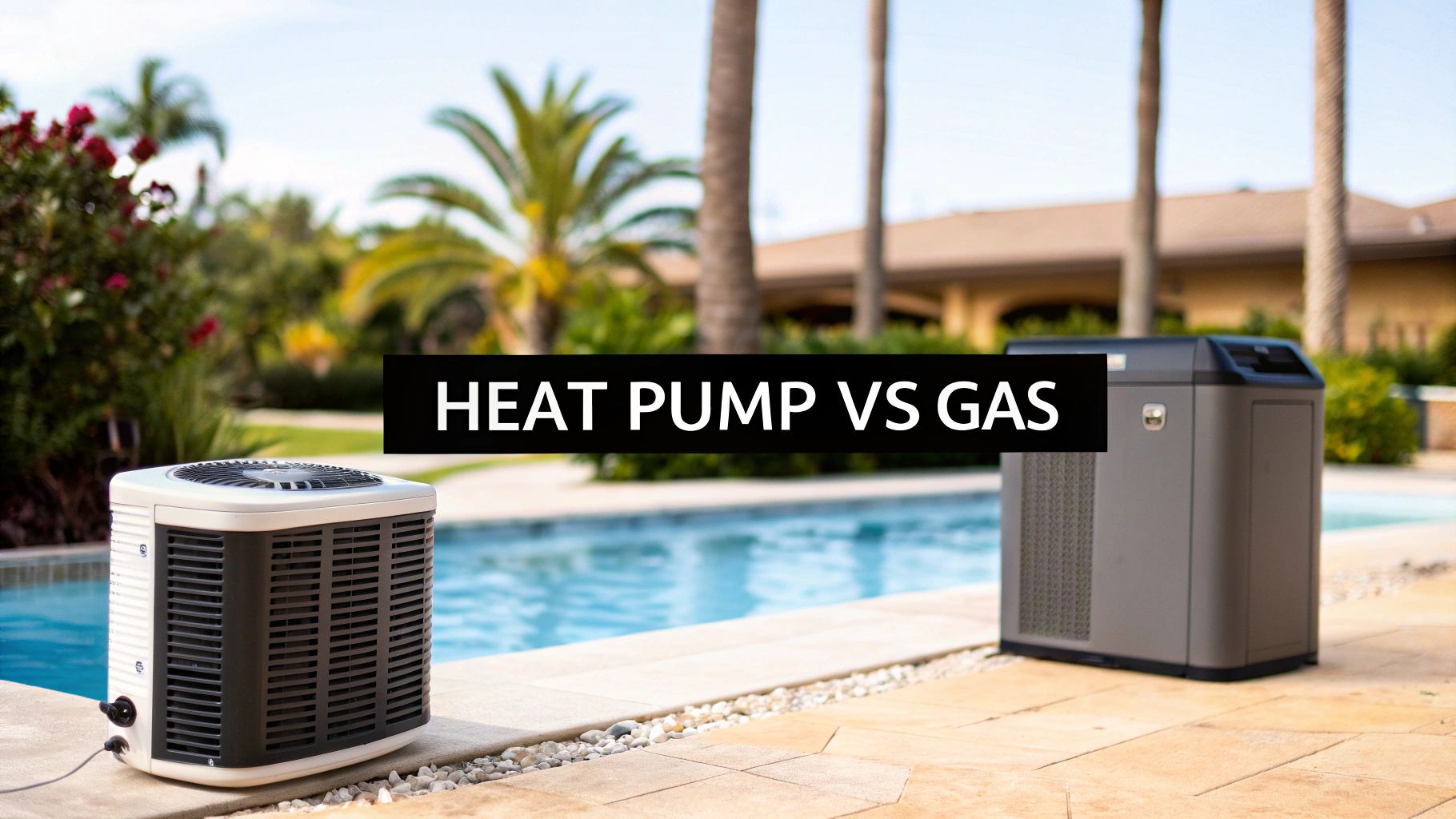
When you're deciding between a pool heat pump vs a gas heater for your custom Florida home, the right answer really boils down to your lifestyle and what you value most. This decision is a key part of the new home design process, impacting everything from energy efficiency to hurricane readiness.
If you're looking for consistent, energy-efficient heating for daily swims—a growing trend in modern Florida home design—a heat pump is going to be your best friend. But if you need fast, on-demand heat for the occasional weekend pool party or firing up the spa, a gas heater is the undisputed champ for convenience.
Choosing the Right Pool Heater for Your Florida Home
Here in Southwest Florida's custom home market, a pool isn't just an add-on; it's the heart of the outdoor living experience. The choice of how to heat that pool is a critical decision during the design phase of a new custom build, and it has a real impact on both your day-to-day enjoyment and long-term running costs.
New builder trends in places like Cape Coral and Fort Myers are all about that seamless indoor-outdoor flow. This makes a comfortably heated pool a must-have, not just a nice-to-have, pretty much year-round. With energy costs always on our minds in Florida, the efficiency of your pool heater quickly becomes a major piece of the homeownership puzzle.
Beyond that, building in Florida means we have to think about resilience. Every single component, right down to the pool equipment, must be judged on its hurricane impact features and how it will hold up during and after a storm. This decision is about more than just warm water—it’s an investment in your property's efficiency, functionality, and readiness for whatever Mother Nature throws at us. A good starting point is understanding the key distinctions between heat pumps and furnaces, as the core principles often apply.
Quick Comparison: Pool Heater Types
| Feature | Pool Heat Pump | Gas Heater |
|---|---|---|
| Best For | Consistent, energy-efficient daily use | Rapid, on-demand heating & spas |
| Florida Climate | Highly efficient most of the year | Unaffected by ambient temperature |
| Storm Readiness | Requires electricity (grid or generator) | Can run on propane with a generator |
| Operating Cost | Lower long-term monthly costs | Higher fuel and operating costs |
Heating Speed and Performance in Florida's Climate

When you're comparing a pool heat pump vs a gas heater, the most immediate difference you'll notice is the heating speed. This isn't just a technical spec—it directly shapes how and when you can enjoy your pool, a crucial piece of the puzzle for any custom home design in Southwest Florida.
Gas heaters are all about rapid, on-demand performance. Think of a gas heater as a sprinter, built for pure speed. It’s the perfect fit if you use your pool less frequently or need to heat an attached spa in a hurry. You can decide on a Friday afternoon that you want to host a pool party on Saturday, and a gas heater will have the water ready for guests in just a few hours.
A heat pump, on the other hand, operates more like a marathon runner. It’s engineered for steady, efficient temperature maintenance, not a burst of speed. This makes it the ideal choice for dedicated daily swimmers or families who want their pool to be consistently comfortable and ready for a dip anytime—a popular design feature for new custom homes.
Real-World Florida Scenarios
Let's look at two common situations for homeowners building custom homes in Cape Coral or Fort Myers to see how this plays out.
-
The Impromptu Entertainer: Imagine a family that loves hosting last-minute get-togethers. A powerful gas heater lets them fire up the pool and spa on short notice, making their backyard the go-to spot for weekend fun without needing to plan days ahead.
-
The Daily Wellness User: Consider a retiree who uses their pool every morning for low-impact exercise. A heat pump is perfect here, maintaining the water at a perfect 85°F day in and day out with incredible energy efficiency and reliability for this consistent use.
This fundamental difference in heating philosophy is often the deciding factor for our clients.
For Florida homeowners, the choice isn't just about technology; it's about aligning the heating system with your lifestyle. Quick heat for social gatherings points to gas, while consistent warmth for daily fitness favors a heat pump.
Performance Through Florida's Seasons
Florida's climate is a heat pump's best friend for about ten months of the year. Because they work by pulling ambient warmth from the air, our humid, warm environment lets them operate at peak efficiency. However, during those rare winter cold snaps when temperatures dip below 50°F, a heat pump's performance will drop off significantly.
This is where a gas heater truly shines. Its ability to create heat is completely independent of the air temperature, giving you powerful, reliable heating even on the coldest Florida night.
Under ideal conditions, gas heaters can raise pool temperatures by 3 to 5 degrees Fahrenheit per hour. In contrast, heat pumps typically manage around 1 to 2 degrees per hour. If you want to get into the technical details, you can discover more about the heating capacity of different systems.
Comparing Upfront Costs and Long-Term Operating Expenses
When we're designing a custom home here in Southwest Florida, I know every line item in the budget matters. Looking at the financials for a pool heat pump vs. a gas heater brings up that classic trade-off: do you spend less now or save more later? It’s a critical decision, especially during a new construction project.
A gas heater definitely has a lower barrier to entry. This makes it a really attractive option for builders trying to manage the initial project budget or for homeowners who need to prioritize immediate savings.
On the other hand, a heat pump requires a bigger investment right out of the gate. But that initial expense is your ticket to some serious long-term savings, which is a huge factor in Florida where our energy bills are a constant concern for homeowners.
A Look at the Numbers
For a new build in Cape Coral or Fort Myers, you need a transparent financial comparison to make the right call.
- Pool Heat Pumps: These units typically have a higher upfront investment, often running between $2,000 and $7,000 for the unit itself, plus the cost of installation.
- Gas Heaters: These are generally much cheaper to buy initially, with prices ranging from just $500 to $1,500.
You can get a more detailed breakdown of the full financial picture in our guide to pool heater and pump costs.
But the long-term story is where things get interesting. Heating a standard-sized pool with a gas heater can easily cost $1,500 to over $2,100 during the swimming season because of how much fuel it burns through. A high-efficiency heat pump gets the same job done for just a fraction of that monthly cost, delivering a clear return on your investment over its lifespan.
This focus on long-term savings is a key trend we're seeing in new home construction. Buyers are getting smarter and looking at the total cost of ownership, not just the initial price tag.
Let's break down the costs in a simple table to see how they stack up for a typical Florida homeowner.
Cost Comparison Pool Heat Pump vs Gas Heater
| Cost Factor | Pool Heat Pump | Gas Heater |
|---|---|---|
| Initial Investment | $2,000 – $7,000 | $500 – $1,500 |
| Monthly Operating Cost | Significantly Lower | $1,500 – $2,100+ (in season) |
| Long-Term Savings | High potential for ROI | Minimal to none |
As you can see, while the gas heater wins on day one, the heat pump is the clear financial winner over the years.
Factoring in Future Volatility
There’s one more crucial piece to this puzzle: the volatility of fuel prices. Natural gas and propane costs can swing wildly, throwing a real wrench into a household budget. While electricity costs aren't set in stone, they tend to be much more stable, making a heat pump a more predictable long-term expense.
For a custom home designed to last for decades, choosing a heat pump is often a strategic move to hedge against future energy price spikes and manage long-term household expenses effectively.
For homeowners in our area, understanding the available Florida solar power incentives can make an electric heat pump even more financially attractive. Pairing a heat pump with a solar array is an increasingly popular new design feature in our new builds. It creates an ultra-efficient system that cuts down on grid reliance and maximizes your savings.
Hurricane Readiness and Post-Storm Reliability
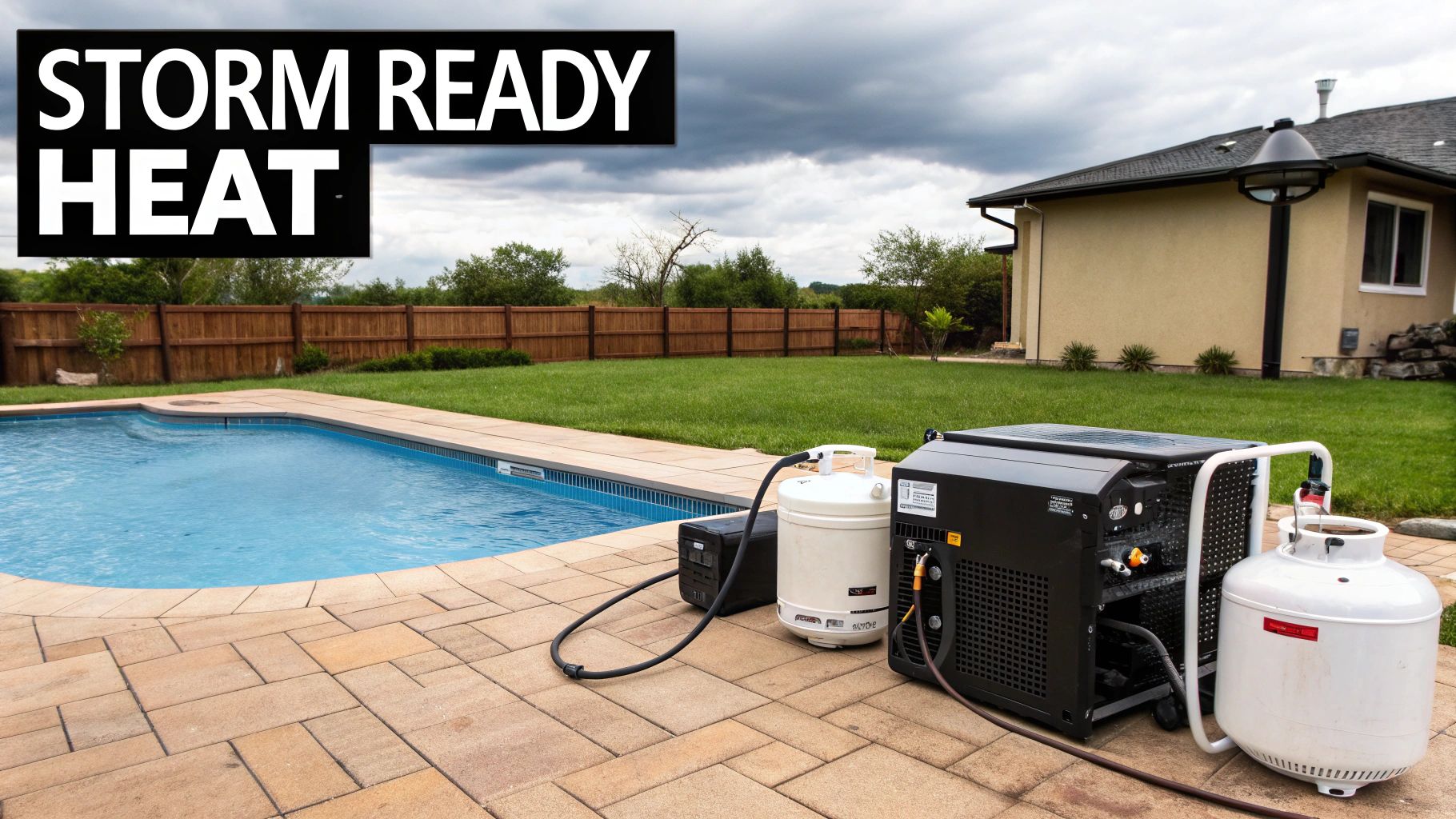
If you're building a custom home anywhere in Southwest Florida, being ready for a hurricane isn't just a nice feature—it's a core requirement. When you're weighing a pool heat pump vs gas heater, how each one performs during and after a storm is a massive consideration. It directly affects your home's usability when you need it most.
Let's be realistic: after a major storm, long power outages are a fact of life here. This is where a gas heater really shines. Fueled by a large, on-site propane tank or a direct natural gas line, it has a serious advantage. Hook it up to a generator, and your gas heater can run completely independent of the power grid.
This isn't just about a warm swim. It's about being able to circulate and treat your pool water, stopping it from turning into a stagnant, murky mess in the humid days that follow a hurricane—a critical part of post-storm recovery.
The Role of Whole-Home Generators
On the flip side, an electric heat pump is totally reliant on a steady stream of electricity. No power from the grid means no heat. While a small generator might be able to handle your pool pump, the massive amperage a heat pump pulls requires a beefy whole-home generator to even think about running it.
This reality ties into a huge trend we're seeing in new Florida construction: whole-home generators are becoming a standard, non-negotiable feature. As homeowners and builders alike prioritize resilience, the pool heater choice becomes one piece of a much larger storm-prep puzzle. Having a powerful generator can make a heat pump a viable option after a storm, but a gas heater almost always demands less from your generator.
In the aftermath of a hurricane, the ability to maintain your pool is a key part of property recovery. A gas heater offers a more direct path to off-grid operation, preserving your investment and ensuring a safe and clean environment.
Planning for Post-Storm Operation
When you're designing your new home, your heater choice has to sync up with your overall power backup strategy. Getting a handle on the electrical loads of all your essential systems is a critical part of the custom home building process.
- Gas Heater Advantage: You can often run a gas heater on a smaller generator alongside other critical appliances. Because its main energy source is gas, the electrical draw is minimal, giving you more flexibility during a long outage.
- Heat Pump Dependency: A heat pump will eat up a huge chunk of a whole-home generator's capacity. This could force you to choose between heating the pool and running other power-hungry systems, like your central air conditioning.
Ultimately, when it comes to storm readiness, the debate over a pool heat pump vs gas heater is really about self-sufficiency. A gas heater, with its own fuel source, delivers a robust and dependable way to keep your pool up and running when the grid is down. For homeowners who put maximum hurricane resilience at the top of their list, it's often the clear winner.
Environmental Impact and Modern Backyard Design
When you're designing a luxury home in Southwest Florida, the backyard isn't just an add-on; it's a centerpiece. It's about crafting an experience that feels both indulgent and responsible. So, when it comes to the classic pool heat pump vs. gas heater debate, the conversation has moved beyond just heating efficiency. It's now about environmental consciousness and preserving the tranquility of your private oasis.
For anyone building with an eye on sustainability, the heat pump is the clear frontrunner. It fits seamlessly into modern green building trends simply because it has a much gentler impact on the environment. Unlike gas heaters that burn fossil fuels to create warmth, a heat pump cleverly transfers existing heat from the ambient air into your pool water. The result is zero on-site emissions.
The Sound of Serenity
One of the most overlooked—yet most important—elements of a high-end backyard is the soundscape. You want to hear the gentle splash of water, not the constant drone of machinery. This is where the two types of heaters really diverge.
Gas heaters, for all their power, can be quite loud when they kick on. They produce a low roar and vibrations that can cut right through the peaceful atmosphere you've worked so hard to create. Modern heat pumps, on the other hand, are engineered from the ground up to be quiet.
Many of today's advanced heat pumps operate at a noise level similar to your kitchen refrigerator. This whisper-quiet performance is a non-negotiable feature for a true luxury outdoor space, as it keeps the focus on relaxation and tranquility.
Footprint and Functionality
A gas heater’s environmental toll is straightforward: it burns fuel and releases carbon dioxide directly into the atmosphere. A heat pump’s impact is indirect, tied only to the electricity it consumes from the grid. But because they are so astonishingly efficient, they pull far less energy overall, which helps reduce the strain on our power infrastructure.
The efficiency gap is massive. A good heat pump can slash your pool heating energy consumption by up to 70%-85% compared to a gas model. That's a huge win for your wallet and the planet. If you're looking for more ways to build green, check out our guide to custom home design ideas.
And while a gas heater's noise is a given, some of the latest inverter heat pumps are almost silent, producing as little as 38.4 decibels—that’s barely a whisper. For builders and homeowners in Florida crafting a peaceful, eco-friendly backyard retreat, the quiet operation and green credentials of a heat pump make it the undeniable design choice.
Making the Final Decision for Your Custom Build
Alright, it’s time to bring it all together. The pool heat pump vs. gas heater debate is the final hurdle in designing the perfect Florida backyard for your custom home. If you're building with us in Cape Coral or Fort Myers, the best choice really comes down to your lifestyle, your budget, and what you see as your long-term priorities. There's no single right answer here—only the one that’s a perfect fit for you.
This decision tree can help you visualize which path to take if key priorities like environmental impact and a quiet backyard are at the top of your list.
As you can see, for homeowners who want a low environmental footprint and a tranquil, serene outdoor space, the heat pump is hands-down the way to go.
Tailored Recommendations for Florida Lifestyles
To make this choice even simpler, let's walk through a few common scenarios we see all the time with our new construction clients. See if one of these sounds like you and your vision for your new home.
-
The Daily Swimmer & Eco-Conscious Family: If your pool is going to be a core part of your daily fitness routine or family fun, a heat pump is the no-brainer. Its incredible energy efficiency will save you a ton of money over the long haul, and its quiet, low-emission operation is exactly what you want for a modern, sustainable lifestyle.
-
The Seasonal Resident & Occasional Entertainer: For those who use their Florida home seasonally or mainly for vacations and get-togethers, a gas heater is all about convenience. It gets the pool and spa hot on demand, meaning your backyard is always ready for action without having to plan ahead.
For the absolute best in flexibility and performance, we're seeing more and more luxury custom builds go with a hybrid system. This dual-fuel setup gives you the best of both worlds—the steady, efficient heating from the heat pump for daily use, and the raw power of the gas heater for those moments when you need heat now.
This final decision is about more than just equipment; it's about perfectly integrating your pool into your home's design. Getting it right ensures your new oasis meets every expectation for comfort, cost, and enjoyment for years to come.
To help you decide at a glance, we've put together this simple reference table. Just find what matters most to you and see which heater comes out on top.
Which Pool Heater Is Right for You?
| If Your Priority Is… | Best Choice | Why |
|---|---|---|
| Lowest Monthly Bills | Heat Pump | Unbeatable energy efficiency means significantly lower operating costs over the long run. |
| Fastest Heating Speed | Gas Heater | Nothing heats a pool or spa faster, making it perfect for spontaneous use. |
| Eco-Friendly Operation | Heat Pump | It transfers heat instead of creating it, resulting in zero direct carbon emissions. |
| Year-Round Use (Even in Cold Snaps) | Gas Heater | Performance is not affected by air temperature, guaranteeing warm water anytime. |
| A Quiet Backyard Oasis | Heat Pump | Operates at a low hum, similar to a central AC unit, preserving your peace and quiet. |
| Lower Initial Cost | Gas Heater | The upfront purchase and installation cost is typically less than a heat pump. |
| Ultimate Performance & Flexibility | Hybrid System | Combines the efficiency of a heat pump with the on-demand power of gas. |
Ultimately, the right choice will feel like a natural extension of how you plan to live in your new Florida home. Whether you prioritize efficiency, speed, or a bit of both, there's a perfect solution waiting for you.
Common Questions Answered
When you're building a new home here in Florida, picking the right pool heater is a big decision. It comes down to performance, cost, and meeting local building codes. These are the most common questions our clients have when choosing between a pool heat pump and a gas heater.
Can a Pool Heat Pump Actually Work During a Florida Winter?
Absolutely. A modern heat pump is more than capable of handling our mild Florida winters. These units work by pulling warmth from the ambient air, a process that stays incredibly efficient as long as the temperature is above 45-50°F.
Now, during those rare, bitter cold snaps where the temperature dips below that range, you will see its performance drop off. This is exactly where a gas heater shines, giving you that guaranteed heating power no matter how cold it gets outside.
What Are the Installation Requirements for a Gas Heater?
Putting in a gas pool heater for a new custom home means following Southwest Florida's building codes to the letter. These rules are strict, covering everything from proper ventilation and specific clearances from your home to prevent fire hazards, all the way to the professional installation of the gas line itself.
Hiring a licensed and insured contractor isn't just a suggestion—it's non-negotiable. This ensures the installation is done safely and will pass the necessary inspections, which is essential for getting your certificate of occupancy and keeping your homeowner's insurance valid.
In Florida's highly regulated building environment, safety and code compliance for gas appliances are paramount. An improper installation can void warranties, fail inspections, and create significant safety risks for your new home.
Is a Hybrid Pool Heating System a Good Investment?
For many of the new luxury homes we build in Florida, a hybrid (or dual-fuel) system is a fantastic investment. It truly gives you the best of both worlds by combining the strengths of each technology for maximum flexibility and performance.
Typically, a hybrid setup uses the heat pump for day-to-day heating, keeping your pool warm efficiently and affordably. Then, the gas heater is there when you need a rapid temperature boost—like firing up the spa on short notice—or for reliable heating during a cold front when the heat pump is less effective. This approach is quickly becoming a go-to premium feature in new custom homes.
At Sinclair Custom Homes Inc, we build your vision into your new home, from the foundation right down to the finishing touches on your backyard oasis. If you're ready to build a home in Cape Coral or Fort Myers that truly reflects your lifestyle, start your journey with us today.