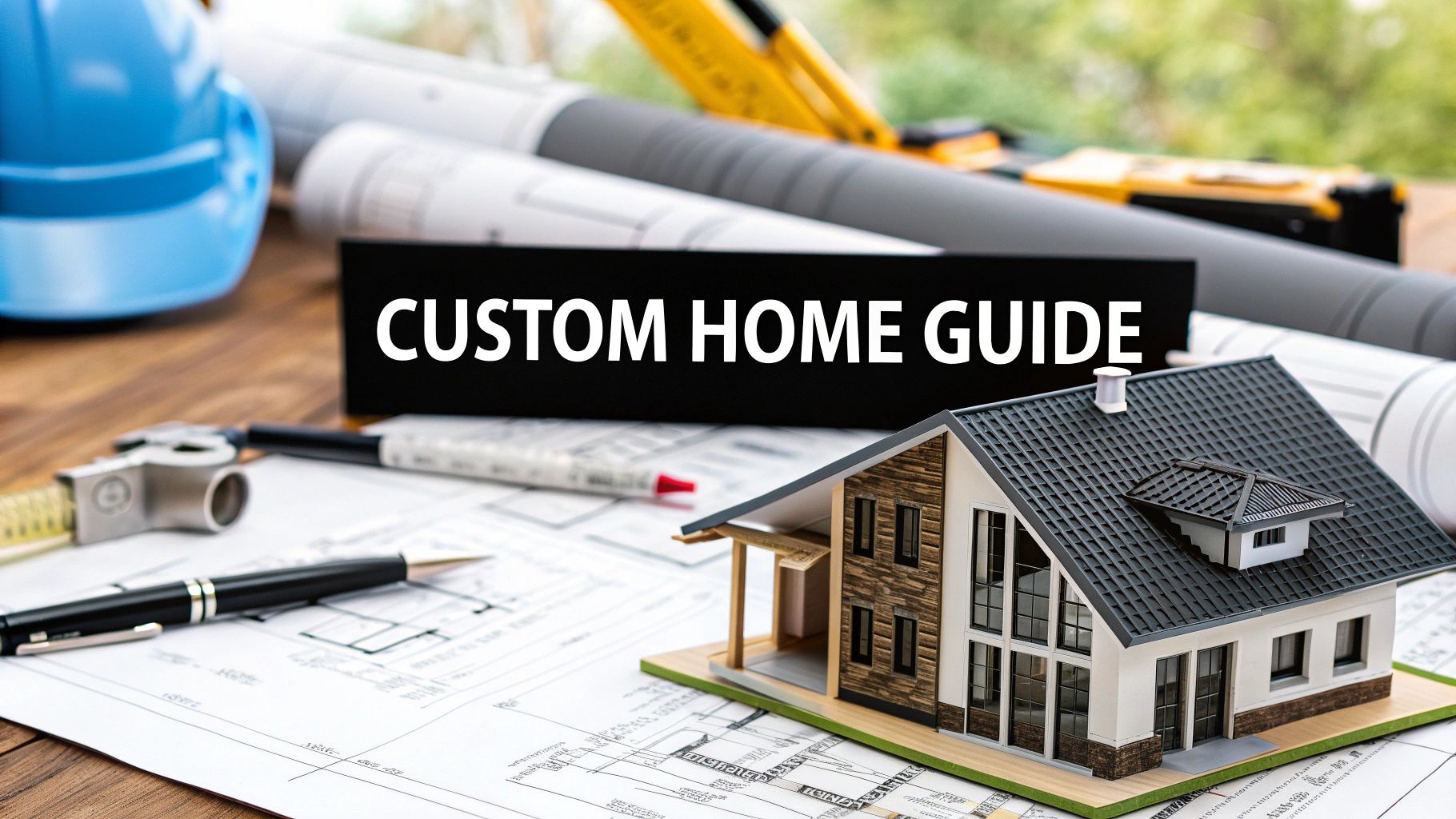
So, you’re ready to build a custom home. It’s an exciting journey, one that takes your unique vision and turns it into a real, physical sanctuary. Here in Southwest Florida, building a custom home means more than just creating a beautiful space—it's about engineering a fortress that can handle our specific climate and weather, a key focus in the custom home industry today.
This guide will walk you through the critical steps of the custom home building process, from the initial daydreaming phase all the way to understanding the financial side of things, with a special focus on building in Florida.
Starting Your Custom Home Building Journey in Florida
Building a custom home in a place like Cape Coral or Fort Myers is a huge investment, not just in property, but in a specific way of life. This initial phase is, without a doubt, the most important. The choices you make right now will set the tone for the entire project. This is where your dreams start to bump up against the realities of land, budgets, and design in the Southwest Florida market.
Before you even think about hiring a builder or scrolling through floor plans, the real first step is to define your vision. And I don’t just mean creating a Pinterest board. This is about taking a serious look at how you and your family actually live.
Think about your daily routines. Consider your long-term needs. What are the absolute must-haves versus the “nice-to-haves”? Getting this clarity from the get-go is the single best way to avoid expensive changes and regrets down the road.
Understanding the Initial Steps
The journey really kicks off with a few key actions that will form the foundation of your project. This planning stage, where you map everything out from your vision to a preliminary budget, is what makes the difference between a smooth process and a stressful one.
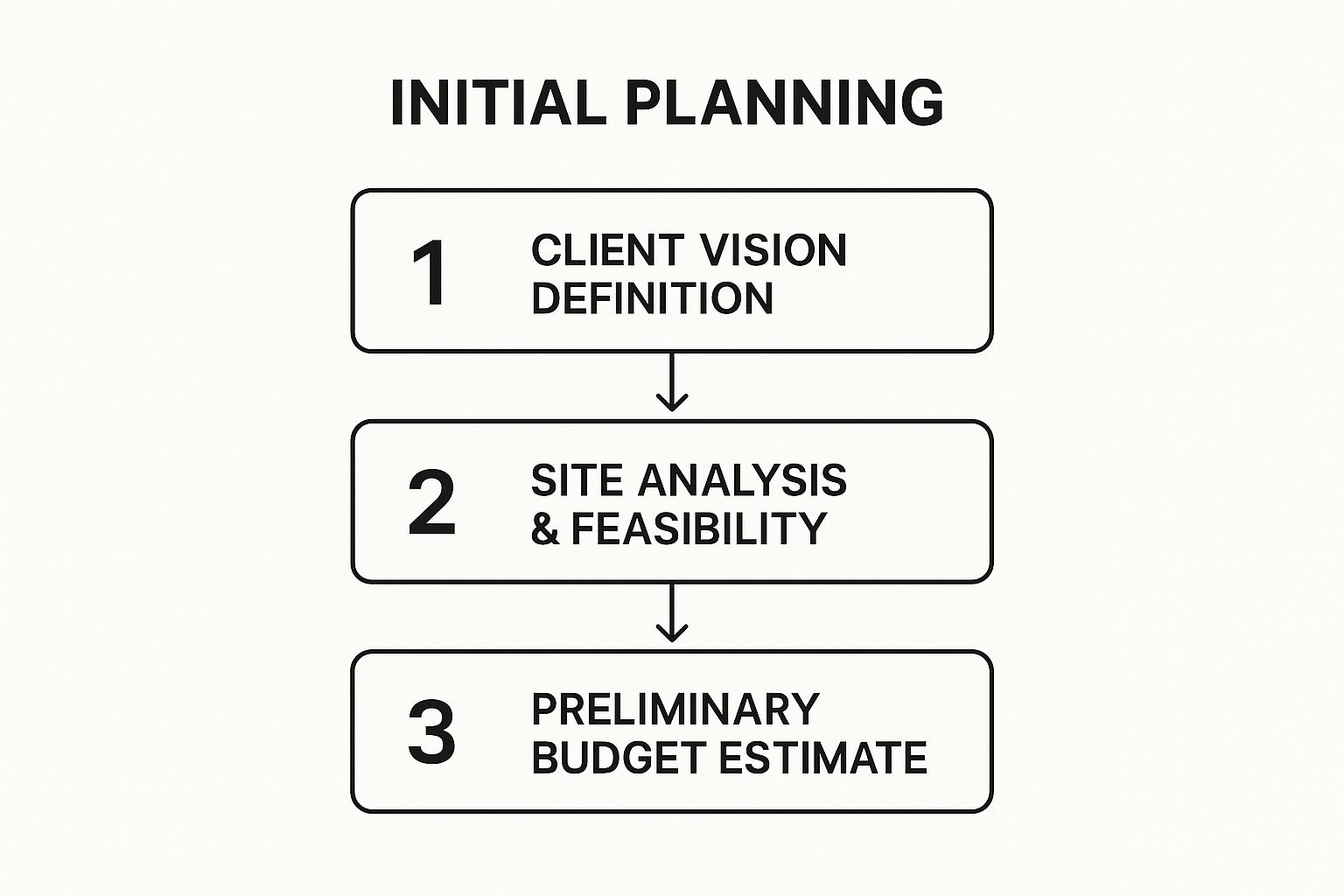
As you can see, each step logically flows into the next. This ensures your vision, your property, and your budget are all in sync before you make any major financial commitments. From property deeds to final permits, there’s a mountain of paperwork. Staying organized is key. For some great pointers, check out these expert tips on real estate document management.
To give you a clearer picture, let's break down the major phases of the custom home building process.
Key Milestones in Your Custom Home Build
| Phase | Primary Goal | Typical Timeline |
|---|---|---|
| 1. Pre-Construction | Define vision, set budget, select team, and finalize design. | 2-6 Months |
| 2. Permitting & Site Prep | Secure all necessary permits and prepare the land for building. | 1-3 Months |
| 3. Construction | Build the home from foundation to finishes. | 9-18 Months |
| 4. Post-Construction | Conduct final walkthrough, address punch list, and move in. | 1-2 Months |
This table provides a high-level roadmap, but remember that every custom project is unique and timelines can vary based on local conditions in Florida.
Market Realities and Financial Planning
You also need to have a handle on the current market. Recent news affecting building in Florida, such as shifts in insurance costs and updated building codes, can influence project expenses. The custom home building process isn't as swayed by interest rate cycles as other parts of the housing market, but it is more sensitive to things like stock market performance and shifts in household wealth.
Even when things feel uncertain, the custom market has proven to be incredibly resilient. It consistently maintains an 18% share of all single-family housing starts, which really speaks to its stability.
A successful build starts with the right partnership. Your builder should be more than a contractor; they are your guide, advocate, and the expert who brings your vision to life while navigating the unique demands of Florida construction.
This early stage is also when you start putting your team together. Choosing the right partners is absolutely fundamental to your project's success. For a closer look at this crucial relationship, take a moment to read our guide on the best reasons for you to work with a custom home builder. It’s a decision that will shape every other part of your build.
Assembling Your Dream Team And Budget
Once you have a good sense of what you want, it's time to get down to the brass tacks. This is where the vision for your custom home starts to become something tangible. We’re talking about putting together your expert team and locking in a realistic budget—the two pillars that will hold up your entire project. This is the point where dreams meet dollars and cents, a make-or-break moment for any successful build here in Southwest Florida.
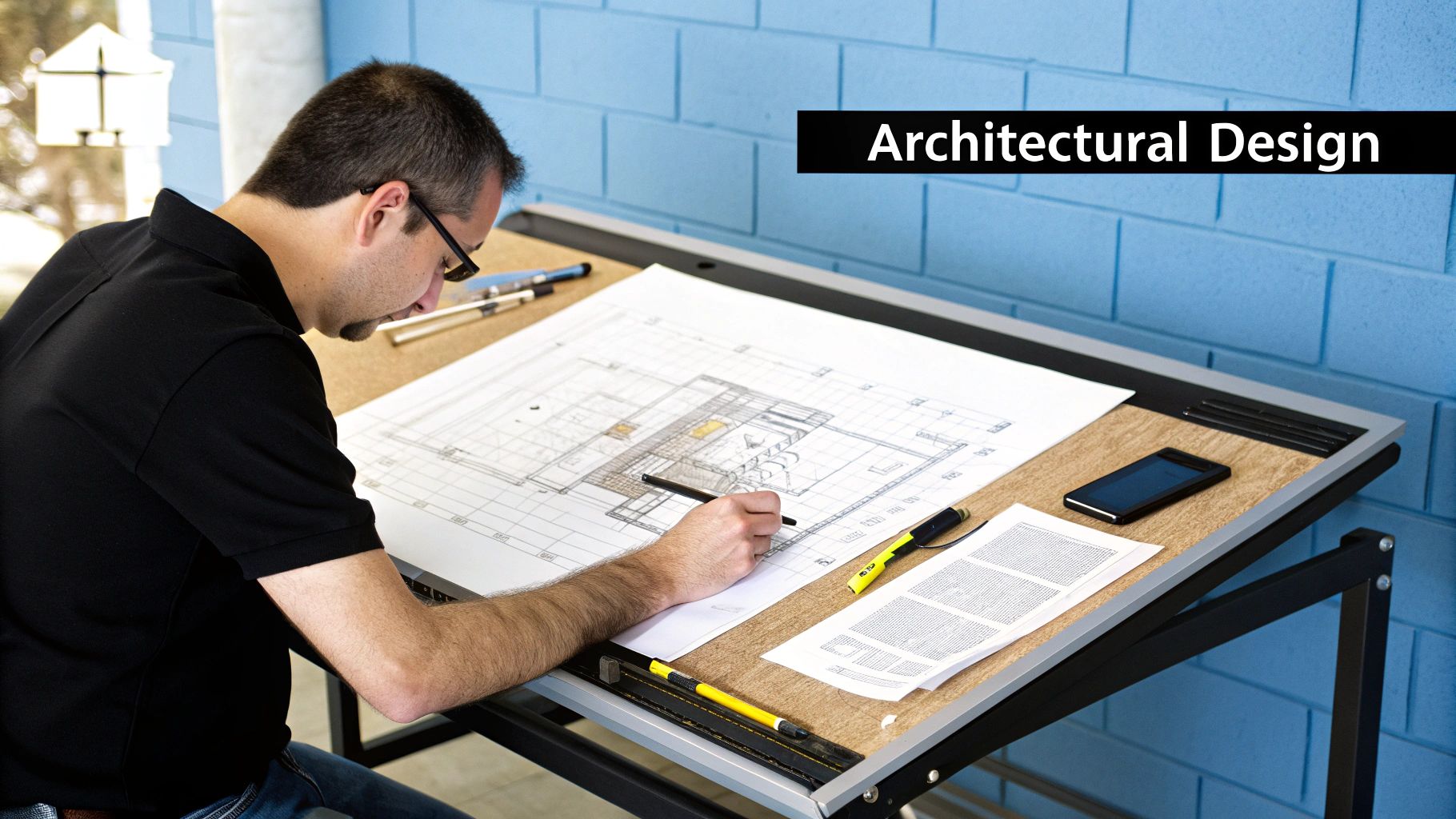
Honestly, the biggest mistake I see homeowners make is getting impatient right here. They'll have a Pinterest board bursting with gorgeous ideas but haven't taken the time to translate those photos into a functional floor plan or a detailed budget. Your builder is an expert in construction, not a mind reader. The clearer you can be, the smoother the process will be and the happier you'll be with the final home.
Crafting a Realistic Florida Budget
A budget for a custom home in places like Cape Coral or Fort Myers isn't just one big number. It's a living, breathing document that has to account for all the unique costs of building in our corner of the world, including factors like property elevation and hurricane impact features. With material prices that can change and supply chains that sometimes get tricky, solid planning is your best friend.
A truly comprehensive budget breaks everything down into line items. You need to account for every potential cost:
- Land Acquisition Costs: The price of the lot itself.
- Design and Engineering Fees: What you'll pay your architect and engineers for resilient design.
- Permitting and Impact Fees: The non-negotiable costs required by local government, which can be affected by new regulations.
- Construction Costs: This is the big one—all labor and materials, including specialized hurricane-rated products.
- Landscaping and Exterior Work: Everything outside the walls, from your driveway to your sod.
- A Healthy Contingency Fund: You absolutely must set aside 10-15% of your total construction cost for the unexpected. Trust me, it will get used.
As you start pulling these numbers together, a tool like a Construction Material Cost Predictor can be a huge help. It gives you a reality check based on current market data, which can save you from major sticker shock down the road.
Selecting Your Builder: The Cornerstone of Success
I can't overstate this: choosing your builder is the most important decision you will make in this entire process. This relationship is so much more than contracts and blueprints. It’s built on trust, clear communication, and a shared vision for your home. Here in Southwest Florida, you don’t just need a builder who gets your style; you need someone with deep, firsthand experience in our specific building codes, elevation requirements, and hurricane-resilient construction methods.
When you're vetting potential builders, you have to dig deep. Don't just flip through their portfolio. Ask for references and actually call them. Talk to past clients. Ask tough questions about how they handle real-world challenges, like material shortages or storm delays—things that are just part of building in Florida.
The relationship with your builder is the foundation of your entire project. Look for a partner who is transparent, communicates proactively, and has an impeccable reputation for quality and integrity.
A great builder will walk you through different contract options, like fixed-price versus cost-plus, and explain the pros and cons of each for our local market. At the end of the day, the chemistry has to feel right. You'll be relying on this person and their team for months, so a strong, positive working relationship is absolutely essential.
To get an even more detailed look at this critical phase, check out our guide on the fundamentals of building a custom home. It will give you more context to make these foundational decisions with total confidence.
Designing for the Florida Lifestyle and Climate
Building a custom home in Southwest Florida is a special kind of challenge. It’s a dance between creating a beautiful, open-air retreat and engineering a fortress that can stand up to Mother Nature. This isn't just about picking out tile and countertops; it’s about making smart, long-term decisions that protect your family and your investment.
The latest new design features are all about erasing the line between inside and out. Expansive lanais, fully loaded summer kitchens, and pocketing glass doors that vanish into the walls are no longer luxury add-ons—they’re what people expect. These features create that seamless flow that makes living in Florida so incredible.
But what really sets a quality custom home apart is what you can't see. It's the commitment to building beyond the bare minimum code requirements to make sure your home is ready for anything. This is a non-negotiable part of the custom home building process for any reputable builder in Florida.
Integrating Hurricane Resilience and Modern Features
In Florida, preparing for hurricane season isn't just a good idea; it's baked into every part of the building process. While the building codes are tough, real peace of mind comes from knowing your home exceeds them. This means taking a layered approach to both the structure itself and how it functions during and after a storm when the power goes out.
We focus on a few key structural areas:
- Impact-Resistant Windows and Doors: These are your front line of defense. They have to withstand incredible wind pressure and protect your home from flying debris, a primary hurricane impact feature.
- Reinforced Roofing Systems: This goes way beyond just the shingles. We're talking about superior underlayment, stronger attachments for the sheathing, and often hip roof designs, which are aerodynamically better at handling high winds than gable roofs.
- Property Elevation: This might be the single most important factor. Building your home's finished floor well above the required Base Flood Elevation (BFE) is absolutely critical for avoiding flood damage from storm surge, which is a major threat in coastal spots like Cape Coral and Fort Myers.
Beyond the bones of the house, a key new builder trend is ensuring continuity of life during a power outage. A whole-home generator, usually powered by a large, buried propane tank, ensures your AC, lights, and refrigerator keep running no matter what's happening with the grid during storms. This feature has become a near-standard expectation in the luxury custom home industry.
A great Florida home has to be a paradox. It needs to feel open and breezy to embrace the sunshine, yet be strong enough to seal up tight against a hurricane. True quality is achieving both without compromise.
Making Smart Choices for Safety and Value
The demand for new construction often follows the wider real estate market. For instance, recent data from the U.S. Census Bureau showed a big jump in single-family housing starts nationally, largely because there just aren't enough existing homes for sale. This trend is a huge advantage for the custom home market. Buyers can sidestep the bidding wars on resale homes and build something that perfectly fits their life. You can learn more about these national construction trends and how they trickle down to local markets like ours.
This puts even more importance on the design phase, since you're creating a major asset from scratch. Every decision—from the type of impact window to the height of the foundation—affects your home's safety, your insurance premiums, and its value down the road.
Here's a look at how standard code-minimum features stack up against the upgrades we recommend for true resilience.
Essential vs. Upgraded Hurricane Resiliency Features
When you're building in a hurricane zone, "code minimum" is just the starting point. For genuine peace of mind and long-term protection, investing in enhanced features is one of the smartest decisions you can make. The table below breaks down the difference between what's required and what we recommend for a truly resilient home.
| Feature | Standard Protection (Code Minimum) | Enhanced Protection (Recommended Upgrade) |
|---|---|---|
| Windows/Doors | Basic wind-rated shutters or impact glass. | High-performance impact glass with stronger frames and advanced sealing systems. |
| Roofing | Standard asphalt shingles with code-approved nailing patterns. | A durable metal roof with a peel-and-stick secondary water barrier for superior leak protection. |
| Garage Door | A basic hurricane-rated door that meets minimum wind load. | A high wind-load rated door with heavy-duty reinforcement and bracing. |
| Power | The house is pre-wired for a small, portable generator. | A fully integrated whole-home generator with an automatic transfer switch and a large, buried propane tank for storm security. |
Ultimately, choosing these upgrades isn't just about surviving a storm; it's about safeguarding your investment and ensuring your home remains a safe, comfortable sanctuary.
At the end of the day, designing for the Florida climate means you have to plan for the worst while building for the absolute best. Integrating these thoughtful, resilient features ensures your custom home isn't just beautiful—it's a safe haven you and your family can enjoy for many years to come.
From Blueprint to Reality: Navigating Construction and Site Management
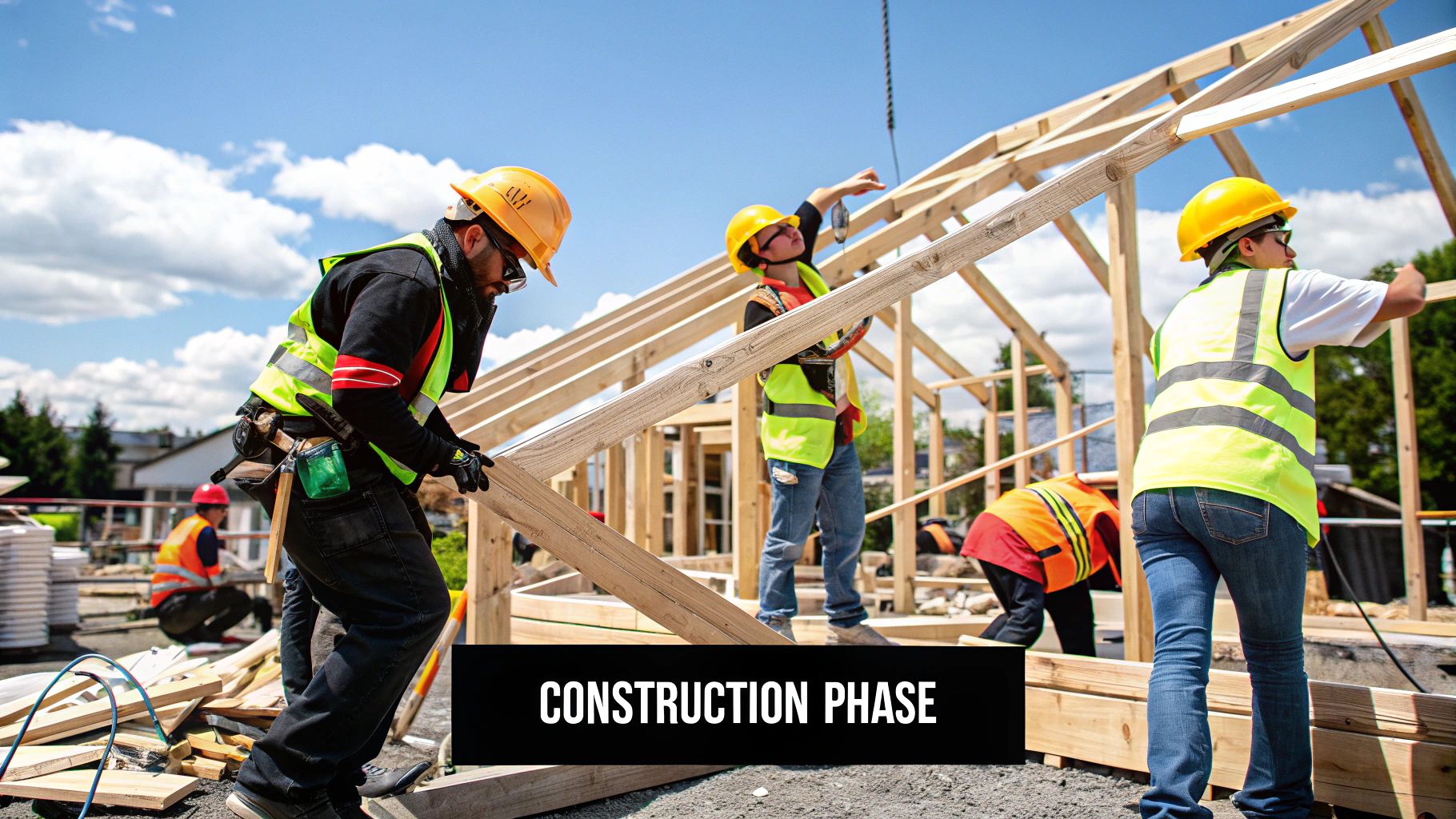
After all the planning and paperwork, this is where the real fun begins. With your permits in hand, the quiet phase of dreaming gives way to the hum and buzz of construction. This is the moment your vision finally starts taking shape, rising right out of the ground.
Watching the process unfold is incredible, but understanding what’s happening empowers you to be a truly engaged partner in the build. It’s less of a mystery and more of a beautifully orchestrated dance.
The first real, tangible sign of progress is site preparation. We start by clearing the lot and grading the land—a critical step to ensure water flows away from your home, not toward it. Then, we stake out the precise footprint of your new house. It doesn't look like much at first, but it's the exact outline of your future.
Shortly after, you'll see the foundation being formed and poured. This is a massive milestone. In Southwest Florida, this is also when we lock in the final elevation, a crucial detail for flood mitigation that we manage with absolute precision. Once that concrete cures, everything else can begin.
Keeping the Build on Schedule
With a solid foundation in place, the pace really picks up. You'll be amazed at how quickly the framing—the skeleton of your home—goes up. Suddenly, you can walk through what will be your living room or kitchen and get a true feel for the space. It’s an exciting time.
Once the framing is complete, our focus shifts inside to the "mechanicals." This is all the essential stuff you won't see later: the HVAC ductwork, the plumbing lines, and the web of electrical wiring that will power your life.
Your site supervisor is your best friend during this phase. While it’s great to visit the site and see the progress, these visits should always be scheduled with us. Construction sites have a lot of moving parts, and we need to ensure everyone stays safe and the tradespeople can work without disruption. We're your go-to source for clear, straightforward updates on all the complex work happening each day.
Here are a few of the big milestones you’ll want to watch for:
- Foundation Pour: The literal base of your home is officially in the ground, set at the proper elevation.
- Framing Complete: The structure is fully assembled, and you can finally visualize the layout.
- "Dry-In": This is a huge step, especially in Florida. The roof, windows, and exterior sheathing are installed, protecting the interior from sun and rain.
- Rough-In Inspections: Before any drywall goes up, city or county inspectors will come out to approve all the electrical, plumbing, and mechanical work. It’s a vital quality-control checkpoint.
Tackling Common Construction Hurdles
Even the best-planned custom build will face a few challenges. It’s just the nature of the beast. Here in Florida, our biggest variable is almost always the weather. An unexpected afternoon thunderstorm can easily cause delays, especially during the early stages like site prep, foundation work, and framing. A good builder always anticipates this and bakes some buffer days right into the schedule.
Change orders are another common speed bump. These are any formal requests to change the original plans, and they almost always add both cost and time to the project. While some changes are unavoidable, the best way to minimize them is to be as decisive as possible during the design phase.
A change order isn’t just a simple swap. It can create a domino effect, messing with material orders, subcontractor schedules, and even requiring new permit amendments. Solid, thoughtful planning upfront is your best defense against these costly and time-sucking modifications.
Your part in keeping things moving is making timely decisions on selections. Things like tile, fixtures, lighting, and paint colors might seem far off, but a delay in your choice can bring progress to a screeching halt on-site. By working closely with your builder and staying ahead of these decisions, you can confidently watch your custom Florida home come to life, one piece at a time.
From Punch List to Handing Over the Keys
The finish line is in sight, and it’s one of the most exciting moments of the entire home-building journey. But these final steps are absolutely critical for making sure you’re completely satisfied with your new Florida home for years to come. This phase is all about locking in the quality, handling the final paperwork, and officially handing you the keys.
It all starts with what we call the punch list. This isn't just a quick walkthrough. It's a meticulous, room-by-room inspection with your builder to create a complete list of every single item that needs a final touch-up or fix before we hand over the keys.
Perfecting the Final Details
The punch list walkthrough is your chance to get granular. Don't feel like you're being picky—this is your home, and our goal is to get it perfect for you. We’ll look at everything from the consistency of the paint finishes and the neatness of tile grout to the perfect alignment of your custom cabinet doors.
During this final check, you should:
- Test every fixture: Turn on all the faucets, flush the toilets, and flip every single light switch.
- Operate all appliances: We recommend running a quick, empty cycle on the dishwasher and washing machine.
- Check doors and windows: Make sure they open, close, and lock smoothly without sticking.
- Inspect surfaces: Look closely for any scuffs on walls, scratches on floors, or tiny imperfections where countertops meet the wall.
This isn't a test; it's a team effort to ensure every detail meets the Sinclair Custom Home standard. We then work through that list methodically to guarantee your home is absolutely flawless on move-in day.
The punch list isn’t about finding fault. Think of it as the final quality control step—a shared promise between you and your builder to ensure the finished home is a perfect match for the vision you’ve worked so hard to create.
The Official Handover
Once every item on the punch list has been checked off, we handle the final paperwork. This is the part where your house officially becomes your home.
One of the most crucial documents you'll get is the Certificate of Occupancy (CO), which is issued by the local building department. This certificate is the official green light, confirming your home is safe, up to all building codes, and legal to live in. You can't move in without it.
Along with the CO, we'll give you a complete homeowner’s manual. This isn't just a stack of paper; it’s your go-to guide for the future. It contains all the warranties for your appliances, detailed information on your systems (like HVAC and plumbing), and the contact info for the trusted subcontractors who helped build your home.
Even with economic shifts, the demand for truly personalized homes holds strong. In the first quarter, there were 34,000 custom home starts across the country, a number that held steady from the year before. This news confirms the stability of the custom home industry. With a total of 181,000 starts over the last four quarters, it’s clear that people continue to value building a home that’s uniquely theirs. For more on this trend, you can explore the latest custom building market data.
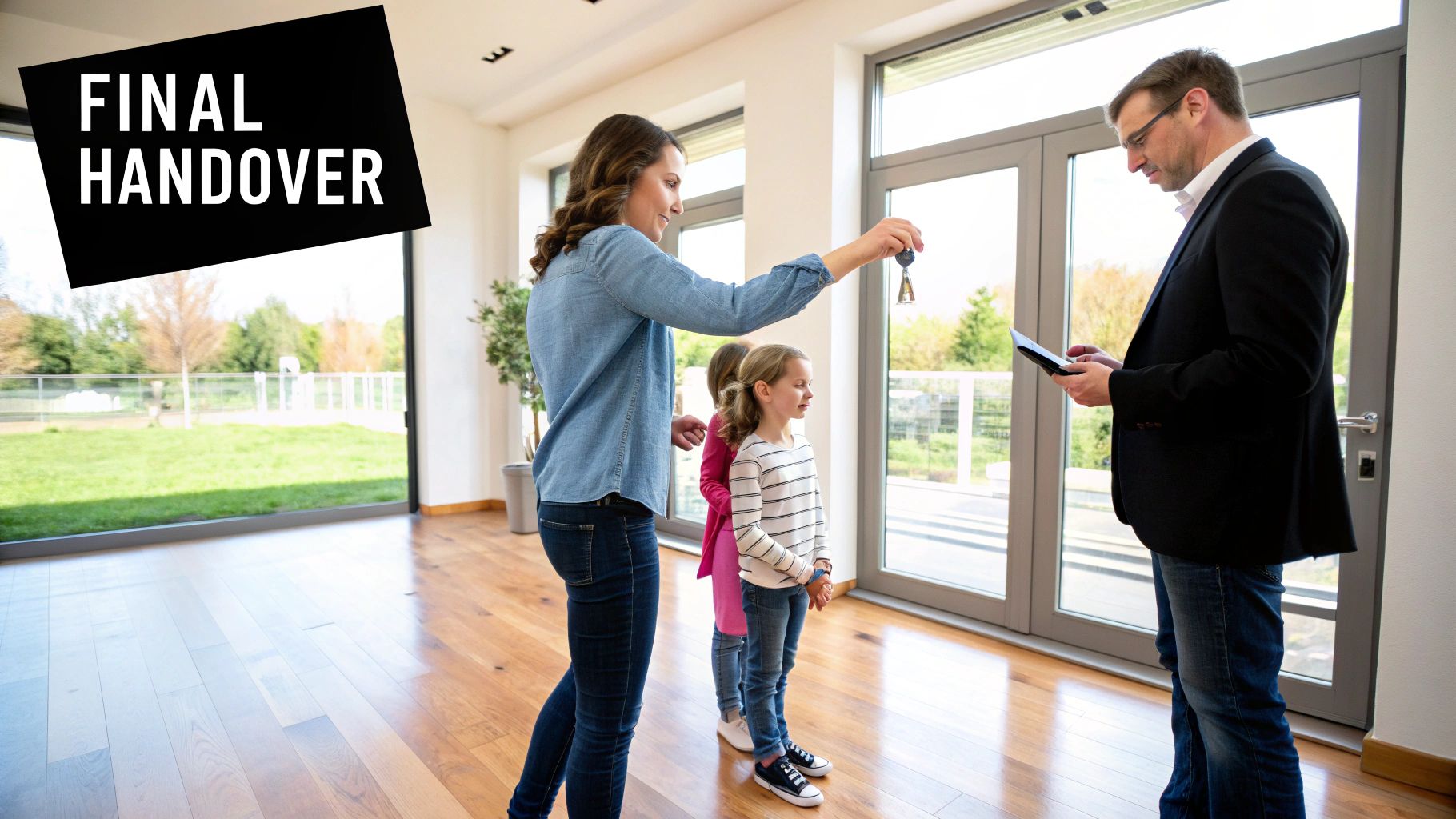
Finally, with all the i's dotted and t's crossed, we get to the best part: handing you the keys. It’s more than just a simple exchange; it’s a celebration of the incredible journey we’ve taken together and the start of a wonderful new chapter for you and your family.
Common Questions About Building a Custom Home
Starting the custom home building process naturally kicks up a lot of questions. We get it. Feeling confident and prepared comes from having clear, straightforward answers. So, let's tackle some of the most common things we hear from clients building here in Southwest Florida.
The first question is almost always about the timeline. While every project is different, a good rule of thumb is to expect the entire process—from scribbling initial ideas on a napkin to getting your keys—to take between 12 to 24 months.
This breaks down into roughly 4-8 months for the design and permitting phase, with the actual hands-on construction lasting anywhere from 9 to 16 months. Keep in mind, factors like a complex design, unique challenges with your lot, or the inevitable Florida weather delays can all nudge that schedule. A realistic timeline established with your builder right at the start is absolutely essential.
Navigating Critical Design and Budget Choices
Another big area of concern for homeowners is how to design a home that can stand up to Florida's unique climate. When it comes to hurricane preparedness, simply meeting the minimum building code isn't enough. True peace of mind comes from going above and beyond.
Key new design features should absolutely include:
- High-quality impact-resistant windows and doors to protect your home from wind-borne debris. These are essential hurricane impact features.
- A hip roof design, which is far more aerodynamic and performs better against high winds than a standard gable roof.
- Proper site elevation and drainage to defend against the very real risk of storm surge and flooding, a critical consideration in Southwest Florida.
We also strongly recommend integrating a whole-home generator connected to a large propane tank. Frankly, it's a modern necessity. This ensures you have uninterrupted power for critical systems like air conditioning, refrigeration, and lighting during the outages that almost always follow a major storm. Having a reliable generator during storms is a key part of Florida living.
Managing your budget effectively is just as important. The best approach is detailed, proactive planning from day one. Sit down with your builder to create a line-item budget and—this is critical—set aside a contingency fund of 10-15% of the total construction cost. This fund is your safety net for those "what if" moments, like an unexpected material price hike or a hidden issue on site.
A disciplined approach to change orders is vital. Every alteration, no matter how small it seems, can impact both the budget and the timeline. Finalizing your selections for finishes and fixtures early helps lock in prices and keeps the project on a smooth, predictable path.
The type of contract you choose also plays a big part in managing your budget. A fixed-price contract offers cost certainty but can be less flexible. On the other hand, a cost-plus contract gives you more transparency but carries more risk if costs go up. Many builders in Florida now use a hybrid model to balance the two. It’s crucial to discuss which structure fits your project and your personal comfort level. To help you get ready for that chat, take a look at our list of great questions you should ask a potential custom home builder.
Ready to turn your vision into a stunning, resilient Florida home? The team at Sinclair Custom Homes Inc is here to guide you through every step of the process with integrity and unmatched quality. Contact us today to start your journey.
Article created using Outrank