
Choosing the right custom home builder in Florida isn't just a big decision—it's the decision that will shape your entire experience and the final home you live in. The best builders in Florida are more than just contractors. They’re partners who bring a deep, almost intuitive, understanding of our state's unique building environment, a non-negotiable commitment to quality, and a process you can actually see and understand.
Your Guide to Selecting the Best Florida Home Builder
Finding the right builder involves looking past the glossy brochures and floor plans. It’s a detailed evaluation of their real-world experience, especially within the custom home world where personalization and quality are everything. This is a massive investment of your time and money, so learning what separates a great builder from a merely good one is the first, most critical step toward a successful project.
The market is crowded, and it's vital to know the difference between a high-volume production builder and a true custom home specialist. Production builders work on scale, offering a limited menu of designs with few, if any, modifications. Their game is speed and volume.
Custom builders, on the other hand, offer a completely different experience. We collaborate directly with you, designing and constructing a one-of-a-kind home that’s built for your lifestyle and tailored to the unique character of your land. You can get a better sense of what this journey looks like by exploring our guide on building a custom home.
Understanding the Builder Landscape
Let's look at the bigger picture for a moment. The custom home industry is shaped by both national trends and local Florida realities. Nationally, the home building industry has seen major consolidation, but discerning clients in places like Southwest Florida are increasingly seeking out specialized custom builders who prioritize genuine craftsmanship and resilience over sheer volume.
When you're comparing your options, it's helpful to see the differences side-by-side.
Production Builder vs Custom Home Builder Characteristics
| Characteristic | Production Builder | Custom Home Builder |
|---|---|---|
| Design Flexibility | Limited floor plans, few modifications | Fully custom designs, high flexibility |
| Lot Choice | Builds in their own large communities | Can build on your lot or help you find one |
| Client Involvement | Minimal after initial selections | High level of collaboration throughout |
| Quality & Materials | Standard, bulk-purchased materials | High-end, client-selected materials |
| Primary Focus | Speed and volume | Craftsmanship and personalization |
Ultimately, the choice comes down to what you value most: the efficiency of a pre-set process or the total personalization that comes from a dedicated partnership.
This side-by-side comparison often highlights the key differences you'll encounter in cost, timeline, and overall satisfaction when choosing between builder types.
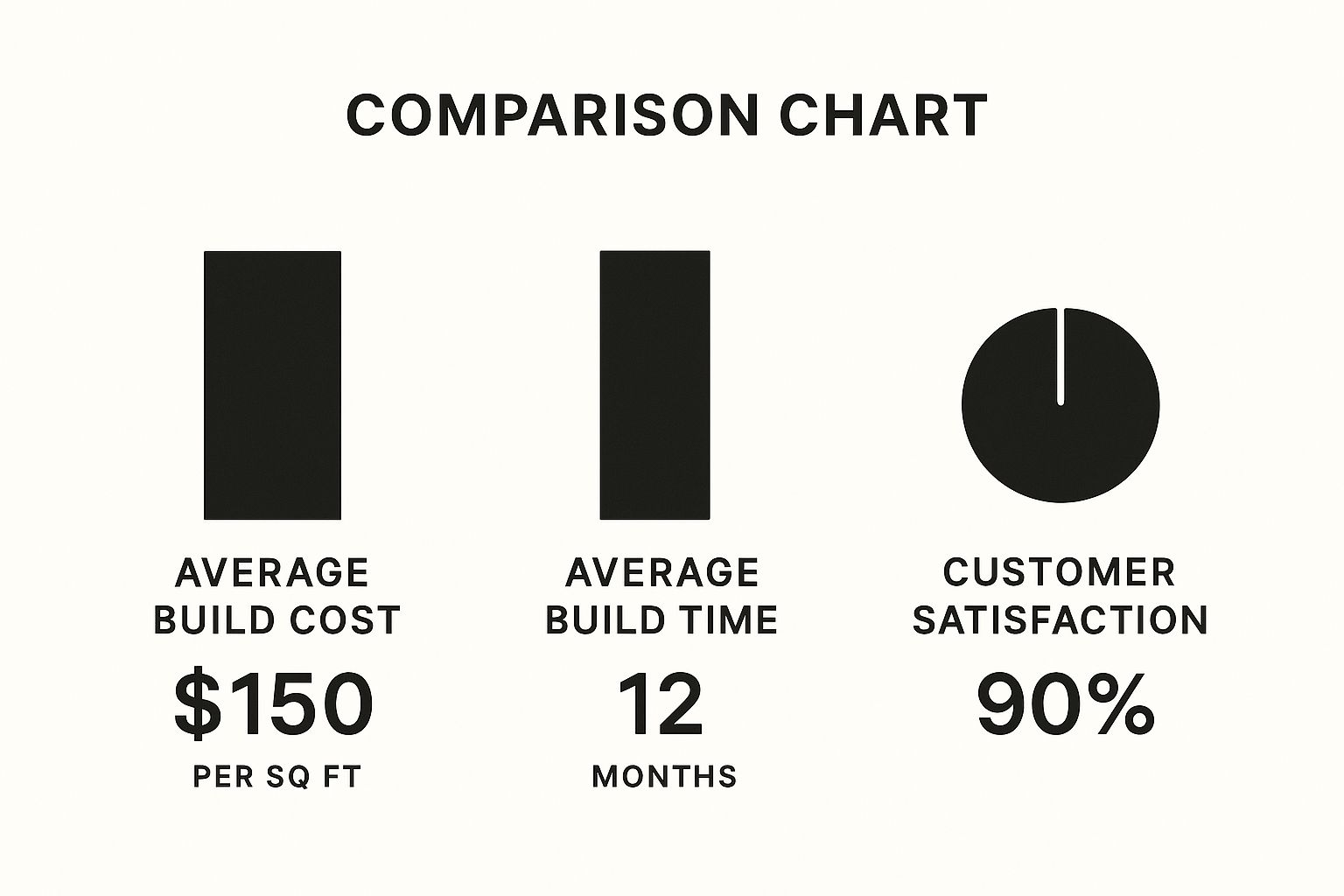
While a fully custom home might take a bit longer to complete, the data—and our own experience—shows it almost always leads to higher satisfaction because the final product is a true reflection of you.
Key Considerations for Your Florida Home
If you’re building here in Southwest Florida, the checklist for choosing a builder gets even more specific. Your partner must be an expert in coastal construction. I can't stress this enough. They need proven, hands-on experience with features that are non-negotiable for keeping your family safe and comfortable, especially in the face of our state's weather challenges.
- Hurricane Resilience: This means more than just checking a box. It’s about installing high-impact windows, engineering a reinforced roofing system, and ensuring the entire structure is designed to stand up to extreme weather.
- Site Elevation: In our low-lying coastal areas, proper elevation is your number one defense against flood risk from storm surges. A good builder knows this is critical and will build well above minimum code requirements, a lesson reinforced by recent storms.
- Emergency Power: A whole-home generator isn't a luxury anymore; it's a necessity in Florida. It provides peace of mind and ensures life can go on even when the power grid is down after a storm.
As you get started, taking the time to understand the key things to consider when building a house will pay dividends. This groundwork will empower you to ask the right questions and vet potential builders with confidence.
Defining Your Vision and Must-Have Features
Before you even think about sitting down with a builder, the most important work happens with you and your family. You need to get crystal clear on what you want your new home to be. This goes way beyond just counting bedrooms and bathrooms; it's about translating your real-life, day-to-day needs—and your dreams—into a tangible plan.
Think of this as creating a "user manual" for your future life. Are you the hosts for every big holiday? Or are your get-togethers more about a few friends grilling by the pool? Your answers will guide a builder toward an open-concept great room or something more traditional and defined. A detailed brief is the single most powerful tool you have. It ensures you get accurate quotes and shows a builder you’re serious.
Articulating Your Florida Lifestyle
Here in Southwest Florida, we live in a place where the line between inside and outside beautifully disappears. One of the biggest shifts I’ve seen in design is the focus on creating these seamless transitional spaces. This often means huge pocketing glass doors that vanish into the walls, opening up to a massive covered lanai with an outdoor kitchen, cozy seating, and a resort-style pool.
A custom home should be a direct reflection of how you live. It’s not just about square footage, but about creating spaces that enhance your daily routines and personal passions, from a gourmet kitchen for a home chef to a quiet study for focused work.
As you build out your vision, take some time to explore the elements of a luxury home and see what resonates with you. This can help you nail down specific details you love, whether it's chef-grade appliances, custom cabinetry, or a spa-like master bath with a big freestanding tub and a walk-through shower.
Essential Features for Storm Readiness and Resilience
Living in paradise means being prepared. For any custom home in Florida, resilience isn’t a luxury—it’s baked into the very foundation of the design. A builder's expertise in this area is what separates the merely good from the truly great. Your "must-have" list has to include these critical safety features.
Hurricane Impact Features
This is about so much more than just having "hurricane windows." A quality builder should be able to talk specifics with you, like the Design Pressure (DP) ratings for windows and doors. The higher that DP number, the better the product stands up to wind pressure and flying debris. You want to insist on products that not only meet but exceed the local building codes for your home's wind zone.
Site Elevation and Drainage
The news from recent storms has made one thing painfully clear: elevation is everything. A top-tier builder won't just build to the minimum code. They'll perform a detailed site analysis to find the Base Flood Elevation (BFE) and then design your home's foundation to sit well above it. This isn't just a good idea; it's your best defense against storm surge.
Emergency Power Systems
When a major storm hits, power can be out for days, sometimes weeks. A whole-home generator with an automatic transfer switch has become a modern necessity. The moment the power goes out, the system automatically fires up, running everything from your A/C and refrigerators to your lights and security. It provides safety, comfort, and a crucial sense of normalcy.
Prioritizing Your Wants and Needs
Once you have this big, beautiful list of ideas, it's time to get organized. It’s a simple exercise, but it's incredibly powerful for keeping your budget in check. Just create two columns: "Non-Negotiables" and "Wish List."
- Non-Negotiables: These are the features you absolutely cannot live without. This is where all those critical safety and structural items belong—things like your specific hurricane protection, foundation elevation, and the generator we just talked about.
- Wish List: Here’s where the fun stuff goes! These are the features you would love to have if the budget allows, like a high-end wine cellar, a dedicated home theater, or that amazing outdoor fire pit.
Handing a prioritized brief like this to a potential builder gives them an immediate, clear picture of your expectations. It empowers them to give you a far more detailed and accurate proposal right from the start, which means fewer surprises and a much smoother process for everyone.
Vetting Builder Credentials And Local Expertise
Once you have a clear, detailed vision for your home, it's time to find the builder who can actually bring it to life. This is where the real work begins—the careful due diligence that separates the truly great home builders in Florida from the rest. It's more than just looking at websites; it's a deep dive that protects your investment and, ultimately, guarantees a home you'll love.
Let's start with the absolute non-negotiables: licensing and insurance. In Florida, you can easily verify a contractor's license with the Department of Business and Professional Regulation (DBPR). It’s a quick check that confirms they're legally allowed to build here. Just as crucial is asking for their certificates of general liability and workers' compensation insurance. If a builder isn’t adequately covered, you could be on the hook for accidents or damages. It’s a risk you can’t afford to take.
Beyond the official paperwork, look into their reputation. The Better Business Bureau (BBB) can offer a glimpse into how they handle customer issues. And while online reviews are helpful, learn to spot the real stories among the generic one-liners. Look for detailed, balanced feedback that gives you a genuine sense of the client's experience.
Analyzing Portfolios For Southwest Florida Expertise
A builder's portfolio isn't just a gallery of pretty houses; it's their professional resume. When you flip through their past projects, you're not just looking for style—you're looking for proof that they understand how to build in Southwest Florida's unique and demanding environment.
You need to see more than just beautiful designs. You need to see smart, resilient homes. Look for specific features that show they know our climate:
- Robust Hurricane Protection: Is there clear evidence of impact-rated windows, reinforced roof-to-wall connections, and secure entryways?
- Smart Elevation and Site Work: Do their project descriptions mention building above Base Flood Elevation (BFE) or using sophisticated drainage systems to manage our heavy rains?
- Integrated Outdoor Living: Can you see that they truly know how to build lanais, outdoor kitchens, and pool areas that will stand up to the Florida sun and humidity for years to come?
- High-End, Resilient Finishes: Do they choose materials that resist moisture, salt air, and fading? This shows they’re thinking about long-term durability, not just the initial "wow" factor.
This is what separates a generalist from a true local expert.
A builder’s portfolio should answer one crucial question: "Have they successfully and repeatedly built the kind of high-quality, storm-resilient home I want in this specific environment?" If the answer isn't a clear "yes," they may not be the right fit.
The Power Of Asking The Right Questions
After you've narrowed your list down to a few builders with impressive, relevant portfolios, it’s time to talk to their past clients. This is your chance to get the unfiltered truth. A confident builder who does great work will be happy to connect you with their references.
When you get a homeowner on the phone, don’t just ask, "Were you happy?" You need to dig deeper into the process. To really prepare, checking out some great questions you should ask a potential custom home builder will give you a solid framework for these all-important conversations.
Be sure to ask about:
- Communication: How often did you hear from the project manager? Were updates clear and consistent?
- Budget Management: How did they handle change orders or unexpected costs? Was the final bill a surprise?
- Timeline Adherence: Did they stick to the schedule? If there were delays, were they explained clearly and proactively?
- Post-Construction Service: What happened after they handed over the keys? How did the builder address punch-list items or any warranty issues?
This thorough vetting process—checking credentials, scrutinizing local experience, and talking to real clients—is the best way to find a partner you can truly trust. It ensures your builder has the technical skill, integrity, and local knowledge needed to succeed here. When you're evaluating builders, it's also smart to see who they work with; for example, looking into the services designed for builders they use can reveal a lot about their commitment to quality resources and partnerships.
Navigating New Home Construction Trends in Florida
The world of home building in Florida is anything but static. It’s constantly being reshaped by new technology, what homeowners like you expect, and the tough lessons we’ve all learned from past hurricane seasons. Getting a handle on these shifts is critical.
When you sit down with a top-tier builder, these are the topics that will drive the conversation. They’ll influence everything from your home's layout and your monthly utility bills to its ability to stand strong when it matters most.
Right now, the biggest movement we’re seeing is a huge push toward energy efficiency and sustainability. This isn't just about feeling "green"—it's a smart, practical response to rising energy costs and the desire for a home that's both comfortable and more self-reliant. The best builders are leaving basic code requirements in the dust, making advanced, high-performance systems a standard part of their build.
The Rise of High-Performance and Resilient Homes
Think of a modern custom home less like a house and more like a high-performance machine. The goal is to engineer a complete system where every component—from the insulation to the windows to the roof—works together. This creates a living space that’s not just comfortable and efficient, but incredibly durable.
This focus on resilience isn't happening in a vacuum. After what Southwest Florida has been through, homeowners are more knowledgeable and demanding than ever. You’ve seen what fails in a storm and what holds up, and you rightfully expect your builder to be an expert in building a home that can weather the worst.
Here’s what this looks like in practice:
- Advanced Insulation: We’re moving far beyond basic insulation. Top builders use materials like open-cell or closed-cell spray foam. This creates a nearly airtight seal that dramatically cuts down on heat seeping in, which means lower cooling costs—a huge deal in our climate.
- Solar-Ready Designs: Many new custom homes are now built "solar-ready." This is a forward-thinking move where the roof is already structured to support solar panels and the necessary wiring is run to the electrical panel. It makes adding solar in the future a simple, far less expensive upgrade.
- Smart Home Automation: Integrated systems controlling your lights, thermostat, security, and appliances are becoming the new normal. This isn’t just for convenience. A smart thermostat learns your family's patterns and optimizes your HVAC system, translating directly into real savings on your power bill.
The ultimate goal for a new Florida home is resilience. That means engineering for hurricane-force winds, preparing for outages with reliable generators, and elevating the structure to protect against storm surge. Your home should be your family's fortress.
Market Forces and Evolving Building Codes
Beyond the physical trends, powerful market forces are shaping how we build in Florida. It's smart to be aware of these as you plan, because they have a direct impact on your budget and timeline. Rising material costs and ongoing labor shortages are a reality, which makes a builder's project management skills and their relationships with suppliers more critical than ever.
In the wake of major storms like Hurricane Ian, there’s been a renewed push to strengthen building codes. For example, there are active discussions about increasing freeboard requirements—that’s the height your home’s floor must be above the predicted flood level. A proactive, experienced builder doesn’t just build to meet today’s code; they build with an eye on the future to ensure your home remains safe and insurable for decades.
This challenging environment is also sparking incredible growth. The Florida home building market is on track to grow from USD 25 billion to USD 40 billion by 2034. This boom is fueled by our state's population growth and a powerful demand for sustainable, storm-ready homes.
You can read more about these market projections on Reports and Data. This growth highlights why choosing a builder who truly understands these trends isn't just a preference—it's essential for a successful build.
Comparing Bids and Finalizing Your Contract
This is it—the moment the proposals from builders start rolling in. It’s an exciting time, but it's also where you need to put on your analyst hat. A lot of homeowners make the mistake of just glancing at the bottom-line price and picking the lowest number. I've seen it time and time again, and it can lead to some serious financial headaches later on.
To do a real "apples-to-apples" comparison, you have to dig much deeper. You need to understand what each builder has put into their bid and, just as importantly, what they’ve conveniently left out.
A shockingly low bid might seem like a win, but it’s often a huge red flag. Be especially cautious with vague "allowances." These are just placeholder budgets for things like your light fixtures, countertops, or flooring. If a builder uses unrealistically low allowances, you’re guaranteed to go over budget once you start picking out the real materials. That "low" bid suddenly isn't so low anymore. It's a common tactic, so you have to scrutinize every single line item.
Decoding Contract Types and Finding Transparency
As you sift through the proposals, you'll mainly see two kinds of contracts: fixed-price and cost-plus. Knowing the difference is crucial for protecting your investment and making sure everyone is on the same page. Each has its pros and cons, and one might fit your comfort level better than the other.
- Fixed-Price Contract: This gives you the most predictability. The builder agrees to build your home for one set price. It’s straightforward, but it means every single decision—down to the exact faucet model and grout color—has to be made before you sign. Any changes will require a formal change order, adding both cost and time.
- Cost-Plus Contract: This approach is all about transparency. You pay the actual cost of labor and materials, plus a pre-agreed fee or percentage for the builder's overhead and profit. It offers a lot more flexibility to make decisions as you go, but the final price isn't locked in. This kind of relationship requires immense trust and a builder who operates with a completely open-book policy.
The best builders in Florida operate with total transparency, no matter which contract type you use. They should hand you a detailed, line-item budget that spells out every single anticipated cost—from permits and site work to the specific materials they plan to use.
Essential Clauses Your Contract Must Include
The contract is the single most important document in this entire journey. It's a legally binding agreement that protects you and your builder. Don't even think about signing anything until you're 100% comfortable and have had a professional, ideally a lawyer, review it.
Make sure your contract has rock-solid language covering these key areas:
- Detailed Scope and Specs: The contract must list all materials, including brand names, model numbers, and finishes. Vague phrases like "standard fixtures" are a no-go.
- A Clear Payment Schedule: Payments should be tied to specific, verifiable construction milestones—like the foundation being poured or framing being completed—not just random dates on a calendar.
- The Change Order Process: It needs to explicitly state how you can request changes and how they will be priced, approved, and documented in writing. No handshake deals.
- A Realistic Timeline: This means a firm start date, a projected completion date, and clauses that address what happens in case of delays from weather or supply chain issues.
- Comprehensive Warranty Information: A quality builder provides a detailed written warranty covering their workmanship and materials for a set period. You need to understand what's covered, for how long, and the process for making a claim.
Finalizing your agreement is the last big step before your dream home starts taking shape. For a little more guidance on keeping things on track, you can review some key tips you should follow to build a successful custom home. Taking the time to lock in a solid, transparent contract is the best investment you'll make in the whole process.
Answering Your Top Questions About Building a Custom Home in Florida
Building a custom home, especially in a unique place like Southwest Florida, naturally comes with a lot of questions. Getting clear, honest answers is the first step toward building with confidence. Over the years, we've heard just about everything, but a few key questions always come up.
What Hurricane-Resistant Features Actually Matter?
Here in Florida, hurricane readiness isn't an add-on; it's baked into the very DNA of a well-built home. The best builders don't just check boxes on a code sheet—they integrate a complete system of resilience from the ground up.
A few things should be non-negotiable:
- Impact Windows and Doors: These need to meet—and we always aim to exceed—the strict wind zone codes for your specific lot. High Design Pressure (DP) ratings are what you're looking for.
- A Fortified Roof: This is about so much more than shingles. A truly resilient roof involves hurricane straps that anchor the trusses to the walls, a secondary water barrier for added protection, and top-of-the-line fasteners.
- A Whole-Home Generator: After a big storm, power outages are almost a guarantee. Having a generator with an automatic transfer switch means your A/C, refrigerator, and security systems keep running, which is crucial for safety and comfort.
- Smart Site Work: Your first line of defense against flooding isn't a sandbag; it's your builder's plan for site elevation and drainage. This is where an experienced builder's foresight really pays off.
How Do I Realistically Budget for a Custom Build?
A solid budget starts with a transparent, line-item estimate from your builder. If you're handed a vague, lump-sum number, that's a major red flag.
The single most important practice for any new homeowner is setting up a contingency fund of 10-15% of the total construction cost. This isn't "extra" money; it's a smart safety net for tackling unforeseen site issues or for when you decide you simply must have that upgraded appliance package without derailing the whole budget.
To keep things on track, insist on regular budget meetings with your builder to see how actual spending is lining up with the estimate. Making your decisions on finishes, fixtures, and materials early on is one of the best ways to avoid the costly change orders that can blow up a budget later. We use project management software to give our clients a real-time window into the financials, and you should expect that level of transparency.
What’s the Difference Between My Flood Zone and My Site Elevation?
This is a fantastic and incredibly important question for anyone building near the coast. Think of it this way: a flood zone is a broad geographical area defined by FEMA. It tells you your general risk of flooding and dictates your flood insurance requirements.
Site elevation, on the other hand, is specific to your property. It's the actual height of your land—and more importantly, your home's finished floor—in relation to sea level.
While your flood zone is a set classification, a great builder can actively control your site elevation. By strategically bringing in fill dirt, we can physically lift your home's foundation well above the minimum required height, giving you far superior protection from storm surge.
This proactive approach is a true hallmark of an expert Florida builder.
How Long Does a Custom Home Build Take in Florida?
From our first design meeting to the day we hand you the keys, a custom home build in Florida typically takes anywhere from 12 to 24 months. It's a complex process, but it generally breaks down like this:
- Design & Engineering: 3 to 6 months
- Permitting: 2 to 4 months (this can vary a lot between counties)
- Construction: 9 to 15 months
Of course, things like hurricane season or supply chain hiccups for specialty materials can sometimes stretch the schedule. A builder you can trust will give you a realistic timeline from the start and, more importantly, communicate openly and honestly about any potential delays.
Embarking on your custom home journey is a major life event, and Sinclair Custom Homes Inc is dedicated to making it a successful and rewarding one. With a foundation of honesty, integrity, and unparalleled quality, Matthew Sinclair ensures every home is an over-engineered masterpiece built to last. Explore how our commitment to craftsmanship can bring your vision to life by visiting us at https://sinclaircustomhome.com.
Article created using Outrank