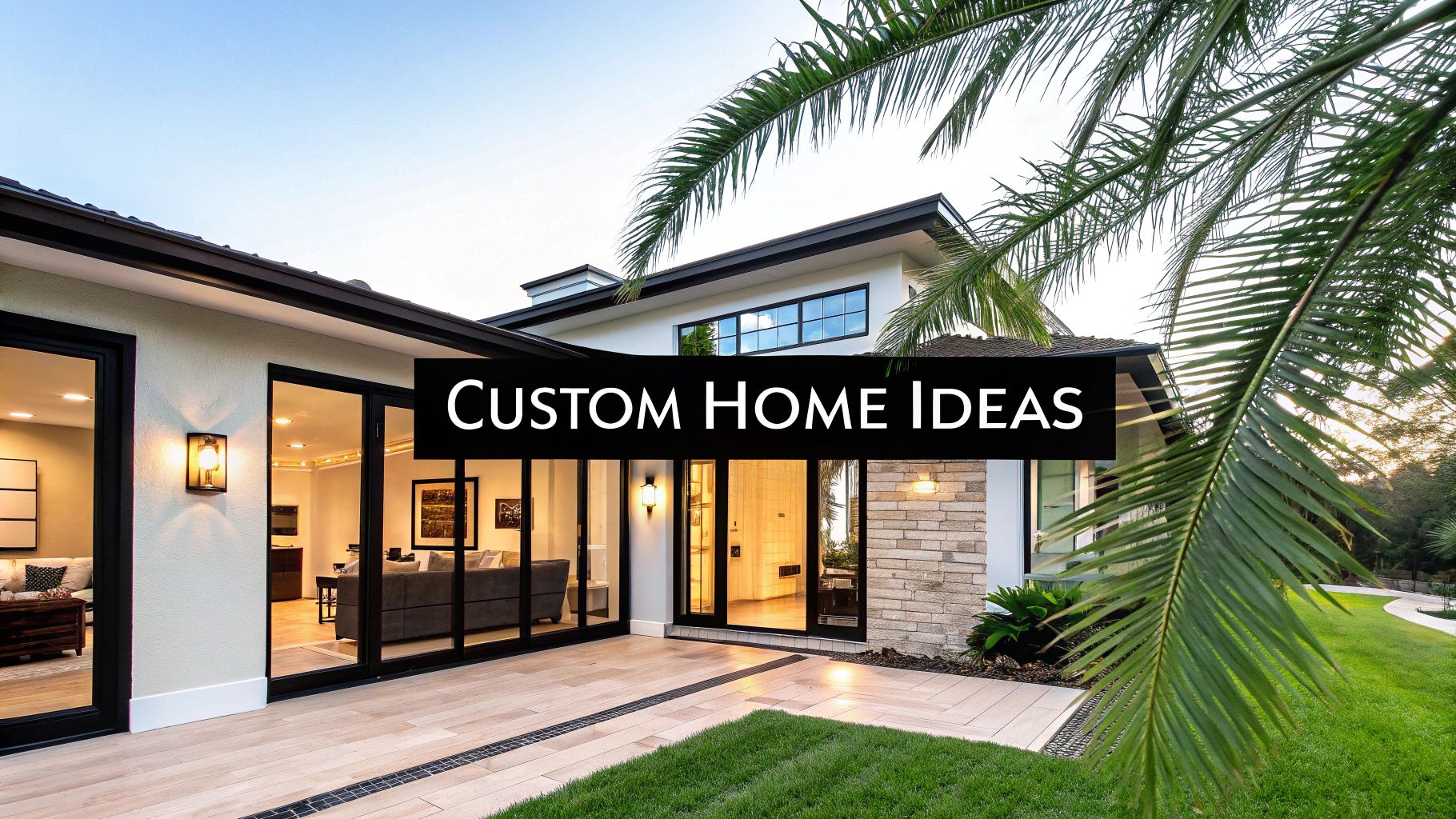
Building a custom home in Southwest Florida presents a unique opportunity to create a sanctuary perfectly tailored to your lifestyle. In a region known for its stunning beauty and powerful weather, however, thoughtful design is paramount. Today’s custom home isn’t just about aesthetics; it’s about resilience, efficiency, and seamless indoor-outdoor living. Following recent hurricane seasons and shifts in building news, homebuyers are increasingly seeking innovative features that address the specific challenges and opportunities of the Sunshine State, from hurricane-resistant construction and higher elevation to energy-independent power solutions.
This guide explores the latest trends and essential custom home design ideas, focusing on what matters most for new construction in areas like Cape Coral, Fort Myers, and Fort Myers Beach. We'll delve into architectural styles, storm-ready features, and luxury amenities that define modern Florida living. Moving beyond generic advice, we will examine specific, actionable concepts that blend structural integrity with sophisticated design, reflecting the latest in the custom home industry. For visionary homeowners, these ideas serve as a practical blueprint for creating a home that is not only beautiful but also intelligently engineered for the local climate.
From multi-functional rooms that adapt to your needs to outdoor extensions that embrace the coastal environment, this curated collection provides a roadmap for your new build. You will find practical tips for implementing smart home integration, sustainable materials, and luxury master suites. Each concept is designed to inspire a home that offers both comfort and peace of mind, built to withstand the elements and enhance your quality of life for years to come.
1. The Florida Fortress: Prioritizing Hurricane Impact Features
In Southwest Florida, from Fort Myers to Cape Coral, building a home isn't just about aesthetics; it's about creating a sanctuary that can withstand the region's formidable weather. The "Florida Fortress" concept is a cornerstone of modern custom home design ideas, focusing on integrating advanced hurricane-impact features from the initial blueprints. This approach goes far beyond meeting minimum building codes, ensuring your home provides superior protection against high-velocity winds, relentless rain, and potential storm surge—a critical consideration given recent news and storm activity affecting the state.
This proactive strategy involves a holistic system where every component works together. Rather than just adding storm shutters, the entire building envelope is engineered for resilience. This new builder trend ensures peace of mind, protects your family, and safeguards your most significant investment against Florida's intense hurricane season.
How to Implement a Fortress Design
Building a true Florida Fortress requires a specialized, defense-in-depth strategy. It’s a key trend new home builders are adopting, especially after recent storms highlighted vulnerabilities in older construction and led to updated building regulations across Florida.
- Elevate Your Foundation: In coastal Southwest Florida, elevation is your first line of defense against storm surge. Discuss raising the finished floor elevation significantly above FEMA requirements with your builder. This is one of the most impactful new design features for long-term resilience.
- Structural Reinforcement: Discuss specific reinforcement techniques with your builder. Sinclair Custom Homes, for example, often uses steel-reinforced, poured concrete block construction and advanced truss-to-wall connections to create a unified, durable structure.
- Integrated Safe Rooms: Incorporate a reinforced safe room or storm shelter directly into your floor plan. These spaces are built with fortified walls and ceilings, providing a secure refuge during the most severe weather events.
Actionable Tips for Maximum Protection
When discussing your project, focus on these critical details:
Key Insight: The strength of your home is determined by its weakest point. A comprehensive approach, from elevation to the roofline, ensures there are no weak points.
- Verify DP Ratings: Check the Design Pressure (DP) rating of all windows and doors. A higher DP rating indicates greater resistance to wind pressure and wind-driven debris.
- Choose a Hip Roof: This roof design, with slopes on all four sides, is inherently more aerodynamic and performs significantly better against high winds than a traditional gable roof.
- Fortify the Garage Door: Often the largest and most vulnerable opening, your garage door must have a high impact and wind-load rating. Reinforcing it is one of the most crucial custom home design ideas for storm safety.
2. Smart Home Integration: The Connected Florida Lifestyle
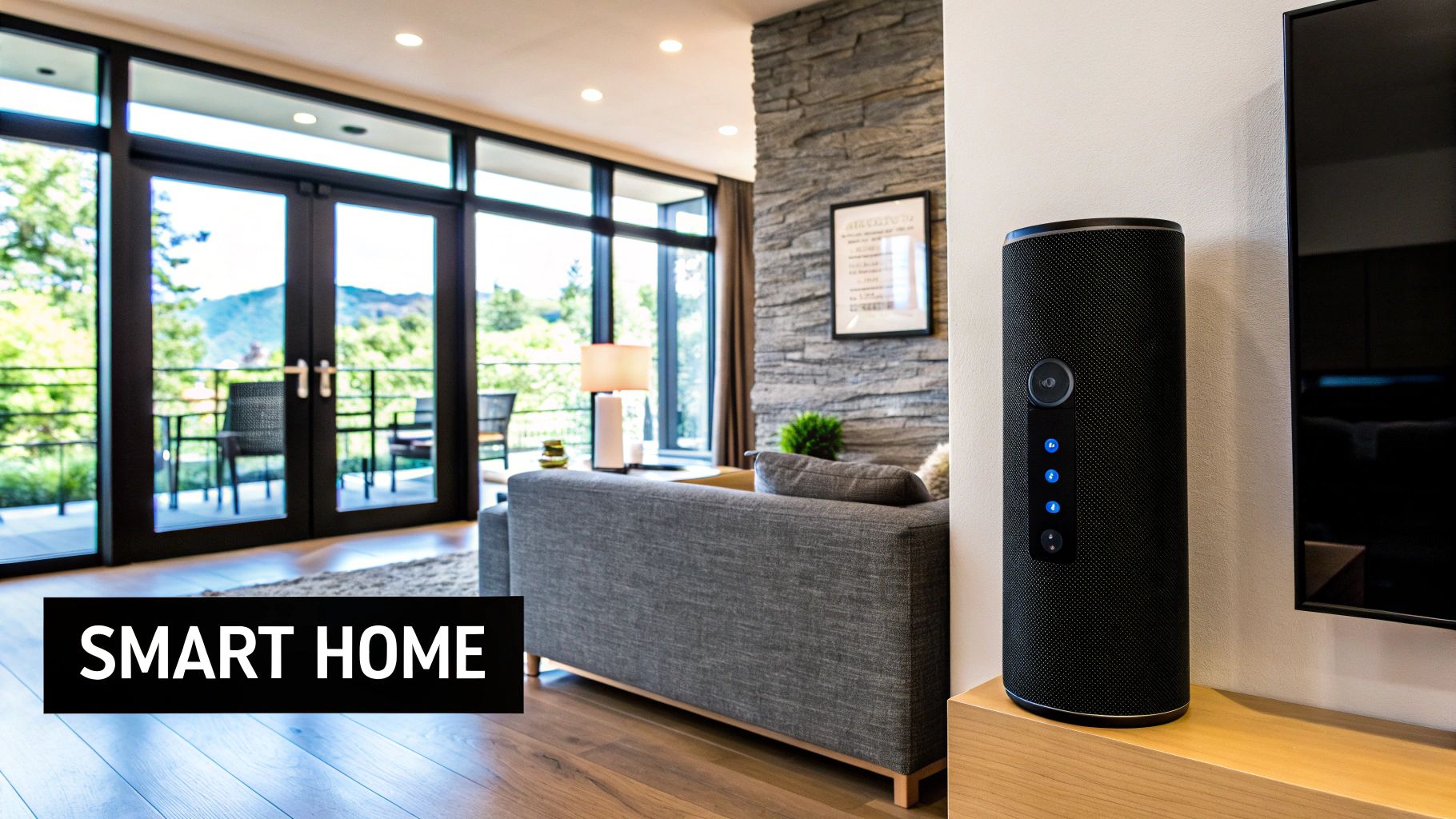
True luxury in a custom home is no longer just about high-end finishes; it’s about seamless convenience and intelligent control. Smart home integration is a foundational element of modern custom home design ideas, transforming your residence into a responsive, efficient, and secure environment. This concept involves weaving a network of connected devices into the very fabric of your home, allowing you to manage everything from lighting and climate to security and entertainment from a central hub or a simple app.
In Southwest Florida, this technology offers more than just convenience. It provides an added layer of control and peace of mind, especially when managing your property during storm season or while away. A fully integrated home built by a forward-thinking builder like Sinclair Custom Homes ensures that all systems work in harmony, creating a truly effortless living experience.
How to Implement Smart Home Integration
A successful smart home begins with a solid plan, not just a collection of gadgets. Integrating these systems during the initial design and construction phases is far more effective and cleaner than retrofitting them later. This proactive planning is a hallmark of the Sinclair Custom Homes building process.
- Plan a Robust Network Foundation: Your smart home is only as reliable as its network. Specify a commercial-grade Wi-Fi system with multiple access points to ensure strong, uninterrupted coverage throughout your entire home and outdoor living areas.
- Choose a Centralized Ecosystem: Select a primary automation system like Control4 or Crestron to act as the "brain" of your home. This ensures all your subsystems, from automated shades to your security cameras, communicate flawlessly without compatibility issues.
- Wire for the Future: Even if you don't install every feature immediately, run structured wiring (like Cat6a and fiber optic cables) to key locations. This future-proofs your home for emerging technologies without needing to open up walls later.
Actionable Tips for a Smarter Home
When discussing your vision, focus on creating a system that enhances your specific lifestyle.
Key Insight: The best smart home technology is invisible and intuitive. In the custom home industry, this means integrating systems that anticipate your needs and simplify daily routines, especially during critical weather events.
- Integrate Power Management: In Florida, power continuity is crucial. Integrate your smart home with a whole-house generator and an automatic transfer switch. During storms, a generator is not a luxury; it's a necessity for running A/C, refrigerators, and medical equipment. Learning about the best whole house generators is a key step.
- Prioritize Smart Climate Control: Use smart thermostats and integrated sensors that learn your habits to optimize your HVAC system. This dramatically improves energy efficiency and comfort in the Florida heat.
- Automate Lighting Scenes: Program lighting "scenes" for different activities, like "Entertain," "Movie Night," or "Away," to adjust multiple lights and shades with a single touch or voice command.
3. Multi-Functional Rooms: Maximizing Space and Lifestyle Flexibility
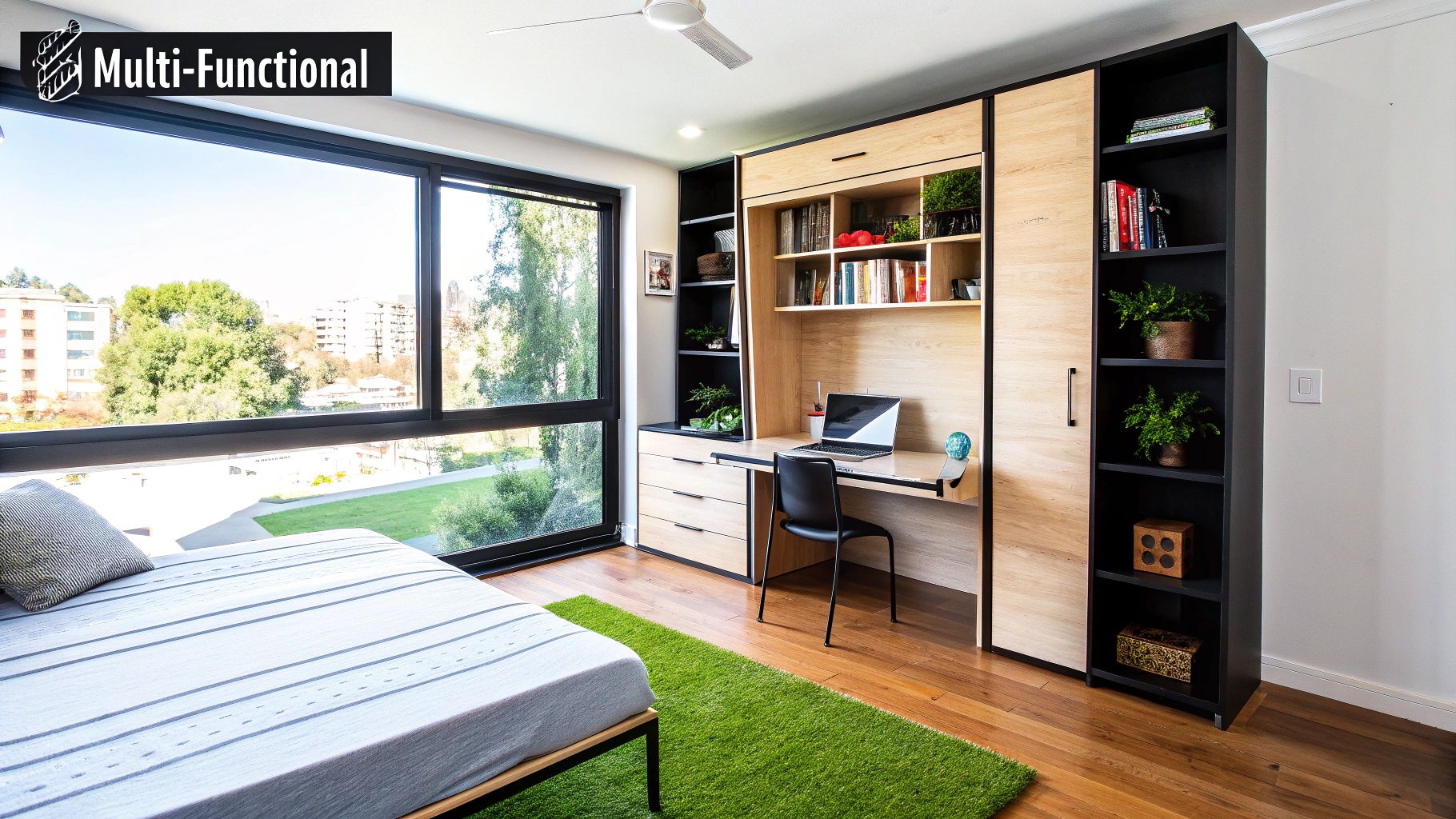
As land values rise and lifestyles become more dynamic in Southwest Florida, homeowners are looking for ways to maximize every square foot. Multi-functional rooms are one of the most intelligent custom home design ideas for achieving this, creating spaces that adapt to your family’s needs throughout the day. This design philosophy moves beyond single-purpose rooms, using flexible layouts, convertible furniture, and integrated storage to serve multiple roles seamlessly.
This approach is about smart design, not just saving space. A well-executed multi-functional room enhances a home's utility, making it feel larger and more responsive to the owner’s lifestyle. It allows a home office to transform into a welcoming guest suite or a dining room to double as a productive homework hub, all without compromising on style or comfort.
How to Implement a Multi-Functional Design
Creating a truly adaptable space requires careful planning from the very beginning of the design phase. It's a popular trend new home builders are embracing to meet the demand for homes that work as hard as their owners.
- Design for Transformation: Work with your builder to plan the room’s layout for multiple scenarios. This includes strategic placement of outlets, lighting, and architectural features to support each function.
- Integrate Custom Built-Ins: Custom cabinetry is a cornerstone of this concept. Sinclair Custom Homes often designs built-in desks that fold away or Murphy beds concealed within elegant wall units, ensuring a polished look in any configuration.
- Zone the Space: Use architectural cues like varied ceiling heights, distinct flooring materials, or partial walls to delineate different functional zones within a single room, creating a sense of order and purpose.
Actionable Tips for Maximum Utility
When planning your custom home, focus on these details to perfect your flexible spaces:
Key Insight: A successful multi-functional room feels intentional in every configuration. Thoughtful design ensures the space never looks like a temporary compromise, but rather a clever, permanent solution.
- Invest in Quality Mechanisms: For elements like Murphy beds or convertible tables, choose high-quality hardware. Smooth, reliable operation is critical for a space you will transform frequently.
- Plan for Versatile Lighting: Install a layered lighting scheme. This might include bright overhead light for work, dimmable ambient light for relaxation, and focused task lighting for reading or hobbies.
- Prioritize Smart Storage: Designate specific, easily accessible storage for each of the room's functions. This prevents clutter and makes transitioning between uses quick and effortless.
4. Outdoor Living Extensions: Blurring the Lines Between Inside and Out
In Southwest Florida’s year-round temperate climate, the line between indoor and outdoor living is beautifully blurred. Outdoor living extensions are one of the most sought-after custom home design ideas, creating functional, luxurious exterior areas that serve as a seamless continuation of the home's interior. This goes beyond a simple patio; it involves designing covered lanais, full-scale outdoor kitchens, and resort-style lounging areas that are integral to the home's floor plan and lifestyle.
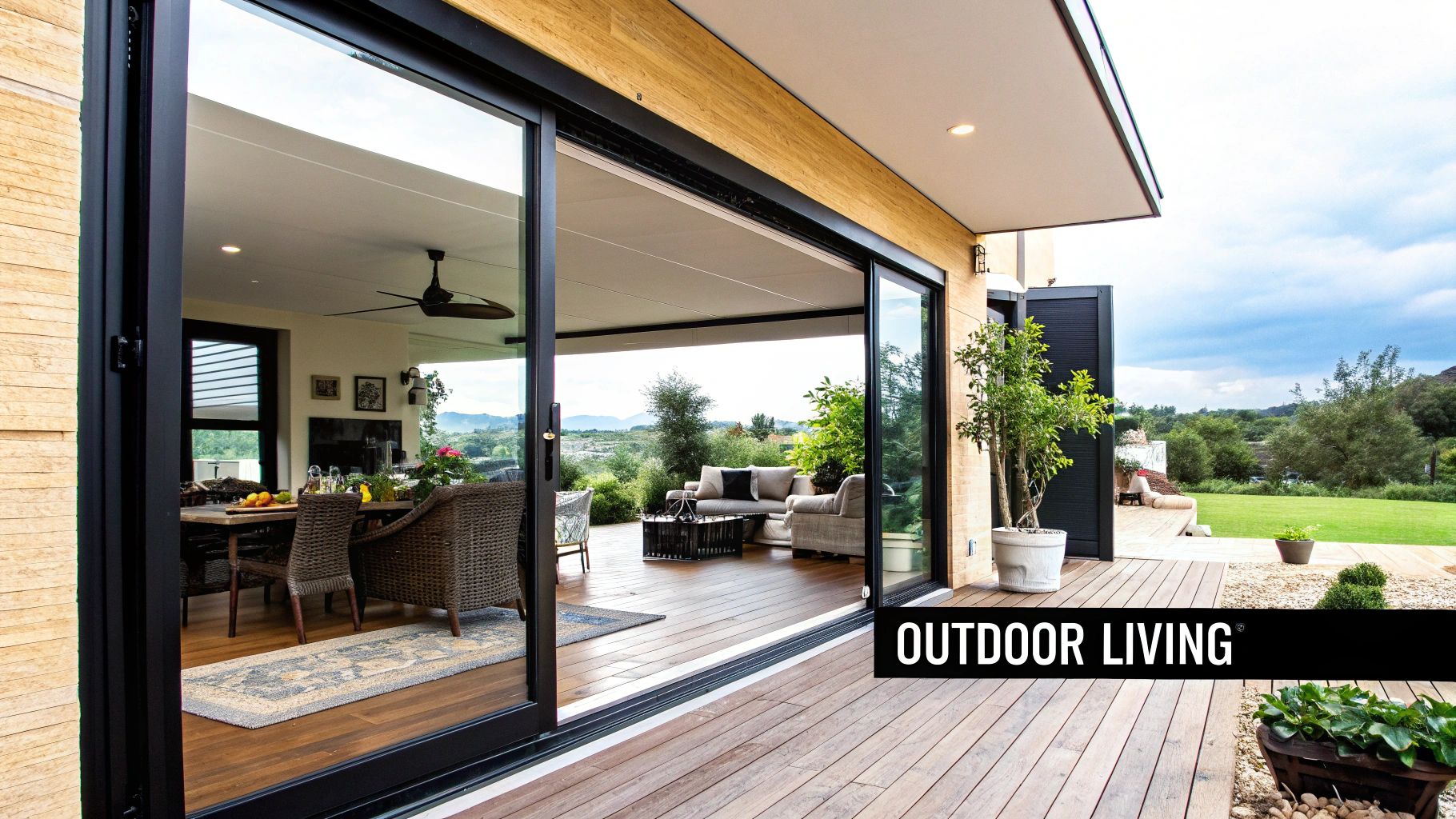
This approach maximizes your property's potential and enhances your daily life, offering a perfect setting for everything from quiet morning coffees to large family gatherings. For new home builders in areas like Fort Myers and Cape Coral, integrating these spaces from the start ensures they are structurally sound, aesthetically cohesive, and equipped with the necessary infrastructure for comfort and convenience.
How to Implement Outdoor Living Extensions
Creating a true outdoor extension requires thoughtful planning that considers Florida’s unique environment, including intense sun, humidity, and insects. It’s a signature feature of modern Florida living, blending luxury with practicality.
- Integrate with the Floor Plan: Work with your builder to design the outdoor space as part of the home's core layout. Use large, pocketing sliding glass doors or disappearing glass walls to create an unobstructed flow from the great room or kitchen directly to the lanai.
- Establish Functional Zones: Plan distinct areas for different activities. This could include a dining zone with a large table, a cooking zone with a built-in grill and countertops, and a lounging zone with comfortable, weather-resistant sofas and a fire pit.
- Emphasize Durability and Weather Resistance: Given the coastal environment, material selection is critical. Sinclair Custom Homes often recommends marine-grade polymers for cabinetry, durable composite decking like Trex, and high-performance, weather-resistant fabrics for furniture.
Actionable Tips for a Flawless Outdoor Space
When designing your outdoor oasis, focus on details that elevate comfort and usability.
Key Insight: A successful outdoor living extension feels like a natural room of the house, not an afterthought. Proper planning for utilities, lighting, and climate control is what makes the space truly livable.
- Install Retractable Screens: Motorized, retractable screens are a game-changer in Florida, providing instant protection from insects without sacrificing views or airflow.
- Plan for Utilities Early: Ensure your design includes dedicated electrical circuits for lighting, fans, and appliances, as well as plumbing for sinks and gas lines for grills or fire features. This is far more cost-effective than retrofitting later.
- Consider Privacy and Landscaping: Use strategic landscaping, privacy walls, or decorative screens to create a secluded retreat. The right plants can also help buffer noise and add to the tropical ambiance.
5. Sustainable and Eco-Friendly Features
Sustainable custom home design is more than just a trend; it's a responsible approach to building in Southwest Florida’s unique environment. This philosophy integrates environmentally conscious materials, energy-efficient systems, and resource conservation to reduce a home's ecological footprint. For homeowners in areas like Fort Myers and Cape Coral, this translates into healthier living spaces, lower utility bills, and homes that are thoughtfully aligned with the surrounding ecosystem.
This forward-thinking strategy involves designing a home that works with nature, not against it. By prioritizing sustainability from the start, you can create a high-performance home that is not only beautiful and comfortable but also resilient and cost-effective over its entire lifespan. These modern custom home design ideas prove that luxury and environmental responsibility can go hand-in-hand.
How to Implement Sustainable Design
Achieving a truly sustainable home requires a holistic plan that considers energy, water, materials, and indoor air quality. It’s a key focus for new home builders aiming to create properties that offer long-term value beyond just aesthetics.
- Adopt a "Fabric-First" Approach: Before considering solar panels, focus on creating a high-performance building envelope. This means specifying superior insulation, advanced air sealing techniques, and high-efficiency windows and doors to minimize energy loss.
- Integrate Renewable Energy and Storage: Plan for solar panel installation from the initial design phase, including orienting the roof for optimal sun exposure. A critical new design feature is pairing solar with battery storage systems. This provides energy independence and power continuity, which is essential during outages caused by storms in Florida.
- Utilize Water-Wise Landscaping: Design your outdoor spaces using native, drought-tolerant plants (xeriscaping) to dramatically reduce irrigation needs. Combine this with rainwater harvesting systems to capture and reuse a valuable natural resource for landscaping.
Actionable Tips for Maximum Sustainability
When discussing green features with your builder, concentrate on these impactful details.
Key Insight: True sustainability is a system, not a single product. The greatest benefits come from integrating multiple eco-friendly features that work together to enhance performance and reduce environmental impact.
- Prioritize Indoor Air Quality (IAQ): Use low- or no-VOC (Volatile Organic Compound) paints, finishes, and building materials to create a healthier indoor environment for your family.
- Choose Regionally Sourced Materials: Select building materials that are manufactured or harvested locally, such as specific types of Florida limestone or reclaimed wood. This reduces transportation emissions and supports the local economy.
- Plan for Future Tech: Even if you don't install an electric vehicle (EV) charger immediately, have your builder run the necessary conduit to the garage. This makes future upgrades simpler and more affordable. Planning is a crucial step in our building a custom home checklist.
6. Luxury Master Suite Retreats
Today’s custom homes are redefining the master bedroom, transforming it from a simple sleeping space into an expansive, hotel-inspired personal sanctuary. The "Luxury Master Suite Retreat" is one of the most sought-after custom home design ideas, especially in the upscale Florida market. It’s about creating a comprehensive private wing that integrates spa-like bathrooms, boutique-style walk-in closets, and serene sitting areas to offer a daily escape within your own home.
This concept, popularized by high-end resorts and featured in celebrity homes, elevates daily living by providing zones for relaxation, rejuvenation, and organization. Rather than just a room, it’s an experience-driven space meticulously designed to cater to comfort, privacy, and personal wellness, making it a cornerstone of modern luxury construction.
How to Implement a Retreat Design
Designing a true master retreat goes beyond simply enlarging the room; it requires thoughtful spatial planning and a focus on high-end amenities. This trend reflects a desire for homes that support a restorative lifestyle.
- Create Distinct Zones: Work with your designer to lay out separate, functional areas within the suite. This could include a reading nook with built-in shelving, a morning bar with a coffee station and mini-fridge, and a private sitting area oriented toward the best view.
- His-and-Her En-Suites: For ultimate luxury and convenience, consider dual master bathrooms or separate, dedicated vanity and water closet areas. This popular feature in Sinclair Custom Homes projects eliminates countertop clutter and provides personalized space.
- Seamless Indoor-Outdoor Connection: In Southwest Florida, a key feature is providing the master suite with its own private access to a lanai, balcony, or garden. This enhances the resort feel and allows you to enjoy the coastal environment directly from your personal space.
Actionable Tips for Maximum Luxury
When planning your retreat, prioritize these details for a truly elevated experience:
Key Insight: A successful master retreat isn’t just about size; it's about creating a seamless flow between spaces that cater to every part of your personal routine, from waking up to winding down.
- Prioritize Smart Storage: Plan for more than just a closet. Incorporate custom cabinetry, display islands for accessories, and integrated laundry hampers to keep the space organized and serene.
- Invest in a Spa Bathroom: Include features like a freestanding soaking tub, a multi-head walk-in shower with body jets, heated floors, and towel warmers to replicate a five-star spa experience.
- Plan Your Lighting Layers: A successful lighting plan is critical. Combine ambient recessed lighting, decorative pendants or chandeliers, and focused task lighting at vanities and reading areas. Similarly, for those looking to create a chef-inspired space, the right illumination is crucial, and you can find comprehensive advice on choosing the perfect kitchen lighting.
7. Custom Storage Solutions: Integrating Organization into Your Architecture
Effective custom home design ideas extend far beyond the visual, focusing on how a home functions for its inhabitants day-to-day. Custom storage solutions are a prime example, shifting organization from an afterthought to an architectural feature. Instead of relying on standalone furniture, this approach integrates bespoke cabinetry, shelving, and organizational systems directly into the home's structure, creating a seamless, clutter-free environment.
This method maximizes every square foot, turning potentially awkward spaces into highly functional assets. In new Florida homes, where open-concept living is popular, thoughtfully designed built-ins help maintain a clean aesthetic while providing designated places for everything from daily essentials to seasonal gear. It's about creating a home that not only looks beautiful but also supports an organized and efficient lifestyle.
How to Implement Integrated Storage
True custom storage is about micro-designing spaces around your specific inventory and routines. It’s a key trend new home builders are embracing to deliver a superior living experience that off-the-shelf solutions can't match.
- Design Around Your Lifestyle: Map out daily routines. A well-designed mudroom with built-in cubbies and charging stations can prevent clutter from entering the main living areas, while a walk-in pantry with pull-out drawers and dedicated spice racks transforms kitchen workflow.
- Embrace Verticality: In rooms with high ceilings, take advantage of vertical space. Floor-to-ceiling library walls, garage organization systems with overhead racks, or stacked cabinetry in laundry rooms can dramatically increase storage capacity without expanding the home's footprint.
- Consider Sustainable Materials: For those committed to eco-conscious living, exploring a comprehensive guide to sustainable construction materials is a fundamental step towards a greener Florida home. Materials like bamboo or reclaimed wood can be used for beautiful and durable custom cabinetry.
Actionable Tips for Maximum Functionality
When planning your storage, focus on precision and foresight.
Key Insight: The most successful storage solutions are invisible yet indispensable. They anticipate your needs, making organization feel effortless and inherent to the home’s design.
- Plan for Future Needs: Don't just design for what you own now. Consider future hobbies, family growth, or lifestyle changes. Allocating a "flex" storage space can save you from future headaches.
- Integrate Smart Lighting: Install motion-activated or integrated LED lighting within closets, pantries, and deep cabinets. This small detail significantly enhances functionality, making it easy to find what you need.
- Prioritize Quality Hardware: The drawers, hinges, and pulls on your built-ins will be used daily. Investing in high-quality, durable hardware ensures longevity and smooth operation, preventing common frustrations down the road.
8. Statement Ceilings and Architectural Details
In the world of custom home design, the fifth wall, your ceiling, offers a vast canvas for creativity and sophistication. Statement ceilings and architectural details are powerful custom home design ideas that elevate a room from standard to stunning. This approach moves beyond flat, plain surfaces, incorporating elements like coffered ceilings, exposed beams, and intricate moldings to add depth, character, and a sense of bespoke luxury to any space.
This design strategy is about integrating architectural interest directly into the home’s structure, creating a cohesive and high-end feel. Whether you’re aiming for the rustic charm of a coastal farmhouse or the grand elegance of a Mediterranean estate in Fort Myers, these details turn ordinary rooms into memorable, visually engaging environments that reflect a true commitment to craftsmanship and personalized style.
How to Implement Architectural Ceilings
Implementing statement ceilings effectively requires forethought and collaboration with your builder from the earliest design stages. It's a hallmark of high-end construction, transforming a simple floor plan into an architectural showpiece.
- Coffered Ceilings: For a touch of traditional elegance in a dining room or study, a coffered ceiling with its grid of recessed panels adds a classic, dimensional quality.
- Exposed Wood Beams: In great rooms or kitchens, reclaimed or finished wood beams can introduce warmth and texture, perfect for coastal or rustic aesthetics popular in Southwest Florida.
- Geometric and Tray Ceilings: Contemporary homes benefit from tray ceilings or unique geometric patterns that can be accentuated with cove lighting, adding a modern, dramatic flair.
Actionable Tips for Maximum Impact
To ensure your ceiling design enhances your home, focus on these key considerations during the planning phase.
Key Insight: A well-designed ceiling does more than just look good; it can define a space, influence a room's perceived proportions, and serve as a central anchor for your entire interior design scheme.
- Scale to the Room: Ensure the complexity and scale of your ceiling treatment are proportional to the room’s size and height. An overly elaborate design can overwhelm a small space.
- Integrate Lighting: Plan your lighting design in conjunction with the ceiling architecture. Recessed lights, chandeliers, and cove lighting should be strategically placed to highlight the details.
- Coordinate with Trim: The ceiling design should feel like a natural extension of the room's other architectural elements, such as crown molding and window casings. For a deeper look into how these elements work together, you can explore the world of custom trim and molding on sinclaircustomhome.com.
9. Home Spa and Wellness Areas: Your Personal Sanctuary
In today's fast-paced world, the home is evolving from a mere living space into a personal sanctuary for health and rejuvenation. One of the most sought-after custom home design ideas is the creation of a dedicated home spa and wellness area. This concept integrates features traditionally found in luxury resorts, such as steam rooms, saunas, and therapeutic bathing areas, directly into your floor plan to promote daily physical and mental well-being.
This design philosophy moves beyond a standard master bathroom, creating a purpose-built environment for relaxation and self-care. Whether it's a dedicated yoga studio with natural light or a master suite that includes a steam shower, these spaces provide a private escape, allowing you to de-stress and recharge without ever leaving home. It’s about building a lifestyle, not just a house.
How to Implement a Wellness-Focused Design
Integrating a spa area requires careful planning around moisture, ventilation, and ambiance. It’s a key trend new home builders are adopting to meet the demand for homes that support a holistic, healthy lifestyle.
- Integrate into the Master Suite: The most common approach is to expand the master bathroom to include features like a large, multi-head steam shower or a freestanding soaking tub designed for hydrotherapy. This creates a seamless transition from daily routines to moments of relaxation.
- Create a Dedicated Room: For those prioritizing wellness, dedicating a separate room for a yoga studio, meditation space, or even a home gym with an attached sauna is the ultimate luxury. Consider specialized, non-slip flooring and calming, natural materials.
- Blend with Outdoor Living: Extend your wellness zone into your outdoor space. In Southwest Florida, a covered lanai can house a hot tub, an outdoor shower, and a secluded meditation garden, blending the benefits of nature with spa-like amenities.
Actionable Tips for the Perfect Home Spa
When planning your wellness retreat, focus on both functionality and sensory experience.
Key Insight: A successful home spa isn't just about the features; it's about creating an atmosphere. Proper lighting, sound control, and material choices are as crucial as the sauna or steam unit itself.
- Ensure Proper Ventilation: Steam rooms and saunas produce significant heat and moisture. Work with your builder to install a high-capacity, specialized ventilation system to prevent mold, mildew, and structural damage.
- Plan for Privacy and Sound: Use sound-dampening insulation and solid-core doors to create a quiet, private retreat, acoustically separated from the rest of the home.
- Choose Low-Maintenance, Durable Materials: Opt for materials like porcelain tile, natural stone, or teak wood, which are beautiful, durable, and resistant to the moisture and heat common in a spa environment. This is one of the most practical custom home design ideas for long-term enjoyment.
Custom Home Design Ideas Comparison Matrix
| Feature / Aspect | Open Concept Living | Smart Home Integration | Multi-Functional Rooms | Outdoor Living Extensions | Sustainable and Eco-Friendly Features | Luxury Master Suite Retreats |
|---|---|---|---|---|---|---|
| Implementation Complexity | Moderate – requires structural changes | High – involves advanced technology setup | Moderate – needs flexible furniture & design | Moderate – construction of exterior spaces | High – requires specialized materials & tech | High – custom high-end finishes and layouts |
| Resource Requirements | Demolition, design, interior adjustments | Smart devices, wiring, software systems | Convertible furniture, storage solutions | Outdoor materials, weatherproofing | Renewable materials, energy systems | Premium materials, large space allocation |
| Expected Outcomes | Spacious, bright, social, flexible space | Efficient, secure, convenient smart control | Versatile, space-saving, adaptable rooms | Extended living space, enhanced lifestyle | Energy savings, eco-friendly, health benefits | Personal luxury retreat, high comfort |
| Ideal Use Cases | Family homes, entertaining spaces | Tech-savvy homes, security focus | Small homes, dynamic lifestyles | Warm climates, entertaining outdoor lovers | Environmentally conscious homeowners | Luxury homes, owners seeking private sanctuary |
| Key Advantages | Light flow, social interaction, resale | Energy efficiency, security, convenience | Maximizes space use, cost-effective | Connects indoors/outdoors, lifestyle boost | Lower bills, reduced footprint, incentives | Relaxation, privacy, upscale experience |
| Key Disadvantages | Noise, odors, privacy loss, higher costs | High cost, complexity, privacy concerns | Setup time, comfort compromises | Weather dependent, maintenance, security | High upfront cost, material limits | Large footprint, cost, maintenance |
Your Vision, Our Expertise: Building Your Custom Florida Home
The journey from a blank canvas to a fully realized custom home is one of the most rewarding experiences a homeowner can undertake. As we've explored, the landscape of modern homebuilding is rich with innovative custom home design ideas that blend aesthetic beauty with profound functionality. Your dream home is no longer just a collection of rooms; it is an integrated system designed for comfort, efficiency, and resilience, especially here in Southwest Florida. The concepts we've detailed, from storm-hardened structures to sophisticated smart home integrations that simplify daily life, are the building blocks of a truly personalized sanctuary.
The key takeaway is that great design is intentional. It’s about more than just choosing finishes or paint colors. It’s about foresight, planning, and understanding how each element contributes to the whole. A truly custom home anticipates your needs, providing multi-functional rooms that adapt to your evolving lifestyle and luxury master suites that offer a private escape. It embraces our unique Florida climate with seamless outdoor living extensions and respects our environment through sustainable, eco-friendly features. These are not fleeting trends but foundational principles of modern, intelligent home design in the Florida custom home industry.
From Blueprint to Reality: Actionable Next Steps
Mastering these concepts transforms your role from a passive observer to an active, informed participant in the creation of your home. Understanding the value of hurricane impact features, the impact of architectural details like statement ceilings, or the long-term benefits of a whole-house generator empowers you to make confident decisions. This knowledge allows you to articulate your vision clearly and collaborate effectively with your builder, ensuring the final product is a true reflection of your desires.
To move forward, begin by prioritizing the ideas that resonate most with your family's lifestyle.
- Create a Vision Board: Collect images, textures, and notes on the features you love. Do you gravitate toward the clean lines of modern design or the warm, inviting feel of coastal contemporary?
- Assess Your Lot: Consider how the orientation of your property in Fort Myers or Cape Coral can maximize natural light, capture coastal breezes, and accommodate your desired outdoor features.
- Prioritize for Resilience: In Southwest Florida, resilience is not an afterthought. Discuss hurricane-impact windows and doors, elevated construction, and whole-home generator systems with your builder from day one. These are critical investments in your safety and peace of mind.
- Consult the Experts: The most crucial step is partnering with a builder who has a proven track record of integrity, quality craftsmanship, and deep local expertise. A builder should be your guide, translating your abstract ideas into a concrete, structurally sound, and beautiful home.
The ultimate benefit of embracing these advanced custom home design ideas is creating a home that not only meets your needs today but is also built to last for generations. It’s about crafting a space that is "over-engineered" for safety, meticulously designed for daily joy, and built with an unwavering commitment to quality. This is more than a structure; it is the backdrop for your life's most cherished memories. Your home should be a fortress of comfort and a masterpiece of personal expression, built to withstand Florida’s storms and beautifully designed for its sunshine.
Ready to transform these custom home design ideas into your reality? The team at Sinclair Custom Homes Inc specializes in bringing sophisticated, resilient, and beautifully crafted homes to life across Southwest Florida. Let's start the conversation and build the home you've always envisioned, together. Contact Sinclair Custom Homes Inc today to schedule your initial consultation.