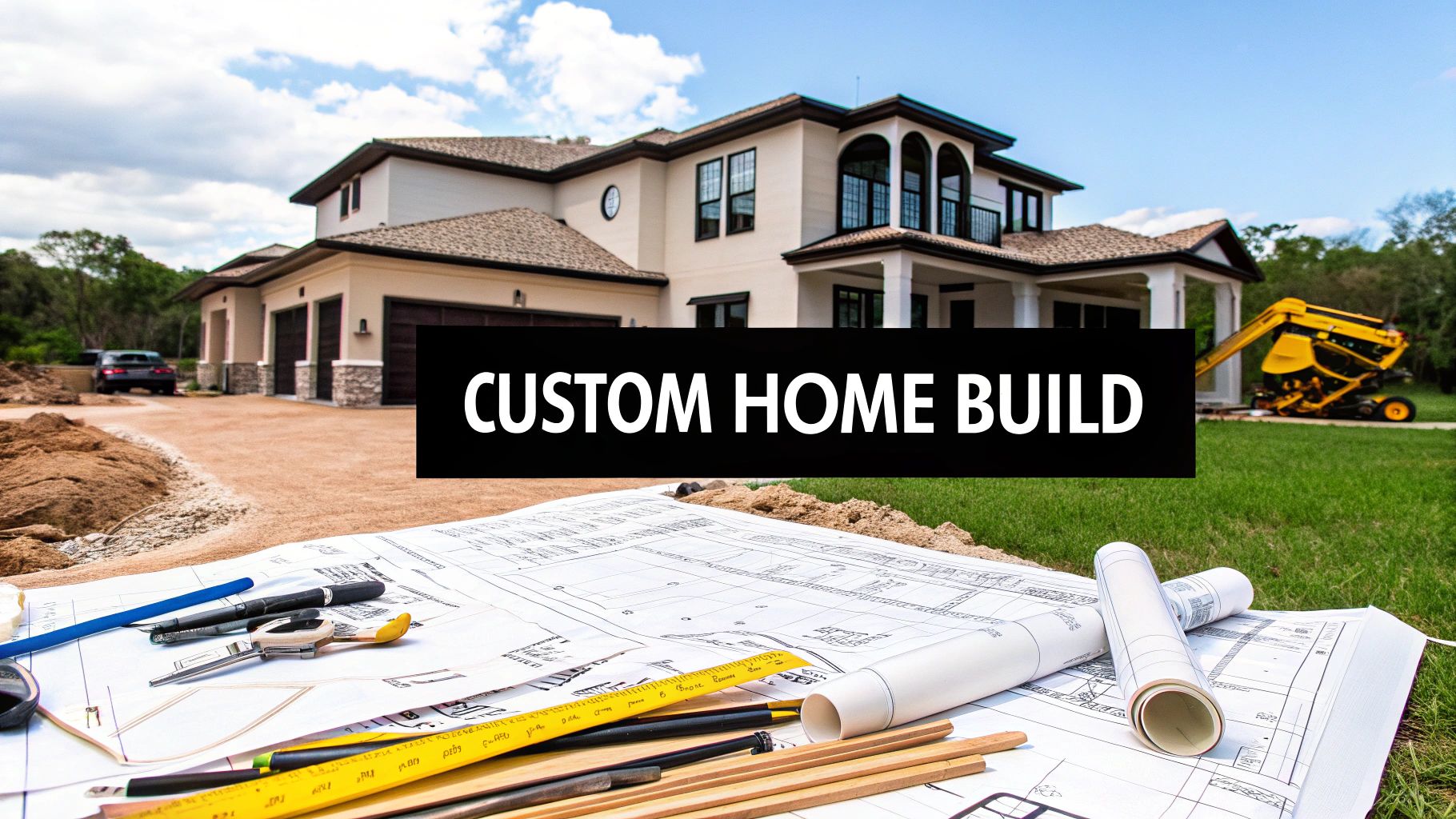
Building a custom home in Florida isn't just about construction; it's about bringing a personal vision to life in a unique and challenging environment. The journey from a simple idea to a finished home is a big one, involving distinct stages. It all starts with getting your finances in order and finding the perfect piece of land, then moves into design and permitting, and finally wraps up with construction and the exciting day you get your keys. This guide will walk you through what to expect, step by step, with a special focus on building in Southwest Florida.
Your Blueprint for Building a Custom Home in Florida
Deciding to build a custom home, especially in a unique market like Southwest Florida, is a huge commitment. Unlike purchasing a pre-existing house, you're in the driver's seat for every single decision—from the elevation of your lot right down to the finish on your kitchen cabinet pulls. It’s an empowering process, for sure, but that level of control also means you need a solid, structured plan to keep things moving on time and on budget.
The very first steps are the most critical. Before you even think about floor plans, you have to nail down your budget and secure the land you'll build on. This goes beyond just getting a loan. You need to account for the total project cost, which in Florida often includes things like site work to achieve the right elevation or clearing a heavily wooded lot, both of which have become more critical following recent storms and changes in regulations.
Key Stages and Initial Planning
This early planning phase is where you translate those dreams and "what-ifs" into an actual, buildable plan. It really sets the foundation for the entire project. For instance, we're seeing a lot of new designs that include things like multi-generational living suites or massive outdoor living spaces. These aren't afterthoughts; they have a major impact on the home's footprint and overall cost, so they have to be part of the conversation from day one.
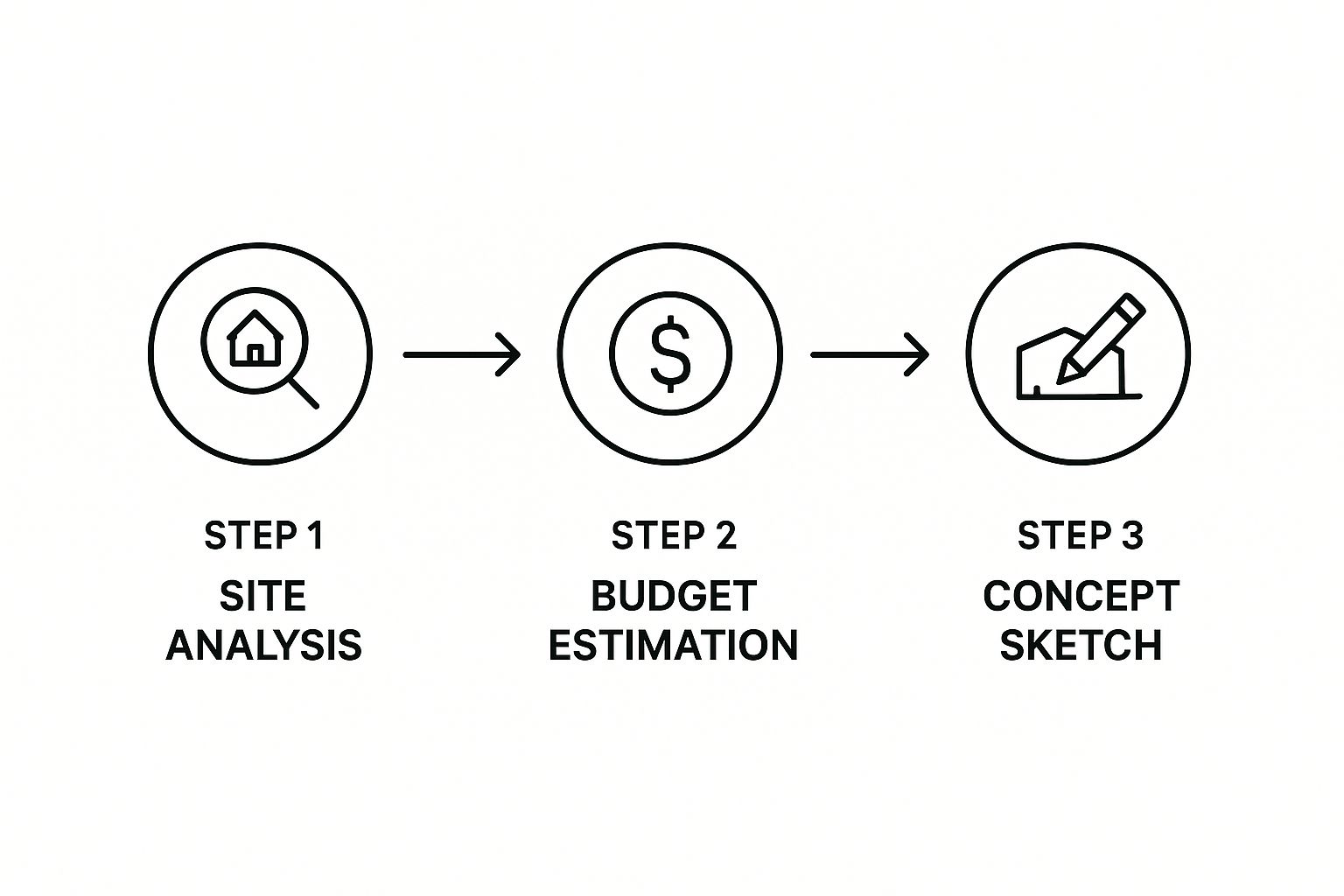
As you can see, these initial steps—analyzing the site, estimating the budget, and creating concept sketches—are all connected. One flows right into the next, forming the solid groundwork your entire home will be built upon.
To keep a complex project like this from going off the rails, you need to think like a project manager. Many of the same principles from these home renovation project management tips apply here, especially when it comes to creating schedules and keeping a close eye on the numbers.
To give you a clearer picture, here’s a breakdown of the major phases involved in a Florida custom home build.
Key Phases of a Florida Custom Home Build
| Phase | Primary Goal | Key Decisions |
|---|---|---|
| Pre-Construction | Establish a solid foundation for the project. | Budgeting, financing, lot selection, and hiring your builder and architect. |
| Design & Permitting | Translate vision into buildable plans and get official approval. | Finalizing floor plans, selecting materials, and submitting documents to the county. |
| Construction | Physically build the home from the ground up. | Site work, foundation, framing, roofing, and installing mechanical systems (HVAC, plumbing). |
| Finishing | Add the final details that make the house a home. | Drywall, flooring, cabinetry, paint, fixtures, and landscaping. |
| Handover | Ensure the home is complete and ready for move-in. | Final walkthroughs, punch list completion, and receiving the keys. |
Each phase has its own set of milestones and requires clear communication to stay on track.
A successful build hinges on a clear, shared vision between you and your builder. From day one, transparent communication about your lifestyle, design preferences, and must-have features ensures the final home is a true reflection of your goals.
As you move forward, just remember that building in Florida comes with its own set of unique opportunities and challenges. We'll get into important details like hurricane-impact windows and doors, and why whole-home generators are becoming less of a luxury and more of an expectation, especially after a storm. When you understand these local nuances from the start, you'll feel much more confident and prepared as you work toward building your dream home.
Securing Your Finances and Finding the Perfect Florida Lot
Before a single shovel can hit the dirt, your custom home project needs to stand on two solid pillars: strong financing and the perfect piece of land. These early steps are where your dream starts to become a reality, and getting them right is absolutely critical for a smooth process ahead.
These two pieces are deeply connected. The specifics of the land you fall in love with—its location, elevation, and condition—will directly shape your budget and what you’ll need from a lender.
Financing a custom home isn't like getting a mortgage for a house that's already built. You'll most likely be looking for a construction loan. This is a shorter-term loan designed to cover building costs, and it works differently. Instead of a lump sum at closing, the funds are paid out in stages (called "draws") as construction milestones are met.
Lenders will need to see everything: detailed plans, a solid contract with your builder, and a comprehensive budget. Be ready for a high level of financial scrutiny—they’re underwriting the risk on a home that doesn't exist yet.
Crafting a Realistic and Resilient Budget
One of the most common mistakes we see is a budget that only covers the "sticks and bricks." In Florida, your total project cost needs to be much more comprehensive. Think of your budget not just as a number, but as the financial roadmap for the entire journey.
A truly realistic budget must account for:
- Land Acquisition: The purchase price of your lot.
- Site Work: This is a huge variable in Southwest Florida. It can involve clearing trees, testing the soil, and hauling in fill dirt to meet new elevation requirements, which are vital for flood protection and mandated by updated flood maps.
- Permits and Fees: All the costs for county and city approvals, impact fees, and necessary surveys.
- Construction Costs: The labor and materials needed to actually build your home.
- Finishing Touches: Don't forget allowances for landscaping, a pool, the driveway, and any outdoor living spaces you’re dreaming of.
- Contingency Fund: This is non-negotiable. Plan to set aside 10-20% of your total construction cost as a buffer. This fund will cover any surprises or let you make those exciting upgrades you decide on mid-build.
Building a custom home is a major investment, often driven more by personal wealth and long-term life goals than by short-term market trends. A robust budget and solid financial plan are what ensure your vision can withstand any economic climate.
Recent news in the custom home industry shows that this market remains surprisingly resilient, even when building costs fluctuate. This is because clients are focused on getting the personalized design and quality they want, not just timing the market. If you're weighing your options, our guide on building versus buying a home can offer some valuable perspective.
Finding the Ideal Lot in Southwest Florida
Choosing land in Florida is about much more than just a great view. It’s a technical decision with serious long-term consequences. What you don't know about a piece of property can lead to some very expensive surprises. Performing your due diligence is the best defense.
When you're evaluating a potential lot, you and your builder need to investigate several key factors. These will determine not just your building costs, but also the safety and insurability of your future home.
Here's what to look for on any Florida lot:
- Flood Zones and Elevation: FEMA flood maps are always being updated, especially after major storms. A lot's flood zone and its Base Flood Elevation (BFE) will determine how high your home must be built, which directly impacts site work and foundation costs.
- Zoning and Deed Restrictions: Local zoning laws dictate what you can build—from size and setbacks to, in some cases, architectural style. Deed-restricted communities can have even more specific rules.
- Soil Conditions: Not all Florida dirt is created equal. Poor soil might require expensive engineering or deep pilings to support your foundation. That's a cost you want to know about upfront.
- Utilities and Access: Is the lot on city water and sewer, or will you need to install a well and septic system? You also need to confirm there is clear legal and physical access to the property.
Ignoring these details can turn a dream lot into a financial nightmare. One of the smartest moves you can make is to work closely with an experienced local builder during your search. They have the expertise to spot potential red flags and help you understand the true cost of developing a specific piece of land, ensuring you make an investment you feel confident about.
Assembling Your Dream Team and Designing Your Home
With your financing in order and the perfect piece of land secured, the process shifts. You're moving out of the world of spreadsheets and surveys and into the exciting phase of creativity and collaboration. This is where your vision truly starts taking shape, brought to life by the team of experts you bring on board. It’s all about finding the right builder, architect, and maybe a designer who can translate your ideas into a home that's beautiful, functional, and built to last in Florida.
Finding the right custom home builder in Southwest Florida is, without a doubt, the single most important decision you'll make. This is the person who will be your partner, managing every single detail from pulling the first permit to handing you the keys at the very end. Don't rush this. A builder's real-world experience, especially with local nuances like elevation rules and hurricane-code construction, is absolutely priceless.
Vetting Your Florida Home Builder
When you start interviewing builders, you need to dig deeper than just their glossy photo galleries and glowing testimonials. You're searching for a proven history of quality, integrity, and crystal-clear communication. A great builder isn't just managing things from an office; they are on your job site, hands-on, making sure things are done right.
Here are the essential questions I always tell clients to ask:
- Are you licensed and fully insured in Florida? This is non-negotiable. Ask to see physical copies of their license and insurance certificates.
- Can I get a list of recent homes you’ve built nearby? You need to see their work up close and, more importantly, talk to the people who live there.
- How do you handle changes or unexpected costs? A builder should have a clear and fair process for change orders. Surprises happen, but how they’re handled makes all the difference.
- Who is my main point of contact, and how often will we talk? Consistent, open communication is the secret ingredient to a low-stress build.
When you check those references, ask the real questions. Were they genuinely happy with the quality? Did the project stay on budget and on schedule? And the ultimate test: would they hire that builder again?
The relationship you have with your builder is a long-term partnership. Choosing someone whose communication style and core values match yours is just as critical as their technical skill.
The Collaborative Design Process
Once you’ve locked in your builder, the design fun begins. This part is a collaborative dance between you, your builder, and your architect. Your job is to communicate your lifestyle, your non-negotiable "must-haves," and how you picture your family actually living in the home. Their job is to take that vision and capture it in a set of buildable, code-compliant blueprints.
Bring everything you've collected—your Pinterest boards, magazine clippings, and random sketches. The more clearly you can show what you want, the better the final plans will be. This is the time to hash out everything, from the overall flow of the floor plan to the small details that really define a modern Florida home.
Designing for the Florida Lifestyle
Living in Florida is all about embracing the outdoors while being smart about the weather. We're seeing a big shift away from old-school, compartmentalized rooms. New builder trends focus on open, airy designs that feel seamlessly connected to the beautiful environment just outside your walls.
Here are a few key design features trending across Southwest Florida:
- Seamless Indoor-Outdoor Living: Think expansive lanais with full summer kitchens, pocketing glass doors that vanish into the walls, and pools that feel more like a private resort.
- Adaptable and Multi-Generational Suites: More families want homes with flexible spaces, like a true in-law suite or a private guest casita that can change as the family's needs evolve over time.
- Hurricane-Resistant by Design: Good design is your first line of defense. Architects are incorporating more hip roofs, which hold up better in high winds, and strategically placing windows to get maximum light without compromising structural strength.
- Dedicated Functional Spaces: With so many people working from home, a dedicated office is no longer a luxury—it's a necessity. We're also seeing a huge demand for large walk-in pantries, highly functional laundry rooms, and clever storage solutions.
As you finalize the design and start picking out materials, you'll need to think through every detail. For example, when it comes to interior finishes, knowing how to measure square footage for carpeting can save you headaches and help you stick to your budget. This kind of meticulous planning is what allows your team to turn a detailed plan into the home you’ve always wanted.
Building for Florida Weather With Hurricane-Proofing
When you decide to build a custom home in Southwest Florida, you're signing up for more than just style and comfort—you’re building for resilience. Our climate is no joke. A home here needs to stand strong against severe weather, which means hurricane-proofing isn't an afterthought; it's at the core of the design from day one.
This isn't just about adding a few storm-ready features here and there. It's about creating a fully integrated system of defense. Honestly, thinking through these elements is one of the most critical parts of the entire how to build custom home process in our region. The choices you make will directly affect your family's safety, the long-term value of your home, and your own peace of mind when a storm is brewing.
Impact Windows and Doors: A Non-Negotiable Defense
In a hurricane, the weakest points of any home are its openings—the windows and doors. If powerful winds breach one of them, the sudden change in air pressure inside can literally blow the roof off. It’s a terrifying and catastrophic failure. That's why hurricane impact windows and doors are a non-negotiable investment in Florida.
Forget about wrestling with cumbersome shutters. Modern impact-rated products are engineered with laminated glass and heavily reinforced frames designed to take a beating from both high-velocity winds and flying debris. They come with a Design Pressure (DP) rating, which is a measure of how well they resist wind load and water getting in. In Southwest Florida, you have to meet or exceed the local building codes for DP ratings, and they can be incredibly strict, especially the closer you get to the coast.
Choosing impact-rated windows and doors isn't just a building code requirement; it's your home's primary armor against a storm. It simplifies storm prep, enhances security, and can significantly reduce your homeowner's insurance premiums.
Fortifying the Structure From the Ground Up
A truly storm-ready home is a connected system where every piece works together, from the foundation right up to the roof's peak. Florida builders use specific techniques to create what we call a continuous load path, which basically ties the whole house together to resist the immense uplift and sideways forces of a hurricane.
This involves several key structural reinforcements you’ll want to discuss with your builder:
- Hurricane Straps and Clips: These simple-looking metal connectors are absolutely essential. They create a powerful link from the roof trusses down to the walls, and from the walls to the foundation, stopping the roof from being peeled away by extreme winds.
- Reinforced Masonry: There's a reason concrete block (CBS) construction is so common here. When the blocks are filled with concrete and reinforced with steel rebar, they form an incredibly tough and durable exterior shell.
- Modern Roofing Materials and Design: A hip roof, with its four sloped sides, is naturally more aerodynamic and handles high winds far better than a traditional two-sided gable roof. When you pair that smart design with high-quality materials like metal or concrete tile secured with superior fasteners, you're adding another vital layer of protection.
The Critical Role of Elevation
Wind is only half the fight. Storm surge and flooding are equally destructive, and recent storms and updated FEMA flood maps have driven this point home. Your lot’s Base Flood Elevation (BFE) is a number you need to know; it dictates the minimum height your home's finished floor must be.
Frankly, building well above the required BFE is one of the smartest moves you can make. It often requires significant site work and bringing in truckloads of fill dirt to raise the building pad. Yes, it adds to the upfront cost, but elevating your home is the single most effective way to protect it from flood damage—a risk that's only growing across Florida.
Ensuring Power and Normalcy With Generators
After a major storm, power can be out for days, sometimes even weeks. It’s not just uncomfortable; it can be unsafe. This reality has turned the whole-home generator from a luxury nice-to-have into a standard, essential feature for new custom homes, especially in areas prone to outages during storms.
Unlike a portable generator you have to drag out and fuel up, a whole-home system is permanently installed and wired right into your electrical panel. It’s hooked up to a large fuel source, usually a buried propane tank or a natural gas line. When the power grid fails, an automatic transfer switch senses the outage and seamlessly kicks the generator on, usually within seconds.
This means your crucial systems—the air conditioning, refrigerator, well pump, and any necessary medical equipment—keep running without a hitch. It provides more than just power; it gives you a sense of security and normalcy during an incredibly stressful time. Having a detailed conversation with your builder about the right size and fuel type for your generator is key to making sure it’s ready when you need it most.
Navigating Permits, Construction, and Final Details
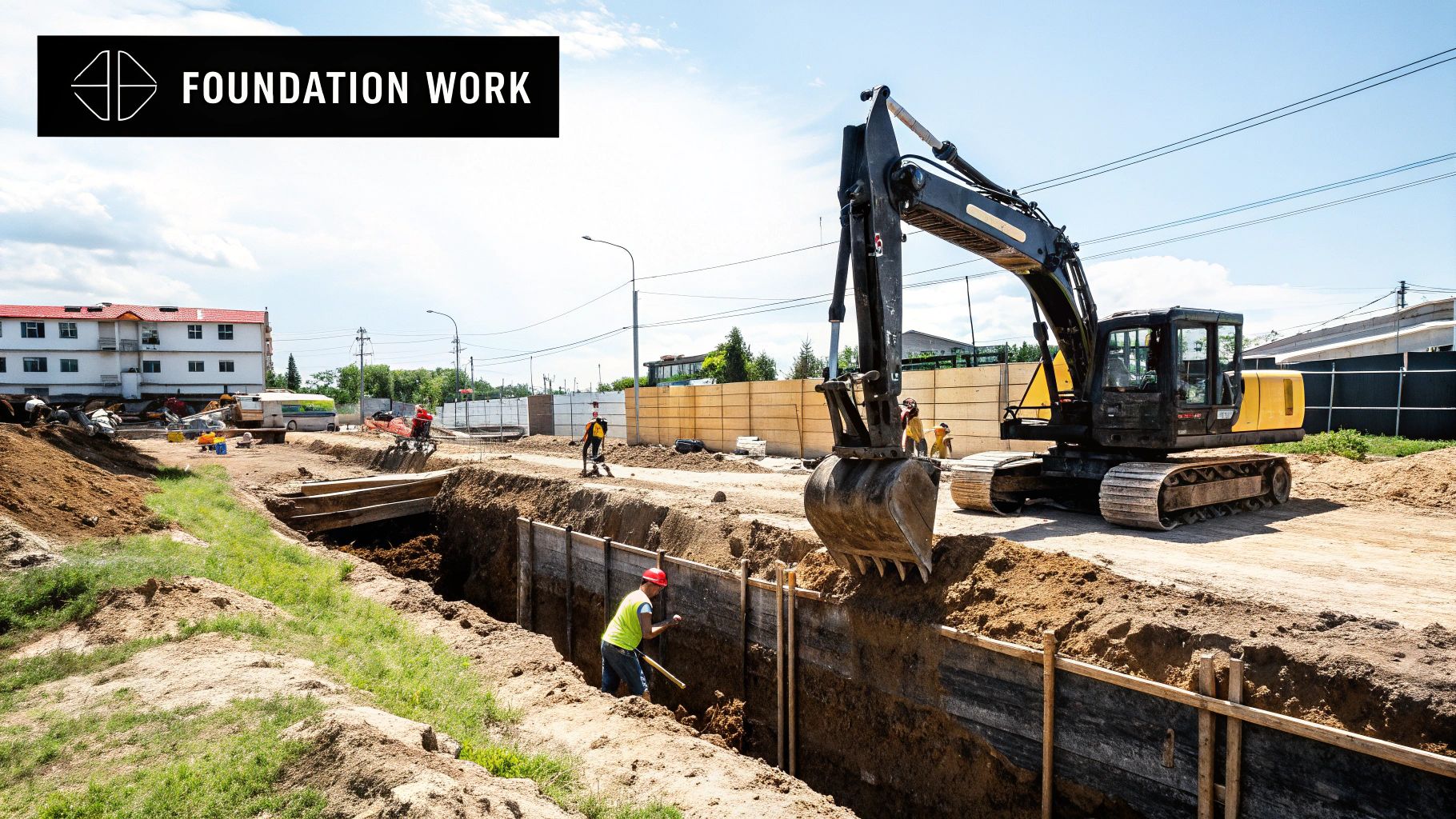
With your approved plans in hand, the real excitement begins. This is the moment your vision finally jumps off the paper and starts to take physical form as your custom home build breaks ground. It's a whirlwind of activity, from navigating Florida’s often-complex permitting process to the final walkthrough where every last detail is perfected.
The first major hurdle is getting through the local building department. In places like Cape Coral or Fort Myers, this process is famously meticulous. Your builder is responsible for submitting all the architectural plans, engineering documents, and site surveys for review. And trust me, this isn't a rubber-stamp approval. Officials scrutinize every detail to make sure it complies with Florida’s tough building codes, especially those for elevation and storm readiness.
From Dirt Work to a Dried-In Structure
Once those permits are issued, things start moving fast. The first real milestone is site preparation. Crews will clear the lot and, if needed, bring in fill dirt to establish the correct elevation—a non-negotiable step for flood protection in our area. Next, they'll dig the footers and pour the concrete foundation, the solid base your entire home will rest on.
Then comes the framing. This is when your house truly begins to take shape, and it’s a thrilling experience. Suddenly, you can walk through the rooms and get a real feel for the space and flow. After the walls are up, the roof trusses are set, and the sheathing and roofing materials go on. This point is what we call being "dried-in," which simply means the interior is now protected from the elements.
This is also when your investment becomes very real and visible. As your home takes shape, it's wise to consider robust modern construction site security strategies to protect against the theft of materials and equipment.
Mechanical Systems and Critical Milestones
With the structure dried-in, the focus shifts inward to the home's vital systems. This "rough-in" phase is all about installing the complex network of wires, pipes, and ducts that will soon be hidden behind your walls.
Key mechanical installations include:
- HVAC: The ductwork for your heating, ventilation, and air conditioning system is carefully mapped out.
- Plumbing: Water supply lines and drain lines are run to every kitchen and bathroom.
- Electrical: All the wiring for outlets, switches, light fixtures, and your main electrical panel is installed.
At each of these major stages—foundation, framing, electrical, plumbing, and mechanical—your builder will coordinate inspections with the county. Every single one must be passed before work can continue, ensuring your home is built exactly to code. It's a process that demands meticulous coordination, which is why effective home construction project management is absolutely essential to keeping the build on schedule.
Open and frequent communication with your builder is the foundation of a successful construction phase. Regular site visits and scheduled meetings allow you to see progress firsthand, ask questions, and make timely decisions, preventing small issues from becoming big problems.
Finishes, Selections, and the Final Push
Once the drywall goes up, the true character of your home starts to emerge. This is when you'll be making all the final decisions on the finishes that reflect your personal style—from flooring and cabinetry to light fixtures, paint colors, and plumbing hardware. It can feel like a lot, but your builder and designer are there to guide you, helping you make selections that fit both your vision and your budget.
News and trends in the construction industry can affect material availability and timelines. For example, national building permit data often reflects the broader economic climate, which can trickle down to local supply chains in Florida. An experienced builder stays ahead of these trends to minimize delays.
The Final Walkthrough and Your Punch List
After all the construction is complete, two critical steps remain before you get the keys. First, your builder will secure the Certificate of Occupancy (CO) from the local building authority. This is the official document certifying that your home is safe, compliant with all codes, and legal to live in.
The very last step is the final walkthrough with your builder. This is your chance to meticulously inspect every inch of your new home. Together, you’ll create a "punch list" of any small items that need adjustment or correction—a paint touch-up, a sticky door, or a misaligned cabinet handle. A quality builder welcomes this process and will work diligently to address every item, ensuring the home is delivered in perfect condition. This final check is what turns a construction project into your dream home.
Common Questions About Building a Custom Florida Home
As you start down the path of creating your own home, you're going to have a lot of questions. That’s perfectly normal. Getting these common concerns out of the way upfront gives you the clarity and confidence to make smart decisions and actually enjoy the process.
Let's walk through some of the most frequent questions we hear from our clients right here in Southwest Florida.
How Long Does It Really Take to Build a Custom Home in Florida?
This is usually the first thing people ask, and the honest answer is: it varies. A realistic timeline, from the moment we start designing to the day you get your keys, is typically 12 to 18 months. It's crucial to understand how that time breaks down.
The pre-construction phase alone—which covers all the design work, engineering, and getting permits—can easily take up four to six months. From there, the actual construction generally lasts another eight to twelve months.
Of course, some things are out of anyone's control. Think summer storms, unexpected supply chain hiccups for a specific material, or even a backlog at the local permitting office. A great builder plans for this, gives you a detailed schedule from day one, and keeps you in the loop about any changes.
What Are the Most Critical Hurricane-Resistant Features?
When you’re building in Florida, building for resilience isn't just a good idea—it's everything. This is one area where you absolutely cannot cut corners. We're talking about the safety of your family and protecting a major investment.
Here’s what should be at the top of your non-negotiable list:
- High-Impact Windows and Doors: These are your primary defense against wind and flying debris. They need to meet, and ideally exceed, our stringent local building codes.
- A Hip Roof Design: This roof style, with slopes on all four sides, is far more aerodynamic. It performs significantly better in high winds than a standard gable roof.
- Reinforced Connections: Your builder must use hurricane straps and clips to lock everything together. This creates a solid "load path," securely connecting the roof to the walls and the walls to the foundation.
- A Whole-Home Generator: After a major storm, power can be out for days, sometimes weeks. A generator that keeps your A/C and refrigerator running isn't just about comfort; it's about safety and a sense of normalcy when you need it most.
Beyond the peace of mind, incorporating these features can also lead to some serious savings on your homeowner's insurance premiums.
A contingency fund is your project's financial safety net. It gives you the flexibility to handle unexpected issues without derailing your budget or causing a ton of stress. It's an essential tool for a smooth build.
How Much Should I Set Aside for a Contingency Fund?
A contingency fund is a non-negotiable part of your budget. I always tell my clients to plan for 10% to 20% of their total construction cost. This isn’t "extra" money you might not spend; it's a planned buffer for the unexpected.
This fund is there for things you can't see coming. Maybe we discover poor soil on your lot that requires more foundation work. Maybe the price of a specific material suddenly spikes. Or maybe, halfway through the build, you decide you absolutely have to have a certain design upgrade. This financial cushion gives you peace of mind and the ability to handle surprises without compromising on quality.
For more hands-on advice, checking out these tips for building a successful custom home can help you get even better prepared.
How Involved Should I Be During Construction?
Ultimately, this is a personal choice, but I strongly encourage you to stay actively involved. Yes, you've hired a professional builder to manage the day-to-day chaos on the job site, but your input is still what makes the house yours.
We typically recommend regular site visits and scheduled meetings, maybe once a week or every other week. This way, you can see the progress with your own eyes, ask questions as they pop up, and make those important, timely decisions on things like paint colors, tile, and light fixtures.
Clear, consistent communication is the bedrock of a successful project. It's the only way to ensure the final home is a perfect reflection of your vision.
Building a home that truly captures your vision requires a partner dedicated to honesty, integrity, and exceptional quality. At Sinclair Custom Homes Inc, Matthew Sinclair is on your job site, ensuring every detail meets his exacting standards. Discover the difference that hands-on, expert craftsmanship can make for your dream home in Southwest Florida.