
When you're building a custom home in Southwest Florida, the details are what truly set it apart. Custom trim and molding are far more than just finishing touches; they are the architectural bones that elevate a house into a genuinely luxurious home. Whether you're dreaming of a breezy coastal contemporary look or a sophisticated modern Mediterranean vibe, the right millwork is what defines your home's unique character and resilience in the face of Florida's demanding climate.
Defining Your Home’s Character with Custom Trim
In the competitive world of Southwest Florida custom homes, "cookie-cutter" just doesn't cut it anymore. We've seen a major shift in what homebuyers want, influenced by new builder trends and a desire for personalization. They're moving away from generic, builder-grade designs and demanding spaces that truly reflect their personal style. This is exactly where custom trim and molding come into play. It's the framework that ties your entire vision together—the critical difference between a standard house and a thoughtfully crafted home.
This isn't just a local trend. It’s a reflection of a much larger movement in home design. The global market for molding and trim was recently valued at USD 14.2 billion and is expected to climb, all driven by new construction and a growing desire for more beautiful, personalized living spaces. You can see the latest market research to get a feel for just how significant this shift is.
Matching Trim to Florida’s Unique Architecture
Southwest Florida homes are known for their grand scale—soaring ceilings, wide-open floor plans, and massive hurricane-impact windows. Standard, off-the-shelf trim you might find at a big-box store just gets lost in these spaces. It looks undersized and completely out of place, a common misstep in less-attentive builds.
One of the most important design features we focus on is using substantial, properly scaled millwork that actually complements the home’s impressive volume. This is especially true given recent news and code changes affecting building in Florida, which often require higher home elevations.
Think about it: in a room with 12-foot ceilings, a skinny 3-inch baseboard practically disappears. But when you install a custom 7-inch or even a 9-inch baseboard, it immediately grounds the space. It adds a sense of permanence and luxury that’s especially critical in the newly elevated homes we’re building today to meet new flood map requirements.
Key Considerations for a Florida Build
When you're planning for custom trim in a new Florida home, it's about more than just aesthetics. You have to think about performance, longevity, and how it integrates with other critical systems in our unique—and often challenging—climate.
Here are a few things that should be top of mind from the very beginning:
- Material Resilience: Your trim has to stand up to our intense humidity without warping, cracking, or encouraging mildew. Choosing the right material is your first and most critical decision for a long-lasting, beautiful finish.
- Hurricane-Impact Integration: Heavy-duty hurricane windows and doors have much thicker profiles than standard units. Your trim needs to be designed to frame them elegantly, a key new design feature that separates a custom build from a standard one.
- Cohesive Design: A well-planned trim package is what creates that seamless, unified look throughout the house. It’s what connects different rooms and ties together other architectural features, like coffered ceilings and custom built-ins.
By thinking through these elements from the start, you ensure your custom trim doesn’t just look incredible but also functions perfectly within the unique context of your new Florida home. This guide is here to walk you through making those crucial decisions for a flawless result.
Choosing Resilient Materials for the Florida Climate
When you’re building a custom home in Southwest Florida, picking the right material for your custom trim and molding is a decision that pays dividends for years. It's one of those details that seems small but has a huge impact on durability and beauty. Our unique climate—with its relentless humidity, intense sun, and salty air—is notoriously tough on building materials. Choosing the wrong stuff can lead to warping, mildew, and insect infestations down the road.
This isn't just about looks; it's about protecting your investment and ensuring the architectural details you fell in love with stay beautiful. Getting this right is a cornerstone of a successful build. In fact, smart planning at every stage is crucial, which is something we discuss in our guide on the 3 tips to follow for building a successful custom home.
These finishing touches, like the elegant crown molding shown below, do more than just complete a room—they significantly boost your home's perceived value.
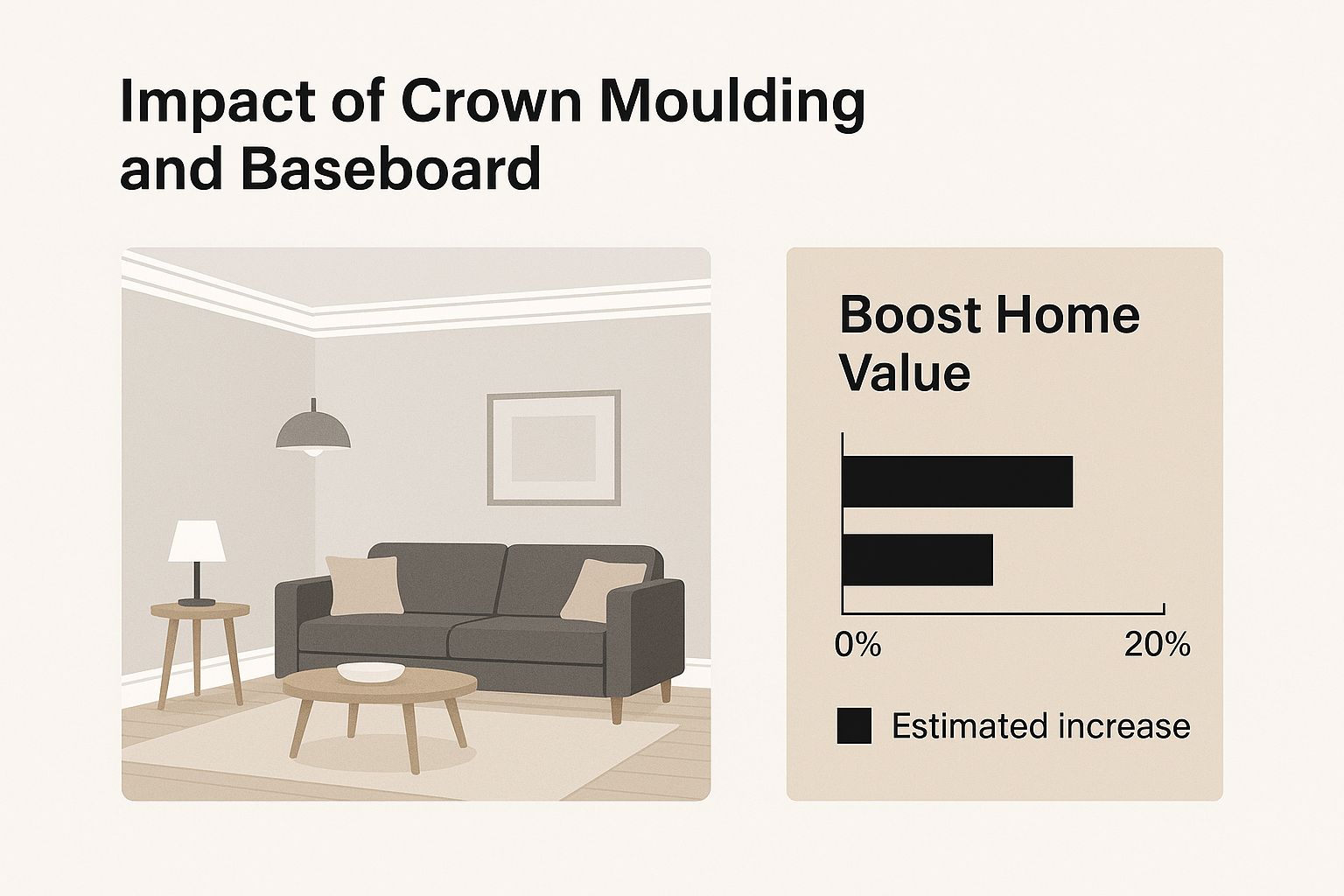
As you can see, details like substantial baseboards and intricate crown molding signal a high-quality, thoughtfully constructed home. They’re a true mark of craftsmanship in the custom home industry.
Materials That Thrive in High Humidity
Here in Florida, moisture is the number one enemy of many common building materials. Inside your home, the A/C does a lot of the work, giving you some flexibility. But for any trim on the exterior—think lanais, entryways, or even high-moisture indoor spots like bathrooms and laundry rooms—your material choice is absolutely critical.
We've had great success with a few specific materials that stand up to the challenge:
- Polyvinyl Chloride (PVC): This isn't your grandfather's wood trim. PVC is an engineered material that's 100% waterproof. It simply will not rot, warp, or swell, no matter how much rain or humidity we get. It’s a fantastic, low-maintenance choice for any exterior application, especially important for homes built to new elevation standards which may have more exposed lower-level finishes.
- Polyurethane: If you want the sharp, crisp details of traditional wood molding without the headaches, polyurethane is the answer. It’s a high-density foam product that’s lightweight, incredibly stable, and won’t attract insects or absorb moisture. It's perfect for creating those intricate, high-end looks.
- Cypress: For those who just love the authentic beauty of real wood, you can't go wrong with cypress. It’s a classic Florida choice for a reason. This native wood contains a natural oil, cypressene, that makes it inherently resistant to decay and pests like termites.
A Pro Tip for Wood Trim: If you opt for cypress or another wood, proper sealing is non-negotiable. We make sure to seal all six sides of every board—front, back, and all the edges—before it's installed. This prevents moisture from seeping in from behind the wall, which is a common point of failure, especially during the wind-driven rain of a storm.
Durability Against Salt Air and Sun
If your home is anywhere near the coast in places like Cape Coral or Fort Myers Beach, you're also fighting a battle with salt spray. Salt is corrosive and can eat away at finishes and materials over time.
This is where engineered options like PVC and polyurethane really pull ahead, as they are completely unfazed by salt. If you’re using natural wood in a coastal setting, the paint job becomes more than just cosmetic—it's a protective shield. You’ll need a robust, marine-grade finish that is meticulously maintained.
The demand for these kinds of durable, beautiful materials is only growing. The molding and trim market is projected to expand from USD 16.33 billion to USD 21.7 billion by 2032, driven by homeowners who want both lasting quality and aesthetic appeal.
When deciding, it helps to see the options side-by-side.
Material Comparison for Florida Custom Trim
Here’s a quick breakdown of how the most common trim materials stack up against the demands of our Southwest Florida climate.
| Material | Moisture Resistance | Insect Resistance | Best For | Maintenance Level |
|---|---|---|---|---|
| PVC | Excellent | Excellent | Exteriors, bathrooms, lanais | Low |
| Polyurethane | Excellent | Excellent | Intricate interior/exterior designs | Low |
| Cypress Wood | Good (with sealant) | Good (natural oils) | Classic aesthetic, interiors/exteriors | Moderate |
| Pine/Poplar Wood | Poor | Poor | A/C-controlled interiors only | High |
| MDF | Very Poor | Poor | Dry, interior use only; budget projects | High |
Ultimately, engineered materials like PVC and polyurethane offer the most "set it and forget it" solution for Florida's harshest conditions. While natural wood has its undeniable charm, it requires a commitment to proper sealing and upkeep to ensure it lasts.
Designing a Cohesive Look with Custom Millwork
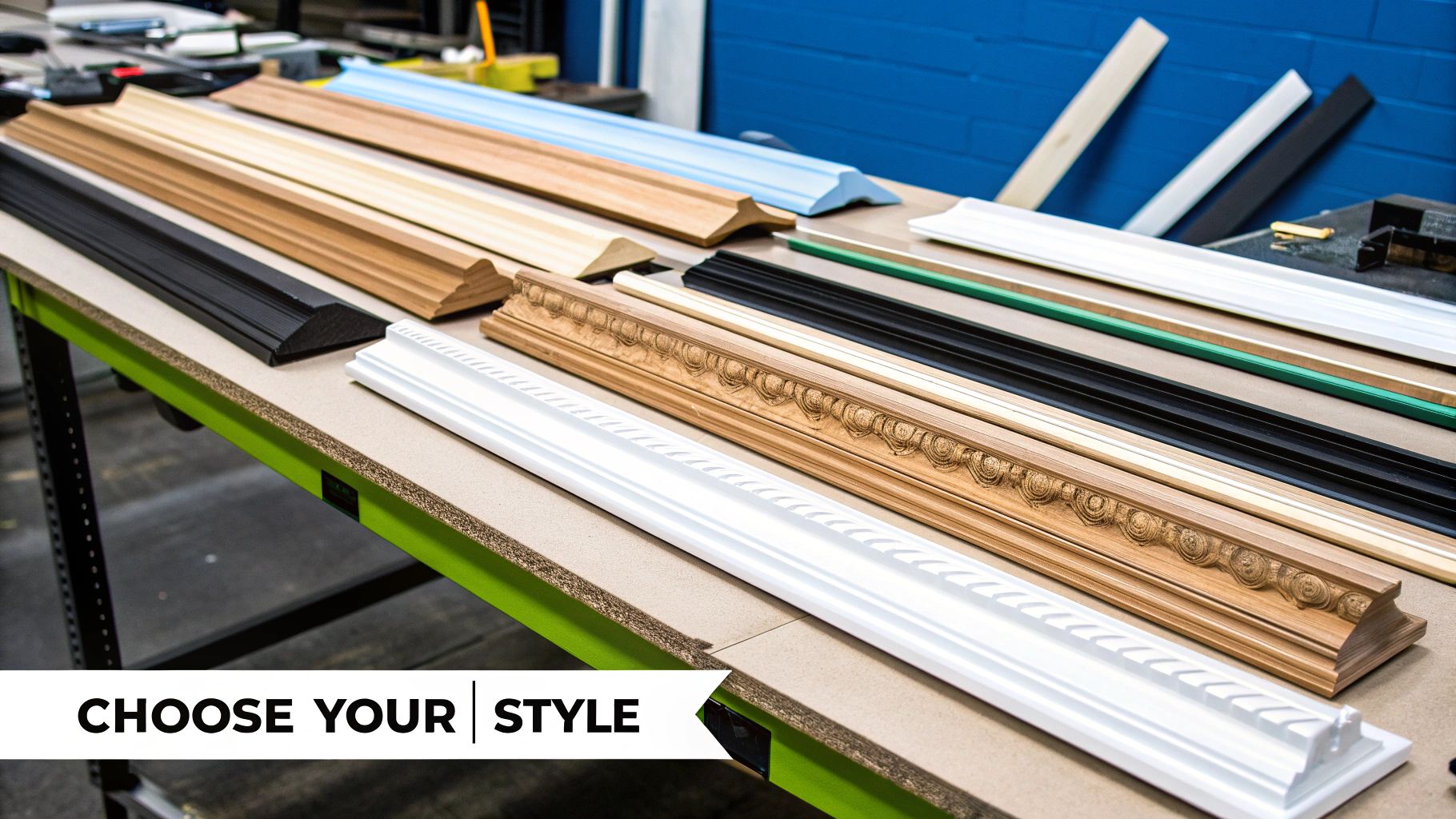
Truly great design isn’t about one single showstopping feature. It's found in the thoughtful repetition of beautiful details. For a new custom home in Southwest Florida, custom trim and molding are the essential threads that pull your entire architectural vision together into a high-end, cohesive look. It’s what makes a collection of beautiful rooms feel like a single, unified home.
This focus on detail is a key new builder trend. The global molding and trim market was recently valued at about USD 8.5 billion and is projected to soar to nearly USD 13.9 billion by 2032. What does this tell us? Homeowners are moving away from cookie-cutter designs and demanding personalized interiors where quality and differentiation are front and center.
Creating a Trim Schedule for Your New Build
In the custom home industry, a "trim schedule" is one of our most powerful tools. You can think of it as the master blueprint for every single piece of millwork planned for your home. This document clearly lays out the exact profile, size, and material for the baseboards, crown molding, and door and window casings for every room.
Developing this schedule early in the design phase is absolutely critical. It helps in two major ways:
- It Ensures Consistency: It guarantees that your core trim profiles—like the main baseboard and casing styles—are carried throughout the home, creating a wonderful sense of rhythm and flow.
- It Highlights Focal Points: It also lets you strategically plan for more elaborate or larger-scale trim in key areas. Think of a grand entryway or a formal dining room where you want to make a statement, all without clashing with the home's overall harmony.
A well-planned trim schedule is your best defense against the common mistake of having mismatched or poorly scaled trim from one room to the next. It ensures every detail feels intentional.
Scaling Trim for Modern Florida Homes
One of the biggest design challenges we see in new Florida construction is getting the scale right. Following new builder trends, many modern custom homes feature 12-foot, 14-foot, or even higher ceilings and massive open-concept living areas. Your standard, off-the-shelf 3-inch baseboards or 4-inch crown molding will simply look lost and undersized in these grand spaces.
Proper scaling is non-negotiable for a true luxury feel. When you have soaring ceilings, you have to think bigger.
- Baseboards: You should be looking at 7-inch, 9-inch, or even custom-milled 12-inch baseboards to properly ground the room and give it weight, especially important for newly elevated homes.
- Crown Molding: A stacked crown molding, which involves combining multiple profiles, can create the substance needed to draw the eye upward and perfectly balance the room’s height.
- Door and Window Casings: The casings around large hurricane-impact windows and 8-foot doors need to feel substantial. We often use profiles that are 5 inches or wider to feel proportionate.
Matching Styles for a Cohesive Aesthetic
Your custom trim should be a direct extension of your home's architectural style. It's these small, consistent details that truly sell the overall theme and make it feel authentic.
For a Coastal Modern look:
The key here is clean, simple, and streamlined profiles. Think flat-stock baseboards with a subtle eased edge and simple, unadorned window casings. The goal isn't a lack of detail, but rather sophistication through simplicity, a popular trend in new design features.
For a Traditional or Mediterranean Estate:
This is where you get to have some fun with more ornate and decorative profiles. Intricate, multi-layered crown moldings, fluted casings, and substantial, shapely baseboards add that sense of history and grandeur that truly defines these classic styles.
Beyond the millwork itself, incorporating other personalized elements like custom window treatments will further elevate your home's unique character. The secret is to ensure every custom element speaks the same design language, creating a bespoke environment that feels both luxurious and flawlessly complete.
What to Expect During Trim Installation
Once your custom trim designs are finalized and the materials have arrived, the real magic begins. This is the installation phase, where true craftsmanship turns stacks of wood into the gorgeous architectural details that give a luxury home its soul.
Installing custom trim and molding isn't a quick job; it's a meticulous process that demands precision, a steady hand, and an expert eye. The smallest details at this stage make all the difference in the final look and feel of your home.
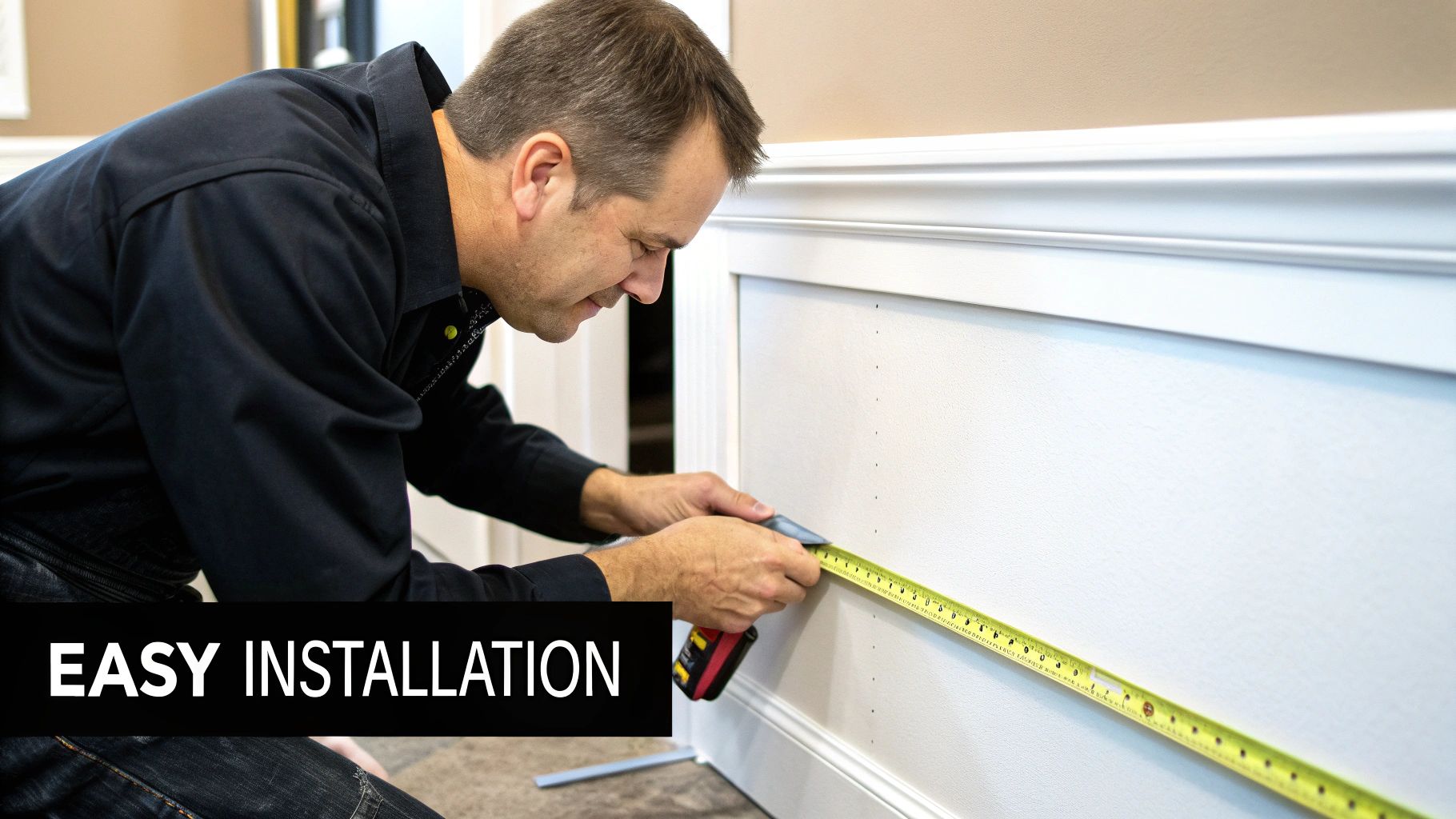
It all starts with measurement. A skilled trim carpenter doesn't just measure once. They measure, double-check, and then measure again, accounting for every subtle wave and imperfection in the walls. In Florida, especially with new concrete block construction, walls are rarely perfectly flat or plumb. A seasoned pro knows how to scribe the trim to fit flush against these surfaces, creating a seamless line that looks absolutely perfect.
The real artistry is in the joints. Anyone can nail a piece of trim to the wall, but a master carpenter creates joints so tight they practically disappear. The difference between a standard job and masterful work is evident in these small but critical details.
The Hallmarks of Quality Craftsmanship
As the trim goes up, you can easily spot the techniques that separate a true professional from an amateur. One of the most telling signs is how they handle the inside corners. A novice might just cut both pieces at a 45-degree angle. This seems logical, but it often leaves a gap that will open and close as the house naturally settles or reacts to humidity.
A seasoned carpenter, on the other hand, uses a technique called coping. This is where they painstakingly cut the profile of one molding into the end of the adjoining piece. The result is an incredibly tight, flexible joint that stays perfect for years. For outside corners, you should see flawless miter joints that meet with hairline precision. Understanding what to look for when choosing the right contractor is key to getting this level of quality work.
Addressing Unique Florida Challenges
Installing custom trim here in Southwest Florida comes with a few specific hurdles. Our homes are built differently, and your installation team needs the experience to handle these local quirks.
- Concrete Block Walls: You can't just fire nails into concrete block like you can with drywall. Pros use specialized fasteners and high-grade adhesives to securely attach the trim, ensuring it won't budge with shifts in temperature and humidity.
- Hurricane-Impact Windows and Doors: These beefy units have thick, heavy-duty frames that often sit proud of the interior wall surface. A quality installer will build custom jamb extensions and use deeper casings to gracefully hide this transition, making the window look like a seamless, elegant part of the room. This hurricane impact feature is a critical design consideration.
The entire trim installation is a crucial step in the larger construction journey. It helps to understand how this fits into the overall timeline, which you can do by reviewing the complete custom home building process with your builder. From the first cut to the final paint touch-up, every action is focused on achieving that pristine finish that truly elevates your home's character.
Integrating Trim With Modern Florida Home Features
In the past, you might have thought of trim and molding as just the final decorative touch. But in a modern Southwest Florida custom home, it's so much more. Millwork has become a powerful tool, an integral part of the home’s architecture and function. We're seeing a huge shift toward using custom trim and molding not just for looks, but to solve real design puzzles and cleverly integrate the latest new design features and technology.
This kind of thoughtful integration is what separates a standard build from a truly custom one. It shows a builder's dedication to quality and forward-thinking design. It's a philosophy we live by, and you can get a better sense of why choosing a builder who sweats these details matters.
Enhancing Indoor-Outdoor Living
One of the absolute must-haves in any new Florida home is that seamless flow between the inside and the outside. Everyone wants those massive pocketing sliding glass doors that completely open up a wall. But these create a unique challenge: how do you frame such a huge opening so it doesn't look unfinished or flimsy?
This is where custom millwork really shines. Instead of a simple, thin frame, we design and install substantial, architectural casings that give these expansive openings the presence they deserve. This new design feature turns a purely functional door into a grand architectural statement that celebrates the very lifestyle Florida is known for.
Concealing Smart Home Technology
Luxury homes today are packed with tech—automated shades, integrated lighting, whole-home audio. The last thing you want is for all that convenient technology to clutter up the clean, beautiful lines of your home's interior. Custom trim is the perfect answer.
We regularly use millwork to hide technology in plain sight. Here are a few examples from our projects:
- Automated Shades: We can build a custom valance or a recessed soffit, finished with elegant crown molding, that makes the roller mechanism for motorized shades completely disappear when they're up.
- Integrated Lighting: Need some soft, ambient light? We can create custom channels right inside crown molding or wall panels to conceal LED strip lighting, casting a beautiful, indirect glow.
- Hidden Speakers: For the audiophiles who want perfect sound without visual disruption, we design trim with seamless, paintable grilles that cover in-wall speakers.
By thinking about technology from the very start of the design process, we use custom trim to make it part of the architecture itself. You get to enjoy all the modern conveniences without ever compromising on a timeless, clean aesthetic.
Grounding Elevated Homes and Ensuring Resilience
With recent storms and updated flood maps, building new homes to higher elevation standards in Southwest Florida is now the norm. It's a critical safety measure, but let's be honest—an elevated home can sometimes feel a bit disconnected from its landscape.
We use custom trim and molding to visually anchor the home. Think heavy, multi-piece baseboards and wide, solid door casings. These elements add visual weight and a sense of permanence, making an elevated home feel grounded, established, and just as luxurious as a home built on a traditional foundation.
Beyond looks, exterior trim is a key player in a home's resilience. When we install exterior window and door casings with proper flashing and sealing, they become a vital part of the building envelope. This meticulous attention to detail helps fortify the home against water intrusion during the intense, wind-driven rain of a hurricane—an absolutely critical hurricane impact feature for any new build in our region. This integrated resilience is a top new builder trend.
Your Florida Custom Trim Questions, Answered
As you start envisioning your new custom home here in Southwest Florida, the details are what really bring it to life. Custom trim and molding is one of those details that sparks a lot of questions. I get it. You want to make sure your choices look incredible, but also stand up to our unique climate and demanding building codes that affect building in Florida.
Let's dive into some of the most common questions we hear from homeowners, framed by our experience in the custom home industry.
How Does Florida Humidity Affect My Choice of Wood Trim?
Florida's humidity is, without a doubt, the single biggest challenge for wood trim. When moisture in the air goes up, wood expands. When it drops, wood contracts. Over and over, this cycle can lead to warped boards, swollen joints, and paint that just won't stop cracking. It’s why picking the right material from the get-go is so important.
Based on our experience, there are two smart paths to take:
- Go with Engineered Materials: Modern choices like PVC and high-density polyurethane are completely immune to moisture. They simply won’t swell, rot, or warp. This makes them a fantastic "set it and forget it" solution for both inside and outside your home, a popular choice in the new builder trends for low-maintenance living.
- Choose a Stable Wood Species: If you absolutely love the authentic look and feel of real wood, you need to pick a species known for its stability in humid conditions. Cypress is a great local option because it’s full of natural oils that make it resistant to decay and insects.
No matter what wood you choose, proper prep is non-negotiable. We make it a rule to let all wood trim acclimate inside the air-conditioned home before a single piece is installed. Then, every piece gets sealed on all six sides—front, back, and all four edges. This creates a complete shield against moisture, especially critical during the prolonged power outages that can occur during storms when generators are essential for running A/C.
Can I Still Have Custom Molding with Hurricane-Impact Windows?
Absolutely. In fact, creating beautiful, substantial trim around heavy-duty hurricane windows and doors is a signature of a well-built Florida custom home. It’s a crucial hurricane impact feature that we plan for and incorporate into every single one of our builds.
The secret is all in the planning. The frames on hurricane-impact windows are much thicker and deeper than standard ones. A true craftsman doesn't just slap trim around the opening. They design a complete solution. This new design feature might mean using deeper trim profiles or building out custom jamb extensions so the molding looks proportional and elegant, not flimsy next to the beefy window frame.
What’s the Real Cost Difference?
There’s no sugarcoating it: a true custom trim package costs more than the standard stuff. But the impact it has on your home's character and feel is massive. The price really comes down to three things:
- The Material: Engineered PVC might cost more than basic pine, but it’s often less than a premium hardwood like cypress or mahogany.
- The Complexity: A simple, flat-stock baseboard is much less expensive than a dramatic, multi-layered crown molding that has to be milled just for your home.
- The Labor: Installing custom trim takes more time and a higher level of skill. Things like scribing trim perfectly to a slightly uneven wall or coping inside corners for a seamless look—that’s true craftsmanship, and the labor cost reflects that expertise.
While the initial investment is higher, custom trim and molding is one of the most powerful upgrades you can make to boost your home’s perceived value and achieve that genuine luxury feel.
How Do I Take Care of My Trim in This Climate?
Maintenance is pretty straightforward, and it really just depends on the material.
For exterior PVC or polyurethane trim, you’re in luck. Maintenance is minimal. A good cleaning now and then to wash away dirt and mildew is about all it needs.
For exterior wood trim, you have to be more watchful. Regularly check the paint for any cracks or peeling. If you see any spot where the paint has failed, you need to sand it, prime it, and repaint it right away to keep moisture from creeping in.
For interior wood trim, your air conditioner is your best friend. Keeping the indoor climate stable minimizes the expansion and contraction that stresses the wood. Given the frequency of storms in Florida, having a whole-home generator to keep your A/C running during outages is a wise investment to protect not just your comfort, but also your home's fine finishes like custom trim.
At Sinclair Custom Homes Inc, we believe exceptional trim work is the soul of a finely crafted custom home. We specialize in designing and installing beautiful, durable millwork that not only stands up to the Florida climate but also perfectly complements the luxury features of your new home. If you're ready to begin your custom home journey in Cape Coral or Fort Myers, contact us today to share your vision.