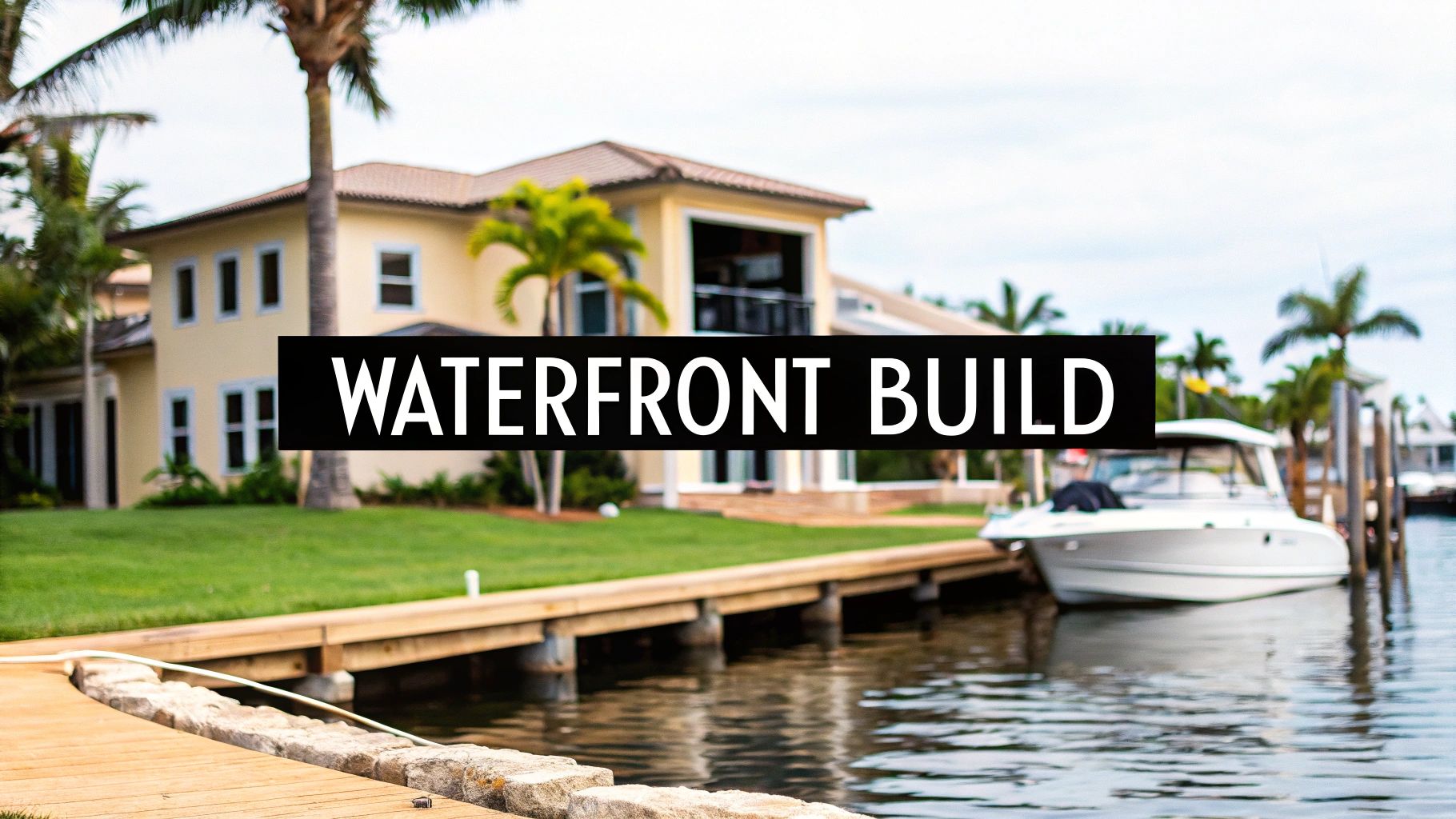
Picture this: you wake up to a panoramic view of the water, and your boat is sitting right at your back door, ready for a day of adventure. This is the heart and soul of owning a custom waterfront property in Cape Coral. It’s more than just building a house—it's about creating a legacy and a lifestyle perfectly matched to the coast, engineered with the latest construction science and design trends.
Why Build a Custom Home on Cape Coral's Canals
Deciding to build a custom home here isn’t just about picking a floor plan. It’s about crafting a home that lives and breathes the waterfront environment. Unlike buying a pre-owned house, going custom puts you in the driver’s seat for every single detail. This ensures your home is not only your personal sanctuary but also a fortress built to handle the elements, incorporating new builder trends and design features right from the start.
This approach lets you bake in the latest in coastal construction. Think wide-open living spaces with floor-to-ceiling hurricane-impact windows that completely blur the line between your living room and the stunning canal views. The waterway truly becomes an extension of your home, a key feature in modern Southwest Florida design.
Resilience and Modern Design
Starting from scratch in Southwest Florida gives you a massive advantage: you can incorporate modern, hurricane-resistant technology from the foundation up. This is where a custom home really proves its worth, especially with evolving building codes and insurance requirements.
You get to include key resilience features that are now industry standards:
- Elevated Foundations: Building your home to today’s elevation standards is non-negotiable. It’s your first and best line of defense against storm surge and a critical factor in flood insurance rates. News from across Florida constantly reinforces the need for higher building elevations.
- Advanced Hurricane Protection: Every component, from reinforced concrete block construction to high-impact doors and windows, is handpicked for maximum durability. Custom home builders are at the forefront of integrating these features seamlessly into beautiful designs.
- Whole-Home Generators: A custom build means you can integrate a powerful generator right into the home's design. After recent storms, this has become a must-have, guaranteeing comfort and safety when the inevitable power outages hit.
A custom home isn’t just about aesthetics; it’s about engineering peace of mind. By building new, you are proactively designing a home to withstand the specific challenges of coastal Florida living, incorporating the latest hurricane impact features and building science.
Ultimately, choosing to build new is an investment in both your lifestyle and your security. With its more than 400 miles of navigable waterways, the city is a world-renowned destination for boaters, which keeps driving long-term demand for quality homes. You can get more insights into Florida's unique real estate market on foxbusiness.com.
Understanding the Cape Coral Waterfront Market
Before you even think about breaking ground, it's vital to get a solid handle on the financial realities of building a custom waterfront property in Cape Coral. This isn't just about the final sticker price; it's about seeing the whole picture—from buying the land and covering construction costs to understanding the long-term value of your investment. News that affects building in Florida, from material costs to insurance legislation, plays a huge role here.
Lately, the Cape Coral real estate market has entered a correction phase after several years of explosive growth. By September 2025, the average home value had settled around $348,000, which was a drop of nearly 10% from the previous year. While premium waterfront properties are always in a class of their own, they weren't entirely immune to the shift. Luxury waterfront homes with pools, for example, saw a correction of about 14% over two years.
The Enduring Value of Waterfront Lots
Even with market ups and downs, that "waterfront premium" is a powerful and persistent force in Cape Coral real estate. Lots right on the water consistently sell for more than their inland neighbors. You're not just buying land; you're investing in a lifestyle with direct Gulf access, incredible sunsets, and a connection to the Southwest Florida environment that is increasingly rare.
This premium also means your investment holds its value better. When the market softens, well-located waterfront properties tend to be far more resilient. For anyone planning a custom build, that stability is a huge deal, as it helps protect the significant investment you're making in your new home for the long haul.
Navigating Costs and Opportunities
So, what does this market correction mean for your custom home project? It means that while land costs are still at a premium, you might find more favorable opportunities now than in the past few years. This shift can free up more of your budget to go directly into the build itself—things like the latest hurricane-impact windows and doors, higher elevation standards for better flood protection, and other new design features that define a strong, resilient home.
A corrected market doesn't mean the opportunity is gone. For a savvy buyer planning a custom build, it’s actually a chance to lock in a prime waterfront spot at a more reasonable price, creating a much stronger financial foundation for the entire project.
To really grasp the full investment picture, you have to look at the broader trends, like the rising demand for Southwest Florida vacation rentals, which helps fuel property appreciation. If you're still exploring the area, our guide on whether Cape Coral is a good place to live offers a deeper dive into the community. With a clear view of the market, you can move forward with confidence and turn that vision of a custom waterfront home into a valuable reality.
New Trends in Custom Waterfront Home Design
When you design a waterfront property in Cape Coral, you’re doing more than just building a house—you're creating a lifestyle. The latest custom home industry trends are all about dissolving the barrier between inside and out. It’s about making the canal and your lanai feel like a natural, seamless extension of the great room.
To make this happen, builders are embracing wide-open floor plans that let the light and those incredible water views pour in. This whole design philosophy hinges on one key element: massive floor-to-ceiling hurricane impact glass. Picture entire walls made of sliding glass doors that disappear into pockets, opening your main living space directly onto a sprawling outdoor oasis. This new design feature isn't just for aesthetics; it's a testament to modern engineering in hurricane-prone regions.
The New Standard for Outdoor Living
Here in Southwest Florida, the lanai isn't just a back patio; it’s the heart of the home. Modern builders are giving this space meticulous attention. Gourmet summer kitchens are no longer a luxury—they're a standard feature in the custom home industry, complete with high-end grills, refrigerators, and ample counter space.
The best outdoor hubs feel like a private resort. We’re seeing a few new design features become must-haves:
- Infinity-Edge Pools: These pools create a stunning visual where the water seems to flow right into the canal.
- Integrated Spas: A hot tub built right into the pool deck is the perfect spot to unwind after a day on the boat.
- Sun Shelves: These large, shallow areas are perfect for lounging in the water, a popular builder trend for luxury homes.
Resilient Materials and Smart Technology
Living on the coast means building smart. Everything has to stand up to the sun, salt, and humidity. That’s why custom builders now lean heavily on durable, coastal-grade materials. Think composite decking, corrosion-resistant metal roofing, and high-performance exterior paints. It’s all about longevity and creating a low-maintenance home.
Today's custom waterfront home is a masterclass in blending luxury with resilience. Every design choice, from the structural elevation to the brand of window sealant, is made with storm preparedness in mind, creating a home that is as strong as it is stunning.
At the same time, smart home integration is a key builder trend. Everyone wants to control their lighting, climate, security, and sound systems from their phone. This extends to crucial hurricane impact features, like automated hurricane shutters you can deploy remotely, offering priceless peace of mind when a storm is brewing.
To see how all these elements can come together, take a look through a gallery of custom home design ideas for inspiration.
Popular Design Features for Custom Cape Coral Homes
Choosing the right features can be overwhelming. This table breaks down some of the most popular new design features and builder trends we're seeing in new waterfront construction.
| Feature | Primary Benefit | Consideration |
|---|---|---|
| Open-Concept Floor Plan | Maximizes natural light, enhances water views, and creates a social, inviting space. | Can be noisier than traditional layouts; furniture placement is key to defining "rooms." |
| Pocket Sliding Glass Doors | A top design feature creating the ultimate indoor-outdoor connection. | Requires specific structural engineering and is a significant investment. |
| Gourmet Summer Kitchen | Extends your living space and makes outdoor entertaining effortless. | Needs durable, weather-resistant appliances to withstand Southwest Florida's elements. |
| Infinity-Edge Pool | A luxury builder trend that provides a breathtaking visual connection to the waterway. | Higher installation and maintenance costs compared to standard pools. |
| Smart Home Automation | Offers convenience, security, and energy efficiency at your fingertips. | System complexity can vary; choose a user-friendly interface that meets your needs. |
| Composite Decking | Extremely durable, low-maintenance, and resistant to rot, insects, and splintering. | Higher upfront cost than traditional wood, but offers long-term savings on maintenance. |
Ultimately, blending these modern trends with durable, storm-ready construction is the key to creating a waterfront home you'll love for decades to come.
Building a Hurricane-Resistant Home
When you decide to build a custom waterfront property in Cape Coral, the conversation quickly shifts from granite countertops to resilience. In Southwest Florida, a home is a fortress engineered to stand against tropical weather. An experienced builder in the custom home industry sees an integrated system designed from the ground up for safety.
It all starts with the foundation, quite literally. Your first defense against a hurricane's storm surge is elevation. Building your living space above the Base Flood Elevation (BFE) is non-negotiable and a focal point of recent news affecting building in Florida. Modern custom homes achieve this by resting on reinforced concrete stem walls, a critical design feature that lifts your home safely above potential floodwaters.
The Core of Structural Integrity
Once elevated, the home's skeleton needs to be incredibly strong. In this part of the world, that means using reinforced concrete block construction. This method offers vastly superior resistance to both high winds and flying debris compared to traditional framing.
Steel rebar is threaded vertically through the blocks, tying the concrete foundation to a solid concrete "tie-beam" that caps the top of the walls. This creates a unified, monolithic structure that acts as one solid piece.
The roof is your home's shield. Advanced roof strapping systems are absolutely critical. These are heavy-gauge metal connectors that physically anchor the roof trusses directly to that concrete tie-beam. This smart engineering creates a continuous load path, transferring the ferocious energy from hurricane winds safely from the roof, down through the walls, and into the foundation.
Building for resilience is a game of connections. It’s not about having one strong feature, but about ensuring every component—from roof straps to window frames—is locked together to create a single, powerful unit that can withstand a storm's fury.
Hardening the Envelope
With a solid structure, the next job is to seal the building's "envelope." This is where hurricane-impact windows and doors prove their worth. These are complete, engineered systems. The glass is a laminate, usually two panes bonded with a tough plastic interlayer. If something smashes into the window, the interlayer holds the broken shards together, preventing a dangerous breach.
The frames are equally important, built from heavy-duty materials and anchored securely into the concrete walls. A single broken window during a hurricane can cause a massive buildup of internal pressure, powerful enough to blow the roof off. These impact-rated products are brutally tested to keep your home sealed and secure.
Ensuring Continuous Power and Safety
Finally, a truly resilient custom home plan must include a whole-home generator. Storms in Florida often lead to extended power outages. After a major storm, a generator becomes a critical piece of safety equipment.
Modern systems are fully automated, kicking on within seconds of a power failure. They can run everything you need—air conditioning, refrigerators, freezers, and medical equipment. This allows you to ride out the aftermath of a storm in comfort and safety. Planning for a generator during the design phase allows builders to seamlessly integrate it with a dedicated, elevated concrete pad, a crucial detail given recent storm experiences in Southwest Florida.
Navigating Local Building Codes and Flood Zones
When you decide to build a custom waterfront property in Cape Coral, you're working with a complex rulebook written by both Mother Nature and local government. Getting this right isn't just about avoiding red tape—it’s about building a safe, resilient home that will stand the test of time, informed by the latest news and legislation affecting building in Florida.
These regulations are the backbone of your project, influencing everything from your home's design and height to the final price tag.
Two terms you’ll hear over and over are FEMA flood zones and Base Flood Elevation (BFE). The BFE is the precise height that water is expected to reach during a major storm. In Cape Coral, any new custom home must be built with its finished floor elevated above that BFE line. This is a non-negotiable code requirement and your first line of defense against storm surge. Working with a builder who understands local elevation requirements is key for compliance and securing better flood insurance rates.
The 50% Rule and New Construction
There's one local regulation that often surprises people and tilts the scale toward building new: the "50% Rule." This rule is a major reason why a brand-new custom home is often a much smarter investment than trying to overhaul an older waterfront property.
Here's the deal: If the cost of your planned renovations on an existing house is 50% or more of the structure's market value, the entire home must be brought up to today's building and flood codes. This can trigger a cascade of incredibly expensive upgrades.
For many older homes, hitting that 50% threshold could mean having to lift the entire structure onto a new, higher foundation. That's a massive, complex, and costly job. It's exactly why tearing down and building new is so often the more practical way to go in the custom home industry.
When you start from scratch, your builder can design a home that meets modern, stringent codes from the ground up. You sidestep the costly surprises of the 50% Rule and ensure every single element, from the foundation to the hurricane-impact windows, is engineered for today's world.
A local builder deals with these codes every day and can map out a clear path forward. To get into the nitty-gritty, you can learn more about Cape Coral building permits and how they affect new construction. Ultimately, building new gives you certainty.
Your Custom Home Journey From Lot to Launch
Taking a vacant waterfront lot and turning it into your dream home is a journey—one that requires a clear plan and the right partners. The process of creating a custom waterfront property in Cape Coral doesn't start with the first shovel; it begins with picking the perfect lot and hiring the right custom home builder.
A great builder acts as your guide, helping you find land that not only offers the water access you want but also suits the home you envision. They'll analyze details—elevation, soil quality, and site requirements—to ensure your chosen lot is the ideal canvas. Getting this right sets the stage for a successful project.
From Blueprint to Reality
With your lot and builder locked in, the design phase begins. This is where your ideas become architectural blueprints, featuring popular new builder trends like open floor plans and seamless indoor-outdoor living. Meanwhile, your builder will be tackling the maze of local permits and regulations.
Once permits are secured, construction kicks off. This stage is marked by exciting milestones:
- Foundation and Elevation: The home's footprint is laid out, and the structure is raised to meet or exceed modern flood elevation codes. This is a critical hurricane impact feature and your first line of defense.
- Structural Framing: Next, the walls and roof go up, almost always using reinforced concrete block construction built to withstand hurricane-force winds.
- Home Systems Installation: The house gets its vital organs—plumbing, electrical, and HVAC systems are installed, along with must-have features like a whole-home generator to ensure comfort during storms.
This infographic breaks down some of the key regulatory hurdles your builder has to clear.
Understanding these steps is vital. They affect not just the design and safety of your home but also your long-term insurance costs.
The home stretch is all about the finishes. This is when the personality of your home comes to life with custom cabinetry, beautiful flooring, and hurricane-impact windows and doors. The journey wraps up with a meticulous walkthrough with your builder. After that, you get the keys, and your new life on the water officially begins.
Common Questions About Building in Cape Coral
Bringing a custom waterfront property in Cape Coral to life is an exciting journey, and clients in the custom home industry often have great questions.
First, everyone wants to know about the timeline. For a custom build, expect the process to take between 12 to 18 months. This can shift based on design intricacy, permitting, and Florida's weather.
Another big question revolves around elevation. Every new home must be built above FEMA’s Base Flood Elevation. This is a strict requirement to protect against storm surge, and it's a non-negotiable standard for any reputable builder in Southwest Florida.
When it comes to storm readiness, having a whole-home generator is a smart move, a popular design feature for peace of mind during storms. You also need to protect your investment for the long haul, which means understanding things like homeowners insurance coverage for water damage.
Finally, we talk a lot about materials. Living on the coast demands materials that can stand up to the elements. That’s why we always build with hurricane-impact windows, reinforced concrete, and finishes designed for the coastal environment. It’s all about creating a home that’s not only stunning but also strong enough to weather Southwest Florida’s climate, reflecting the latest builder trends in resilience.
Ready to build a home engineered for the coast? Contact Sinclair Custom Homes Inc to start your custom home journey today. Learn more at https://sinclaircustomhome.com.