


For custom home builders in Southwest Florida, cutting down on construction waste isn't just about being green—it's about staying profitable. Let's be honest, with soaring disposal fees and sky-high material costs, you can't afford to ignore it. A smart waste management plan isn't a nice-to-have; it's a core part of a successful build that can seriously pad your bottom line and boost your reputation, especially in a market driven by new design trends and hurricane-resilient features.
The Real Cost of Construction Waste in Florida

In the crazy-busy custom home market we're seeing from Cape Coral to Fort Myers, job site debris is a massive, often overlooked, financial leak. We’ve got rapid development, post-hurricane rebuilding, and landfills that are getting tighter on space. All of that together has sent disposal costs through the roof, forcing a major rethink in how the best builders operate.
The old way of thinking—just haul everything to the dump and forget about it—is dead. Today, top builders see reducing construction waste as a fundamental business strategy, something that gets baked into the plan from the very first design sketch.
A Growing Challenge with Global Implications
This isn't just a local problem. By 2025, the world is expected to generate a staggering 2.2 billion tons of construction waste every year. This boom is driven by urbanization and big infrastructure projects, especially here in North America where materials like wood, concrete, and drywall account for more than half of all debris. You can get more details on this global waste trend from the National Roofing Contractors Association.
For us here in Florida, that global issue hits close to home. It means higher tipping fees, more questions from regulators, and a growing number of clients who want to see sustainable building practices.
It's More Than Just Landfill Fees
The real hit to your wallet goes way beyond what you pay at the dump. Think about it: every piece of trashed drywall or leftover lumber is a triple loss. You paid for the material itself, you paid for the labor to handle it twice (once to install it, and again to clean it up), and then you pay the disposal fee on top of it all.
It’s all about a shift in perspective. Waste isn't just trash; it's a direct measure of inefficiency on your job site. Every overflowing dumpster is a billboard for lost materials, wasted labor, and shrinking profits.
Getting this process under control gives builders in hurricane-prone areas a huge leg up. A clean, organized site is a safer site, one that's better prepared for a sudden storm. It means expensive materials like impact-rated windows and whole-home generators are protected from damage before they're even installed. A solid waste reduction plan pays off in several ways:
- Significant Cost Savings: You’re spending less on materials and less on hauling away debris. It's a direct win.
- Improved Project Efficiency: A tidy site with less clutter means a smoother, faster workflow for every trade on the job.
- Enhanced Brand Reputation: Showing a commitment to sustainability and quality is a major selling point for today's eco-conscious homebuyers.
- Better Risk Management: In Florida, protecting materials from weather damage is crucial. A good plan minimizes replacement costs.
Designing Waste Out Before Breaking Ground
The most effective way to reduce construction waste has nothing to do with the dumpster on site. It all starts long before the first shovel hits the dirt. It's about a fundamental shift in mindset—a commitment to designing waste out of the project from the very beginning. For us builders here in Southwest Florida, this isn’t just about being green; it's a make-or-break strategy for controlling costs and delivering a superior home.
This design-first approach completely flips the old script of just ordering extra "just in case" and dealing with the pile of scraps later. Instead, we embed waste prevention directly into the architectural plans and material lists. The blueprint becomes a roadmap for a leaner, more profitable build. A key part of this is strategically developing a construction waste management plan that anticipates what waste will be created and how we’ll handle every bit of it.
Designing Around Standard Material Sizes
One of the simplest, yet most powerful, ways to slash waste is to design rooms and structures around standard material dimensions. Just think about the mountains of scrap that come from trimming down drywall sheets, OSB, or lumber because a wall is just a few inches off a standard 4×8 or 4×12 measurement.
When we plan layouts with these dimensions in mind from the start, we can radically cut down on the offcuts destined for the landfill. For instance, designing a room with a ceiling height that fits a full 8-foot sheet of drywall means no more wasteful little strips to cut and toss. This kind of thoughtful planning is a core part of the custom home building process, where smart decisions upfront pay off big time down the line.
This isn't about limiting creativity. It's about smart design that respects the materials we use. A few inches of adjustment on a blueprint can save thousands of dollars in wasted materials and disposal fees over the course of a custom home build.
Leveraging Technology for Precision
These days, savvy builders are looking beyond paper blueprints and embracing tools like Building Information Modeling (BIM). BIM software creates a highly detailed 3D model of the entire house, letting architects, engineers, and builders see exactly how every single component fits together before anyone swings a hammer.
This "digital rehearsal" is an absolute game-changer for reducing waste.
- Precise Material Takeoffs: BIM can calculate the exact amount of lumber, concrete, and drywall needed, putting an end to costly over-ordering.
- Clash Detection: The model instantly flags potential conflicts—like plumbing pipes trying to run through an HVAC duct—so we can fix them on the screen, not with a saw on the job site.
- Prefabrication Opportunities: We can identify components like wall panels or roof trusses that can be built to exact specs off-site in a controlled shop, which cuts job site scrap to virtually zero.
This technology turns material estimation from a rough guess into a precise science, which has a direct and positive impact on your budget and timeline.
Resilient Design Is Sustainable Design in Florida
Here in Southwest Florida, building for resilience isn't optional. Hurricanes are a fact of life, and designing a home that can stand up to them is the ultimate form of long-term waste prevention. Why? Because a home that survives a storm doesn't become a pile of demolition debris.
This is where specifying durable, long-lasting materials with high hurricane-impact ratings becomes a critical waste reduction strategy. Investing in these tougher components upfront minimizes waste during the initial build and, more importantly, prevents the colossal waste that comes from storm damage and rebuilding.
We focus on key design choices:
- High-Impact Windows and Doors: These are specifically engineered to resist windborne debris, which is often the first point of failure in a storm.
- Robust Roofing Systems: Using superior materials and attachment techniques ensures the roof stays put, protecting the entire structure from catastrophic water intrusion.
- Elevated Foundations: Building above the required flood elevation is one of the most effective ways to protect a home and prevent it from being condemned after a major flood.
Globally, the construction industry is a massive waste generator, producing an estimated two billion tons of debris every year and making up about one-third of all waste worldwide. This staggering figure highlights our responsibility to build smarter. By integrating storm-ready design from day one, Florida builders aren't just creating safer homes—they are making a powerful statement about true, long-term sustainability.
Mastering On-Site Material Management
Once the design is locked in and we’ve broken ground, the real action shifts to the job site. This is where a brilliant, waste-conscious design can completely fall apart without a solid, field-tested playbook. An organized site isn't just about looking good; it's the engine that drives a profitable custom home build in Southwest Florida, directly impacting your success in reducing construction waste.
A chaotic site where materials are just dropped wherever they fit is a recipe for disaster. I’ve seen it happen time and again: expensive lumber soaked by a sudden afternoon thunderstorm, impact-rated windows getting scratched, and pallets of block getting buried. This leads to re-ordering, project delays, and costs that could have been easily avoided. Mastering on-site management is all about precision, protection, and planning.
The Power of Just-In-Time Delivery
Here in Florida, one of the biggest culprits of material waste is our wild, unpredictable weather. Leaving stacks of drywall, engineered lumber, or custom cabinetry exposed to our intense sun and pop-up downpours is a surefire way to ruin them. This is exactly why the best builders are moving away from having everything delivered at once.
Instead, we lean on a just-in-time (JIT) delivery strategy. It’s simple: materials arrive on-site only when they're needed for the very next phase of construction. This one scheduling shift has a massive impact:
- Protects from Weather Damage: It drastically cuts down the time sensitive materials spend exposed to rain, humidity, and sun.
- Reduces On-Site Clutter: A less cluttered site is a safer site. Period. There are fewer trip hazards and more room for our trades to work without bumping into each other.
- Prevents Theft and Vandalism: High-value items like appliances and copper aren't just sitting around for weeks, making them a much less attractive target.
Of course, this approach demands tight coordination. But the payoff in reduced material loss is enormous. Effective home construction project management is the absolute key to making JIT delivery work seamlessly, ensuring a smooth flow from one phase to the next without expensive delays.
Creating Designated Storage Zones
A well-run job site has a place for everything, and everything is in its place. Setting up designated, clearly marked storage areas isn’t optional—it’s a non-negotiable first step. This goes beyond tidiness; it’s about protecting your investment and making your crews more efficient.
You need specific zones for different types of materials. For those long, bulky items like timber and steel pipes, you can't just leave them lying on the damp ground. A smart move is to implement efficient cantilever racking systems that get them up, supported, and out of harm's way.
A simple spray-painted square on the ground labeled "Lumber" or "Windows" can save you thousands. It tells your delivery drivers exactly where to place materials safely, and it tells your crew where to find them without wasting time searching.
Think ahead and plan these areas based on the construction sequence. For instance, foundation materials like rebar and block should be stored near the build footprint. Roofing materials, on the other hand, can be placed further away until they're actually needed later in the project.
An On-Site Sorting System That Actually Works
The final piece of the on-site puzzle is a sorting system that actually works for the waste we inevitably create. Just having one giant dumpster encourages a "toss it all" mentality, which is incredibly wasteful. A much smarter approach is to set up multiple, smaller, and clearly labeled bins for different material streams.
This system makes recycling and reuse a practical reality, not just a nice idea. It puts a process in place that your whole team can follow.
Here’s a practical sorting plan we often use on our Florida custom home sites. It’s straightforward and helps everyone understand where things go.
On-Site Waste Sorting Plan for Florida Custom Homes
| Material Type | Common Examples | Sorting Bin Label | Recycling/Reuse Action |
|---|---|---|---|
| Clean Wood | Lumber offcuts, untreated plywood scraps, framing pieces | WOOD ONLY | Can be chipped for mulch or sent to a wood recycler. |
| Metals | Steel studs, rebar ends, copper pipe, aluminum siding | METALS | High-value scrap that can be sold to a metal recycling facility. |
| Drywall (Gypsum) | Unpainted drywall cutoffs, damaged sheets | DRYWALL | Can be recycled and used as a soil amendment in agriculture. |
| Concrete & Block | Broken CMU blocks, concrete washout, old patio pieces | CONCRETE | Can be crushed on-site for clean fill or hauled to a concrete recycler. |
The key is getting your subcontractors on board. A quick five-minute walkthrough when they arrive, explaining the bin system and the "why" behind it, can make all the difference. When everyone understands that sorting waste saves money—which helps keep project costs down for everyone—they are far more likely to buy in.
This small investment in organization transforms a chaotic site into a model of efficiency, yielding huge savings and a much safer work environment for everyone involved.
Finding Value in Florida's Reuse Economy
What if that overflowing dumpster on your job site wasn't a liability but an untapped asset? Here in Florida, the way we look at construction debris is changing. Smart builders are starting to see "waste" as a resource, plugging into a local reuse and recycling market that can turn landfill-bound materials into profit while reducing construction waste. This isn't just about feeling good—it's a smart business decision that directly impacts your bottom line.
The market for construction waste is massive, valued at USD 232.1 billion in 2024 and only expected to grow. This is especially true in places like Southwest Florida, where new construction and urbanization are driving governments to encourage more recycling and green building practices. Builders who get ahead of this curve are setting themselves up for success. You can explore more on the global construction waste market dynamics and its expected growth.
This simple flow shows the core of effective on-site management: planning what you need, storing it right, and sorting what's left over.
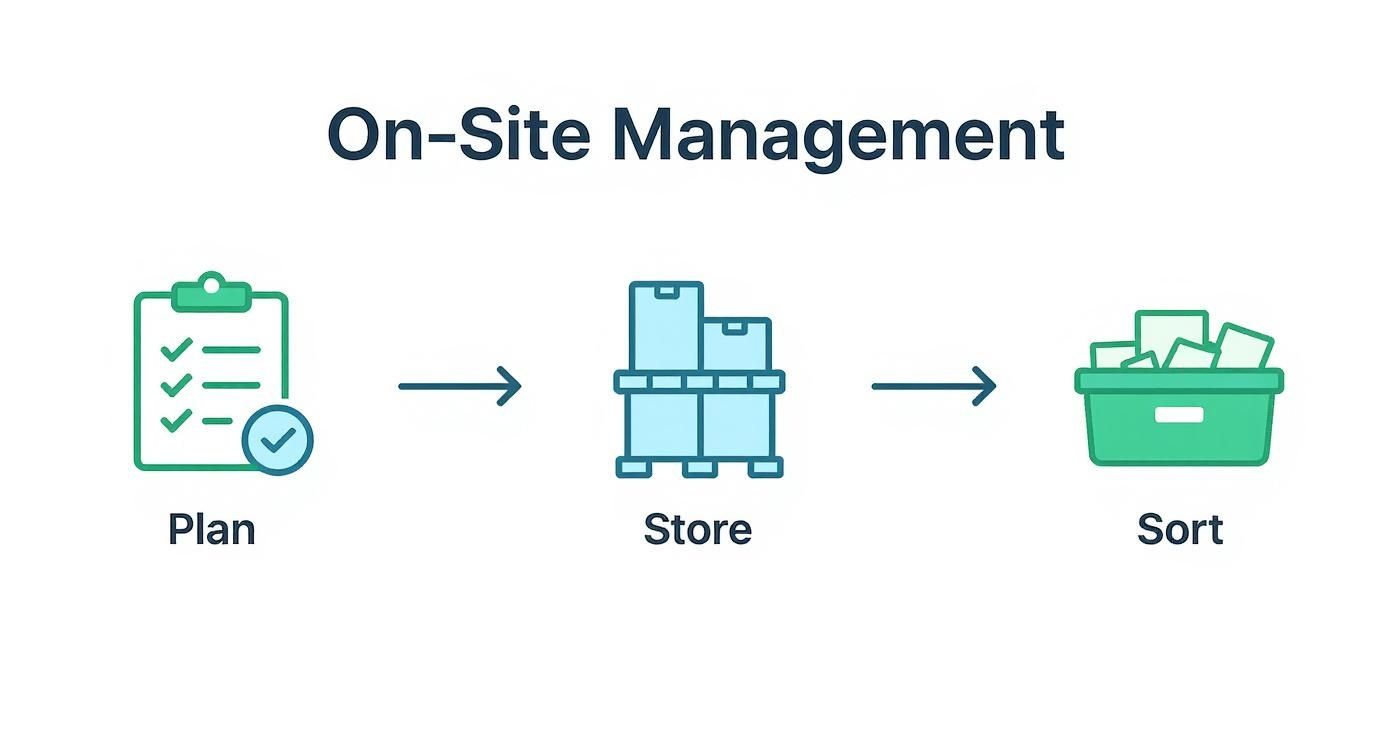

The real takeaway here is that a proactive, organized system is what turns trash into treasure, stopping waste before it even happens.
Deconstruction Over Demolition
When it comes to renovation projects or tear-downs in areas like Cape Coral and Fort Myers, the old wrecking ball approach is incredibly wasteful. There’s a better way: deconstruction. This means carefully taking a structure apart to salvage high-value materials. It's a game-changer for recovering assets that would otherwise be lost forever.
Instead of just smashing everything to bits, a deconstruction mindset helps you spot and preserve items for another life. This is especially true for some of the older Florida homes that might hide some unique architectural gems.
A few key items to look for:
- Hardwood Flooring: Original heart pine or old-growth oak flooring is gold. It's highly sought after and can be sold for a great price.
- Architectural Elements: Think vintage doors, unique trim, or those classic Florida corbels. They can bring character and new life to another custom project.
- Fixtures and Cabinetry: Good quality kitchen cabinets, bathroom vanities, and light fixtures are often in perfect shape for donation or resale.
Choosing deconstruction is really about seeing the hidden value in what's already there. Yes, it takes more planning and labor upfront, but it pays off by creating a new source of valuable materials and slashing your disposal costs.
Tapping into Local Reuse and Recycling Partners
Southwest Florida has a solid network of businesses and organizations that are ready to take your salvaged materials, often giving you a tax receipt for your trouble. Knowing who to call is key for any builder looking to make their waste reduction plan work.
- Habitat for Humanity ReStores: These places are fantastic. They’ll happily take gently used doors, windows, cabinets, appliances, and lighting. Your donation not only keeps good material out of the landfill but also helps support affordable housing in our community.
- Specialized Recyclers: There are local facilities set up specifically to handle concrete, wood, and metals. Clean concrete can be crushed and used again, and scrap metal always has market value.
- Architectural Salvage Yards: If you come across something really unique or historic, these are the people to call. They often buy materials directly from builders because they know their value for restoration projects.
Building relationships with these partners turns your waste management from a headache into a smooth, efficient process. A quick phone call can often get a pickup scheduled, saving you both time and hauling fees.
On-Site Reuse: A Florida Specialty
Beyond just sending materials away, there are some clever ways to reuse them right on your job site. This is especially true here in Florida, where our unique building requirements open the door for some real resourcefulness. A perfect example is what to do with leftover concrete block and rubble.
With the strict flood zone elevation requirements in Southwest Florida, builders often need a ton of clean fill to raise a home's foundation. Instead of paying to haul away broken concrete and then paying again to truck in fill dirt, you can solve both problems at once.
Bring a portable crusher to the site and process your leftover concrete into perfectly good aggregate. This crushed material can be used as a sub-base for driveways or as the structural fill you need to hit that required elevation. This one move eliminates disposal costs, cuts your material purchasing budget, and solves a major Florida-specific building challenge. It's the perfect example of turning a waste problem into a cost-saving, practical solution.
Building Resilient Homes for a Waste-Free Future

Here in Southwest Florida, building smarter isn’t just a trend—it's an absolute necessity. The best way to reduce construction waste is to build a home that can stand up to Mother Nature. The logic is simple but incredibly powerful: a resilient home that survives a hurricane is a home that doesn't become tons of debris hauled to a landfill.
This mindset shifts waste reduction from a simple job site task to a core design philosophy. Every choice we make to harden a home against a storm is also a choice to prevent future waste. It's about playing the long game—ensuring the materials, money, and labor we invest today don’t become tomorrow's massive cleanup project.
Durability Is the Ultimate Form of Waste Prevention
Investing in high-quality, resilient building materials is the single most effective waste management strategy a Florida builder can have. Sure, sorting scraps and recycling on-site is important, but preventing the catastrophic failure of an entire home is on a whole different level. This means focusing on features specifically designed for our unique coastal environment.
Think about the non-negotiables for a storm-ready home:
- Hurricane-Impact Windows and Doors: These are your first line of defense. They're engineered to stop wind-borne debris in its tracks because a single breach can lead to catastrophic structural failure and an unbelievable amount of waste.
- Robust Roofing Systems: A roof that stays put protects everything below it. Spending more on superior underlayment, stronger fasteners, and wind-rated shingles is an investment against massive water damage and the gut renovations that follow.
- Whole-Home Generators: When the power goes out after a storm, secondary damage begins. Mold starts growing from dormant HVAC systems, ruining drywall, flooring, and cabinets that all end up in a dumpster. A generator protects the home's interior long after the storm passes.
A home that weathers a storm is a testament to sustainable building. It’s the ultimate success story in waste reduction, proving that durability is the most eco-friendly feature you can build into a house.
Elevating Homes and Expectations
In coastal communities from Cape Coral to Fort Myers, building above the required flood elevation isn't just a good idea; it's essential. This is another critical area where resilience and waste prevention meet. A home that stays dry during a storm surge is a home that avoids being condemned and demolished—the single largest source of construction-related debris.
When we engineer a foundation that exceeds the minimum code, we're making a direct investment in that home's longevity. We are literally safeguarding it from the landfill. This forward-thinking approach to elevation is a perfect example of how smart building practices are inherently green.
Marketing Resilience as a Green Feature
This commitment to durability isn't just good building; it's a powerful selling point in the custom home market. Clients in Southwest Florida today are savvy. They understand the value of storm readiness, but they also care about sustainability. As a builder, you can and should connect these dots for them.
Frame your building practices as a complete approach to responsible construction. Explain that your choice of impact glass isn't just about safety—it's a commitment to building a home that lasts, which minimizes its environmental footprint over decades. This narrative really resonates with clients who want a home that protects their family, their investment, and the beautiful state we call home.
For more guidance on building a home with these considerations in mind, check out our new home construction tips that cover the entire process.
The takeaway is clear: the most effective way to reduce waste is to build stronger, smarter homes that endure. It’s how we protect our clients, our business, and our little slice of paradise.
Frequently Asked Questions
When you start talking about reducing waste on a custom home build, a lot of questions pop up. It’s a newer way of thinking for many, and as we adapt to what clients in Southwest Florida are looking for, it's only natural to have questions about how it all works in the real world. Here are a few straightforward answers to the things we hear most often.
Is Reducing Construction Waste Expensive Upfront?
This is probably the biggest myth we run into—that building green will automatically bloat your budget. While a few strategies, like careful deconstruction instead of demolition, might take a little more labor upfront, the final result is almost always a net savings. The real expense is in throwing away perfectly good materials and paying those ever-climbing landfill fees.
For example, paying a crew for an extra day to salvage beautiful hardwood floors is a heck of a lot cheaper than hauling them to the dump and buying brand-new flooring.
Look at it this way: every dollar you put into a smart waste reduction plan is an investment that pays you back, often several times over. You cut down your material costs, slash your disposal fees, and can even open up a new revenue stream by selling salvaged items.
How Do I Get My Subcontractors on Board?
Getting your trade partners to adopt a new process can feel like herding cats, but it’s completely doable. The secret is keeping it dead simple and explaining the "why." Nobody wants a complicated system when they're just trying to get the job done.
Here’s what we’ve found really works:
- Keep It Simple: Use color-coded bins or just big, clear labels for different materials. Think Wood, Metal, Concrete. Easy.
- Quick Onboarding: All it takes is a five-minute walkthrough when a new crew shows up on-site to get them up to speed.
- Show Them What’s In It For Them: A clean, organized site makes their job easier, faster, and safer. When everyone understands that less waste helps keep the project's overall costs down, they get on board.
At the end of the day, your subs want a smooth project just as much as you do. Once they see that a tidy site helps them work without tripping over junk, they're usually quick to embrace the system.
What Is the Best First Step to Take?
If you’re just starting to get serious about reducing construction waste, don't bite off more than you can chew. The single most powerful first step is to set up a basic sorting system right there on the job site.
Just start with three dedicated areas: one for clean wood, one for metals, and one for everything else. This simple habit forces everyone to stop and think for a second before they toss something. It’s amazing how much valuable scrap metal and reusable lumber you’ll pull out of the main dumpster with just this one change.
Once that becomes second nature, you can start layering in other strategies, like designing with standard material sizes in mind or connecting with local recyclers. But it all flows from that first, simple sort. It's the foundation that makes every other effort to reduce waste possible—and profitable.
Building smarter, more resilient homes is at the core of everything we do at Sinclair Custom Homes Inc. If you're ready to build a custom home in Southwest Florida that marries outstanding quality with responsible, forward-thinking practices, we're here to help bring your vision to life. Find out more about our process at https://sinclaircustomhome.com.