


When you're building a custom home in Southwest Florida, budgeting for the pool heater pump is a key step. You can generally expect the final pool heater pump cost to land somewhere between $4,000 and $8,000. This isn't just for the unit itself—it's an all-in figure that covers professional installation and all the necessary permits. The final price tag will shift based on the heater's size, its efficiency, and how it ties into your home's other smart systems and resilient design features.
Your Initial Investment in Year-Round Comfort

For anyone designing a new custom home in Southwest Florida, the pool is so much more than just a feature; it’s the heart of our outdoor lifestyle. To make sure you can enjoy it whenever you want, a reliable heating system is a must. The initial pool heater pump cost is a critical line item in your construction budget, and it’s a foundational investment in your property's value and your family's daily enjoyment.
This isn't just about buying another appliance. It's about seamlessly integrating a major system into your new custom home’s infrastructure. This cost really breaks down into three core parts:
- The Equipment Itself: The price of the heater can vary quite a bit, depending on its power (measured in BTUs) and the technology inside. High-efficiency heat pumps, a key new builder trend in Florida for their low running costs, tend to have a higher sticker price than standard gas or electric models.
- Professional Installation: In a new build, installation goes way beyond just hooking up a few pipes. It involves careful coordination with electricians to run dedicated circuits, plumbers for a leak-proof connection, and the construction crew to pour a proper, hurricane-rated equipment pad at the correct elevation.
- Permits and Compliance: Building in places like Cape Coral or Fort Myers means dealing with strict local regulations. Your builder has to pull the right permits to make sure the installation is up to snuff with hurricane resilience standards and specific flood elevation requirements, which are constantly being updated based on new building science and climate news.
Breaking Down the Upfront Costs
Think of the total cost like you would the foundation of your home—getting it right from the start saves a world of headaches and surprise expenses down the road. The main things that will drive your final price are the size of your custom pool, any new design features you want (like heating for an integrated spa), and the unit's efficiency rating.
It just makes sense: a bigger, deeper pool with a gorgeous spillover spa will need a more powerful—and therefore more expensive—heater to keep the water comfortable, especially during our cooler winter months. In the same way, a top-of-the-line, high-efficiency model might cost more upfront, but it perfectly aligns with the modern custom home trend of focusing on long-term energy savings and sustainability.
In the custom home industry, the upfront cost of a pool heater isn't an expense; it's an investment in functionality. Skimping here often leads to an underpowered system that struggles to do its job, which completely defeats the purpose of having one in the first place.
The table below gives you a clear snapshot of what to expect for this initial investment, tailored specifically for new custom home construction in our unique Southwest Florida building environment.
Estimated Pool Heater Pump Cost for a New Florida Custom Home
This table outlines the typical costs you'll see when purchasing and installing a new pool heater pump as part of a custom home project.
| Cost Component | Typical Price Range (Low End) | Typical Price Range (High End) | Key Considerations for Custom Builds |
|---|---|---|---|
| Pool Heater Unit | $2,500 | $5,000 | Price depends on BTU size, brand, and efficiency (COP rating). |
| Installation & Labor | $1,000 | $2,500 | Includes electrical wiring, plumbing, and building a hurricane-rated pad at the proper elevation. |
| Permits & Inspection | $300 | $500 | Necessary for ensuring compliance with Florida building codes and hurricane impact features. |
| Total Estimated Cost | $3,800 | $8,000 | The final cost is shaped by pool size, design features, and home automation integration. |
As you can see, planning ahead allows you to incorporate the right system for your home, ensuring your pool is a source of year-round pleasure, not a source of unexpected costs.
Choosing The Right Pool Heater Type For Your Lifestyle
Picking a pool heater for your new custom home in Southwest Florida is a lot like choosing the engine for a luxury car. The decision you make will directly impact your pool's performance, its running costs, and ultimately, how much you get to enjoy it. In our unique climate, it’s not just about getting the water warm; it’s about control, efficiency, and finding a system that fits seamlessly into the modern, custom-built home you’re designing.
This is a decision that really matters. The right system complements the sophisticated, easy-living lifestyle you’re building. Get it wrong, and you could be stuck with surprisingly high utility bills or a pool that’s just too cold to use for months out of the year. Let's break down the three main options you'll be considering: heat pumps, gas heaters, and solar systems.
Heat Pumps: The Florida Standard
For the vast majority of new custom homes we build here in Southwest Florida, the pool heat pump is the undisputed champion. It’s a brilliant piece of technology and a major new builder trend. Instead of creating heat by burning fuel, it cleverly pulls ambient heat from our warm, humid air and transfers it into your pool water. Given our climate, this process is incredibly efficient.
You can think of it as an air conditioner working in reverse. Since the air here is almost always warm, the heat pump has an easy job finding thermal energy to harvest, which keeps operating costs very low.
For a custom home designed for year-round outdoor living, a heat pump offers the perfect balance of consistent performance and manageable monthly costs, making it the default choice for experienced Florida builders focused on modern design.
Many of today's best heat pumps also come with a "chiller" function. This is a game-changer and a must-have design feature for Florida summers. When the sun beats down relentlessly, your pool can feel more like a warm bath. A chiller reverses the process to cool the water down, adding immense value and usability to your outdoor oasis.
Gas Heaters: For Rapid, On-Demand Heat
Gas heaters work much like your home's hot water tank, using either natural gas or propane to instantly heat water as it cycles through the unit. Their single biggest advantage is speed. A gas heater can raise your pool or spa temperature much faster than any other option. This is perfect if you decide on a Friday afternoon that you want to fire up the spa for the evening.
But that speed comes at a price. The pool heater pump cost to run a gas unit monthly is significantly higher. Gas prices can be unpredictable, and these heaters are simply not as energy-efficient as heat pumps. In the custom home industry, they are best used as a secondary heater just for a spa, or for homeowners who only use their pool occasionally and want heat on demand without any pre-planning.
Solar Heaters: The Eco-Friendly Choice
Solar pool heating is exactly what it sounds like. It uses panels, usually placed on your roof, to capture the sun’s raw energy. Your pool water is pumped up through these panels, gets heated by the sun, and is then sent back to the pool. It’s easily the most environmentally friendly choice, with practically zero operating costs once the system is installed.
The trade-off, however, is a lack of consistency. Solar heaters depend entirely on sunshine. They're less reliable on cloudy days or during the cooler winter months—precisely when you want to heat your pool the most. They also have a tough time getting water hot enough for a spa. For a custom homeowner whose top priority is green building, a solar system is a fantastic option, but it often needs a backup heater for guaranteed, year-round comfort.
The infographic below shows how these core factors come together to influence the total cost of ownership.
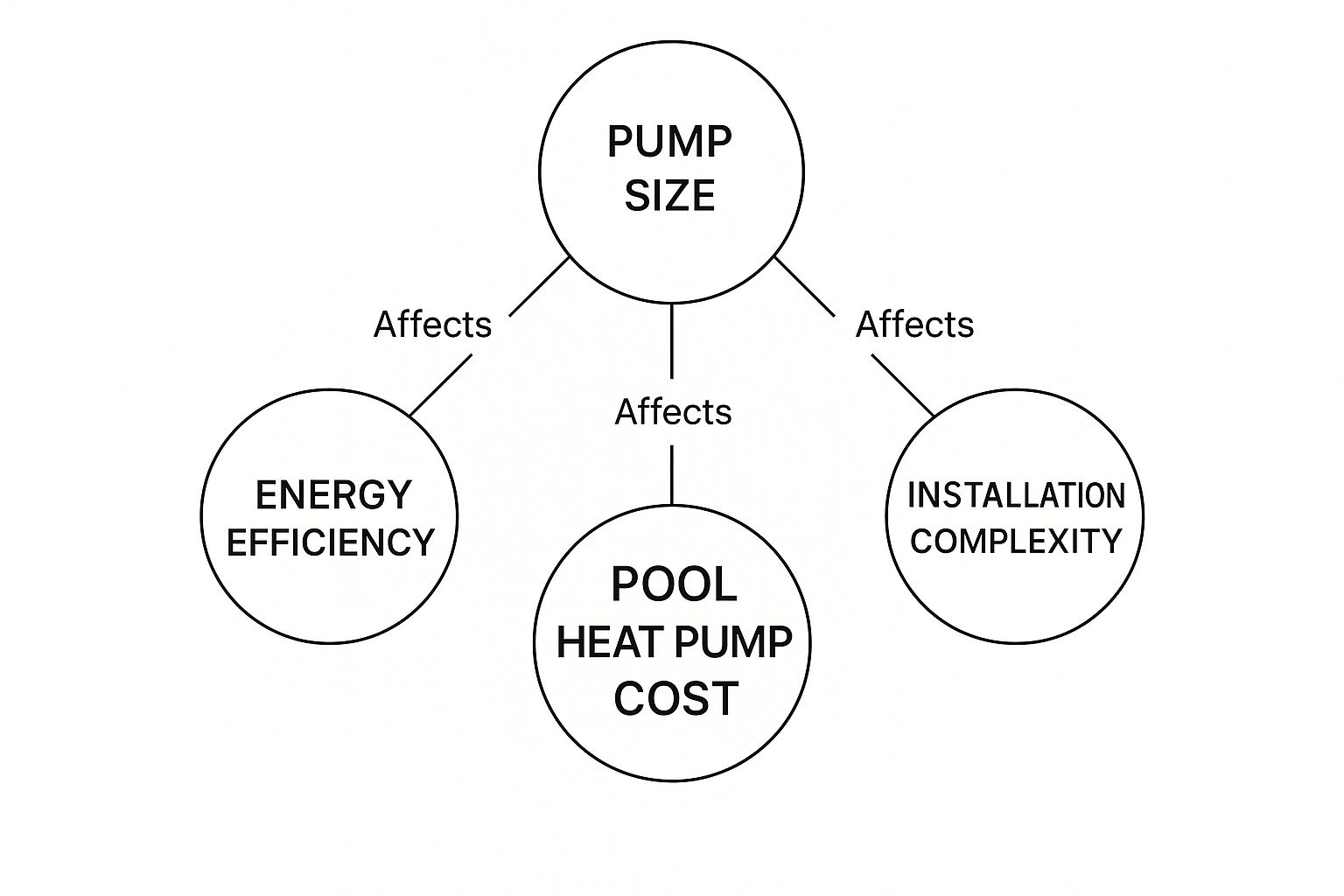

As you can see, the heater's size, its built-in efficiency, and the specifics of the installation all play a role in the final price tag.
Comparing Pool Heater Options for Florida Custom Homes
When it comes down to it, choosing the right heater means matching the technology to your lifestyle, your home’s design, and the realities of living in Southwest Florida. You have to think about how you really plan to use your pool. Are you looking for consistently comfortable water for daily laps, or do you need the power to heat a spa quickly for weekend get-togethers?
This table breaks down how each heater type stacks up, focusing on what matters most for a new custom home build in our part of the world.
| Heater Type | Upfront Cost | Monthly Operating Cost | Ideal Use Case | SW Florida Performance Notes |
|---|---|---|---|---|
| Heat Pump | Moderate | Low | Daily use, year-round swimming, integrated pool/spa combos. | Extremely efficient in our warm, humid climate. The chiller function is a major new design feature. |
| Gas Heater | Low | High | Infrequent use, rapid spa heating, backup for solar systems. | Performs well regardless of air temperature but is expensive to run. Less popular in new custom builds. |
| Solar Heater | High | Very Low | Eco-conscious homeowners, extending the swim season. | Excellent during sunny months but struggles on cloudy days and in winter. Cannot heat a spa effectively. |
Each option has its place, but understanding these key differences ensures you'll make a smart investment that enhances your custom home and lifestyle for years to come.
Understanding Your Installation Costs for a New Build
When you're building a custom home in Southwest Florida, putting in a pool heater pump isn't just a final-step, plug-and-play task. Far from it. It's a foundational part of the construction that demands real foresight, meticulous planning, and a deep understanding of our region's tough building codes. The labor and materials for installation are a major part of the final pool heater pump cost, and getting a handle on these details is key to keeping your budget on track.
Unlike swapping out an old unit in an existing home, a new-build installation is woven right into the DNA of your property. This is where the skill of a true custom home builder really shows. It’s about so much more than just hooking up a machine; it’s about building a robust, compliant, and reliable system from the ground up.
The Foundation: A Concrete Equipment Pad
First things first: your pool equipment can't just sit on the dirt. Florida's building codes—especially in coastal communities like Fort Myers and Cape Coral—are crystal clear on this. They mandate a solid, elevated concrete pad for all your major pool equipment. This isn't just a friendly suggestion; it's a non-negotiable hurricane impact feature.
This pad really serves two critical functions:
- Flood Protection: Here in Southwest Florida, storm surges and flooding are a fact of life. Elevating your equipment pad based on local flood maps and news that affects building codes keeps your expensive heater high and dry when the water rises.
- Hurricane Resilience: The pad provides a rock-solid base to anchor the unit down. During a hurricane, unsecured equipment can easily become a thousand-pound projectile. Proper anchoring is an absolute must for any new installation.
Creating this pad is a team effort. It involves prepping the site, pouring the concrete, and making sure it’s perfectly level and placed just right. For a smooth project, you have to work with builders who truly get the nuances of how to build a custom home that can stand up to our unique climate.
Electrical and Plumbing Integration
Modern pool systems are surprisingly complex. The installation requires a licensed electrician to run a dedicated, properly grounded electrical circuit straight from your main panel to the equipment pad. This is a critical safety measure, and it’s necessary to handle the power draw of a high-performance heat pump. A growing trend in custom homes is to wire this circuit through the home's generator transfer switch, ensuring the pool pump can run even during a storm-related power outage.
At the same time, a skilled plumber has to tie the heater into the pool’s circulation system. This means precision work—cutting and fitting PVC pipes, installing check valves to direct water flow correctly, and creating a "plumbing loop." This loop is a smart design that lets you bypass the heater for service without having to shut down your entire pool. In a new custom build, we often integrate this with home automation, so you can adjust your pool's temperature right from an app on your phone.
In new construction, the goal is to make the equipment invisible in its function—perfectly integrated and flawlessly reliable. This requires meticulous planning between the builder, electrician, and plumber long before the unit ever arrives on site.
The Florida-Specific Challenges
Beyond the basics, installing a pool heater in Southwest Florida comes with its own set of hurdles that directly affect your installation costs. Trying to cut corners here is a recipe for failed inspections, expensive rework, or even a catastrophic failure during a storm.
- Code Compliance: Every city has its own specific rules about setbacks, noise levels, and safety codes that dictate exactly where and how your equipment can be installed. These are constantly updated based on news that affects Florida building.
- Anchoring and Tie-Downs: We’re required to use hurricane-rated straps and anchoring systems to bolt the heater to its concrete pad, a critical hurricane impact feature ensuring it can withstand powerful winds.
- Automation Wiring: If you're connecting the heater to a smart system like Jandy iAquaLink or Pentair IntelliCenter, it involves running low-voltage wiring and programming everything to sync up with the rest of your smart home—a popular new design feature.
Ultimately, the installation process on a new custom home says a lot about the builder's commitment to quality. It's a carefully coordinated effort to ensure your investment is not just functional on day one, but secure and built to last in our beautiful but demanding coastal environment.
Calculating Long-Term Operating Costs and Efficiency
The sticker price on a pool heater is just the first chapter of its financial story. The real narrative, the one that shows up on your budget month after month, is written on your utility bills. When you’re designing a custom home in Southwest Florida, understanding this total cost of ownership is absolutely essential—it’s a view that aligns perfectly with the builder trend of creating modern, energy-efficient, and sustainable properties.
It's tempting to go for a lower upfront cost, but that can often mask much higher operating expenses down the road. This is precisely where a pool heat pump proves its worth, especially here in the Sunshine State. In our warm, humid climate, it’s the undisputed champion of efficiency.
Decoding Efficiency: The Coefficient of Performance
To really get why heat pumps are so cost-effective, we need to talk about a key metric: the Coefficient of Performance (COP). Don't let the technical name throw you; the concept is actually pretty simple. The COP just measures how much heat a unit produces for every single unit of electricity it consumes.
Think of it like this: a gas heater has a COP of less than 1.0. Why? Because it has to burn fuel to create heat, and some of that energy is always lost in the process. A heat pump, on the other hand, doesn't create heat—it just moves it. By pulling existing warmth from the humid Florida air, it can achieve a stunning COP of 5.0 to 6.0 or even higher.
This means for every $1 of electricity you put into a high-efficiency heat pump, you get back $5 to $6 worth of heat in your pool. It’s an incredibly effective system that uses our natural climate to keep your operating costs ridiculously low.
This incredible efficiency is the main reason why a slightly higher initial pool heater pump cost for a quality heat pump translates directly into massive savings over its lifespan.
The Financial Impact of High Efficiency
Let's bring this into the real world of building a custom home. Imagine you're choosing between a standard gas heater and a high-efficiency heat pump. The gas unit might save you a thousand dollars upfront, but its monthly running costs could easily hit several hundred dollars during the swimming season. In sharp contrast, the heat pump might only add $30 to $50 to your monthly electric bill.
Over the 10 to 20-year lifespan of a quality heat pump, those savings compound in a big way. You'll not only cover the initial price difference but end up putting thousands of dollars back in your pocket. This kind of long-term financial planning is a critical part of a successful custom build. For more on this, our guide on effective home construction project management offers valuable insights into budgeting for lasting value.
This shift toward efficiency isn't just a local trend; it's a global movement. News of the growth of the heat pump pool heater market shows it was recently valued at around $4.7 billion and is expected to blow past $5.8 billion by 2033. This growth is all about homeowners demanding sustainable technology and recognizing the huge cost savings these units offer—a key consideration for the custom home industry.
Comparing Long-Term Costs: A Clear Winner
When you look at the total investment over a decade, the financial picture becomes crystal clear.
- Gas Heater: You get a lower initial cost but face high, unpredictable monthly fuel bills that swing with the energy markets.
- Heat Pump: You have a higher initial investment but enjoy consistently low, stable monthly operating costs you can actually budget for.
For a custom homeowner in Florida who plans to enjoy their pool all year, the choice is pretty obvious. A heat pump's efficiency isn't just a "nice-to-have" feature; it's a smart financial decision that pays you back for years. By focusing on long-term operating costs instead of short-term savings, you ensure your beautiful new pool remains a source of affordable enjoyment, not a financial headache.
Factoring in Maintenance Needs and Lifespan in Florida
Here in Southwest Florida, the salt-laced air is tough on everything outdoors. When you're thinking about the total pool heater pump cost, it’s not just about the price tag on day one. Smart homeowners and custom builders know you have to look down the road at maintenance, repairs, and how long the unit will actually last. This kind of long-term thinking is what sets a quality custom home apart.
Think of your pool heater like a high-performance car. It's a major investment, and you wouldn't just drive a luxury car without ever getting an oil change, right? Especially not in our coastal environment where corrosion is always trying to get a foothold. Your heater needs a consistent maintenance schedule to run efficiently and avoid an early trip to the scrapyard.
Lifespan: A Tale of Two Heaters
The difference in how long you can expect a heater to last is massive, and it directly hits your wallet over time. This is a huge deal when you're building a home that’s meant to stand the test of time.
- Heat Pumps: A well-cared-for heat pump, the preferred choice in the custom home industry in Florida, has a seriously impressive lifespan of 10 to 20 years. They're just built tougher and better suited for our climate.
- Gas Heaters: A gas heater, on the other hand, will typically give you only 5 to 10 years of service. The intense heat created by burning gas is rough on the internal parts, and they just wear out faster.
So, when you spread the pool heater pump cost over two decades, you might have to buy and install a new gas heater two, or even three, times. Suddenly, the heat pump doesn't just look like a good option; it looks like the only smart option for long-term value.
Practical Maintenance for a Florida Pool Heater
A little proactive maintenance is your best defense against surprise repair bills and a heater that quits on you years before it should. Your game plan should include bringing in a pro once a year and doing a few simple things yourself.
Annual Professional Service: Get a certified technician out once a year to give the system a full check-up. They’ll do things like clean the evaporator coils, check the refrigerant levels, and inspect all the electrical connections to make sure they’re tight and free of corrosion.
DIY Monthly Checks:
- Keep it Clear: Make sure the area around your heater is clear of any leaves, overgrown bushes, or other yard debris. Good airflow is critical.
- Hose it Down: Give the outside cabinet and coils a gentle rinse with your garden hose once a month. This washes away the salt and grime that causes corrosion.
- Monitor Performance: Just pay attention. If you hear weird noises or notice it’s not heating like it used to, you might be able to catch a small problem before it becomes a big one.
A strong warranty is non-negotiable for any major appliance in a coastal custom home. It’s your financial backstop against premature failure and a clear indicator of the manufacturer's confidence in their product's durability in demanding environments like ours.
Finally, getting familiar with the smaller parts of your system can make a big difference in the long run. For a detailed guide on how various components work and how to care for them, you can find excellent resources covering things like solenoid valve installations and maintenance instructions, as these are common in many complex systems. Taking these simple steps helps ensure your pool heater remains a reliable asset, not a recurring headache.
Hurricane-Proofing Your Pool and Powering Through Storms
Building a custom home in Southwest Florida isn't just about beautiful designs and stunning views—it's about engineering for resilience. When a storm starts brewing on the horizon, the last thing you want is for your major investment in a pool to become a liability. This is where smart, forward-thinking design truly shines, ensuring your pool and its systems are built to handle our unique weather challenges.
One of the smartest trends in modern custom home building is connecting your essential systems. A perfect example is wiring your pool heater and pump directly to a whole-home generator. When a storm knocks out the power, sometimes for days, that generator keeps your pool’s circulation pump running. This is absolutely vital for preventing algae growth and keeping your water chemistry in check when you can't be out there treating it.
Fortifying Your Equipment Against the Elements
Beyond keeping the power on, the physical security of your pool equipment is critical. The job isn’t done until your equipment is completely fortified against hurricane-force winds. For any reputable Florida builder, this is a non-negotiable standard and a key factor that goes into the overall pool heater pump cost.
Essential hurricane-impact features always include:
- Reinforced Tie-Downs: We're talking stainless steel straps and heavy-duty concrete anchors that bolt the heater securely to its elevated pad. This prevents it from becoming a dangerous projectile in high winds.
- Durable Casings: We always recommend heaters with robust, corrosion-resistant cabinets. These are built to withstand impacts from flying debris and hold up against our salty, humid air.
- Proper Elevation: As we've mentioned, elevating all your equipment above the base flood elevation is your number one defense against storm surge damage.
These aren't just fancy add-ons; they are baked into a safe, compliant installation. News from industry analysts shows that the demand for this kind of durable equipment is a big reason the global pool heat pump market was valued at about $2.1 billion in 2022 and is projected to hit $2.85 billion by 2028. It’s no surprise that North America makes up over 38% of that market—homeowners here demand products that are both energy-efficient and built to last.
Permitting and Resilient Design
Making sure these protective measures are installed correctly is a huge part of the local building code and permitting process. Authorities in cities like Cape Coral require detailed plans showing exactly how pool equipment will be secured and protected from storms. Getting the specifics right is crucial. For anyone building here, a solid understanding of Cape Coral building permits is absolutely essential for a smooth project.
In Southwest Florida, hurricane-proofing isn't a feature—it's the foundation of responsible building. It’s about creating a home and a lifestyle that can weather the storm, safeguarding both your family and your investment for years to come.
At the end of the day, this dedication to resilient design ensures your custom pool remains a source of joy, not a point of stress, no matter what the forecast says.
Your Top Pool Questions, Answered
As you get into the nitty-gritty of designing a custom home here in Southwest Florida, a few key questions about your pool system almost always pop up. We've heard them all, and we've got the straightforward answers you need to plan your build with total confidence.
Does My Pool Heater Really Need to Be on a Raised Platform in Florida?
Yes, absolutely. This isn't just a suggestion; it's a critical requirement. Building codes across Southwest Florida, especially in our coastal and flood-prone areas, mandate that all major equipment—pool heaters included—must be installed on a raised concrete platform.
Think of it as essential insurance for your investment. This elevated pad is a key hurricane-impact feature designed to protect your expensive equipment from storm surge and flooding. When you're reviewing blueprints for your custom home, make sure the builder has included an equipment pad that meets or exceeds all local elevation and resiliency codes, which are always subject to change based on the latest news affecting Florida building.
Can a Pool Heat Pump Cool My Pool, Too?
It can, and trust me, this is a game-changing new design feature you'll want. Most modern, high-quality heat pumps are "reverse-cycle" units, meaning they can both heat and chill your pool water. This has quickly become one of the most requested features in new Florida homes, and for good reason. Our intense summer sun can turn a refreshing pool into a warm bath by August.
While adding a chiller function might nudge the initial pool heater pump cost up slightly, the payoff in your pool's year-round usability and overall value is huge.
The demand for these versatile, energy-smart units is exploding worldwide. As industry news shows, the market was recently valued at around $1.5 billion and is expected to grow by 7% annually through 2033. It's clear that homeowners everywhere are catching on to more sustainable and flexible pool solutions. You can read more about the growth of the heat pump pool heater market to see the trend for yourself.
How Does a Heat Pump Work with My Smart Home System?
Seamlessly. Today's pool heaters are built with smart home integration in mind—it’s a key part of modern home construction and a leading new builder trend. They are designed to connect directly to popular automation systems like Jandy iAquaLink or Pentair IntelliCenter.
This allows you to control your pool’s temperature, set heating schedules, and even monitor energy usage right from an app on your smartphone. It’s a fantastic layer of convenience that also provides advanced energy management for your new custom home.
When you're building a custom home that's meant to stand the test of time, every single detail counts. At Sinclair Custom Homes Inc, we build with an unwavering commitment to quality and integrity, ensuring your home is an over-engineered masterpiece perfectly suited for the Florida lifestyle. Start your vision with us today.