Choosing a home builder in Southwest Florida is a massive decision. You’re not just hiring a contractor; you're selecting a partner who needs to be a master of our local climate, building codes, and unique coastal design challenges.
The success of your custom dream home really comes down to finding a builder with a proven track record, deep expertise in Florida-specific construction, and the financial stability to see your project through. This isn't just about building a house—it's about building a fortress that's also your sanctuary, perfectly tailored to the modern Florida lifestyle.
Your First Steps to Finding the Right Florida Builder
Starting the journey to build a custom home here is exciting, but it demands smart planning right from the beginning. Our unique environment—with its intense sun, relentless humidity, and the ever-present threat of hurricanes—calls for a builder who is more than just a general contractor. They have to be a local expert in the custom home industry.
So, the first phase isn't just about finding someone who builds a pretty house. It’s about vetting a partner who truly gets the specific challenges and opportunities of building in this region. This means you need to prioritize builders who specialize in resilient, forward-thinking construction.
They should be fluent in the language of hurricane impact features, reinforced roofing, and proper building elevation to handle potential flooding. Let's be clear: these aren't luxury upgrades in Florida. They are absolute necessities for protecting your investment and your family.
Building a Foundation of Trust
Before you even glance at a portfolio, your first move should be to check the non-negotiables: licensing and insurance. Any reputable builder will happily provide their Florida contractor license number, which you should always verify for complaints. This simple step protects you from unqualified operators and confirms they meet the state's professional standards.
Equally important is their insurance coverage. You need to know your project is safeguarded from any unforeseen issues that might pop up along the way.
To help you get started, use this quick checklist for your initial screening of any potential Southwest Florida home builder.
Initial Builder Vetting Checklist
| Vetting Point | Why It's Critical in Florida | How to Verify |
|---|---|---|
| FL Contractor License | Ensures they meet state standards and are legally allowed to build. | Ask for their license number and verify it on the Florida DBPR website. |
| General Liability Insurance | Protects your property from damage during construction. | Request a copy of their current Certificate of Insurance (COI). |
| Workers' Compensation | Covers their employees if they get injured on your site. | Also listed on the COI; ensures you aren't liable for job site injuries. |
| Local SWFL Experience | They must understand hurricane codes, flood zones, and soil conditions. | Check their portfolio for local projects and ask for addresses you can drive by. |
This table covers the bare minimum. Once you've confirmed these basics, you can start digging into their actual work and design philosophy.
Going Beyond the Basics
Once the fundamentals are out of the way, you can dive into what makes a builder a good fit for your vision of modern Florida living. Start asking questions that reveal their expertise and focus on new design features:
- Seamless Indoor-Outdoor Spaces: Do their designs feature expansive lanais, summer kitchens, and large sliding glass doors that truly embrace our coastal lifestyle?
- Storm Preparedness: What are their standard features for storm hardening? Ask specifically about things like whole-home generators, which are a lifesaver after a major storm knocks out power for days or weeks.
- Innovative Features: Are they up-to-date on new builder trends and materials suited for our climate? You want a home that's both beautiful and built to last, incorporating the latest in smart home technology and energy efficiency.
The right builder for Southwest Florida doesn't just meet the building code; they build beyond it. They anticipate the challenges of the climate and engineer homes designed to last for generations, providing peace of mind alongside stunning craftsmanship.
As you move through this process, you’ll also start thinking about all the material choices for your home, from structural elements to interior finishes. For instance, figuring out how to choose the right flooring for your new home is a key decision that affects both the look and durability in Florida's humid environment.
Knowing the right questions to ask upfront is crucial. Get a head start by reviewing some great questions you should ask a potential custom home builder. These initial steps lay the groundwork for a successful partnership and, ultimately, a home that you'll love for years to come.
Verifying a Builder’s Reputation and Financial Stability
A builder’s portfolio can be stunning, but that's just the highlight reel. What really counts is their ability to manage a complex custom home project, stay afloat financially, and stand by their work long after you've moved in. This is where you roll up your sleeves and do the real homework, moving past the glossy photos to see if they're a truly reliable partner.
Your first stop should be the official records. Here in Florida, you can look up a builder’s license and check for any complaints filed against them through the Department of Business and Professional Regulation. A clean record is a good sign, but it's just the beginning of your investigation.
It's also essential to understand the specific general contractor insurance requirements they carry. This isn’t just a piece of paper; it’s the safety net that protects your massive investment if something goes wrong.
Talking to Past Clients
Online reviews are a starting point, but nothing beats a real conversation with past clients. You'll get the unvarnished truth this way. Don't just ask if they're happy with their home—dig deeper to understand how the builder performs under real-world pressure.
Here are a few questions I always recommend asking:
- Communication: How did they keep you in the loop? Were updates clear and consistent, or did you feel like you were constantly chasing them for answers?
- Budget Management: Did unexpected costs pop up? More importantly, how did they handle it? A good builder will explain the issue, present solutions, and work with you—not just hand you a surprise bill.
- Post-Move-In Support: What happened when you found an issue after getting the keys? Their willingness to address warranty claims quickly and effectively says everything about their integrity.
These conversations paint a vivid picture of what it’s really like to work with them, from the first shovel in the ground to long after the project is complete.
A builder's true character is revealed not when things go perfectly, but in how they manage the inevitable challenges of a complex custom home project. Look for a problem-solver, not just a plan-follower.
Assessing Their Project Pipeline and Financial Health
A builder with a full schedule is often a sign of a successful, in-demand company. But there's a fine line between busy and overextended. A builder juggling too many projects at once can lead to delays, stretched resources, and a drop in quality on your home.
Ask them directly how many projects they currently have active and what systems they have in place to ensure every home gets the attention it deserves. A well-managed firm won't be afraid to answer this question.
Their financial health is just as critical. A key indicator here is their backlog volume, which gives you a sense of their near-term revenue stability. Given recent news affecting building in Florida, such as fluctuating material costs and labor shortages, a healthy backlog suggests the company has the operational muscle to weather market shifts. A shrinking one, on the other hand, could be a red flag. This isn't about getting into their private books, but about ensuring you're partnering with a builder who has the financial endurance to see your dream home through to completion without cutting corners.
Assessing True Craftsmanship and Design Innovation
A builder's portfolio is a great start, but the pictures only tell half the story. True craftsmanship lives in the details you can't see online. To find a custom home builder who is a true master of their craft—not just a project manager—you need to get your boots on the ground and walk their job sites and finished homes.
This is where you'll really learn to see the difference between a house built to code and a home engineered for life.
When you're touring an active construction site, look past the obvious stacks of lumber. How clean and organized is the site? A tidy job site is almost always a sign of a detail-oriented builder who respects the process. Take a close look at the framing. Is the lumber straight? Is it spaced correctly? These are the early clues that point to the level of precision you can expect for the entire build.
It's the same story in a completed home. Run your hand over the drywall finishes, especially in the corners. Are they sharp and clean? Open and close the interior doors. Do they feel solid and close without sticking? These are the tangible results of a builder who demands excellence from every subcontractor—and from themselves.
Beyond Quality: The Importance of a Design Partnership
Here in Southwest Florida, solid construction is just the baseline. You also need a builder who can be a creative partner, not someone who's just recycling the same outdated designs. Your custom home should be a reflection of the modern Florida lifestyle, blending our incredible environment with the comfort and convenience you expect.
A forward-thinking builder won't just build your plan; they'll bring new builder trends and design features to the conversation. Look for someone who talks about things like:
- Seamless Indoor-Outdoor Living: This is a hallmark of new custom home design. Think expansive pocket sliding glass doors that completely disappear into the walls, creating a flawless flow out to a gorgeous lanai or summer kitchen.
- Smart Home Integration: A modern home should have intuitive tech that makes life simpler, not more complicated. This includes smart lighting, climate control, and security systems that work for you.
- Climate-Appropriate Materials: A builder who really knows our humid, salt-air climate will recommend specific, sustainable materials designed to resist moisture, sun damage, and pests for the long haul.
Finding a builder who actively contributes to the design process is a game-changer. They go from being a contractor to being a genuine partner in creating your vision. If you want to get your own creative juices flowing, take a look at some modern custom home design ideas to help you figure out what you truly want. The more prepared you are, the easier it is to find a builder whose style and skill set are a perfect match for your dream home.
A great builder doesn’t just execute your plans; they enhance them. They see potential you might miss and offer innovative solutions that elevate the final design from good to extraordinary.
At the end of the day, it comes down to finding that perfect blend of execution and innovation. You need a partner whose commitment to structural integrity is matched only by their passion for creating beautiful, functional, and modern spaces designed specifically for the unique demands of life in Southwest Florida.
Building for Hurricanes and Florida Weather
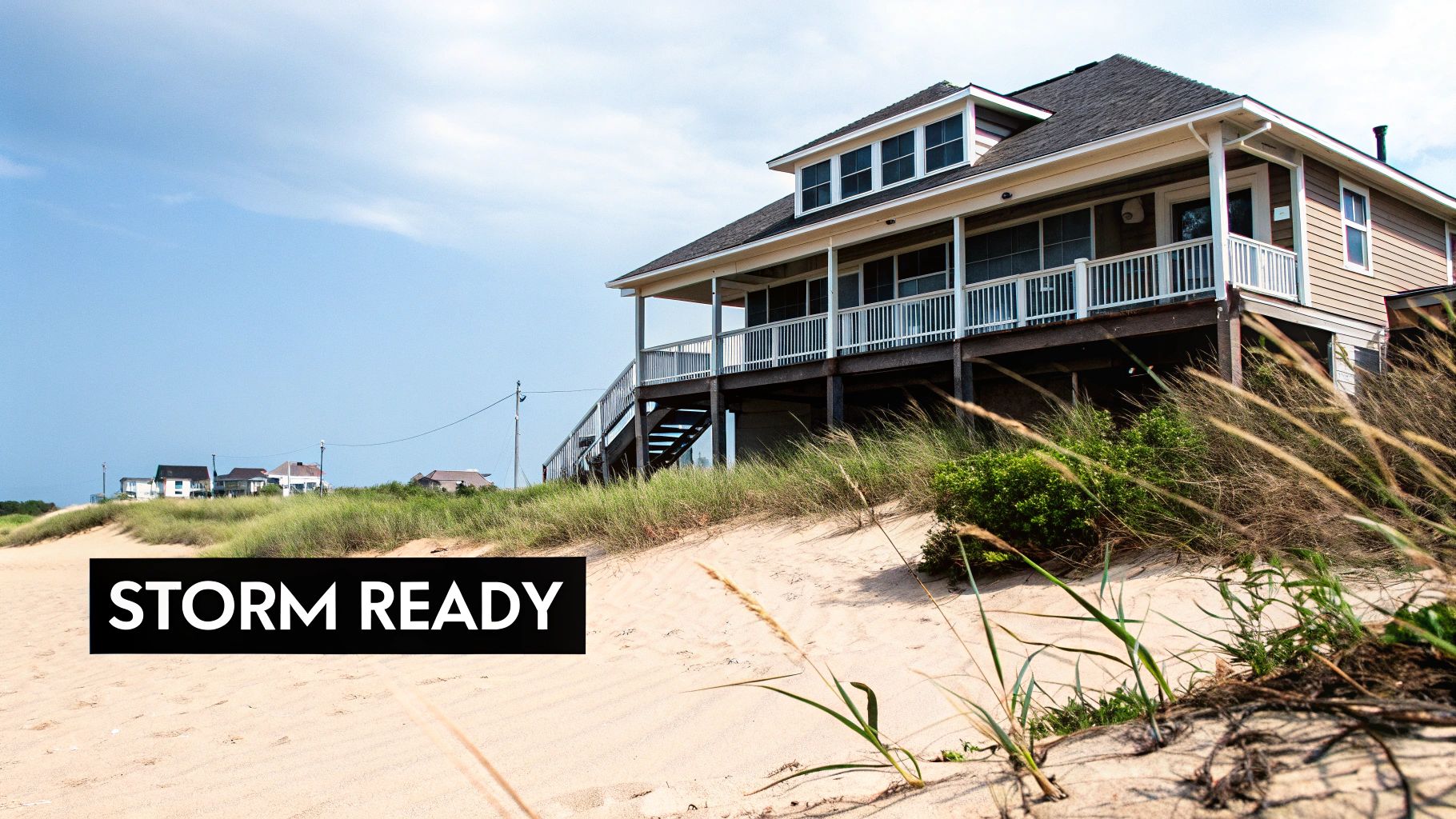
Here in Southwest Florida, a custom home has to be more than just beautiful—it needs to be a fortress. When you're figuring out how to choose a home builder, their deep knowledge of storm resiliency isn't just another nice feature. It's the single most important qualification they can have.
Your builder's approach to our intense weather is what will determine your home's ability to stand up to hurricanes, flooding, and the relentless humidity. The conversation has to go way beyond just meeting basic building codes. Codes are the bare minimum. A top-tier builder constructs homes to a much higher standard, engineering a structure that’s designed for survival and long-term durability. This focus on hurricane impact features is non-negotiable for building in our slice of coastal paradise.
Beyond Code: The Anatomy of a Storm-Hardened Home
A builder who genuinely gets Florida weather doesn't just bolt on storm features as an afterthought. They weave them into the very DNA of the house, treating them as essential structural elements from day one.
When you start interviewing potential builders, ask them to walk you through their standard storm-resiliency package. This is no time for vague assurances; you need specifics.
- Hurricane Impact Features: Don't just ask if they use impact windows and doors. Ask for the specific Design Pressure (DP) ratings. A higher DP rating means it can take a much bigger punch from wind and flying debris.
- Reinforced Roofing: How exactly do they go beyond the code? Look for things like secondary water-resistant barriers, securing roof sheathing with ring-shank nails at closer intervals, or using high-wind-rated shingles and metal roofing systems.
- Generators in Storms: After a major storm, the power can be out for days, sometimes weeks. A builder who includes or at least pre-wires for a whole-home generator understands the reality of living here and is planning for your actual safety and comfort during prolonged outages.
Digging into this level of detail is a crucial part of the custom home building process and quickly separates the builders who are committed to true quality from those just trying to meet the minimum.
Elevation: Your First Line of Defense Against Flooding
If recent storms have taught us anything, it's the devastating power of storm surge. Proper building elevation is your single most important defense against flooding, a threat that keeps changing with new weather patterns and updated flood maps. News that affects building in Florida often revolves around these changing requirements.
A proactive builder won't just meet the minimum Base Flood Elevation (BFE) required by the county. They'll advise you to build higher, adding a critical buffer known as "freeboard" that can be the difference between a dry home and a total loss. This decision gives you incredible peace of mind and can also lead to massive savings on flood insurance premiums for the entire time you own the home.
A builder's true measure in Florida isn't just the beauty of their finished homes, but the strength of their unoccupied structures after a Category 4 storm has passed. Resilience is the ultimate luxury.
Ask potential builders how they decide on the final finished floor elevation. Do they just check the box on the minimum requirement? Or do they analyze your specific lot, look at recent storm data, and advise you on an elevation that puts your long-term safety first? The builder pushing you to go higher is the one looking out for your best interests. Their job is to build a sanctuary that will stand strong for decades.
Choosing a Builder Aligned with Future Trends
The custom home you build today isn't just for you; it's an investment that needs to stand the test of time and hold its value for decades. That’s why it’s so important to find a builder who is looking ahead, not just focused on getting the next job done. The best builders in Southwest Florida have their finger on the pulse of the major new builder trends shaping our state, from explosive population growth to the critical need for climate-resilient construction.
You can often spot a forward-thinking builder by their commitment to sustainable design and energy efficiency. These aren’t just trendy buzzwords anymore—they're quickly becoming the gold standard for high-quality homes. This shift is driving huge growth in residential construction, as savvy builders embrace green practices to gain a competitive edge. To put it in perspective, the European green building market alone is expected to hit $198 billion by 2025. When you vet potential builders, their focus on sustainability gives you a clear window into how well they’re positioned for the future, a fact backed by deep dives into market trends and sustainability in construction.
Embracing Modern Design and Resiliency
A builder who is truly planning for the future also gets how our lifestyles are evolving. Take the rise of remote work—it has completely changed what people need from their homes. A dedicated office, flex spaces, and rock-solid connectivity are now essentials, not nice-to-haves. Make sure you ask builders how they’re weaving these modern necessities into their floor plans.
And here in Florida, "future-proofing" is all about storm resiliency. This means going far beyond today’s hurricane codes and minimum elevation requirements.
A truly forward-thinking builder anticipates what's coming next. They design homes with higher elevations than currently required and integrate the infrastructure for essentials like whole-home generators. They understand that storm intensity and frequency aren't static—they're changing variables.
Choosing a builder who gets these future trends is crucial. It ensures your home stays relevant, desirable, and secure for years to come. Their work won't just meet your needs today; it will be ready to adapt to new regulations and what future buyers are looking for long after the last nail is hammered in. This kind of strategic thinking is the mark of a true partner in your investment.
Making Your Final Decision with Confidence
You’ve put in the legwork—researching, touring job sites, and interviewing your top contenders. Now comes the moment of truth. This final stage is all about diving deep into the proposal and contract to make sure the partnership you’re about to form is solid, transparent, and built on trust.
A builder’s proposal is so much more than a price tag; it’s a window into their entire operation. A great proposal will have an itemized budget, showing you exactly where your money is going. If you get a vague, lump-sum estimate that feels like it’s hiding costs, that’s a red flag. You should see clear line items for everything from site prep and permits to flooring, fixtures, and labor.
The timeline is just as critical. A realistic schedule, especially here in Florida, absolutely must have buffers built in for things like weather delays during our rainy season. Don't be shy about asking the tough questions. How do they handle inevitable setbacks? What's the communication plan when things don't go perfectly to schedule?
Scrutinizing the Fine Print
Before you even think about signing on the dotted line, you need absolute clarity on two things: the change order process and the warranty coverage.
Let’s be real, change orders are going to happen. You might decide you want a different countertop or to add an outdoor outlet. But how a builder manages these changes says a lot about them. A fair process will have a clear, written approval system for any modifications to the plan or budget. This protects you from getting hit with surprise costs down the road.
Similarly, get the nitty-gritty details on their warranty. What, exactly, is covered under their workmanship guarantee? For how long? If you have an issue with your plumbing six months after moving in, who do you call? Getting all of this in writing isn't just a good idea—it's non-negotiable.
This handy decision tree can also help you focus on features that will make your home truly future-proof.
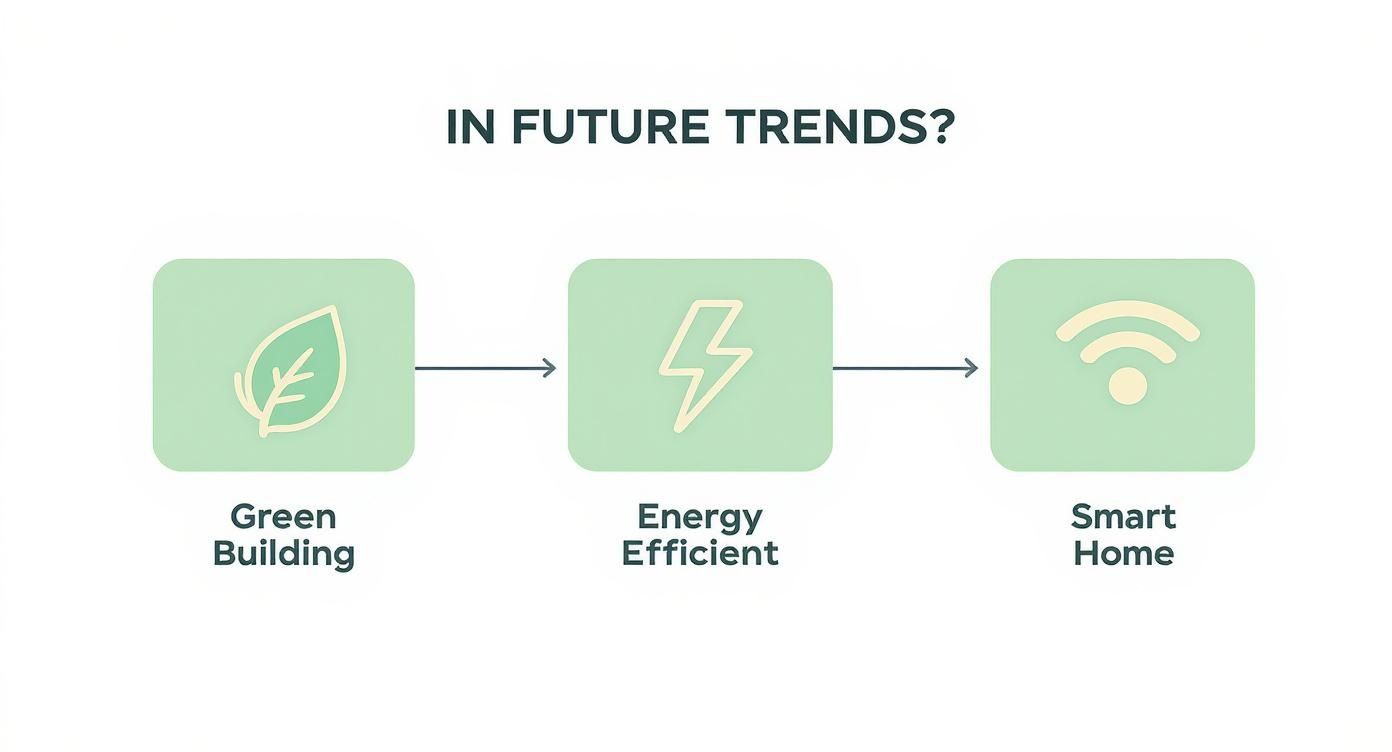
Ultimately, making a confident choice comes down to knowing you’ve found more than just a builder. You've found a genuine partner—one who values clarity, stands proudly behind their work, and is ready to build a home that will stand the test of time.
Common Questions About Building a Home in Florida
When you start thinking about building a new home in Southwest Florida, the questions can pile up quickly. Getting clear, honest answers from the get-go is the best way to vet potential builders and make sure you’re not in for any surprises later on.
What Does It Cost to Build a Custom Home?
This is usually the first question on everyone's mind, but the answer isn't a simple one. Costs can swing wildly depending on the lot you choose, the materials you love, and the specific finishes that will make the house your own.
If a builder throws out a flat price-per-square-foot number without knowing any of these details, consider it a red flag. A true professional in the custom home industry will sit down with you to provide a highly detailed, itemized quote. It should break down everything from the big-ticket items down to the often-forgotten costs like site prep, permits, and local impact fees. That kind of transparency is a hallmark of a builder you can trust.
Custom vs. Production Builders: What Is the Difference?
It’s easy to get these two confused, but they offer completely different experiences. A production builder typically works within a large development, offering a limited menu of floor plans and finishes. You pick from their list of options.
A custom home builder, on the other hand, is your partner in creating a truly one-of-a-kind home on the lot you've chosen. You have total freedom over every single detail—from the layout and architectural style to the materials and features. It’s a process designed to bring your specific vision to life, not fit you into a pre-existing box.
Your home should be a direct reflection of your lifestyle and vision, not a compromise from a set of pre-selected options. A true custom builder is an artist and engineer who brings that unique vision to life.
What Should a Florida New Home Warranty Cover?
A solid warranty is your peace of mind after you move in. In Florida, a quality, reputable builder will typically offer what’s known as a "2-10" warranty.
While the specifics can vary slightly, it generally breaks down like this:
- One to two years: This covers workmanship and materials. Think things like paint, fixtures, flooring, and cabinetry.
- Ten years: This is the big one. It provides coverage for major structural defects, protecting the fundamental integrity of your home’s foundation and frame.
Before you sign anything, make sure you get these warranty terms spelled out clearly in writing. It's a non-negotiable part of any building contract.
At Sinclair Custom Homes Inc, we believe in building homes that stand the test of time, engineered for the unique demands of Southwest Florida. If you're ready to build a home with honesty, integrity, and unparalleled quality, let's start the conversation. Visit us online to learn more.