


So, how long does it really take to build a custom home here in Florida? If you're looking for a straight answer, you can expect the entire journey to take somewhere between 14 and 20 months. That's from the day you say, "Let's do this," to the moment you're holding the keys to your new front door.
But think of that timeframe less as a rigid schedule and more like a roadmap for a long road trip. The final arrival time always depends on the route you take, the weather you encounter, and how much planning you did before you ever left the driveway. In Southwest Florida, that road includes navigating local regulations, planning for hurricane season, and incorporating the latest design trends that make coastal living so unique.
Your Florida Custom Home Timeline At a Glance
Building a custom home in Southwest Florida is a unique adventure, shaped by our beautiful—and demanding—coastal environment. Things like complex architectural designs, navigating the permit process in specific local zones, and engineering for hurricane resilience are all part of the local flavor that influences the timeline.
This high-level overview breaks down the entire process into key stages, giving you a clear picture of the road ahead before we dive into the details of each step.
Understanding the Key Phases
To give you a better feel for how this all breaks down, we can split the journey into six main stages. The full 14 to 20 months it takes to build a custom home includes:
- Preparation: 1-3 months
- Finding Your Spot: 1-3 months
- The Design Phase: 3-6 months
- Approvals & Permitting: 1-3 months
- Active Construction: 8-12 months
- Closing: 1-2 months
To help you visualize this journey from start to finish, here's an infographic that lays out the major milestones you can expect.
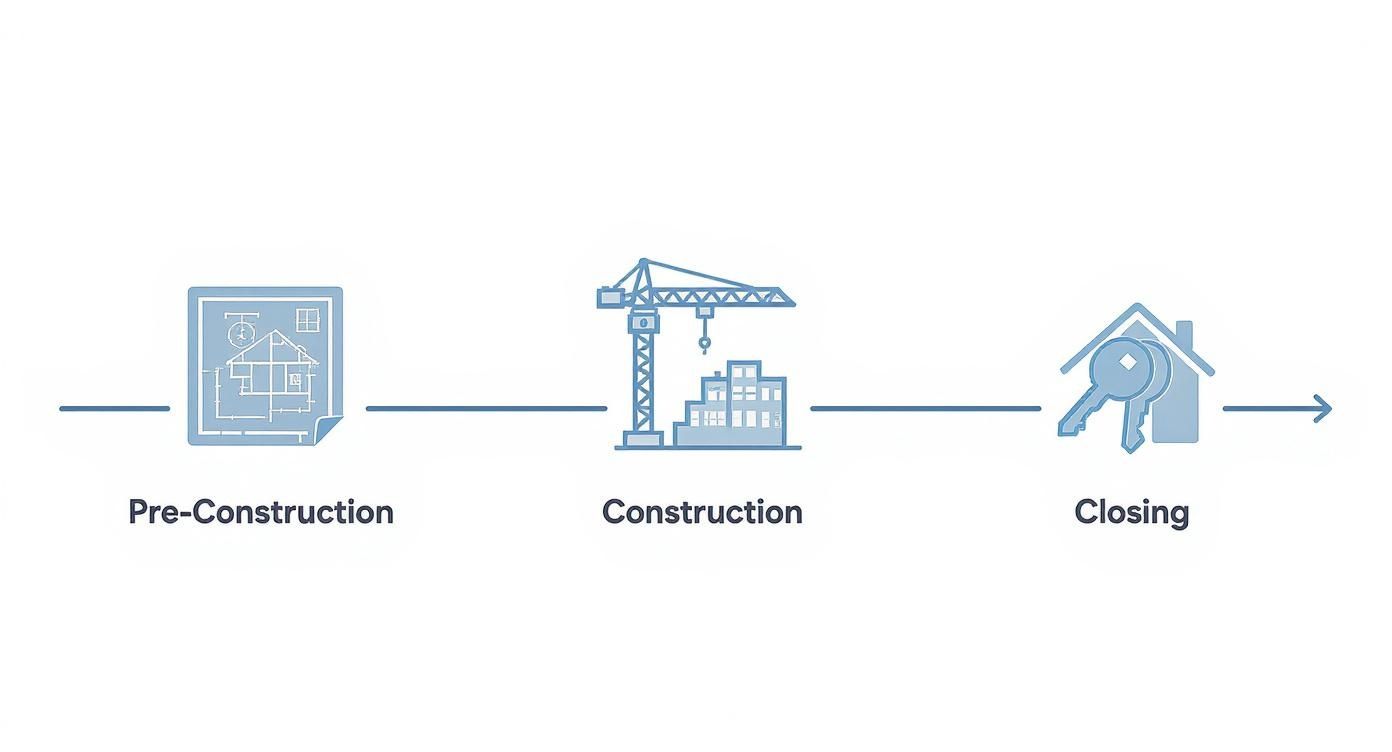

One of the biggest takeaways here? The pre-construction phase—all the planning, designing, and permitting that happens before a single shovel hits the dirt—is often just as long as the construction itself. It’s a powerful reminder of just how critical that upfront work really is.
To give you a bird's-eye view, here's a simple table summarizing the entire process.
Estimated Timeline for Building a Custom Home in Florida
This table provides a quick look at each major phase of the home-building journey and what happens during each one.
| Phase | Typical Duration | Key Activities |
|---|---|---|
| Pre-Construction | 6-12 months | Finding land, architectural design, securing financing, permitting. |
| Site Work & Foundation | 1-2 months | Clearing the lot, grading, pouring the concrete foundation. |
| Framing & Rough-Ins | 2-3 months | Building the home's skeleton, installing HVAC, plumbing, and electrical. |
| Exterior & Interior Finishes | 3-5 months | Installing siding, roofing, drywall, flooring, cabinets, and fixtures. |
| Final Touches & Closing | 1-2 months | Landscaping, final inspections, walkthrough, and closing. |
As you can see, each step builds on the last, leading you progressively closer to your move-in day.
Navigating the Overall Process
The path to your new home is so much more than just the physical build. It's a series of carefully orchestrated steps, from the first napkin sketches to the final meticulous inspections, with each one laying the groundwork for the next.
For a deeper dive into what each of these construction phases entails, this guide on your house construction timeline from start to finish is a fantastic resource. It gives a great general overview of what you can expect throughout the entire journey.
Mapping Your Vision in Pre-Construction
Before a single shovel hits the dirt, the real heavy lifting on your custom home gets underway. This is the pre-construction phase, a deep dive that typically takes anywhere from 4 to 9 months, where your dream home goes from a feeling into a fully detailed blueprint.
Think of it as the master recipe for your home. This is where you, your builder, your architect, and your interior designer team up to meticulously define every single ingredient—from the rebar in the foundation to the exact shade of white for the trim. Making firm, thoughtful decisions now is the single best way to prevent expensive changes and frustrating delays down the road.
Designing for the Florida Lifestyle
Here in Southwest Florida, great design is about so much more than just a floor plan. It's about building a home that lives and breathes the local environment. We take your lifestyle and translate it into a design that truly embraces the best of our region.
This is the perfect time to integrate those signature features that make Florida living so incredible:
- Seamless Indoor-Outdoor Spaces: We'll plan for those huge pocketing sliding glass walls that vanish, creating one massive living area that flows right out to the lanai and pool.
- Dedicated Smart Home Infrastructure: Before a single wall goes up, we map out all the wiring and hubs for integrated lighting, security, and climate control.
- Hurricane Impact Features: This is when we lock in decisions on impact-rated windows, reinforced garage doors, and specific roofing designs to ensure your home is a fortress.
The quality of your pre-construction phase directly dictates the success of the entire build. Time spent getting the details right here saves months of potential setbacks and budget headaches later on.
Site-Specific Planning and Resilience
A huge piece of this early work, especially in Southwest Florida, is analyzing your specific piece of land. We conduct thorough site evaluations to understand its unique personality, which heavily influences the home's engineering and final design.
This means determining the required elevation to meet flood zone regulations and planning for proper drainage—an absolute must in our low-lying coastal areas. Following recent news and FEMA flood map updates, establishing the correct finished floor elevation is one of the most critical first steps in designing a resilient and insurable home.
This is also when we build resilience right into the plan. A whole-home generator isn't an add-on anymore; it's a core component. We figure out the right size, location, and fuel source, integrating it directly into the electrical plans. This ensures a clean, seamless installation when the time comes.
For a closer look at how these early plans come to life, exploring the complete custom home building process shows just how critical these initial decisions are to the final outcome.
Navigating Florida's Permitting Maze

Welcome to what is easily the most unpredictable stage of the entire home-building journey. While many builders might pencil in one to three months for permitting, the reality of securing approvals in Florida can feel like navigating a complex maze. This is the single biggest reason project schedules can get stretched out.
The truth is, it involves a lot more than just getting a single building permit. For a custom home in Southwest Florida, you’re often looking at a whole portfolio of different approvals.
The True Scope of Florida Permitting
Building a new home here, especially if you're on the water in a place like Cape Coral, often means securing specialized permits for all sorts of features. Having an experienced local builder in your corner is non-negotiable; they know the specific hoops you need to jump through for each municipality.
Beyond the main building approval, you could easily need permits for:
- Pools: These come with their own strict set of safety and engineering requirements.
- Seawalls and Docks: Absolutely critical for waterfront properties, involving tough environmental and structural reviews.
- Septic Systems: A must if your lot isn't connected to the city sewer system.
- Elevation Certificates: This confirms your home's height is compliant with local flood zone rules.
Evolving Codes and Backlogged Offices
Florida's building codes are always being updated, particularly when it comes to energy efficiency and hurricane resilience. Every update adds another layer of review to the process, but it's for a good reason—it ensures your new home is built to the highest modern standards for safety and performance. We're talking checks for impact-rated windows, reinforced construction, and even electrical plans for whole-home generators.
The permitting phase is where the timeline for a custom home can really get tricky. An experienced local builder anticipates these hurdles, navigating the bureaucracy and communicating with officials to keep your project moving forward.
Frustrating delays often come from overworked municipal offices that send back unexpected requests for more information or clarification. In rapidly growing areas of Southwest Florida, these backlogs can turn a wait of a few weeks into several months. It's a national issue, too. According to the National Association of Home Builders, the wait time from permit approval to starting construction in our region is nearly double that of some other parts of the country.
Knowing the local rules inside and out is paramount. For a deeper dive into what this all means on the ground, check out our guide on Cape Coral building permits. Having an expert to guide you through this bureaucratic landscape is your best asset.
The Construction Journey From Foundation to Finishes
With the permits approved, your blueprint finally starts its leap from paper to reality. This is where the real action begins—the active construction phase. On average, you can expect this meticulously choreographed process to span 8 to 15 months.
This is the time your vision truly takes shape, from the concrete foundation engineered specifically for Florida's sandy soil to the very last shingle on the roof.
Each step in this journey is completely dependent on the one before it, which is why expert scheduling is non-negotiable. This is especially true here in Southwest Florida, where any good builder knows you have to plan around the infamous summer rainy season to keep foundation work and framing from hitting major delays.
The Foundation and Framing Skeleton
The first tangible progress you’ll witness is the site work and the foundation pour. This is a critical stage that can take one to two months. In our coastal environment, this isn't just about pouring a slab of concrete; it’s about establishing the precise elevation and engineering a foundation tough enough to handle hydrostatic pressure from our high groundwater tables.
Once the foundation cures, the home's skeleton begins to rise. Framing is what gives your home its shape and structure, a process that can last two to three months. This is also where new builder trends can impact the timeline. Some builders are now using advanced framing techniques or pre-fabricated wall panels, which can sometimes speed things up while also boosting energy efficiency.
During framing, we also install robust hurricane strapping and clips. These tie the roof structure directly to the walls, creating a continuous load path that is absolutely essential for wind resistance in our region.
Sealing the Envelope and Rough-Ins
With the frame up, the next goal is to create a "dried-in" shell to shield the interior from the elements. This involves installing sheathing, roofing materials, and—crucially for Florida—hurricane-impact windows and doors. Hitting this milestone is a huge deal because it means interior work can finally start, rain or shine.
Next comes the intricate dance of installing the home's vital systems. This is the "rough-in" phase for mechanical, electrical, and plumbing (MEP). It's a complex puzzle where electricians, plumbers, and HVAC technicians work in a very specific sequence, running wires, pipes, and ductwork through the open walls before any insulation or drywall goes up.
Precise home construction project management is vital here to prevent conflicts between trades and ensure every system is perfectly placed according to the plan.
The entire process is a testament to the fact that building a custom home takes time for a reason. National trends show that build times are actually getting longer, reflecting the increased complexity and detail that goes into modern homes.
Recent data drives this point home, showing that owner-built custom homes took an average of 15.2 months from permit to completion in 2023. This is significantly longer than homes built by contractors for owners (12.1 months), highlighting the efficiency an experienced builder brings to the schedule.
To give you a clearer picture of how this breaks down, here's a look at the estimated timeline for each major step in the construction process.
Detailed Construction Phase Timeline Breakdown
| Construction Stage | Estimated Duration | Florida-Specific Considerations |
|---|---|---|
| Site Work & Foundation | 1 – 2 Months | Engineering for sandy soil, establishing proper flood elevation, and scheduling around the rainy season are critical. |
| Framing | 2 – 3 Months | Includes installation of hurricane straps and clips for wind mitigation. Lumber availability can impact this phase. |
| Exterior & Rough-Ins | 2 – 3 Months | Installation of impact windows/doors is key. MEP (Mechanical, Electrical, Plumbing) rough-ins require careful coordination. |
| Drywall & Interior Finishes | 3 – 6 Months | This is often the longest phase due to the high level of detail in cabinetry, tile, flooring, and paint. |
| Final Details & Landscaping | 1 – 2 Months | Includes final inspections, appliance installation, and landscaping designed for the Florida climate. |
Keep in mind that these are estimates. Weather, supply chain issues, and the complexity of your design can all influence the final timeline.
From Drywall to Detailed Finishes
Once all the rough-in inspections are passed, insulation is installed, and the drywall goes up. This is the moment your project truly starts to feel like a home. The process of taping, mudding, and sanding creates the smooth, blank canvas for all the final touches.
The finishing stage is often the longest and most detailed part of the entire build. This is where your personal style comes to life through the installation of:
- Cabinetry and Countertops: Kitchens and bathrooms are transformed from empty spaces into functional works of art.
- Flooring and Tile: From warm hardwood to cool porcelain, the surfaces underfoot are laid with precision.
- Trim and Moldings: Doors, windows, and baseboards get their detailed woodwork, adding character to every room.
- Painting and Fixtures: The final colors go on the walls, and the lights, faucets, and hardware are installed, bringing everything together.
Building a Fortress Against the Storm
Here in Southwest Florida, building a custom home means more than just creating a beautiful place to live. It's about engineering a fortress, a home designed from day one with resilience in mind. A genuinely storm-ready house isn't just a collection of add-ons; hurricane preparedness is woven right into its DNA.
This proactive mindset is a huge shift in modern Florida construction. We’re integrating strength and safety into every single stage of the build, which, as you can imagine, naturally plays a part in the overall project timeline.
Engineering for Wind and Water
The real strength of a storm-ready home starts with its skeleton. Builders in our region overwhelmingly lean on reinforced concrete block construction. Why? It's just incredibly strong against high winds and flying debris. But we're not just talking about the walls—it's about creating a single, unified structure that stands solid.
The roof is another massive piece of the puzzle. A hip roof, the kind with slopes on all four sides, is naturally more aerodynamic and stable when hurricane-force winds start blowing. It’s a far cry from a traditional gable roof. When you’re planning to build a fortress against our storms, spending time exploring the different hurricane-proof roofing options is one of the most important decisions you'll make for long-term safety. This all happens early in the design phase and sets the schedule for material orders and installation down the line.
A storm-ready home is a system of interconnected components, from the foundation to the roofline, all engineered to work together. This integration is planned months before construction begins, ensuring that resilience is a core feature, not a late-stage addition.
The Rise of the Whole-Home Generator
Recent storms have made one feature practically non-negotiable for many Florida homeowners: the whole-home generator. This isn't your small, portable unit for keeping a few lights on. We're talking about a powerful system designed to run your entire house—air conditioning included—during those long power outages.
Putting in a whole-home generator is a project in itself and adds its own mini-timeline to your build:
- Planning & Sizing: We figure this out during the initial design phase to make sure it can handle your home's entire electrical load.
- Permitting: These units require their own electrical and sometimes structural permits, which can easily add several weeks to the approval process.
- Site Prep: It needs a dedicated concrete pad to sit on, which is usually poured right alongside the main foundation work.
- Installation & Integration: The generator is installed, hooked up to a fuel source (like a big propane tank), and wired directly into the home’s main electrical panel.
This whole process has to be carefully coordinated with the foundation crew, electricians, and even the landscapers. It's because of this complexity that a generator is no longer viewed as a simple upgrade, but as a critical piece of your home's infrastructure. Factoring these robust features into your plan from the very beginning is key to accurately estimating how long does it take to build a custom home that will truly stand strong.
Crossing the Finish Line to Your New Home

With all the heavy construction behind you, the final one to two months are the exhilarating home stretch. This is where the focus shifts from structure and systems to perfection and polish. It's an exciting flurry of activity, and it’s the time when your custom house truly starts to feel like a home.
The path to ownership wraps up with a series of final inspections. Local building inspectors will visit your home multiple times to ensure every detail—from the electrical and plumbing to the structural integrity—meets Florida's demanding building codes. Passing these inspections is the last major hurdle before you can get the all-important Certificate of Occupancy (CO). This is the official document that certifies your new home is safe and ready for you to move in.
The Final Walkthrough and Punch List
Right before closing, you'll do a final walkthrough with your builder. This is your chance to go over every inch of your new home with a fine-toothed comb. Together, we'll create what's known as a "punch list"—a simple, detailed record of any small adjustments or touch-ups that are needed.
It's common for this list to include minor items like:
- A paint scuff on a wall that needs touching up
- A cabinet door that requires a slight alignment
- A small piece of trim that might be missing
- A light fixture that isn't working quite right
A thorough punch list ensures every last detail meets the high standards you expect from a custom-built home. Any experienced builder welcomes this collaboration. It's our chance to guarantee your complete satisfaction before we hand over the keys.
While these final interior details are being perfected, your outdoor oasis is usually taking shape at the same time. Landscaping crews will be hard at work installing sod, plants, and the irrigation system, all specifically chosen to thrive in our unique Southwest Florida climate.
Closing on Your Custom Home
Once the final inspections are passed, the punch list is complete, and the CO is in hand, you're ready for the last step: closing. This just involves signing the final paperwork with your lender and the title company.
After this meeting, the keys are officially yours. It’s the rewarding culmination of the entire custom home building journey and the start of a wonderful new chapter.
Common Questions About Building a Custom Home
Going through the custom home building process for the first time naturally brings up a lot of questions. We get it. Here are some clear, straightforward answers to the questions we hear most often from homeowners here in Southwest Florida.
Can I Speed Up My Custom Home Building Timeline?
Yes and no. While some things, like the official permitting process, are pretty much set in stone and out of your control, you absolutely have influence over the schedule.
The single biggest impact you can have is being decisive during the design and selection phase. When you lock in your choices early and stick to them, you prevent a domino effect of delays once construction is underway. Getting your financing squared away early on also helps. Partnering with a builder who knows the local landscape and has strong relationships with officials and subcontractors is another key piece of the puzzle to keep things moving smoothly.
How Does Florida Weather Impact the Construction Schedule?
Here in Southwest Florida, the weather isn't just small talk—it's a major player in any construction project. Our summer rainy season can bring foundation work, grading, and exterior jobs to a screeching halt. Then there’s hurricane season, which runs from June to November. A potential storm can shut down a job site completely for preparation and cleanup, adding unexpected delays.
Any experienced builder in this area knows to budget for a certain number of weather delays. It’s just part of the reality of building in paradise. However, an unusually active storm season can definitely push back the finish line.
What Is the Biggest Cause of Delays I Can Control?
Outside of things you can't control like weather and permitting, the most disruptive factor is almost always changes made by the homeowner after construction has already started.
It might seem like a small tweak—moving a wall a few feet or swapping out a window—but the ripple effects are huge. That "small adjustment" can mean drawing up new plans, getting them re-approved by the city, and completely rescheduling multiple trades like framers, electricians, and plumbers. This can easily add weeks, or even months, and a significant amount to your final cost.
Ready to build a home that's as strong as it is beautiful? The team at Sinclair Custom Homes Inc. brings decades of on-site expertise, quality, and integrity to every project in Southwest Florida. Let's start building your vision today at https://sinclaircustomhome.com.