Building your dream home in Southwest Florida isn't just a project; it's a journey. The best custom home builders in Fort Myers are more than just contractors—they're your partners. They have the local experience to handle the region's specific climate challenges, complex building codes, and emerging design trends, all while bringing your unique vision to life.
Understanding The Fort Myers New Construction Market
Before you even start a single builder interview, it’s vital to get a feel for the new construction scene here in Fort Myers. This goes way beyond picking a floor plan. You need to understand the economic and environmental factors that are actively shaping the local industry. With Southwest Florida’s population booming and new building regulations frequently updated, everything from land availability and elevation requirements to project timelines is affected.
The market has seen some interesting shifts lately. For instance, in early 2025, a noticeable increase in new construction inventory actually gave homebuyers more negotiating power on custom build pricing. This is a perfect example of how supply and demand can create windows of opportunity for smart buyers. You can dig deeper into these trends in the Fort Myers new construction home market report.
The Fort Myers custom home market is always moving. News affecting building in Florida, like changes in flood maps or new statewide codes, directly impacts your project. Staying informed helps you make smarter decisions.
New Trends In Design And Resilience
What's really shaping custom homes in Fort Myers today is a blend of lifestyle wants and environmental needs. Builders are getting creative, fusing luxury with the kind of durability our climate demands. This isn't just a trend; it's a necessity driven by recent hurricane seasons and evolving best practices.
Here are a few features that have become incredibly popular for good reason:
- Elevated Foundations: Lifting a home’s foundation is one of the most effective defenses against storm surge and flooding. In response to recent storm events and updated FEMA flood maps, building well above the minimum Base Flood Elevation (BFE) is quickly becoming a standard for resilient, long-lasting construction in Southwest Florida.
- Integrated Power Solutions: Whole-home generators, particularly those with automatic transfer switches, have moved from a "nice-to-have" luxury to an essential feature. They provide real security and peace of mind during the prolonged power outages that can follow a major storm.
- Hurricane-Impact Features: Top builders are going far beyond basic code, incorporating advanced impact-rated windows, specially reinforced roofing systems with secondary water barriers, and stronger structural connections to weather the storm.
The Role Of Local Craftsmanship
The true quality of a custom home often comes down to the details—the kind of work done by specialized, local artisans. Knowing what’s possible is part of understanding the market. For example, the work of expert cabinet makers in Fort Myers can completely transform an interior, setting a true custom home apart from a cookie-cutter build.
Having this background knowledge—on market conditions, design innovations, and the value of skilled craftsmanship—puts you in the driver's seat. It prepares you to ask the right questions, so you can evaluate builders not just on their price tag, but on their real ability to deliver a beautiful, resilient, and masterfully crafted home designed for the Southwest Florida lifestyle.
How to Vet Builders and Review Their Work
This is it. Choosing the right partner is the single most important decision you'll make in this entire process. Vetting potential custom home builders in Fort Myers goes so much deeper than just a quick online search or scanning a few testimonials. It's about a systematic, hands-on evaluation of their credentials, their craftsmanship, and their professional integrity.
The first move is a simple background check. Any builder worth their salt will be fully licensed and insured in the state of Florida, and they won't hesitate to prove it. But don't just take their word for it—independently verify their license status and look for any public complaints. This basic diligence is your first line of defense against unqualified or unprofessional operators.
Beyond the paperwork, you absolutely need to see their work with your own eyes. A builder's portfolio isn't just a collection of pretty pictures; it’s a direct reflection of what they can actually do.
Diving Into a Builder's Portfolio
When you start flipping through a portfolio, look for versatility. Can they pull off a sleek, modern coastal design with the same skill they bring to a more traditional Mediterranean home? Zoom in on the details—the fit and finish of the cabinetry, the precision of the tile work, and the quality of the trim. These are the things that separate the good from the great.
Most importantly, look for homes that feel like the one you're dreaming of. If a builder has a long track record of successfully finishing projects that match your style and complexity, that’s a huge green flag. As you assess potential builders, it's also smart to understand their overall philosophy. For example, you can learn more about design-build firm capabilities to see if that integrated approach is a better fit for your project.
A builder's true measure isn't found in a glossy brochure. It's revealed on an active job site—in the organization, the cleanliness, and the attitude of the crew.
The Power of On-Site Visits
Touring a finished home is great, but visiting an active construction site gives you unfiltered, real-world insight into their process. It’s your chance to see how the sausage is really made.
Ask yourself these questions while you're walking the site:
- Is the site organized and clean? A tidy job site almost always means a well-managed project and a much higher standard of work. Chaos is a bad sign.
- How does the crew interact? Look for a professional and respectful team. It’s a clear indicator that the builder values their people and, by extension, your project.
- What materials are being used? Take a peek at the quality of the lumber, the house wrap, and other raw components. Are they using advanced materials designed for hurricane resilience? This tells you if they build to a higher standard or just meet minimum code.
Finally, getting a tour of a finished project lets you talk directly with the people who have already been through it—the homeowners. Ask them about the builder’s communication style, their transparency on the budget, and whether they stuck to the timeline. Getting that direct, honest feedback is priceless.
And for more guidance on building a strong, collaborative partnership with your builder, check out these 3 tips you should follow to build a successful custom home. This methodical vetting process is what ensures you don’t just get a well-built house, but a positive, professional experience from the first handshake to the final walkthrough.
Setting a Realistic Budget for Your Fort Myers Custom Home
Every successful custom home project starts with one thing: a realistic budget. This isn't just about crunching numbers; it's about getting a clear, honest picture of the total investment required to bring your vision to life in Fort Myers. We need to look far beyond the basic cost of lumber and concrete to understand the full financial scope.
A budget is never just a single figure. Think of it as a collection of related costs, each playing a critical role. Breaking it down into major categories helps you see exactly where your money is going.
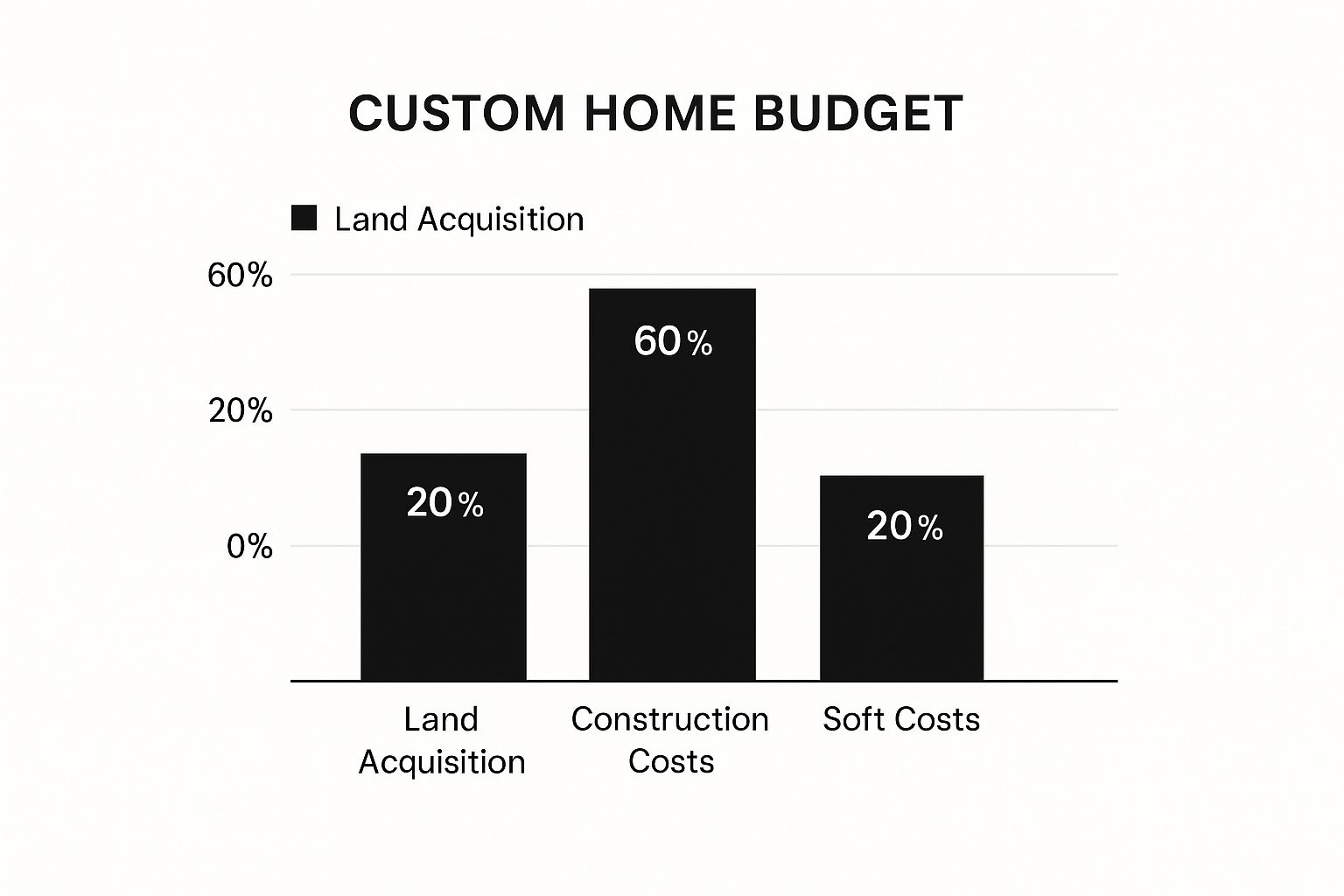
As you can see, construction is the biggest piece of the pie, but it's not the whole story. A huge chunk—often close to 40% of the total budget—goes toward acquiring the land and handling "soft costs" like architectural design fees, engineering, and permits. This is a detail many first-time builders overlook.
H3: What a Custom Home Really Costs in Southwest Florida
The final price of a custom home can swing wildly. The difference between a modest, functional home and a sprawling luxury estate comes down to architectural complexity, overall square footage, and of course, the level of finishes you choose.
Recent figures from April 2025 show that the average cost for custom home building services in the Fort Myers area fell between $35,400 and $51,900. But those numbers don't tell the whole story. Some simpler projects came in as low as $10,700, while high-end builds pushed toward $90,000. It’s a powerful illustration of how your specific choices in scope and materials directly shape the final cost. You can explore more detailed cost breakdowns with local Fort Myers home building data.
To give you a clearer idea of where the money might go, here’s a look at some potential cost ranges.
Estimated Cost Breakdown for a Fort Myers Custom Home
This table illustrates potential cost ranges for different phases of a custom home project in Fort Myers, helping you understand where your budget is allocated.
| Project Phase | Low-End Estimate | Mid-Range Estimate | High-End Estimate |
|---|---|---|---|
| Land Acquisition & Prep | $75,000 | $150,000 | $300,000+ |
| Architectural & Design Fees | $15,000 | $35,000 | $70,000+ |
| Permits & Impact Fees | $10,000 | $20,000 | $40,000+ |
| Construction (per sq. ft.) | $200 | $300 | $450+ |
| Interior Finishes & Fixtures | $50,000 | $100,000 | $250,000+ |
| Landscaping & Exterior | $20,000 | $40,000 | $80,000+ |
Remember, these are estimates. Your actual costs will depend entirely on your lot, your design, and your finish selections.
H3: The One Part of the Budget You Can't Skip: The Contingency Fund
No matter how meticulous your planning is, building a home comes with surprises. It's just the nature of the beast. Here in Florida, you might discover unexpected soil issues once you break ground, or a sudden supply chain disruption could cause the price of your chosen tile to spike. This is exactly why a contingency fund isn’t just a good idea—it's essential.
A contingency fund is your project's financial safety net. I always advise clients to set aside 10-15% of the total construction cost. This buffer is there to absorb those unforeseen expenses without derailing the project or forcing you to make painful compromises on your vision.
Think of it as project insurance. When that unexpected cost pops up—and it will—you can handle it without stress. Whether you need extra foundation work due to site conditions or simply decide on a last-minute appliance upgrade, the contingency fund is there to cover it. Planning for the unexpected is the best way to protect your investment and, just as importantly, your peace of mind.
Designing For Durability In Southwest Florida
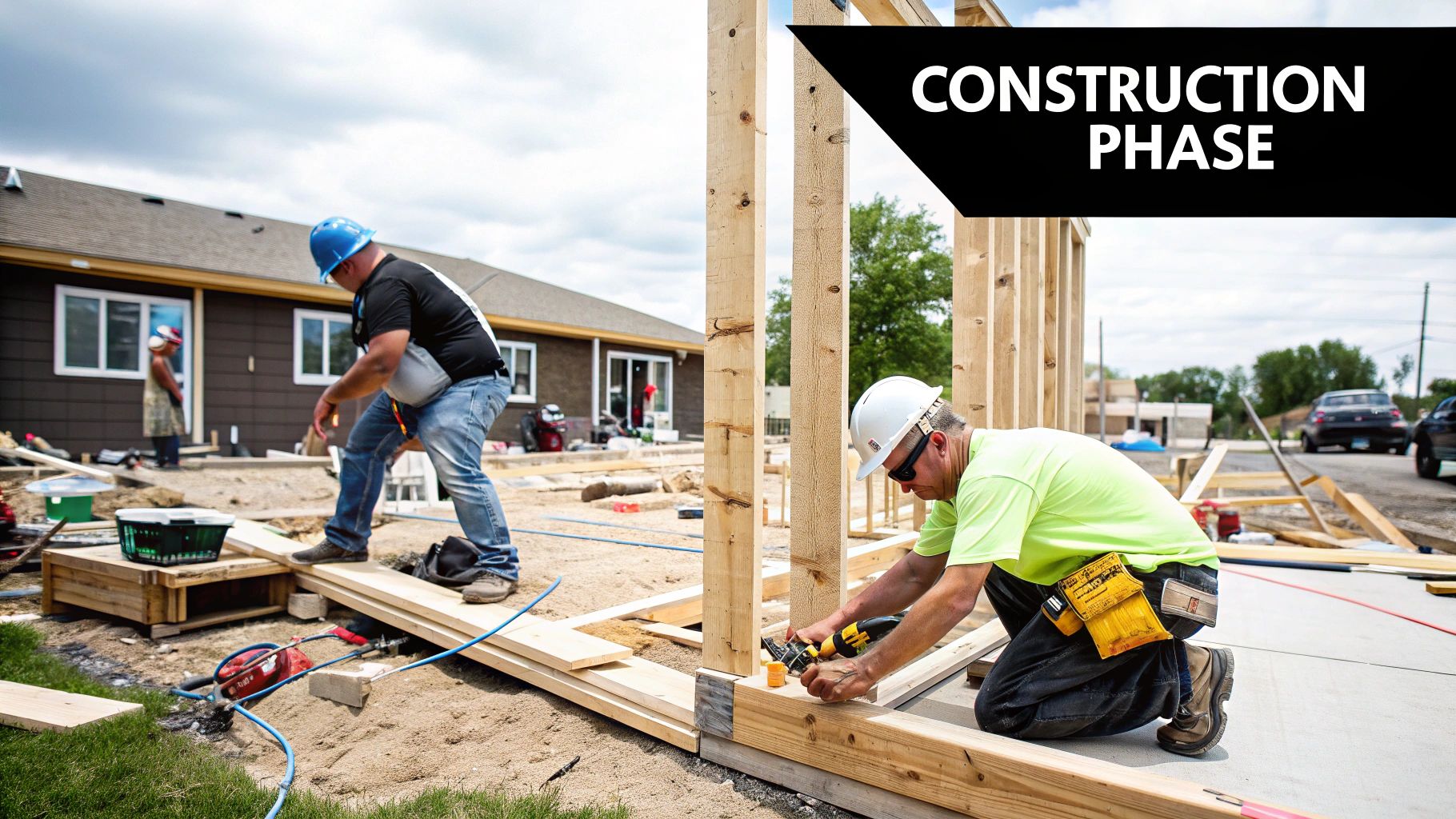
When you choose to build in Southwest Florida, you're not just buying property; you're entering a unique partnership with our local environment. The breathtaking beauty comes with a serious responsibility to build for resilience.
A quality custom home builder in Fort Myers gets this. They know durability isn't just some upgrade—it’s the absolute foundation of the entire design. It’s about weaving aesthetics together with the tough lessons learned from past storms and incorporating new builder trends that prioritize strength.
Building a home that can stare down hurricane-force winds and shrug off flood risk isn't about one single feature. It's a complete, integrated system. Every single component must work in harmony to protect your investment and, more importantly, your family. This is the non-negotiable philosophy for building a true fortress in this region.
A home in Fort Myers has to be more than just beautiful—it must be a bastion against the elements. Working with your builder on a resilience-first design is the single most critical step in creating a home that will stand for generations.
The Foundation Of A Storm-Ready Home
True resilience starts from the ground up—literally. One of the biggest and most necessary trends is building up. Lifting your home's living space above the Base Flood Elevation (BFE) is your number one defense against devastating storm surges. An experienced builder won't just meet the minimum code; they'll often advise building even higher for an extra margin of safety based on new localized data.
Of course, it's not just about height. The materials are critical. Today’s best practices include:
- Reinforced Concrete Masonry: We’re talking concrete block construction, beefed up with steel rebar and filled solid with concrete. This creates an incredibly strong structural shell that can take a beating.
- Advanced House Wraps: Modern, high-performance house wraps are a game-changer. They act as a critical barrier against our intense, wind-driven rain, preventing moisture from getting in where it can cause long-term rot and mold.
- Fortified Roofing Systems: This goes way beyond just shingles. It means using stronger decking, adding a secondary water barrier underneath, and installing hurricane straps that securely anchor the roof to the rest of the house.
Essential Features For Modern Resilience
What used to be considered luxuries are now absolute must-haves for any new custom home in Southwest Florida. Your builder should be bringing these up in your very first design meeting.
A whole-home generator is a perfect example. After a major storm, a generator isn’t about convenience; it’s about safety and protecting your home. It keeps your A/C running to fight off mold, powers the fridge, and gives you light and security during long power outages. The peace of mind this provides is immense.
Likewise, all of your windows and doors must be impact-rated. These products are put through punishing tests to make sure they can withstand flying debris and the wild pressure changes that happen during a hurricane. They are one of the most vital lines of defense for protecting your home’s envelope.
For those who prioritize both durability and green building, exploring concepts like Passive House Principles for Sustainable Home Design can provide powerful insights. These principles focus on creating a super-insulated, airtight home, which naturally makes it tougher and more resilient against our extreme weather.
Navigating Builder Contracts and Project Timelines
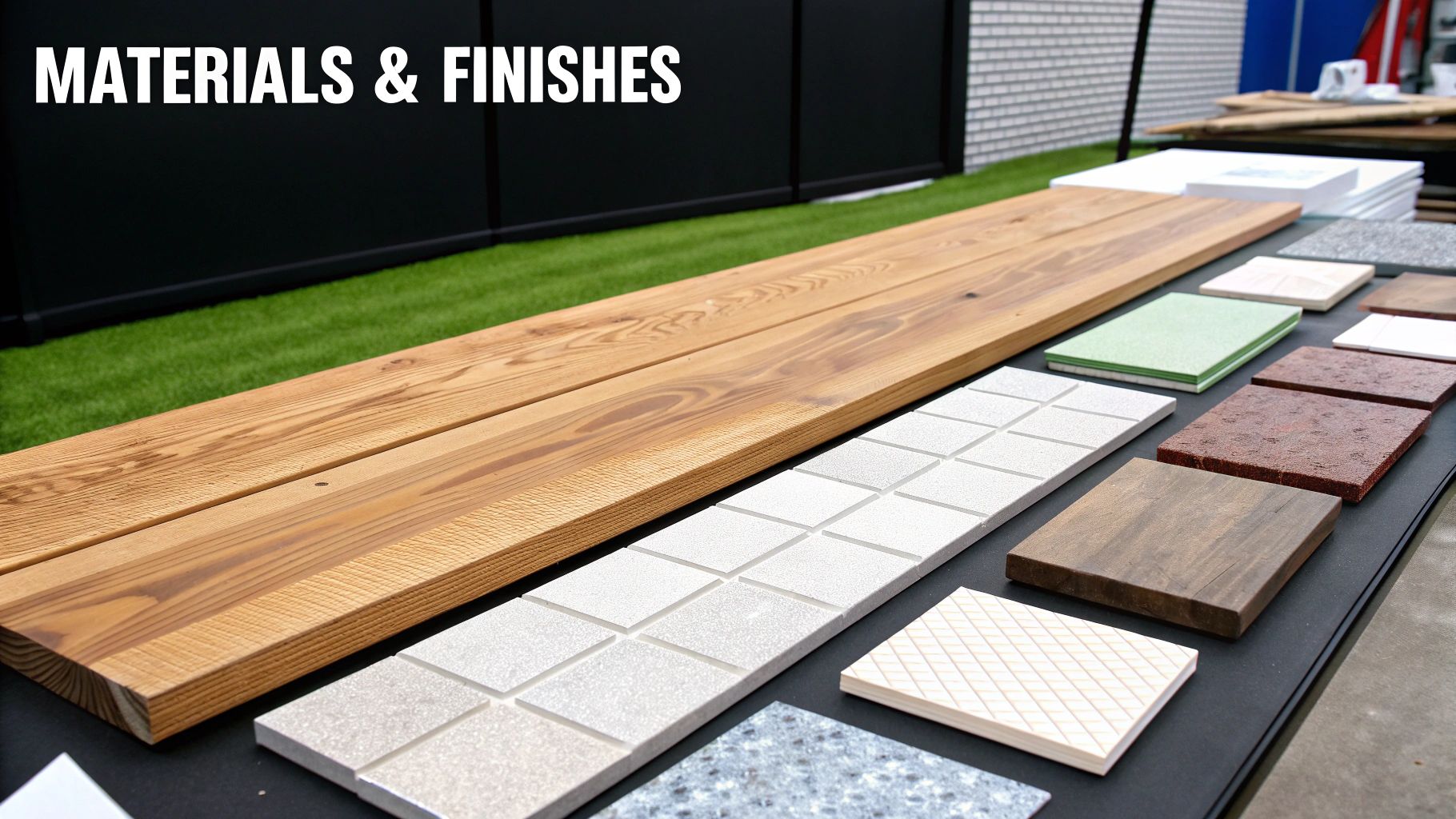
When you get to the contract stage, you’re looking at the legal backbone of your entire home-building journey. This is where all those design meetings, material selections, and timeline discussions get translated into a binding agreement. It’s a document designed to protect both you and your builder.
Sure, these contracts can be dense, but taking the time to understand the key components is absolutely essential for a smooth and successful project. It needs to clearly define every single aspect of the build, from the foundation specs right down to the model numbers of your kitchen appliances.
A well-written contract is your project’s ultimate roadmap. It should leave no room for interpretation on timelines, materials, or costs, providing a clear path forward for everyone involved.
Understanding Today's Construction Timelines
Let's be realistic: building a home in Southwest Florida today requires a good dose of patience. Statewide challenges, from labor shortages to stubborn supply chain issues, have stretched out construction schedules quite a bit.
A few years ago, you might have expected a custom home to be ready in seven to nine months. Now, new builds in Florida commonly take 9–12 months. These delays are a reality for all custom home builders in Fort Myers, which makes having a crystal-clear project timeline in your contract more critical than ever.
Because of these extended timelines, your contract absolutely must include:
- A Detailed Payment Schedule: Payments should be tied directly to specific, verifiable construction milestones—think foundation poured, framing complete, or drywall installed. You should never agree to a huge upfront payment that isn't connected to tangible progress on your lot.
- Material Specification Allowances: The contract needs to list the exact brands, models, and quality of materials you've both agreed on. This is your protection against a builder swapping in lower-quality items to save a buck.
- A Clear Change Order Process: Changes happen. It's a normal part of the process. But your contract needs to spell out how they are handled. This clause should detail how changes are requested, priced out, approved in writing, and then officially added to the project scope.
Finalizing The Agreement
Your contract should also address how potential delays are handled. It's a good place to outline any incentives the builder might be offering, too, like contributions toward closing costs. This is all part of the final negotiation.
Before you put pen to paper, I always recommend making one final investment: have a real estate attorney review the contract. Their expertise ensures every detail is aligned with your best interests.
A solid contract, paired with a clear understanding of the custom home building process, is what sets the stage for a great partnership. It’s the document that protects your vision from the first shovel of dirt to the day you get the keys to your brand-new home.
Frequently Asked Questions
When you're diving into the world of new construction, questions are going to pop up. It's only natural. We've put together some straightforward answers to the most common queries we get from clients looking to build their own custom home here in the Fort Myers area.
How Long Does It Really Take To Build A Custom Home In Fort Myers Right Now?
Let's be realistic. After your designs are locked in and the permits are approved, you should expect a 9 to 12-month construction timeline. This is a bit longer than the 7 to 9-month average we saw in previous years, mostly because of statewide labor shortages and supply chain hiccups that are affecting every builder in Florida.
Any builder worth their salt will give you a detailed project schedule right in your contract. This isn't just a piece of paper; it's a roadmap that lays out every key milestone. It gives you a clear picture of how the project will flow and creates total transparency, especially if unexpected delays pop up.
What Are The Most Important Hurricane-Resistant Features I Should Invest In?
Building in Southwest Florida means building for resilience. These aren't just "upgrades"—they're absolute necessities for keeping your family safe and your home standing strong.
Here’s what should be at the top of your list:
- High-Impact Windows and Doors: These are your home’s first line of defense. They need to meet—or even better, exceed—local building codes to protect your home from high winds and flying debris.
- A Reinforced Roofing System: This is about more than just the shingles. It’s about creating incredibly strong connections that securely anchor your roof to the walls of your home, often with a secondary water barrier for extra protection.
- Elevated Foundations: Storm surge is a serious threat in coastal areas like Fort Myers. Building your home above the Base Flood Elevation (BFE) is the single best way to protect it from flooding.
- A Whole-Home Generator: Power outages are a given after a storm. A generator with an automatic transfer switch keeps the lights on, runs your A/C to prevent mold from taking hold, and ensures your family stays safe and comfortable during extended outages.
How Can I Ensure My Custom Home's Design Won't Look Dated In A Few Years?
This is a great question. The secret is to strike a balance between timeless architectural style and modern, everyday function. We always recommend focusing on classic Florida coastal or clean, modern designs that feel right at home in our local landscape.
Inside, think about creating flexible spaces, like a home office that can easily double as a guest room when family visits. For permanent fixtures like your flooring and countertops, choose high-quality, durable materials in neutral, versatile tones. This gives you a classic, solid foundation to build upon.
You can then layer in the current design trends with things that are easy and affordable to swap out down the road—think paint colors, light fixtures, cabinet hardware, and decor. This approach keeps your home’s core style relevant for decades to come.
Working with a builder who gets this balance is absolutely essential. There are so many best reasons for you to work with a custom home builder who can steer you toward a design that lasts. It's a collaboration that ensures your home is not just built to last physically, but stylistically, too.
At Sinclair Custom Homes Inc, we believe in building homes with integrity, quality, and a deep understanding of the Southwest Florida lifestyle. Matthew Sinclair is on your job site, ensuring every detail reflects our commitment to over-engineered quality and master craftsmanship. Let's start the conversation about your vision.
Build Your Dream Home with Sinclair Custom Homes
Article created using Outrank