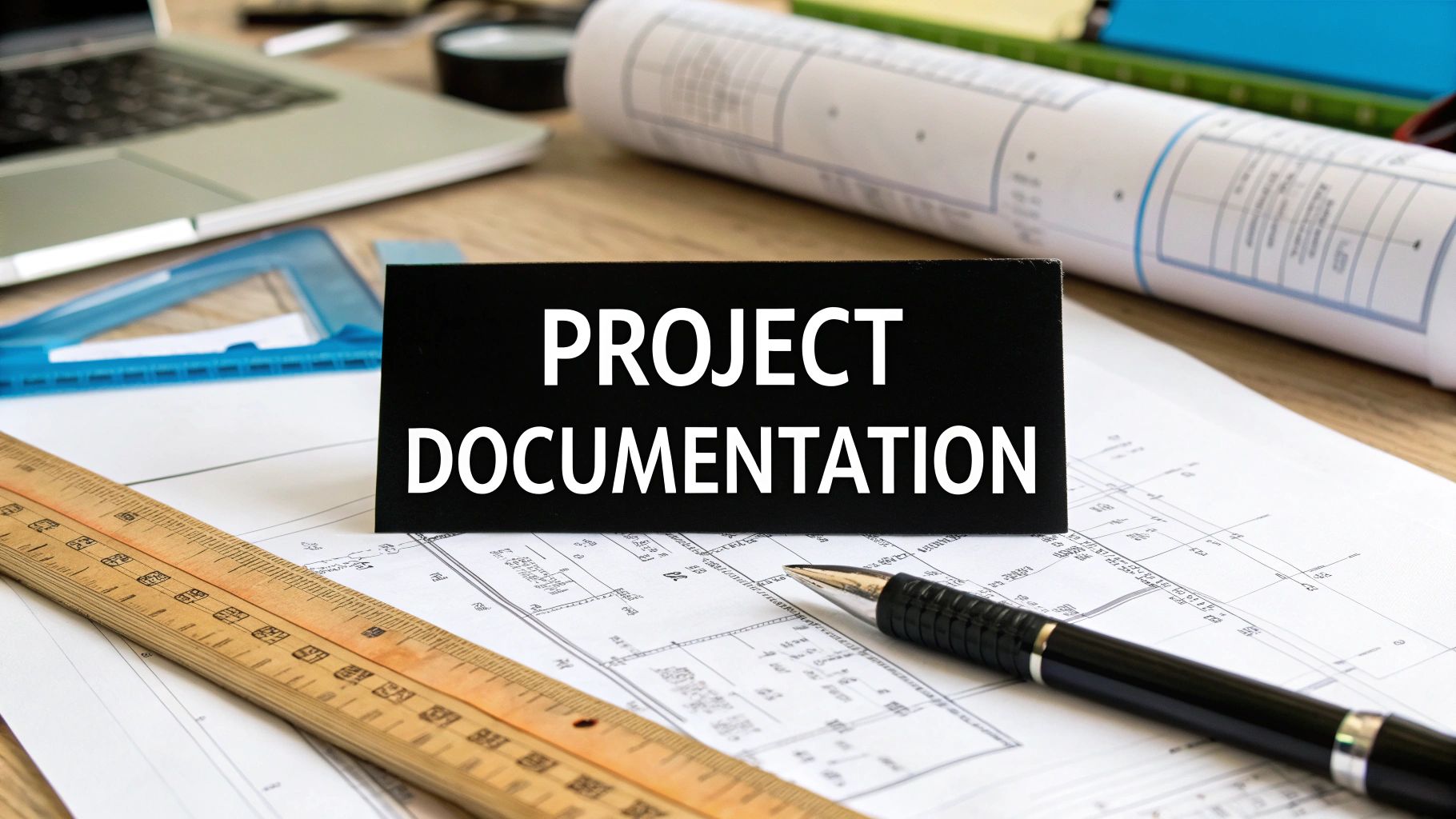
Building a custom home in Southwest Florida is about so much more than a beautiful design; it’s about crafting a fortress built for resilience, quality, and modern living. And the unsung hero of that entire process? The paperwork. That’s right, construction project documentation. This isn't just about red tape; it's the detailed script that ensures your vision, from the hurricane-impact windows down to the exact placement of your whole-home generator, is executed perfectly.
Building Your Home on a Foundation of Facts
Think of all that paperwork as the shared language between you, your builder, and every single craftsman on the job site. It’s the complete collection of plans, contracts, and records that turns a dream on paper into a solid, physical structure. For anyone building in places like Cape Coral, Fort Myers, or anywhere in Southwest Florida, getting comfortable with these documents is your key to transparency, avoiding costly surprises, and knowing for certain your home can stand up to Florida’s tough building codes and unpredictable weather.
In this guide, we'll pull back the curtain on the essential records you'll see. More importantly, we’ll show you why a builder’s commitment to meticulous documentation is the single best sign of a successful, stress-free build. A well-documented project doesn't happen by chance; it’s a deliberate strategy for excellence.
Why Documentation Matters in Southwest Florida
Living here means dealing with unique environmental challenges—from hurricane winds to the ever-present threat of storm surge. In this reality, the fine print of your home’s construction becomes paramount. Meticulous documentation gives you verifiable proof that your home is built not just to code, but to a higher standard of strength and resilience, incorporating the latest design features and building trends that Southwest Florida demands.
A builder’s paperwork is a direct reflection of their process. Disorganized or incomplete documentation often signals disorganized and incomplete work on the job site. It’s the first and most reliable indicator of quality.
When done right, project documentation ensures every critical piece of your home is tracked, verified, and accounted for. This is non-negotiable for:
- Hurricane Resilience: We need proof that the specific hurricane-impact windows, doors, and roofing systems were installed correctly and meet all engineering requirements. No guesswork allowed.
- Flood Prevention: The home’s final elevation must be accurately recorded on an Elevation Certificate. This is crucial for your family's safety and will directly impact your flood insurance rates, especially with recent changes to Florida flood maps.
- Power Continuity: Proper installation and permitting of a whole-home generator needs to be documented, confirming it's ready to go when the next storm hits and can power new, high-demand design features like smart home systems.
- Quality Assurance: A clear record of every material choice—from the concrete mix in the foundation to the brand of exterior paint—leaves no room for error or substitutions.
Ultimately, this foundation of facts protects your investment, secures your family's safety, and gives you genuine peace of mind. It’s the difference between hoping your home is built right and knowing it is.
Understanding Your Core Construction Documents
To feel confident and in control while building a custom home in Southwest Florida, you need to speak the language of construction. That language is written in the stack of construction project documentation that comes with every build. Don't think of it as just paperwork; see it as the official script that turns your dream on paper into a strong, beautiful home.
Every document has its job, just like different instruments in an orchestra. The Architectural Plans are the sheet music, showing the visual layout. The Specifications are the conductor’s detailed notes, dictating the quality of every single material. Understanding these key pieces makes you an informed and empowered partner in the process.
Solid documentation is the bedrock of your entire project, directly supporting the end goals: a high-quality home and a transparent process.
As you can see, a well-built home rests on clear, comprehensive records. These are non-negotiable for achieving both structural integrity and a trustworthy relationship with your builder.
Foundational Blueprints and Recipes
Right at the beginning, two documents lay the groundwork for your entire home: Architectural Plans and Specifications. Everything else is built upon these foundational pillars.
Architectural Plans are the detailed drawings everyone pictures when they think of blueprints. They are the visual map showing dimensions, layouts, elevations, and how every room connects. For a custom home in Cape Coral, these plans get incredibly specific, detailing the exact location and size of hurricane-impact windows to meet our local wind-load requirements and showcase new design features like expansive outdoor living spaces.
Specifications (or "Specs") are your home's detailed recipe book. While the plans show where something goes, the specs tell you exactly what it is. This document lists every material, product, and finish—from the specific model of your whole-home generator to the brand of your roofing tiles and the type of moisture-resistant drywall for the bathrooms. Detailed specs leave no room for guessing and guarantee the quality you paid for is what you get.
Dynamic Documents for Communication and Adaptation
Building a home isn't a straight line; it's a dynamic process. That's why we have documents designed to manage communication and handle the inevitable changes along the way. These records keep the project moving smoothly and ensure everyone—from the foundation crew to the electricians—is on the same page.
Three key documents you'll see are Submittals, Requests for Information (RFIs), and Change Orders.
- Submittals: Before your builder orders something critical, like your custom hurricane-rated garage door, they send the product data to the architect for approval. This check, called a submittal, confirms the part meets the design and quality standards from the specs.
- Requests for Information (RFIs): If a subcontractor on-site hits a snag or needs a detail clarified on the plans, they submit an RFI. It’s a formal way of asking a question and getting a written answer, which prevents mistakes and misunderstandings.
- Change Orders: This is one of the most critical documents for a homeowner. When you decide to upgrade your countertops to the latest quartzite trend or add that outdoor shower you've been thinking about, a Change Order is created. It officially documents the new scope of work, the exact cost (or savings), and any change to the timeline. You sign off on it before any work begins.
A builder's disciplined use of RFIs and Change Orders is a sign of a true professional. It shows a commitment to clear communication and protects you from surprise costs or "he said, she said" arguments later on.
Documents for Verification and Quality Control
Finally, there's a set of documents that proves the work meets all the required quality and safety standards. These records are the tangible proof that your home was built correctly and complies with Florida’s tough building codes. To really know What Are Construction Documents and their importance, check out this great guide.
Two of the most important verification documents are Inspection Reports and the Punch List.
Inspection Reports are the official pass/fail records from city or county building inspectors. At key stages—foundation, framing, electrical, plumbing—an inspector must visit the site and approve the work before we can move on. These passed inspections are non-negotiable milestones that certify your home is code-compliant and safe.
The Punch List comes together near the very end of the project during a final walkthrough with your builder. It’s a detailed list of all the minor items that still need finishing touches, like a scuff on a wall or a cabinet door that needs adjusting. A thorough Punch List ensures every last detail is perfect before we hand over the keys to your new home. For a closer look at this final step, read our guide on the construction quality assurance checklist.
Why Documentation Is Critical in Southwest Florida
Here in Southwest Florida, we don't just build homes—we engineer them to handle everything our unique environment throws at them. From scorching summer sun to the sheer force of hurricanes, every single choice made during construction counts. This is where meticulous construction project documentation stops being simple paperwork and becomes a critical shield for your investment, your safety, and your peace of mind.
Think about it like this: the real strength of your home isn’t just in the concrete and steel. It’s in the verifiable proof behind those materials. Good records are what connect a builder’s promise of a hurricane-ready home to its actual performance when a storm hits. That documented proof is your guarantee of quality.
It’s a bigger deal than you might think. One industry analysis found that poor construction data led to a staggering $1.8 trillion in losses globally in a single year. These losses came from "bad data"—incomplete, inaccurate, or disorganized information that caused expensive mistakes and rework. For custom home builders in competitive markets like Cape Coral and Fort Myers, that number hammers home just how vital getting the paperwork right really is.
Your Defense Against Storms and Floods
The weather in Southwest Florida requires a higher standard of building, and documentation is the only way to prove those standards were met and exceeded. These records are the tangible evidence that your home is truly ready for whatever nature has in store.
Proper documentation provides the critical verification you need for:
- Hurricane-Impact Features: It’s one thing to say you have hurricane windows; it’s another to have the installation records and material specs proving they meet Florida’s tough wind-load codes. That’s your proof of protection.
- Storm-Ready Generator Installation: A fully documented installation confirms your generator was permitted, inspected, and hooked up correctly. It’s your assurance that the lights will stay on when a storm hits and your family remains comfortable.
- Proper Home Elevation: An official elevation certificate isn't just a piece of paper. It’s your best defense against flooding, a non-negotiable document for getting fair insurance rates, and proof of compliance with the latest FEMA and local flood maps affecting all of Florida.
These records are your front line of defense, safeguarding your investment and ensuring your family’s safety is built on a foundation of facts, not just hopeful assumptions.
A builder’s commitment to thorough documentation is a direct reflection of their commitment to quality. It proves they aren't just building to minimum code but are dedicated to delivering a superior, over-engineered home.
Protecting Your Property Value and Insurance Eligibility
Beyond the immediate safety concerns, detailed construction documents play a huge role in the long-term financial health of your home. Insurance companies in Florida are getting stricter, demanding detailed proof of a home’s resilience before they’ll offer good coverage at fair premiums.
Well-organized records can have a direct impact on your wallet by:
- Securing Better Insurance Rates: A complete file showing off your wind mitigation features—from roof-to-wall connections to impact-rated doors—can lead to major discounts on your homeowner's policy.
- Simplifying Future Renovations: When you have a clear record of what’s behind the drywall, including electrical and plumbing layouts, any future projects become faster, safer, and a lot less expensive.
- Increasing Resale Value: A home that comes with a comprehensive documentation package is far more attractive to buyers. It provides verifiable proof of quality and makes the home much easier for them to insure.
This level of detail is also non-negotiable during the permitting phase. To get a better handle on the local requirements, you can check out our guide on navigating the Cape Coral building permits process. Ultimately, your builder's documentation process is the system that ensures every promise—from energy efficiency to hurricane readiness—is recorded, tracked, and verified for the entire life of your home.
How Top Builders Ensure Total Transparency
A promise of quality is only as strong as the process that backs it up. In the custom home world, the best builders don't just talk about transparency—they build systems that guarantee it. They do this with modern construction project documentation that essentially turns the entire build into an open book for the homeowner.
This isn't your grandfather's pile of dusty blueprints and manila folders. Top builders in Southwest Florida now use centralized, cloud-based platforms where every shred of information is live and accessible. This new builder trend is an absolute game-changer for building trust and keeping you connected to your project every single day.
It’s all about creating a single source of truth. Every decision, update, and signature is recorded and visible to you, the builder, and the trades. This proactive style of communication gets rid of the guesswork and anxiety that can creep into a custom home build.
Real-Time Access and Dynamic Updates
Let's paint a picture. You're on-site at your Cape Coral lot, walking through the framed-out kitchen with your builder. Looking at the space, you decide the island needs to shift two feet to the left for better flow. In an old-school build, this conversation might end up scribbled in a notebook or lost in an email chain, creating a huge risk for miscommunication.
With a modern, transparent process, that builder pulls out a tablet right then and there.
- A formal Change Order is created instantly, outlining the new layout specs.
- The document clearly spells out any cost differences and potential schedule tweaks.
- You can review and digitally sign off on the change on the spot.
The second you approve it, the updated plan is pushed out to the entire project team, from the architect to the cabinet maker. No ambiguity, no "he said, she said." Just perfect execution. To see exactly how we handle this critical step, you can learn more about our approach to construction change order management.
This isn’t just about managing changes; it's about building a real partnership founded on clear, documented communication.
A builder's investment in a centralized project management platform is one of the clearest indicators of their commitment to transparency. It shows they are confident in their process and want you to be an informed partner, not just a spectator.
A Window Into Your Project From Anywhere
Life is busy, and you can’t be on the job site 24/7. The best builders get that. They use technology to bring the site to you. A core feature of modern documentation is the daily digital log, which usually gives you:
- Photo and Video Updates: High-resolution photos taken throughout the day show real, tangible progress. You’ll see everything from the rebar being laid for the foundation to your new hurricane-impact windows going in.
- Progress Reports: The project manager posts short, daily summaries detailing what got done, what's up next, and any issues that popped up.
- Schedule Tracking: A live project schedule lets you see milestones as they're checked off and gives you a clear view of the timeline for what's coming.
This kind of access gives you complete peace of mind, knowing your vision is being brought to life correctly. For larger, more complex projects, top builders often rely on sophisticated enterprise document management solutions to keep everything organized and secure. This ensures every document, from permits to warranties, is meticulously filed and accessible, taking the transparency and efficiency of the build to a whole new level.
Your Role in the Documentation Process
As the homeowner, you are without a doubt the most important person involved in building your new home. You’ve hired a builder for their expertise, but your active involvement in the construction project documentation process is what truly ensures a successful outcome. This isn't about micromanaging your builder; it's about being an engaged partner to make sure your vision is perfectly translated into reality.
Think of yourself as the executive producer of a film. The builder is the director, handling the complex, day-to-day operations on set. But it’s your input and approval at key moments that guarantees the final cut matches the original script you fell in love with. Your role is to understand the major plot points—the key documents—and ask the right questions at the right time.
This partnership approach means your expectations for everything, from specific hurricane-impact windows to the grout color in the master shower, are clearly understood, documented, and built without any guesswork.
A Timeline for Your Engagement
Knowing when to pay close attention to certain documents is just as important as knowing what they are. Here’s a simple timeline showing where your focus should be during each phase of your Southwest Florida home build.
- Before Signing the Contract: This is your most critical review period. Go through the Construction Agreement and the Specifications Sheet with a fine-tooth comb. Make sure every single detail, from the model of your whole-home generator to the brand of exterior paint and specific hurricane impact features, is listed exactly as you want it.
- During Permitting and Site Prep: Your main job here is to stay informed. Your builder is handling the technical submissions, but you should get confirmation once key permits are approved. You'll also review and sign off on the final site plan that shows the exact placement and elevation of your home on the lot.
- Throughout Construction: Stay connected to the build through the tools your builder provides, like a client portal with daily photo logs. Look for Change Order documents if you request an adjustment, and always review passed Inspection Reports after major milestones like the foundation pour and framing.
The Dangers of Document Silos
One of the biggest risks on any project is what we call 'document silos'—when critical information gets lost in a jumble of texts, emails, or conversations that were never written down. This scattered communication is a recipe for errors, delays, and budget problems.
And it’s a huge issue in the industry. A staggering 78% of construction professionals admit that their project information is often unreliable or trapped in these silos. This chaos leads to billions in losses every year from simple document mismanagement. When an RFI or a submittal gets lost in an email chain, teams on-site end up working with outdated information, grinding progress to a halt while clients in places like Fort Myers Beach are left wondering what’s going on. You can learn more about these construction documentation challenges.
A builder’s commitment to a single, centralized system for all communication and documentation is a non-negotiable hallmark of a modern, professional operation. It’s the ultimate game-changer for a predictable and smooth construction experience.
Asking the Right Questions
You don't need to be a construction expert to be a great partner in your build. You just need to know what to ask. The right questions ensure everyone is on the same page and accountable to the plan.
Try asking your builder questions like these:
- "Can you show me in the client portal where the approval for the hurricane window submittal is located?"
- "I see the framing inspection passed. Can you share the report with me?"
- "We talked about changing the tile in the guest bath. When can I expect to see the formal Change Order for review?"
These simple questions reinforce the importance of keeping an accurate, central record of everything. By taking an active role, you help protect your investment and ensure the home you get is the exact home you dreamed of, built on a solid foundation of clear and consistent construction project documentation.
Your Top Questions About Home Build Paperwork, Answered
Jumping into a custom home build in Southwest Florida is exciting, but it naturally comes with a lot of questions—especially about the mountain of paperwork involved. It's smart to want clarity. Think of solid construction project documentation as the foundation of your entire build; it keeps everything strong, clear, and on track. Let's tackle some of the most common questions we hear from homeowners.
Getting a handle on these key pieces of the puzzle will make you a more confident and involved partner in bringing your new home to life.
What Is the Single Most Important Document I Should Understand?
If you only master two documents, make them the Construction Agreement (your contract) and the Specifications Sheet (often called "Specs"). While everything is important, these two are the absolute bedrock of your project, defining it both legally and practically.
The contract is the formal, binding agreement that lays out the scope, price, and responsibilities for both you and us. It's the ultimate rulebook. But the Specs sheet? That's the detailed ‘recipe’ for your home. It lists everything, from the brand of your hurricane-impact windows to the specific wood species for your custom cabinets and the capacity of your whole-home generator. A small misunderstanding in the Specs can lead to a big disappointment later, so confirming every single item on that list is crucial to ensuring your vision is exactly what gets built.
How Are Changes to the Original Plan Documented?
Let's be real—great ideas can pop up anytime, and changes are a natural part of any custom project. We manage these adjustments formally and transparently with a Change Order. This simple process is designed to ensure there are no misunderstandings or surprise costs down the line.
Here’s how it works: you decide you want to upgrade your lanai pavers or add an extra outlet in the garage. We then draw up a Change Order that spells out the exact change, the specific cost (or credit, if you're swapping something out), and how it might affect the schedule. Nothing moves forward until you've reviewed and signed off on it. This keeps everyone perfectly aligned on the updated plan and budget.
A disciplined Change Order process is the mark of a true professional builder. It’s your protection, creating a clear paper trail of every decision made after the initial contract is signed. It completely eliminates any "he said, she said" confusion.
What Documents Should I Receive When My Home Is Finished?
When the dust settles and your beautiful new home is ready for closing, you'll get what’s called a closeout package. This isn't just a stack of papers; it's an essential collection of final documents for your home's maintenance, insurance, and future resale value. Any professional builder will have this neatly organized for you.
Here’s what you should expect to find in your package:
- All manufacturer warranties for your appliances, HVAC systems, water heater, roofing—you name it.
- The final survey and the official Elevation Certificate, which is non-negotiable for flood insurance here in Florida.
- The Certificate of Occupancy (CO). This is the official green light from the city or county, confirming your home is safe and ready for you to move in.
- A complete set of ‘As-Built’ drawings. These are the final blueprints, updated to show exactly how your home was constructed, including any changes made along the way.
Getting this organized package means you have everything you need to protect, maintain, and truly enjoy your investment for years to come.
Why Is Photo Documentation Important During Construction?
In a word: transparency. A consistent photo log creates a permanent visual record of what’s behind your walls and gives you a front-row seat to the action, even when you can't be on-site. Daily photos let you track progress from anywhere and see the quality of the work firsthand.
Even more critical, these photos give you an ‘x-ray’ vision of your home’s guts—the plumbing lines, electrical wiring, and structural framing—before the drywall goes up. This visual library is priceless for any future projects, maintenance, or even just figuring out where to safely hang a heavy mirror. For us, it’s a key part of our quality control and a testament to our commitment to being completely open with our clients.
Building a custom home in Cape Coral or Fort Myers is a journey of a thousand details. At Sinclair Custom Homes Inc, we believe meticulous documentation is the key to ensuring every one of those details is perfect. We provide our clients with a transparent, organized, and collaborative building experience from start to finish.
Ready to build a home founded on quality and clarity? Contact us today to start the conversation.