So, you’re thinking about building a custom home in Florida. It’s an exciting prospect, but the big question on everyone’s mind is always the same: what’s it actually going to cost?
If you’re looking for a ballpark number, the total cost of building a home in Florida usually falls somewhere between $270,000 and over $1,000,000, and that’s before you even buy the land. That’s a massive range, and for good reason. The final price tag is a tug-of-war between location, size, and the unique realities of building in a state that demands homes be ready for anything, especially in the custom home industry of Southwest Florida.
Understanding the True Cost of a Florida Custom Home
Building a custom home in the Sunshine State isn't just about nailing down a floor plan. It’s about creating a personal fortress, a sanctuary engineered to handle everything the local environment throws at it. While national cost averages are a decent starting point, they don't really paint the full picture for Southwest Florida. Here, the conversation quickly moves past simple material costs and gets serious about resilience and elevation—two things you just can't skimp on.
A recent look at 2025 projections really drives this point home. Right now, the average cost to build a house in Florida is between $150 and $350 per square foot. For a modest 1,800 sq ft home, that’s about $270,000, while a luxurious 3,000 sq ft custom build can easily top $1,000,000 for construction alone.
Of course, where you build matters immensely. In more inland areas of North Central Florida, you might see costs in the $150–$225/sq ft range. But down here in coastal hotspots like Cape Coral and Fort Myers, you’re looking at $200–$350/sq ft. Why the jump? It comes down to stringent hurricane codes and land values that can soar past $100,000 an acre. You can dive deeper into these Florida construction costs for a more detailed breakdown.
To give you a clearer idea, here's a quick look at how costs can vary.
Florida Home Building Cost Estimates at a Glance
This table offers a snapshot of estimated construction costs (excluding land) for different home sizes, comparing an inland region with our local Southwest Florida market.
| Home Size (sq ft) | Inland Florida (e.g., North Central) | Southwest Florida (e.g., Cape Coral/Fort Myers) |
|---|---|---|
| 1,800 | $270,000 – $405,000 | $360,000 – $630,000 |
| 2,500 | $375,000 – $562,500 | $500,000 – $875,000 |
| 3,000 | $450,000 – $675,000 | $600,000 – $1,050,000+ |
As you can see, building the exact same house in Cape Coral will cost significantly more than building it in a less hurricane-prone, inland area.
Key Factors Shaping Your Budget
That per-square-foot price is just the beginning of the story. Your final number is a mix of several critical, Florida-specific factors. Getting a handle on these is the first real step to creating a budget that won’t give you any nasty surprises.
Here are the big-ticket items that drive costs up, especially around here:
- Hurricane-Resistant Features: It’s not optional. Building codes in coastal areas like Fort Myers demand impact-rated windows and doors, reinforced concrete block construction, and beefed-up roof-to-wall connections. These non-negotiable features are a major driver of the higher costs in Southwest Florida.
- Elevation and Site Prep: Many lots in Southwest Florida are in flood zones and need to be built up. This isn’t just a little extra dirt; it’s a major earth-moving project that requires tons of fill and specialized foundation work to meet FEMA and local code, a significant upfront cost.
- Modern Design and Technology: Custom home builder trends show that clients today expect more. Whole-home generators for storm season, sprawling outdoor living areas with summer kitchens, and smart home tech are becoming standard requests, and they all have a real impact on the budget.
Think of building in Florida not as a standard construction project, but as crafting a high-performance machine designed to withstand heat, humidity, and hurricane-force winds. Every choice, from the foundation to the roof, carries an added weight of durability and safety.
Ultimately, the cost of building here is an investment in longevity and peace of mind. Spending more upfront for things like impact glass and a higher elevation pays off for years to come with lower insurance premiums and, most importantly, the security of knowing your family and your home are protected when a storm rolls in.
Deconstructing Your Custom Home Budget
Trying to budget for a custom home in Florida using just a simple price-per-square-foot average is a recipe for disaster. It’s a good starting point, but it completely misses the nuances of what really goes into the final price tag. The truth is, a custom home budget is more like a complex ecosystem where every single line item affects the others.
Getting a handle on where every dollar is going is the absolute key to a successful build. It’s what separates a smooth, exciting project from one filled with stressful, last-minute financial surprises.
The easiest way to think about your total budget is to split it into two buckets: hard costs and soft costs. Hard costs are all the physical things you can touch—the lumber, the concrete block, the windows, the paint. Soft costs are the less tangible but equally critical services and fees needed to bring your vision off the page and onto your lot.
This visual gives you a quick snapshot of the biggest cost drivers, especially highlighting the price jump between building inland versus right on the coast.
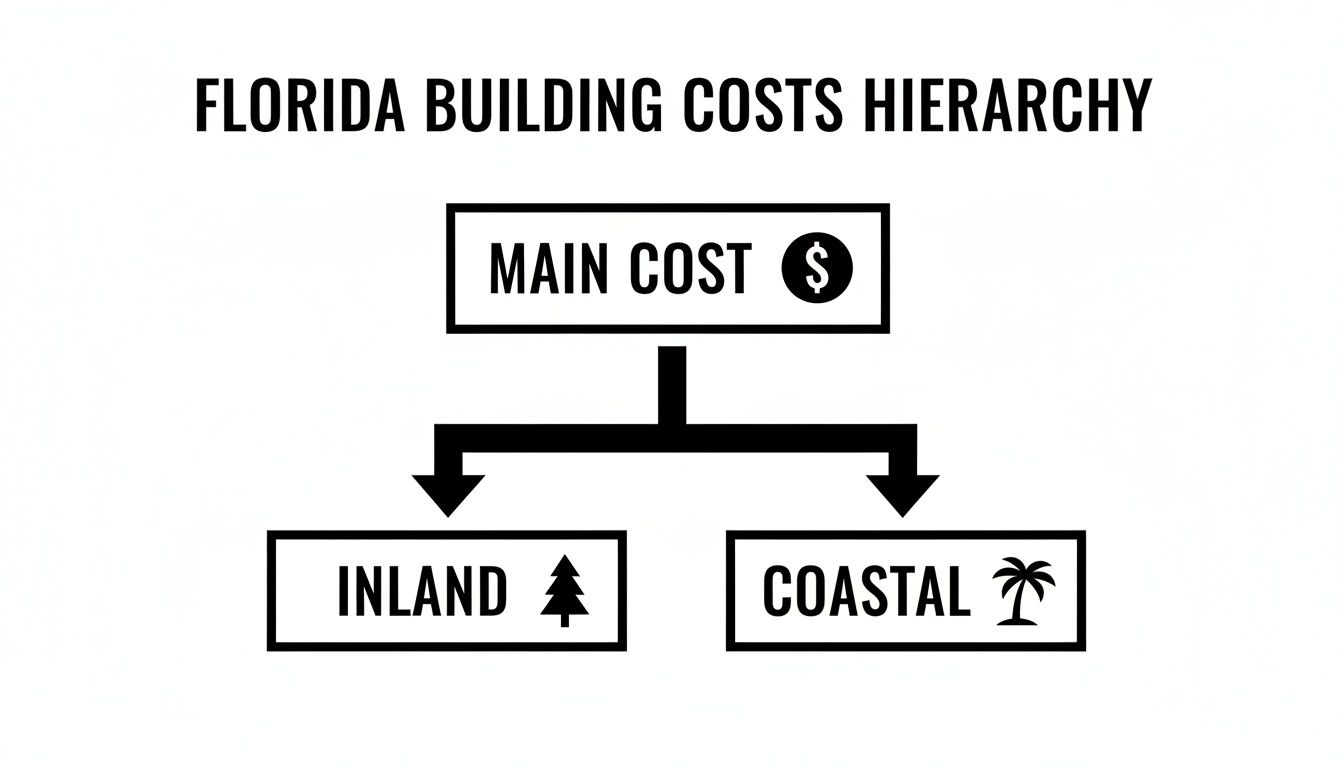
As you can see, that coastal premium is very real. It’s driven by everything from the sky-high value of waterfront land to the stringent hurricane codes and flood elevation rules we have to build to.
Breaking Down the Hard Costs
Your hard costs are the main event, typically eating up 70-80% of your total project budget. This is the money that goes directly into the physical construction of your home.
- The Land Itself: This is a huge variable in Southwest Florida. You might find a lot for $20,000 in an up-and-coming area, but a desirable waterfront or prime coastal lot can easily soar past $150,000.
- Site Prep & Elevation: This is a uniquely Floridian expense and a major one at that. We're talking clearing the land, trucking in load after load of fill dirt to raise the lot to meet flood zone requirements, and grading it all perfectly. This phase alone can run anywhere from $5,000 to over $20,000, depending on the lot’s condition.
- Foundation: A solid foundation is everything. Here, a concrete slab foundation is the standard and will likely cost between $10,000 and $28,000. If you're building on the coast, you may need a more complex foundation with deep pilings, which will push that number higher.
- Framing & Structure: This is your home’s skeleton. In hurricane-prone areas, building with reinforced concrete block isn’t just a good idea—it’s often required. It’s more expensive than wood framing, but it’s essential for safety and peace of mind.
- Exterior & Interior Finishes: Here’s where your personal style truly shines, and it's also where costs can swing wildly. This category covers everything from hurricane-rated impact windows and a durable metal roof to your flooring, custom cabinets, countertops, and paint choices.
Don't Forget the Soft Costs
Soft costs are the behind-the-scenes expenses that make the whole project possible. They often catch homeowners by surprise and can account for a significant 20-30% of your final budget.
- Architectural & Engineering Fees: Your dream home starts with a professional set of plans. You should expect these design fees to be around 5-15% of the total construction cost.
- Permits & Impact Fees: Every city and county has its own fee schedule. Building permits can cost $1,000 to $4,000, but the real kicker can be the impact fees. These are fees counties charge to help pay for the impact new homes have on local infrastructure (like roads, parks, and schools), and they can add thousands more to your bill.
- Insurance & Contingency: You'll need builder's risk insurance to cover the project during construction. More importantly, you absolutely must have a contingency fund. We tell our clients to set aside 10-15% of the total budget for the unexpected issues that always come up during a build of this scale.
To give you a clearer picture, here’s a typical budget breakdown for a custom home in our corner of Southwest Florida.
Typical Custom Home Budget Allocation in Southwest Florida
| Cost Category | Percentage of Total Budget | Key Considerations for Florida |
|---|---|---|
| Land Purchase | 15% – 25% | Waterfront and coastal lots demand a significant premium. |
| Site Prep & Foundation | 10% – 15% | Major costs here include fill dirt for elevation and potential for pilings. |
| Framing & Structure | 15% – 20% | Concrete block construction is common and required for hurricane resilience. |
| Exterior Finishes | 10% – 15% | Hurricane-rated windows, doors, and durable roofing are non-negotiable. |
| Interior Finishes | 15% – 25% | This is highly variable based on your selections for kitchens, baths, and flooring. |
| MEP Systems | 10% – 15% | High-efficiency HVAC is crucial for Florida's climate; generators are a key upgrade. |
| Soft Costs (Permits, Fees, Design) | 10% – 20% | Impact fees and architectural plans are the largest components. |
| Contingency Fund | 5% – 10% | Essential for covering unforeseen site conditions or material price changes. |
This table shows how quickly the costs add up and why a simple square-foot price can be misleading.
Juggling all these moving parts is precisely where an experienced local builder proves their worth. A deep understanding of municipal codes, strong relationships with suppliers, and a mastery of project timelines are what keep a complex build on track and on budget. Learning how a builder handles home construction project management is the best way to understand how they turn this complicated list of costs into a smooth, seamless process.
The Florida Factors Driving Up Construction Costs
Building a custom home in Florida is a completely different ballgame than building anywhere else in the country. The Sunshine State’s unique geography and climate throw a specific set of challenges our way, and these directly pump up the cost of building a home in Florida—especially in coastal regions like Southwest Florida.
These aren't fancy upgrades you can opt out of. We're talking about foundational requirements for the safety, longevity, and insurability of your home.
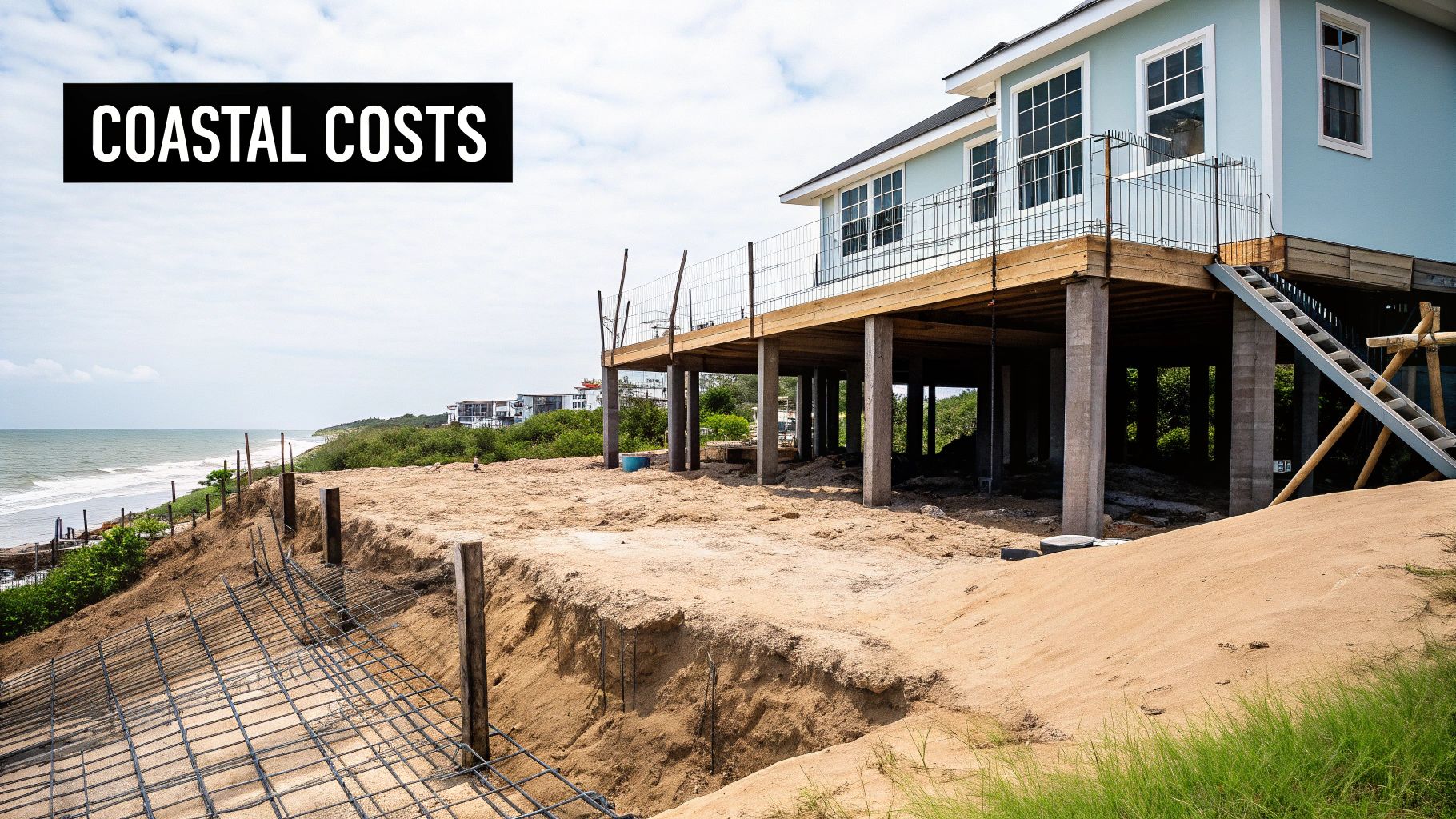
It all starts from the ground up—literally. Before a single concrete block is laid, your lot has to be prepped to handle Florida's reality, which often means significant site work that goes way beyond simple clearing and grading.
The High Ground: The Cost of Elevation and Foundation
In low-lying coastal areas like Cape Coral and Fort Myers, building at the wrong elevation isn't just a mistake; it's a financial catastrophe waiting to happen. Local and federal regulations are strict, mandating that homes in designated flood zones be elevated to a specific height above sea level.
This isn't as simple as just pouring a thicker slab. It often requires trucking in dozens—sometimes hundreds—of loads of fill dirt to physically raise the entire building pad. This process alone can tack on $10,000 to $20,000 or more to your site prep costs before we even think about the foundation.
On top of that, the sandy, porous soil common here requires very specific foundation engineering to guarantee long-term stability. Your builder has to be an expert in creating a solid base that can support a heavy concrete block structure without shifting or settling over time.
Built for the Storm: Hurricane-Resilient Construction
Hurricane-resistant design is probably the single biggest factor that separates Florida construction costs from the rest of the country. After devastating storms like Ian, building codes have become incredibly stringent, and for good reason. These aren't negotiable features; they're built into your home's DNA from the start.
Key hurricane-hardening features include:
- Impact-Rated Windows and Doors: These aren't your average windows. They're engineered with laminated glass and reinforced frames to withstand flying debris. They are significantly more expensive than standard windows but are required in most coastal zones.
- Reinforced Concrete Block Construction: While wood framing is common elsewhere, concrete block (CBS) construction is the gold standard for strength and resilience in Southwest Florida.
- Advanced Roof-to-Wall Connections: A home is only as strong as its weakest link. We use specialized steel straps and anchors to create a continuous load path, essentially locking the roof, walls, and foundation together into one solid structure that can resist powerful uplift forces.
- Whole-Home Generators: In the wake of recent storms, a whole-home generator is no longer a luxury but a critical piece of infrastructure. The ability to maintain power for days after a hurricane provides immense security and makes it a popular feature in new custom builds, adding a significant cost to consider.
Building a home in Florida is an exercise in preparing for the worst-case scenario. Every structural decision is viewed through the lens of a Category 4 hurricane, ensuring the home is not just beautiful but fundamentally safe.
Navigating Market Volatility and Labor Shortages
On top of these environmental factors, builders across Florida are wrestling with persistent economic pressures. Material costs, from lumber to concrete to wiring, remain volatile, which makes locking in prices for the long haul a real challenge.
At the same time, a skilled labor shortage continues to squeeze the industry. Finding and keeping top-tier electricians, plumbers, and framers means paying competitive wages, and that, in turn, affects the overall project cost.
Recent news and building trends indicate that Florida's home construction costs will remain elevated due to these pressures. In hard-hit coastal areas like Fort Myers Beach, costs can soar to $185–$295 per square foot, with resilience upgrades adding another 10–20%. These are crucial investments to safeguard against events like Hurricane Ian, which caused an unbelievable $112 billion in damage. This new reality makes an experienced builder’s project management skills and strong supplier relationships more valuable than ever in controlling costs and keeping your project on schedule.
When you start adding up the cost of building a home in Florida, it’s tempting to look at hurricane-resistant features as just another line item on a long, expensive list. But that’s a shortsighted view. These aren't just about ticking a box for the building inspector; they're a serious, long-term investment in your safety, your finances, and your peace of mind.
Building for resilience means looking past the initial price tag. It's about understanding the real-world value of a home engineered from the ground up to handle everything Southwest Florida’s climate can throw at it. The smart decisions you make upfront will pay you back for decades to come.
The Anatomy of a Resilient Florida Home
A truly hurricane-proof home is more than just concrete blocks. It’s a complete system, where every single piece works together to create a fortress against extreme weather. It’s an integrated defense that starts at the foundation and goes all the way up to the roof.
Here are the key structural investments we focus on:
- Impact Glass and Doors: Modern impact glass is an engineering marvel, designed to take a hit from high-velocity debris without shattering. This isn't just about protection; it means you can ditch the clumsy storm shutters and have 24/7 security built right in.
- Fortified Roof-to-Wall Connections: We physically anchor the roof trusses to the walls using heavy-duty hurricane straps and clips. This simple but critical step prevents the entire roof from lifting off in intense winds—a primary reason homes fail catastrophically during a storm.
- Superior Roofing Materials: A strong roof is your first line of defense. Understanding the average cost for roof installation helps you budget for this crucial component. Materials like metal or tile offer vastly superior durability and wind resistance compared to standard asphalt shingles.
These aren't just upgrades. They are fundamental choices that define the backbone of your home.
The Unseen Benefits of Building Beyond Code
The same principles that make a home strong enough for a hurricane also make it more durable against the daily grind of Florida's humidity and intense sun. This is where investing in premium interior finishes pays off in ways you might not expect.
Builder-grade materials just don't hold up well in our climate. They warp, encourage mildew, and need to be replaced far too soon.
An "over-engineered" custom home isn't about excess; it's about foresight. By investing in higher-quality materials and construction techniques upfront, you're actively reducing future maintenance headaches, repair bills, and insurance claims.
Choosing solid wood cabinetry, durable flooring that can handle moisture, and high-performance paint ensures your home doesn't just survive a storm—it thrives in our humid environment year-round. You get to avoid that constant, frustrating cycle of repairs and replacements that plagues lesser-quality homes.
From Generators to Insurance Premiums
Thinking about resilience also means planning for livability during and after a storm. Power outages are a given. That’s why a whole-home generator has become an almost standard feature in new custom homes around here. Having the power to run your air conditioning, keep your food from spoiling, and stay connected provides security and comfort when you need it most.
And here’s the best part: This commitment to building a better, stronger home directly helps your bottom line. Insurance companies notice and reward homeowners who build to a higher standard.
A home with documented hurricane-mitigation features—like a hip roof, impact-rated windows and doors, and strong roof-to-wall connections—can qualify for some serious discounts on insurance premiums. Over the life of your mortgage, these savings can easily add up to tens of thousands of dollars, effectively paying you back for your initial investment. Before you build, it’s a smart move to look into how much hurricane insurance costs in Florida to see just how much these features can lower your annual rates.
Ultimately, investing in a hurricane-proof home is the smartest money you can spend on your Florida dream.
Navigating the Custom Home Building Process
Understanding the numbers is one thing, but knowing what the journey actually feels like is a whole other ball game. Going from a detailed budget on a spreadsheet to standing in your finished home is a long, rewarding road filled with distinct phases, critical decisions, and some pretty exciting milestones.
Let's be upfront: building a custom home in Southwest Florida isn't a weekend project. A realistic timeline, from those first napkin sketches to the final walkthrough, usually lands somewhere between 12 to 18 months. This timeframe isn't just construction; it includes everything from architectural design and engineering to navigating the often-lengthy permitting process with local city and county offices.
A huge piece of this early puzzle involves thorough land preparation for building a house, which can have a major impact on both your timeline and your budget.
The Modern Florida Home Design Trends
As your project gets underway, you'll see your vision start to take shape, often incorporating the latest design trends that truly define modern living here in Southwest Florida. Today's custom homes are moving away from closed-off, formal rooms and embracing fluid, functional spaces built for the life you actually live.
We're seeing a huge shift toward designs that celebrate our incredible environment and make room for the whole family. The most popular new design features we're building right now include:
- Expansive Outdoor Living Areas: The line between inside and out is practically disappearing. Things like full summer kitchens, retractable screen systems, and resort-style pools are no longer luxuries—they're essentials for creating a seamless extension of the home's main living space.
- Multi-Generational Suites: More families are choosing to live together, and home designs are finally catching up. Private "in-law" suites with their own kitchenettes, living areas, and separate entrances offer the perfect blend of togetherness and independence.
- Seamless Smart Home Integration: Technology is now baked into the design from day one. Homeowners expect integrated systems to control lighting, security, climate, and entertainment from a single app, bringing a new level of convenience and energy efficiency.
What to Expect at Each Stage
The path from an empty lot to your front door follows a clear, logical progression. By 2025, building a 1,500 sq ft Florida home starts around $225,000, but that number can climb to $420,000 once you factor in coastal-specific building codes. For a larger 3,000 sq ft luxury build, you're looking at a range of $450,000–$840,000, depending on design complexity and high-end, energy-efficient features.
Here in Fort Myers and Cape Coral, where a good lot can easily top $100,000/acre, the all-in, move-in-ready cost often lands between $350,000 and $900,000+. That includes crucial systems like specialized HVAC designed to handle our year-round humidity.
The custom home building process is a marathon, not a sprint. Each phase—from pouring the foundation to installing the final light fixture—is a critical step toward realizing your vision, requiring patience and a strong partnership with your builder.
Understanding what happens at each step transforms what could be an overwhelming process into a manageable and genuinely exciting journey. Breaking down the custom home building process into clear stages helps you see what's coming next and feel confident as your project moves forward. With a clear roadmap, there are no surprises, allowing you to focus on the fun part—the creative decisions that will make this house truly your home.
Why Your Builder Is Your Most Important Investment
After breaking down all the line items and unique Florida challenges, the final cost of building a home in Florida ultimately comes down to a single decision: who you choose as your builder.
This one choice will impact your budget, your timeline, and the final quality of your home more than any countertop you select or floor plan you approve. The right partner turns a notoriously complex process into a rewarding one.
Think of it like choosing a captain for a ship. A big production builder might offer a standard, charted course. But a dedicated, owner-involved custom builder is right there in the wheelhouse with you, navigating every current and squall. In Southwest Florida’s demanding building environment, that distinction is everything.
The Value of a Hands-On Builder
A builder who is on your job site every day provides a level of oversight that a massive company juggling dozens of projects simply can't match.
With an owner-involved builder like Matthew Sinclair, there's a personal stake in the outcome. That direct involvement means every detail stays true to your original vision and quality is never, ever compromised for speed.
This hands-on approach delivers some key advantages:
- Proactive Problem-Solving: An on-site builder catches potential issues long before they become expensive fixes, saving you a ton of money and stress down the road.
- Clear, Direct Communication: When you can call the person in charge and get a straight answer, questions are resolved quickly and you always know exactly what's happening.
- A Commitment to Quality: A builder who literally puts his own name on the business has a reputation to protect. This drives a commitment to "over-engineered" quality that doesn't just meet the minimum code but exceeds it.
While the cost to build a quality home in Florida is significant, the cost of a poorly built one is far greater—measured in years of repairs, frustrating maintenance, and the erosion of your investment.
Protecting Your Investment
At the end of the day, your home is more than just an asset; it's the backdrop for your family's memories and a legacy for the future.
Choosing a builder with a proven track record for integrity and superior craftsmanship is the single best way to protect that investment. They make sure every dollar you spend contributes to a home that isn't just beautiful, but is also resilient, durable, and built to stand the test of time against the unique challenges of our Florida climate.
Burning Questions About Building a Home in Florida
Building a custom home is a huge undertaking, and it's only natural to have a lot of questions running through your mind. We get it. Here are some clear, no-nonsense answers to the questions we hear most often from folks looking to build their dream home here in Southwest Florida.
Is It Cheaper to Build a House in Florida or Just Buy One?
This is the age-old question, isn't it? The honest answer is: it depends entirely on what you value most. While you might find an existing home with a lower sticker price, building a custom home delivers a kind of value you just can't put a number on.
When you build new, you get the exact home you've been dreaming of—no compromises on the layout, no settling on finishes, and no need to budget for future renovations. Even better, your new home is built to the absolute latest hurricane and energy codes. That’s not just a talking point; it translates directly into real money back in your pocket through lower insurance premiums and smaller utility bills year after year. In a tight market with few high-quality homes for sale, building new often makes the most sense financially and for your lifestyle.
How Long Does It Really Take to Build a Custom Home in Cape Coral or Fort Myers?
From our first handshake to the day we hand you the keys, you can generally expect the process of building a custom home in our area to take between 12 to 18 months.
Of course, that timeframe isn't set in stone. A few key things can stretch or shrink the schedule:
- Design Complexity: A straightforward design will move faster than an intricate one with lots of custom engineering.
- The Permit Maze: Getting approvals from the city can take time, but having an experienced local builder who knows the system is a huge advantage.
- Florida Weather: Let's face it, our summer storms and hurricane season can throw a wrench in the works and pause construction for a bit.
What Are the Biggest "Hidden" Costs I Should Watch Out For?
The costs that tend to catch people by surprise are the ones that happen long before a single wall goes up. The big three are almost always site preparation, impact fees, and getting utilities hooked up.
In coastal Florida, getting a lot ready for construction can be a serious expense. We're talking about clearing dense vegetation, maybe building a seawall, and often trucking in thousands of dollars worth of fill dirt just to meet the required flood elevation. Then there are the county impact fees—charges that help pay for roads and schools—which can add a hefty sum to your total. Finally, don't forget the cost of running water, sewer, and power lines to your property line, which can be a significant and often overlooked budget item.
Always ask your builder for a detailed breakdown of their estimate. A transparent builder won’t shy away from this. They'll walk you through every potential cost so you have a crystal-clear financial picture from day one.
Your home is one of the biggest investments you'll ever make, and the builder you choose is your most important partner in that journey. At Sinclair Custom Homes Inc, our founder Matthew Sinclair is personally on-site for every project, making sure each home is "over-engineered" for quality that lasts a lifetime. Build your dream home with a builder you can trust.