
If you're building a custom home in Southwest Florida, the choice between an above ground pool vs inground pool is one of the most defining decisions you'll make. Let's cut to the chase: for the custom home industry in Florida, an inground pool is the undisputed standard. It's a permanent, value-adding feature that aligns with new builder trends and integrates seamlessly with your home's design. An above-ground pool? Think of it as a temporary, budget-conscious placeholder that doesn't fit the high-end custom build market.
Choosing the Right Pool for Your Florida Custom Home
When you're building from the ground up in a place like Cape Coral or Fort Myers, the pool isn't just an add-on; it's the centerpiece of the Florida lifestyle. This decision goes far beyond personal taste. You're aligning your home with the high standards of the local real estate market, navigating some of the toughest building codes in the country, and addressing our unique environmental challenges, including news about rising floodplains and stricter building elevation requirements.
Florida is the king of residential pools, with over 1.59 million of them statewide—more than any other state. This makes your choice a critical part of your property's entire concept and long-term value.
For custom home builders and their clients, the conversation has to move past the initial price tag. We need to dig deeper into site-specific issues, like ensuring your property elevation is right to handle potential flooding and integrating hurricane impact features into the design. A major new design feature and builder trend in Southwest Florida is creating that perfect indoor-outdoor living space, where the pool and lanai feel like a natural, architectural extension of your home.
Key Considerations for Florida Homeowners
Before we get into the nitty-gritty comparison, it's important to frame this decision around the realities of building in Southwest Florida. Keep these factors top of mind:
- Long-Term Investment: Is this pool a key selling point that will boost your property's appraisal, or is it just for a few years of fun? For a custom home, every feature should enhance investment value.
- Hurricane Resilience: How will your pool hold up against 150+ mph winds and potential storm surge? This is about more than just the structure; it's about making sure your pumps and equipment can run when the power is out, which often means planning for a whole-home generator—a critical feature for hurricane readiness in Florida.
- Site and Code Compliance: Is your lot ready for the heavy excavation and engineering an inground pool demands, especially with Florida’s high water table and evolving elevation requirements?
In the Southwest Florida custom home industry, an inground pool is seen as a permanent architectural feature that actively increases a home's worth. An above-ground pool is treated like personal property—no different than a backyard playset—with zero impact on your home's appraisal value.
This guide will break down both options through the lens of a Florida custom home buyer. We’ll cover everything from the initial budget and lifetime operating costs to new design features and the all-important impact on your home’s resale value.
| Feature Comparison | Above-Ground Pool | Inground Pool |
|---|---|---|
| Custom Home Integration | A separate structure; conflicts with modern builder trends for seamless design. | Seamlessly built into the home’s design and lanai from day one. |
| Hurricane Durability | Highly vulnerable to wind and flying debris; a liability in storms. | Structurally sound; engineered to withstand immense hydrostatic pressure and hurricane impact. |
| Property Value Impact | No increase. It's considered personal property. | Increases home value by 5% to 7% on average—a significant return. |
| Permitting Process | Simple. Often requires a minimal permit, if any at all. | A complex process requiring engineered plans, site surveys, and multiple inspections that address local elevation and building news. |
Analyzing Initial Investment vs. Lifetime Ownership Costs
When you're building a custom home here in Southwest Florida, the pool conversation goes way beyond the initial sticker price. We need to talk about the total cost of ownership. This covers everything from the day it's installed to the long-term maintenance, insurance hikes, and the inevitable repairs that come with our intense Florida sun. Getting this financial picture right from the start is key to making sure your pool fits comfortably within your overall home construction budget.
The biggest, most obvious difference is the upfront investment. Above-ground pools are the fast and affordable way in, making them a tempting choice if you want a pool now without a massive initial cash outlay. But that initial savings definitely comes with long-term trade-offs.
Inground pools, on the other hand, are a serious investment built right into the foundation and value of your home. The higher cost reflects the massive amount of labor, premium materials, and complex site work involved—especially when we're dealing with Southwest Florida’s high water tables and sandy soil.
Breaking Down The Upfront Installation Costs
The initial price tag tells a pretty clear story. Industry averages show that a standard 12 ft x 24 ft above-ground pool package—including a concrete apron, safety fence, and a basic vinyl cover—will run you about $8,300.
For the exact same size, a basic inground pool immediately jumps to around $31,500. That number reflects the excavation, professional labor, and materials like vinyl, fiberglass, or concrete. But for the kind of pools we integrate into custom homes in Florida, you're realistically looking at a starting point of $45,000, which can easily climb past $100,000 once you add new design features like waterfalls, custom lighting, or an integrated spa. You can get a better sense of the numbers by reading up on the cost to install a salt water pool.
This infographic really nails the main things Florida homeowners have to weigh.
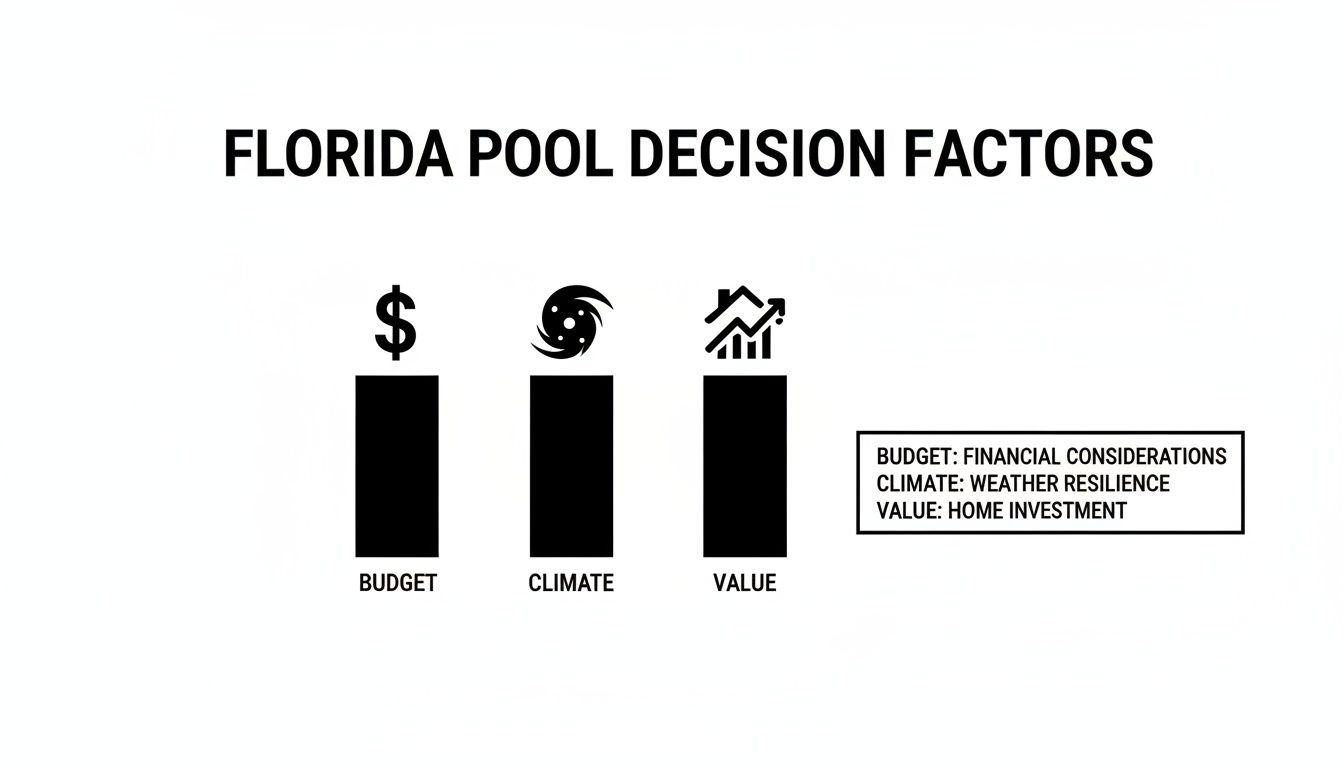
As you can see, it's a balancing act between your immediate budget, how the pool will hold up to our weather, and what it does for your home's long-term value.
Looking Beyond Installation At Lifetime Expenses
This is where the financial comparison gets really interesting. While an inground pool costs a lot more upfront, its sheer longevity and more durable components often deliver better value over the decades you'll own your home.
Here are a few ongoing expenses that many people forget to budget for, but they're critical in our region:
- Insurance Premiums: Down here, homeowner's insurance policies jump up much more for a permanent inground structure than for a "temporary" above-ground pool. It comes down to higher replacement costs and perceived liability.
- Energy Consumption: Inground pools typically have bigger, more powerful pumps and often include heaters. Both of these will add to your monthly FPL bill. Having a whole-home generator is also a consideration, as it keeps the pumps running during storms, but that adds another layer to your energy costs.
- Repairs and Resurfacing: A concrete inground pool will eventually need to be resurfaced, which is a major expense that can hit $10,000 or more. Fiberglass pools avoid this but might need gel coat repairs down the line. In contrast, an above-ground pool's vinyl liner will likely need to be replaced every 7-10 years—a more frequent but much cheaper fix.
To help you visualize these differences, we've put together a table breaking down the typical costs you can expect in the Southwest Florida market.
Florida Pool Cost Comparison: Initial vs. Long-Term Expenses
| Cost Factor | Typical Above-Ground Pool | Typical Inground Pool (Concrete/Fiberglass) |
|---|---|---|
| Initial Installation | $6,000 – $10,000 | $45,000 – $100,000+ |
| Annual Insurance Increase | $50 – $150 | $300 – $600+ |
| Annual Energy Costs | $200 – $400 (pump only) | $600 – $1,500+ (pump, lights, heater) |
| Major Repair (Liner/Surface) | $1,500 – $3,500 every 7-10 years (liner replacement) | $10,000 – $20,000 every 10-15 years (resurfacing) |
| Expected Lifespan | 7-15 years | 25+ years (structure) |
| Impact on Home Value | None to slightly negative | Significant positive increase |
As the table shows, the long-term financial commitment for an inground pool is substantial, but it's an investment baked directly into your property's value from day one. An above-ground pool offers immediate fun for a fraction of the cost, but it comes with its own cycle of recurring expenses and adds nothing to your home's equity.
Navigating Florida Building Permits and Site Challenges
Building a custom home in Southwest Florida isn't just about floor plans and finishes; it's about mastering a unique set of local rules and environmental challenges. This is especially true when it comes to adding a pool. Your choice between an above ground pool vs inground pool will fundamentally change how you navigate this critical phase of construction.
Think of an inground pool as a major structural addition to your home. It's a serious undertaking that kicks off a rigorous and complex permitting process with local municipalities like Cape Coral and Fort Myers. This isn't a quick trip to the building department. You'll need a mountain of documentation, including detailed, engineered plans that map out every inch of the pool's structure, plumbing, and electrical systems. Everything must comply with Florida's notoriously strict building codes, which are constantly updated based on recent news and storm events.
On the other hand, most above-ground pools get to skip the bureaucratic headache. Since they're typically classified as temporary structures, they often require only a minimal permit or sometimes none at all. For homeowners looking for a straightforward, fast installation, this is a huge plus.
Tackling Florida’s High Water Table
One of the biggest hurdles we face as builders in this region is the high water table. In many areas, the ground is saturated just a few feet below the surface. This creates tremendous hydrostatic pressure, turning what should be a simple excavation into an engineering challenge.
For an inground pool, just digging a hole isn't an option. We have to actively fight back against the groundwater by installing a dewatering system. This involves setting up specialized pumps that run 24/7 during excavation and construction, just to keep the site from turning into a muddy lake. It's a necessary step that adds significant time and money to the project—something you simply don't encounter when setting up a pool on top of the ground. Before you even think about pool types, it's worth the time to master land preparation for building to understand what the groundwork really involves.
For a custom home builder in Southwest Florida, managing the water table isn't just a task—it's a critical part of the foundation. A misstep here can lead to a floating pool shell or catastrophic structural failure down the line.
Elevation and Setbacks: The Rules of the Land
Beyond what’s happening underground, you also have to contend with strict zoning laws that dictate exactly where a pool can go on your property. Inground pools are always subject to setback requirements, which are rules defining the minimum distance the pool must be from property lines, the main house, and septic systems.
These regulations exist for good reasons, like ensuring proper drainage and emergency access, but they can definitely limit your design ambitions. And since we're in a flood-prone area, you'll also need an elevation certificate to prove the pool equipment and deck are high enough to withstand a storm surge. Keeping up with news that affects building in Florida, especially regarding FEMA flood maps and local elevation rules, is critical. Getting a firm grip on these local requirements is non-negotiable, and digging into the specifics of Cape Coral building permits will show you just how detailed the process is. Above-ground pools, being less permanent, usually have much more relaxed setback rules, giving you more flexibility.
Permitting & Site Challenge Comparison
| Challenge Factor | Above-Ground Pool | Inground Pool |
|---|---|---|
| Permitting Scope | Minimal to none; often a simple application. | Complex; requires full engineering plans, drainage plans, and multiple inspections. |
| Water Table Impact | None; sits on top of the ground. | Major; requires costly dewatering systems and specialized excavation. |
| Setback & Zoning | Less restrictive; more placement flexibility. | Strict; must adhere to property line, home, and utility setbacks. |
| Elevation Needs | Not typically required. | Mandatory; elevation certificate needed to verify compliance with flood zones. |
Designing for Hurricane Resistance and Durability
Here in Florida, a pool isn't just a luxury—it’s a permanent structure that has to be engineered like a fortress. When weighing an above ground pool vs inground pool, their ability to stare down hurricane-force winds and flooding is a top concern for any custom home builder in Southwest Florida. The decision you make has a direct line to your storm prep and how quickly you recover afterward. Hurricane impact features are no longer an option; they are a necessity.
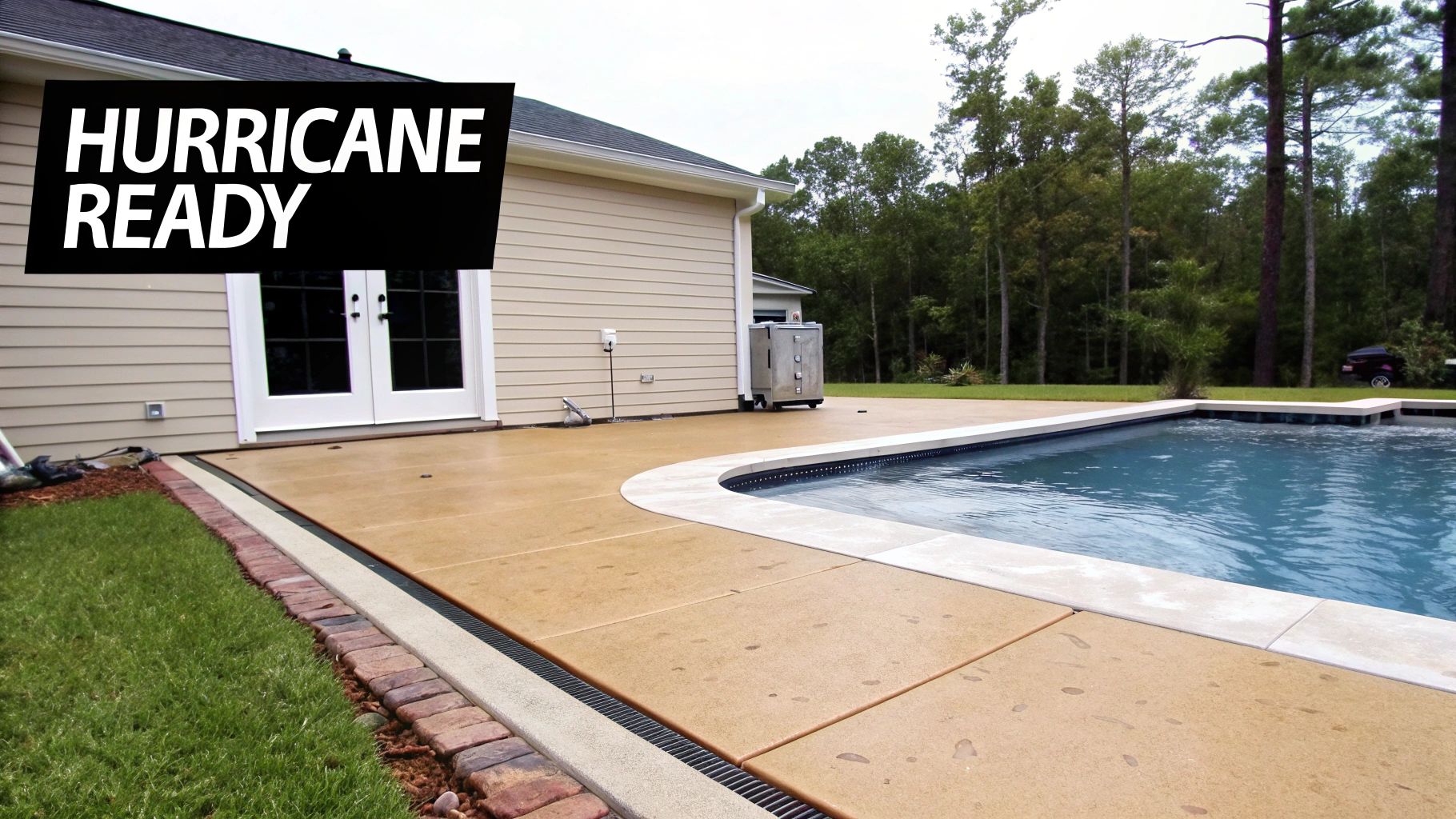
From day one, inground pools are designed for resilience. Built from steel-reinforced concrete or tough fiberglass, their very nature of being set into the earth provides immense structural stability. That integration is the key to surviving Florida's worst weather.
The Inherent Strength of Inground Pools
During a hurricane, one of the biggest threats you can't see is hydrostatic pressure. When floodwater saturates the ground, it pushes up on everything underground with incredible force. An empty or poorly installed inground pool could, in theory, get "popped" right out of the ground.
But a properly engineered and filled inground pool is a different story. It uses the weight of its own water to push back against that pressure, creating a stable equilibrium that anchors it firmly in place. That's a huge advantage in a flood-prone state. Their low profile also makes them far less vulnerable to high winds and flying debris than any exposed structure.
In the face of a hurricane, an inground pool becomes part of your property's defense system. Its mass and integration with the ground provide a level of stability that a temporary structure simply cannot match.
Vulnerabilities of Above-Ground Pools in Storms
Above-ground pools are playing a completely different ballgame. Their exposed walls basically act like sails in the wind, leaving them wide open to being lifted, buckled, or punctured by debris. Even a partially filled pool can be compromised, leading to a sudden and messy release of thousands of gallons of water that can cause major damage to your property.
Because of this, pre-storm prep for an above-ground pool is a serious, labor-intensive chore. You absolutely have to do it. Homeowners are typically advised to:
- Partially drain the water to a level just below the skimmer. This prevents overflow but leaves enough weight to help resist wind.
- Disconnect and store all pumps, filters, and heaters somewhere safe, like a garage or shed.
- Remove any ladders, toys, or unsecured furniture that could easily become dangerous projectiles in a storm.
Modern Solutions for Uninterrupted Operation
Beyond the pool itself, modern custom homes are built with features designed to protect the whole system. Impact-resistant pool enclosures and screens are standard now, engineered to handle serious wind loads and shield the pool from debris. We also design advanced drainage systems around the pool deck to channel torrential rain away from the home's foundation and keep the deck from flooding.
A truly critical hurricane impact feature is power. In storms, power outages can last for days, and a pool's circulation system shuts down, turning stagnant water into a swamp. This is where a whole-home generator is indispensable. It keeps the pool pumps running, maintaining water quality and preventing expensive equipment damage. This level of foresight is a signature of the Sinclair custom home building process, where we design every system for resilience.
Ultimately, while an above-ground pool gets you in the water, an inground pool is a permanent, durable, and storm-resistant feature that truly aligns with the high engineering standards needed to build a lasting custom home in Southwest Florida.
Integrating Your Pool with Custom Home Architecture
When you're building a custom home in Southwest Florida, the pool shouldn't be an afterthought—it needs to feel like a seamless extension of your living space. This is where the above ground pool vs inground pool decision becomes critical, as it directly impacts your home's architectural flow and overall feel. An inground pool is planned from day one to be an integral part of the home’s footprint, creating a cohesive, luxurious outdoor oasis.
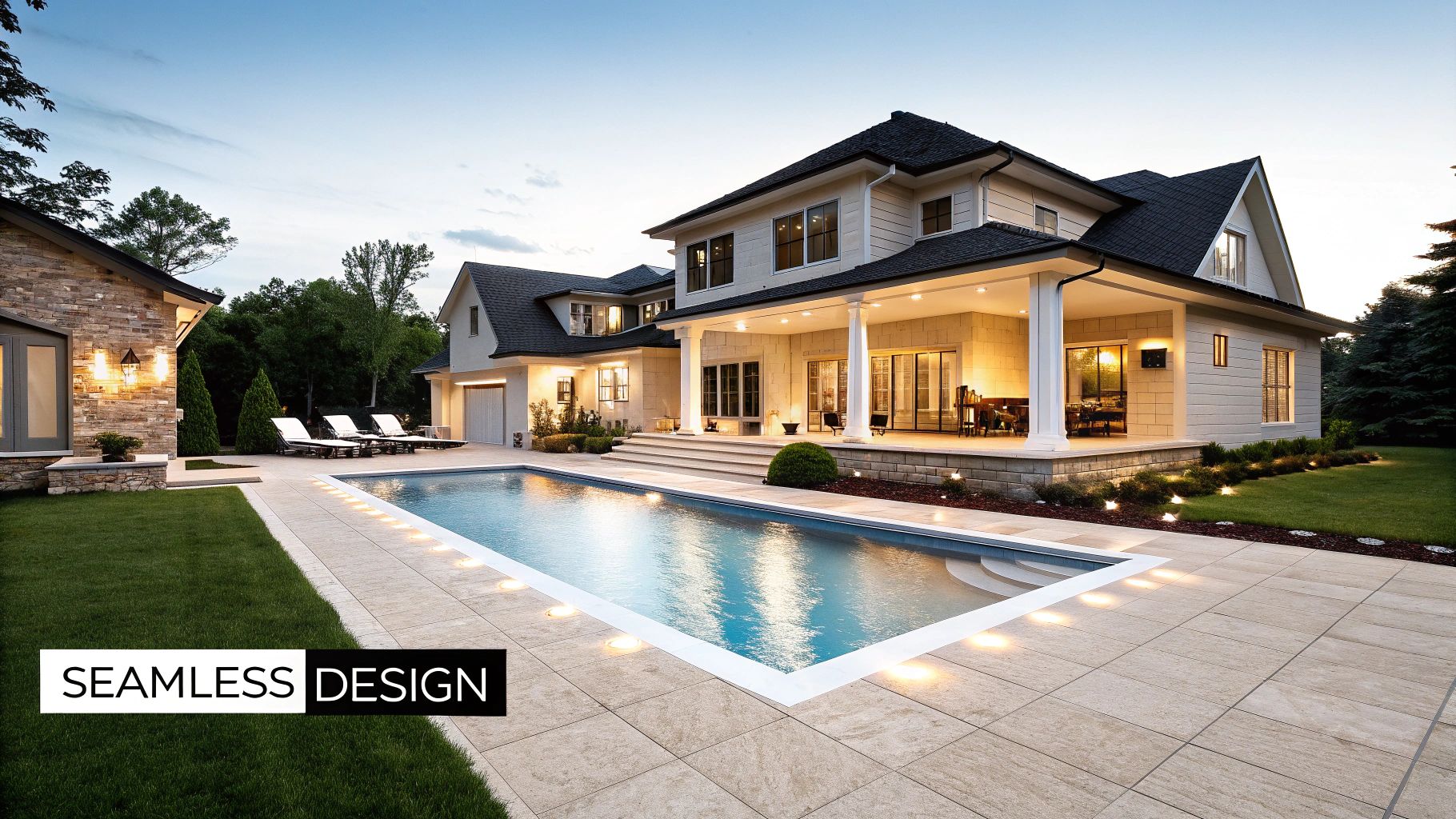
This level of integration is a cornerstone of new builder trends emphasizing fluid indoor-outdoor living. It allows for a natural transition from the great room to the lanai and out to the pool deck, often using the same flooring materials and design cues to blur the lines between inside and out.
The Limitless Design of Inground Pools
With an inground pool, the design possibilities are truly endless, allowing you to perfectly match your home’s specific architectural style. A skilled custom home builder can craft an experience that is completely unique to your property and your vision.
Key new design features include:
- Freeform Shapes: You can design a natural, lagoon-style pool that meanders through your landscaping, which beautifully complements a more organic architectural style.
- Geometric Designs: For modern or contemporary homes, a sleek rectangular or L-shaped pool with crisp, sharp lines reinforces the home’s clean aesthetic.
- Infinity Edges: This is an incredibly popular feature for waterfront properties in Cape Coral or Fort Myers. It creates a stunning illusion that the pool merges right into the canal or the Gulf beyond.
- Integrated Spas and Sun Shelves: Builders can incorporate features like built-in hot tubs, shallow tanning ledges, or even swim-up bars directly into the pool’s structure for that resort-like feel.
These custom elements turn the pool into a deliberate piece of architectural art. By adding water features like waterfalls or fountains, you introduce both visual interest and soothing ambient sound, completing the entire outdoor experience.
For a custom Florida home, an inground pool is not just a place to swim; it's a structural and aesthetic anchor for the entire backyard. Its design directly reflects and enhances the home's architecture, creating a unified and upscale environment.
Elevating the Above-Ground Pool Aesthetic
While an above-ground pool can never achieve the same seamless integration as its inground counterpart, thoughtful design can absolutely elevate its appearance. The goal here is to build around the pool to make it feel less like a temporary object and more like a permanent destination in your yard.
Success really hinges on creating a substantial, intentional structure to surround the pool. This usually involves building a multi-level deck that rises to meet the pool's edge, which effectively hides the exterior walls and creates a flush, "built-in" look.
To achieve a higher-end feel, consider these design strategies:
- Sophisticated Decking: Use high-quality materials like composite decking or tropical hardwoods that match or complement your home’s exterior finishes.
- Architectural Lighting: Install landscape and deck lighting to highlight pathways, illuminate the pool area, and create a warm, inviting atmosphere for evening swims.
- Strategic Landscaping: Use lush, layered plantings to soften the hard lines of the deck and pool structure, helping it blend more naturally with the rest of the yard.
Ultimately, the choice comes down to your vision. An inground pool offers true architectural integration, becoming one with your custom home. An above-ground pool, with some clever design, can become a beautiful—but distinct—backyard feature.
Comparing Resale Value and Long-Term Property Investment
When you’re building a custom home in Southwest Florida, every choice you make is an investment in your property's future. The debate over an above ground pool vs inground pool isn’t just about lifestyle—it’s a serious financial decision that will directly impact your home’s marketability and appraisal value down the road. In this competitive real estate market, you need to understand how each pool type affects your long-term equity.
For buyers in the custom home industry, an inground pool isn't a luxury; it’s a standard, high-value feature they expect to see. It’s a permanent structural improvement that appraisers recognize, and that's the key difference in how it contributes to your home's worth.
On the other hand, an above-ground pool is classified by appraisers as personal property. Think of it like a patio furniture set or a portable shed—it adds no official value in a home appraisal. While it’s certainly fun to have, it won’t build your home's equity. It can even become a liability if it looks old or poorly maintained when you decide to sell.
The Inground Pool as a Core Asset
In the Southwest Florida market, a well-designed inground pool is a powerful asset. It completes the picture of the luxury lifestyle that buyers are looking for, boosting curb appeal and making a property far more attractive. The financial returns definitely reflect that.
A well-maintained inground pool is a lasting improvement, with a lifespan that can stretch from 20 to 50 years. The numbers show it can boost a home's worth by 5% to 7%, with a solid 56% ROI according to the National Association of Realtors' Remodeling Impact Report. Meanwhile, above-ground pools are seen as temporary structures, adding exactly $0 to appraisals and potentially hurting your resale prospects if you don't remove them. You can dive deeper into how pools affect home investments in this detailed financial analysis from Kiplinger.
This is exactly why we at Sinclair Custom Homes plan for inground pools from the very beginning of the design process. It's about creating a cohesive, high-value property, not just a house with a pool dropped in the back.
The Above-Ground Pool in the Resale Market
While an above-ground pool is a low-cost way to get in the water, it often creates headaches during a real estate transaction. Since it’s personal property, it becomes a point of negotiation:
- Removal Costs: Many buyers will ask for the pool to be dismantled and hauled away before closing, which means an extra expense and chore for you as the seller.
- Perceived Maintenance: An older above-ground pool can signal deferred maintenance to potential buyers, souring their perception of the entire property.
- Zero Added Value: No matter how fancy the decking or landscaping is, an appraiser will assign a value of zero to the pool itself.
When it comes to your property's financial future, the distinction is clear. An inground pool is a strategic investment in your home's equity. An above-ground pool is a temporary recreational purchase with no long-term financial return.
To truly understand the market value of your custom home, especially with a major feature like a pool, a thorough real estate comparative market analysis is essential. This analysis will make it obvious that in neighborhoods filled with high-end custom homes, properties without an inground pool are often at a competitive disadvantage.
Ultimately, if your goal is to maximize your investment and meet the expectations of the Southwest Florida market, the choice is unequivocally an inground pool.
Making the Final Decision for Your Florida Lifestyle
After weighing the costs, regulations, and design options, the choice between an above ground pool vs inground pool really boils down to your family’s priorities and the long-term vision you have for your custom home. This isn’t just about having a place to swim; it's about defining your Florida lifestyle for the years ahead.
Let’s be direct. For the custom home industry in Florida, if you’re looking for a permanent, high-value feature that truly elevates your home's architecture, boosts its resale potential, and is built to handle Florida’s tough climate, an inground pool is the only way to go. It’s a foundational investment integrated into your custom home, meeting the high standards expected in the Southwest Florida real estate market.
On the other hand, if a lower upfront cost, flexibility, and getting a pool in the ground fast are your main goals, an above-ground pool offers a quick fix for family fun. While it won't add a dime to your home's equity, it gets you in the water without the major financial and construction commitment of a permanent structure.
A Final Checklist for Your Custom Home
To make sure your decision is the right one, have a frank discussion with your custom home builder about these key questions. This conversation will bring real clarity and confidence, ensuring the pool you choose is a perfect fit for both your lifestyle and your investment strategy.
In the world of custom home building, the right choice is the one that aligns with your home's long-term value, architectural integrity, and the lifestyle you envision. An inground pool is an integral part of that vision; an above-ground pool is a temporary recreational feature.
Think through these final points:
- Your Long-Term Plan: Is this your forever home, or do you see yourself selling in the next 5-10 years? Your answer here really dictates whether the ROI of an inground pool should be a deciding factor.
- Architectural Harmony: How important is it that the pool looks like it was always part of the home's original design? This is a key new builder trend in Southwest Florida.
- Hurricane Preparedness: Are you ready to deal with the pre-storm hassle of securing an above-ground pool? Or do you prefer the built-in resilience and peace of mind that comes with an inground structure, especially when paired with a whole-home generator to keep it running in storms?
- The Total Budget Reality: Have you looked past the initial price tag and accounted for the full lifetime cost? This includes things like insurance, eventual resurfacing, and higher energy bills that come with a permanent pool.
Ultimately, this choice is about creating the heart of your backyard. By weighing these factors honestly, you can make a confident decision that brings your dream Florida lifestyle to life.
Ready to build a custom home where every detail, including the perfect pool, is designed for your lifestyle? Contact Sinclair Custom Homes Inc today to start the conversation. Let us bring our commitment to quality, integrity, and masterful craftsmanship to your project. https://sinclaircustomhome.com