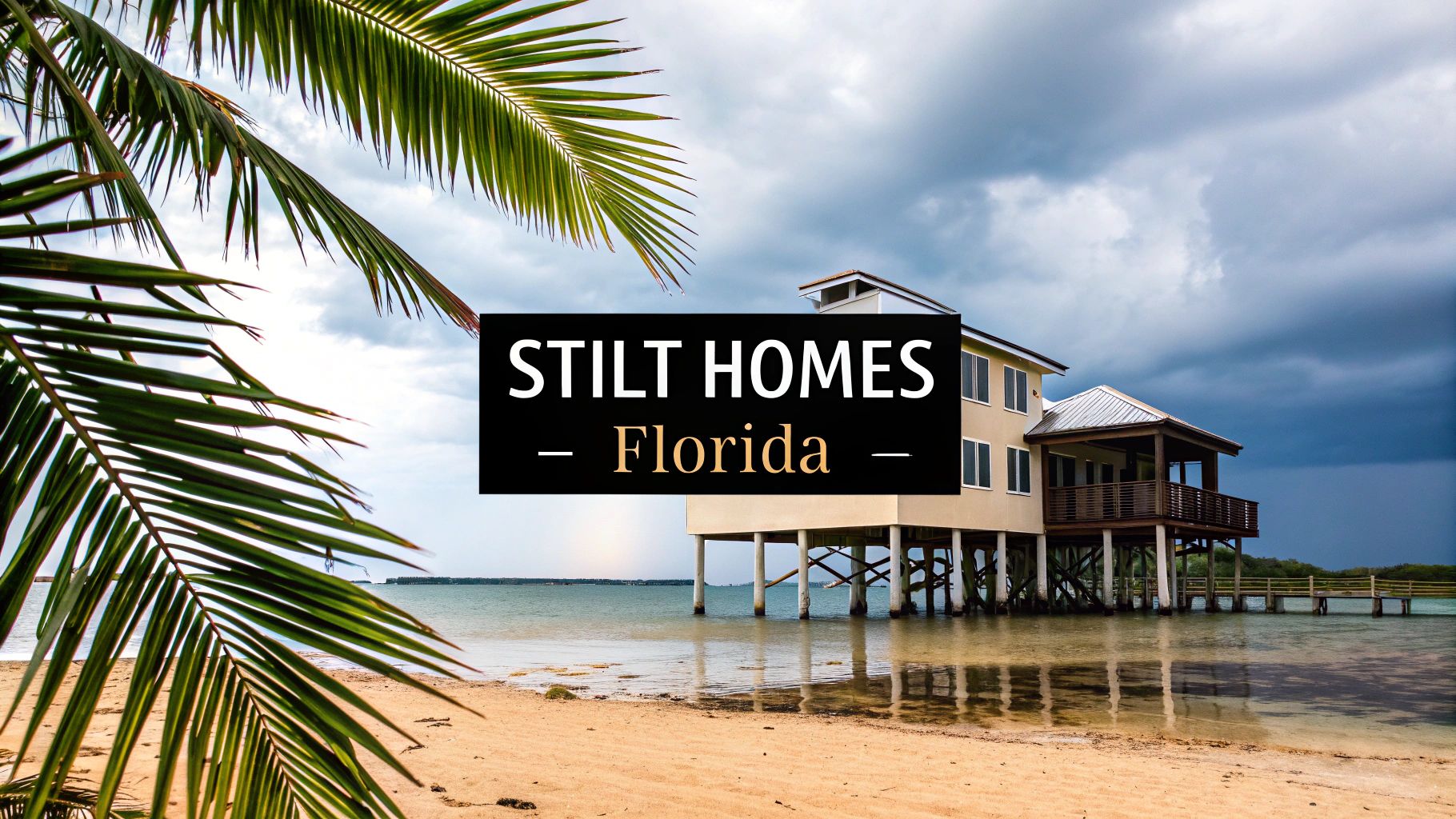
In Florida's custom home industry, stilt homes are more than just a coastal aesthetic—they represent the pinnacle of resilient, forward-thinking design. For builders and discerning clients in Southwest Florida, elevating a new home is a strategic response to the state's unique environmental challenges, blending cutting-edge hurricane-impact features with sophisticated architectural trends.
Why Build a Stilt Home in Florida
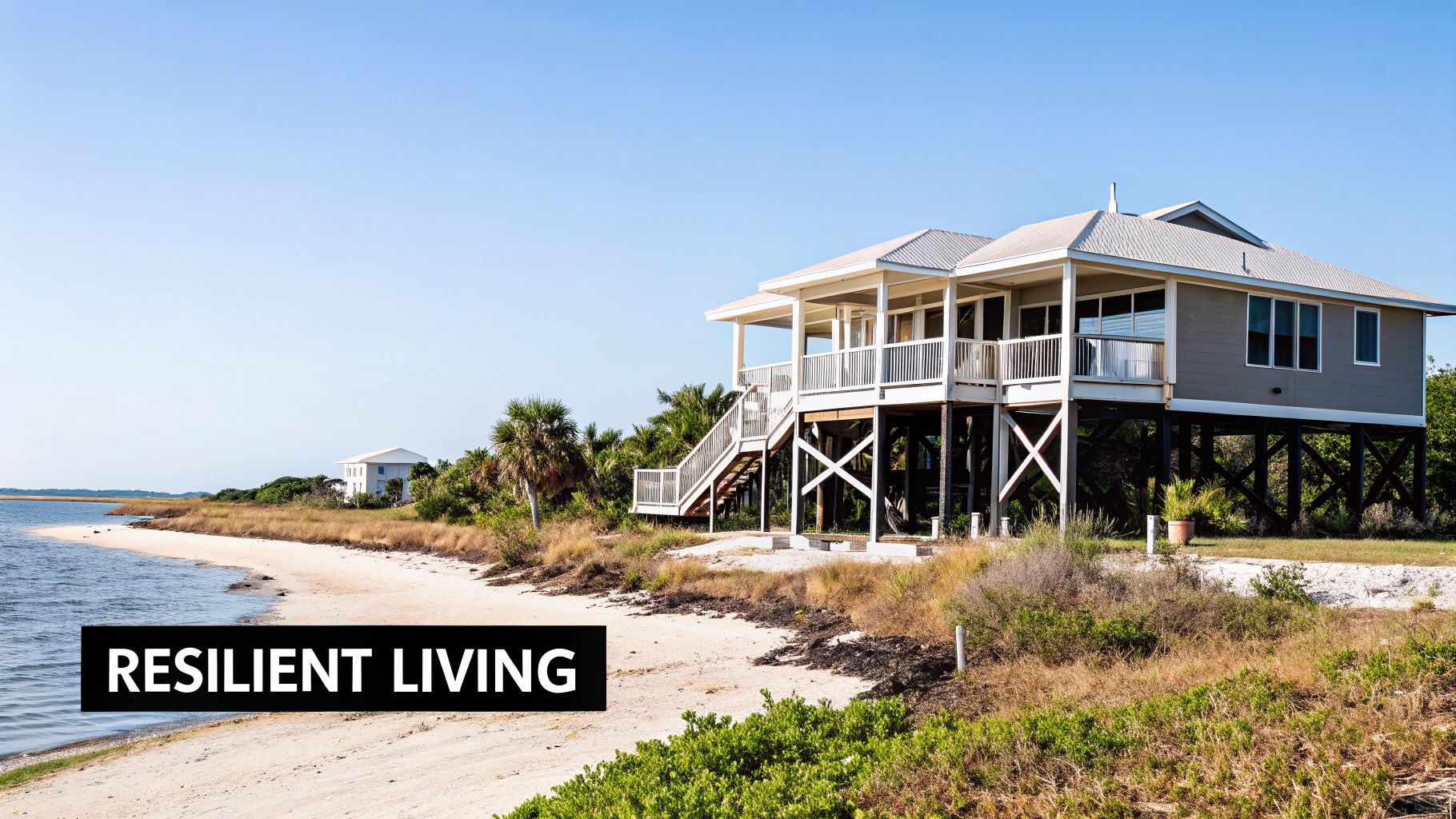
For anyone planning new construction in Southwest Florida, building on stilts isn't just an option—it's a fundamental strategy for protecting a long-term investment. This method of construction directly mitigates the primary threats posed by the local climate, particularly storm surge and flooding, which are constant concerns for any property owner.
Today’s custom stilt homes are engineered for ultimate peace of mind without sacrificing style. New builder trends focus on integrating modern hurricane-impact features with durable, low-maintenance materials, transforming a practical necessity into a bold statement of architectural strength. As part of the planning process, it's also crucial to understand the impact of Florida's climate on home exteriors.
The Modern Approach to Coastal Resilience
Custom home builders across Florida are witnessing a clear trend: clients are prioritizing homes designed to withstand severe weather. A stilt home is the ultimate expression of this demand. By lifting the primary living areas well above the ground, the design establishes a formidable defense against rising waters—the most destructive element of any hurricane.
This elevation is the first and most critical line of defense. The core benefits of this building trend are clear:
- Superior Storm Surge Protection: Elevating a home above the required Base Flood Elevation (BFE) ensures the living space remains safe and dry, protected from destructive floodwaters.
- Enhanced Structural Integrity: The foundation, constructed on deep-driven concrete pilings, provides an exceptionally stable anchor capable of withstanding hurricane-force winds.
- Reduced Insurance Costs: Homes built to modern elevation standards often qualify for substantial discounts on flood insurance premiums, offering significant long-term savings.
- Expanded Lifestyle Opportunities: The ground-level space becomes a versatile blank canvas for covered parking, secure storage, or a breezy outdoor entertainment area—a key design feature in new builds.
The table below outlines why a stilt home is a strategic choice for new custom construction in Florida.
Key Advantages of Building a Stilt Home in Florida
| Benefit Category | Advantage for Florida Homeowners | Impact on a New Custom Home |
|---|---|---|
| Safety & Protection | Elevates the primary living area above FEMA's Base Flood Elevation (BFE), providing superior defense against storm surge and flooding. | Minimizes the risk of catastrophic water damage to the home's interior, structure, and personal belongings. |
| Financial Savings | Often qualifies for significantly lower flood insurance premiums, saving thousands of dollars annually. | Reduces long-term ownership costs and makes the property a more attractive and affordable investment. |
| Lifestyle Enhancement | Creates usable, weather-protected space underneath the home for parking, storage, or outdoor entertainment. | Adds valuable square footage that enhances daily living and maximizes the property's potential. |
| Structural Durability | Built on deep concrete pilings, the foundation offers exceptional stability against high winds and soil erosion. | Provides a robust structure designed to withstand Florida's severe weather, ensuring greater longevity and peace of mind. |
Ultimately, building on stilts offers a comprehensive solution that addresses the key challenges of coastal living while enhancing your lifestyle.
People sometimes think stilt homes are a compromise. The truth is, they're a strategic advantage. They let you fully enjoy the coastal lifestyle while smartly managing the risks that come with it. An elevated design is the bedrock for a safer, more resilient future in Florida.
Planning for Post-Storm Livability
One of the most significant trends in new custom stilt homes is the focus on livability after a storm has passed. Custom builders are now integrating features specifically designed to maintain comfort and security during the extended power outages that frequently occur in Southwest Florida following a major hurricane.
A whole-home generator has moved from a luxury upgrade to a critical component of resilient design. It’s an essential piece for maintaining normalcy in the aftermath of a storm. A properly sized generator can power the entire home—from air conditioning and refrigeration to lighting and security systems—ensuring a family remains safe and comfortable while awaiting grid restoration. This focus on post-storm functionality is a defining characteristic of how custom home building has evolved in Florida.
From Fishing Shacks to Modern Fortresses
Today's stilt homes in Florida—engineered marvels designed to stare down hurricanes while soaking up coastal views—didn't just pop up out of nowhere. Their story is one of evolution, a direct and necessary response to everything Florida's environment can throw at a structure. It’s a fascinating journey from simple, functional shelters to the high-tech fortresses custom builders are creating today.
The whole idea started from a place of pure practicality. The first stilt homes weren't about luxury; they were about survival. The goal was simple: coexist with the water, don't fight it. Building up was the only way to keep your living space out of reach of the daily tides and minor storm surges.
That basic concept proved to be incredibly smart and long-lasting. You can see a perfect example in the history of Stiltsville, that famous cluster of wooden houses out on the flats of Biscayne Bay. Back in the 1930s, characters like "Crawfish Eddie" Walker built homes perched on pilings about ten feet above the water. It was classic coastal ingenuity, long before Hurricane Donna came through and changed that community forever in 1960. You can dive deeper into the story of this iconic Florida spot over at Only In Your State.
The Leap from Wood to Concrete
The jump from those early fishing shacks to today’s coastal strongholds is a massive leap in building science. While the core idea of elevation is the same, how we get there has been completely reinvented. Custom home builders in Southwest Florida aren't just driving treated wood pilings into the sand anymore.
Now, the gold standard is deep-driven, steel-reinforced concrete pilings. These aren't just posts holding up a house; they're foundational anchors engineered to withstand incredible lateral forces from wind and waves. This shift marks a huge change in thinking—we've gone from simply getting above the water to creating an immovable foundation built for the absolute worst-case scenario.
Today’s stilt home isn't just a house on stilts; it’s an engineered system where every component, from the deep-driven pilings to the roof trusses, works together. This approach transforms a practical necessity into a statement of architectural strength and hurricane resilience.
Integrating Hurricane-Ready Features
But the evolution didn't stop at the foundation. Modern custom builders now wrap the entire home in a storm-proof envelope. This isn't just a trend; it's a critical part of new construction across Florida, where a home’s strength is just as important as its style.
Some of the key upgrades include:
- Impact-Rated Windows and Doors: These are way more than just strong glass. They are complete systems—frame, glass, and hardware—that have been lab-tested to take a hit from flying debris at hurricane speeds.
- Fortified Roofing Systems: We're talking about roofs secured with advanced fasteners and often layered with a secondary water barrier. This one-two punch prevents the roof from peeling off in high winds and stops water from pouring in.
- Reinforced Concrete Grade Beams: At ground level, these heavy-duty beams connect the pilings, creating a rigid grid. This distributes the storm's forces evenly across the foundation, stopping it from shifting or twisting under pressure.
When you take this kind of holistic approach, the entire structure feels incredibly solid and secure, giving homeowners real peace of mind when a storm is brewing.
A Focus on Post-Storm Livability
One of the defining features of a modern stilt home is how it's designed for life after the storm has passed. Builders have seen a huge demand for features that keep a family comfortable and safe, especially during the long power outages that are all too common in Southwest Florida.
The biggest game-changer here is the whole-home generator. These units are tied directly into the home's electrical system, usually fueled by a large propane tank. The moment the grid fails, they automatically kick on, powering everything from the air conditioning and refrigerator to security systems. It makes the recovery period so much easier to handle. This feature is quickly becoming a standard expectation in the custom stilt home market, showing a clear shift from building just for survival to building for sustained comfort and security.
Understanding Florida Flood Zones and Elevation Rules
When you decide to build a stilt home in Southwest Florida, you're not just picking out a floor plan; you're designing a home that works with the environment. A huge part of that process is getting to grips with the local and federal rules that are all about keeping your home safe from flooding. Think of these regulations as the blueprint for a strong, resilient coastal home.
The first step is figuring out your property's specific FEMA flood zone. These zones, whether it’s a VE zone (Velocity zones with wave action) or an AE zone (areas prone to flooding from a 1% annual chance storm), set the minimum standards for how your home has to be built. They’re like a risk forecast, telling your builder exactly what kind of forces your home needs to be ready for.
This infographic really shows how far stilt homes have come—from basic shelters to the engineered fortresses we build today.
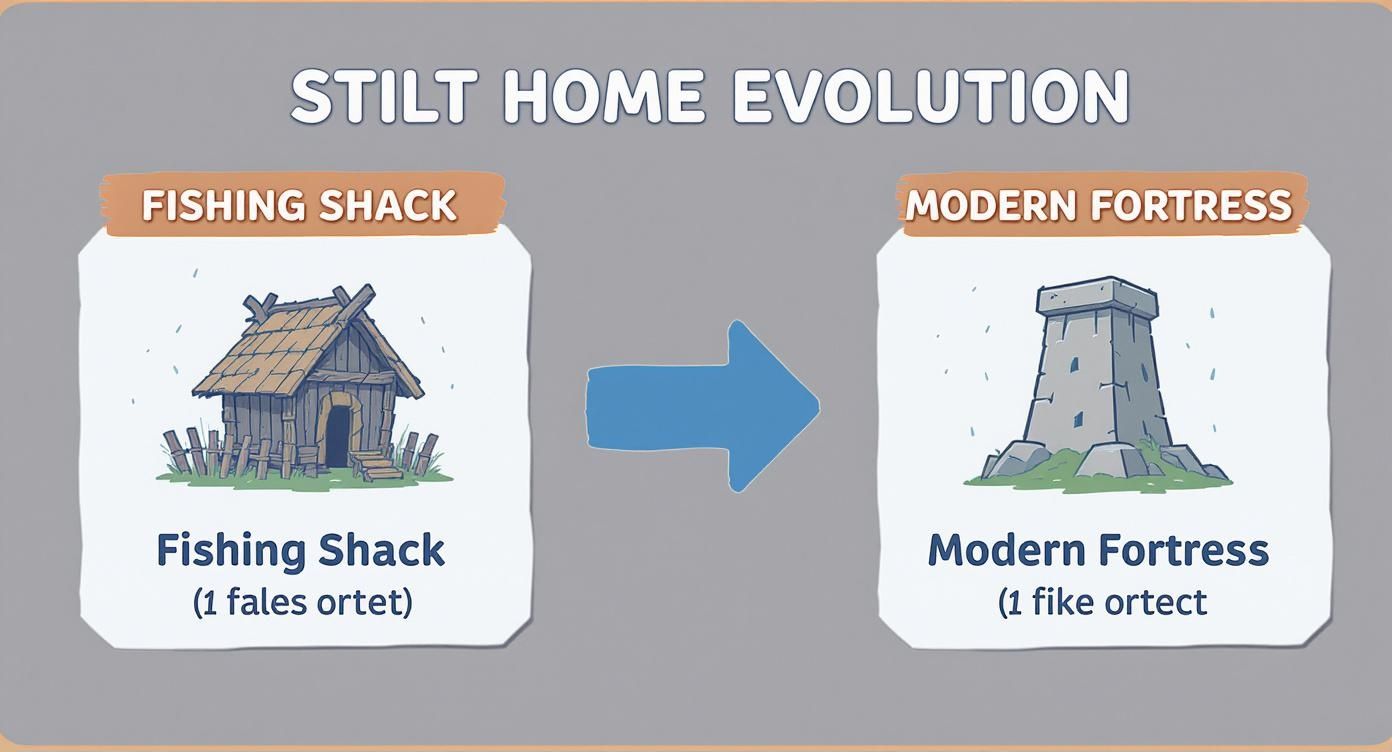
It’s a great visual of how building science has taken a simple concept for survival and turned it into a sophisticated style of architecture built for resilience.
The Critical Role of Base Flood Elevation
Every flood zone is assigned a crucial number: the Base Flood Elevation (BFE). This number represents how high floodwaters are expected to rise during a major storm. Local building codes require that the lowest horizontal structural part of your home must be built at or above this BFE. This isn't a suggestion—it’s a non-negotiable rule for getting building permits and being compliant. You can get a better sense of these local complexities in our guide on Cape Coral building permits.
But here’s a tip from experienced custom home builders in Southwest Florida: the BFE is just the starting line. It’s the bare minimum. Simply meeting that legal requirement doesn't give you any wiggle room if a storm turns out to be worse than predicted. That's where smart, forward-thinking design makes all the difference.
Going Above and Beyond with Freeboard
The smartest approach in custom stilt home building today is incorporating freeboard. Freeboard simply means building your home higher than the required BFE, giving yourself an extra margin of safety. Think of it this way: if the BFE is the minimum score you need to pass a test, freeboard is like studying extra to guarantee you ace it.
Building with several feet of freeboard is one of the most powerful decisions you can make. It’s a direct investment in your home’s long-term resilience, significantly reducing flood risk while often leading to substantial savings on flood insurance premiums. It turns a reactive requirement into a proactive strategy.
Adding just a few extra feet of elevation can have a massive impact:
- Drastically Lower Insurance Premiums: Insurers see a higher home as a lower risk. That often translates into thousands of dollars in annual savings on your flood insurance policy.
- Enhanced Storm Resilience: Freeboard acts as a vital buffer against a bigger-than-expected storm surge or future sea-level rise, protecting your investment for years to come.
- Greater Peace of Mind: There’s an incredible sense of security that comes with knowing your living space is safely elevated above even the worst-case flood scenarios.
Navigating Local Rules and Grandfathered Rights
Florida's building codes are always changing, updated with new climate data and lessons learned from past storms. While any new stilt home has to meet the latest, strictest standards, older communities often have different rules. For example, along Florida's Pasco County coast, some stilt houses have been standing for over a century. The state now prevents new stilt house construction in some areas and has a rule that if a home is damaged by more than 50% of its assessed value, it can't be rebuilt.
However, some property owners have "grandfathered" rights that allow them to repair and maintain these historic homes, which shows just how complex the legal side of things can get. For anyone building a new home, understanding these nuances is key. A knowledgeable custom home builder will navigate the maze of FEMA regulations, state laws, and local codes for you, ensuring your home isn't just compliant, but truly optimized for safety and financial benefit.
Hurricane-Proofing Your Elevated Home
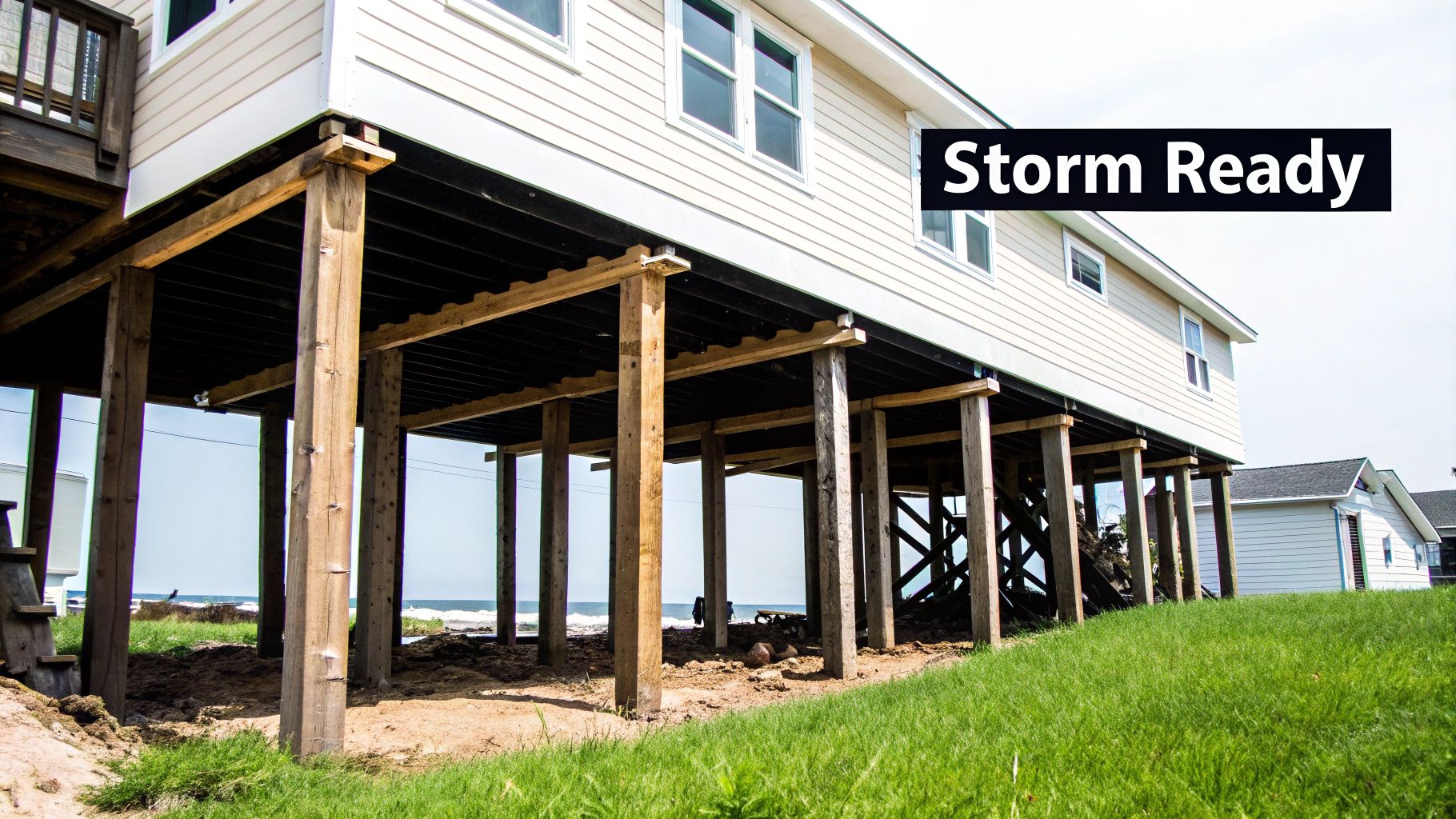
A modern stilt home in Florida isn't just a house on posts—it’s an engineered coastal fortress. While raising the home is the obvious first line of defense against storm surge, its real resilience comes from how every single component works together to laugh off hurricane-force winds and torrential rain. Top custom home builders in Southwest Florida think of it as one unified structure, where the foundation and the living space are fused into a single, incredibly tough unit.
It all starts deep underground. The foundation for today's stilt homes in Florida is built on deep-driven pilings, usually made of steel-reinforced concrete, that lock the home into stable soil layers far below the shifting sands. These pilings are connected by a grid of reinforced concrete grade beams, creating a rigid skeleton that shrugs off the immense lateral forces from wind and waves. It’s this unbreakable bond that channels a storm's fury safely into the earth.
Fortifying the Building Envelope
Once the foundation is rock-solid, the attention shifts to the living space itself, or what we builders call the "building envelope." This is where smart materials and modern design choices become absolutely critical. The mission is simple: keep wind and water out. A breach is often what leads to catastrophic failure during a major storm.
A key evolution in new custom homes is the now-standard inclusion of impact-rated windows and doors. These aren't just beefed-up panes of glass; they are entire assemblies engineered to take a hit from flying debris at high speeds. If a projectile strikes an impact window, the glass might spiderweb, but a tough inner membrane holds it all together. This prevents a blowout that would otherwise allow destructive high-pressure winds to get inside your home.
Roofing systems have also seen a massive upgrade. Modern techniques mean using stronger fasteners to bolt down the roof decking and, crucially, adding a secondary water barrier right onto the sheathing. This "peel and stick" membrane essentially shrink-wraps the entire roof, so even if you lose some shingles in the fight, water isn't going to pour into your attic and wreak havoc.
Strategic Structural Reinforcements
Beyond the obvious openings, advanced framing techniques add another layer of brute strength. Builders strategically integrate shear walls into the home's skeleton. These are specially reinforced walls designed to resist the sideways, twisting forces of a hurricane, stopping the house from racking and contorting under stress.
Think of shear walls as the home's spine. They are precisely engineered to take the wind loads from the roof and exterior walls and transfer that energy all the way down to the foundation, forcing the house to hold its shape. It’s a critical, and often invisible, feature that really separates a standard build from a true hurricane-ready fortress.
The modern approach to building stilt homes in Florida is systemic. It's not about one single feature, but about how the deep pilings, impact glass, fortified roof, and shear walls all lock together. This creates a continuous load path that directs a hurricane's energy around and through the structure, rather than letting it tear the home apart.
Ensuring Livability After the Storm
Surviving the storm is only half the battle. Experienced Florida home builders know that the days or even weeks of power outages that follow can be just as grueling. That's why planning for post-storm livability has become a huge priority, with whole-home generators becoming an almost non-negotiable feature.
Unlike a portable generator you have to wheel out, a whole-home system is permanently installed and tied into a large propane tank. It senses an outage and kicks on automatically within seconds, restoring power to the entire house. That means your AC, refrigerator, lights, and security systems never skip a beat. In the oppressive heat of a Florida summer without power, this isn't just a luxury—it's a critical piece of equipment for safety and comfort, allowing your family to shelter in place while the grid is being rebuilt.
Hurricane Resiliency Feature Comparison
Building a custom home in a hurricane zone gives you the opportunity to harden it from the ground up. Here’s a look at how standard features compare to the robust upgrades that create a truly resilient home.
| Component | Standard Feature | Hurricane-Hardened Upgrade | Primary Benefit |
|---|---|---|---|
| Foundation | Concrete slab on grade | Deep-driven concrete pilings & grade beams | Anchors home against surge and wind uplift |
| Windows & Doors | Standard glass, conventional frames | Miami-Dade rated impact glass and frames | Prevents breaches from flying debris |
| Roofing | Standard fasteners, single underlayment | Ring-shank nails, secondary water barrier | Resists roof uplift and prevents water intrusion |
| Wall Structure | Standard wood framing | Engineered shear walls and metal connectors | Prevents racking and structural twisting |
| Power | Grid-dependent electrical | Whole-home generator w/ automatic switch | Ensures comfort and safety during outages |
These upgrades work as a system. Each component reinforces the others, creating a structure that’s far more than the sum of its parts—it's a home built to endure.
Modern Design Trends for Stilt Homes
Building on stilts in coastal Florida isn't just about meeting code—it's a launchpad for some truly incredible home designs. Smart custom builders have moved way beyond the basic elevated box. They're now using the unique structure to create stunning, functional living spaces that you just can't get with a ground-level home.
The latest design trends are all about squeezing every drop of potential out of the property. Think maximizing those killer views, blurring the lines between indoor and outdoor living, and making every square inch count.
One of the biggest game-changers in modern stilt homes in Florida is the "reverse floor plan." Instead of the traditional layout with bedrooms upstairs, this design flips the entire concept. The main living areas—your kitchen, great room, and dining room—are moved to the very top floor.
This simple switch completely transforms the home. It unlocks breathtaking, panoramic views of the water or coastline, turning everyday moments like making coffee into a scenic escape. It's not just about the view, though. This strategic move gives you the best light, the best breezes, and a level of privacy that's tough to find anywhere else.
Unlocking the Potential of the Ground Floor
In the past, the ground level of a stilt home was often an afterthought—a dark, concrete slab for parking and maybe some forgotten lawn equipment. Not anymore. Today, that space is being completely reimagined into a valuable extension of the home's living area. It's become the perfect spot for creating covered, resort-style outdoor entertainment zones.
Picture a space that's always protected from the harsh Florida sun and those classic afternoon showers. This isn't just a patio; it's a full-blown outdoor living room, often complete with:
- An Outdoor Kitchen: We're talking a built-in grill, a sink, and a refrigerator for seamless alfresco dining and entertaining.
- A Lounge Area: Think comfy, weather-resistant couches, outdoor TVs for game day, and ceiling fans to keep the breeze flowing.
- Secure Storage: Custom-built, lockable enclosures are perfect for stashing your boat, kayaks, fishing gear, and all the beach toys, keeping everything safe, organized, and out of sight.
This multi-purpose approach basically doubles your home's usable entertainment space. You also get secure, multi-car parking that keeps your vehicles protected from the elements. It’s a brilliant and functional use of space that adds tremendous lifestyle value.
Luxury Features and Seamless Indoor-Outdoor Flow
Modern stilt homes are also defined by luxury features that feel perfectly at home in an elevated design. Wrap-around verandas and massive lanais are almost standard now, giving you multiple spots to soak in the views and enjoy the coastal air. These covered outdoor spaces become true extensions of the rooms inside.
To make that connection feel effortless, builders are installing huge sliding glass walls or pocketing door systems. When you open them up, the doors completely disappear, erasing the boundary between your great room and the veranda. It creates one vast, open-air living area that’s ideal for parties or just enjoying that perfect Florida weather.
A key trend is treating the home not as a collection of separate rooms, but as a fluid space that flows from the interior living areas to the outdoor verandas and down to the ground-level patio. This creates a cohesive living experience that is perfectly suited for the Florida lifestyle.
Accessibility has also become a major focus. To make multi-level living a breeze for everyone, private elevators are now a common and sought-after feature. An elevator ensures that homeowners and their guests can move between floors effortlessly, making the home comfortable and accessible for a lifetime.
If you're looking for inspiration, you can explore various custom home design ideas that bring these modern elements to life. These thoughtful additions show just how far stilt homes have come, evolving into sophisticated, convenient, and incredibly desirable properties.
How to Choose a Stilt Home Builder in Florida
Your dream of a resilient coastal home all comes down to one person: your builder. Let me be clear—choosing a contractor for stilt homes in Florida is a completely different ballgame than hiring for a typical ground-level build. You’re looking for a specialist, someone who lives and breathes the unique engineering, complex regulations, and specific construction methods needed to build in Southwest Florida's challenging coastal zones.
Finding the right partner means digging deeper than a general portfolio. You need a builder with a long list of successful elevated homes that are proven to stand up to hurricane-force winds and storm surges. This is a niche field where deep experience with local flood rules and heavy-duty foundations isn't just a plus—it's absolutely essential.
Vetting a Builder's Coastal Expertise
When you start interviewing potential builders, your questions need to be sharp and specific. Any truly qualified contractor will welcome this detailed discussion and should have clear, confident answers ready. This first conversation is arguably the most important step you’ll take.
Kick things off by asking about their direct experience building elevated homes right in your local area. A builder who mostly works on inland projects might not have a handle on the nuances of coastal engineering or the headaches of navigating FEMA regulations. Their expertise should be obvious from the get-go.
Here are a few essential questions to get the conversation rolling:
- How many stilt homes have you actually built in this coastal region? A solid portfolio of similar, local projects is the best proof of their ability.
- Can you describe your working relationships with local coastal engineers and the permitting offices? A builder with strong local ties can often make the tangled approvals process feel a lot smoother.
- What specific materials and techniques do you use to fight back against saltwater corrosion and high humidity? Their answer will tell you a lot about how well they understand the harsh marine environment.
- What’s your plan for securing a job site before a hurricane hits? A true professional will have a detailed, proactive plan to protect your investment while it’s under construction.
Verifying Credentials and Past Performance
After your initial talks, it’s time to do some digging. Don't just take a builder's word for it; you need to verify their credentials and, most importantly, talk to their past clients. Any reputable builder will be happy to provide a list of references.
A great builder for stilt homes in Florida isn't just a contractor; they are a project manager, a regulatory navigator, and a coastal construction expert all in one. Their ability to manage every complex detail, from soil testing to final inspections, is what ensures your home is built to last a lifetime.
When you call those references, ask about the entire experience, from start to finish. Dig into their communication style, whether they stuck to the budget, and how they handled the inevitable curveballs. The million-dollar question: has their home been through a major storm, and how did it hold up? It also helps to understand the full journey, so learning more about the step-by-step nature of the custom home building process can help you prepare for what's ahead.
Finally, do your due diligence. Check their license with the Florida Department of Business and Professional Regulation (DBPR). Confirm they carry both general liability and worker's compensation insurance. This is non-negotiable—it protects you from liability and is the mark of a professional and trustworthy operation.
Common Questions About Building a Stilt Home
Thinking about building a custom coastal home is exciting, but it naturally comes with a lot of questions. As more and more people are choosing to build stilt homes in Florida, we want to make sure you have the answers you need to feel great about your decision.
Here are a few of the most common questions we get from clients in Southwest Florida. We're here to clear up any confusion and give you the real story on what it's like to live the elevated life.
Are Stilt Homes More Expensive to Insure?
This is a big one, but the answer surprises most people. In reality, stilt homes are usually cheaper to insure. It all comes down to risk.
Because the entire living space of a stilt home is lifted high above the Base Flood Elevation (BFE), the chance of flood damage is drastically reduced. Insurance companies love this, and they reward you with significantly lower flood insurance premiums than a traditional ground-level home in the exact same spot.
What Kind of Maintenance Do the Pilings Require?
Modern pilings are engineered to be tough and low-maintenance. They’re typically built from steel-reinforced concrete or specially treated wood designed for a harsh marine environment, so they're incredibly resilient.
Maintenance is simple. It really just comes down to periodic visual inspections to check for any signs of wear or shifting. Your builder will give you a straightforward checklist, but the entire foundation is designed for decades of durability with very little work on your part.
A common myth is that stilt home foundations are high-maintenance. In reality, modern concrete pilings are designed to be a 'set it and forget it' system, providing decades of stability with only simple, routine inspections required. They offer a secure foundation against Florida's harsh coastal elements.
Does Building on Stilts Limit My Landscaping?
Not in the slightest! In fact, it often opens up more creative possibilities. The space right under the house is perfect for covered parking, storage, or a shady patio area, leaving the rest of your property as a blank canvas.
We see owners of stilt homes in Florida create stunning tropical gardens, custom pools, and beautiful lawns. Since the home itself has a smaller footprint on the ground, you often have more natural landscape to work with. It's the perfect setup for designing the outdoor oasis you've always wanted.
Can a Stilt Home Feel as Stable as a Traditional Home?
Absolutely. In a storm, it can feel even more secure. A professionally engineered stilt foundation is anchored deep into the ground—often much deeper than a standard concrete slab.
This rock-solid system of deep-driven pilings, cross-bracing, and grade beams creates an incredibly rigid structure. It’s specifically designed to stand strong against the powerful forces of wind and water, giving you a serious sense of security when it matters most.
Ready to build a home that combines breathtaking views with unmatched resilience? The team at Sinclair Custom Homes Inc specializes in creating custom stilt homes in Southwest Florida that are engineered to last. Contact us today to discuss your vision.