
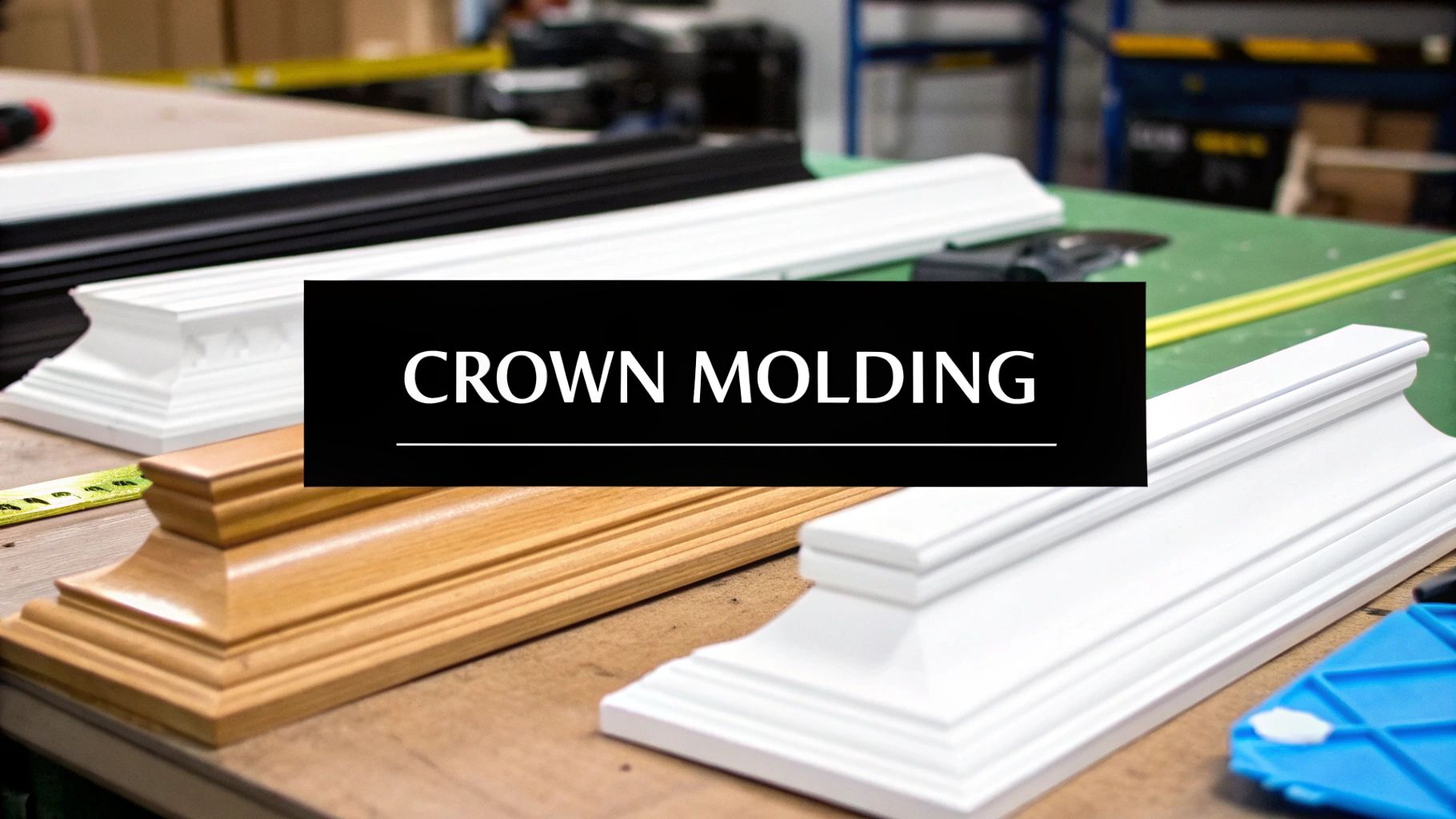
In Southwest Florida's competitive custom home market, every detail matters. From withstanding hurricane season to reflecting the latest coastal design trends, the architectural choices you make define your home's character, value, and resilience. Crown molding, often seen as a final flourish, is a critical element that bridges walls and ceilings, establishing the style and perceived quality of a space. More than just decoration, it's a testament to craftsmanship and a key component in creating a truly bespoke interior.
This guide moves beyond generic advice to provide a comprehensive roundup of the essential types of crown molding suited for our unique climate. We will explore specific profiles, from classic Colonial to sleek modern designs, and analyze the best materials-like polyurethane and specialized wood treatments-that endure Florida's demanding humidity without warping or degrading. We will cover how to pair different styles with room functions, typical sizing for Southwest Florida's high ceilings, and the installation considerations that separate standard work from a high-end, custom finish.
Throughout this list, we'll feature curated examples from Sinclair Custom Homes' local builds, showcasing how premier builders leverage detailed trim work to elevate a property from a house to a handcrafted masterpiece. You will learn not only what to choose but why it works in a modern luxury home built for coastal living. Once you've selected your ideal profile, the next step is often finishing it perfectly; understanding how to paint trim and baseboards ensures a cohesive and professional-grade result throughout your home. Let's delve into the options that will bring architectural integrity and lasting beauty to your new build.
1. Ogee Crown Molding: The Versatile Classic for Florida Living
Ogee is arguably one of the most popular types of crown molding for custom homes, and for good reason. Its signature S-curve profile, featuring a graceful blend of concave (inward) and convex (outward) arcs, offers a timeless elegance that complements a vast range of architectural styles. From traditional colonial-inspired estates to modern transitional designs, the ogee profile provides a sophisticated transition between the wall and ceiling.
This versatility makes it a go-to choice for discerning homeowners and builders throughout Southwest Florida. Its classic form enhances the perceived value and craftsmanship of a space without overpowering other design elements.
Best Uses and Style Pairings
The balanced design of ogee molding makes it incredibly adaptable. It shines in formal spaces like living rooms and dining rooms, where it adds a touch of classic grandeur. However, it’s equally at home in primary suites and custom kitchens, providing a polished, cohesive look.
- Traditional & Colonial: Ogee is a cornerstone of these styles, often seen in high-end residential communities in Cape Coral. When crafted from solid hardwoods like oak or cherry, it creates a rich, historic feel.
- Transitional Design: In many Fort Myers luxury homes, builders pair painted ogee molding with sleek, modern cabinetry. This juxtaposition of classic curves and clean lines is the essence of transitional style.
Material and Installation Tips for Southwest Florida
Selecting the right material and ensuring proper installation are critical in Florida's humid, storm-prone environment.
Pro Tip: For high-visibility areas like a great room with soaring ceilings, solid wood ogee offers unparalleled visual depth. However, for moisture-prone zones like kitchens and bathrooms, consider using a high-quality MDF or polyurethane that resists warping and mildew.
When installing any type of crown molding in our climate, meticulous attention to detail is non-negotiable. Always use a premium, exterior-grade paint, even for interior applications, to combat humidity. Furthermore, ensure every seam and joint is perfectly caulked with a flexible, mold-resistant sealant. This not only creates a seamless visual but also prevents moisture intrusion—a crucial detail for maintaining the integrity of your home's envelope, especially in preparation for hurricane season. For standard 9-foot ceilings common in new builds, a 3.5 to 4.5-inch profile height provides the ideal visual proportion.
2. Dentil Crown Molding: A Nod to Classical Architecture
For homeowners seeking to make a definitive architectural statement, dentil is one of the most distinguished types of crown molding. Characterized by its repeating pattern of small, tooth-like rectangular blocks, this profile is rooted in classical Greek and Roman architecture. It introduces a rhythmic, textural element that adds sophisticated depth and a sense of historic permanence to a room.
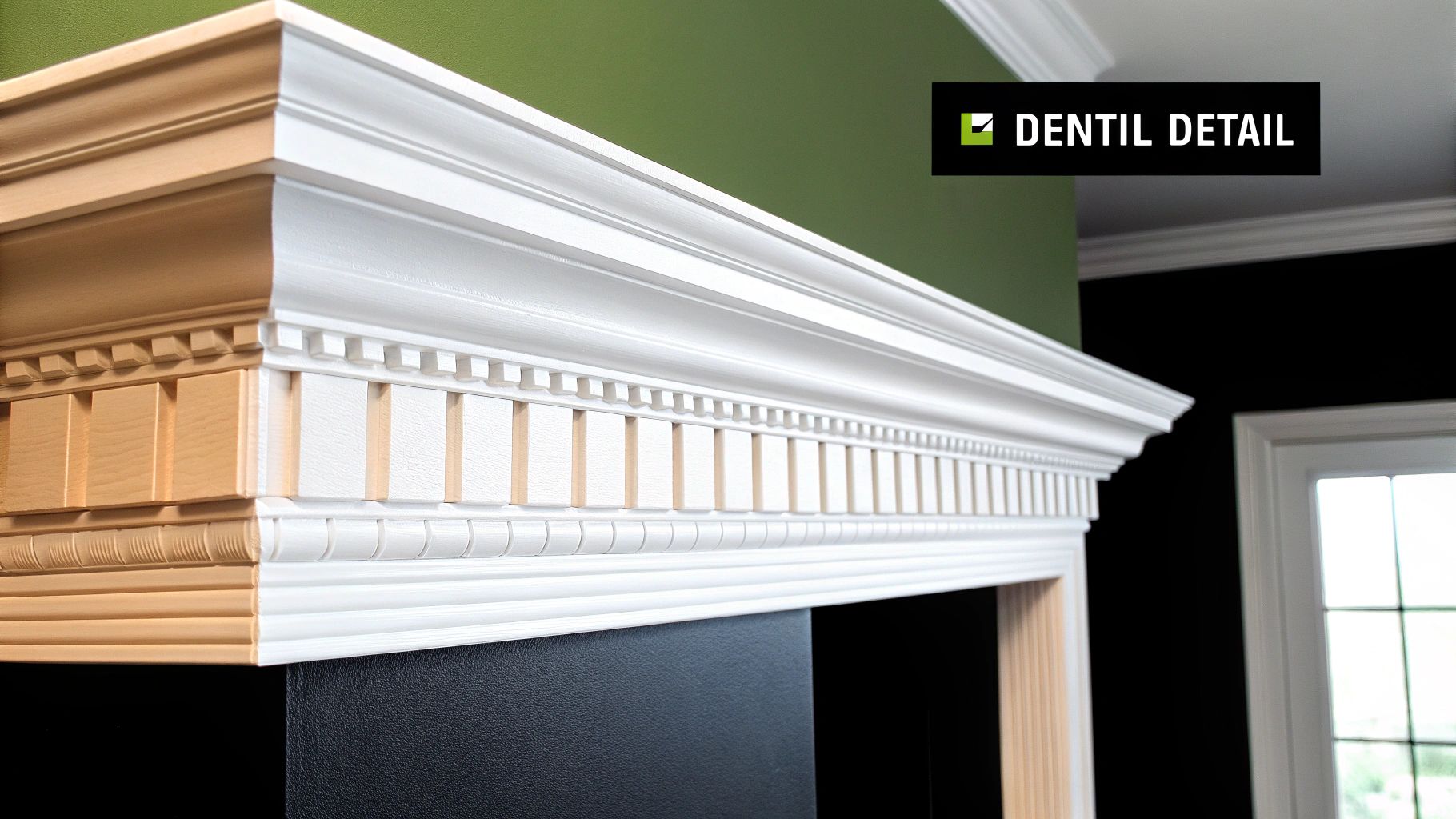
This classical detail elevates a home's interior, signaling a commitment to high-end craftsmanship. In the luxury market of Southwest Florida, dentil molding is often a key feature in formal spaces, transforming them from well-appointed rooms into curated architectural experiences.
Best Uses and Style Pairings
Due to its ornate nature, dentil molding is best reserved for primary living spaces where architecture is a design priority. It is particularly effective in rooms with high ceilings, a popular design feature in new Florida custom homes built to modern elevation standards.
- Neoclassical & Federal: This is the quintessential style for dentil molding. In high-end Cape Coral waterfront homes, it is often paired with complementary custom cabinetry and extensive trim packages to create a cohesive, historically inspired aesthetic.
- Grand Traditional: In formal living rooms, libraries, and dining rooms of Fort Myers luxury residences, dentil molding provides a strong visual anchor. It pairs exceptionally well with solid hardwood flooring and detailed casings to create an atmosphere of timeless grandeur.
Material and Installation Tips for Southwest Florida
The precise, geometric nature of dentil molding demands expert installation and the right material choices to withstand our coastal climate.
Pro Tip: Plan the dentil spacing meticulously during the design phase. This ensures the pattern terminates symmetrically in the corners of a room, avoiding awkward partial blocks which can undermine the profile's sophisticated look.
For this highly detailed profile, solid hardwoods like poplar (for painting) or mahogany (for staining) emphasize the sharp, clean lines and justify the investment. Given Florida's humidity, a professional-grade polyurethane topcoat is essential for durability, preventing moisture from compromising the intricate details. We recommend installing it primed and then finish-painted in place. This technique allows for flawless caulking at the seams, creating crisp lines and a built-in look that will endure for years.
3. Colonial Crown Molding: Timeless American Simplicity
Colonial crown molding embodies the quintessential charm of American design history. Characterized by simple, refined profiles with clean lines and subtle curves, this style provides understated elegance without the ornate complexity of other types of crown molding. Its beauty lies in its purposeful simplicity, offering a crisp, clean transition from wall to ceiling that feels both historic and freshly traditional.
This profile is a favorite in Southwest Florida communities where historical accuracy and classic home designs are celebrated. It evokes a sense of heritage and enduring quality, making it a perfect fit for homeowners who appreciate timeless architectural details that honor both form and function.
Best Uses and Style Pairings
The classic and uncluttered nature of colonial molding allows it to blend seamlessly into various traditional aesthetics. It is particularly effective in spaces that prioritize a clean, bright, and organized feel.
- Historical & Traditional: This molding is the definitive choice for authentic colonial-inspired homes. Paired with other traditional details like wainscoting and chair rails, it creates a cohesive and historically accurate interior design.
- Farmhouse & Coastal: In many new farmhouse-style builds in Cape Coral and coastal traditional homes in Fort Myers Beach, builders use painted colonial molding to add a touch of classic structure while maintaining a light, airy atmosphere.
Material and Installation Tips for Southwest Florida
Achieving the authentic colonial look while accounting for Florida's climate requires smart material choices and precise installation techniques.
Pro Tip: For an authentic historical appearance in a study or formal living room, solid pine is an excellent choice. However, for areas exposed to humidity like lanais or bathrooms, pre-primed composite materials offer superior durability and resistance to moisture-related issues.
The success of colonial molding lies in its crisp execution. Maintaining sharp, clean paint lines is crucial to showcase the profile's simple elegance. We recommend sizing this profile conservatively; a height of 2.5 to 3.5 inches is often ideal for standard 8 or 9-foot ceilings, preventing it from overwhelming the room. Ensuring every joint is perfectly caulked is also essential, not just for aesthetics but to seal against humidity—a constant consideration in our coastal environment. You can explore more options for custom trim and molding on our specialty molding page.
4. Cove Crown Molding: The Sleek Solution for Modern Spaces
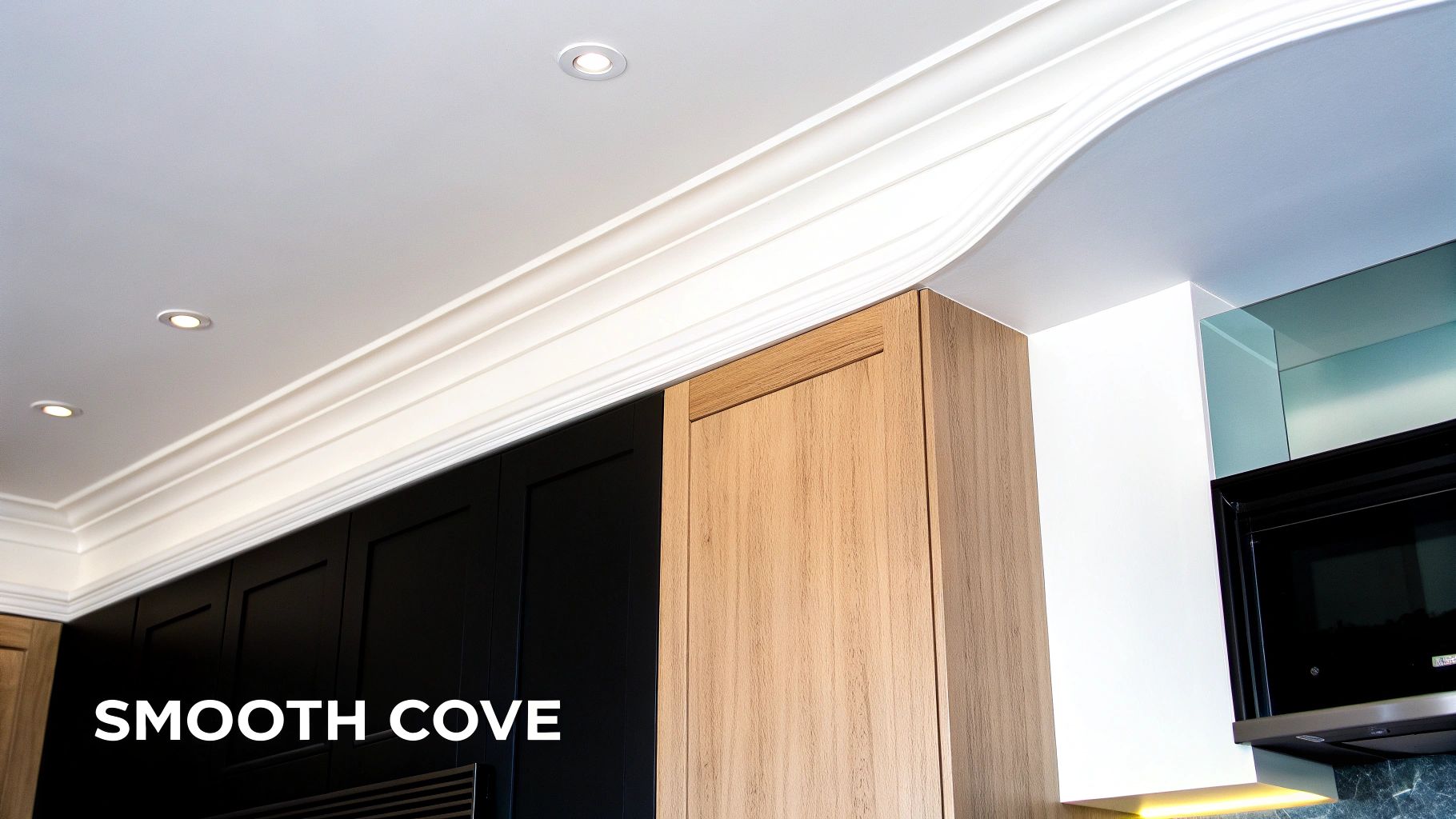
Cove crown molding is the embodiment of minimalist elegance, featuring a simple, uniform concave curve. This understated profile creates a smooth, rounded transition from wall to ceiling, making it one of the essential types of crown molding for modern, contemporary, and transitional homes where clean lines and visual restraint are paramount. Its clean sweep avoids ornate detail, instead focusing on form and function.
This modern simplicity is why it’s increasingly specified in new custom homes across Southwest Florida, from minimalist waterfront properties in Fort Myers to contemporary new builds in Cape Coral. Cove molding enhances architectural lines without adding visual clutter, supporting an open and airy aesthetic.
Best Uses and Style Pairings
The minimalist nature of cove molding makes it a perfect fit for spaces that prioritize a clean, uncluttered look. It is particularly effective in open-concept floor plans, where it provides a subtle architectural finish without visually segmenting the space.
- Modern & Contemporary: Cove molding is a natural choice here. In many contemporary Cape Coral homes, builders pair it with sleek, flat-panel cabinetry and unadorned finishes to create a cohesive, modern interior.
- Transitional & Scandinavian: Its simplicity bridges the gap between classic and modern. A painted cove profile complements the light woods, neutral palettes, and functional ethos of Scandinavian-inspired design.
Material and Installation Tips for Southwest Florida
Given Florida’s climate, the right material choice and installation technique are crucial for maintaining the crisp, clean lines that define the cove style.
Pro Tip: For moisture-prone areas like kitchens, bathrooms, and laundry rooms, polyurethane cove molding is the superior choice. It is impervious to moisture, preventing the warping, swelling, and mildew growth that can affect wood or MDF in our high-humidity environment.
For a truly seamless look, precision is key. Joints must be perfectly mitered and caulked with a high-quality, flexible sealant to create an unbroken line. For modern aesthetics, opt for a matte, eggshell, or satin paint finish rather than a high gloss. A profile height of 2.5 to 3.5 inches is often ideal for standard 9-foot ceilings in modern homes, providing definition without dominating the space.
5. Egg and Dart Crown Molding: Sophistication with Historical Roots
For homeowners seeking to infuse their interiors with a sense of history and opulence, egg and dart is one of the most distinguished types of crown molding available. This ornate profile features a classical repeating motif of an oval "egg" shape alternating with a pointed "dart," a design that traces its lineage back to ancient Greek and Roman architecture. It adds compelling shadow lines and a layer of sophisticated ornamentation that transforms a room into a statement of timeless design.
In the high-end custom home market of Southwest Florida, egg and dart molding serves as a powerful architectural detail. It signifies a commitment to craftsmanship and an appreciation for classical forms, elevating the perceived luxury and character of any space it adorns.
Best Uses and Style Pairings
Due to its decorative nature, egg and dart molding is best reserved for formal, high-impact areas where its intricate details can be fully appreciated. It is a hallmark of classical and traditional design, creating a sense of grandeur and permanence.
- Classical & Neoclassical: This is the native environment for egg and dart. In high-end Cape Coral estates, it is often paired with coffered ceilings, ornate columns, and period-appropriate cabinetry to create a cohesive, historically inspired aesthetic.
- Formal Living & Dining Rooms: Many Fort Myers luxury homes use this profile to define formal gathering spaces. When used in a grand dining room or library, it establishes a formal, stately atmosphere.
Material and Installation Tips for Southwest Florida
The intricate detail of egg and dart molding demands a premium material and expert installation to look its best, especially in Florida’s demanding climate.
Pro Tip: To truly showcase the intricate details and craftsmanship of an egg and dart profile, solid hardwood is the superior choice. A rich stain on cherry or walnut will highlight the wood grain and the deep relief of the pattern, creating an unparalleled visual effect.
Proper installation is critical for this decorative profile. The pattern must be meticulously planned to ensure seamless transitions at every corner, avoiding awkward cuts that disrupt the repeating motif. Given Florida's humidity, using a high-quality polyurethane material can be a practical alternative to wood in some applications, as it is impervious to moisture and will hold its detailed shape without risk of swelling or cracking. For larger rooms with high ceilings, a bolder profile of 5.5 inches or more ensures the ornate pattern doesn't get lost.
6. Crown with Bed Molding (Stacked Profile): Grandeur Through Layering
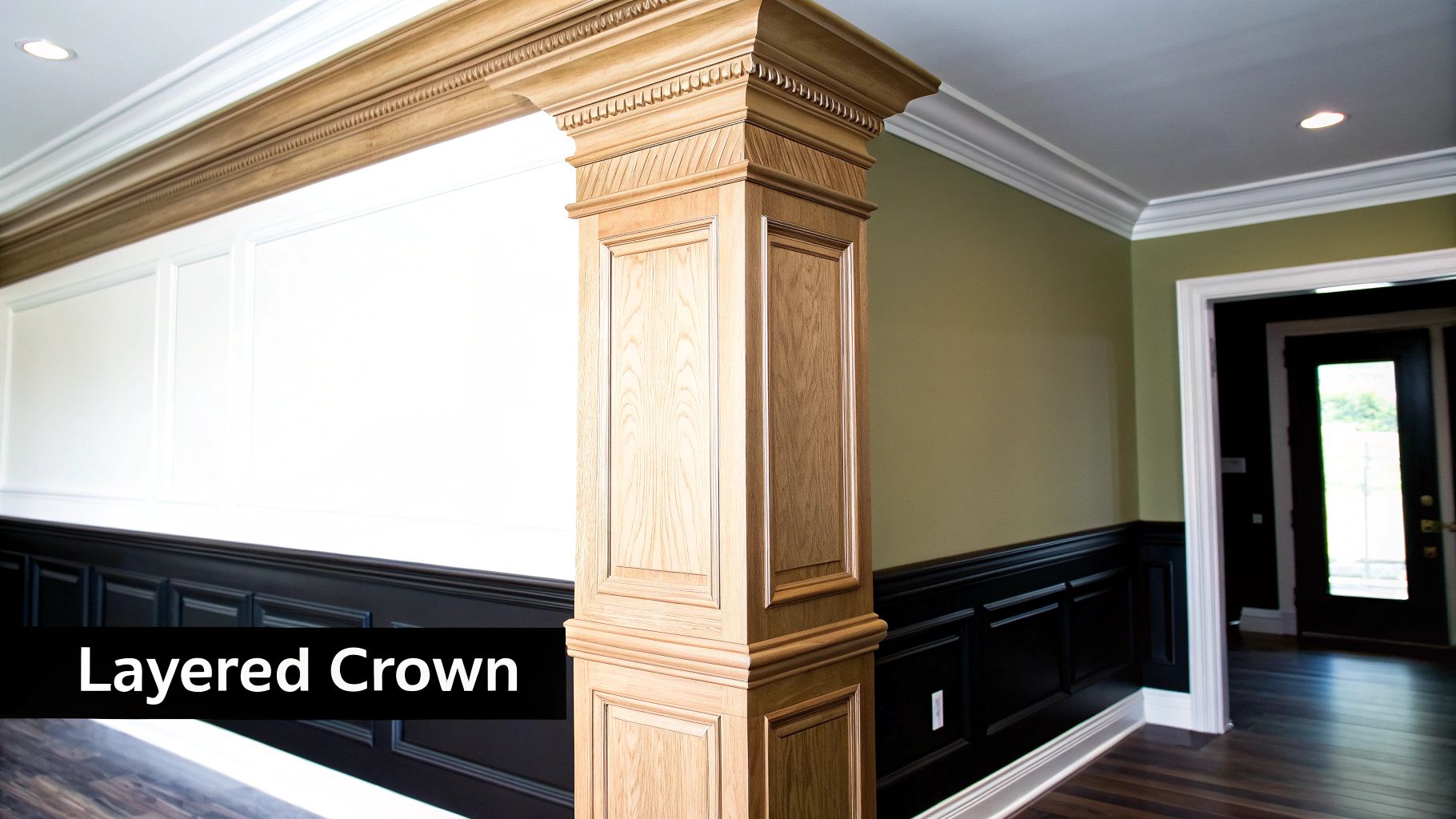
For spaces that demand a truly commanding architectural statement, a stacked profile combining crown with bed molding is an exceptional choice. This technique involves installing a primary crown molding profile and then adding a secondary, simpler bed molding below it, creating a substantial, multi-layered appearance. This method dramatically increases the visual weight and complexity of the trim, producing pronounced shadow lines that add depth and dimension to any room.
This is one of the more intricate types of crown molding to execute, but the result is undeniably luxurious. It's a hallmark of high-end custom construction, frequently seen in the grand entry foyers and formal dining rooms of Cape Coral luxury estates. The layered effect elevates the entire space, transforming the transition between wall and ceiling into a focal point.
Best Uses and Style Pairings
Stacked profiles are best reserved for primary spaces with ceilings of 10 feet or higher, where their scale can be fully appreciated without overwhelming the room. They are a signature element in classical and neoclassical architecture, echoing the grandeur of Georgian and Federal period design.
- Formal Living & Dining Rooms: In many Fort Myers luxury homes, stacked molding defines formal areas, creating an atmosphere of opulence and meticulous craftsmanship. The added height and detail are perfect for rooms designed for entertaining.
- Grand Foyers & Great Rooms: For spaces with cathedral or soaring ceilings, this layered approach helps to visually manage the expansive height, preventing the room from feeling cavernous. It adds a crucial layer of architectural detail that complements the scale of the space.
Material and Installation Tips for Southwest Florida
The complexity of a stacked profile requires a builder with proven expertise in high-end finish carpentry. The alignment and spacing between the two profiles must be flawless to achieve the desired effect.
Pro Tip: To manage costs without sacrificing visual impact, consider using a premium solid hardwood for the primary, more visible crown profile, and a more economical MDF or finger-jointed pine for the lower bed molding. Once painted, the difference is virtually undetectable.
In Florida's humid climate, proper installation is paramount. The small gap between the two moldings (typically 1 to 2 inches) must be perfectly prepped and painted before installation to prevent moisture issues. Both profiles must be meticulously caulked at the wall, ceiling, and between each other with a flexible, mold-resistant sealant to create a seamless, monolithic appearance that will withstand seasonal expansion and contraction.
7. Tray Ceiling Crown Molding (Recessed Profile): The Architectural Accent
Tray ceiling crown molding is a specialized application designed specifically for recessed or multi-level ceilings, a popular feature in new luxury homes. Unlike standard molding that sits at a simple 90-degree wall-to-ceiling junction, this type of crown molding is adapted to navigate the steps and varying heights of a tray ceiling. Its profile is carefully selected to enhance architectural geometry, add depth, and create distinct visual zones within a single room.
In the contemporary custom homes of Cape Coral and Fort Myers, tray ceilings are a statement of architectural intent. The right molding acts as the perfect frame, drawing the eye upward and transforming a flat plane into a dynamic design element. This is a current builder trend that signals superior craftsmanship and thoughtful design.
Best Uses and Style Pairings
This molding application is intrinsically linked to the ceiling architecture itself. It excels in rooms designed to feel grand and open, such as primary suites, formal dining rooms, and great rooms, where the stepped ceiling adds volume and character.
- Modern & Contemporary: In modern custom homes, a simpler, more angular recessed profile can be used to emphasize clean lines and geometric shapes. Painting the crown a different color from the ceiling planes can create a dramatic, layered effect.
- Transitional Design: For transitional spaces, a simplified ogee or cove profile applied to a tray ceiling can bridge the gap between classic elegance and modern simplicity, providing a subtle flourish without overwhelming the design.
Material and Installation Tips for Southwest Florida
The complexity of a tray ceiling demands meticulous planning and execution, especially in our humid climate where material stability is key.
Pro Tip: Professional installation is highly recommended for tray ceilings. The multiple corners, varying planes, and precise alignment required are far more complex than a standard crown application. A flawless finish is essential to achieving the intended architectural impact.
For tray ceilings, polyurethane is often an ideal material choice due to its stability and resistance to moisture, preventing expansion and contraction issues. When planning, consider integrating lighting within the trays; LED strip lighting concealed by the crown molding is a popular new design feature that creates an ambient glow, highlighting the ceiling's geometry. Always use a high-quality, mold-resistant caulk at every joint to ensure a seamless look that withstands Florida's humidity.
8. Beadboard Crown Molding: Coastal Charm and Textured Detail
Beadboard crown molding offers a distinctive, textured look that evokes the casual elegance of coastal and farmhouse living. Characterized by its repeating vertical grooves or "beads," this profile creates an articulated, linear pattern that draws the eye upward. It is one of the more unique types of crown molding, providing visual interest and a handcrafted feel that’s less formal than many classic profiles.
This style is particularly beloved in Southwest Florida’s coastal communities, where it complements beadboard wall paneling and wainscoting. It adds a layer of architectural detail that feels both nostalgic and fresh, perfectly capturing the relaxed yet sophisticated atmosphere of a custom-built seaside retreat.
Best Uses and Style Pairings
Beadboard molding excels in creating a cohesive, thematic look in casual and semi-formal spaces. Its charm lies in its ability to add texture without overwhelming a room, making it ideal for bedrooms, breakfast nooks, and cozy living areas.
- Coastal Cottage & Farmhouse: This is the quintessential application. In Fort Myers Beach cottages and modern farmhouse designs in Cape Coral, builders often pair white-painted beadboard crown with matching wall treatments to create a seamless, light-filled aesthetic.
- Transitional & Shabby Chic: Beadboard’s clean lines and subtle texture work surprisingly well in transitional spaces, adding a touch of warmth to more contemporary elements. It's a foundational element for shabby chic interiors that prioritize comfort and vintage appeal.
Material and Installation Tips for Southwest Florida
Achieving an authentic beadboard look while ensuring durability in our humid climate requires careful material selection and precise installation.
Pro Tip: For a truly classic cottage or farmhouse feel, solid pine is the traditional choice. However, in moisture-prone areas like laundry rooms or lanais, a high-quality polyurethane beadboard profile offers superior resistance to warping, mildew, and pests without sacrificing the crisp, detailed look.
To maintain the clean, bright aesthetic, finish the molding with a premium semi-gloss or satin paint, which provides a durable, wipeable surface. Dust can settle in the grooves, so regular gentle cleaning will keep it looking fresh. For standard 8 or 9-foot ceilings, a more modest profile height of 2.5 to 3.5 inches is typically sufficient to deliver the intended charm without overpowering the space.
9. Modern Minimalist Crown Molding: The Essence of Clean Lines
Modern minimalist profiles represent a significant departure from traditional ornate designs, making them one of the most distinctive types of crown molding available today. These profiles feature simple, clean, and often geometric shapes, such as squares, rectangles, or subtle tapers. Their purpose is not to add decoration but to provide a crisp, intentional transition between the wall and ceiling, emphasizing architectural purity and negative space.
This "less is more" approach is a hallmark of contemporary luxury homebuilding in Southwest Florida. In modern Cape Coral and Fort Myers residences, minimalist molding creates a sophisticated, uncluttered aesthetic that allows other new design features, like expansive hurricane impact windows or custom art pieces, to take center stage.
Best Uses and Style Pairings
The stark simplicity of modern molding demands a cohesive design environment. It is the perfect finishing touch for spaces defined by clean lines, open-concept layouts, and a focus on form and function.
- Contemporary & Minimalist: This is the native environment for minimalist profiles. They excel in great rooms, kitchens, and primary suites where the goal is a sleek, gallery-like feel. They pair perfectly with flush-mount cabinetry and simple, geometric light fixtures.
- Scandinavian Design: Reflecting the core principles of Scandinavian style, these simple profiles complement light-colored walls, natural wood tones, and an overall sense of functional, uncluttered living.
Material and Installation Tips for Southwest Florida
Achieving a flawless minimalist look requires absolute precision, as even minor imperfections are highly visible on simple geometric profiles.
Pro Tip: For modern designs, a matte or satin paint finish is crucial. Glossy paints can highlight minuscule flaws in the wall or joint work, detracting from the intended clean aesthetic. Always ensure your painter has experience with Level 5 finishes for best results.
In our humid climate, polyurethane is the ideal material for these profiles due to its stability and resistance to moisture. During installation, perfect alignment is non-negotiable. Seams must be invisible, and corners must be perfectly mitered to maintain geometric integrity. For most modern spaces with 9 to 10-foot ceilings, a conservative profile height of 1.5 to 2.5 inches is typical, ensuring the molding defines the space without overwhelming it. This architectural choice is a key element in many modern custom home design ideas.
10. Victorian Crown Molding: Ornate, Multiple-Component Artistry
Victorian crown molding is less a single profile and more an elaborate, multi-component system designed to make a grand architectural statement. Characterized by extensive carved or cast details like flowers, scrolls, and intricate geometric patterns, this is one of the most decorative types of crown molding available. It creates a dominant, period-authentic feature that defines a room's character.
This ornate style harkens back to the Gilded Age, bringing a level of historical grandeur that is simply unmatched. In the grand estate homes of Southwest Florida, a Victorian molding system is a clear testament to uncompromising quality and a dedication to classical architectural millwork.
Best Uses and Style Pairings
Due to its scale and complexity, Victorian molding is best reserved for large, formal spaces with high ceilings where its elaborate details can be fully appreciated without overwhelming the room. It is the definitive choice for historic restorations and new builds aiming for a truly palatial, period-accurate aesthetic.
- Historic Restorations: In Fort Myers' historic districts, replicating or restoring Victorian crowning is essential to preserving the architectural integrity of period homes. It requires specialized craftspeople to execute properly.
- Grand Estates: For large, custom-built estates in Cape Coral with soaring 12-foot or higher ceilings, a multi-piece Victorian system can create a breathtaking focal point in a formal dining room, library, or grand salon.
Material and Installation Tips for Southwest Florida
The intricacy of Victorian profiles demands superior materials and expert installation. This is not a project suited for DIY or general contractors; it requires a master craftsman.
Pro Tip: Solid hardwoods like mahogany, walnut, or cherry are the preferred materials for authentic Victorian molding. The crispness of the wood holds the intricate details perfectly and can be stained to highlight the grain, adding another layer of visual richness and depth.
Given Florida's humidity, ensuring the wood is properly kiln-dried and acclimated to the home's environment before installation is non-negotiable to prevent future movement. Every piece of this complex system, from the base to the cap, must be perfectly aligned. For a truly authentic look, consider pairing it with other period-appropriate details like ceiling medallions and ornate casings. Explore the world of custom millwork and understand how these pieces come together by reading about what architectural millwork is.
Comparison of 10 Crown Molding Styles
| Crown Type | Implementation complexity | Resource requirements | Expected outcomes | Ideal use cases | Key advantages |
|---|---|---|---|---|---|
| Ogee Crown Molding | Moderate — curved profile requires careful mitering | Moderate — solid wood, MDF/veneer, polyurethane options | Balanced, elegant transitional look with strong shadow lines | Living/dining, master bedrooms, traditional & contemporary homes | Highly versatile; wide material choices; good for standard 8–10' ceilings |
| Dentil Crown Molding | High — precise repeating blocks and corner alignment needed | High — hardwoods or high-end composites; higher cost | Classical, rhythmic architectural statement with deep shadowing | Formal living/dining, libraries, luxury residential spaces | Distinctive, high-end architectural detail that elevates perceived value |
| Colonial Crown Molding | Low — simple profile, easy to manufacture and install | Low–Moderate — pine, hardwoods, pre-primed composites, MDF | Timeless, refined traditional appearance with subtle curves | Colonial/traditional homes, farmhouses, historic preservation | Affordable, timeless, easy installation; suits coastal/traditional styles |
| Cove Crown Molding | Low — single concave curve, simplest installation | Low — pine, MDF, polyurethane (moisture-resistant) | Smooth, minimalist transition with subtle shadow | Contemporary/transitional homes, kitchens, bathrooms | Clean modern aesthetic; easy to finish and maintain; moisture tolerant |
| Egg and Dart Crown Molding | High — intricate repeating motif needs precise fitting | High — solid hardwoods or detail-accurate composites | Ornamental classical detail with pronounced three-dimensionality | Formal dining rooms, classical homes, studies, high-end interiors | Memorable classical ornamentation that conveys luxury and craftsmanship |
| Crown with Bed Molding (Stacked) | Very high — multi-component alignment and complex installation | Very high — hardwoods or mixed materials; labor-intensive | Grand, layered architectural statement with dramatic shadow lines | Grand foyers, cathedral/vaulted ceilings, formal traditional homes | Highly customizable; dramatic visual impact; increases architectural presence |
| Tray Ceiling Crown Molding (Recessed) | High — custom fitting for stepped ceiling planes | Moderate–High — hardwoods, primed composites, polyurethane | Emphasizes ceiling geometry; defines architectural zones | Tray/recessed ceilings, master suites, contemporary/transitional homes | Tailored to recessed ceilings; enables color/plane differentiation and refined detailing |
| Beadboard Crown Molding | Low — straightforward repeating bead detail | Low — pine, MDF, polyurethane-coated composites | Lightly textured, cottage/farmhouse charm with delicate shadowing | Cottage, farmhouse, coastal interiors, secondary spaces | Adds texture without heavy ornamentation; cost-effective and versatile |
| Modern Minimalist Crown Molding | Low–Moderate — precision for clean geometric lines | Moderate — polyurethane, high-quality MDF, modern composites | Subtle, architecturally pure transition with minimal visual presence | Contemporary luxury, open-concept, minimalist and Scandinavian designs | Clean, unobtrusive profiles; moisture-resistant materials; easy maintenance |
| Victorian Crown Molding (Ornate Multiple-Component) | Very high — multi-piece carved/cast installation and finishing | Very high — premium hardwoods or detailed composites; expensive | Ornate, dramatic period-authentic statement requiring high ceilings | Victorian/Edwardian restorations, grand foyers, period-authentic interiors | Exceptional craftsmanship and historical authenticity; commanding visual impact |
From Blueprint to Reality: Partnering with a Master Craftsman
Navigating the extensive world of crown molding can feel like mastering a new language. We’ve journeyed through the timeless curves of Ogee, the rhythmic precision of Dentil, and the stately simplicity of Colonial profiles. We’ve explored the subtle elegance of Cove, the classical artistry of Egg and Dart, and the modern, clean lines of minimalist designs. Each of these types of crown molding offers a unique opportunity to infuse personality and architectural integrity into your custom home, transforming a simple room into a bespoke statement of style.
More than just a decorative flourish, crown molding is a critical finishing element that bridges the gap between wall and ceiling, creating a sense of completeness and luxury. The choice you make, whether it’s a complex stacked profile for a grand great room or a sleek, modern trim for a contemporary coastal retreat, sets the tone for the entire space. It’s an architectural detail that communicates intention, quality, and a commitment to superior design.
Key Takeaways for Your Southwest Florida Home
In our unique coastal environment from Fort Myers to Cape Coral, the decision-making process carries additional weight. The material you choose is just as important as the profile. While traditional wood offers undeniable beauty, modern, high-performance materials like polyurethane and PVC have become the gold standard for new construction in this region. Their inherent resistance to moisture, humidity, and pests makes them a practical, long-lasting investment that protects your home’s beauty against the challenges of our climate, especially during a prolonged power outage after a storm when a generator is essential for climate control.
Here are the most critical takeaways to guide your selection:
- Material Matters Most: In Southwest Florida, prioritize moisture-resistant materials. Polyurethane offers crisp, paintable detail and durability, making it an ideal choice for nearly any application, from humid bathrooms to expansive living areas.
- Scale and Proportion are Everything: The height of your ceilings and the size of your room dictate the appropriate scale for your crown molding. A grand, multi-component Victorian profile can overwhelm a room with 8-foot ceilings, while a simple cove molding might get lost in a two-story foyer built to new flood elevation standards.
- Style Consistency is Key: Ensure your chosen crown molding profile complements your home's overall architectural style. A modern minimalist profile will feel out of place in a Mediterranean-style home, just as ornate Dentil molding would clash with a sleek, contemporary aesthetic.
- Execution Defines the Outcome: The most exquisite molding can be undermined by poor installation. Flawless execution requires a master craftsman’s eye for detail, precision cuts, and seamless joins. This is where the difference between a good home and a truly exceptional one is most apparent.
Turning Vision into a Tangible Masterpiece
The journey from selecting a molding profile to seeing it perfectly installed is where a true partnership with your builder becomes invaluable. For design professionals and enthusiasts looking to meticulously plan and visualize architectural details like crown molding, exploring various options for interior design software for professionals can be highly beneficial. These tools can help you model different profiles and sizes, ensuring your final choice aligns perfectly with your vision before a single piece of trim is cut.
Ultimately, however, translating that digital blueprint into a physical reality requires hands-on expertise. A builder who is personally on-site, overseeing the intricate work of trim carpentry, ensures that every miter cut is perfect and every seam is invisible. This level of dedication, a hallmark of European craftsmanship, guarantees that the architectural details you so carefully selected are honored with the precision they deserve. It's this commitment to quality that transforms a house into a custom-built home of enduring value and character.
Ready to build a home where every detail is executed with unparalleled craftsmanship? Partner with Sinclair Custom Homes Inc, a builder renowned for hands-on, on-site management and a commitment to quality that brings architectural visions to life. Contact Sinclair Custom Homes Inc to begin your journey toward a truly bespoke home in Southwest Florida.