


Putting a pool in your Cape Coral custom home isn't just about adding a water feature—it's about embracing the Southwest Florida lifestyle. The initial planning is everything. This is where your vision meets the practical realities of your property, ensuring your new pool is not only stunning but also structurally sound, hurricane-ready, and a perfect match for your home's design.
Planning Your Cape Coral Pool: A Foundational Blueprint
Building a pool here, especially if it's part of a new custom home construction, is a big move that needs serious upfront thought. This goes way beyond just picking a shape. It's about creating a solid plan that works with the unique landscape and building styles we see all over Southwest Florida. A great pool project starts by making sure your dream design actually fits your specific lot.
This means a thorough site assessment is non-negotiable. We're looking at things like property elevation, which is critical in a place known for its high water table. Getting the elevation right from the start prevents a world of drainage headaches later and keeps the pool structure stable for years. We also have to consider how the pool is oriented to the sun. This simple decision affects everything from how warm the water stays to your future heating bills.
Integrating Design with New Builder Trends
The trend in modern custom homes around here is all about blurring the lines between indoor and outdoor living. Your pool shouldn't feel like an afterthought; it needs to feel like a natural extension of your home's architecture.
This seamless integration is what sets new construction apart. When you plan the pool at the same time as the house, you can nail this synergy.
Planning the pool and home together means you can perfectly position the lanai, place windows for the best views, and run electrical and plumbing lines efficiently. This avoids the headache and high cost of trying to retrofit everything later on.
Before breaking ground, it's crucial to get your arms around the key planning elements specific to our area. This checklist summarizes what you and your builder should be thinking about right from the start.
Initial Pool Planning Checklist for Cape Coral
| Planning Element | Key Considerations | Why It Matters in Cape Coral |
|---|---|---|
| Site Assessment | Lot elevation, sun orientation, setbacks, easements, and soil type. | High water tables and sandy soil require specialized construction. Proper sun placement maximizes natural heating. |
| Design Integration | Flow with home layout, lanai size, and access points. | Modern Florida homes emphasize indoor/outdoor living. A cohesive design increases usability and property value. |
| Hurricane Readiness | Screen enclosure engineering, equipment anchoring, and proper drainage. | Local codes are strict. Everything must be built to withstand high winds and heavy rain to be insurable. |
| Budgeting | Shell, decking, enclosure, equipment, landscaping, and automation. | Be comprehensive. Unexpected costs often come from site prep (fill dirt) or code-required upgrades. |
| Feature Selection | Salt vs. chlorine, heaters, lighting, water features, and automation. | Your choices impact long-term maintenance costs and energy use. Smart automation adds convenience and efficiency. |
Thinking through these points early on with your builder creates a clear roadmap, preventing surprises and ensuring the final result is exactly what you envisioned for your Florida oasis.
Establishing a Realistic Budget
A solid budget is the backbone of the entire project. It needs to cover everything from the first shovel in the ground and the gunite shell to the little details that create that luxury feel. Here in Cape Coral, that absolutely means budgeting for critical hurricane-impact features, like a robust screen enclosure anchored to meet our tough local codes. Getting advice from companies offering comprehensive swimming pool services can be a huge help in mapping out these initial costs.
Your financial plan should also account for today's must-haves:
- Advanced Automation Systems: Imagine controlling your lights, heater, and filter right from your phone.
- Backup Power: A whole-home generator is a smart investment. It keeps your pool equipment running during a power outage, saving your water quality.
- Premium Finishes: Think about decking materials like travertine pavers or beautiful interior surfaces that make the pool pop.
Of course, one of the first decisions is the type of pool you want. If you're weighing your options, learning the differences between an in-ground vs. above-ground pool is a great place to start. In the end, taking the time for detailed planning saves money, avoids delays, and makes sure your new pool is an asset you'll enjoy for years to come.
Navigating Cape Coral Permitting and Modern Pool Design
Getting from a simple sketch to a sparkling, finished pool involves a lot more than just digging a hole. For any swimming pool construction in Cape Coral, FL, the journey takes a critical detour through the City of Cape Coral and Lee County permitting offices. This isn't just red tape; it's a vital step that ensures your new pool is safe, structurally sound, and tough enough to handle everything Southwest Florida throws at it, from torrential summer rains to hurricane-force winds.
Successfully getting through the permitting process hinges on having a deep understanding of local codes and a perfectly prepared stack of documents. This is one area you absolutely cannot rush. Your builder needs to submit a comprehensive package covering everything from site and drainage plans—engineered to handle our famous downpours—to the structural specs for the pool shell and screen enclosure.
Before we even get to the technical plans, the real foundation for a successful project starts with three key elements.
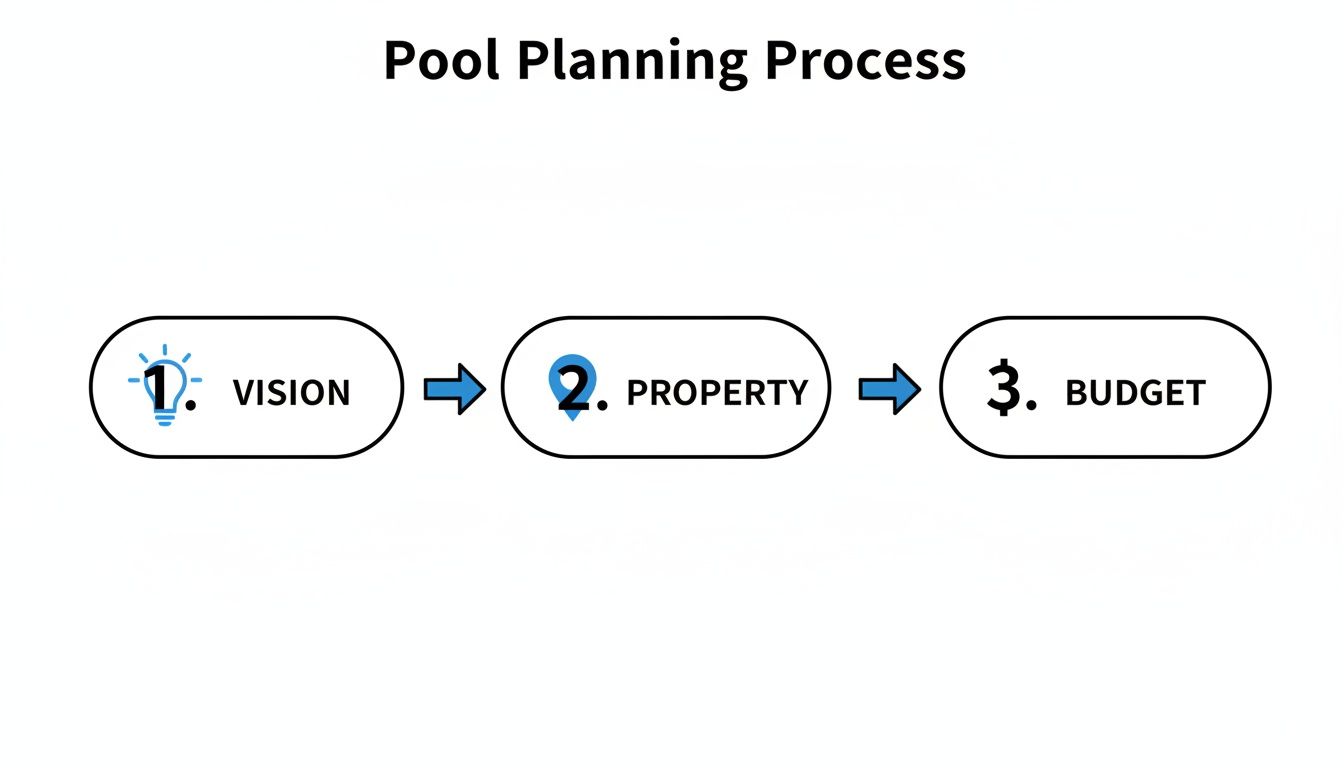

As you can see, locking down your vision, confirming your property is suitable, and setting a realistic budget are the first things you need to tackle. Only then can the technical drawings and permit applications begin.
Understanding Key Building Codes
Cape Coral's building codes are notoriously strict, and for very good reason. They’re written to protect your investment and, more importantly, your family. An experienced custom home builder lives and breathes these requirements, which is crucial for keeping your project on track and avoiding expensive delays or, worse, compliance failures.
Here are a few of the big regulations you'll definitely run into:
- Hurricane-Rated Construction: This is a complete non-negotiable in our area. The screen enclosure, or "cage," must be engineered to meet specific wind-load requirements. This means reinforced corners, heavy-duty anchoring, and materials specifically designed to handle massive uplift forces.
- Pool Safety Barriers: Florida law is very clear on mandating safety features to prevent accidental drownings. This usually means installing a fence at least four feet high with self-closing, self-latching gates. Alternatively, you may need approved alarms on every door and window that leads directly to the pool area.
- Property Line Setbacks: You can't just put a pool wherever you want. The city has precise rules about how far the pool and its decking have to be from your property lines, easements, and, for waterfront lots, the seawall.
A builder's intimate knowledge of these codes is everything. They know exactly what the inspectors are looking for, right down to the steel rebar schedule in the gunite shell and the specific type of electrical bonding needed for all metal components. This kind of expertise is what prevents failed inspections that can stop a project dead in its tracks for weeks.
If you want to get a more detailed look at the local rules, our guide to understanding Cape Coral building permits breaks down exactly what you can expect as a homeowner.
Modern Design Trends for New Custom Homes
Once you get past the paperwork, the real fun begins: the design. The latest trends in new custom homes are all about creating a seamless, resort-style vibe where the pool is the undeniable centerpiece of your outdoor living space. We've moved far beyond simple kidney-shaped pools into a world of sophisticated, feature-rich aquatic retreats.
An integrated spa is easily one of the most requested features. Instead of a clunky, separate hot tub, we design spas that are built right into the pool's structure. These often include a "spillover" edge, creating a beautiful waterfall effect that's as soothing to listen to as it is to look at. This approach guarantees a cohesive aesthetic and makes the plumbing and electrical work much cleaner.
Another huge trend is the addition of large sun shelves, sometimes called Baja shelves. These are wide, shallow ledges (usually 9-12 inches deep) that are perfect for setting up a couple of lounge chairs right in the water. They also double as a safe play spot for little kids or a great place to cool off without having to swim. They add a real touch of luxury and make your pool feel much more functional.
For homeowners aiming for that truly high-end, dramatic look, nothing beats an infinity edge (or negative edge). This design creates a breathtaking illusion that your pool water is flowing right into the horizon—an especially stunning feature for homes on Cape Coral’s famous canals. These modern elements are what turn a standard backyard pool into your own private oasis.
Decoding Pool Construction Costs and Timelines in Southwest Florida

Let's talk about the two biggest questions everyone asks: "How much will it cost?" and "How long will it take?" Nailing down the true investment for a custom pool in Cape Coral is one of the most critical steps in the whole process. The final price tag isn't based on a simple cost-per-square-foot guess. It’s a detailed equation that has to balance your design dreams with the on-the-ground realities of building here in Southwest Florida.
The foundation of your budget starts with the pool's gunite shell—its size, depth, and shape. A large, freeform pool with intricate curves will naturally cost more in materials and labor than a classic rectangle. But the shell is just the beginning. The choices you make from there are what really shape the final numbers.
Breaking Down the Major Cost Drivers
These days, building a pool is about creating a complete outdoor living experience, not just a place to swim. We're integrating features that make your backyard both more functional and stunning to look at.
Here’s what really moves the needle on price:
- Luxury Upgrades: Think custom rock waterfalls, sheer descents, and integrated spas. These features add incredible visual appeal but also require extra plumbing, masonry, and specialized equipment.
- Decking and Finishes: The material you choose for your pool deck is a huge part of the budget. High-end options like travertine or artistic pavers give you a beautiful, non-slip surface that stays cooler in the Florida sun, but they're a much bigger investment than standard concrete.
- Automation Systems: Controlling your lights, heater, and filtration from an app on your phone is pretty much standard now in new custom homes. That convenience means installing advanced control panels and wiring, which factors into the cost.
- Hurricane-Rated Enclosures: In Cape Coral, a tough, engineered screen enclosure isn't optional—it's a must. The price reflects the heavy-duty aluminum, reinforced anchoring, and wind-resistant screening required to meet our strict local hurricane codes.
The reality is, while a basic, well-built gunite pool might start in the $50,000 to $60,000 range, it’s a different story when you want a complete outdoor environment. A fully custom setup with an integrated spa, premium decking, and smart automation can easily top $150,000. The price reflects the jump from a simple pool to a central feature of a luxury home.
While you're planning your budget, it's also smart to understand what your contractor's builder's risk insurance covers. This is a crucial protection that safeguards your project from unexpected events during construction that could otherwise throw your budget and timeline off track.
Mapping a Realistic Construction Timeline
Once the permits are in hand, the actual construction can get underway. You can generally expect this phase to last between 8 to 16 weeks. Of course, that timeline can shift based on a few variables that are unique to building in Southwest Florida.
Here’s a look at the typical sequence of events on-site:
- Excavation and Site Prep: First, we clear the area and dig out the shape of your new pool.
- Steel and Plumbing: The structural steel cage is formed, and all the necessary plumbing lines are run.
- Gunite Application: This is a big day—we spray the concrete shell that creates the pool’s permanent structure.
- Tile and Coping: Next comes the waterline tile and the stone or concrete edge that frames the pool.
- Deck and Enclosure: The concrete deck is poured, and the screen enclosure goes up around it.
- Interior Finish: We apply the final interior surface, whether it's a classic plaster or a premium finish like PebbleTec.
- Fill, Startup, and Balancing: Finally, we fill the pool with water and get all the equipment running and the chemicals perfectly balanced.
The demand for high-quality pools around here is off the charts. Southwest Florida consistently leads the state in new swimming pool permits—in just one recent month, an incredible 502 permits were issued with a total construction value of $39.24 million. This boom, fueled by growth in Cape Coral and Fort Myers, puts the average project value at $78,173, showing just how much homeowners are investing in feature-rich pools for their luxury homes.
Knowing these costs and timelines from the start helps you set a realistic budget and truly appreciate the value a professionally built pool brings to your home. If you're weighing different sanitation systems, our guide on the cost to install a saltwater pool dives even deeper into the financial details. This kind of transparency is key to making sure your project runs smoothly and your new backyard oasis is everything you hoped for.
Engineering a Pool That Can Handle Cape Coral's Environment
When you're building a custom home here in Cape Coral, a pool isn't just an add-on; it's the heart of the Southwest Florida lifestyle. But getting it right involves so much more than a pretty design. It's about smart engineering that stands up to our unique challenges. This is where a builder's local experience really shows—it’s the difference between a pool that just looks good today and one that’s built to last for decades.
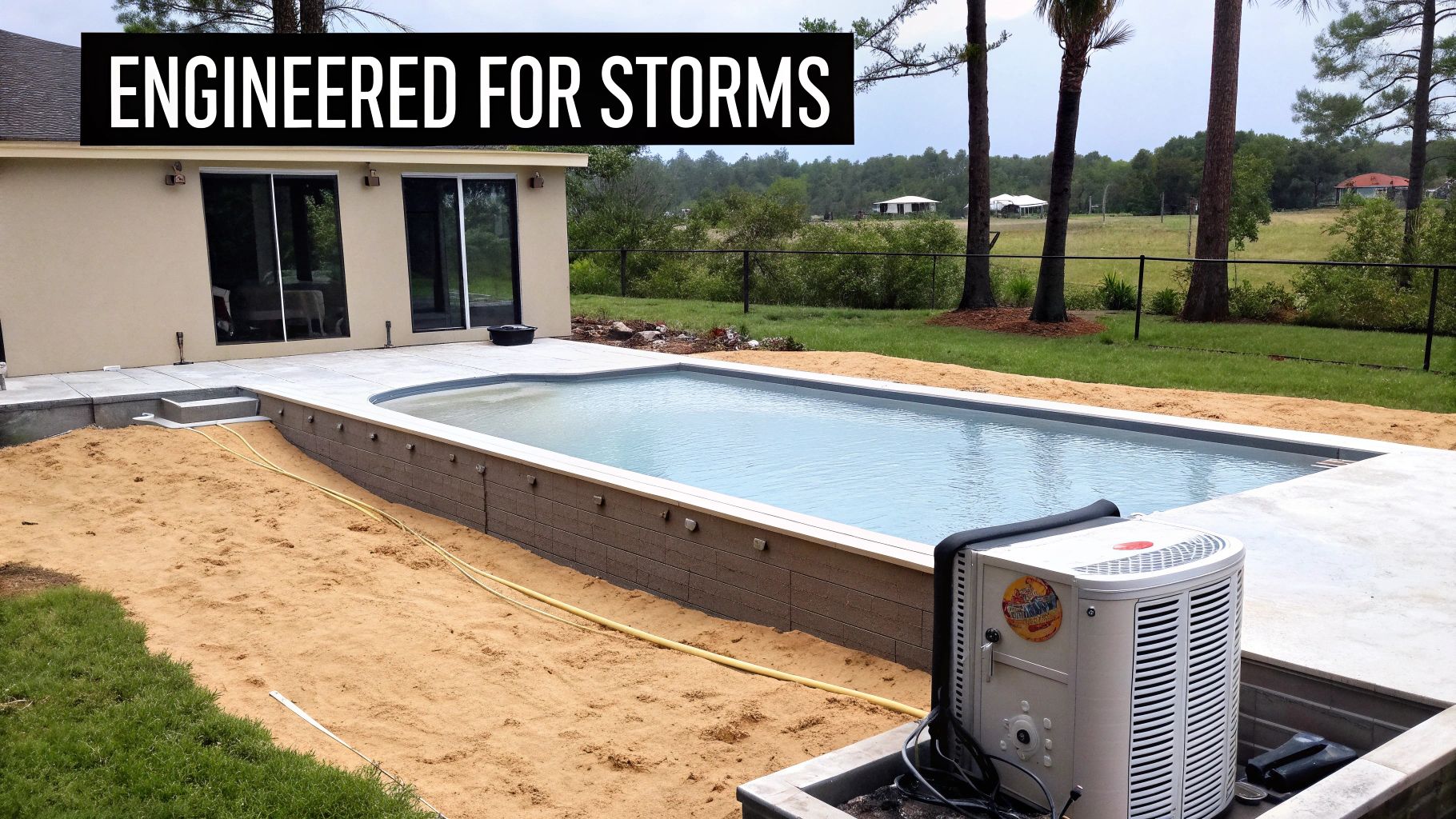

The first hurdle is literally the ground beneath our feet. Cape Coral is famous for its high water table and sandy, unstable soils. If you don't account for this, the hydrostatic pressure from the groundwater can actually try to lift a pool shell right out of the ground, leading to cracks and costly failures.
Any experienced local builder knows that a proper foundation is everything. This means bringing in engineered fill to build up the site, creating a stable base that sits well above the water table. This process of establishing the correct elevation is paramount in Southwest Florida to ensure proper drainage and long-term structural stability.
Over-Engineering for Hurricane Readiness
Here in Southwest Florida, we have to build with hurricanes in mind. For swimming pool construction in Cape Coral FL, that means going well beyond the basic building codes. A quality builder will over-engineer the pool shell with extra steel rebar and thicker gunite walls. It’s this kind of built-in strength that gives you peace of mind when a storm is tracking our way.
This build-it-tough philosophy applies to everything around the pool, too:
- Screen Enclosures: Cages aren't just for bugs; they're huge structures that have to handle massive wind loads. We insist on larger footers and stronger fasteners to anchor the enclosure securely, preventing it from becoming a projectile in a hurricane.
- Storm-Protected Equipment: The pump, heater, and filter are your pool's vital organs. They need to be installed on a raised, securely anchored concrete pad, and ideally shielded by a wall to protect them from flying debris and storm surge.
Building for resilience is at the core of how we approach custom homes in this region. We plan for the worst-case scenario and engineer a solution that ensures your entire property, pool included, is ready to face whatever nature throws at it.
The demand for these thoughtfully built pools is booming. In May 2025, Southwest Florida actually led the entire state in new swimming pool permits, and Lee County was responsible for almost a third of that activity. This surge, especially in places like Cape Coral, shows that homeowners in new custom developments expect this level of hurricane-ready quality as a standard. You can dig into the numbers yourself in this May 2025 report on new pool construction.
The Generator: Your Pool's Best Friend in a Storm
One of the most overlooked parts of a hurricane-ready pool is a whole-home generator. When the power goes out for days or even weeks after a storm, a pool without a running pump quickly turns into a swamp. Algae takes over, and your backyard oasis becomes a disgusting, expensive cleanup project.
A generator keeps the pump and filtration system running, maintaining water clarity and chemical balance. It's not just about looks; it's about protecting your investment. By the time the power is back on, your pool is ready to enjoy. Integrating a generator from the start is a smart move that proves its worth after just one major storm. It’s exactly this kind of practical, forward-thinking engineering that defines a truly well-built home in Southwest Florida.
Selecting the Right Pool Builder for Your Custom Home
Let's be blunt: choosing your builder is the single most important decision you'll make for your pool. In a hot market like Cape Coral, a great partner delivers a flawless backyard oasis and total peace of mind. The wrong one? That path can quickly spiral into a nightmare of blown budgets, endless delays, and structural problems that haunt you for years.
Your goal is to find a professional whose standards for quality are just as high as your own, especially when this pool is part of your brand-new custom home.
This process is so much more than just collecting quotes. You're searching for a true partner with deep, proven experience in the unique challenges of building in Southwest Florida. Start with the absolute must-haves: verify their state license is active and demand proof of both general liability and workers' compensation insurance. Don't even think about skipping this—it’s your primary shield against massive financial risk.
The Advantage of an Integrated Custom Home Builder
There’s a clear advantage to working with an integrated custom home builder—a company that manages everything from your home’s foundation to the pool’s final coat of plaster. This unified approach completely sidesteps the communication breakdowns and scheduling disasters that almost always pop up when a separate pool company is brought in late in the game.
When your builder is integrated, the pool's engineering and design are woven into the master plan from day one.
This is a game-changer. It means plumbing, electrical, and gas lines are planned and installed correctly during the home's main construction. It guarantees the pool's elevation and drainage work in perfect harmony with your property's site plan, preventing water issues down the road. In short, the pool and home become one cohesive, structurally sound system.
This synergy doesn't just produce a far superior final product. It saves time, cuts down on costs by using crews and equipment already on-site, and ensures the craftsmanship of your pool—from the rebar in the shell to the tile on the spillway—matches the exacting standards of the rest of your home.
Vetting Your Potential Builder
As you start to narrow down your list, it's time to do some real homework. A builder's portfolio is their resume, so don't just glance at it. Ask to see projects specifically in Cape Coral, and look for pools that mirror your own vision in size, features, and complexity. Even better, ask for examples built alongside a new custom home.
Don't just rely on written reviews, either. Ask for a list of recent clients you can actually talk to. Ask them the tough questions: How was the communication? Did they stick to the budget? What happened when something unexpected went wrong? Their honest answers are pure gold.
The market for swimming pool construction in Cape Coral FL is absolutely booming. With nearly 1,900 active pool businesses in Florida and a market that’s grown at 2.7% annually since 2020, there's a lot of noise out there. This growth gives top-tier custom home builders the perfect opportunity to integrate over-engineered, high-efficiency pools that are built to last a lifetime. You can learn more about the growth of Florida's pool construction industry on IBISWorld.
Finding the right builder means asking the right questions. We've compiled a quick checklist to help you separate the true professionals from the rest.
Builder Vetting Checklist
| Criteria | What to Look For | Red Flags to Avoid |
|---|---|---|
| Licensing & Insurance | A current, verifiable Certified Pool Contractor (CPC) license. Proof of General Liability and Workers' Comp. | Hesitation to provide documents. Expired licenses or insurance policies. |
| Local Experience | A deep portfolio of completed pools specifically in Cape Coral and Lee County. | A portfolio showing only work from other counties or states. Lack of familiarity with local codes. |
| Client References | Eager to provide a list of recent clients you can call directly. | Vague testimonials, no phone numbers, or providing only "friends and family" as references. |
| Technical Expertise | Confident, detailed answers about handling high water tables, soil conditions, and hurricane codes. | Generic answers, dismissing local challenges, or a "we'll figure it out" attitude. |
| Communication Style | A clear point of contact. Proactive updates. A process that feels transparent and collaborative. | Vague timelines, poor responsiveness to calls/emails, pressure to sign immediately. |
This checklist is your starting point for a serious conversation that goes far beyond the price tag.
Key Questions for Your Shortlist
When you sit down with your top contenders, be ready with specific questions that cut to the heart of their process and expertise.
Here’s a good list to get you started:
- Construction Process: "Can you walk me through your entire build, from digging the hole to the first swim? Who is my dedicated on-site contact?"
- Hurricane Readiness: "How, specifically, do you over-engineer your pools and cages for hurricane winds? What materials and anchoring methods do you use that others might not?"
- Warranty: "Tell me about your warranty. What exactly does it cover for the shell, the equipment, and the workmanship? Is it transferable if we sell the home?"
- Site Challenges: "What's your standard procedure for dealing with Cape Coral's high water table and sandy soil during excavation?"
A true professional will welcome these questions. Their ability to give you clear, confident, and detailed answers is one of the best signs you've found a builder who is truly committed to quality.
Answering Your Cape Coral Pool Questions
Even when you have a great plan, a few questions always pop up as you get closer to breaking ground. It’s a big investment in your custom home, and you deserve total clarity. Here are some straight answers to the questions we hear most from homeowners building a pool in Cape Coral.
How Does a New Pool Affect My Homeowner's Insurance and Property Taxes?
Let's get this out of the way: yes, adding a pool will impact both your insurance and property taxes. It’s crucial to factor these recurring costs into your budget from the start. A beautiful new pool boosts your home's assessed value, which means your annual property taxes will increase. It’s a direct reflection of the value you're adding to your property in Southwest Florida.
You also need to call your homeowner's insurance agent right away. Legally, a pool is considered an "attractive nuisance," so your provider will almost certainly require you to bump up your liability coverage. This is to protect you financially. They’ll also need proof that your pool meets all local and state safety codes, like having a hurricane-rated enclosure and a fence that’s at least four feet high with self-latching gates. Don't skip this step—failing to update your policy could mean a denied claim if an accident ever happens.
What’s the Real Difference in Long-Term Costs: Saltwater vs. Chlorine?
This is a classic debate. A modern saltwater system usually costs more to install upfront, but you'll spend less on chemicals over time. The system's salt cell generates its own chlorine through electrolysis, so you can say goodbye to buying chlorine tabs or liquid every week. The catch? You'll need to budget for replacing that salt cell every 3-7 years, and that can be a hefty expense.
A traditional chlorine pool requires you to constantly buy and add chemicals to keep the water sanitary. Both systems, of course, use electricity for the pump and require regular cleaning and water testing to keep things balanced and safe.
Here's a pro tip for anyone building in Southwest Florida: think about material durability. Saltwater is naturally more corrosive to certain metals and natural stone. A seasoned builder will insist on using high-quality, salt-resistant materials for your pool coping, decking, and handrails. It's a small detail that protects your investment from premature wear and tear.
Can I Build a Pool on My Canal-Front Lot? Are There Special Rules?
Absolutely! A pool on a canal-front lot is the quintessential Cape Coral experience. But yes, it comes with a specific set of rules you can't ignore. The city enforces strict setbacks from the seawall, which determines exactly how close your pool and deck can get to the water's edge. This is non-negotiable; it's done to protect the seawall's integrity and keep public access areas clear.
These setbacks will directly shape your pool's size, shape, and where it sits on your property. This is where hiring a builder with deep waterfront experience pays off. They know precisely how to work with these zoning codes to design a pool that maximizes your gorgeous water views and creates that seamless flow from your lanai to the canal, all while staying perfectly compliant.
What’s the Big Deal About Integrating the Pool Build with My New Custom Home?
Honestly, building the pool at the same time as your new custom home is the only way to go. It's smarter, more efficient, and delivers a far superior result. The benefits are massive, touching everything from your budget to the final quality.
Here’s why it’s a no-brainer:
- One and Done Permitting: Your builder submits a single, cohesive plan to the city that includes both the house and the pool. This sidesteps the headaches and delays of filing two separate permits that might conflict with each other.
- Serious Cost Savings: Think about it—the heavy equipment like excavators and dump trucks are already on site for the home's foundation. Using them for the pool dig saves you thousands in what we call mobilization costs.
- A Truly Unified Design: This is the most important part. The pool, lanai, and home are designed from day one to work together as a single, beautiful system. Your builder ensures the elevations line up perfectly, the flow from inside to outside feels natural, and the architectural style is harmonious.
- Seamless Infrastructure: All the guts of the pool—plumbing, electrical conduits, gas lines for a heater—are planned from the very beginning. They get installed correctly during the main construction, avoiding the messy, expensive, and often ugly process of trying to retrofit them later.
When you work with an integrated custom home builder, the pool isn't just an afterthought. It's an engineered feature of the home itself, ensuring your backyard oasis has the same structural integrity and aesthetic beauty as the rest of your new home.
At Sinclair Custom Homes Inc, we believe your pool should be a core part of your custom home’s vision from the very first sketch. Our integrated approach guarantees a seamless design, top-tier engineering, and a stress-free process that delivers the backyard you’ve always dreamed of. To start planning your dream home and pool, visit us at https://sinclaircustomhome.com.