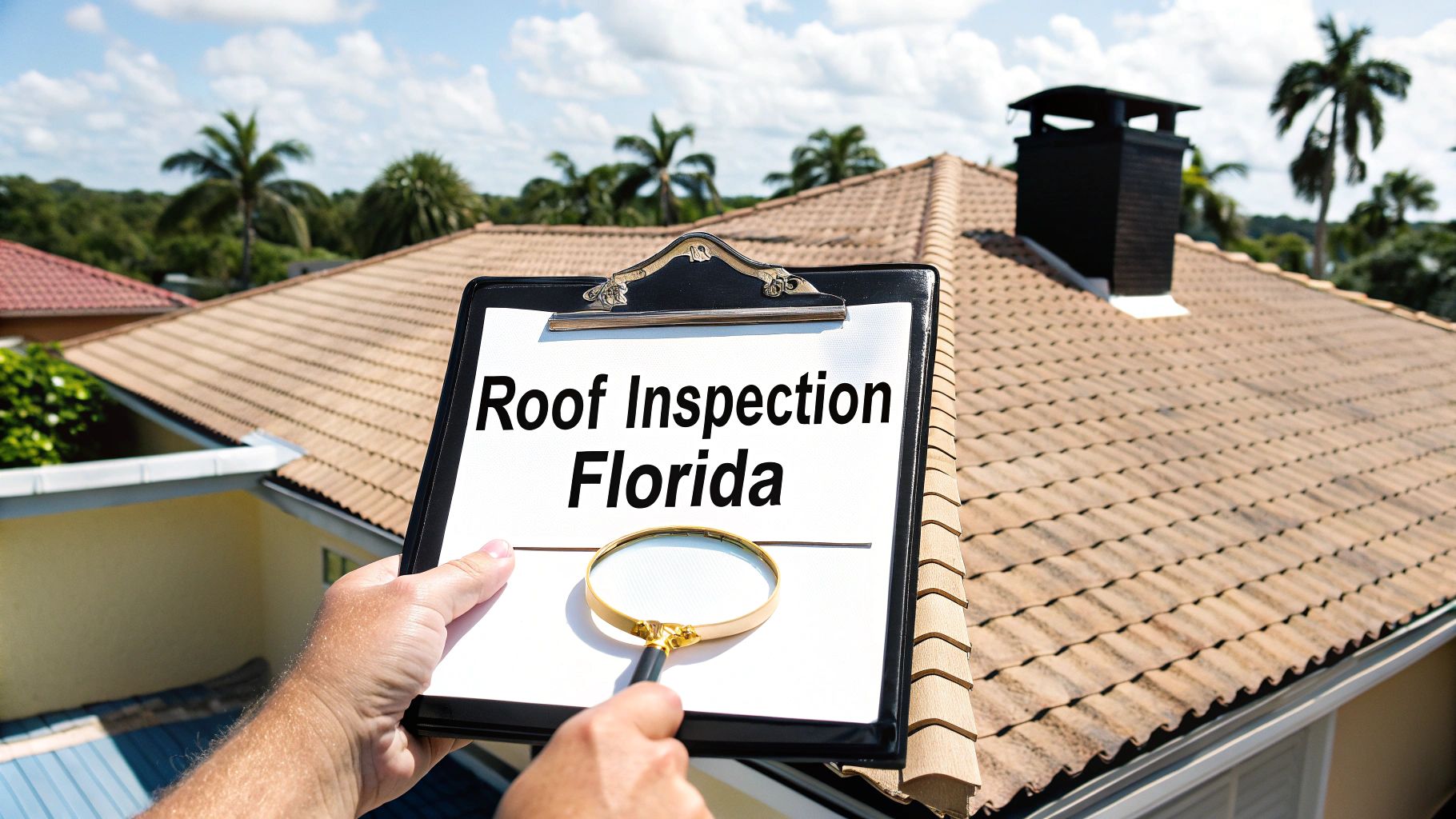
For anyone who owns a custom home here in Florida, getting a professional roof inspection isn't just a good idea—it's an absolute necessity. It’s your best strategy for protecting your investment against everything our climate throws at it: hurricanes, the blistering sun, and that never-ending humidity. A thorough look-over by an expert is your first line of defense, ensuring your home's advanced design features and hurricane-impact systems are performing as intended.
Why Inspections Are the First Line of Defense
Think of a roof inspection as a regular health checkup for the most critical part of your custom home. Down here in Southwest Florida, a roof does more than just keep the rain out; it's the main shield standing between your family and the elements. Skipping an inspection is like heading into hurricane season with a generator you haven't tested in years—a gamble you just don't want to take, especially when power grids are vulnerable during major storms.
These assessments let you spot small problems before they balloon into full-blown disasters. A single cracked tile or a tiny leak you can't even see from the ground can quickly lead to major water damage, compromising your home’s structure and hitting you with expensive, complicated repair bills that affect the very foundation of your custom build.
The Foundation of Financial Protection
Beyond keeping you safe and dry, a professional roof inspection is also a smart financial move for any custom homeowner. It has a huge impact in a few key areas:
- Securing and Keeping Your Insurance: Florida insurance companies are tougher than ever. A clean inspection report is often required just to get or renew your homeowner's policy, especially for homes in specific flood zones or at lower elevations. For a deeper dive into this, check out our guide on how much hurricane insurance costs in Florida.
- Protecting Your Property Value: When it’s time to sell, a well-documented history of professional inspections and maintenance is a major selling point. It shows potential buyers you’ve taken meticulous care of the property and that its hurricane-impact features are verified and intact.
- Handling Modern Building Trends: Today’s custom homes often feature beautiful, complex designs like huge skylights, intricate rooflines, or integrated solar panels. These new builder trends require a specialist's eye to ensure they’re performing correctly and are completely sealed against moisture intrusion.
A roof inspection for a custom-built home is about more than just looking for damage. It’s about making sure the high-performance materials and hurricane-rated features are actually doing their job, guaranteeing your home doesn't just meet—but exceeds—Florida's tough building codes.
This proactive approach ensures every part of your roof, from the truss tie-downs to the secondary water barriers, is ready for whatever the next storm season brings. It’s a small investment that protects the massive value of the custom sanctuary you’ve built in Southwest Florida.
Navigating the Different Types of Roof Inspections
Thinking that all roof inspections are the same is a common mistake, but it's a crucial one to avoid when protecting your custom home here in Florida. The reason you need an inspection completely changes its focus, scope, and what the final report looks like. It’s a bit like a doctor's visit—a routine annual physical is worlds away from a specialized stress test for your heart, and each one serves a very specific purpose.
A roof inspection in Florida is always tailored to a particular situation, whether you're trying to satisfy a nervous insurance carrier, documenting storm damage, checking the quality of new construction, or evaluating a high-end property before you buy. Each type looks at the roof through a different lens, zeroing in on the details that matter most for that scenario. For us custom home builders and for our clients in Southwest Florida, knowing which inspection to ask for is key to maintaining your home's safety, value, and insurability.
This quick decision guide can help you figure out which inspection is right for your situation.
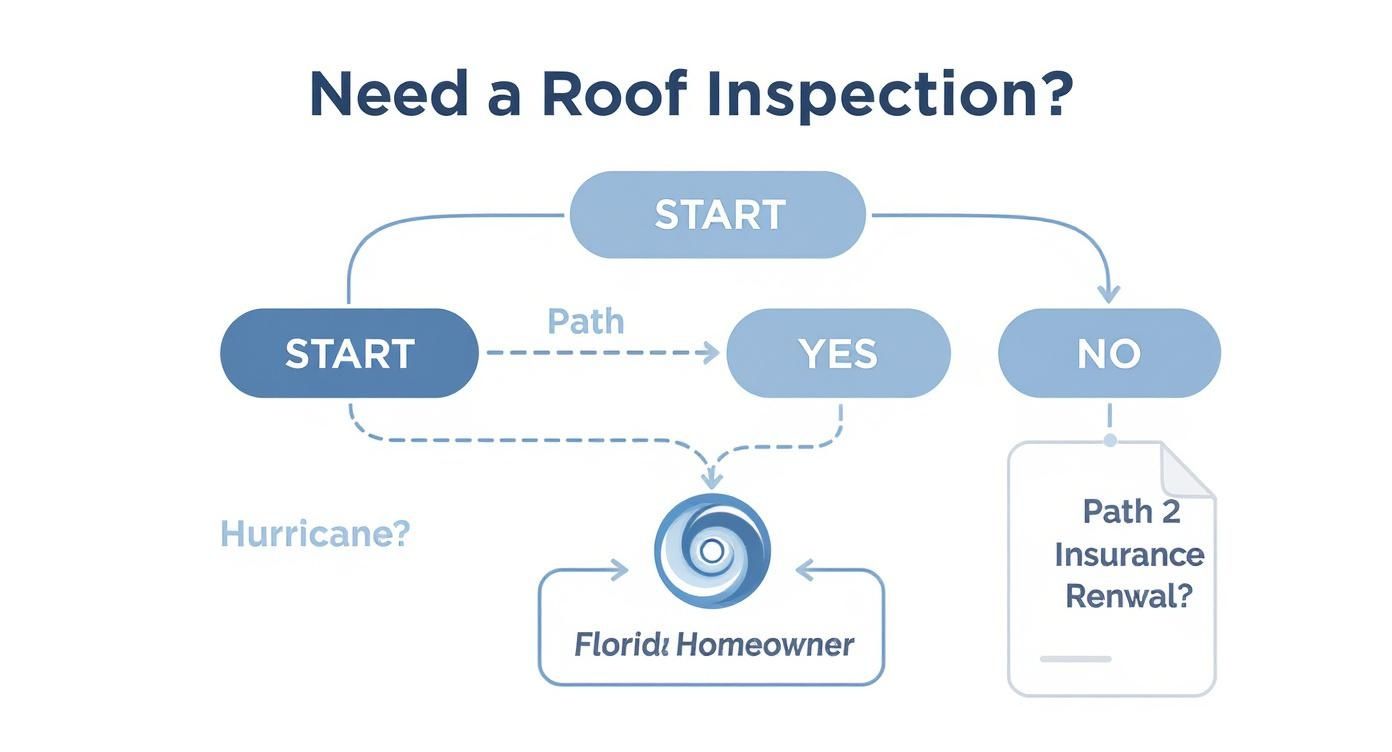
This flowchart breaks down the most common triggers for a roof inspection in Florida, showing how events like a hurricane or a simple insurance renewal notice dictate the right next steps for a homeowner.
To make it even clearer, let's break down the main inspection types you'll encounter.
Here’s a quick table summarizing the most common types of roof inspections and what they’re used for in Florida.
Florida Roof Inspection Types and Their Primary Purpose
| Inspection Type | Primary Purpose | When Is It Needed? |
|---|---|---|
| Insurance Inspection | To assess risk for the insurance carrier, focusing on the roof's age, condition, and remaining lifespan. | Before getting a new policy or renewing an existing one. Insurers are very strict about this. |
| Post-Storm Assessment | To identify and document all damage caused by a specific weather event like a hurricane or severe storm. | Immediately after a major storm to support insurance claims and plan for necessary repairs. |
| New Construction Phase | To verify quality and code compliance at critical stages of the building process, not just at the end. | During the construction of a new custom home to ensure every layer of the roof is installed correctly. |
| Pre-Purchase Inspection | To provide a detailed, unbiased report on the roof's condition for a potential buyer. | As part of the due diligence process when buying a home, especially a luxury or custom property. |
Each of these serves a unique, critical function in protecting your investment. Let's dig a little deeper into what each one involves.
Insurance Inspections
For anyone owning a new or existing luxury home in Florida, the insurance inspection has become one of the most important—and stressful—parts of homeownership. Florida’s insurance market is getting tougher by the day, and carriers now look at roofs with a fine-toothed comb before they'll even consider issuing or renewing a policy. Their main goal is risk assessment, so they focus heavily on the roof's age, its overall condition, and how much useful life it has left.
This isn't an exaggeration. The recent property insurance crisis has put roofs directly in the crosshairs. By mid-2025, over 1.5 million Florida property insurance policies were dropped, and the number one reason cited was the condition of the roof. Insurers are using everything from drones to satellite imagery to assess roofs, sometimes denying renewals even after a homeowner gets a "passing" inspection if they decide the roof's lifespan is too short for their standards. As a recent analysis from The Palm Beach Post details, this new reality makes a thorough, well-documented inspection more critical than ever just to keep your coverage.
Post-Storm Damage Assessments
After a hurricane or a nasty tropical storm barrels through Southwest Florida, a post-storm assessment isn't just a good idea—it's essential. This inspection is forensic. It’s all about finding and documenting every bit of damage, from the glaringly obvious to the hidden issues caused by high winds, flying debris, and driving rain. This is especially vital for homes at higher elevations which can experience greater wind speeds.
An inspector is hunting for specific problems:
- Lifted or missing tiles and shingles that expose your home to water intrusion.
- Dents and punctures on metal roofing systems from flying branches or other impacts.
- Compromised seals around vents, skylights, and anything else that penetrates the roof.
- Damage to hurricane-resistant features like straps and clips, to make sure they did their job.
Getting this inspection done promptly is the first step to filing an accurate insurance claim and ensuring your home’s most important line of defense is quickly restored to pre-storm condition.
New Construction Phase Inspections
When we build a custom home, we don’t just wait until the end to make sure everything is perfect. Phase inspections are a core part of our quality assurance process. We bring in inspectors at critical stages of construction to verify that every layer of the roofing system—from the sheathing and underlayment to the final flashing and tiles—is installed flawlessly.
This proactive approach is how we guarantee that all hurricane-impact features are properly integrated and that the roof is built not just to code, but to a higher standard of resilience. It's about building peace of mind right into the structure of your home.
Pre-Purchase Inspections
In any high-value real estate deal, a pre-purchase roof inspection is simply smart due diligence. This assessment gives a potential buyer a clear, unbiased picture of the roof's health, flagging any existing problems and highlighting potential future costs. For a custom home with unique architectural features or specialized materials, this inspection provides critical leverage for negotiation and helps you make a confident final decision. It’s the best way to ensure there are no expensive surprises waiting for you after you get the keys.
A Florida-Specific Roof Inspection Checklist
A generic, off-the-shelf checklist just won’t do for a high-end custom home here in Southwest Florida. Our one-of-a-kind climate and stringent building codes demand a much deeper dive. Think of a proper roof inspection in Florida less like a quick glance and more like a forensic investigation, designed to make sure your home’s main line of defense is performing exactly as it was engineered to.
An inspector's job is to see beyond the surface. They need to verify that the modern materials and hurricane-rated features aren't just there, but are correctly installed and ready to do their job. It’s all about confirming that the entire roofing system works together seamlessly to fight back against wind uplift, brutal solar heat, and our relentless humidity.
Let’s break down what a truly thorough inspection really looks at.
Assessing Modern Roofing Materials
In Florida's custom home market, we're not just talking about basic asphalt shingles. A qualified inspector needs to be an expert in the high-performance materials you see in new construction, like modern tile and standing-seam metal roofing.
-
For Tile Roofs: This goes way beyond just looking for a few cracked or missing tiles. The inspector will check how they’re fastened—are they mechanically attached or foam-adhered to meet the high-wind velocity codes? They’re also looking for any signs of "chattering," which is where tiles have worked themselves loose and are rubbing against each other. That’s a clear warning sign of failure waiting to happen in a storm.
-
For Metal Roofs: Here, the focus is all on the integrity of the panels and seams. An inspector is searching for any dents from hail or flying debris, corrosion (especially in our coastal areas), and making sure every fastener is secure and properly sealed to lock out water. A key point of verification is the panel's resistance to wind uplift.
This kind of detailed material check ensures the premium roof you invested in is actually ready to perform when the pressure is on.
Verifying Hurricane-Resistant Features
This is, without a doubt, the most critical part of any roof inspection in Southwest Florida. It’s not enough for a home to simply have hurricane features; they have to be verified. This part of the inspection has a direct impact on your family’s safety and your insurance premiums.
A top-notch inspector will confirm:
-
Roof-to-Wall Connections: They will physically get into the attic to check for the presence and proper installation of hurricane straps or clips. These simple metal connectors are absolutely essential for preventing your roof from lifting off the walls during an extreme wind event.
-
Secondary Water Resistance (SWR): This is a self-adhering membrane that goes directly onto the roof deck, under the tiles or metal. It acts as your last line of defense—a final waterproof barrier if the primary roofing material is ever blown off. The inspector confirms it was installed and is still in good shape.
-
Impact-Rated Materials: If the home was built with impact-rated shingles or tiles, the inspector will look for the manufacturer markings and specific installation patterns that prove these tougher materials were used.
These features are the true backbone of a storm-ready home.
Inspecting Flashing and Penetrations
The weakest links on any roof are the spots where something pokes through the surface. On custom homes, this can include everything from standard vents and plumbing stacks to huge skylights, solar panel mounts, and custom-designed chimney shrouds.
A meticulous inspection of all flashing is non-negotiable. Improperly sealed flashing is the number one cause of roof leaks in Florida, period.
An inspector checks that every single penetration has overlapping, correctly installed flashing and that the sealants are still pliable and haven’t been cooked by years of UV exposure. They’ll pay extra attention to complex rooflines and valleys where massive amounts of water are channeled during a downpour. Any sign of failing flashing is an immediate red flag that needs to be addressed.
Evaluating the Attic and Underlayment
What’s going on underneath your roof is just as important as what’s on top. A trip into the attic reveals the hidden story of your roof’s health.
- Moisture Intrusion: Inspectors are trained to spot water stains on the underside of the roof deck, on the rafters, and in the insulation. These are the telltale signs of a slow, active leak that you’d never see from the outside.
- Ventilation and Insulation: They will check for proper attic ventilation, which is crucial for managing the heat and moisture that builds up in our humid climate. Blocked soffit vents or poor exhaust can literally cook your roof from the inside out, leading to premature failure. For homeowners looking to maximize energy efficiency, how your insulation and roof work together is key. You can dive deeper into this by understanding R-value insulation in our detailed guide.
- Structural Integrity: The inspector examines the roof trusses and decking for any hint of sagging, cracking, or rot, making sure the entire structural framework is still sound.
This comprehensive, Florida-first approach ensures that every single component of your roof is evaluated, giving you a complete and honest picture of its condition and its ability to protect your custom home.
The Financial Sense Behind Proactive Inspections
Thinking of a professional roof inspection as just another bill is a common mistake, and frankly, a costly one—especially when you own a custom home in Florida. It’s better to see it for what it truly is: a strategic investment in your property's long-term health. Think of it like a routine health check-up for the most critical part of your house; it’s a small, predictable cost that helps you avoid catastrophic, five-figure surprises down the line.
This proactive mindset is absolutely essential here in Southwest Florida. New construction trends lean toward complex rooflines, huge skylights, and integrated solar panels. While these new design features look fantastic and add tremendous value, they also create more potential weak spots. A tiny issue, like a compromised seal around a vent or a single loose tile on a steep pitch, can quietly let moisture seep into your home’s structure.
Left unchecked, that slow leak leads to wood rot, ruined insulation, and mold—problems that can run you tens of thousands of dollars to fix and might not even be fully covered by your insurance. A proactive inspection catches that bad seal when it’s still a simple, cheap fix, protecting both your home and your wallet.
The Cost of Prevention vs. The Price of Procrastination
When you look at the numbers, proactive maintenance just makes sense. With Florida's unique climate, industry experts are now recommending inspections twice a year to stay ahead of damage from our intense summer sun and hurricane-force winds. A professional roof inspection in Florida usually runs between $200 and $400, so you’re looking at around $600 for a full year of protection. When you compare that to the staggering cost of emergency repairs, the value is crystal clear. You can explore the financial rationale behind biannual inspections to see a more detailed breakdown.
This small annual investment is your best defense against much bigger financial headaches. Just look at the difference:
- Minor Preventative Repair: Fixing a small patch of damaged flashing or a few loose tiles found during an inspection might set you back $300 to $1,200.
- Major Leak Repair: If you wait until that same small issue becomes a significant leak, you could be looking at repairs from $1,500 to $4,000, and that’s before accounting for any interior water damage.
- Premature Roof Replacement: Ignoring systemic problems can shave years off the life of a high-end tile or metal roof. This could force a full replacement that can easily cost $15,000 to $35,000 or more on a custom home.
By investing in regular check-ups, you're essentially buying yourself financial certainty and extending the life of your roof—one of the most valuable components of your entire home.
Protecting Your Equity and Insurability
Beyond just dodging repair bills, regular inspections are crucial for protecting your home's overall financial health. A well-documented history of professional maintenance is a powerful tool when it comes time to sell. It gives potential buyers tangible proof that your property has been meticulously cared for, justifying your asking price and making the whole sales process smoother.
In Florida’s tough insurance market, a clean inspection report isn't just a "nice-to-have" anymore. It's often a mandatory requirement to get or even renew your homeowner's policy. Taking a proactive approach shows insurers you're a responsible homeowner, which lowers their risk and makes you a much more attractive client.
At the end of the day, a proactive roof inspection is the smartest financial move any custom homeowner in Florida can make. It flips the script on roof maintenance, turning it from a reactive, unpredictable expense into a manageable, budgeted investment. This simple shift in mindset not only saves you thousands of dollars but also delivers priceless peace of mind, ensuring the home you’ve so carefully designed and built remains a secure and protected sanctuary.
How to Hire a Qualified Florida Roof Inspector
Picking the right expert for a roof inspection isn't just a box to check—especially here in Florida. The right assessment can directly impact your home's safety, how much you pay for insurance, and its overall value. This isn't about finding someone who can just climb a ladder; it’s about partnering with a true professional who gets the unique demands of our climate and understands the engineering behind a well-built custom home.
Your goal is to find a licensed, insured, and experienced pro who gives you an unbiased and incredibly detailed report. You need someone with a deep knowledge of current Florida building codes, hurricane-impact features, and how modern materials like tile and metal roofing are supposed to perform under pressure.
Key Credentials to Verify
Before you even think about hiring someone, it's time to do a little homework. In Florida, there are a few non-negotiables that separate a real professional from someone who just bought a clipboard.
Make sure they have the right credentials right from the start:
- State Licensing: The first thing to do is verify their Florida license is active and in good standing. This proves they've met the state's baseline for knowledge and professionalism.
- Liability Insurance: Always, and I mean always, ask for proof of general liability insurance. This is what protects you and your property from any accidental damage that could happen during the inspection.
- Specialized Certifications: Keep an eye out for certifications related to wind mitigation. This shows they have specialized training in assessing hurricane-resistant features—an absolute must-have skill in Southwest Florida.
Think of these credentials as the minimum entry fee for any inspector you'd consider.
Questions to Ask Potential Inspectors
Once you have a shortlist, asking a few smart questions can tell you everything you need to know about their expertise and how they operate. This is even more critical in today's market, where labor and supply challenges are a real issue affecting new builder trends.
Believe it or not, the construction sector is staring down a workforce deficit of 450,000 workers nationally in 2025, with roofing being hit particularly hard. This reality makes it more important than ever to stick with established, reputable professionals. You can get the full rundown in this in-depth analysis of 2025 trends for Florida roofers.
To properly vet your candidates, here’s what you should ask:
- Do you have experience with custom homes? You'll want to know if they're comfortable with complex rooflines, unique materials, and integrated design features like solar panels or massive skylights that you find on custom properties.
- Can I see a sample report? A top-tier report is more than a simple checklist. It should be detailed, filled with high-resolution photos, and offer clear, easy-to-understand explanations. Look for thoroughness and professionalism.
- What kind of equipment do you use? The best inspectors often bring advanced tools to the job. Think drones for getting a look at hard-to-reach areas or thermal imaging cameras that can spot hidden moisture before it becomes a disaster.
When you're looking to hire a qualified professional for your roof inspection, starting with a reputable local company is always a smart move. Vetting local experts, like the teams providing Paletz Roofing Inspection services, means you're getting people who live and breathe our regional building codes and climate challenges.
Here at Sinclair Custom Homes, we’ve built our reputation on partnering exclusively with trusted, vetted experts for every single phase of construction. This is our guarantee that from day one, every home we build meets the absolute highest standards of safety and durability, protecting your roof and your investment for years to come.
Taking Action After Your Roof Inspection
Getting your roof inspection report back isn't the finish line; it’s the starting gun. This document is your personalized roadmap, detailing the exact condition of your home’s most important shield. It's the strategic plan for defending your investment against Florida’s notoriously harsh weather.
Think of the report as a blueprint for action. It’s about more than just repairs—it’s about preserving your home's value and structural integrity, especially for custom homes here in Southwest Florida that often have unique and complex rooflines as part of new design trends. The first, and most crucial, step is to prioritize what the inspector found.
From Report to Resolution
Now it's time to dig into the findings. A good report won’t just be a long list of problems; it will sort every issue by urgency, clearly separating the must-fix-now items from the things you should keep an eye on.
- Urgent Repairs: These are your absolute top priority. We're talking about things like compromised flashing around vents, significant tile or shingle damage, or any sign of an active leak. These issues need immediate attention to prevent the kind of catastrophic water damage that’s a constant threat in our humid climate.
- Preventative Maintenance: This category covers the smaller stuff—resealing vents, clearing away debris that can trap moisture, or replacing a few worn fasteners. Tackling these tasks now will extend your roof’s lifespan and stop them from turning into major emergencies after the next big storm rolls through.
When a roof inspection in Florida uncovers significant damage, one of the biggest questions is financial. You’ll need to figure out whether insurance will cover your roof replacement and what that whole process looks like. Your inspection report is the key piece of evidence you'll need to start a claim.
And if the necessary repairs involve changes to your home's original plans? That's where our expertise in https://www.sinclaircustomhome.com/construction-change-order-management/ comes in, ensuring the entire process is handled smoothly and transparently.
For owners of Sinclair Custom Homes, your inspection report often serves as validation. It’s tangible proof that the storm-resilient engineering and hurricane-impact features we built into your home from day one are performing exactly as they were designed to.
Building Proactive Durability from Day One
For anyone still in the planning stages of a new custom home, this whole process really drives home the value of proactive design. Instead of reacting to an inspection report years down the road, we engineer storm-resilient roofing systems right from the very first blueprint, taking into account new builder trends and materials.
We build that durability in from the start, from specifying superior underlayment that acts as a second line of defense to integrating robust hurricane tie-downs that anchor the roof to the very foundation. We even engineer sophisticated drainage for the most complex rooflines. It’s a forward-thinking approach that ensures your roof isn't just built to code—it’s built to a higher standard of resilience, giving our clients true peace of mind from the moment we hand them the keys.
Your Top Florida Roof Inspection Questions, Answered
Owning a home in Southwest Florida comes with its own set of rules, especially when you're dealing with our intense weather. To clear things up, we’ve put together answers to the questions we hear most often from our clients about roof inspections, particularly for custom-built homes.
How Often Should I Get My Florida Roof Inspected?
Given our climate, we can't stress this enough: get a professional roof inspection at least once a year. It’s also absolutely critical to have one done right after a major hurricane or tropical storm rolls through, even if everything looks fine from your driveway. After a storm, it's also wise to check your generator and other emergency systems.
This isn’t about being overly cautious; it's about being smart. An annual check-up catches the subtle damage caused by relentless sun, thick humidity, and high winds before those small issues turn into major structural headaches or compromise the hurricane-impact integrity of your entire home.
What Is a Wind Mitigation Inspection? Do I Really Need One?
A wind mitigation inspection is a special kind of assessment that looks at one thing: how well your home can stand up to hurricane-force winds. The inspector is on the hunt for specific hurricane-resistant features that are standard in well-built modern homes.
They’re looking for things like:
- Roof-to-wall attachments, such as heavy-duty hurricane straps or clips.
- Secondary Water Resistance (SWR), which is a crucial backup waterproof layer beneath your tiles or shingles.
- Impact-rated windows and doors, because your roof is only as strong as the rest of your home’s protective envelope.
Here in Florida, getting a good wind mitigation report isn't just for peace of mind. It can directly lead to significant discounts on your homeowner's insurance. Think of it as a smart investment that often pays for itself.
A wind mitigation report puts a number on your home's resilience. For an insurance company, that number equals risk. When you can prove your home is less of a risk, they’ll often reward you with lower premiums. It’s a powerful financial incentive to build and maintain a storm-ready home.
What Happens If My Roof Fails an Insurance Inspection?
It’s a scenario no homeowner wants, but it happens. If a roof inspection in Florida uncovers problems that prevent you from getting insured, the report will give you a clear, detailed list of what needs fixing.
Your insurance carrier will typically give you a window of time—usually around 30 days—to hire a licensed contractor and get the repairs done. This could be anything from replacing a few cracked tiles to reinforcing the trusses in your attic.
Once the work is finished, you'll need a follow-up inspection to confirm everything is up to code. Passing that second look is the final step to getting your policy issued or renewed, keeping your custom home protected.
Your roof is the single most important defense for your custom-built home. Whether you need to book a routine inspection or you’re planning a new build designed for superior strength from day one, the expert team at Sinclair Custom Homes Inc is here to help. We build homes engineered to handle everything Southwest Florida can throw at them, delivering lasting quality and peace of mind.
To discuss how we can bring your vision for a durable, beautiful custom home to life, visit us online to schedule your consultation.