


Building a custom home in Southwest Florida marks the beginning of an exciting new chapter. But between the final walkthrough with your builder and truly settling in, a series of crucial steps can make all the difference. This is not just another generic list; this is your definitive new house checklist tailored for the unique demands of Florida living, from Fort Myers to Cape Coral. It’s designed to transform your newly constructed house into a secure, efficient, and personalized sanctuary.
This guide moves beyond simply unpacking boxes. We will focus on the specific tasks that protect your investment, incorporating modern builder trends, hurricane-resilient features, and smart home technology. We'll cover everything from verifying the integrity of your hurricane impact windows to ensuring your generator is storm-ready, and addressing critical details related to local building codes and elevation requirements. This blueprint outlines the essential pre-move, move-in, and post-move actions necessary to fully prepare your home. Let's dive into the practical, actionable steps that matter most when establishing your life in Southwest Florida, ensuring your custom home is ready for sunshine, storms, and everything in between.
1. Initial SW Florida Home Systems Check & Documentation
Before a single box is unpacked, your first priority in a new Southwest Florida home is to conduct a detailed audit of its critical systems. This step is a cornerstone of any comprehensive new house checklist for our region, as it moves beyond standard appliance checks to focus on features essential for resilience against tropical weather and the humid climate. This initial review establishes a vital performance baseline and ensures you are prepared long before a storm is on the horizon.
This process involves a hands-on walkthrough with your builder to understand the specific operations of your home’s protective features. It's the perfect time to ask detailed questions and document everything for future reference, ensuring you know how to operate and protect your most valuable assets. You can see how this fits into the larger construction timeline by reviewing Sinclair's custom home building process.
Actionable Steps for Your Systems Audit
- Hurricane-Rated Features: Confirm with your builder, such as Matthew Sinclair, that your impact windows and doors meet the latest wind-borne debris and pressure standards for your specific municipality, like Lee County or the City of Cape Coral.
- Generator Test Run: Perform a live test of your home’s generator. Ensure the automatic transfer switch functions seamlessly during a simulated power outage, a critical function during hurricane season.
- Elevation Certificate: Locate, scan, and digitally store your home’s elevation certificate. This document is non-negotiable for securing accurate and affordable flood insurance and understanding your property's specific storm surge risk.
Pro-Tip: Create a dedicated "Hurricane Binder" or a secure digital folder. Store copies of your elevation certificate, impact window specifications, generator manuals, and a list of key service providers for easy access in an emergency. This simple organizational step is invaluable when time is of the essence.
2. Security System Installation and Setup
Securing your new Southwest Florida home is a critical early step, moving beyond basic safety to create a comprehensive shield for your investment. This task is an essential part of any new house checklist, especially in newly constructed custom homes where you have a blank slate to design a system tailored to your specific property and lifestyle. Integrating modern security establishes peace of mind, protecting against unauthorized entry and providing advanced monitoring capabilities.
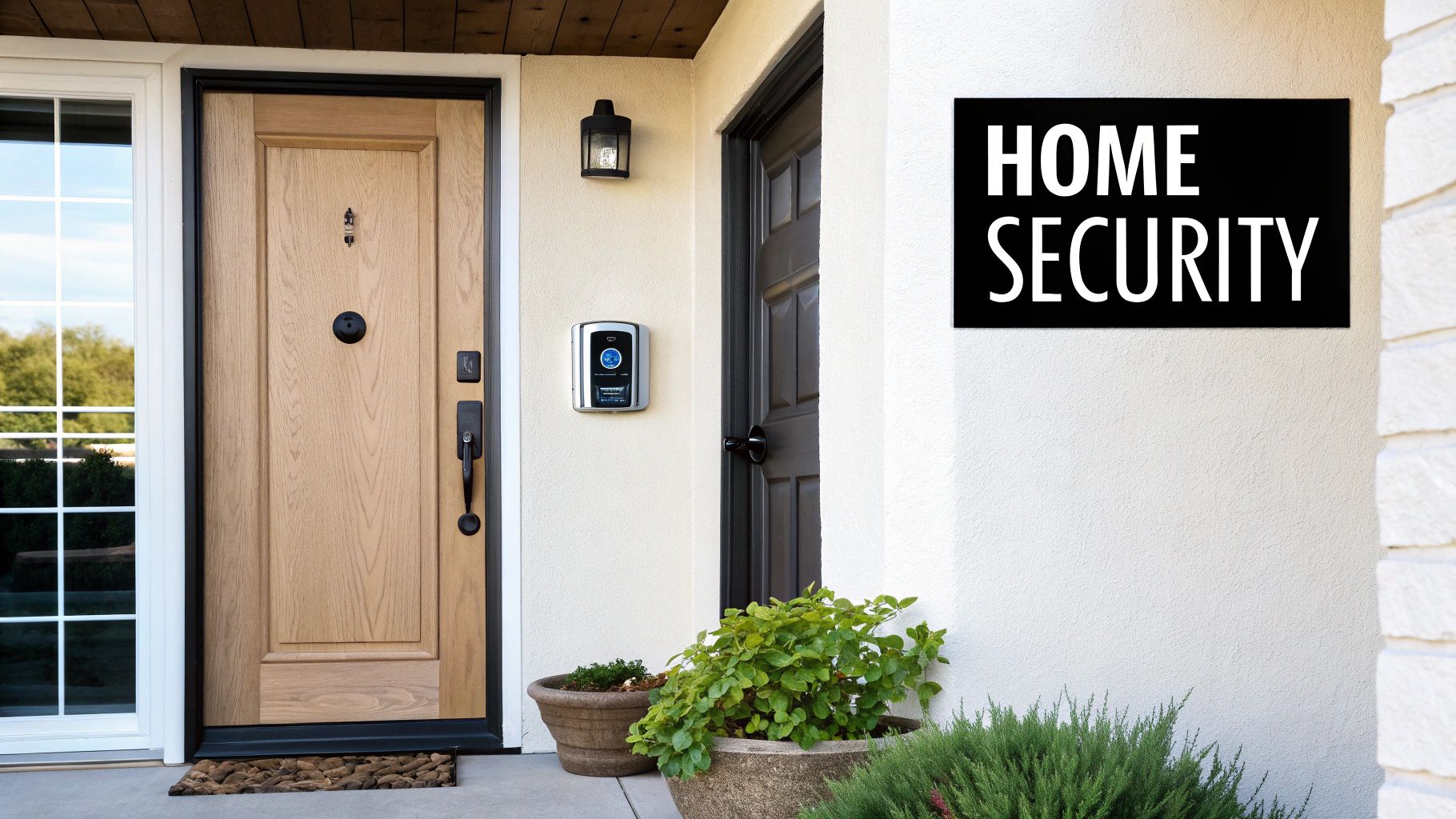

The process involves selecting and installing a multi-layered security approach, from physical locks to smart-home integrated alarms and cameras. This is the ideal time to decide what level of automation you want. To begin integrating smart technology, it's essential to understand the basics of what smart home automation entails and its real-world benefits; you can learn more by reading What is Smart Home Automation Explained.
Actionable Steps for Your Security Setup
- Rekey All Entry Points: Immediately upon taking possession, have a locksmith rekey all exterior doors. This ensures no previous construction keys can be used, giving you complete control over who has access to your home.
- Install a Smart Doorbell: A video doorbell, like a Ring or Google Nest, provides a first line of defense, allowing you to monitor package deliveries and see visitors from anywhere, a valuable feature for seasonal residents.
- Assess Monitoring Needs: Decide between a self-monitored system (like SimpliSafe) or a professionally monitored service (like ADT). Professional services offer 24/7 emergency dispatch, which can be critical during vacations or extended absences.
Pro-Tip: During the build process, ask your builder about pre-wiring for security cameras and sensors. Having the wiring installed before the drywall goes up is significantly more cost-effective and provides a cleaner, more integrated final installation.
3. HVAC System Inspection and Maintenance
In Southwest Florida's relentless heat and humidity, your HVAC system isn't a luxury; it's the operational heart of your home. A professional inspection upon moving in is a non-negotiable part of your new house checklist. This goes beyond a simple filter change, ensuring your system is optimized for peak performance, efficiency, and longevity, which is critical for managing energy costs and maintaining indoor air quality in our tropical climate.
For newly constructed homes, this step confirms the system was installed to specification and is ready for the demands of its first year. A thorough evaluation by a certified technician establishes a baseline for future maintenance and can identify minor issues before they escalate into costly repairs. This proactive approach is a key component in protecting the long-term integrity of your home's infrastructure, a principle Sinclair Custom Homes emphasizes throughout the new home construction journey.
Actionable Steps for Your HVAC Audit
- Professional Tune-Up: Schedule a comprehensive inspection with a licensed HVAC contractor. They should check refrigerant levels, clean condenser coils, inspect the condensate drain line for blockages, and test electrical components to ensure everything operates safely and efficiently.
- Ductwork Inspection: Ensure the inspection includes checking your home’s ductwork for any leaks, which can significantly reduce efficiency and pull unconditioned, humid air into your home, potentially leading to mold growth.
- Filter Upgrade and Schedule: Replace the standard air filter immediately and consider upgrading to a high-efficiency HEPA or MERV-rated filter, especially during high pollen seasons. Set a recurring monthly reminder to check and change it.
Pro-Tip: Ask your custom builder to provide all manuals and warranty information for the HVAC unit. Digitize these documents and store them in the same secure folder as your hurricane preparedness paperwork. This history is invaluable for troubleshooting and proves a consistent maintenance history.
4. Home Inspection Documentation and Follow-ups
While your custom home is built to exacting standards, a professional third-party inspection provides crucial final verification and peace of mind. This step is a non-negotiable part of any new house checklist for Southwest Florida, as it creates an official record of your home's condition at handover. It moves beyond your own walkthrough to deliver a detailed, unbiased report that can identify subtle issues or future maintenance needs before they become significant problems.
Organizing and acting on this report creates a prioritized action plan for remedying any defects or concerns discovered by the professional inspector. It’s also an opportunity to discuss findings with your builder, who can provide context on specific building codes or material specifications. Understanding this documentation is just as important as knowing the process behind Cape Coral building permits, as both ensure your home's compliance and safety.
Actionable Steps for Your Inspection Follow-up
- Review and Prioritize: Categorize the inspector’s findings into three lists: immediate repairs required before closing, near-term maintenance items (e.g., resealing grout within one year), and long-term budget planning (e.g., roof replacement in 15+ years).
- Address Punch-List Items: Schedule a follow-up walkthrough with your builder to address any punch-list items identified in the report. Document the resolution of each point with photos, ensuring all work meets your satisfaction before final sign-off.
- Evaluate Exterior Fortifications: Pay special attention to the inspection notes on windows, doors, and roofing. Beyond general security, Florida's climate demands robust protection, so it's wise to cross-reference these findings when researching effective hurricane window protection options for long-term resilience.
Pro-Tip: Digitize your entire home inspection report, including all photos and written summaries. Store it in the same secure cloud folder as your hurricane binder documents. This creates a permanent, easily accessible record essential for future warranty claims, insurance purposes, and potential resale.
5. Address Change and Administrative Updates
Once you have possession of your new custom home, the next critical task is to officially anchor your life to your new Southwest Florida address. This administrative update is a crucial part of any new house checklist, ensuring continuity of essential services, legal compliance, and financial accuracy. For new residents in areas like Fort Myers or Cape Coral, promptly updating your address with state and local agencies is not just about receiving mail; it's about establishing legal residency for tax purposes, homestead exemptions, and voter registration in your new community.
This process involves systematically notifying all relevant entities of your move. Neglecting this step can lead to missed insurance renewals, lost financial statements, and critical delays in receiving documents like your updated driver's license or tax forms. Starting this process early ensures a seamless transition and avoids frustrating administrative hurdles down the line, allowing you to focus on enjoying your newly built home.
Actionable Steps for Your Administrative Updates
- Government and Legal: Immediately file a change of address with the USPS online. You must also update your driver's license with the Florida Department of Highway Safety and Motor Vehicles within 30 days of moving to establish residency and update your voter registration for Lee County elections.
- Financial Institutions: Notify all banks, credit card companies, investment firms, and loan providers of your new address. This is critical for receiving statements, new cards, and important security alerts.
- Insurance and Employer: Contact your home, auto, and flood insurance providers to update your policy to the new property address. Inform your employer and any benefits providers to ensure W-2s and other essential documents are sent correctly.
Pro-Tip: Create a master spreadsheet listing every account, subscription, and agency that needs your new address. Track the date you requested the change and when you received confirmation. This organized approach prevents any from slipping through the cracks during the busy post-move period.
6. Deep Clean and Sanitization
Even in a brand-new custom home, a deep, post-construction sanitization is a non-negotiable step on your new house checklist. This goes far beyond a simple surface wipe-down; it's a meticulous process designed to remove the fine dust, microscopic drywall particles, and other residues inevitably left behind by the construction process. For Southwest Florida homeowners, this is crucial for ensuring pristine indoor air quality from day one and creating a truly fresh start.
This professional-grade cleaning sets the stage for a healthy living environment, addressing areas often overlooked during the final builder walkthrough. It ensures that every surface, from the inside of your brand-new cabinetry to the HVAC registers, is free from potential allergens and construction debris before your furniture and personal belongings arrive.
Actionable Steps for Your Post-Construction Clean
- Detailing Kitchen Appliances: Ensure your cleaning plan includes the interior of all appliances, like the oven, microwave, and refrigerator. This removes any manufacturing residues or dust that may have settled inside during installation.
- HVAC System Flush: Request that cleaners vacuum all HVAC registers and vents. This prevents construction dust from circulating through your new, high-efficiency air conditioning system when you first turn it on.
- Grout and Tile Sanitization: Pay special attention to new tilework in bathrooms and kitchens. A deep clean of grout lines removes any lingering haze or particulates from the installation process, protecting the finish and ensuring a hygienic surface.
Pro-Tip: Schedule this deep clean for the day after your final walkthrough with your builder and at least 24 hours before your movers are set to arrive. This provides a clear, empty space for the cleaning crew to work efficiently and allows the home to air out completely before you move in.
7. Smoke and Carbon Monoxide Detector Installation
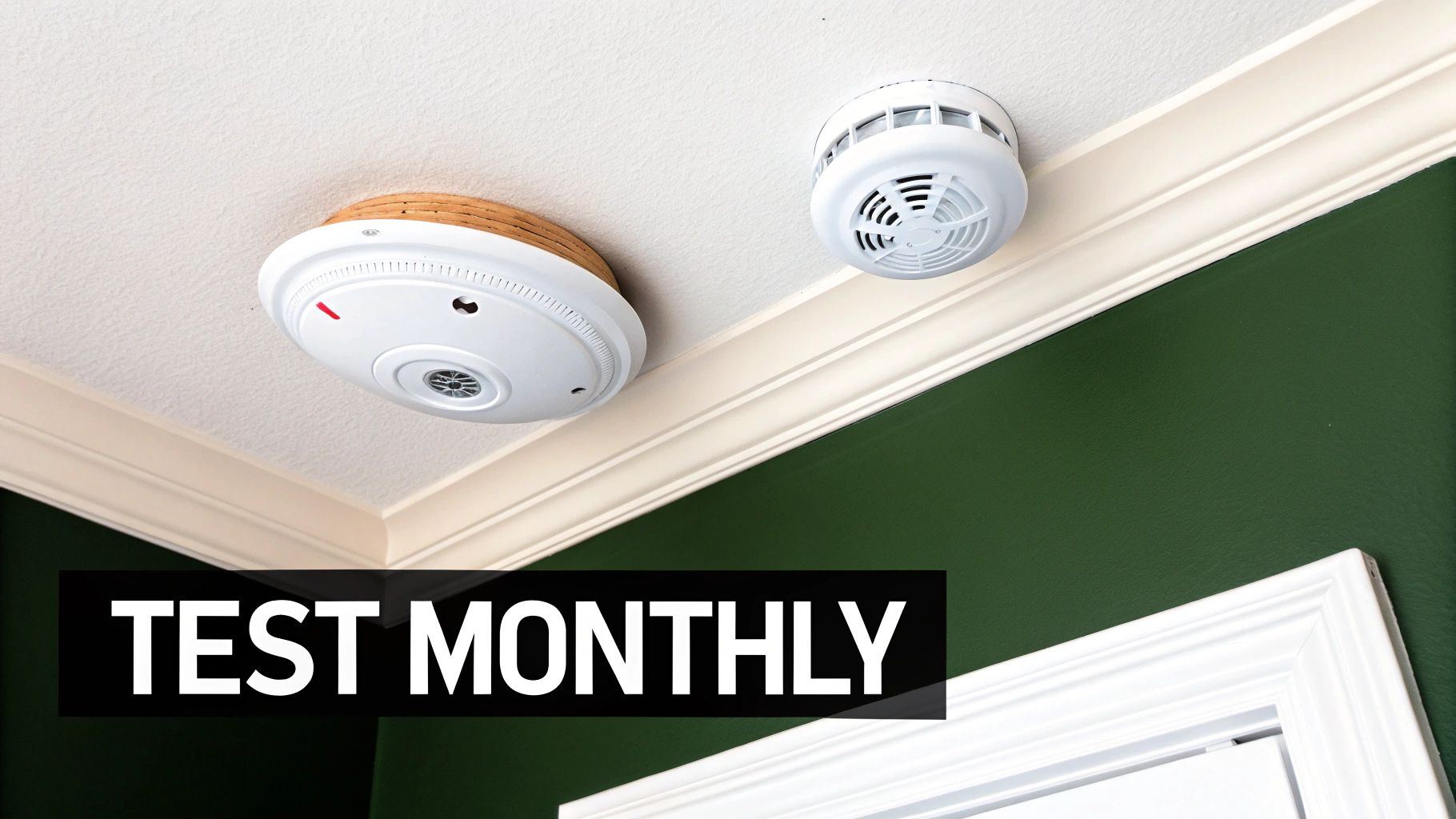
Ensuring your new home is equipped with properly installed and functioning smoke and carbon monoxide (CO) detectors is a non-negotiable safety step. This task is a critical component of any new house checklist, moving beyond basic move-in chores to fundamental life safety. For new custom homes in Southwest Florida, this often involves integrating these devices into a centralized smart home or security system, providing a superior level of protection against fire and silent, toxic gas threats.
This process involves more than just sticking a few battery-operated units on the ceiling. It’s about creating a comprehensive, interconnected safety net. A reputable builder will typically install hardwired, interconnected alarms as a standard feature, ensuring that if one alarm sounds, they all sound, a crucial feature in larger, multi-story custom homes.
Actionable Steps for Your Safety System
- Verify Installation Locations: Confirm that detectors are installed on every level of your home, inside each bedroom, and outside sleeping areas, as required by Florida building codes. CO detectors should be near sleeping areas and on each floor.
- Test and Interconnect: Test every single detector to ensure it sounds an alarm. If you have an interconnected system, confirm that triggering one alarm activates all other units throughout the house, including any that are linked to a central security system for remote monitoring.
- Review Documentation: Locate the manuals for your specific models. Note the manufacturer's recommended replacement date, which is typically 10 years for most modern smoke and CO detectors.
Pro-Tip: Schedule your detector maintenance to coincide with the twice-yearly daylight saving time changes. Use these dates as a reminder to test each unit, replace backup batteries in any battery-powered devices, and gently vacuum the detector vents to prevent dust from causing false alarms or sensor failures.
8. Water Quality Testing and Treatment
Beyond structural integrity, the quality of your home's water supply is a fundamental aspect of your family's health and the longevity of your plumbing and appliances. While municipal water in areas like Fort Myers is treated, local factors and specific plumbing can affect its final quality. A thorough analysis is a critical part of any new house checklist, ensuring the water you drink and use is free from common regional contaminants and minerals.
This process involves testing your tap water to establish a baseline for purity and hardness. For homes with private wells, this step is non-negotiable, but even those on city water can benefit from understanding what's flowing through their pipes. The results guide the selection of a tailored treatment solution, from a simple filter to a comprehensive whole-home system, safeguarding both your health and your investment in high-end appliances.
Actionable Steps for Water Purity
- Request Municipal Reports: Start by obtaining the latest Consumer Confidence Report (CCR) from your local utility, such as the City of Cape Coral Utilities Department, to understand the general quality of the treated water supply.
- Professional Well Testing: If your custom home is on a private well, schedule a professional water test. This should check for bacteria (like coliform), nitrates, lead, and common Florida issues such as high iron or sulfur content, which can cause staining and odors.
- Implement Treatment Solutions: Based on test results, install appropriate systems. A water softener can combat the hard water common in Southwest Florida that leads to scale buildup, while a reverse osmosis system installed at the kitchen sink provides purified drinking water.
Pro-Tip: Discuss water treatment options during the design phase of your custom build. Pre-plumbing for a whole-house filtration system or a water softener is far more efficient and cost-effective than retrofitting these systems after construction is complete.
9. Door Lock Rekeying and Smart Lock Installation
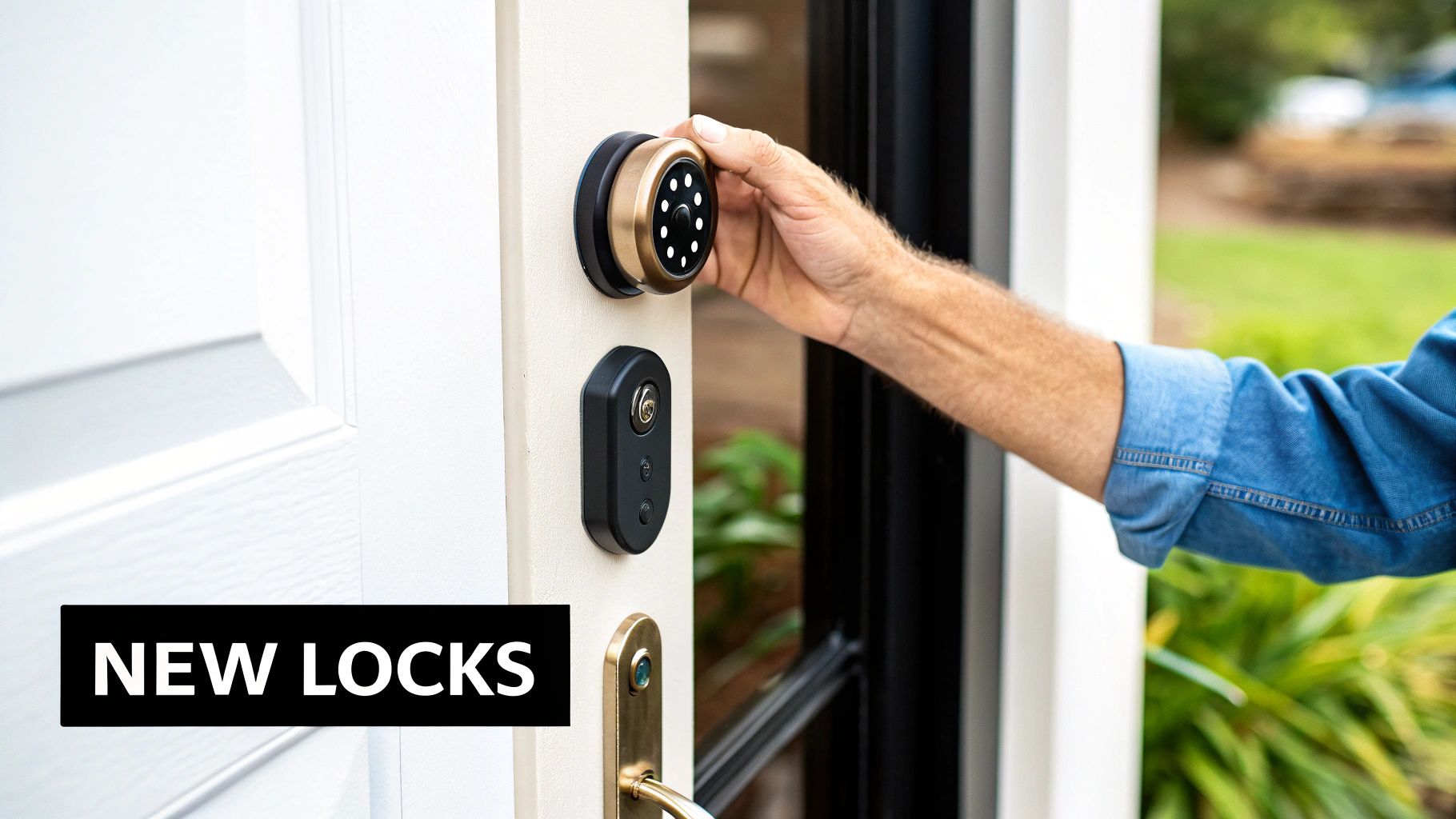
One of the most immediate security measures on any new house checklist is to take full control of your home's access points. While your custom builder ensures the integrity of the physical structure, you are responsible for who can enter it. Rekeying all exterior locks guarantees that previous owners, contractors, or any other individuals no longer have access, providing essential peace of mind from day one.
Upgrading to smart locks further enhances this security, offering features like remote access, keyless entry, and temporary codes for guests or service providers. This is more than a convenience; it's a modern security standard that integrates seamlessly into the connected lifestyle many new homeowners in Southwest Florida desire.
Actionable Steps for Your Home Security
- Schedule a Locksmith: Contact a professional locksmith to rekey all exterior locks, including the front door, garage entry, and any side doors, immediately after closing. This is a non-negotiable first step.
- Install Smart Locks: Upgrade primary entry points with smart locks that offer features like keypad combinations or Bluetooth/Wi-Fi connectivity. This is especially useful for managing access when you are away or during hurricane season preparations.
- Integrate and Test: If you have a smart home system, ensure your new locks are compatible and fully integrated. Test all functions, including remote locking/unlocking and user code management, to confirm they work reliably.

Pro-Tip: When choosing smart locks, look for models with a manual key override. This ensures you can always access your home, even during a power outage or if the electronic components fail-a crucial backup in storm-prone areas like Cape Coral and Fort Myers.
10. Plumbing Inspection and Water Leak Testing
Beyond the visible finishes, the integrity of your new home's plumbing system is paramount, especially in a region with high humidity and corrosive salt air like Southwest Florida. A professional plumbing inspection is a critical component of any new house checklist, as it verifies that all pipes, fixtures, and connections are flawlessly installed. This preemptive step establishes a baseline for your system's condition and helps prevent insidious water damage and mold growth that can compromise your home’s structure.
Engaging a qualified plumber to conduct a thorough review ensures that modern building materials and installation techniques have been correctly applied. For a custom-built home, this inspection serves as a final quality control check, confirming that everything from the water heater to the drainage lines meets the high standards expected. It’s an investment in preventing future disruptions and costly repairs, ensuring your plumbing is ready for years of reliable service.
Actionable Steps for Your Plumbing Audit
- Comprehensive Leak Test: Have your plumber pressure-test the entire system. This process can reveal hidden pinhole leaks in copper or PEX lines that a simple visual check would miss, a crucial step to avoid slow, long-term water damage.
- Water Heater Verification: Confirm the age, condition, and proper installation of your water heater. Ask the inspector to check the anode rod's condition, especially in areas with hard water, to maximize its lifespan and efficiency.
- Drainage and Fixture Check: Test every faucet, shower, and toilet for proper water pressure and drainage. Slow drains could indicate improper venting or construction debris in the lines, which is much easier to address before you’ve fully moved in.
Pro-Tip: During the inspection, locate and clearly label your home's main water shut-off valve. Take a photo of it and store it in your digital home binder. Knowing its exact location and how to operate it can turn a potential plumbing catastrophe into a manageable inconvenience.
10-Point New Home Checklist Comparison
| Item | Implementation complexity | Resource requirements (time / cost) | Expected outcomes | Ideal use cases | Key advantages |
|---|---|---|---|---|---|
| Utility Setup and Account Transfers | Moderate — coordinate multiple providers | 2–3 weeks lead time; deposits $100–500 per utility; calls/emails | Active electricity, water, gas, internet on move-in | New move-ins, service transfers | Prevents service gaps; allows rate comparison |
| Security System Installation and Setup | High — wiring, integration, professional options | Upfront $1,500–5,000+; monthly $20–50; reliable internet | Deterrence, real-time alerts, monitored security | High-value homes, frequent travel, security concerns | 24/7 monitoring, remote access, insurance reductions |
| HVAC System Inspection and Maintenance | Low–moderate — technician visit and testing | Inspection $100–200; duct cleaning $500–1,500; seasonal upkeep | Improved efficiency, fewer breakdowns, better air quality | Seasonal prep, older systems, warranty maintenance | Energy savings, longer system life, better IAQ |
| Home Inspection Documentation and Follow-ups | Moderate — review, prioritize, schedule repairs | Time to review reports; contractor quotes; repair costs vary | Prioritized repair plan, negotiation leverage, documented baseline | During closing, newly purchased homes | Identifies major issues; supports negotiations and future claims |
| Address Change and Administrative Updates | Low–moderate — many organizations to update | Days to weeks; some in-person visits; small fees possible | Updated legal/financial records; reduced lost mail | All new residents, legal compliance needs | Ensures receipt of documents; reduces fraud risk |
| Deep Clean and Sanitization | Low — DIY or hire professionals | Pro cleaning $800–2,500+ or 2–4 days DIY | Hygienic living space; reduced allergens and odors | Before move-in, allergy-sensitive households | Fresh start; healthier environment before furnishing |
| Smoke and Carbon Monoxide Detector Installation | Low — usually DIY; hardwired needs electrician | Units $15–50 each; batteries semi-annual; possible electrical work | Early warning for fire/CO; code compliance | All homes; sleeping areas and each level | Life-saving, low cost, may lower insurance |
| Water Quality Testing and Treatment | Moderate — testing then install treatment as needed | Testing $200–500; systems $500–3,000+; ongoing filter costs | Safe drinking water; reduced scale; better taste | Private wells, areas with known water issues | Health protection; extends appliance life |
| Door Lock Rekeying and Smart Lock Installation | Low–moderate — locksmith or DIY install | Rekey $50–100/lock; smart locks $200–400 each; batteries | Secure access, key control, remote/temporary entry | New owners, rentals, smart-home adopters | Eliminates unknown key holders; convenient access control |
| Plumbing Inspection and Water Leak Testing | Moderate — visual, pressure tests, camera as needed | Inspection $150–300; camera $200–500 extra; repair costs possible | Detects leaks/corrosion; prevents water damage; baseline | Older homes, pre-purchase inspections | Prevents costly damage; informs maintenance and budgeting |
Your Custom Home, Your Florida Sanctuary
Moving into a new custom home in Southwest Florida is more than just a change of address; it's the beginning of a new chapter in a meticulously crafted environment designed for your lifestyle. This comprehensive new house checklist is your roadmap to transforming a beautiful structure into a fully functional, secure, and personalized sanctuary. By methodically addressing each item, from the practicalities of utility transfers and deep cleaning to the critical safety measures of rekeying locks and testing detectors, you are laying a foundation of security and comfort. You are ensuring that every system, from HVAC to plumbing, operates flawlessly from day one.
This process is not merely about ticking boxes. It is about actively engaging with your new environment and understanding its unique characteristics, especially in a region like Southwest Florida. Mastering this new house checklist allows you to proactively manage the specific demands of our coastal climate. You are not just moving in; you are embedding resilience and peace of mind into the very core of your home. This attention to detail ensures your custom-built paradise is prepared for everything from a sunny afternoon by the pool to the challenges of a hurricane.
The True Value of a Thoughtful Move-In
The real power of this checklist lies in its ability to empower you as a homeowner. Each completed task adds a layer of protection and personalization that elevates your living experience. When you verify that your hurricane-impact windows are properly sealed and documented, or confirm your generator is ready for storm season, you are making a tangible investment in your family’s safety. When you test the water quality and install smart security features, you are taking control of your home’s health and security.
This is the ultimate goal of building a custom home: creating a space that not only reflects your aesthetic but also functions as a seamless extension of your life. Your builder has provided the expert craftsmanship and superior materials; your role now is to infuse the home with your presence and foresight. By following these steps, you honor the investment you've made and set the stage for years of cherished memories in a home that is truly your own. Welcome home to the Florida lifestyle, where your thoughtfully prepared, custom-built sanctuary awaits.
Ready to build a home that is as resilient as it is beautiful? The team at Sinclair Custom Homes Inc specializes in crafting high-performance luxury homes designed for the unique demands of Southwest Florida, incorporating the latest in design trends and storm-ready features from the very start. Visit Sinclair Custom Homes Inc to explore our portfolio and begin your custom home journey today.