
Choosing the right exterior paint for your custom home in Southwest Florida isn't just about picking a color you like—it's one of the most important investments you can make in protecting your property. A genuinely long lasting exterior paint is more than just a pretty face; it’s a complete system engineered to fight back against intense UV rays, corrosive salt air, and the kind of weather that only a hurricane can deliver.
Your Home's First Defense Against Florida's Climate
Think of your home's exterior paint job as its armor. It's the first line of defense standing between your biggest investment and the punishing climate we have here in Southwest Florida. For us as custom home builders, and for any homeowner who cares about quality, this protective coating is just as critical as hurricane impact windows or a backup generator.
When a major storm rolls through, your home's exterior is put to the ultimate test. A high-quality paint finish is what stops that wind-driven rain from sneaking into tiny hairline cracks in the stucco. Once water gets in, it's a fast track to mildew, rot, and serious structural headaches down the road. This barrier is absolutely essential for the long-term health of the entire house, especially for new homes built to modern elevation standards designed to mitigate flood risk.
More Than Just Curb Appeal
Sure, a fresh coat of paint makes your house look fantastic, but its real job in our neck of the woods is preservation. That constant, blazing sun will cause cheap paints to fade and break down in a hurry, leaving a chalky residue behind. Add in the salty air blowing in from the Gulf, and you've got a recipe for corrosion and decay. A top-notch paint system is built to stand up to all of it.
Here’s what a great paint job really does for your custom Florida home:
- UV Radiation Protection: It shields the color from fading and stops the sun from destroying the binders that hold the paint together.
- Moisture Intrusion Prevention: It creates a waterproof seal over porous surfaces like stucco—a non-negotiable feature during our rainy season and a critical hurricane impact feature.
- Salt Air Resistance: It protects the materials underneath from the relentless corrosive effect of airborne salt.
- Structural Integrity: A well-maintained paint job is a key player in your home's overall defense system, working hand-in-hand with everything else that keeps it strong.
At the end of the day, investing in a professional-grade paint application is a smart, strategic move that protects your home's value. It goes right along with other crucial maintenance, like ensuring your roof is in top shape. To get a full picture of your home’s protective envelope, you can learn more by checking out our guide on what goes into a proper roof inspection in Florida.
The Science Behind a Weatherproof Paint Finish
Think of a premium exterior paint less like a can of color and more like a high-performance recipe. Every single ingredient has a specific job, working together to create a durable shield for your custom Florida home. When you understand what goes into the can, you can look at a label and know exactly what you’re getting for your money—a key consideration for any custom home builder focused on longevity.
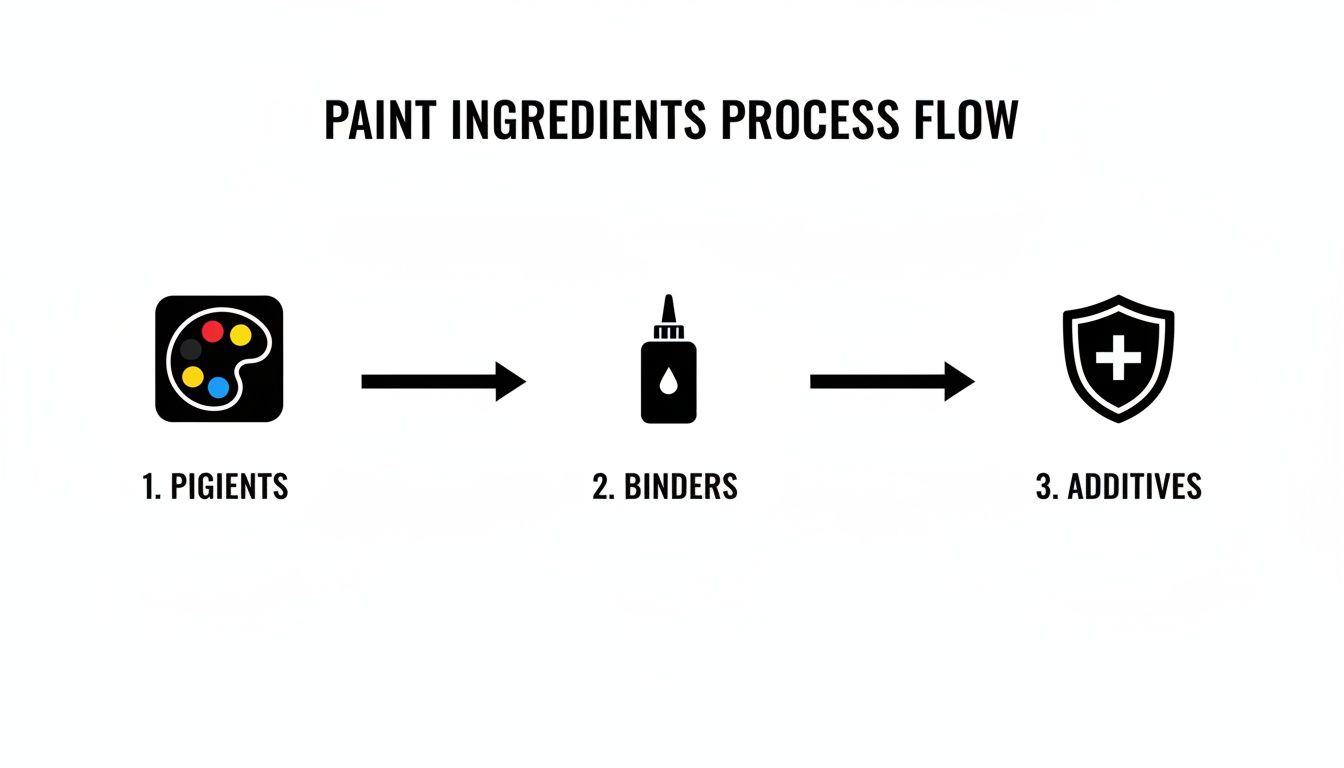
The three core elements are pigments, binders, and additives. Pigments give you that beautiful color and crucial UV protection. Binders are the glue holding it all together. And the additives? They’re the specialists, adding critical benefits like mildew resistance—an absolute must in our humid climate.
The Role of Binders and Additives
If there's one ingredient that matters most for a long lasting exterior paint, it's the binder. For any modern, high-quality paint, this is almost always a 100% acrylic resin. Imagine it as a super-strong, flexible glue that grips the surface and refuses to let go.
That flexibility is key here in Southwest Florida. Our temperatures can swing dramatically, and a good acrylic binder allows the paint film to expand and contract right along with your home's exterior, preventing cracks.
These advanced acrylics are also built to stand up to the sun's relentless UV rays, which is what turns lesser paints into a chalky, brittle mess. When you combine them with the right additives, the formula gets even tougher:
- Mildewcides: These actively fight the growth of mold and mildew, a constant battle in our high-humidity environment and a major concern for Florida builders.
- Surfactants: These little helpers ensure the paint flows smoothly during application, giving you that even, professional look without brush marks.
- Thickeners: These control the paint's consistency, making sure it goes on thick enough to provide a truly protective layer.
How Paint Sheen Affects Durability
The sheen of a paint—that subtle difference between flat and high-gloss—comes down to the ratio of pigment to binder. It’s far more than just a style choice; it has a direct impact on how durable and easy to clean your finish will be.
More gloss means more binder, which creates a harder, smoother surface that’s much better at repelling moisture.
For a custom home in Southwest Florida, a satin or semi-gloss finish is often the sweet spot. It delivers fantastic resistance to moisture and mildew while being incredibly easy to clean—a huge advantage over a flat finish that tends to trap dirt and salt deposits.
We've put together a quick guide to help you visualize how different sheens perform under the Florida sun.
Exterior Paint Sheen Performance in Florida
| Sheen Type | Durability | Moisture Resistance | Best Use on Florida Homes |
|---|---|---|---|
| Flat/Matte | Low | Low | Best for areas with very low traffic/exposure, like soffits. Hides imperfections well but stains easily. |
| Eggshell/Satin | Good | Good | The workhorse for siding and stucco. Offers a great balance of durability and a low-reflective finish. Easy to clean. |
| Semi-Gloss | High | Excellent | Ideal for trim, doors, and shutters. Its hard, smooth surface repels moisture and is simple to wipe down. |
| High-Gloss | Very High | Excellent | Extremely durable and reflective. Best for high-impact areas like front doors that you want to stand out. |
Choosing the right sheen is a practical decision that directly impacts how well your home's exterior will hold up to our demanding climate.
This intense focus on durable chemistry is a big deal in the industry. The global exterior paint market was valued at USD 35.5 billion in 2024, and it's growing fast, largely because homeowners are demanding tougher, weather-resistant coatings. In fact, advanced formulas like low-VOC acrylics now account for roughly 77% of the paint sold in many markets, showing a clear preference for longevity.
This same commitment to using the best materials extends beyond paint. To see how we apply this philosophy to other fine details, check out our guide on selecting custom trim and molding.
Preparing Your Home's Surface for a Lasting Bond
Here's a truth every seasoned painter in Southwest Florida knows: the most critical part of a long lasting exterior paint job happens long before the first can of paint is even cracked open.
Think of it like the foundation of a custom home. If that foundation isn't poured perfectly, every single thing built on top of it is at risk. It’s the same with paint. For a finish to survive our intense sun, humidity, and salt air, the surface preparation has to be absolutely meticulous.
This is where the real battle is won. On materials like stucco and concrete block, the first step is always a thorough, high-pressure washing. We’re not talking about a quick rinse. This is a deep clean that blasts away all the invisible enemies of a good paint job—the salt spray that drifts in from the Gulf, chalky residue from old paint, and the stubborn mildew that just loves our humid climate. Knowing the best way to clean your home's exterior is the first step to creating a clean slate for the paint to grab onto.
Repairing Every Imperfection
After the walls are clean, the next step is a detailed, hands-on inspection to find and fix every flaw in the substrate. Here in Florida, even a tiny hairline crack in the stucco is a major problem waiting to happen. It's basically an open door for water.
When hurricane season hits, wind-driven rain will force its way into those small cracks, leading to peeling paint, hidden water damage, and eventually, some very expensive structural repairs.
A professional paint job is about more than just a new color; it’s about creating a completely sealed, waterproof envelope around your home. We have to seal every single crack, no matter how small, to truly fortify the building against storm season.
Just like you’d want to understand the materials inside your home, maybe learning how to tell drywall from plaster, knowing the exact condition of your exterior walls before you coat them is crucial. We meticulously address every imperfection to create a smooth, solid canvas for the paint.
The Critical Role of Primers and Sealers
Once the surface is clean, totally dry, and fully repaired, we move to the final prep stage: applying high-quality primers and sealers. This isn’t just an optional extra layer; it's the critical bonding agent that makes sure your expensive topcoat can actually do its job.
- Moisture Blocking: A good sealer soaks into porous surfaces like stucco and creates a barrier. This stops moisture from getting in behind the paint and literally pushing it off the wall.
- Stain Blocking: Primers also prevent old water stains or mineral deposits from bleeding through and ruining the look of your fresh paint job.
- Enhanced Adhesion: Most importantly, a primer creates the perfect texture for the topcoat to grip onto, forming a powerful chemical bond that fights off peeling and blistering for years.
This careful, multi-step preparation is what allows the paint’s core ingredients—the pigments, binders, and additives—to work together effectively.
The flowchart below breaks down how these key components come together to form a tough, protective layer.
When you combine quality paint with a perfectly prepared surface, you get a beautiful finish that’s built to last. It’s as simple as that.
Matching Paint Technology to Florida Building Materials
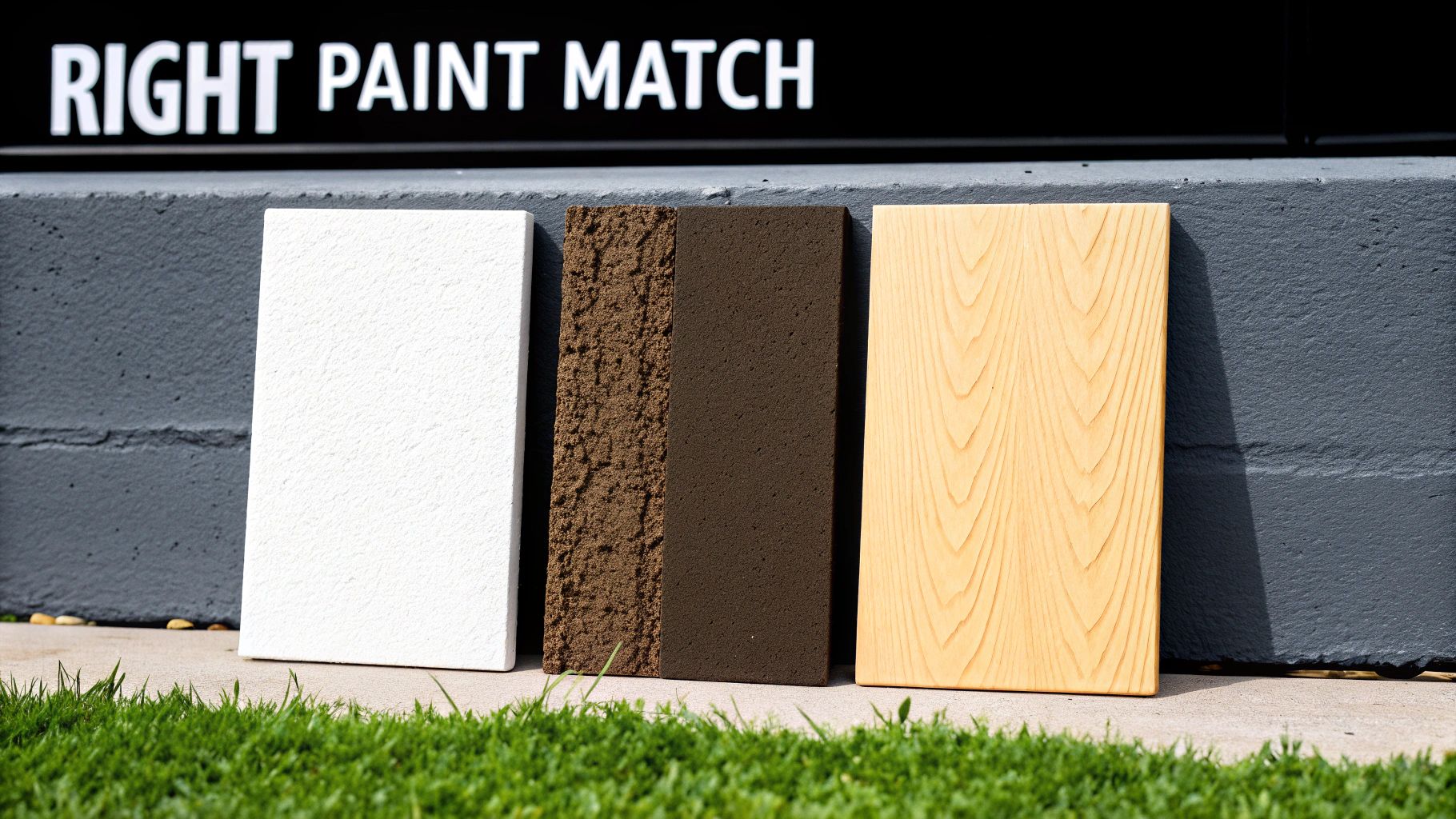
In Southwest Florida, we don't build with just any materials. Our custom homes use stucco, concrete block, and fiber cement for a reason—they're tough and resilient. It only makes sense that a truly long lasting exterior paint job requires a coating system that’s selected with the same level of care.
Matching advanced paint technology to the specific building material isn't just a minor detail; it’s the most critical step in creating a durable, weatherproof shield for your home. This isn't a one-size-fits-all game. Every surface has its own personality and its own needs, especially when you're up against constant sun, punishing humidity, and hurricane-force rain. The secret is to create a real partnership between the wall and the coating, making sure they work together to protect your investment for years to come.
The Ideal Coating for Stucco and Concrete Block
Stucco is the classic look for so many Florida homes, but its porous and rigid nature means it’s prone to developing tiny hairline cracks over time. This is exactly why elastomeric coatings are the hands-down winner for these surfaces.
Think of elastomeric paint as a thick, flexible, rubber-like skin for your house. It’s applied up to 10 times thicker than the standard acrylic paint you’d find at a big-box store.
This incredible thickness does two crucial jobs:
- Bridging Cracks: Its amazing elasticity lets it stretch right over existing hairline cracks, sealing them off from moisture completely.
- Waterproofing: It creates a seamless, waterproof barrier that’s incredibly tough against wind-driven rain—a huge deal during our intense storm seasons.
The Right Choice for Siding and Trim
For other common materials like fiber cement siding (think Hardie board) and wood trim, a high-quality 100% acrylic latex paint is the professional go-to. These paints are specifically engineered for top-notch adhesion and flexibility, which allows them to expand and contract as temperatures swing without cracking or peeling away.
Their proven UV resistance is non-negotiable for keeping colors from fading under the relentless Florida sun. The surface itself plays a huge role in how long a paint job lasts. Field estimates show that while wood siding might need a fresh coat every 3–7 years, tougher materials like stucco and vinyl can go 5–10 years. In our harsh coastal environment, you can expect those timelines to be on the shorter side. You can dig into more detailed house painting statistics to see how different materials hold up over time.
Choosing the right formula isn't just about durability; it's about performance. An elastomeric coating on stucco provides a level of waterproofing that standard paint simply cannot match, turning your home's exterior into a formidable barrier against moisture intrusion.
Embracing New Building and Design Trends
As custom home builders, we’re always on the lookout for ways to boost both performance and efficiency. That obsession extends to the very latest in paint technology. One of the biggest new builder trends we’re seeing is the use of heat-reflective or "cool" paints.
These coatings are made with special pigments that reflect the sun's infrared radiation, keeping the surface of your home noticeably cooler. This dramatically reduces the heat your walls absorb, which means your air conditioning system doesn't have to work nearly as hard. The result? Lower energy bills, a real, tangible benefit in our year-round warm climate and a popular new design feature for energy-conscious buyers.
On top of that, advanced mildew-resistant additives are now a must-have, giving an extra layer of defense against the mold and algae that absolutely love our humidity.
Flawless Application and Long-Term Care: The Keys to Durability
You can have the best paint in the world, but if it's not applied with skill and care, it just won't last. A truly long lasting exterior paint job isn’t just about what’s in the can; it’s about the professional touch during application. This is where real craftsmanship transforms a gallon of paint into a durable, protective shield for your home.
Here in Southwest Florida, any seasoned pro knows the weather calls the shots. Slapping paint on a wall in the blistering afternoon sun is a recipe for disaster—it dries way too fast, preventing the paint from properly bonding to the surface. And that infamous humidity? It can trap moisture under the new paint, leading to ugly blisters and peeling down the road. True experts are patient, waiting for the temperature and humidity to fall within the paint manufacturer's sweet spot.
The Professional's Approach to Application
Getting that perfectly smooth, durable finish takes more than just a brush. It's about applying the paint at just the right thickness, which we measure in "mils." Too thin, and it won't stand a chance against our harsh UV rays and constant moisture. Too thick, and it's prone to cracking and peeling as it dries. This is why a top-tier professional airless paint sprayer is indispensable for achieving a flawless, efficient coat.
Another non-negotiable is respecting the recoat time printed on the can. It's tempting to rush things, but applying that second coat before the first one has properly cured is a critical mistake. It traps solvents and moisture, compromising the entire paint system and leaving you with a weak finish that simply won't hold up in Florida.
A professional application is a disciplined process. It’s about controlling variables—from ambient humidity to film thickness—to ensure the paint performs exactly as engineered, creating a seamless, long-lasting barrier.
Proactive Maintenance for Lasting Protection
Once the brushes are clean and the job is done, a little proactive maintenance goes a long way in maximizing your paint’s lifespan. Think of it as protecting your investment—in your home's beauty and its structural integrity. A few simple steps can prevent small issues from turning into big, expensive headaches.
Here’s a smart and simple maintenance schedule:
- Annual Visual Inspections: Once a year, take a slow walk around your home. Look closely for any early signs of trouble like fading, chalking, or tiny cracks, paying special attention to areas around windows and doors.
- Gentle Annual Cleaning: The salt and mildew in our air love to settle on our homes. A light wash with a garden hose or a soft-bristle brush once a year is usually all it takes to remove this buildup and stop it from breaking down the paint.
- Prompt Touch-Ups: Did a stray rock from the lawnmower cause a chip? Don't ignore it. Touching up these small spots right away seals the surface and prevents moisture from creeping in behind the paint, which is what leads to widespread peeling.
This little bit of ongoing effort is the final piece of the puzzle. When you combine a professional application with diligent care, you ensure your home stays protected and looks incredible for years to come.
Protecting Your Custom Home Investment
A truly long-lasting exterior paint job isn’t something you can just buy off a shelf. It's a complete system built on three pillars: choosing the right paint for Florida’s climate, demanding meticulous surface preparation, and ensuring a professional-grade application. Nothing less will do.
Think of this system as your home’s primary defense against the punishing sun, corrosive salt air, and turbulent storms we get here in Southwest Florida. It’s every bit as important to a resilient home as impact windows or a generator for hurricane season.
The real goal is to create a seamless, waterproof envelope that shields your entire structure. This turns the paint job from a simple cosmetic decision into a critical investment in your home's long-term health and value.
When you ask the right questions and partner with builders who truly understand our coastal environment, you’re ensuring your beautiful home stays protected. This is how you safeguard one of your biggest investments, preserving its structural integrity and curb appeal for years. It’s the final, crucial step in building a home that’s not just stunning, but engineered to last.
Your Florida Exterior Paint Questions Answered
When you're building a custom home in Southwest Florida, the topic of exterior paint always comes up. It’s more than just color; it’s your home’s first line of defense against our unique climate. We get a lot of questions about this, so let's clear up some of the most common ones.
How Often Should I Expect to Repaint My House in Southwest Florida?
This is the big one, and the answer depends on a few things. With a professional paint job using high-quality materials on a surface like stucco, you should realistically expect it to last 7 to 10 years.
Now, if your home is right on the coast, that timeline shrinks. The constant salt spray is incredibly corrosive, so you might be looking at a repaint closer to the 5-7 year mark. A simple annual power wash can go a long way in stretching that lifespan, no matter where you live.
Is There Really Such a Thing as Hurricane Proof Paint?
While you won't find a can labeled "hurricane proof" at the store, some paints are absolutely tougher than others when it comes to severe weather. It's all about creating a protective shield.
We lean on elastomeric and high-build 100% acrylic paints for this reason. They create a thick, flexible, and waterproof barrier over your home. Think of it less like a coat of paint and more like a resilient, waterproof membrane that can stand up to wind-driven rain and stop moisture from forcing its way inside during a storm—which is what causes so much damage.
What Are the First Signs My Exterior Paint is Failing?
You want to catch paint failure early before a small touch-up becomes a major project. Keep an eye out for these tell-tale signs:
- Chalking: Run your hand over the surface. If a fine, powdery dust comes off, the paint is starting to break down.
- Fading: This is an obvious one, especially on walls that get blasted by the Florida sun all day. The color just won't have that original pop.
- Cracking or Peeling: Any blistering, flaking, or cracking is a clear red flag that the paint is losing its bond with the wall.
- Mildew Growth: See any dark streaks or splotches of green and black? That’s often mildew, a sign that moisture is getting trapped in or behind the paint, especially on stucco.
Can New Paint Really Help Lower My Electric Bill?
Yes, it absolutely can. This isn't just a gimmick; it's smart building science. Modern "cool" or "reflective" paints are engineered with special pigments designed to reflect infrared light from the sun.
Instead of your walls absorbing all that heat, a huge chunk of it is bounced away. This keeps your home's exterior cooler, which means your air conditioning system doesn't have to work nearly as hard. The result? Lower energy bills, particularly if you have a darker-colored home.
At Sinclair Custom Homes Inc, we know that a superior finish is non-negotiable for a true custom home. It's why we insist on using only the highest quality materials and proven application methods—to ensure your home’s exterior is as durable as it is beautiful. Explore our commitment to quality craftsmanship and learn how we build homes designed to last in the Florida climate.