


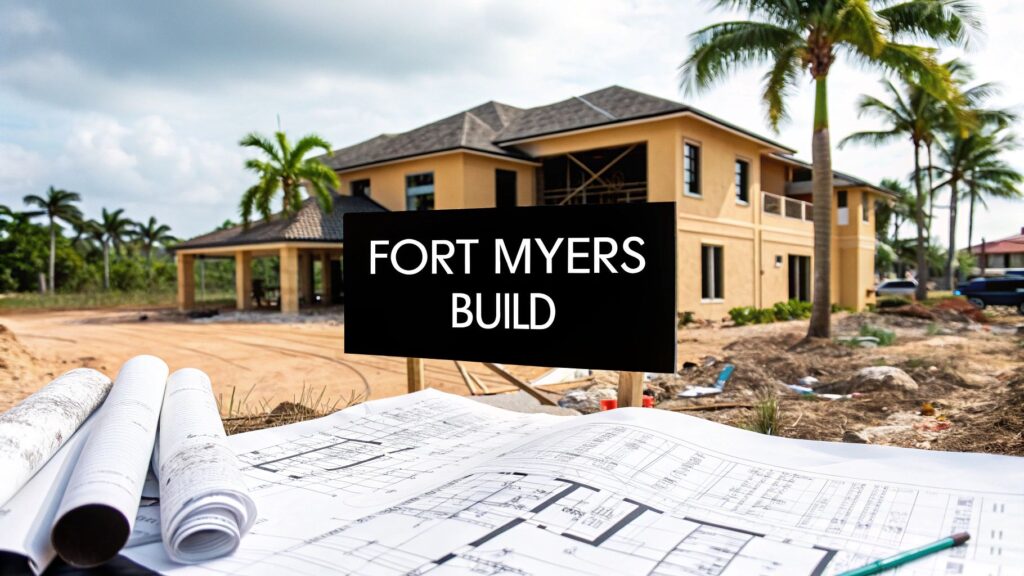
Building a custom home in Fort Myers isn't just about construction; it's about creating your personal slice of the Southwest Florida lifestyle. It’s the process of turning a dream into a real, tangible structure that’s not only beautiful but engineered to handle our unique coastal environment. From the first sketch to the final walkthrough, you need a builder who lives and breathes quality, integrity, and hands-on management.
Your Guide to Custom Home Construction in Fort Myers
Deciding to build a custom home is one of the most exciting journeys you can take. Forget buying a pre-existing house; when you build from the ground up, you're in the driver's seat for every single decision. You pick the floor plan, the finishes, everything.
In a place like Fort Myers, that control is everything. Building here is about more than just curb appeal—it’s about smart engineering for a coastal climate. We're creating a home that gives you total peace of mind, knowing it's built to stand strong against the very weather that makes this area so stunning.
Think of this guide as your complete roadmap. We're going to break down what can feel like a huge, complicated project into simple, straightforward stages. Our goal is to arm you with the knowledge to feel confident and in control from start to finish.
Setting the Stage for Success
To build a custom home right in Southwest Florida, you have to know the lay of the land. We’re dealing with constantly updated building codes, specific climate challenges, and the latest design trends that define luxury coastal living. A top-tier builder doesn't just react to these things; they anticipate them.
Here are a few of the key topics we'll get into:
- Hurricane Resilience: This is non-negotiable. We'll talk about essentials like hurricane-impact windows, reinforced roofing, and achieving the correct elevation for flood protection. Today’s custom homes are built like personal fortresses, designed to last for generations.
- Builder Trends and Design: The world of custom homes is always evolving. We'll look at popular new design features like creating seamless indoor-outdoor living areas, installing high-efficiency systems, and why whole-home generators are becoming a must-have for uninterrupted comfort during and after storms.
- The Sinclair Philosophy: We believe the real foundation of a great home is the builder’s personal commitment. With Sinclair Custom Homes, the owner is on your job site, making sure every detail meets our demanding standards. That hands-on approach is the only way to guarantee your vision is brought to life with true craftsmanship.
Building a home is more than a transaction; it's a partnership. A builder's name on the business is a personal promise of quality, a commitment to creating a legacy for your family that will stand the test of time.
This is just the beginning. We're about to dive deep into every aspect of home construction Fort Myers style—a perfect mix of luxury, strength, and personal design. Let's get started on turning your dream home into a beautiful reality.
The Custom Home Building Process Step by Step
Building a custom home in Fort Myers isn't just construction; it's a journey that turns your personal vision into a physical reality. It can feel like a huge undertaking, but when you break it down into clear, manageable steps, the process becomes an exciting and collaborative adventure.
Think of it as a true partnership between you and your builder, all centered around making sure every last detail is just right.
This visual gives you a bird's-eye view of the key stages you can expect, from that first spark of an idea to the day you get your keys.
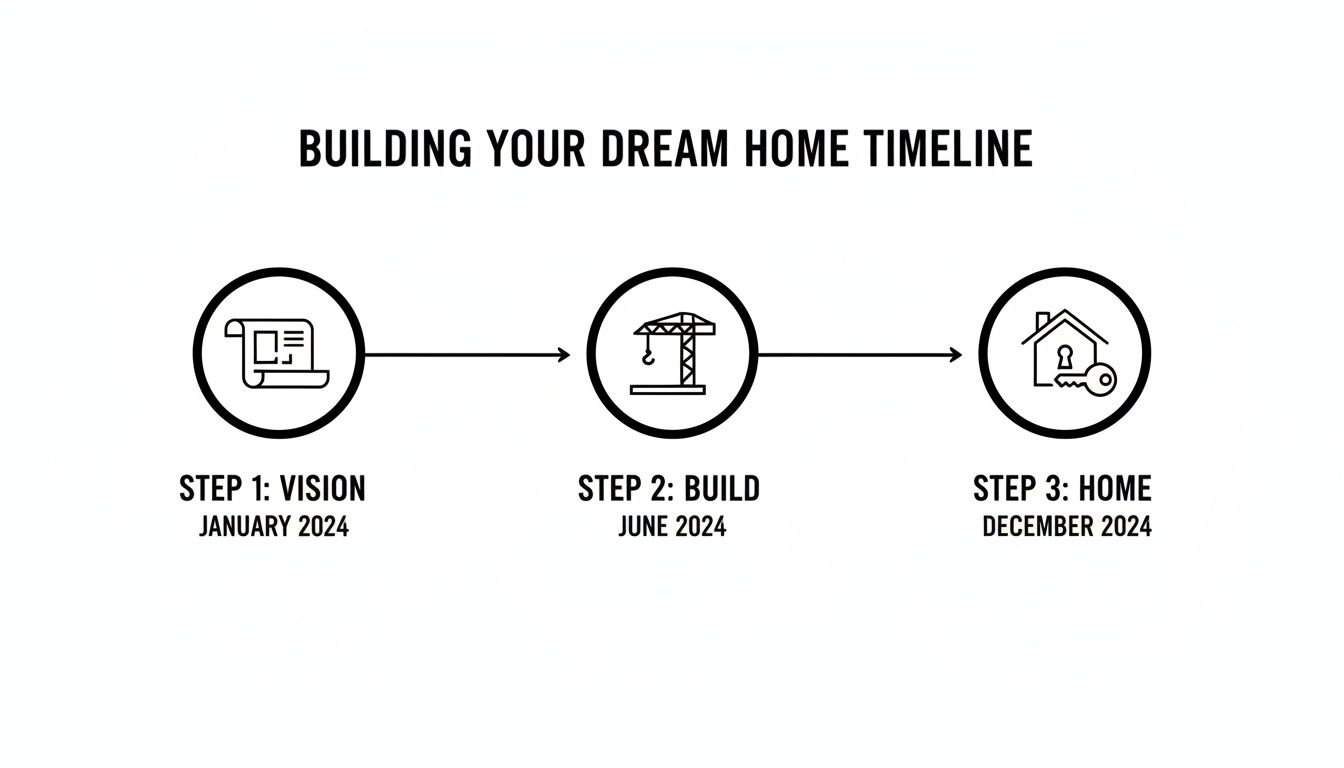

As you can see, the path to your dream home has distinct phases for design, the actual build, and all the final touches, each one built on the one before it.
Phase 1: Initial Design and Lot Preparation
Every great home starts with a great idea—yours. The first real step is translating that vision into a set of architectural blueprints. This is a deeply collaborative phase where you’ll work side-by-side with designers to create a floor plan that perfectly fits your lifestyle, your aesthetic, and your budget.
At the same time, we'll be focused on finding the perfect piece of land. Here in Southwest Florida, choosing a lot is about so much more than the view. There are some critical factors to consider:
- Elevation: A lot’s height above sea level is everything when it comes to flood mitigation. It directly impacts your foundation design and insurance rates, something any experienced builder doing home construction Fort Myers will analyze carefully.
- Soil Quality: The ground beneath your home determines the kind of foundation you’ll need to keep it secure for decades to come.
- Zoning and Setbacks: We have to play by the local rules. These regulations dictate exactly where your home can sit on the property, which can influence the overall design.
Once your land is secured and the designs are locked in, the site prep can begin. This means clearing the lot, grading it to ensure proper water drainage, and getting it ready for the foundation.
Phase 2: Permitting and Foundational Work
Before a single shovel of dirt is moved, every detail of your home's plan must get the green light from local authorities like Lee County. This permitting process is one of the most crucial steps. It’s how we ensure your home meets Florida’s incredibly strict building codes, especially those designed for hurricane resilience. A seasoned builder knows how to navigate this red tape efficiently to avoid frustrating delays.
With permits in hand, it’s time to lay the foundation. This is the structural bedrock of your entire home. Depending on your lot's soil and elevation, this might be a straightforward slab-on-grade foundation or a more robust stem wall foundation designed to lift the home above the base flood elevation.
After the foundation is poured and has had time to cure, the essential underground plumbing and electrical conduits are laid. It’s meticulous work, but it’s critical for setting up all the systems that will run through your house.
Phase 3: Framing and Rough-Ins
This is when the magic really starts to happen. The framing crew arrives to erect the walls, floors, and roof structure, turning those 2D blueprints into a three-dimensional reality. For the first time, you can walk through the rooms and get a true sense of the space and flow of your new home.
Once the "skeleton" is up, we shift to installing the "organs" of the house. This phase is called the rough-in, where our skilled trade partners install all the essential systems before the walls are closed up.
- Plumbing: Water supply and drainage pipes are routed through the walls and floors.
- Electrical: Wires for every outlet, switch, light fixture, and appliance are carefully installed.
- HVAC: The ductwork for your heating, ventilation, and air conditioning system is put in place to guarantee efficient climate control.
Every one of these systems is inspected to ensure it meets code before a single sheet of drywall goes up.
Phase 4: The Finishing Touches
With the internal systems tucked away, your home starts looking less like a job site and more like a place to live. Drywall is hung, taped, and textured, creating the smooth interior walls that are ready for your paint colors. This is where your design choices truly start to shine.
The finishing stage is all about craftsmanship. This is where our expert artisans install the custom elements that give your home its character, from handcrafted wood cabinets in the kitchen to the detailed trim work and crown molding. Flooring, tile, countertops, and light fixtures are all meticulously placed, turning a house into your home.
Finally, the exterior gets its finishing touches with siding or stucco, the landscaping is installed, and we conduct a final, thorough walkthrough. This last inspection ensures every single detail meets not only our high standards, but more importantly, your expectations. After that, we hand you the keys.
To see an even more granular look at how we manage this journey, you can explore Sinclair's guide to the custom home building process.
Navigating Hurricane Codes and Permits in Southwest Florida
Building a home in Fort Myers isn't like building anywhere else in the country. Out here, you’re not just putting up four walls and a roof; you’re constructing a personal fortress, a sanctuary meticulously engineered to stand up to the awesome power of nature. This philosophy is baked right into Florida's building codes, which are deservedly known as some of the toughest and most effective in the nation.
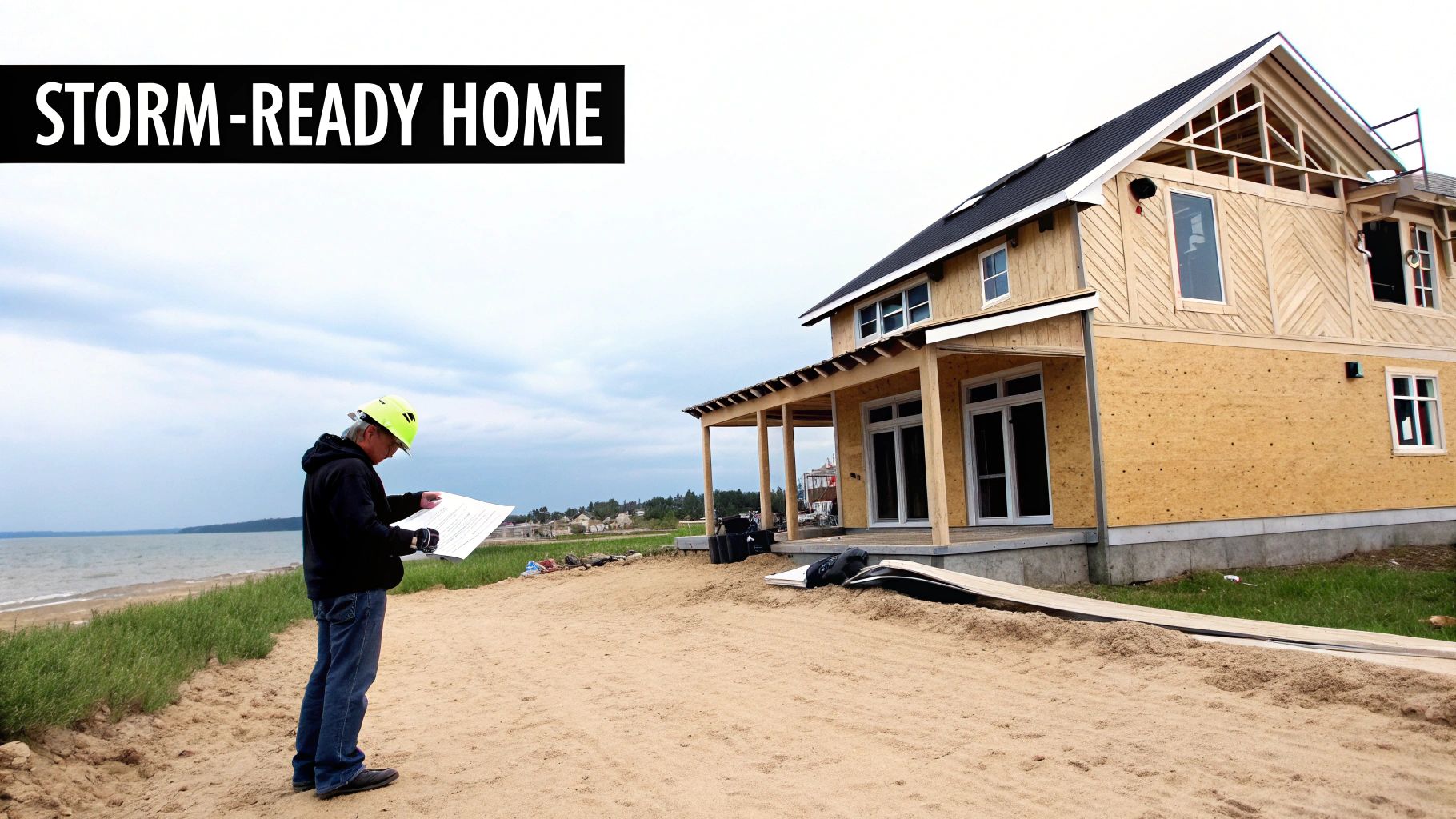

This intense focus on safety is a non-negotiable mandate that shapes every single decision in home construction Fort Myers. For a builder, it means becoming an expert in a complex, ever-evolving rulebook designed to protect both people and property. It's a responsibility we embrace completely, ensuring every home we build isn't just "to code," but is genuinely resilient for your family’s peace of mind.
The Foundation of Safety Florida Building Codes
The wake-up call was Hurricane Andrew back in 1992. After that devastating storm, Florida got serious and created a unified, statewide building code that has since become the gold standard for coastal construction around the globe. These aren't dusty old rules, either—they're updated every three years to reflect the latest in materials science and the hard lessons learned from recent storms.
So, what does this mean for your custom home? It boils down to several key requirements that any quality builder will have mastered:
- Impact-Resistant Windows and Doors: Every opening on the outside of your home must be shielded from flying debris. High-impact glass, which is a sandwich of glass and a protective inner layer, is designed to crack but not break apart, preventing the dangerous pressurization that can blow a home apart from the inside.
- Reinforced Roofing Systems: The roof is your home's primary shield. The codes get incredibly specific, demanding certain nailing patterns, stronger roof-to-wall connections (think hurricane straps), and materials specifically rated to handle extreme wind speeds.
- Stronger Structural Connections: The whole house has to act as one solid unit. This means reinforcing every connection, from the foundation clear up to the roof, creating what engineers call a "continuous load path" that can stand up to the lifting and pushing forces of a major hurricane.
Understanding the local codes is the first step, but it's also smart to explore all your hurricane window protection options to see what makes the most sense for your home's design and your budget.
Elevation and Flood Zone Compliance
Here in Southwest Florida, wind is just one piece of the puzzle. Storm surge is a massive threat, which is why your property’s elevation is a huge deal during the permitting and building process. The Federal Emergency Management Agency (FEMA) creates flood maps that set the required Base Flood Elevation (BFE) for every neighborhood.
The finished floor of your home must be built at or above this BFE. A truly experienced builder, however, knows that meeting the minimum is rarely the best strategy. We often design foundations to elevate a home well above the BFE, creating an extra buffer of safety that also helps you get much better insurance rates. You can get a better idea of your property's specific needs by checking out the Fort Myers flood zone map.
A builder committed to excellence doesn't just meet the minimum code requirements. They 'over-engineer' for safety, using superior materials and techniques that go beyond the baseline to deliver a home built for generations. This philosophy turns a house into a legacy.
Mastering the Lee County Permitting Process
The sheer volume of new construction in our area speaks volumes. The system has to be efficient, but it's also complex. For perspective, in August 2025 alone, our region saw 1,397 single-family permits authorized, and Lee County was at the forefront with 967 permits. This isn't just a number; it shows a powerful, sustained demand and proves why you need a builder who knows how to navigate the system without getting bogged down.
A seasoned local builder like Matthew Sinclair knows the Lee County permitting system inside and out. It’s not just about filling out forms; it’s about submitting airtight architectural plans, structural calculations, and site plans that prove total compliance from day one. By anticipating roadblocks and having solid relationships with local officials, a great builder prevents frustrating and expensive delays, keeping your project moving smoothly from groundbreaking all the way to final inspection.
Understanding the Cost to Build a Home in Fort Myers

Alright, let's talk numbers. Thinking about a custom home build is thrilling, but getting a firm grip on the financials right from the start is what makes the whole process smooth and enjoyable. The final price tag on your dream home isn't just one big number; it’s a sum of several key parts, each shaped by your personal style and the piece of land you choose to build on.
When you understand where the money goes, you can make smarter decisions, create a realistic budget, and see exactly where your investment is building real, lasting value. Think of it like a recipe—the final dish depends entirely on the quality and quantity of each ingredient you choose.
Breaking Down the Primary Cost Categories
When you're budgeting for home construction in Fort Myers, the easiest way to wrap your head around it is to split the costs into three main buckets: land acquisition, hard costs, and soft costs. Each one has a specific job in your overall financial plan.
- Land Acquisition: This is your canvas, the very ground your dream will stand on. The price of a lot here in Fort Myers can swing wildly depending on its location, size, and whether it has that coveted waterfront view. This is the first major investment that kicks everything else off.
- Hard Costs: This is the stuff you can see and touch. It covers all the tangible expenses of physically building your home, from the concrete for the foundation and the lumber for the framing to the shingles on the roof and the final coat of paint on the walls. All labor and materials live here.
- Soft Costs: These are the essential, behind-the-scenes expenses. This bucket is for things like architectural design plans, engineering reports, pulling permits with Lee County, and crucial protections like builder’s risk and liability insurance.
These categories all influence one another. For instance, if you choose a tricky lot with poor soil, your hard costs for the foundation will likely need to go up to ensure the home is built right.
Investing in quality craftsmanship and materials from the beginning isn't an expense; it's a down payment on future peace of mind. A well-built home costs less to maintain, holds its value better, and provides a safer sanctuary for your family.
How Your Choices Influence the Budget
The best part of building a custom home is making it uniquely yours, but every one of those choices steers the final cost. The most obvious driver is square footage—a bigger house simply needs more materials and labor. But that's just the beginning.
The architectural complexity is a huge factor. A straightforward rectangular home is always going to be more budget-friendly to construct than one with multiple intersecting rooflines, lots of corners, and custom curves. Inside, your finish selections carry a lot of weight. Choosing high-end options like handcrafted wood cabinets, imported tile, and professional-grade appliances will naturally push the budget higher than more standard finishes. For a deeper dive into how it all adds up, check out our guide on the cost to build a house in Florida.
Financing and Insuring Your Custom Build
Unless you're paying cash, you'll need a construction loan. This isn't like a typical mortgage. Instead, the bank releases funds in stages, known as "draws," as the builder hits specific construction milestones. It's vital to partner with a lender who has real experience with new construction loans to keep the process moving smoothly.
Proper insurance is another non-negotiable, especially living in a coastal area like ours. You'll need a builder's risk policy to protect the structure while it's being built, and your builder must carry their own liability and workers' compensation insurance. The good news? Once your home is finished, your homeowner's insurance will reflect its quality. Homes built to the latest hurricane codes often qualify for better rates.
This focus on quality is reflected in our local market. The Cape Coral-Fort Myers All-Transactions House Price Index hit a record high of 453.050 in April 2023, proving that well-built properties here hold strong, sustained value. You can discover more about Fort Myers housing market trends on TradingEconomics.
Essential Design Features for Florida Living
A modern Florida home isn't just four walls and a roof; it's a sanctuary designed for comfort, efficiency, and unwavering strength. When you build a custom home in Fort Myers, you're embracing a lifestyle where the line between your living room and the lanai completely disappears. This is where smart design and exceptional craftsmanship come together to create a space that’s as beautiful as it is functional.
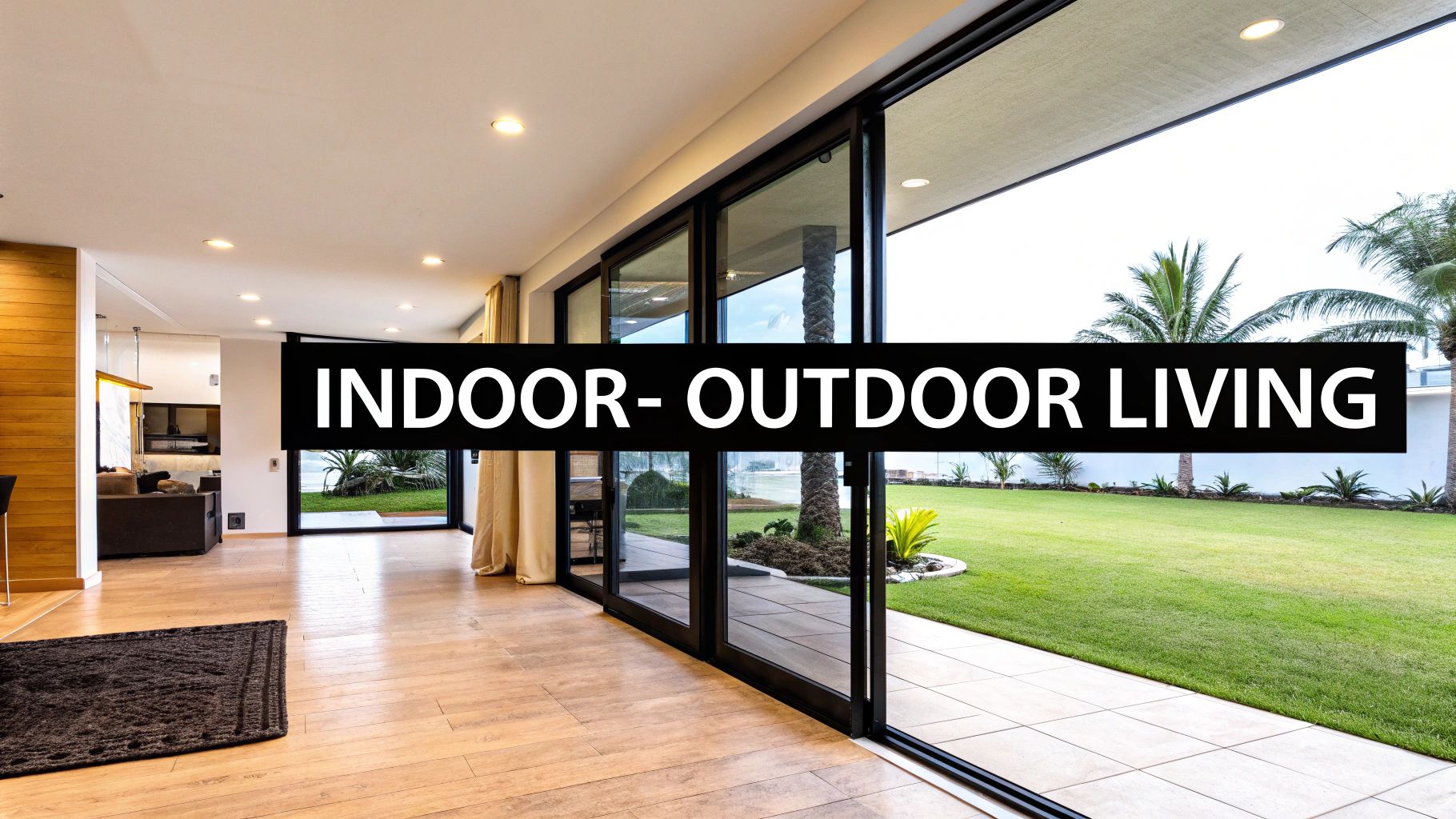
The biggest trends in Southwest Florida construction right now are all about creating open, airy spaces that make the most of our incredible weather. This is done with a few key design choices that let the natural light and gentle breezes flow right through.
Blending Indoor and Outdoor Spaces
The quintessential Florida home effortlessly connects its interior with the lush landscape just outside. This design philosophy is a cornerstone of modern home construction in Fort Myers. We bring it to life with several key features.
- Open-Concept Floor Plans: By knocking down unnecessary walls between the kitchen, living room, and dining area, we create one big, welcoming space. Not only does this make the home feel larger, but it’s also perfect for family gatherings and entertaining.
- Expansive Lanais and Outdoor Kitchens: Think of the lanai as the new Florida room. We build large, screened-in patios with comfortable seating, dining areas, and even full-blown outdoor kitchens. It effectively doubles your living space, letting you enjoy the perfect weather all year long.
- Pocketing Sliding Glass Doors: This is a game-changer. These massive glass doors slide completely into the walls, creating a wide-open, seamless transition to the lanai. It truly merges your indoor and outdoor areas into one incredible living space.
Engineering for Efficiency and Comfort
Living in our warm climate demands a smart approach to energy. A well-built custom home is designed from the ground up to be incredibly efficient, keeping you cool while your utility bills stay low. A huge piece of this puzzle is the insulation. It’s crucial to look at all your options, including choosing between spray foam and blown-in insulation for South Florida homes.
Beyond insulation, we focus on high-SEER HVAC units that deliver powerful cooling without guzzling electricity and energy-efficient windows that block the sun's heat while still letting in all that beautiful natural light. All these systems work together to create a home that’s both comfortable and affordable to run.
A truly well-designed home does more than just look good—it performs. By integrating advanced, energy-efficient systems, a custom builder provides long-term value that you'll appreciate on your utility bills every single month.
Must-Have Features for Storm Preparedness
Here in Southwest Florida, being resilient isn't a luxury—it's a necessity. Modern homes incorporate features that give you security and peace of mind when a storm is on the horizon. We’ve already talked about impact windows and proper elevation, but true preparedness goes a step further.
One of the most requested features in our new custom homes is a whole-home generator. These systems are permanently installed and wired right into your home's electrical panel. If the power goes out, the generator automatically kicks on within seconds and restores power to your entire house, not just a couple of appliances. That means your AC, refrigerator, lights, and security systems keep running without a hitch. It’s a level of comfort and safety that is invaluable during and after a storm, and it's quickly becoming a standard expectation for quality coastal living.
Why Your Choice of Custom Home Builder Matters
The blueprints are drawn, you’ve picked out the finishes, and the vision for your new home is finally crystal clear. But all of that planning comes down to one crucial decision: who you trust to actually build it. When it comes to home construction Fort Myers, the gap between a big-box production builder and a dedicated custom home builder is as wide as the Caloosahatchee River.
It’s the difference between being a number in a factory-style process versus having a true partner. With a large production builder, you’re often just one of hundreds of projects. Your main point of contact is a superintendent juggling dozens of homes at once, and it’s easy for important details to get lost in the shuffle.
The Value of a Hands-On Builder
A true custom home builder offers a completely different world. This is a real partnership where the builder is personally on your job site, making sure every joint is tight, every material is up to snuff, and every single subcontractor executes the plan to perfection. That kind of direct, daily oversight is the best quality control you can get.
When the builder’s own name is on the sign out front, it’s not just a brand—it's their personal reputation on the line. This approach is built on a few core principles:
- Unwavering Integrity: Every decision, from the budget to the timeline, is handled with complete transparency. Your best interests always come first.
- Superior Materials: A custom builder isn’t stuck using whatever materials they bought in bulk. They have the freedom and the know-how to select premium components that will make your home stronger and last longer.
- Unmatched Service: You have a direct line to the person in charge. When you have a question, you get a straight answer. You’re a respected partner, not a project number.
Building a Legacy, Not Just a House
Choosing a builder is about so much more than concrete and drywall; it's about entrusting someone with your family’s future. Your home is one of the biggest investments you'll ever make, and it’s the sanctuary where you’ll create memories for years to come. The quality of its construction is what allows it to stand strong through Florida storms and build lasting value over time.
The right builder doesn't just follow a set of plans. They pour their experience, passion, and personal reputation into creating a home that is truly exceptional—a masterpiece of quality and craftsmanship.
This commitment to quality is absolutely essential in a booming market like ours. The Cape Coral-Fort Myers area has seen incredible growth, with projections calling for over 16,500 new homes between 2020 and 2023. Even more recently, in August 2025, Southwest Florida issued 1,397 single-family building permits, with a whopping 967 in Lee County alone. In a market this hot, a truly premium custom home stands out. You can dig into more local market data from the Home Building Association of Lee County.
In the end, the builder you choose is the single biggest factor in how your home turns out. A hands-on, quality-obsessed builder is the only way to ensure your vision is brought to life without compromise, creating a home that is as strong and enduring as it is beautiful.
Questions We Hear All the Time
Building a custom home is a huge step, and it's completely normal to have a ton of questions before you even think about breaking ground. We get it. Here are some of the most common things people ask us about building in Fort Myers, with straight-up answers to help you get started.
How Long Does It Really Take to Build a Custom Home in Fort Myers?
Plan on about 12 to 18 months from your first design meeting to the day you get your keys. That might sound like a long time, but a good chunk of it is spent on architectural design and getting permits approved before a single shovel hits the dirt.
Working with an experienced local builder who knows the ins and outs of Lee County's requirements is a game-changer here. It's the best way to keep things moving and sidestep those frustrating, costly delays.
What Are the Most Important Hurricane-Resistant Features?
Florida's building codes are a great starting point, but for real peace of mind, you need to go beyond the bare minimum. We believe in over-engineering our homes to stand up to the worst Mother Nature can throw at us.
Here's what we consider essential:
- High-Impact Windows and Doors: This is your home's armor against flying debris. It's non-negotiable.
- A Hip Roof Design: This roof style is naturally more aerodynamic and performs way better in high winds.
- Reinforced Garage Doors: Your garage door is often the biggest weak spot. It needs to be tough enough to resist being breached.
- Robust Roof-to-Wall Connections: We use hurricane straps and clips to make sure your roof stays put.
A whole-home generator is another smart move. Power can be out for days or even weeks after a big storm, and having one means life can go on without interruption.
Building to code is just the legal minimum. True resilience comes from building a home that's a genuine fortress for your family, no matter what's happening outside.
Can I Build a Custom Home on Land I Already Own?
Absolutely! This is a fantastic way to begin the process. If you've already found your perfect piece of Fort Myers, we're ready to help.
Our team will do a complete site evaluation to check for critical details like flood elevation requirements, specific zoning rules for your area, and utility access. This step ensures the land is perfectly suited for the home you've been dreaming of. And if you're still looking for that ideal spot, we can help with that, too.
Ready to build a home that's as strong as it is beautiful? At Sinclair Custom Homes Inc, we put our integrity and hands-on experience into every single project. Let’s talk about your vision.
Build Your Dream Home in Fort Myers with Sinclair Custom Homes