
When you're building a custom home in Southwest Florida, you'll find that the cost for a pool heat pump usually falls somewhere between $2,500 and $7,500. That price covers both the unit itself and the professional installation needed to get it running.
Think of it as the key that unlocks your pool's full potential, turning it from a seasonal treat into a year-round centerpiece of your Florida lifestyle, a non-negotiable feature in modern custom home design.
Why a Heated Pool Is a Must-Have for Your Custom Home
A swimming pool is practically a requirement for any custom home in Southwest Florida, but its true value shines when you can actually use it every month. Even with our mild winters, pool water can easily dip into the 60s, which is more than enough to make a spontaneous swim feel pretty uninviting for a good chunk of the year.
A pool heat pump is the modern answer. It provides consistent, energy-efficient warmth that lets you get the most out of your backyard oasis.
The smartest and most cost-effective way to do this is to plan for the heater right from the initial design phase of your new home. Integrating the necessary electrical lines and plumbing during construction is infinitely simpler (and cheaper) than trying to retrofit everything later. This kind of foresight is what separates a good custom home from a truly great one, where every single element, from hurricane impact windows to the pool equipment, is designed to work together perfectly from day one.
Understanding the Upfront Investment
The total heat pump for pool cost isn't just the sticker price on the unit. It’s a complete package that includes professional installation—something you absolutely don’t want to skimp on if you care about performance and longevity, especially in our demanding coastal environment.
So, when looking at the full cost to install a heat pump for a swimming pool, that $2,500 to $7,500 range makes more sense. Where you land in that range depends heavily on the size of your pool, the power of the unit you need, and any complexities with the installation. Factors like the required elevation of the equipment pad and the extent of electrical work can influence the final price.
While the initial investment is a bit more than a traditional gas heater, the long-term savings on your energy bills are significant. For more details on what drives these figures, you can discover more insights about regional installation costs to see how local factors come into play.
Estimated Pool Heat Pump Costs for a New Florida Custom Home
To give you a clearer picture, here’s a quick breakdown of what you can expect when incorporating a pool heat pump into your Sinclair Custom Home build.
| Cost Component | Typical Price Range | Key Factors for Florida Homes |
|---|---|---|
| Heat Pump Unit | $2,000 – $5,000+ | Sized for your pool's surface area. Hurricane-rated models are a wise investment. |
| Professional Installation | $500 – $2,500+ | Includes electrical wiring to code, plumbing connections, and labor on an elevated pad. |
| Permits & Inspections | $250 – $750 | Necessary for ensuring the installation meets Southwest Florida's stringent building codes. |
| Total Estimated Cost | $2,750 – $8,250+ | A comprehensive figure covering the unit, all installation work, and required permits. |
Remember, these are typical ranges. The final cost will be tailored to your specific pool design and home layout, but this table provides a solid starting point for budgeting.
Key Benefits for Florida Homeowners
For anyone building a new home in Cape Coral, Fort Myers, or the surrounding areas, a pool heat pump isn't just a luxury—it's a practical upgrade that pays off.
- Year-Round Enjoyment: Why limit swimming to the summer? Get the most out of your beautiful custom pool by keeping it comfortable from January through December.
- Increased Property Value: In Southwest Florida, a heated pool is a major selling point. It’s a design feature that adds tangible value and appeal to your home if you ever decide to sell.
- Energy Efficiency: Heat pumps work by pulling warmth from the ambient air, which is an incredibly efficient process. The result is much lower monthly operating costs compared to old-school gas heaters.
- Hurricane Preparedness: When we build your home, we integrate the pool equipment correctly from the start. That means placing it on an elevated, secure concrete pad that meets local hurricane codes, giving you better protection when storms roll through. This is crucial for new builds adhering to the latest elevation standards.
Deconstructing the Upfront Investment
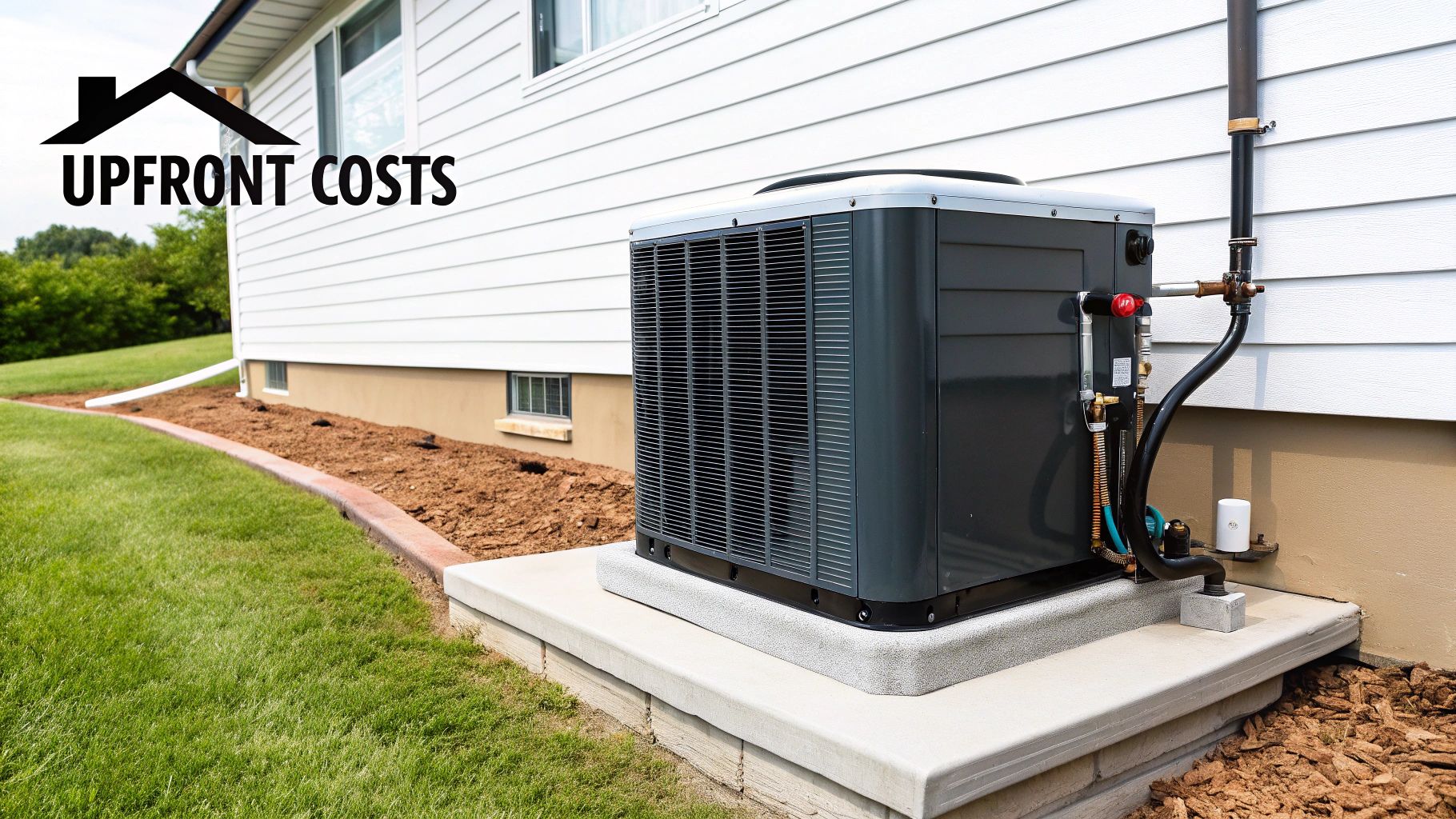
When you're figuring out the heat pump for pool cost, the price tag on the unit itself is just the first chapter of the story. To get the full picture, you have to look beyond that initial purchase to the complete system you're adding to your custom home. A few key factors drive this initial outlay, and each one plays a huge part in how well your pool heater performs over the long haul, especially in the unique climate of Southwest Florida.
The most obvious cost is the heat pump unit. Its price tag is really shaped by three things: its size, how efficient it is, and how tough the brand built it to be.
Unit Size and Efficiency Ratings
A heat pump's power is measured in British Thermal Units (BTUs). It’s simple: the bigger your pool, the more BTUs you’ll need to keep it warm, especially on those cooler winter days we get here in Southwest Florida.
At the same time, you'll see a Coefficient of Performance (COP) rating, which is just a straightforward measure of the unit's energy efficiency. A higher COP means it cranks out more heat for every bit of electricity it uses. While the high-COP models might cost a bit more upfront, they save you a ton on your monthly FPL bill, making them a smart move for anyone who wants to use their pool year-round.
Think of it this way: a heat pump with a high COP rating can produce up to five times more heat energy than the electricity it consumes. That incredible efficiency is exactly why they're the go-to choice for keeping pools at the perfect temperature in our Florida climate.
Florida-Specific Durability and Installation
Here in Southwest Florida, not all heat pumps can handle the elements. Our salty air and high humidity are tough on equipment, so you need something built to last. Going with a unit that has corrosion-resistant parts, like a titanium heat exchanger, isn't just a good idea—it's essential to prevent it from failing early. On top of that, choosing a hurricane-rated model is a critical investment to protect your equipment when severe weather rolls through.
Beyond the unit, you've got the "hidden" costs of professional installation, which are non-negotiable for safety, performance, and staying on the right side of the law. When you're building a new home with Sinclair Custom Homes, these aren't afterthoughts; we bake them right into the construction plan from the get-go.
These essential installation pieces include:
- Dedicated Electrical Work: A heat pump is a serious appliance that needs its own dedicated circuit run from your home’s main electrical panel. This ensures it runs safely without tripping breakers, a key consideration for homes also equipped with powerful systems like whole-house generators.
- Robust Plumbing: You need solid plumbing to create a seamless loop between the heat pump and your pool's filter system. This is what allows the water to cycle through and get heated efficiently.
- Concrete Equipment Pad: Florida building codes require all pool equipment to sit on a sturdy, elevated concrete pad. This keeps the unit safe from ground moisture and potential flooding—a key detail for new homes built to modern elevation standards mandated by updated flood maps.
We’ve found it’s far more cost-effective to handle all of this during the initial home build rather than trying to add it later. This kind of planning also ties into the bigger picture; knowing the complete cost to install a salt water pool helps you budget for a fully integrated backyard oasis from day one. By planning for a hurricane-rated unit on a properly elevated pad, you're not just buying a heater—you're investing in a durable, code-compliant system designed for the realities of building in Southwest Florida.
Choosing the Right Size Heater for the Florida Climate
Getting the size of your heat pump right is, without a doubt, the single most important decision for keeping your pool comfortable and your energy bills in check. It’s a lot like picking the right air conditioner for your home—go too small, and it will run nonstop trying to catch up, costing you a fortune. Go too big, and you’ve wasted money on a unit that will constantly turn on and off, never running at its best efficiency.
The sweet spot is finding that perfect balance. Let’s break down what you actually need to know about sizing, especially for the unique weather we get here in Southwest Florida, and skip the confusing technical jargon.
Decoding BTUs for Florida Pools
A heat pump's muscle is measured in British Thermal Units (BTUs). All that really means is how much heating power it has. When you pick a unit, you’re not just warming up a big tub of water; you’re fighting a constant battle against heat escaping from the pool's surface.
For a custom home in Cape Coral or Fort Myers, this becomes a really specific calculation. We've got intense sun, high humidity, and those cooler snaps in the winter that can surprise you. A bigger pool surface means more exposure to wind and evaporation—the two biggest thieves of your pool's heat.
As a general rule, a correctly sized heat pump should be able to raise your pool's temperature by about 1 to 1.25 degrees Fahrenheit per hour. This slow-and-steady approach is what makes them so efficient for keeping your pool at that perfect temperature day after day.
This gradual heating method is way more affordable to run than the brute-force power of a gas heater. If you're curious about how they stack up, we break it all down in our guide comparing a pool heat pump vs a gas heater, written specifically for Florida homeowners.
Key Sizing Variables for Our Climate
Several local factors have a huge impact on how many BTUs you'll need. When we're planning your new custom home with Sinclair, we look at every single one of these to make sure your system is a perfect fit.
- Pool Surface Area: This is the big one. The larger the surface of your pool, the faster it loses heat, especially overnight. This requires a more powerful heater.
- Wind Exposure: Is your backyard wide open, or is it sheltered by your home and landscaping? A windy spot can dramatically increase evaporation, which means you'll need more BTUs to keep the water warm.
- Sunlight Exposure: A pool that gets soaked in sun all day long will naturally stay warmer. This takes a lot of the load off your heater compared to a pool that sits in the shade for part of the day.
- Desired Temperature: Do you like a refreshing 82°F, or are you aiming for a spa-like 88°F? Every degree you add means more work for the heater, particularly during our cooler winter months.
But the real game-changer? A pool cover. A simple solar cover can slash heat loss from evaporation by up to 70%. This one accessory can make a huge difference in your monthly bills and might even let you get by with a slightly smaller, less expensive heat pump.
A Sizing Guide for Southwest Florida Pools
To help you start the conversation with your builder, here’s a straightforward table that estimates the BTUs needed for common pool sizes right here in our area. These numbers are based on typical Florida conditions and what most people find comfortable.
Pool Heat Pump Sizing Guide for Southwest Florida
This table gives you a ballpark idea of what to expect. "Standard Season" usually means heating from spring through fall, while "Year-Round Use" accounts for keeping your pool warm even on the coolest winter days.
| Pool Surface Area (sq. ft.) | Estimated BTU Requirement (Standard Season) | Estimated BTU Requirement (Year-Round Use) |
|---|---|---|
| 300 sq. ft. (e.g., 12'x25') | 50,000 – 75,000 BTUs | 75,000 – 90,000 BTUs |
| 450 sq. ft. (e.g., 15'x30') | 75,000 – 100,000 BTUs | 100,000 – 125,000 BTUs |
| 600 sq. ft. (e.g., 20'x30') | 100,000 – 125,000 BTUs | 125,000 – 140,000+ BTUs |
| 800+ sq. ft. (e.g., 20'x40') | 125,000 – 140,000+ BTUs | 140,000+ BTUs (Consultation needed) |
Remember, this is just a starting point. By looking closely at all these factors during the design phase of your home, we make sure your heat pump is never overworked or oversized. It’s all about creating a system that gives you consistent comfort and efficiency, perfectly matched to your new Florida lifestyle.
Comparing Your Pool Heating Options
When we design a custom home here in Southwest Florida, the pool is almost always the star of the show. But to really get the most out of it all year long, you need the right heating system. You've got three main contenders, and each one has its own personality and a specific job it does best in your backyard oasis.
Picking the right one really boils down to what you want to achieve. Are you after steady, efficient warmth for daily swims? Do you need lightning-fast heat for those spontaneous spa nights? Or is a totally green, hands-off solution more your style? Let's dive into how each option fits the unique Florida lifestyle.
The Marathon Runner: Heat Pumps
Think of a pool heat pump as the marathon runner of the group. It might not be the fastest off the starting line, but its steady, consistent performance is just unbeatable for keeping your pool at that perfect temperature day in and day out. It works by pulling ambient heat right out of our humid Florida air—something we have plenty of—and transferring it into your pool water.
This method is incredibly energy-efficient. While the initial heat pump for pool cost can be a little higher than a gas unit, your monthly operating costs will be significantly lower. This makes it the clear winner for homeowners who want to keep their pool comfortably warm for months on end without getting a shock from the utility bill.
When you're weighing your options, getting a handle on the financial side of a heat pump compared to other systems is a key step. Looking at a detailed comparison of heat pump vs. AC costs can offer some great perspective on the technology and the long-term savings you can expect.
The Sprinter: Gas Heaters
If the heat pump is the marathoner, then a gas heater is the sprinter. It burns natural gas or propane to heat water incredibly fast, making it the go-to choice for on-demand warmth. If you want to fire up your attached spa and have it bubbling at a perfect 102°F in less than an hour, a gas heater is your best friend.
But all that speed comes at a price. Gas heaters are the least energy-efficient of the bunch, and their operating costs can really add up, especially if you try to heat your whole pool with one on a regular basis. For our new custom homes, we see them as the perfect sidekick to a heat pump—a popular new design feature ideal for the spa or for giving the pool a quick temperature boost on a surprisingly chilly day.
The Silent Partner: Solar Heaters
Solar pool heating is your quiet, eco-friendly partner. It uses panels on your roof to capture the sun's energy, circulating pool water through them to heat it up naturally. The best part? Once it's installed, the operating costs are practically zero. You're running on free energy from the sun.
The trade-off, however, is a lack of control. A solar heater's performance is completely at the mercy of the weather. On cloudy days or during those cooler winter stretches, it just can't generate enough heat to keep the pool consistently warm. While it's a fantastic, green supplement, it usually falls short as the only heating source for true year-round swimming in Southwest Florida.
This chart really brings to life the factors that make any pool heater work harder to maintain your desired temperature.
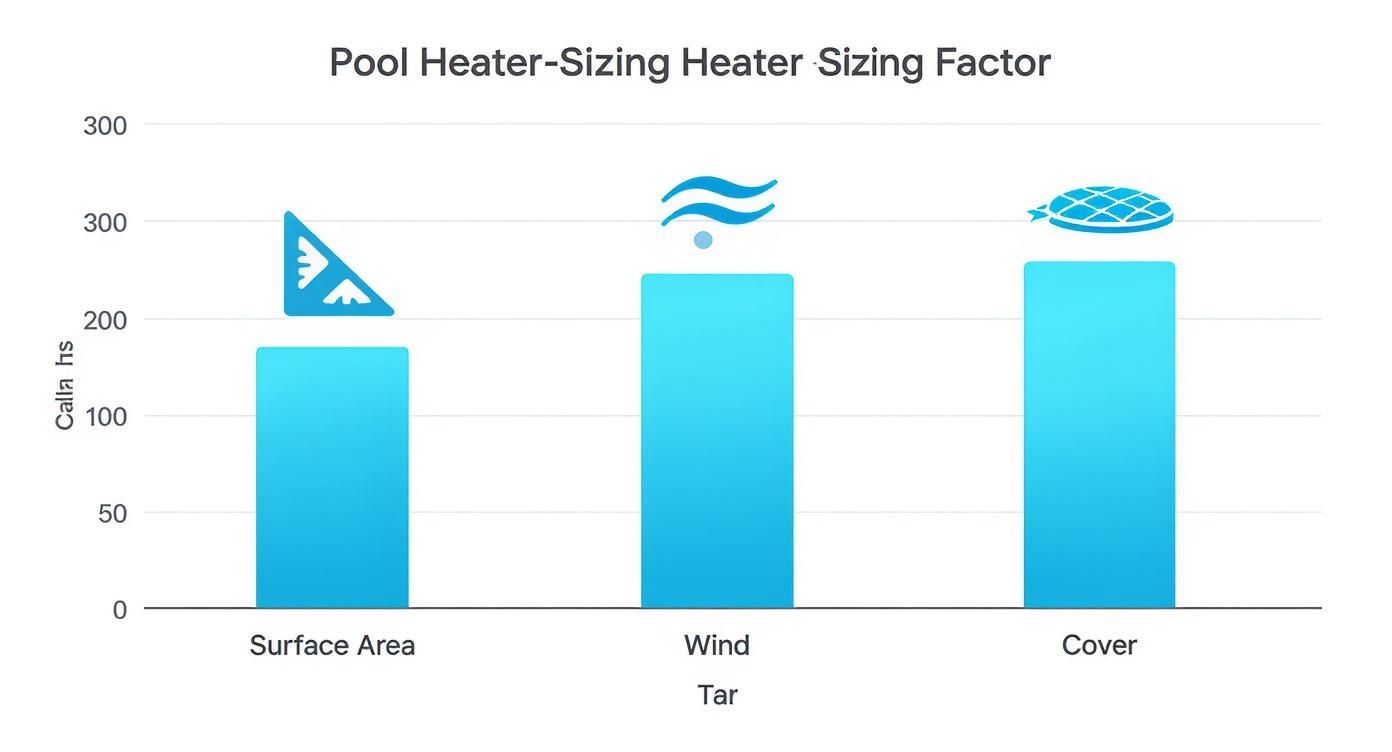
As you can see, surface area and wind are big players in heat loss, but throwing a pool cover on has the single biggest impact on cutting down your heating needs and, ultimately, your costs.
When it comes to the upfront investment, the installation costs for these systems are often closer than you'd think. The price to install a residential pool heat pump typically lands somewhere in the $2,500 to $7,500 range. That's right in line with natural gas heaters ($1,500 to $6,000) and solar heaters ($2,500 to $9,500), though it’s important to remember that gas heaters can sometimes require costly new gas lines.
For the vast majority of new luxury homes we build, a heat pump simply offers the best balance of performance, control, and long-term value. It’s the cornerstone of a modern, efficient, and enjoyable custom pool experience.
Understanding Long-Term Costs and ROI
Any smart investment in your custom Florida home means looking beyond the initial price tag. When it comes to the heat pump for pool cost, the real story isn't on the first invoice—it's told over months and years of use. Shifting your focus to the total cost of ownership is what really shows why this technology is a cornerstone of modern luxury living in Southwest Florida.
The secret to understanding the long-term savings is a simple metric called the Coefficient of Performance (COP). Don't worry, this isn't complex jargon. It’s a straightforward measure of efficiency, telling you how many units of heat the pump produces for every single unit of electricity it pulls from the grid.
Decoding Efficiency and Monthly Bills
So, a heat pump with a COP of 5.0 can generate up to five times more thermal energy than the electricity it uses. How? It cleverly pulls ambient warmth from the humid Florida air and transfers it into your pool water. This is a world away from a gas heater, which has to create heat from scratch—a far less efficient process.
This incredible efficiency translates directly into lower monthly electricity bills. While a gas heater could easily run you hundreds per month for regular use, a well-managed heat pump can keep your pool at a perfect 84°F for just a fraction of that. For a new custom home designed with energy efficiency in mind, this is a massive advantage.
A heat pump transforms your pool from a seasonal expense into a year-round asset. The modest monthly operating cost is a small price for turning your backyard into a 365-day retreat, significantly boosting both your lifestyle and your home’s market value.
Estimating Operating Costs in Florida
During the cooler months here in Southwest Florida—think late fall through early spring—your heat pump will naturally work a bit harder to maintain that ideal swimming temperature. On average, you can expect the operating cost to fall somewhere between $100 to $200 per month during this period. That number gets even better if you're diligent about using a solar cover to trap heat overnight.
This investment ensures your pool remains a usable, inviting feature of your home, even when the air gets a little crisp. It’s a key part of maximizing the value of your entire outdoor living space, which is always a major focus in our new custom builds. To push those long-term savings even further, you can integrate solar panels with your pool heating system for an even stronger return on investment.
Maximizing Lifespan and Return on Investment
A quality pool heat pump is built to last, typically giving you 10 to 20 years of reliable service with the right care. That kind of longevity makes the initial investment look even better. A few simple maintenance routines are all it takes to help your unit reach the upper end of that lifespan.
Here are the essentials:
- Keep it Clear: Make sure the area around the unit is totally free of leaves, landscaping debris, and clutter. Good airflow is everything.
- Regular Cleaning: Gently hose down the evaporator coils from time to time to clear away dust and salt buildup—a must in our coastal climate.
- Annual Professional Check-up: Have an HVAC or pool professional inspect the unit once a year. They'll check refrigerant levels and make sure every component is working as it should.
Ultimately, the true return on this investment isn't just about the money you save. It’s measured in the countless extra days of swimming, family gatherings, and morning laps you get to enjoy. When you frame the heat pump for pool cost as a strategic investment in your lifestyle and property value, it becomes clear that this isn't just an appliance—it's an essential feature of a well-designed Florida custom home.
Integrating Your Heat Pump into a Custom Home Design
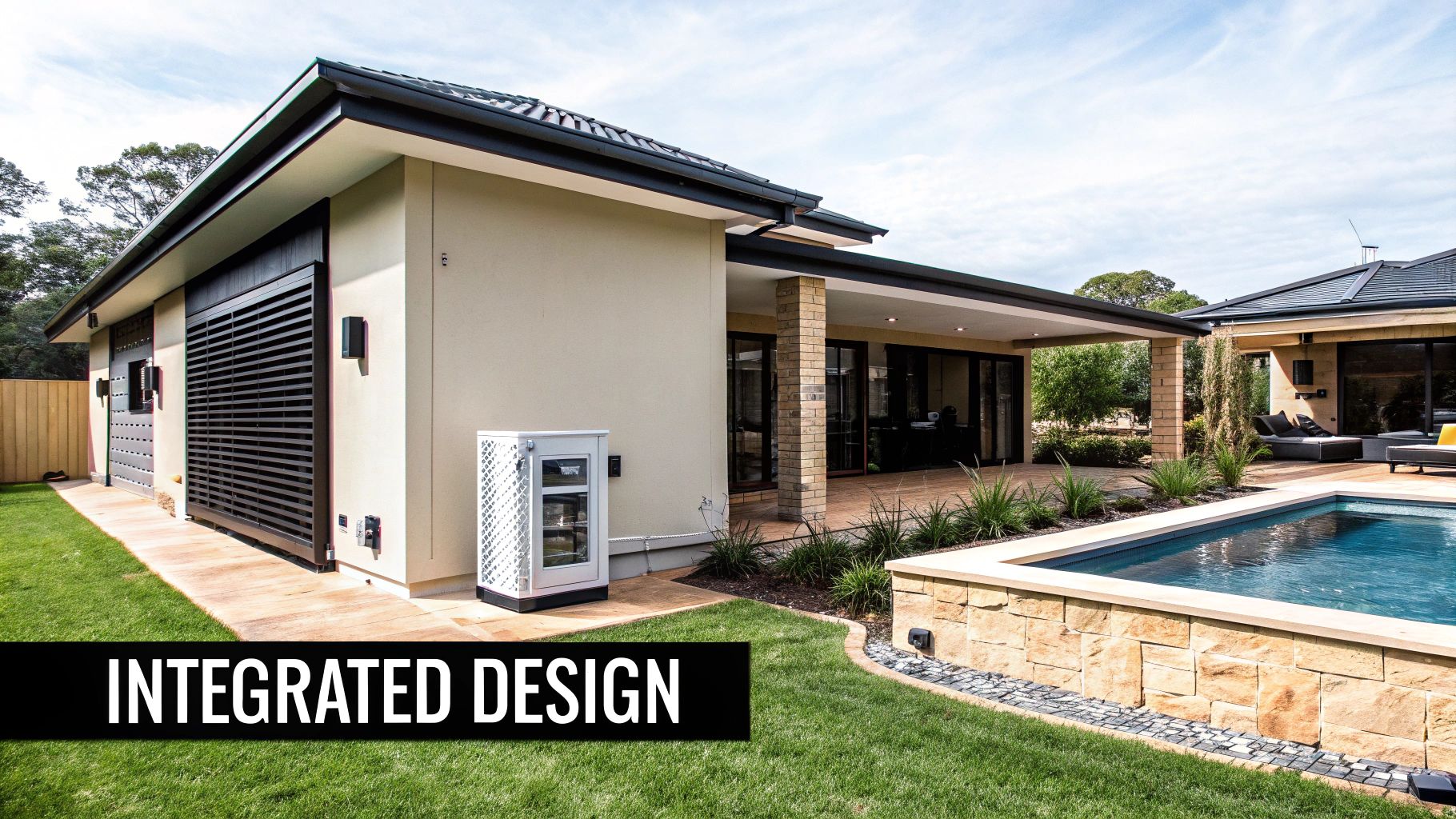
The absolute best time to plan your pool’s heating system is before a single shovel of dirt is moved. Thinking about the heat pump for pool cost during the initial design phase of your custom home isn't just a smart move—it’s the most financially sound approach you can take.
This foresight creates a seamless, efficient, and beautiful integration that feels like it was always part of the home's original vision.
Trying to retrofit a heat pump later on? That means tearing up pristine landscaping, drilling through finished walls, and running into a whole host of unexpected (and expensive) headaches. By planning ahead, you weave the system into your home's very DNA, saving a ton of money and hassle down the road.
Strategic Equipment Placement and Infrastructure
One of the most crucial decisions is where to put the pool equipment pad. This isn't just about tucking it out of sight. Smart placement is everything for peak performance, quiet operation, and maintaining that clean, uncluttered look you expect from a luxury custom home.
During the design phase with Sinclair Custom Homes, we carefully consider several factors:
- Performance: Your heat pump needs excellent airflow to work properly. We also position it a reasonable distance from the pool to avoid long plumbing runs that sap its efficiency.
- Aesthetics and Noise: We work to position the equipment pad to have minimal visual and audible impact on your outdoor living spaces. This often involves using clever landscaping or architectural elements to screen it from view.
- Code Compliance: Here in Southwest Florida, the equipment pad has to meet specific elevation requirements to protect against storm surge and flooding—a non-negotiable detail for hurricane resilience and a critical part of modern new construction trends.
Planning for dedicated electrical and plumbing lines during the initial construction is a massive cost-saver. It allows us to run conduits and pipes before any concrete is poured or drywall goes up, resulting in a clean, professional setup that’s built to last.
The Modern Luxury Build: Smart Integration
A thoughtfully designed, fully integrated system is a true hallmark of a new luxury build in Southwest Florida. We can even tie your pool heat pump into your home automation system, taking convenience to a whole new level.
Imagine adjusting your pool's temperature right from your smartphone before you even get home from work. Or setting heating schedules that perfectly align with your family's routine.
This level of control means your pool is always perfectly warm and inviting when you want it, without wasting energy heating it around the clock. It’s a feature that truly defines the turnkey custom home experience and is central to our modern design philosophy. To see how these details come together in the bigger picture, you can explore some of our favorite custom home design ideas that masterfully blend function with luxury.
This forward-thinking approach reflects a broader trend in home and pool construction. The global pool heat pump market was valued at USD 5.09 billion in 2024 and is projected to grow to approximately USD 7.17 billion by 2033. This growth is fueled by an increasing demand for energy-efficient, sustainable home features, especially in expanding luxury residential markets like those found across Florida.
By integrating your pool heating system from day one, you’re not just adding an appliance. You’re making a deliberate design choice that enhances your lifestyle, adds real value to your property, and ensures your custom home is a masterpiece of both form and function.
Your Top Questions About Florida Pool Heat Pumps Answered
As custom home builders here in Southwest Florida, we spend a lot of time designing incredible backyard oases for our clients. Naturally, questions about heating the pool come up all the time. Here are the straight answers to the questions we hear most often about heat pumps and how they fit into a new custom home.
What Does It Actually Cost to Run a Pool Heat Pump in Florida?
This is the big one, and the answer is refreshingly affordable. For most homeowners, you can expect your monthly cost to run between $100 to $200 during the cooler season from late fall to early spring. That's a fraction of what you'd spend on a gas heater for the same period.
Want to know the single best way to keep that cost down? Use a solar cover, especially at night. It's a simple step, but it can slash heat loss by as much as 70%. That means your heat pump runs less, saving you money while keeping the water perfectly warm.
Is a Heat Pump Strong Enough for Our "Winters"?
Absolutely. People sometimes worry that heat pumps won't work well when it gets "cold," but our mild Florida winters are practically the perfect environment for them. These units operate at peak efficiency as long as the air outside is above 45-50°F.
Considering our winter days in Cape Coral and Fort Myers almost never dip that low, a correctly sized heat pump will have zero issues maintaining your pool at a comfortable 82-86°F all season long.
How Long Will a Pool Heat Pump Last in This Climate?
Durability is a huge deal in the salty, humid air of Southwest Florida. A quality, corrosion-resistant heat pump that's properly looked after should give you 10 to 20 years of service. The key is consistent maintenance—rinsing the coils to wash away salt buildup and making sure nothing is blocking the airflow is crucial for a long life.
When we build a new custom home, we make sure the heat pump is installed for the long haul. We place it on a specially constructed, elevated concrete pad that meets all hurricane codes, protecting it from ground moisture and potential flooding to extend its working life even further.
Should I Get a Heat Pump, a Gas Heater, or Both?
For the vast majority of homeowners, a heat pump is the hands-down winner for consistent, efficient, and affordable pool heating. But if you're looking for the ultimate setup for a luxury Florida home, the new "hybrid" system is the way to go: pairing a heat pump with a small gas heater.
This has become a popular design trend because it truly offers the best of both worlds. The heat pump does the heavy lifting, efficiently maintaining the pool's temperature day-to-day. Meanwhile, the gas heater is on standby for rapid, on-demand heat—perfect for getting the spa bubbling hot in minutes or quickly bumping up the pool's temperature before a party.
This combination gives you the ultimate flexibility and enjoyment, which is what custom home design is all about. It ensures your entire pool and spa area is ready to use precisely when you want it, without a single compromise.
Ready to design a custom home where every detail, including your year-round pool oasis, is planned to perfection? Contact Sinclair Custom Homes Inc today to start the conversation about building your dream home in Southwest Florida. Learn more at https://sinclaircustomhome.com.