


Figuring out if your walls are drywall or plaster is actually pretty simple. The easiest way? Push a thumbtack into the wall. If it goes in without much of a fight, you’ve got drywall. If you hit a rock-solid surface and the tack bends, it’s almost certainly plaster. It’s a classic trick that quickly solves the mystery for most homeowners, especially when considering a renovation or storm prep.
Is It Drywall or Plaster? A Custom Builder's Identification Guide

Before you start any project in your Southwest Florida home—whether it's hanging hurricane shutters or planning a full-blown renovation—you need to know what your walls are made of. The two most common finishes, drywall and plaster, might look the same, but they behave very differently. This is especially true when it comes to repairs after a storm, hanging heavy fixtures, and how they perform in our humid climate.
If you're in a modern custom home in Naples or Bonita Springs, chances are you have drywall. We custom home builders in Southwest Florida prefer it for its efficiency and design flexibility. But if you own an older home, particularly one built before the 1960s, you might have traditional plaster walls. Knowing which you have will impact everything from decorating choices to major structural work, like changing your home's elevation.
At-a-Glance Comparison
To make it even easier, here’s a quick rundown of the key differences you can look for. Getting familiar with these will help you make smarter decisions about your home's upkeep and any future projects, especially in a region affected by building news and trends.
Quick Identification Guide: Drywall vs. Plaster
| Characteristic | Drywall (Sheetrock) | Plaster |
|---|---|---|
| Surface Feel | Perfectly flat, with a faint paper-like texture. Corners are crisp and sharp, a hallmark of modern custom home design. | Often has subtle waves or minor imperfections. Corners might be slightly rounded. |
| Sound When Knocked | Produces a hollow, deep sound between the studs. | Makes a solid, dense thud with almost no echo. |
| Age of Home | Common in homes built from the 1950s to today. Standard in all new Florida construction. | The go-to material for homes built before the 1950s; a tell-tale sign of older craftsmanship. |
| Push Pin Test | A pin or thumbtack slides in with little to no effort. | You'll have a hard time—or it's impossible—to push a pin in by hand. |
This quick check should give you all the information you need. The feel, the sound, and especially the push pin test are dead giveaways that will tell you exactly what you’re working with before you begin your next project.
A Builder’s Guide to Wall Materials and Trends
As a custom home builder here in Southwest Florida, I get asked a lot about the materials we use. Understanding the "why" behind your wall material is a bigger deal than you might think. The choice between drywall and plaster isn't just about looks; it's a story of construction trends, building efficiency, and what makes the most sense for the unique challenges of our local Florida climate.
At their core, they are two completely different beasts. Drywall, which most people know as Sheetrock, is basically a gypsum plaster core pressed between two thick sheets of paper. Plaster, on the other hand, is the old-school, tried-and-true method of building up layers of a cement-like mixture over a wood or metal lath base. That fundamental difference is what gives each one its unique pros and cons.
The Shift in Southwest Florida Construction
In a booming market like Southwest Florida, speed and efficiency are everything. After World War II, the demand for new housing exploded, and builders needed faster, more affordable ways to get homes built. That's when drywall really took over. Installing large sheets of drywall is far faster than painstakingly applying multiple coats of plaster, which can take weeks to fully cure. This trend continues today as builders respond to the high demand for custom homes in Florida.
This wasn't just a local thing; it mirrored a global shift toward speed and cost control in construction. The numbers don't lie: regular drywall makes up over 70% of all drywall shipments worldwide, with a staggering 7 billion square meters sold in 2023 alone.
For us building custom homes from Cape Coral to Marco Island, drywall gives us predictability. We can map out timelines and budgets with greater accuracy, which is essential for any new build. While you can't deny the rock-solid durability of plaster, drywall’s practicality makes it the go-to for modern homes that feature the latest design trends and impact-resistant features.
Material Choices and Home Longevity
What your walls are made of has a direct impact on long-term maintenance and future renovations. Drywall is hands-down easier and cheaper to repair. If a pipe leaks or you get some storm damage from a hurricane—both real possibilities in Florida—we can cut out a section of drywall and replace it seamlessly.
Plaster is a different story. It's incredibly tough and resists dings, but fixing it is a real challenge. You need a skilled plasterer, and they're not as common as they used to be. A bad patch job on a plaster wall stands out. When you're planning your home, thinking about all the different sustainable building materials is a smart move for ensuring both quality and longevity.
For any new custom home, especially in rooms prone to moisture, we specify moisture-resistant or mold-resistant drywall. It's a non-negotiable in our humid environment and a crucial new builder trend that helps prevent common issues that can compromise a home down the road.
At the end of the day, while a historic home with pristine plaster has charm, modern custom homes are built for the Florida lifestyle. The versatility and repairability of drywall are a practical response to today’s building standards and the specific environmental challenges we face right here in Southwest Florida.
Five Simple Tests to Tell What Your Walls Are Made Of
If you're done with the guessing game and want a definite answer, I've got five easy tests you can do right now. Figuring out if you're dealing with drywall or plaster is actually pretty straightforward with these hands-on methods. Each test highlights a key difference, giving you the solid info you need before starting any project.
1. The Push Pin Test
This is the quickest and most definitive test. Just grab a thumbtack or push pin and try pressing it into your wall in an inconspicuous spot.
- If it's drywall: The pin will slide in with almost no resistance. You're just pushing through paper and a soft gypsum core.
- If it's plaster: That pin is going to stop dead in its tracks. It might even bend. Plaster is rock-hard, and there's no way you're pushing a pin through it by hand.
2. The Sound Test
Next, just give your wall a good knock with your knuckles. The sound it makes is a dead giveaway.
Listen for a hollow, deeper sound, especially between the wall studs. That hollow area behind the sheet of drywall creates a sort of drum-like echo. A plaster wall, being a thick, solid layer over a lath structure, will give you a solid, dense "thud" with basically no echo.
The age of your home is also a huge clue. As you can see below, there was a major shift in building materials right around the mid-20th century.
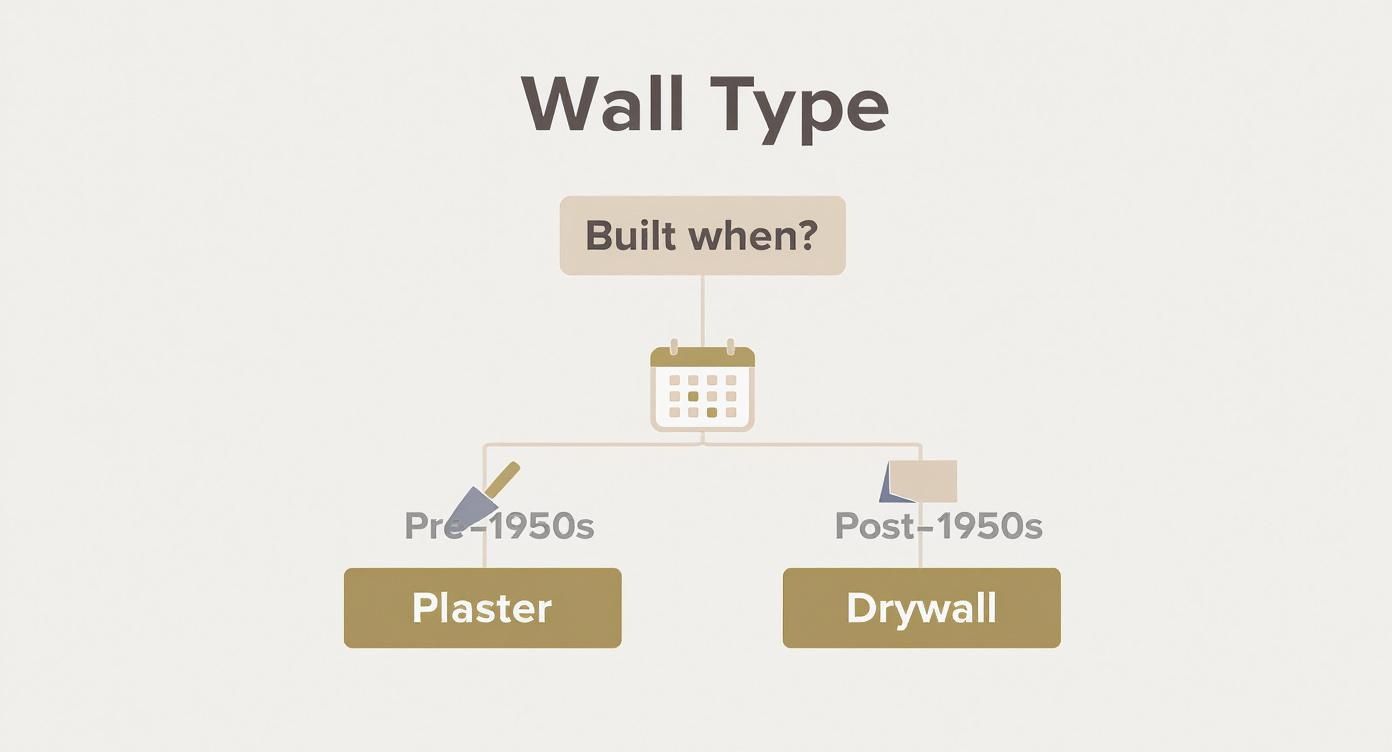

Builders pretty much universally used plaster before the 1950s. After that, drywall took over because it was just so much faster and more efficient to install, a trend that defines modern custom home building.
3. The Surface and Edge Test
Take a moment to run your hand over the surface of the wall and look closely at the corners. Here in Southwest Florida, modern construction and new design features are all about clean lines and precision, which is exactly what drywall provides.
Drywall sheets come perfectly flat, and we use metal or plastic corner beads to get crisp, perfect 90-degree angles. Plaster, since it's troweled on by hand, often has very subtle waves or imperfections that give it character. The corners tend to be a bit softer and slightly rounded as a result of the hand-finishing process.
4. The Fastener Test
Look closely at the wall's surface for any hint of fasteners. On a drywall wall, you might be able to spot faint, perfectly circular dimples in a row. Those are the heads of drywall screws, set just below the surface and then covered with joint compound. Plaster walls rarely show fasteners, but if they do, you might see tiny, round nail heads sitting almost perfectly flush with the wall.
5. The Outlet Inspection
If you want a 100% foolproof method, this is it. Carefully unscrew and remove the cover plate from any light switch or electrical outlet. Peeking at the edge of the opening gives you a perfect cross-section view of the wall material.
This test leaves no room for doubt. You will either see the distinct layers of a drywall sheet—paper, gypsum core, paper—or you'll see a thick, solid, and often gritty mass of plaster, sometimes with the wood or metal lath it was applied over still visible.
Once you’ve run through these tests, you'll know for sure what you're working with. That knowledge is key for planning everything from hanging heavy storm shutters to mapping out a full-scale renovation with your custom builder.
How Wall Type Impacts Your Florida Renovation
Once you’ve figured out whether you're dealing with drywall or plaster, the real work begins. Knowing what’s on your walls is more than just a fun fact; it fundamentally changes how we approach renovations, repairs, and even simple decorating—especially here in Southwest Florida. The differences in strength, moisture resistance, and repairability have major implications for any custom home project.
For instance, hanging something heavy is a completely different ballgame. With drywall, you have to find a stud for anything with real weight. A big flatscreen TV or a heavy piece of art needs to be anchored directly into the home's framing. No exceptions.
Plaster, however, gives you more freedom. It’s rock-solid, so you can often hang heavy items almost anywhere using the right anchors. This is a huge advantage when you’re installing hurricane impact features or decorative pieces where the studs just aren’t in the right spot.
Handling Moisture and Storm Damage
In our humid, storm-prone climate, how a wall deals with moisture is everything. This is where the difference between drywall and plaster really comes into focus, particularly after a hurricane or a plumbing leak.
Drywall’s paper facing makes it a sponge for water. Once it’s wet, it loses its integrity and quickly becomes a home for mold. The fix is straightforward: cut out the affected section and replace it. This is why having a reliable power source, like a whole-house generator, is critical after a storm to run dehumidifiers and prevent mold growth from spreading.
Plaster, on the other hand, is much tougher against a single water event. It can often dry out without crumbling. But if it keeps getting wet, it can pull away from the lath behind it, causing widespread cracks. Fixing that kind of damage is a true craft, requiring a specialist.
In our new custom builds around Southwest Florida, we exclusively use moisture-resistant drywall, especially in bathrooms, kitchens, and laundry rooms. This builder trend provides a crucial first line of defense against the everyday humidity that can compromise a home’s structure.
Cutting and Remodeling Challenges
Thinking about adding a new window for more light or creating a pass-through to open up your living space? The job looks completely different depending on your wall type.
- Drywall: Cutting new openings is clean and simple. We can make precise cuts, easily work around existing wiring, and finish the new opening with standard materials. It’s a fast, efficient process that aligns with modern design trends.
- Plaster: This requires more muscle. Cutting through plaster and lath is a dusty, labor-intensive job that needs specialized tools to avoid cracking the surrounding wall. It’s absolutely doable, but it adds significant time and labor costs to the project.
Understanding these practical differences is vital. They affect your project's timeline, budget, and even your home’s energy efficiency. To see how other materials impact your home's performance, learning about understanding R-value for insulation can offer valuable insights for any Florida homeowner.
Comparing Project Costs, Timelines, and Labor
When you're planning a renovation or a new custom build here in Southwest Florida, the wall material you choose has a real, tangible impact on your budget and schedule. We see it every day on our projects—the differences in cost, time, and labor between drywall and plaster are massive, and knowing what you're getting into helps you make smarter financial decisions.
Drywall installation has become the industry standard for a reason: it's a streamlined, predictable process. A skilled crew can hang the sheets fast, and the taping and mudding that follow are just as efficient. This speed is why it absolutely dominates modern custom home construction.
Plaster, on the other hand, is a true craft. It's an art form that demands patience, specialized skill, and, most importantly, time. The process involves applying multiple coats, and each one needs to dry thoroughly before the next can begin. That drying time alone can stretch a project timeline by days or even weeks.
Cost and Timeline Breakdown
For any homeowner in Southwest Florida, the financial difference becomes clear when you look at common jobs. Let's say you need a simple patch from moving an electrical outlet. With drywall, that's likely a one-day job. But for a plaster wall? You're calling in a skilled artisan for a multi-day process to perfectly match the texture—and that expertise naturally costs more.
This time gap becomes a critical factor in larger projects. The speed of drywall installation means other trades—painters, electricians, and finish carpenters—can start their work sooner. It keeps the whole project flowing smoothly. If you want a deeper look at how these stages fit into the bigger picture, our guide on how long it takes to build a custom home breaks down the entire construction schedule.
The numbers tell the same story on a global scale. The worldwide drywall market was valued anywhere between USD 48 billion and USD 58.97 billion, while the gypsum plaster market hovered around USD 3.41 billion in 2024. That staggering difference highlights just how much the construction world relies on drywall for its economic advantages. You can dig into more of these market trends on marketgrowthreports.com.
Installation and Repair Realities
So, how do these differences actually play out on a job site in our area? I've put together a table to give you a realistic snapshot of what to expect for both cost and time when working with a builder in our region.
Project Cost and Timeline Comparison: Drywall vs. Plaster
Here's a quick look at estimated costs and timelines for typical renovation and construction tasks in Southwest Florida. Keep in mind these are ballpark figures, as every project has its own unique variables.
| Project Task | Drywall (Estimated) | Plaster (Estimated) |
|---|---|---|
| New Installation (per sq. ft.) | $2 – $4 | $8 – $20+ |
| Minor Repair (small hole) | $100 – $300 (1 day) | $250 – $500+ (2-3 days) |
| Major Repair (water damage) | $400 – $1,000+ (2-4 days) | $800 – $2,500+ (4-7 days) |
| Labor Skill Level | Widely available, moderate skill | Specialized, high skill required |
As you can see, the differences add up quickly, not just in dollars but in the amount of time your home will be under construction.
For the vast majority of modern custom homes, drywall simply offers the best balance of quality, cost-effectiveness, and timeline management. While plaster’s durability is second to none, its higher cost and the need for specialized labor make it a niche choice, usually reserved for historical restorations or high-end luxury applications.
Making the Right Choice for Your Custom Florida Home
So, after all this, what’s the final verdict? When it comes down to choosing between preserving plaster and embracing drywall, your specific goals—especially here in Southwest Florida—are what really matter. Figuring out what’s already on your walls is one thing, but aligning that material with the life you want to live in your custom home is the real job.
If you’re lucky enough to own a historic home with its original plaster in great shape, keeping it is often the right move. That inherent strength and quietness are hard to replicate. However, if you're planning a major renovation—say, changing elevations or reconfiguring the layout for better hurricane resilience—then tearing out old, damaged plaster for modern drywall is almost always the more practical and cost-effective choice.
Getting That High-End Look with Modern Materials
A lot of our clients love the seamless, solid feel of plaster but want the practical benefits of drywall. The great news? You don't have to compromise. We can achieve a Level 5 drywall finish, which is the absolute highest quality you can get. This involves skim-coating the entire surface to create a perfectly smooth, uniform plane that beautifully mimics the look of traditional plaster. It’s a go-to design feature in the new custom homes we build.
This isn't just a local trend. While the Asia Pacific region led the global plaster market in 2024, North American builders overwhelmingly stick with drywall because it’s just faster and requires less specialized labor. You can dig into some of the global trends over at Verified Market Research.
Tailoring Your Walls for the Florida Lifestyle
At the end of the day, a few key local factors should guide your decision:
- Hurricane Resilience: Drywall is far easier and faster to repair if—or when—you have to deal with storm-related water intrusion.
- Humidity Control: Modern moisture-resistant drywall gives you much better protection against mold and mildew in our humid climate.
- Design Flexibility: Drywall is simply built for modern design. It easily accommodates open-concept layouts, integrated smart home tech, and any other new design features you can dream up.
For a new custom build, the choice is clear. We recommend modern, high-performance drywall every time. It ensures your home is beautiful, durable, and ready for whatever Florida weather throws at it, all while keeping the construction timeline smooth and predictable.
Making these kinds of material decisions is a core part of bringing your vision to life. To get a better handle on how all these choices fit together, we’ve laid out our entire approach in our guide to the custom home building process.
Questions We Hear All the Time
When you're building a custom home or planning a major renovation here in Southwest Florida, a lot of questions come up about the best materials for the job. We get it. Here are some straightforward answers to the questions we hear most often about drywall and plaster.
Can You Put Drywall Over Old Plaster?
Absolutely. In fact, it's a pretty common technique called "laminating," and it's a great way to avoid the unbelievable mess of tearing out old plaster walls.
But it's not without its challenges. Adding a new layer of drywall means all your existing trim around doors and windows will suddenly be recessed. We also have to extend every single electrical outlet and switch box so they sit flush with the new wall surface—a critical step to keep everything up to code and looking right.
Which One is Better for Soundproofing?
Hands down, plaster is the winner here. Its dense, solid structure is fantastic at blocking airborne noise. It's just inherently better at it than the lighter, layered nature of drywall.
It’s one of the unsung benefits of older homes. While there are certainly modern sound-dampening drywall products and techniques we use today, a traditional plaster wall provides incredible noise reduction right out of the box.
For new custom homes where peace and quiet are a priority, we can achieve amazing acoustic separation. We'll often build walls with resilient channels or use double layers of drywall with a special sound-insulating compound sandwiched between them. This is a popular new design feature that gives you the best of both worlds: modern building efficiency and that quiet, solid feel you're looking for.
How Does Florida's Humidity Affect These Walls?
In a humid climate like ours, plaster has a natural edge because it can "breathe" a little better, letting moisture vapor pass through more easily.
Standard drywall, with its paper facing, can trap that moisture if it gets damp, which can lead to mold. That's a non-starter for us. It's exactly why we only use moisture-resistant drywall in all our kitchens, bathrooms, and laundry rooms. It's a non-negotiable new builder trend that is part of building a home made to last in Florida.
Ready to build a home that's perfectly suited for the Southwest Florida lifestyle? Contact Sinclair Custom Homes Inc today to discuss your vision. Let's create a space with the quality, resilience, and expert craftsmanship you deserve. Start planning your dream home with us.