Building a custom home in Cape Coral isn’t just about putting up walls—it’s about crafting your very own slice of the waterfront lifestyle. This process demands a real understanding of the local custom home industry, from the quirks of canal-front lots and new elevation requirements to the absolute necessity of building for hurricane resilience.
Finding the right custom home builder in Cape Coral is your first and most critical step. They're the partner who will turn your vision into a home that's not only beautiful but also a solid, lasting investment incorporating the latest trends and safety features for Southwest Florida.
Starting Your Cape Coral Custom Home Journey
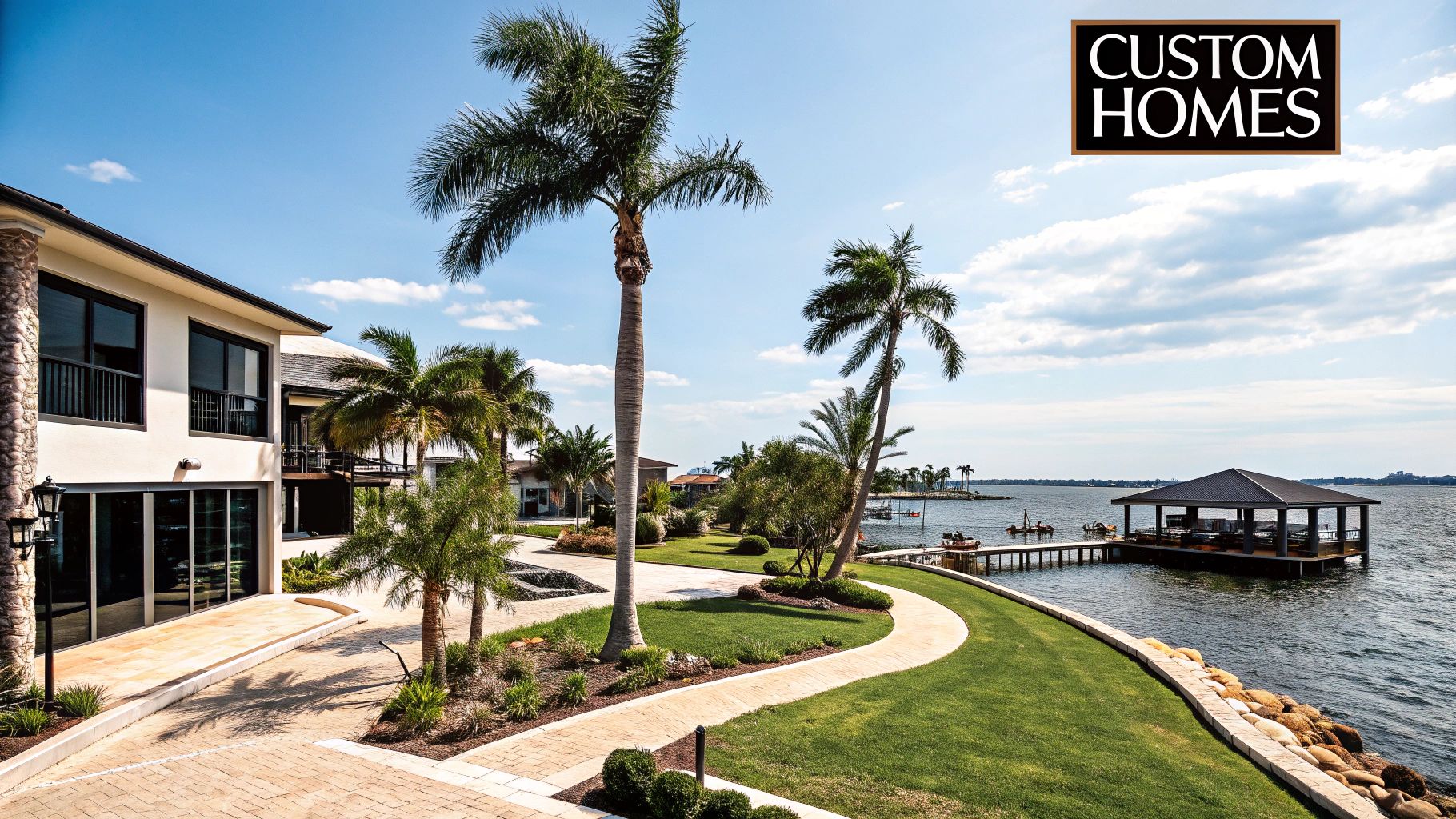
Kicking off a custom build in Southwest Florida is an incredible feeling. It’s where your design dreams meet the practical needs of our unique region, famous for its sprawling canal system and steady growth. It's no wonder so many people want a home built just for them here. But to do it right, you need to go in with your eyes wide open to the current building news and market conditions affecting Florida.
The housing market here definitely has its own rhythm. For instance, recent data shows the median home price in Cape Coral dipped to $365,000, yet homes are selling faster than the statewide average. This points to strong, sustained buyer interest and a competitive atmosphere. It’s a good sign, but it also means being prepared is non-negotiable, especially as building regulations continue to evolve.
To give you a clearer picture, here’s a quick look at how Cape Coral stacks up against the broader Florida market.
Cape Coral vs Florida State Home Market Comparison
| Metric | Cape Coral | Florida (Statewide) |
|---|---|---|
| Median Sale Price | $365,000 | $403,000 |
| Median Days on Market | 33 days | 36 days |
| Market Outlook | Competitive, high buyer demand | Strong, but with regional variations |
This snapshot shows that while you might find more approachable prices in Cape Coral, you’ll need to act decisively. A faster-moving market means having your builder and your finances lined up is key to securing your spot.
Balancing Your Vision with Practicality
A truly successful project is a perfect blend of your dreams and the hard realities of construction. You might be imagining soaring ceilings and a master suite that feels like a private spa, but your builder's job is to anchor those brilliant ideas in solid engineering and climate-smart design. The most important new builder trends aren't just about looks; they're about resilience and functionality.
As you plan, keep these non-negotiables in mind:
- Hurricane-Ready Design: This is much more than just shutters. We’re talking about high-impact windows and doors, a reinforced roof system, and ensuring the home’s elevation meets new post-Ian FEMA flood maps to handle potential storm surge.
- Long-Term Value: When you invest in high-quality construction and materials from day one, you’re saving yourself headaches and money on maintenance down the road. This is a core principle in the custom home industry.
- Future-Proofing Features: Think ahead. A whole-home generator is no longer a luxury but a near-necessity for weathering storms and power outages. Integrating smart home technology and energy-efficient systems will keep your home comfortable and your utility bills low for years to come.
Choosing a builder is really about finding a partner who can expertly guide you through all these critical decisions. Your custom home is one of the biggest investments you'll ever make, so finding a team with deep local experience in the latest building news and codes for Southwest Florida is paramount. They ensure your home isn’t just stunning, but built to stand the test of time.
How to Vet Builders and Evaluate Their Work
Let's be clear: choosing the right custom home builder in Cape Coral is the single most important decision you'll make in this entire process. It’s a choice that goes far beyond flashy portfolios or a smooth sales pitch. You're not just hiring a contractor; you’re picking a partner who will manage a huge investment and bring your personal vision to life according to the latest standards of the custom home industry.
Your vetting process needs to be methodical, starting with the non-negotiables. Never just take a builder's word for it—verify everything yourself. This means checking their state license with the Florida Department of Business and Professional Regulation and, crucially, confirming they carry comprehensive liability and workers' compensation insurance. A builder without the right coverage puts your entire project, and your finances, at serious risk.
Beyond the Online Reviews
Online testimonials are a good first glance, but they rarely paint the full picture. To get a real feel for a builder’s track record, you have to dig deeper. Ask for a list of recent clients, but don't stop there. The real gold is in speaking with clients whose projects were finished over a year ago. This gives you incredible insight into the home's long-term quality and the builder's follow-up support after they've handed over the keys.
When you do get a past client on the phone, don’t just ask, "Were you happy?" You need to ask targeted questions to uncover the truth about their experience.
- Communication: How often did the builder give you updates? Were they easy to reach by phone or email when you had a question?
- Budget Management: Did the final bill match the initial contract? How did they handle change orders or unexpected costs?
- Timeline Adherence: Was the project finished on time? If there were delays, what caused them, and how did the builder communicate them?
- Subcontractor Quality: Did the plumbers, electricians, and other tradespeople seem skilled and professional? Was the job site kept clean and orderly?
These are the kinds of specific questions that reveal what it’s really like to work with someone day in and day out. For even more ideas, check out our guide on great questions you should ask a potential custom home builder.
Evaluating Portfolios and Local Reputation
As you flip through a builder's portfolio, look for more than just pretty pictures. You need to scrutinize the details for proof they have experience relevant to your project. Since you're building in Cape Coral, their portfolio should be filled with waterfront properties, homes engineered for modern hurricane codes, and the specific new design features you're dreaming of, like a sprawling lanai, outdoor kitchen, or custom boat dock.
A builder’s reputation within the local community is another huge tell. A respected local builder has cultivated strong relationships with the best subcontractors and suppliers in Southwest Florida. This network is absolutely vital for keeping a project on schedule and ensuring high-quality work, because the best tradespeople will prioritize jobs for builders they trust.
A builder's true value is measured not just by the homes they've built, but by the relationships they've maintained. A strong local network and a long list of genuinely happy clients are the clearest signs you've found a trustworthy partner for your Cape Coral dream home.
Navigating Contracts and Budgeting for Your Build
Once you’ve found a builder you trust, it’s time to make things official. This is where your vision starts its journey into a tangible, buildable project, and it all hinges on two things: a rock-solid contract and a no-surprises budget. These documents are the foundation of a smooth build, protecting both you and your builder from any crossed wires down the road.
Think of your contract as more than just a formality; it's the legal roadmap for the entire construction process. Any top-tier custom home builder in Cape Coral will provide an exhaustive agreement that leaves nothing to interpretation. You'll want to pay special attention to the payment schedule. It should be logical, with payments tied directly to real, visible progress on-site—not just random calendar dates.
Understanding Contract Types
Here in Southwest Florida, you’ll likely come across two main types of contracts. Each has its own benefits, and the right one for you often depends on your project's scope and how you feel about financial flexibility versus predictability.
- Fixed-Price Contract: Just like it sounds, this agreement locks in the total cost of your new home from the get-go. It offers peace of mind and makes budgeting straightforward, which is why a lot of homeowners prefer it. The trade-off? It can be a bit rigid if you decide you want to make major changes once construction is underway.
- Cost-Plus Contract: With this model, you’re billed for the actual cost of all labor and materials, plus a pre-agreed builder's fee (this could be a set dollar amount or a percentage). This approach gives you total transparency—you see exactly where every dollar goes—and offers a lot more flexibility for on-the-fly adjustments. The catch is that the final price tag isn't guaranteed upfront.
The path from those initial conversations to signing the final papers is a clear, step-by-step process.
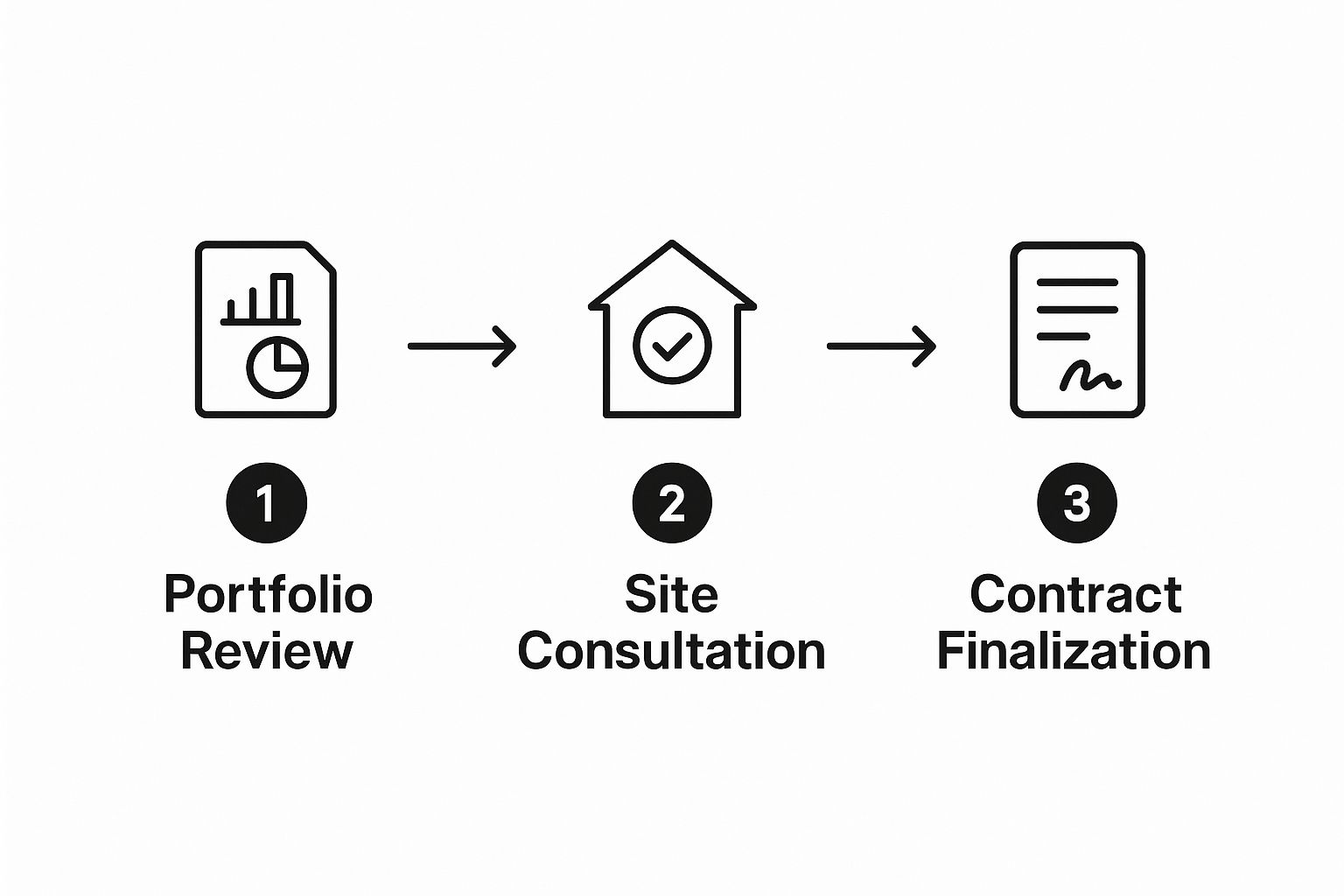
As you can see, spending time on a thorough portfolio review and having detailed on-site talks are essential steps that lead directly to a fair, comprehensive contract.
Crafting a Realistic Budget
The final price of your home is much more than just the cost of the structure. A truly comprehensive budget needs to account for everything, from buying the land itself to screwing in the last lightbulb. Make sure you have line items for things like permits, impact fees, getting utilities connected, landscaping, and any site prep work, such as clearing the lot or building to new elevation requirements.
Here's a piece of advice I always give my clients: build in a contingency fund. Setting aside an extra 10-15% of the total construction cost is one of the smartest things you can do. It's your financial cushion for handling unexpected issues or sudden material price jumps without derailing the whole project.
In Cape Coral, the cost of labor and materials has definitely shaped the custom home industry. While material prices have started to level out a bit, overall construction costs are still high. Why? A persistent shortage of skilled labor in Southwest Florida. This is a key piece of news that affects building in Florida in general. The most cost-heavy phases like framing, roofing, and electrical work are feeling the squeeze from high demand and a limited workforce. This is a key reason why waiting to build probably won't save you much money. If you want to dive deeper, you can explore the pros and cons of timing the Cape Coral new construction market on Gulf Coast RE Group.
Finally, when you're planning your budget, don't skimp on resilience and comfort. Building high-quality impact windows and a whole-home generator into your plan from day one isn't just a luxury—it's a core part of creating a safe, modern, and truly livable home in Southwest Florida, especially in the aftermath of a storm.
Designing for Hurricane Resilience and Modern Lifestyles
When you choose to build a home in Southwest Florida, you're not just picking out floor plans and paint colors. You’re embarking on a design journey that has to masterfully blend stunning looks with serious strength. A home here has to be more than just a pretty face; it needs to be a fortress, ready for our intense weather while still delivering that modern, comfortable lifestyle you're dreaming of.
The best custom home builder in Cape Coral doesn’t treat these as separate challenges. They're two sides of the same coin.
This means that hurricane impact features aren't some fancy "upgrade"—they're the bare minimum, the standard. From your very first conversation about blueprints, the discussion needs to include features built for durability and peace of mind. Investing in these elements from day one isn't just about protecting your property; it’s about protecting your family, earning a significant return through lower insurance premiums, and boosting your home’s resale value down the road.
Fortifying Your Foundation Against Storms
Real resilience starts from the ground up and works its way to every corner of your home. It's about creating a completely integrated system, where every single component works together to stand up to hurricane-force winds and driving rain.
Your builder needs to be an absolute expert in the latest building codes, which are incredibly strict here in coastal areas like Cape Coral. These are the non-negotiable structural elements that have to be part of your design conversation:
- Impact-Resistant Windows and Doors: This is your first and most important line of defense. Modern impact glass is essentially a laminated sandwich of glass and a clear polymer layer. It's engineered to stay in its frame even if it shatters, preventing wind and water from getting inside.
- Reinforced Roofing: This is about much more than just strong shingles. It means specific nailing patterns, secondary water barriers, and heavy-duty strapping that anchors the roof trusses directly to the walls. This is what stops the catastrophic roof lift-off you see during major storms.
- Proper Site Elevation: With Cape Coral’s canals and proximity to the Gulf, flood risk is a huge deal. An experienced builder will make sure your home's finished floor elevation meets or, even better, exceeds FEMA requirements. This is absolutely critical for your safety and your flood insurance rates, and it's a major piece of news affecting all new construction in Southwest Florida.
Don't ever look at these features as just line-item expenses. They are fundamental investments in your home's safety and longevity. A whole-home generator, for instance, isn’t just a nice-to-have during an outage; it's a lifeline that keeps your family safe and your home running when the grid is down for days after a storm.
Blending Safety with Modern Design Trends
While safety is the foundation, your home should also be a reflection of how you want to live. The new design features and builder trends we're seeing in Cape Coral today are all about creating bright, functional spaces that fully embrace the indoor-outdoor Florida lifestyle.
The best part? Strength and style go hand-in-hand. For example, those big, beautiful impact-glass sliding doors that provide storm protection are the very same features that create that seamless, flowing transition from your great room to the lanai that everyone loves.
Here are a few popular new design features that perfectly complement a resilient build:
- Open-Concept Layouts: Tearing down the walls between the kitchen, dining, and living areas creates that spacious, airy feel that's perfect for both everyday family life and entertaining guests.
- Gourmet Kitchens with Smart Tech: Things like oversized islands, professional-grade appliances, and integrated smart home controls for your lights and security systems are pretty much standard expectations in new builder trends.
- Spa-Like Master Suites: Homeowners want a private escape. We're talking large walk-in showers, elegant freestanding tubs, and dual vanities. It's about creating a personal retreat.
- Dedicated Home Offices: With so many people working from home, a quiet, dedicated office is no longer a luxury—it’s a must-have, and it needs to be planned for, not shoehorned in as an afterthought.
An expert custom home builder in Cape Coral knows exactly how to weave these modern must-haves into a structural shell that’s built to last for generations. They get that a home's real value is found in its ability to give you both comfort and security, no matter what the weather decides to throw at us.
Getting into the Build: What to Expect When Construction Starts
Once your plans are finalized, the real fun begins. This is where the architectural drawings start becoming your actual home, and where a top-tier custom home builder in Cape Coral really proves their worth. It’s a carefully managed dance of site work, materials, and skilled tradespeople, taking you from an empty lot to your move-in day.
Before a single shovel hits the dirt, your builder will perform a thorough site evaluation. This isn't just a quick look-around; it’s a deep dive into Cape Coral’s specific zoning laws, soil conditions, and the lot's required elevation. Getting this right from the start is absolutely crucial to sidestepping costly headaches down the road and making sure your home is built on a solid, fully compliant foundation.
From Foundation to Framing
With the site prepped and permits in hand, you'll start to see tangible progress. First, the foundation is poured—the literal base of your future home. Soon after, the framing goes up, and suddenly you can see the walls, floors, and roofline taking shape. For any homeowner, watching your home emerge from the ground up during this phase is a truly incredible experience.
Behind the scenes, this is an intensely busy period for your builder. They're coordinating a non-stop flow of materials and scheduling crews—from concrete pros to framing experts—to keep the project humming along without a hitch. It's this seamless collaboration that ensures every beam and joist perfectly matches the vision you and your architect created.
Communication and Key Inspections
A great build runs on clear, proactive communication. While your builder should be giving you regular updates, nothing beats scheduled site visits for seeing the progress with your own eyes. These visits are your chance to ask questions and really understand how the complex systems of your home—the plumbing, the electrical, the HVAC—are all coming together. You can get a much deeper look at what to expect by reviewing the entire custom home building process from start to finish.
Two of the most important milestones you’ll be a part of are the pre-drywall walk-through and the final walk-through.
- Pre-Drywall Walk-Through: This is your golden opportunity to inspect the "bones" of your house before the drywall covers everything up. You can check that the plumbing, electrical outlets, and HVAC ducts are exactly where they should be according to the plans. If you have any concerns, this is the time to voice them.
- Final Walk-Through: Right before you get the keys, you'll do one last, meticulous inspection with your builder. Here, you'll confirm every last detail, from the paint finish to the appliance installations, meets the quality standards you both agreed on.
A great builder won't just build your house; they will guide you through it. They will encourage your questions during site visits and take the time to explain what’s happening, ensuring you feel like a valued partner every step of the way.
It’s also smart to keep a casual eye on news that affects building in Southwest Florida. For instance, the Cape Coral residential market recently saw a bit of a slowdown, with 2,995 sales in the first half of the year—a 6.12% drop from the previous year. This dip, which saw sales fall from a high of 598 in March to 501 in July, is likely a mix of normal summer seasonality and the market working through extra inventory. For more on this, you can check out some great insights from local experts discussing these market dynamics on YouTube.
Ultimately, understanding these phases of construction gives you a real appreciation for the skill, precision, and dedication it takes to build a beautiful, high-quality home that will last for generations in Southwest Florida.
Common Questions About Building a Custom Home in Cape Coral
Embarking on a custom home journey naturally brings a lot of questions to the surface. Getting clear, straightforward answers is key to feeling confident as you move forward with your project in Southwest Florida. Let's dig into some of the most common ones we hear from prospective homeowners.
One of the first things people want to know is how long it all takes. Realistically, building a high-quality custom home, from the day we break ground to the final walkthrough, is typically a 12 to 18-month process. Of course, this can shift depending on how complex the home design is, the availability of certain materials, and the local permitting process.
Speaking of permits, the process in Cape Coral is rigorous for good reason. It’s all about making sure your new home meets every safety standard, which is especially critical when it comes to hurricane and flood regulations. A seasoned custom home builder in Cape Coral will handle this entire maze for you, but it’s good to know it can take several weeks, or even a couple of months, before any dirt starts moving.
Costs and Lot Considerations
Another big topic is the real cost of building a hurricane-resilient home. Yes, adding hurricane impact features like impact windows, reinforced roofing, and a whole-home generator will add to the initial budget. But the return on that investment is massive, both in significant savings on your insurance premiums and the priceless peace of mind you get in return. These aren't just "upgrades"; they're essential new design features for any home built in this part of Florida, especially for riding out storms.
Choosing the right piece of land is another frequent point of discussion. The decision between a waterfront lot and an off-water lot really boils down to your lifestyle and your budget.
- Waterfront Lots: These are the dream for many, offering direct Gulf access and that quintessential Cape Coral lifestyle. They do come at a premium and often require more site prep, like dealing with higher elevation requirements and seawalls.
- Off-Water Lots: A more affordable option, these lots often give you more flexibility in your home’s size and placement on the property. You still get to enjoy the beautiful Florida setting—just without the boat in your backyard.
The key is to partner with a builder who truly gets the nuances of both. They can walk you through the pros and cons, helping you weigh the costs to make sure your lot is the perfect foundation for your vision and budget.
An experienced builder is also your guide to new builder trends that add real value and comfort. This means integrating smart, energy-efficient systems to tackle Florida's cooling costs, designing flexible spaces like dedicated home offices, and creating modern layouts that blur the line between indoor and outdoor living. A focus on top-tier materials and superior craftsmanship ensures your home isn't just built for today, but for generations to come.
When you're ready to build a home that embodies quality, integrity, and unmatched customer support, connect with Sinclair Custom Homes Inc. See how Matthew Sinclair's hands-on approach and deep-seated commitment to excellence can bring your vision to life at https://sinclaircustomhome.com.