


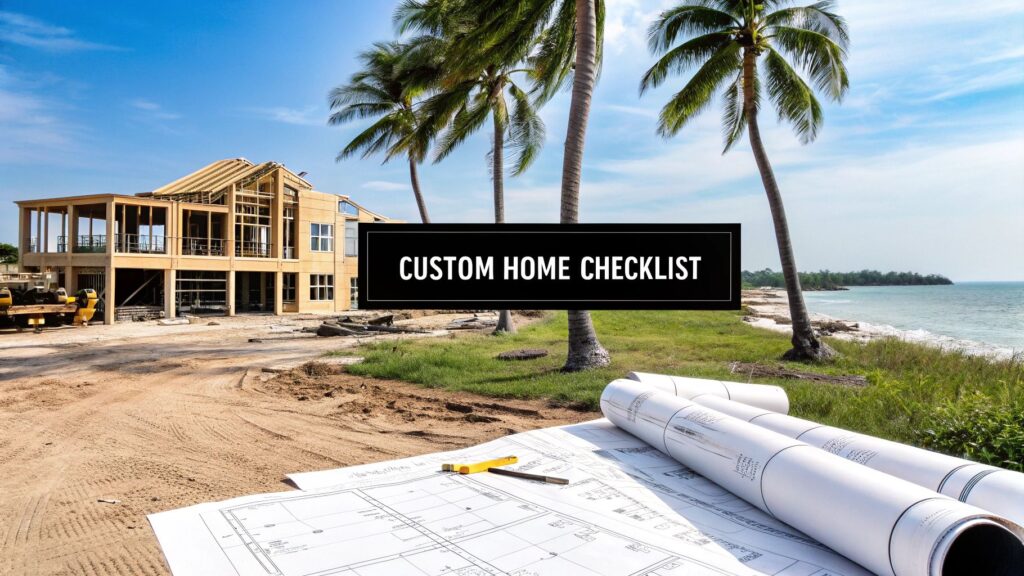
Building a custom home in Southwest Florida is more than just construction; it's about creating a personalized sanctuary resilient enough to withstand the unique coastal environment. This journey, from a simple vision to receiving the keys, requires a meticulous plan. With rising sea levels, evolving building codes post-hurricane season, and new builder trends focusing on both luxury and resilience, having a comprehensive guide is crucial.
This building a custom home checklist is your roadmap for 2025 and beyond, tailored specifically for the opportunities and challenges of the Southwest Florida market. We'll navigate the latest in hurricane impact features, the necessity of integrated generator systems in Florida's storm-prone climate, and the new design features that define modern living in Fort Myers, Cape Coral, and beyond. This is not a generic overview; it's a detailed blueprint covering everything from initial financial planning and site analysis to navigating permits, selecting materials, and managing the final punch list, reflecting the latest news affecting the Florida building industry.
By following this guide, you will gain a clear understanding of each critical stage, empowering you to make informed decisions and transform your dream into a tangible, storm-ready reality. Let's lay the foundation for a home that is not only beautiful but also engineered for peace of mind.
1. Financial Blueprint: Budgeting for Florida's Unique Costs
Building a custom home in Southwest Florida requires a financial strategy that accounts for the region's unique environmental and regulatory landscape. A standard construction budget is simply not enough; your financial blueprint must be a detailed, forward-thinking plan. This first step on your building a custom home checklist is foundational, ensuring your project is solvent from land acquisition to final inspection. It involves a granular breakdown of costs that go far beyond lumber and labor, specifically targeting the realities of coastal construction in Florida.

In areas like Cape Coral and Fort Myers, this means allocating funds for significant site work to meet new Base Flood Elevation (BFE) requirements, a critical factor given recent news and climate projections for Florida. This can involve substantial costs for fill dirt and specialized foundations. Your budget must also prioritize hurricane-rated materials, such as high-performance hurricane impact glass and reinforced roofing systems designed to withstand Category 4 or 5 winds. A comprehensive budget anticipates these non-negotiable expenses upfront, preventing costly surprises down the road.
Key Insight: A successful Southwest Florida build treats resilience features not as upgrades, but as core budget line items. Items like a whole-home generator, essential during prolonged power outages after a storm, or advanced moisture barriers are essential investments in your home's longevity and safety.
Actionable Budgeting Strategies
To implement a robust financial plan, break your budget into distinct categories:
- Land & Site Preparation: Includes the purchase price of the lot, plus costs for clearing, fill dirt to meet new elevation standards, and soil testing to ensure foundation stability.
- Hard Construction Costs: The core build, including foundation, framing, roofing, and finishes. Get specific quotes for hurricane-impact glass and fortified roofing materials early.
- Resilience & Systems: Create a separate budget "bucket" for items like a whole-home generator with an automatic transfer switch, a comprehensive lightning protection system, and high-efficiency HVAC units built for humid climates.
- Soft Costs & Fees: This covers architectural designs, engineering studies, municipal permitting fees (which have increased in many Florida municipalities), and higher-than-average builder's risk and flood insurance premiums.
- Contingency Fund: Set aside a non-negotiable 15-20% of your total project cost. In a region prone to supply chain disruptions during hurricane season, this fund provides critical flexibility.
2. Site Selection and Land Analysis
The perfect custom home begins with the perfect piece of land, a step on your building a custom home checklist that defines the project's potential and constraints. In Southwest Florida, site selection is far more than just choosing a location; it's a critical analysis of environmental factors, zoning regulations, and physical characteristics that will directly impact your home's design, resilience, and final cost. The right lot complements your vision, while the wrong one can introduce unforeseen expenses and frustrating limitations based on the latest news affecting development in Florida.
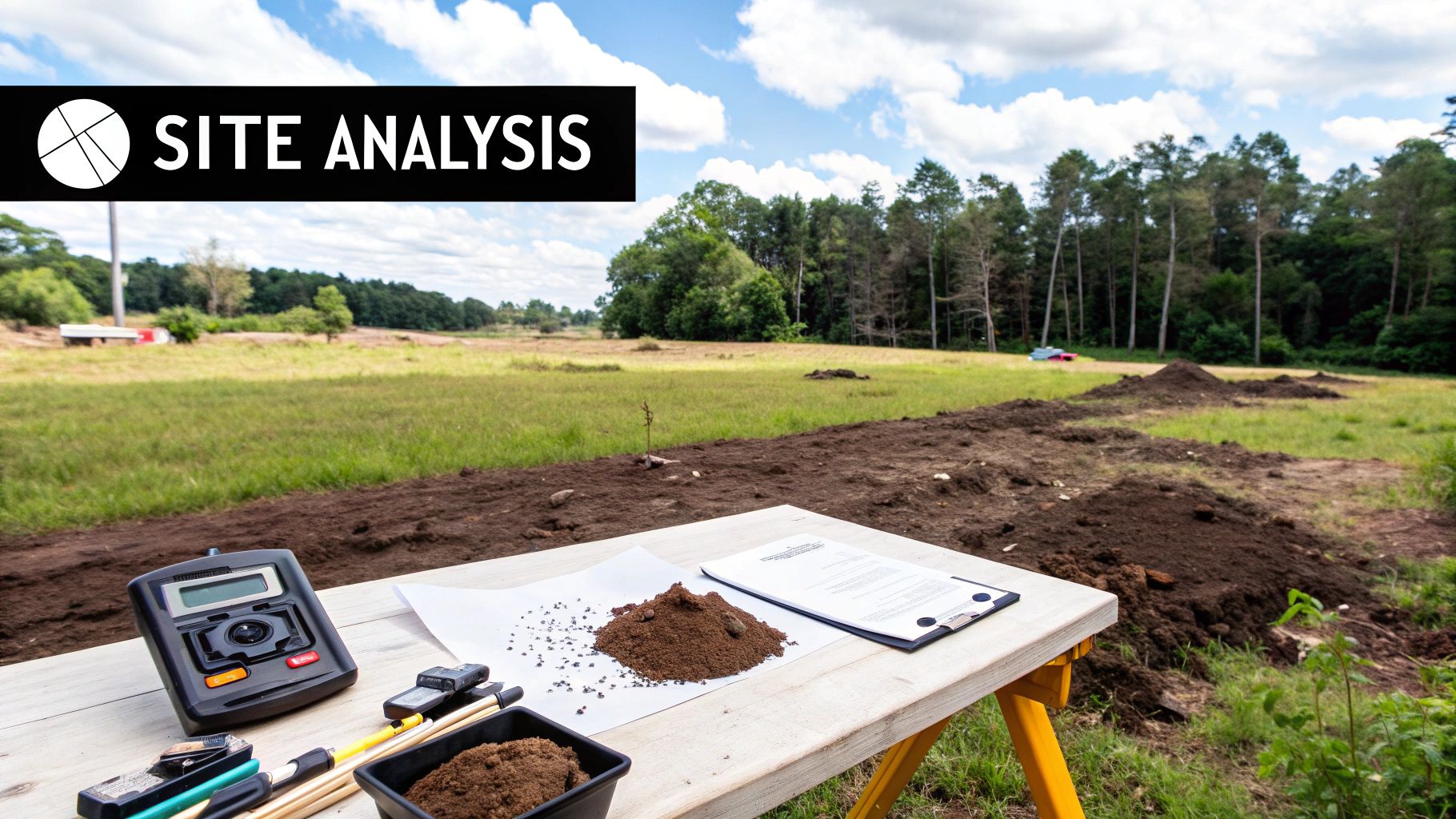
For instance, a waterfront property in a Fort Myers Beach AE flood zone requires a specialized piling foundation and adherence to strict elevation codes, very different from an inland lot in a less restrictive X zone. The initial phase of your build relies heavily on professional excavation and land clearing to prepare your chosen site for construction. Proper analysis ensures these preparation costs, from bringing in fill dirt to meet updated BFE requirements to removing invasive species, are factored into your budget from day one.
Key Insight: Treat land acquisition as a due diligence mission, not just a transaction. The unseen elements below the surface, like soil composition and water table levels, hold as much importance as the view or neighborhood amenities, directly affecting your elevation and foundation strategy.
Actionable Land Analysis Strategies
To ensure your chosen lot is a sound investment, perform a thorough evaluation:
- Geotechnical & Environmental Survey: Before closing, invest in a soil test to determine load-bearing capacity and a survey to identify flood zones, easements, and property lines. This data is non-negotiable for engineering a stable foundation that meets Florida's demanding standards.
- Utility & Infrastructure Audit: Verify the availability and connection costs for essential utilities like water, sewer, and electricity. For rural sites, this means budgeting for well drilling and a septic system, including the necessary permits and percolation tests.
- Zoning & Covenant Review: Scrutinize local zoning laws, deed restrictions, and any Homeowners Association (HOA) covenants. These rules can dictate everything from your home's exterior color and size to specifics about seawalls and boat docks.
- Site Preparation Cost Estimate: Get firm quotes for land clearing, grading, and the amount of fill dirt required to meet the current Base Flood Elevation (BFE). These elevation-related costs can vary dramatically and must be included in your initial budget.
- Future Development Research: Investigate the long-term development plans for the surrounding area. A quiet, wooded lot today could be adjacent to a major roadway or commercial center in five years, impacting your property value and quality of life.
3. Design Planning and Architectural Services
The design phase is where your custom home vision begins its transformation into a tangible reality. This collaborative process involves working closely with architects and designers to translate your ideas, lifestyle needs, and aesthetic preferences into detailed blueprints. For a home in Southwest Florida, this step on your building a custom home checklist must expertly balance beautiful design with the stringent demands of local building codes and the coastal environment. It's about creating a home that is not only functional and visually stunning but also resilient and code-compliant.
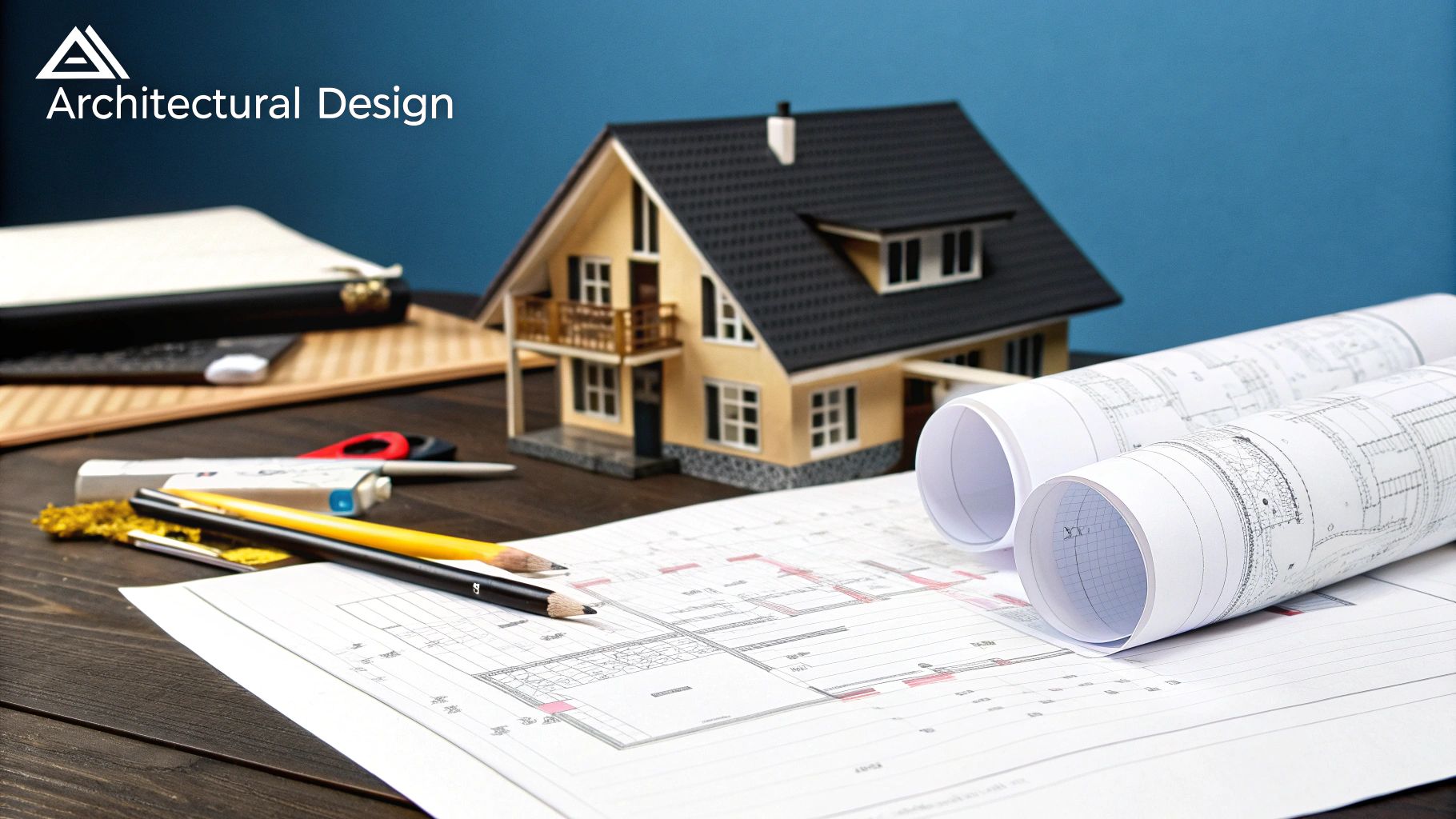
In communities like Fort Myers and Cape Coral, architectural plans must address specific challenges like high humidity, intense sun exposure, and the risk of hurricanes. A critical component for integrating strength and style is the selection of materials such as hurricane impact glass for your windows and doors. The design must also seamlessly incorporate modern necessities like elevated living spaces to meet flood requirements and dedicated, well-ventilated areas for whole-home generators—a feature that has become standard practice after recent storms. New design features often include expansive indoor-outdoor living spaces with retractable glass walls, creating a seamless connection to the Florida landscape while maintaining structural integrity.
Key Insight: The most successful custom home designs are born from a detailed "lifestyle audit" before any lines are drawn. Consider your daily routines, future family changes, and how you will use each space, ensuring the final blueprint is a perfect reflection of how you live.
Actionable Design Strategies
To ensure your architectural plans are comprehensive and effective, approach the design process with clear goals:
- Create a Vision Board: Before meeting with your architect, compile inspiration images, material samples, and a detailed wish list. Rank your priorities as "must-haves," "nice-to-haves," and "dream features" to guide budget discussions.
- Plan for Resilience and the Future: Discuss incorporating features that enhance durability and long-term livability. This includes designing for future needs, like aging-in-place, specifying robust hurricane impact features, and integrating smart home technology for energy efficiency and convenience.
- Specify Finishes Early: Make decisions on flooring, fixtures, cabinetry, and lighting during the design phase, not during construction. This prevents decision fatigue, avoids delays, and provides a more accurate initial cost estimate.
- Review Drawings Meticulously: Take the time to understand every detail of the blueprints. Verify room dimensions, window placements, and electrical layouts. Your thorough review and approval are critical before construction begins.
This detailed planning stage is a cornerstone of the entire project. To see how this fits into the larger journey, you can learn more about the custom home building process on sinclaircustomhome.com.

4. Permits and Legal Requirements
Navigating Southwest Florida's regulatory maze is a critical and often underestimated step in the construction journey. This phase goes far beyond simply filing paperwork; it involves a deep understanding of local building codes, complex zoning laws, and stringent environmental regulations specific to coastal areas. Successfully managing this part of your building a custom home checklist ensures your project remains compliant, avoiding expensive delays, stop-work orders, or fines that could derail your timeline and budget.
In municipalities like Fort Myers and Cape Coral, the permitting process is rigorous, especially post-Hurricane Ian. Regulations now mandate stricter adherence to hurricane-resistant standards, from reinforced concrete tie beams to specific nailing patterns for roof sheathing. If your property is near a designated wetland or coastal conservation area, you may also need environmental impact studies and approvals from agencies beyond the local building department, adding another layer of complexity to your Florida build.
Key Insight: Treat the permitting process not as a bureaucratic hurdle, but as a quality control checkpoint. These regulations are designed to ensure your home is safe, resilient, and legally sound, protecting your investment for decades to come.
Actionable Strategies for Regulatory Navigation
To streamline the permitting and legal approval process, integrate these steps into your project plan:
- Engage Local Experts Early: Hire an architect, engineer, and builder with proven experience in your specific municipality. They will have established relationships with permitting officials and a deep understanding of local code interpretations, especially new hurricane-related mandates.
- Pre-Design Code Review: Before finalizing your design, conduct a thorough review of setback requirements, height restrictions, and lot coverage limitations. This prevents the need for costly redesigns later.
- Budget for Fees and Expertise: The permitting process involves significant costs. As you plan, factoring in the various fees is crucial, including understanding the cost of building regulations and professional consultation fees.
- Proactive Inspection Scheduling: Don't wait for your builder to schedule mandatory inspections. Work with them to call for inspections as soon as a phase of work is complete to keep the project moving forward without interruption.
- Organize Your Documentation: Maintain a digital and physical file of all submitted applications, permits, approved plans, and inspection reports. This centralized record is invaluable for reference and for your final certificate of occupancy.
5. Contractor Selection and Management
Choosing your general contractor is arguably the most critical decision in the entire process of building a custom home. This partner translates your architectural plans and financial blueprint into a physical structure, making their expertise, integrity, and management style paramount. This step on your building a custom home checklist goes far beyond comparing bids; it's about vetting a team's capability to navigate Southwest Florida’s demanding construction environment, from managing subcontractors to ensuring every hurricane-rated component is installed to code.
In coastal areas like Fort Myers Beach and Cape Coral, a builder's experience with local regulations and resilience measures is non-negotiable. An experienced contractor will be up-to-date on new builder trends and will have established relationships with reputable subcontractors who specialize in critical installations, such as impact window sealing, elevated foundation work, and whole-home generator integration. Their project management system should be transparent, providing you with regular updates on progress, budget adherence, and any challenges that arise, ensuring a smooth build from foundation to finish.
Key Insight: The best contractor for your project isn't just a builder; they are a risk manager. They proactively address potential issues like supply chain delays during hurricane season, labor shortages, and complex permitting, protecting your investment and timeline.
Actionable Vetting & Management Strategies
To secure and manage a top-tier construction partner, implement a structured approach:
- Intensive Vetting: Interview a minimum of 3-5 general contractors. Move beyond their portfolio and ask specific questions about their experience with new BFE standards, their preferred suppliers for hurricane-impact materials, and how they manage project schedules when storms threaten.
- Visit Active & Completed Sites: Request to visit both a project currently under construction and one completed over a year ago. This allows you to assess their site management, craftsmanship, and the long-term durability of their work. Speak directly with the homeowners about their experience.
- Verify Credentials Exhaustively: Confirm their state license is active and in good standing. Request copies of their general liability insurance and workers' compensation policies. Check their Better Business Bureau (BBB) rating and look for any history of litigation.
- Establish Contractual Clarity: Your contract must be meticulously detailed. It should specify material brands, model numbers, and installation standards. Outline a clear payment schedule tied to construction milestones, and stipulate a 5-10% retainage to be held until the final walkthrough is complete and all punch list items are resolved.
- Define Communication Protocols: Agree on a regular communication schedule from the outset. This could be a weekly site meeting, a bi-weekly summary email with photos, or access to a project management portal. Clear, consistent communication is the cornerstone of a successful builder-client relationship.
6. Material Selection and Procurement
The strategic selection and procurement of materials are critical to defining your home's character, durability, and resilience, especially in Southwest Florida. This phase on your building a custom home checklist goes far beyond picking paint colors; it’s a logistical challenge of balancing aesthetics, performance, and availability. It involves the meticulous process of choosing, sourcing, and scheduling every single component, from the structural concrete to the final decorative hardware, ensuring they align with both your design vision and the demanding coastal environment.
In a post-hurricane market like Fort Myers and Cape Coral, material procurement is about proactive planning. The demand for specific high-performance items, such as impact-rated windows, advanced roofing systems, and moisture-resistant exterior claddings, can create significant lead times. A successful build depends on ordering these long-lead-time items months in advance to prevent costly delays that can halt the entire construction schedule. This is a key area where new builder trends, such as using composite materials or sustainably sourced wood, come into play.
Key Insight: Treat your material list as a critical-path document. Long-lead-time items, like custom cabinetry or imported tile, dictate your project timeline just as much as foundation work. Proactive ordering and supplier verification are non-negotiable.
Actionable Procurement Strategies
To master material selection, you need a system that ensures quality and timeliness:
- Create a Master Schedule: Work with your builder to develop a detailed material schedule that lists every selection, from foundation rebar to appliance models. This document should include model numbers, colors, suppliers, and required-on-site dates.
- Prioritize Long-Lead-Time Items: Identify and order materials with the longest delivery times first. This almost always includes windows, exterior doors, custom millwork, and specialized fixtures. Placing these orders as soon as the design is finalized is crucial.
- Factor in Resilience and Climate: Specify materials designed for Florida's humidity and sun. This includes mold-resistant drywall, marine-grade exterior lighting, and UV-resistant finishes. The trim and molding, for example, should be chosen for both style and ability to withstand moisture. You can learn more about selecting custom trim for Florida homes on sinclaircustomhome.com.
- Verify Upon Delivery: Never assume a delivery is correct. Inspect all materials immediately upon arrival for damage, quantity, and accuracy against your order specifications before they are installed.
- Plan for Overage: For materials like flooring, tile, and stone, order a 10-15% overage. This accounts for cuts, waste, and potential breakage, and provides you with extra stock for future repairs, ensuring a perfect match years down the road.
7. Construction Timeline and Project Management
A successful custom home build runs on a meticulously planned schedule, not guesswork. This phase of your building a custom home checklist transforms your blueprints and permits into a tangible reality by orchestrating every trade, material delivery, and inspection. In Southwest Florida, effective project management is critical for navigating weather delays, particularly during hurricane season, and coordinating specialized labor for features like seawalls and elevated foundations. A detailed timeline ensures efficiency, manages costs, and keeps the project moving forward with clarity.
This clean timeline infographic showcases three key construction phases for a custom home in Southwest Florida, providing a general duration for each stage.
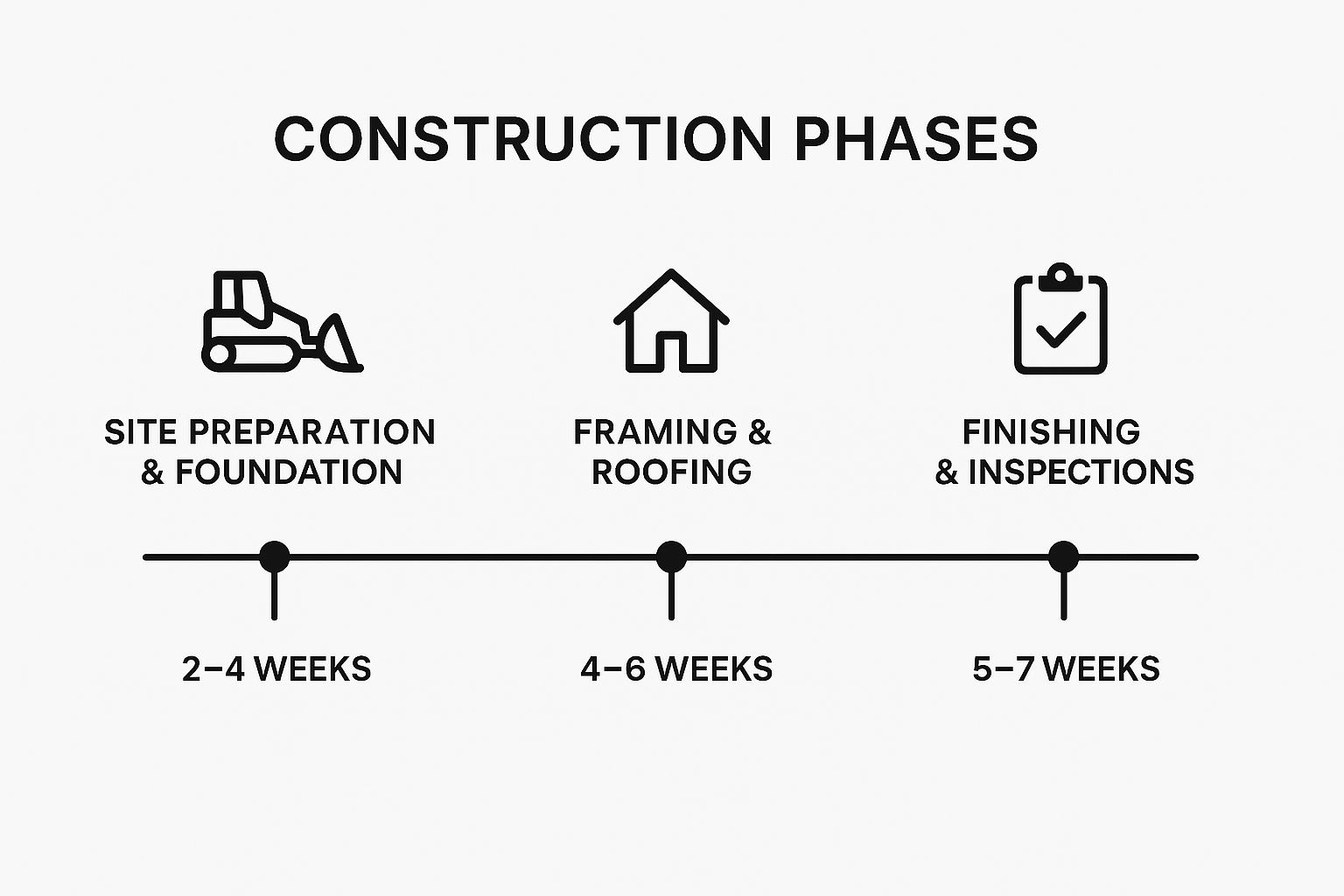
The visualization highlights how the critical path flows from foundational work to the final finishes, with each phase building upon the last in a structured sequence.

A key new builder trend involves utilizing digital project management tools, such as Buildertrend or CoConstruct, to provide clients with real-time updates. This transparency allows you to track progress, view photos, approve change orders, and communicate directly with your build team, creating a collaborative and accountable environment from groundbreaking to final walkthrough.
Key Insight: The construction timeline is not just a calendar; it is a dynamic risk management tool. Building buffer days into the schedule specifically for potential tropical weather events or supply chain hiccups is a non-negotiable strategy in coastal Florida construction.
Actionable Project Management Strategies
To keep your project on track, work with your builder to implement a clear management system:
- Establish a Critical Path: Use a Gantt chart or similar tool to map out essential tasks and their dependencies. This identifies which activities must be completed on time to avoid delaying the entire project.
- Schedule Weekly Meetings: Hold mandatory weekly check-ins, either on-site or virtual, with your project manager. These meetings should cover progress, upcoming milestones, and any challenges that have arisen.
- Leverage Technology: Insist on using a project management portal. This centralizes all communication, documentation, and financial tracking, preventing miscommunications and providing a clear record of the entire build.
- Coordinate Major Deliveries: Plan for the delivery of long lead-time items, like impact windows or custom cabinetry, well in advance to align with the installation schedule and avoid costly downtime.
- Implement a Contingency Plan: Define clear protocols for how schedule changes will be communicated and approved. This includes having a plan for securing the site and materials if a hurricane watch is issued.
8. Quality Control and Final Inspections
The final phase of your build is not just a formality; it's a critical checkpoint that validates the entire construction process. Implementing rigorous quality control throughout the build and conducting meticulous final inspections are essential steps in the building a custom home checklist. This stage ensures your new Southwest Florida home adheres to your architectural plans, meets stringent building codes, and performs as designed, protecting your significant investment and providing peace of mind. It’s where you confirm that every component, from the foundation to the rooftop, is flawless before you take possession.
In a region where construction quality directly impacts storm resilience, this process takes on heightened importance. It involves verifying that hurricane impact features are correctly installed and sealed, that the roof system meets Florida’s specific wind mitigation requirements, and that all electrical systems, including your generator, function perfectly under test conditions. This final verification is your last line of defense against future problems, ensuring the home is ready to face a Fort Myers or Cape Coral storm season.
Key Insight: Treat your final walkthrough not as a single event, but as the culmination of an ongoing quality assurance process. Engaging an independent, third-party inspector provides an unbiased expert assessment, catching issues the builder might overlook and ensuring total compliance.
Actionable Inspection Strategies
To ensure your home is built to the highest standard, adopt a multi-layered inspection approach:
- Independent Third-Party Inspections: Hire an inspector certified by a reputable organization like ASHI or InterNACHI. Schedule inspections at key milestones: pre-drywall (to see plumbing, electrical, and framing), and the final comprehensive walkthrough. This provides an unbiased report on the home's condition.
- Create a Detailed Punch List: During your final walkthrough, arm yourself with a notepad, camera, and painter's tape. Document every imperfection, no matter how small, from a scuff on the wall to a misaligned cabinet door. Take photos and note the specific location of each item.
- Systems Commissioning & Testing: Don't just look; test everything. Run the HVAC through a full cycle, test every faucet for hot water and pressure, flush all toilets, and operate every appliance. Conduct a full system test on your whole-home generator to confirm it engages correctly and can handle the load, simulating a power outage after a storm.
- Warranty and Documentation Binder: Ensure your builder provides a comprehensive binder containing all manuals, maintenance schedules, and warranty information for every component and appliance in your home. This is vital for future upkeep.
- Hold Back Final Payment: A standard practice is to withhold the final payment until every single item on the agreed-upon punch list has been corrected to your satisfaction. This provides powerful leverage to ensure the job is truly finished.
8-Step Custom Home Building Checklist Comparison
| Aspect | Budgeting and Financial Planning | Site Selection and Land Analysis | Design Planning and Architectural Services | Permits and Legal Requirements | Contractor Selection and Management | Material Selection and Procurement | Construction Timeline and Project Management | Quality Control and Final Inspections |
|---|---|---|---|---|---|---|---|---|
| Implementation Complexity | Moderate – requires detailed financial knowledge and planning | High – involves technical land assessments and due diligence | High – requires professional design skills and coordination | Moderate to High – navigating complex, varying regulations | High – vetting, contracting, and managing multiple parties | Moderate – balancing quality, cost, logistics | High – coordinating multiple trades, inspections, and timelines | Moderate – ongoing inspections and technical evaluations |
| Resource Requirements | Financial experts, budgeting tools, lender coordination | Soil tests, environmental assessments, legal research | Architects, designers, engineers | Permit specialists, legal knowledge, inspection scheduling | Experienced contractors, project managers | Material specialists, suppliers, logistics coordinators | Project managers, scheduling software, communication systems | Qualified inspectors, testing equipment, inspection services |
| Expected Outcomes | Controlled costs, financial clarity, secured financing | Optimal site selection supporting design and investment value | Custom home plans meeting codes, aesthetics, and function | Legal compliance, timely permits, avoidance of delays | Quality construction, timely completion, effective communication | High-quality materials available to prevent delays | Smooth project flow, minimized delays, coordinated work | Defect identification, warranty protection, quality assurance |
| Ideal Use Cases | Any custom build needing strong financial oversight | Projects requiring careful site feasibility and investment | Custom home builds focused on unique design and compliance | All builds requiring legal permits and regulatory compliance | Builds requiring professional construction oversight | Projects aiming for specific material quality and style | Builds with complex schedules and multiple subcontractors | Builds needing thorough quality assurance before handover |
| Key Advantages | Prevents cost overruns, aids financing decisions | Avoids costly site issues, enhances long-term value | Tailored designs, reduces construction errors | Ensures legal and safety compliance, avoids costly penalties | Reduces owner stress, ensures workmanship quality | Unique aesthetics, potential cost savings, exact material match | Reduces delays, optimizes workflow, early problem detection | Ensures structural and systems quality, protects investment |
Your Foundation for Success: Building with Confidence
Navigating the journey from a vacant lot to a finished home is one of the most significant and rewarding projects you can undertake. This comprehensive building a custom home checklist was designed not just as a list of tasks, but as a strategic roadmap to empower you throughout the process. By breaking down the complexities of financial planning, site selection, design, permitting, and construction management, you can move forward with clarity and a deep understanding of each critical phase. In Southwest Florida, building a custom home means planning for more than just aesthetics; it means engineering for resilience, preparing for hurricane season, and making smart choices about elevation and storm-ready features.
Key Takeaways for Your Southwest Florida Build
The path to your dream home is paved with deliberate, informed decisions. As you reflect on the steps outlined in this guide, remember these core principles:
- Financial Planning is Resilience Planning: Your budget must account for more than just square footage and finishes. In areas like Cape Coral and Fort Myers Beach, this includes allocating funds for impact-rated windows and doors, whole-home generators, and potentially higher foundation elevations to mitigate flood risk. A well-prepared budget is your first line of defense.
- Your Builder is Your Most Critical Partner: Selecting a contractor is not merely a business transaction; it is a long-term partnership. Look for a builder who demonstrates unwavering integrity, stays current on new builder trends and materials, and prioritizes quality over speed. This relationship is the cornerstone of a successful project.
- Design Must Marry Vision with Reality: Your architectural plans should be a perfect blend of your personal style and the practical demands of the Florida climate. This means integrating new design features like seamless indoor-outdoor living with robust structural engineering and essential hurricane impact features to withstand severe weather.
- Proactive Management Prevents Problems: From navigating local permitting requirements in Lee County to overseeing material procurement and ensuring quality control, staying ahead of the timeline is crucial. A proactive approach, supported by your builder, ensures that potential issues are addressed before they become costly delays.
Ultimately, mastering this building a custom home checklist transforms a daunting endeavor into a manageable and exciting journey. The goal is not just to construct a house, but to create a sanctuary that reflects your vision, provides security, and stands as a testament to thoughtful design and superior craftsmanship. By embracing these principles, you are not just building a structure; you are building a legacy designed to last for generations, ready to weather any storm and provide comfort in every season. Your diligence in the planning phase is the foundation upon which your future home, and all the memories within it, will be built with confidence.
Ready to turn your vision into a reality with a builder who embodies quality, integrity, and hands-on management? The team at Sinclair Custom Homes Inc specializes in creating high-performance luxury homes engineered for the unique demands of Southwest Florida. Visit Sinclair Custom Homes Inc to see how our commitment to on-site presence and over-engineered quality can bring your dream home to life.