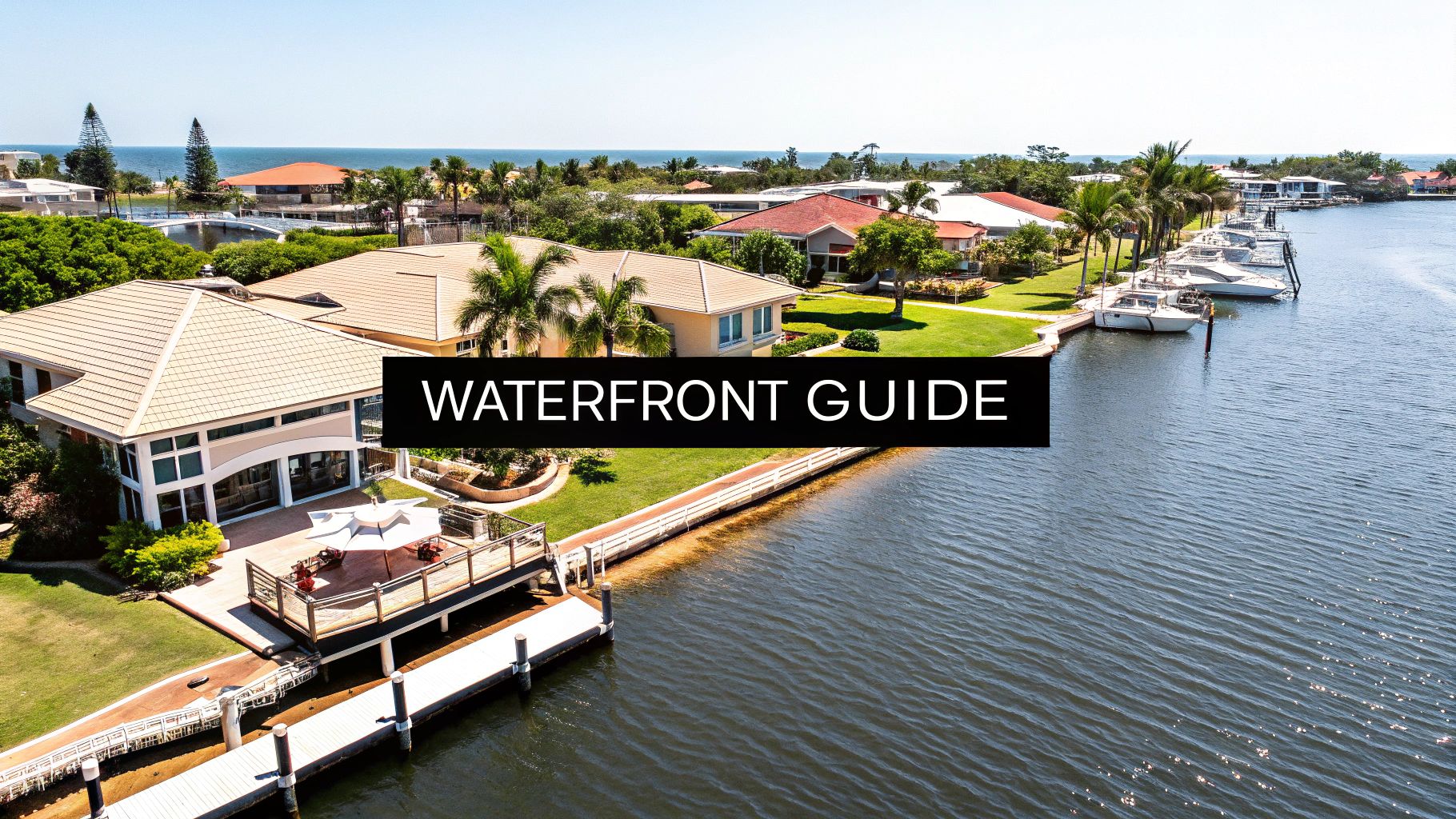
Waking up to calm canal views with your boat docked just a few feet from your back door—that's the dream. It’s the unique lifestyle a waterfront property in Cape Coral Florida offers, a perfect blend of backyard boating and modern living. This guide is your roadmap to turning that vision into a custom-built reality, focusing on the latest trends and resilient building practices in the custom home industry.
Building Your Dream Waterfront Home
Building a custom home on the water is so much more than a construction project; it's a commitment to a specific way of life. Cape Coral, with its famous 400-plus miles of canals, gives builders and homeowners a one-of-a-kind canvas to work with.
But creating a home here takes specialized knowledge that goes way beyond typical construction. The process means getting familiar with the local environment, from water access and property elevation to the latest in resilient building science. We're going to walk you through the most important parts of this journey, with a sharp focus on new builder trends and news affecting construction in Southwest Florida.
This guide will break down the complicated stuff into clear, actionable insights. We’ll focus on the latest trends and the must-know details for anyone looking to build. Our goal is to give you a solid understanding of what it really takes to create a durable, beautiful, and functional home in Southwest Florida's unique coastal landscape.
What You Will Learn in This Guide
To really get a handle on the custom home building process, you need to dive deep into a few key areas. We will cover the essentials, from picking the right lot to adding the final design touches that make a house feel like home.
Here's what we'll get into:
- Hurricane Resilience: We’ll look at modern construction methods like impact-rated windows, advanced roof-to-wall strapping, and why a whole-home generator is critical for keeping your family safe during a storm.
- Property Elevation and Flood Zones: Understanding how your property's elevation impacts flood risk, insurance premiums, and building requirements is foundational to a successful project. This is a key topic in Southwest Florida building news.
- Modern Design Trends: We'll explore how today's custom homes are seamlessly blending open-concept layouts with expansive outdoor living spaces, smart home tech, and energy-efficient materials.
- Navigating Regulations: Building on the water involves a whole different level of permitting and environmental rules. You’ll need to understand regulatory processes, which can include things like marine environmental impact assessments, to make sure your project is fully compliant.
By focusing on these core principles, you can transform the complex process of building a waterfront home into an exciting and rewarding experience. The right planning ensures your investment is not only beautiful but also engineered to last.
This introduction gives you the foundational knowledge to start your custom home journey with confidence, establishing us as your expert partner in this significant investment.
Choosing Your Ideal Waterfront Location
Picking the perfect lot is ground zero for creating your custom waterfront home. This one decision sets the stage for everything that follows—from your daily views and boating habits to your home’s final design, storm resilience, and even the total construction budget. Think of it like choosing the right canvas before an artist picks up a brush; the type of waterfront you settle on will shape every single choice you make from here on out.
Here in Cape Coral, "waterfront" isn't a one-size-fits-all term. The city is a fascinating tapestry of different canals and waterways, and each one offers a completely unique lifestyle. Getting to know these differences is the key to making sure your new property truly matches the dream you have in mind.
The journey from a simple idea to a finished home is a clear, step-by-step process. It starts with a dream, moves into careful planning, and ends with a precise build.
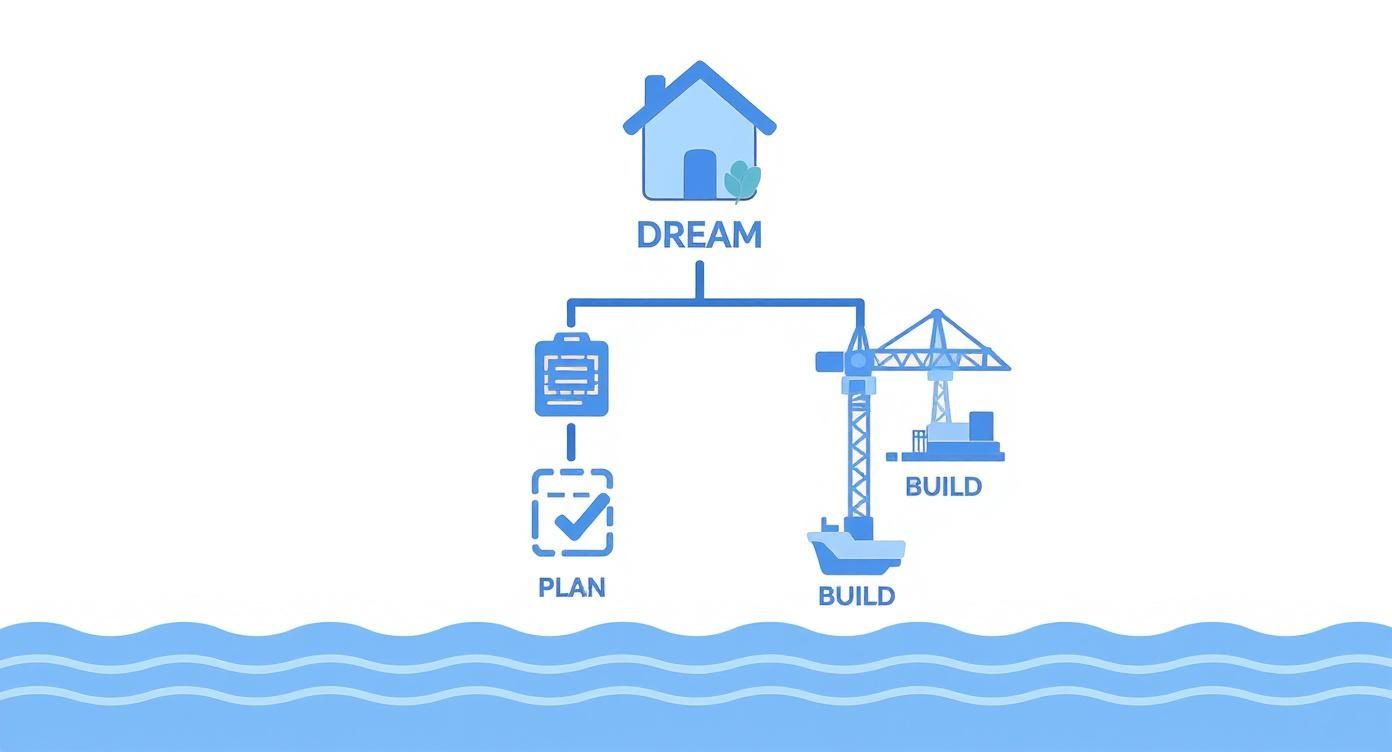
This visual shows that a successful project isn't rushed. It’s a deliberate journey that starts with dreaming about the perfect home, then moves into meticulously planning every feature before executing the build with a skilled team.
Comparing Cape Coral Waterfront Property Types
To help you get your bearings, this table breaks down the main types of waterfront properties available for your custom home build in Cape Coral. It covers the key features, advantages, and practical considerations for each.
| Property Type | Boating Access | Typical Lot Cost | Key Considerations |
|---|---|---|---|
| Direct Sail Access | Quickest, unrestricted access to the Gulf. No bridges. | $$$$ (Highest) | Ideal for sailboats and large yachts. Highest demand and price. |
| Gulf Access Canal | Access to the Gulf via a canal system with bridges. | $$$ (High) | Check bridge heights and travel time to open water. Great for most powerboats. |
| Freshwater Canal | Landlocked system of canals and lakes. No Gulf access. | $$ (Moderate) | Perfect for kayaking, paddleboarding, and serene water views. More affordable. |
| Riverfront | Direct frontage on the Caloosahatchee River. | $$$$ (Highest) | Offers expansive views and often quick Gulf access, but can be exposed to more boat traffic and wind. |
Each of these options offers a distinct version of the Florida waterfront lifestyle. Your choice really boils down to how you plan to use the water and what you prioritize in a homesite.
The Critical Role of Elevation and Flood Zones
Once you’ve thought about water access, the single most important factor for building a waterfront property in Cape Coral, Florida is the lot's elevation. How high your property sits above sea level, and its corresponding FEMA flood zone designation, will directly influence your home's safety, insurance costs, and the specific construction codes you'll need to follow. This is a constantly evolving topic in Florida building news.
- Flood Zone AE: These are areas with a 1% chance of flooding in any given year. New homes built here must have their lowest floor elevated to or above the official Base Flood Elevation (BFE).
- Flood Zone VE: Known as a "Coastal High Hazard Area," these zones face serious risks from storm-driven waves. Building codes are much tougher, usually requiring homes to be built on deep pilings or other elevated foundations.
- Flood Zone X: These lots are on higher ground and are considered to have a moderate-to-low flood risk. While the government doesn't mandate flood insurance here, it’s almost always a smart idea to have it anyway.
Building a new custom home to meet today's strict elevation standards gives you a massive advantage. Not only does it offer far better protection against storm surge, but it also leads to dramatically lower flood insurance premiums compared to older, non-compliant homes nearby. This is a critical factor influencing the custom home industry in Southwest Florida.
Seawalls and Dock Permitting
The concrete wall that separates your property from the water is called a seawall, and it’s there to prevent erosion. The condition of this structure is a huge financial variable. A seawall that's failing can cost tens of thousands of dollars to replace, which makes getting a professional inspection a non-negotiable step before you buy any lot.
On top of that, building a dock isn’t as simple as just putting one in. It requires navigating a permitting process with the city and sometimes state agencies. They’ll look at things like water depth, protection for local wildlife like manatees, and how your dock might affect your neighbors. This is where working with an experienced local builder becomes invaluable—they know the regulations inside and out and can help you get your dock design approved without frustrating and expensive delays.
The unique layout of Cape Coral is a huge part of its charm. You can dive deeper into what makes the city’s lifestyle so special and learn if Cape Coral is a good place to live.
Engineering Homes for Hurricane Resilience
Building a custom waterfront property in Cape Coral Florida is about more than just stunning views; it's about creating a home that can stand tall against the powerful weather Southwest Florida is known for. Real storm resilience isn't just about slapping on some hurricane shutters—it's an entire engineering philosophy that's built right into the bones of your home. This focus on hurricane impact features is a defining trend for custom builders in the region.
Think of it as a complete protective envelope, where every single component, from the foundation to the peak of the roof, works in harmony to shield your family from punishing wind and rain.
Modern building science has thankfully moved well beyond just meeting the bare minimum code requirements. Today, the best builders focus on creating an integrated defense system. This starts deep in the ground with a foundation built to the correct elevation and extends all the way to the roofing material, making sure every connection point is absolutely rock-solid.
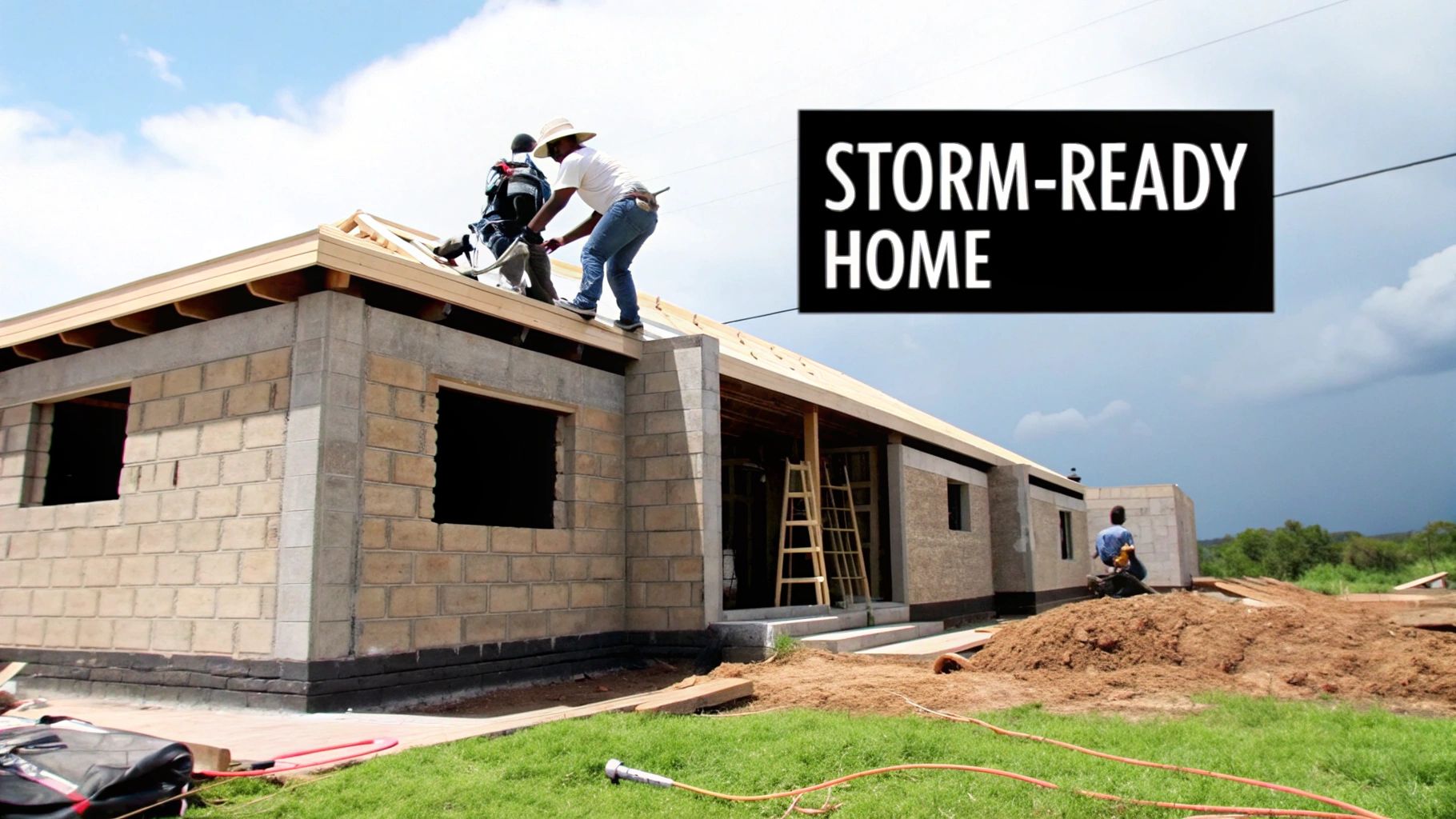
The ultimate goal is to build a structure that behaves as one single, unified unit, capable of shrugging off the massive uplift forces that hurricane winds create. This approach gives you more than just safety—it delivers priceless peace of mind.
Building a Fortified Structural Shell
The heart of any storm-ready home is its structural shell. Here in Cape Coral, that almost always starts with reinforced concrete block construction. Steel rebar is threaded vertically through the blocks, which are then filled with solid concrete. The result is a formidable wall system that resists both direct impacts and immense lateral wind pressure.
But strong walls are only part of the story. The real magic lies in how the roof is anchored to them.
Advanced roof-to-wall strapping, commonly known as hurricane straps, is absolutely critical. These heavy-gauge steel connectors are engineered to bolt the roof trusses directly to the concrete block walls. This prevents the roof from being lifted off during a storm—a catastrophic point of failure we see all too often in older homes. This is a non-negotiable hurricane impact feature.
On top of that, a sophisticated moisture barrier is wrapped around the exterior sheathing before any siding or stucco goes on. This wrap acts like a high-tech raincoat for your house, keeping wind-driven rain from getting inside the walls where it can cause devastating water damage and mold. Of course, you also have to consider the glass, so it's vital to research all your options when choosing your hurricane window protection options, from impact windows to various shutter systems.
Ensuring Energy Independence with Whole-Home Generators
Riding out the storm is just the first challenge. Living comfortably in the aftermath is just as important. Widespread power outages can drag on for days, even weeks, but a whole-home generator ensures your family isn’t left in the dark. This has become an essential design feature in new custom homes, especially after recent storms.
These aren't the portable units you drag out of the garage. Whole-home generators are permanent installations that kick on automatically within seconds of an outage. They are powerful enough to run everything you need:
- Air conditioning (a must-have in Florida!)
- Refrigerators and freezers, protecting your food supply
- Lights and security systems
- Important medical equipment and all your electronics
Proper installation is everything. All mechanicals, including the generator and your HVAC units, must be elevated above the Base Flood Elevation (BFE). This crucial step protects thousands of dollars worth of equipment from being wiped out by storm surge. Many homeowners are now looking at different foundation designs, like those used for Florida stilt homes, which offer superior elevation and protection for the home and its vital systems.
Choosing the Right Generator System
When adding a generator to your plans, the biggest decision is the fuel source. Each has its own pros and cons for a waterfront property.
| Fuel Type | Advantages | Considerations |
|---|---|---|
| Natural Gas | Connects to the municipal supply, giving you a nearly endless source of fuel. It’s convenient and burns clean. | You need to have access to a natural gas line, which isn't available on every street in Cape Coral. |
| Propane | A large, dedicated tank is installed on your property, so your fuel supply is completely independent of public utilities. | The tank requires periodic refills, and you need to plan for its placement so it doesn't become an eyesore. |
An experienced custom builder can walk you through which option makes the most sense for your specific lot and lifestyle. They’ll also know how to seamlessly integrate the generator and its fuel tank into your home's design and landscaping, making it both functional and discreet. That’s the kind of detailed planning that turns a house into a true, resilient sanctuary.
Embracing Modern Waterfront Design Trends
Building a custom waterfront property in Cape Coral Florida isn’t just about the structure; it’s about creating a home that feels as smart and stunning as the water it sits on. The real magic in today's new design features is the way we're dissolving the lines between indoor luxury and outdoor coastal living. This goes way beyond just installing a big sliding glass door. Custom home builders now engineer the entire home to function as one seamless space where the lanai is just as vital as the living room.
It all starts with an open-concept floor plan. By minimizing interior walls, we create these vast, airy spaces where the kitchen, dining, and living areas all flow together. This isn't just a style choice; it’s a practical way to flood the home with natural light and guarantee that you have an amazing water view from nearly every room. The goal is simple: make that shimmering canal a constant, beautiful backdrop to your daily life.
That seamless flow continues right outside, where expansive outdoor living areas have become the new normal. And these aren’t just simple patios. They're fully-equipped outdoor rooms, designed from the ground up for year-round enjoyment.
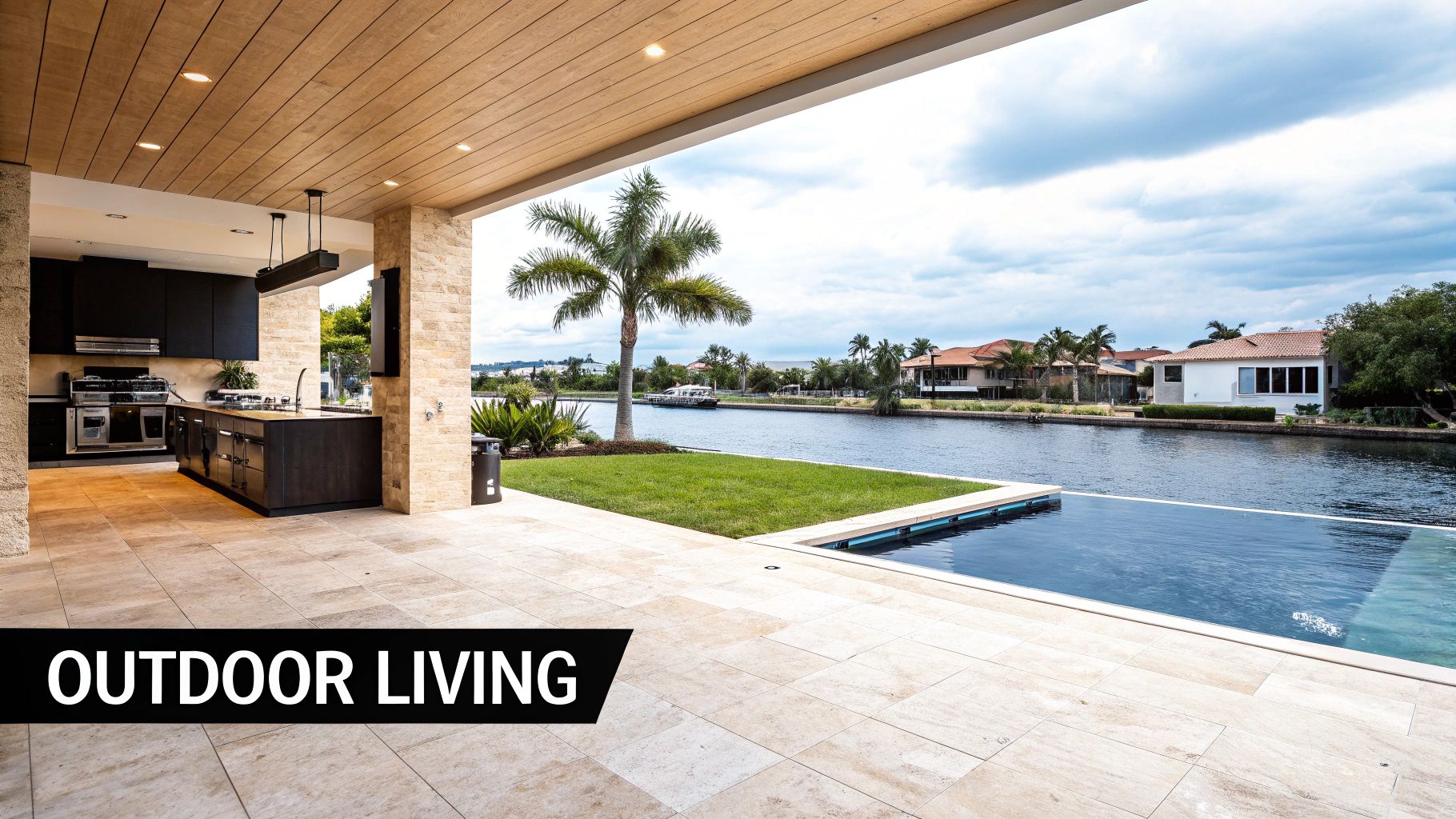
Blurring the Lines Between Indoors and Out
The modern Cape Coral lanai is a true marvel of design and engineering. Features that used to be considered high-end upgrades are now the essential building blocks of the waterfront lifestyle. Every detail of these spaces is meticulously planned to deepen your connection to the water while wrapping you in comfort and convenience.
Here are a few key design features you’ll see in new custom builds:
- Panoramic Lanai Screens: Say goodbye to traditional screened cages with their chunky aluminum frames. These wide-format screens give you a completely unobstructed view, creating a "picture window" effect. You feel totally connected to the canal, but without any of the bugs.
- Negative-Edge Pools: You might know them as infinity pools. They create a breathtaking visual where the pool’s edge seems to vanish right into the waterway. It’s a touch of resort-style luxury that transforms any backyard.
- Fully Equipped Outdoor Kitchens: We’re talking about much more than a standalone grill. Modern outdoor kitchens come with built-in gas grills, refrigerators, sinks, and beautiful, durable stone countertops. It makes alfresco dining and entertaining completely effortless.
This fusion of indoor and outdoor spaces fundamentally changes how you experience your home. You're no longer just looking at the water; you're living with it. This is a defining trend in the custom home industry, creating a fluid environment for everything from a quiet morning coffee to a big family barbecue.
Smart Homes for the Boating Lifestyle
As home design evolves, so does the technology that runs it. Smart home automation is no longer a novelty; it’s a core feature in new custom builds, offering a level of control that’s perfectly suited for waterfront living. For boaters, this tech is a game-changer, simplifying routines and boosting security.
Imagine getting ready for a day on the water with a single tap on your phone. Custom home builders are now integrating systems that let you:
- Control Your Boat Lift Remotely: Lower your boat into the canal while you’re still inside grabbing the cooler. No more wasted time at the dock.
- Monitor Your Property From Anywhere: Check security cameras covering your dock, lanai, and front door. It gives you incredible peace of mind, whether you're at the grocery store or out of town for the week.
- Automate Lighting and Climate: Program your lanai lights and fans to switch on at sunset, or even adjust the AC from your boat as you’re heading home.
The Rise of Energy-Efficient Materials
Alongside all these luxury features, there's a huge push toward building smarter, more sustainable homes. The materials we use in modern construction are picked for performance, not just looks. Things like energy-efficient windows with low-E coatings, spray foam insulation that creates an airtight seal, and high-SEER HVAC systems all work in concert to slash your long-term utility costs.
This focus on efficiency is a must in the Florida climate. A well-built, energy-efficient home stays cooler, uses less power, and is a quieter, more comfortable place to live. It's a forward-thinking approach that makes sure your beautiful waterfront home is also a sound financial investment for years to come.
Navigating Construction Costs and Market Realities
Let's be upfront about the financial side of building your dream home. A successful project starts with a clear understanding of the numbers. When you're building a waterfront property in Cape Coral, Florida, your budget isn't just about the house itself—it's shaped by the specific lot you choose and the broader economic pulse of Southwest Florida. Getting a handle on these factors, which are often in the news, is key to moving forward with confidence.
The journey really begins at the dirt. Site-specific needs are often the biggest wild cards in a construction budget. For instance, a low-lying lot might need a whole lot of fill dirt just to meet today's elevation codes, and that adds up in both material and labor. The soil itself can also throw you a curveball, sometimes requiring more complex (and expensive) foundation work to guarantee the home stands strong for decades.
Site-Specific Cost Drivers
Beyond just prepping the land, the condition of the waterfront is a massive piece of the puzzle. A pre-purchase seawall inspection is absolutely non-negotiable. Trust me on this. Discovering a failing or damaged seawall after you've closed on the lot can mean a surprise bill for tens of thousands of dollars. It’s critical to identify this early. These are the kinds of foundational costs that have to be locked in before a single bag of concrete is opened.
Other factors that will absolutely influence your budget include:
- Permitting and Impact Fees: These are the city's fees for any new construction. Knowing what to expect here helps you avoid any nasty surprises down the road. Our guide on Cape Coral building permits breaks this process down in more detail.
- Utility Connections: Getting water, sewer, and power hooked up to your specific lot isn't always plug-and-play. Depending on the existing infrastructure, there can be extra costs.
- Debris Removal: If you're buying a lot with an old house on it, you have to account for the cost of demolition and hauling everything away in your initial financial plan.
Broader Economic and Regional Influences
While your lot's unique quirks are a big deal, the larger market realities also have a say in the final price tag of your new home. Southwest Florida is a hot market, and a few key trends directly affect construction budgets. The insurance world, for one, is always changing. Building to the very latest, most resilient codes doesn't just protect your home; it can also help you get better insurance premiums. This is a constant topic of news that affects building across Florida.
On top of that, the cost and availability of building materials can shift based on national and global supply chains. A seasoned builder knows how to stay ahead of these trends, sourcing materials smartly to keep your project on track and on budget. And with recent major storms, building codes have gotten even tougher to improve storm resilience, which can affect both construction methods and the materials we use.
The incredible demand for housing in this region, fueled by massive population growth, is what makes building a new custom home here such a solid long-term investment. This growth helps keep property values strong, ensuring your home is more than just a place to live—it's a valuable asset.
This regional boom is impossible to ignore. Cape Coral's waterfront property market is directly tied to its incredible population surge. Between 2020 and 2025, the population shot up by nearly 25%, hitting an estimated 243,810 residents in 2025 with an annual growth rate of 4.13%. This flood of new residents is what's driving the intense demand for waterfront homes. You can read more about this trend and get more insights on Cape Coral's real estate future on floridafuturerealty.com.
Partnering With the Right Custom Home Builder
When you decide to build a waterfront property in Cape Coral, Florida, choosing your builder is hands-down the most critical decision you will make. This isn't just about hiring a contractor; it’s about finding a partner who understands the custom home industry and can expertly navigate you through the complexities of modern construction.
This partnership is all about turning your ideas into a resilient, one-of-a-kind home. A smooth, transparent building journey isn't just a nice-to-have—it should be the standard.
The real work begins long before the first shovel hits the dirt. It all starts with a design consultation and a meticulous lot evaluation. An experienced builder will walk the property with you, pointing out the unique opportunities of the site and flagging potential challenges like soil conditions, seawall integrity, and elevation requirements. Doing this homework upfront saves a world of headaches and costly surprises later on.
From that point, we shift gears to translating your dream into a concrete, buildable plan. This is where a builder's deep understanding of local codes and regulations really proves its worth.
The Sinclair Custom Homes Process
We see building a home as a true partnership, one that transforms a complicated undertaking into an exciting and genuinely rewarding experience. Our foundation is built on superior craftsmanship and unwavering transparency, every single step of the way. We don’t just build beautiful homes; we engineer them to stand up to the unique demands of the Southwest Florida environment.
Our process is designed to be clear and straightforward:
- Initial Design & Lot Evaluation: We start by listening. We want to understand your lifestyle so we can perfectly align it with the potential of your property.
- Architectural Planning: We team up with top-notch architects to design a home that feels both timeless and modern, incorporating new builder trends from open-concept layouts to expansive outdoor living spaces.
- Transparent Permitting: Let us handle the red tape. We manage the entire permitting process with the city and county, making sure every detail complies with the latest building codes.
- Precision Construction: Our hands-on, on-site management ensures that every detail—from the reinforced foundation to the final piece of trim—meets our exacting standards.
- Final Walkthrough & Handover: Before we hand over the keys, we’ll walk through your completed home with you to make sure every single element is perfect.
A great builder doesn’t just build houses; they build trust. They are your advocate, your problem-solver, and the steady hand that guides your project from a simple idea to a breathtaking reality. Our goal is to inspire you to take that next step toward creating your dream home.
Frequently Asked Questions About Waterfront Construction
Committing to a custom waterfront property in Cape Coral, Florida is a huge step, so it's only natural to have a few questions buzzing around. We hear a lot of the same great questions from clients dreaming of a home on our beautiful canals, so we’ve put together some straight answers focusing on the custom home industry.
How Long Does It Take to Build a Custom Home?
This is the big one, and the honest answer is: it depends. The timeline really hinges on a few key things, like how complex your home design is, how quickly the city’s permitting process moves, and what the current supply chain for materials looks like.
From the day we sketch the first line to the moment we hand you the keys, you should plan for a timeframe of about 12 to 18 months. The pre-construction phase—which is all about design and getting those permits approved—can take up several months on its own. Once we break ground, the actual build usually takes another 9 to 12 months to get everything just right.
What Are Common Unforeseen Costs?
If there's one area where surprises can pop up, it's almost always related to the land itself. Building on the water comes with unique challenges you just can't see by looking at an empty lot.
Here are a few of the most common surprises we help clients navigate:
- Extra Fill Dirt: Your lot might need more soil than we first think to meet the latest hurricane-safe elevation codes.
- Poor Soil Conditions: Sometimes, the ground beneath the surface isn't as stable as it looks. This might require specialized foundation engineering to ensure your home stands strong for decades.
- Seawall Repairs: An existing seawall can look perfectly fine from the outside but hide structural problems below the waterline. This could mean a major repair or even a full replacement is needed.
A thorough due diligence process on your chosen lot, conducted with an experienced waterfront builder, is the single best way to identify and budget for these potential issues before they become costly problems.
How Does New Construction Affect Flood Insurance?
Here’s some great news for those investing in the custom home industry. Building a brand-new custom home today gives you a massive advantage when it comes to flood insurance costs. All new construction is required to follow the very latest, most stringent building codes. A key part of that is elevating the home above the Base Flood Elevation (BFE).
This modern, compliant design—which we often pair with hurricane-impact windows and doors and superior engineering—leads to dramatically lower insurance premiums compared to older homes sitting at a lower elevation in the same neighborhood. While your final rate will depend on your specific flood zone and how high we build, engineering your home correctly from the very start is the most powerful tool you have for locking in great insurance rates for the life of your home.
Ready to turn your vision of waterfront living into a reality? The team at Sinclair Custom Homes Inc specializes in engineering and building resilient, beautiful homes designed for the Southwest Florida lifestyle. Contact us today to schedule your initial consultation.