


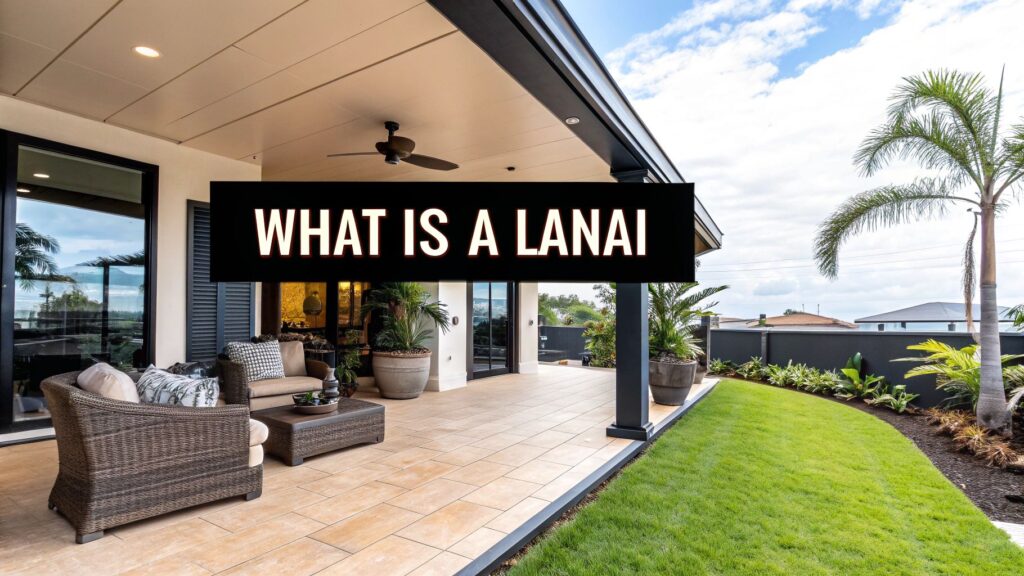
When you think about the quintessential Florida custom home, a lanai is probably part of that picture—even if you don't know it by name. It’s far more than just a patio; it's an architectural feature that acts as a true extension of your home. Think of it as creating a roofed, outdoor room that perfectly marries indoor comfort with the gorgeous Florida outdoors, a key trend in new home design.
What truly sets a lanai apart from a simple porch is how it's integrated directly into a custom home's floor plan. This isn't an afterthought. It's a protected, incredibly versatile space designed from the ground up to enhance the Southwest Florida lifestyle.
What Is a Lanai and How Is It Different?
Imagine an indoor room that just happens to be outdoors. That's the essence of a lanai. Here in Southwest Florida, this feature has become an absolute cornerstone of modern custom home design. It creates a seamless flow from your great room right into the fresh air, almost always enclosed with screens to welcome the breeze while politely showing bugs the door.
This design philosophy is essential in Florida, where enjoying our year-round warm climate is at the top of every homeowner's list. A lanai isn't just an add-on; it's a dedicated living area. While a patio is often a separate, uncovered slab of concrete and a porch is a covered entrance, a lanai is built right under the main roof of the house.
The real difference is its function. A lanai is designed for living—not just for walking through or for a couple of chairs. It’s a deliberate space for dining with family, entertaining friends, and simply relaxing, all while shielded from the intense sun and pesky insects.
This valuable space is more than just a lifestyle upgrade; it’s a smart investment in the custom home market.
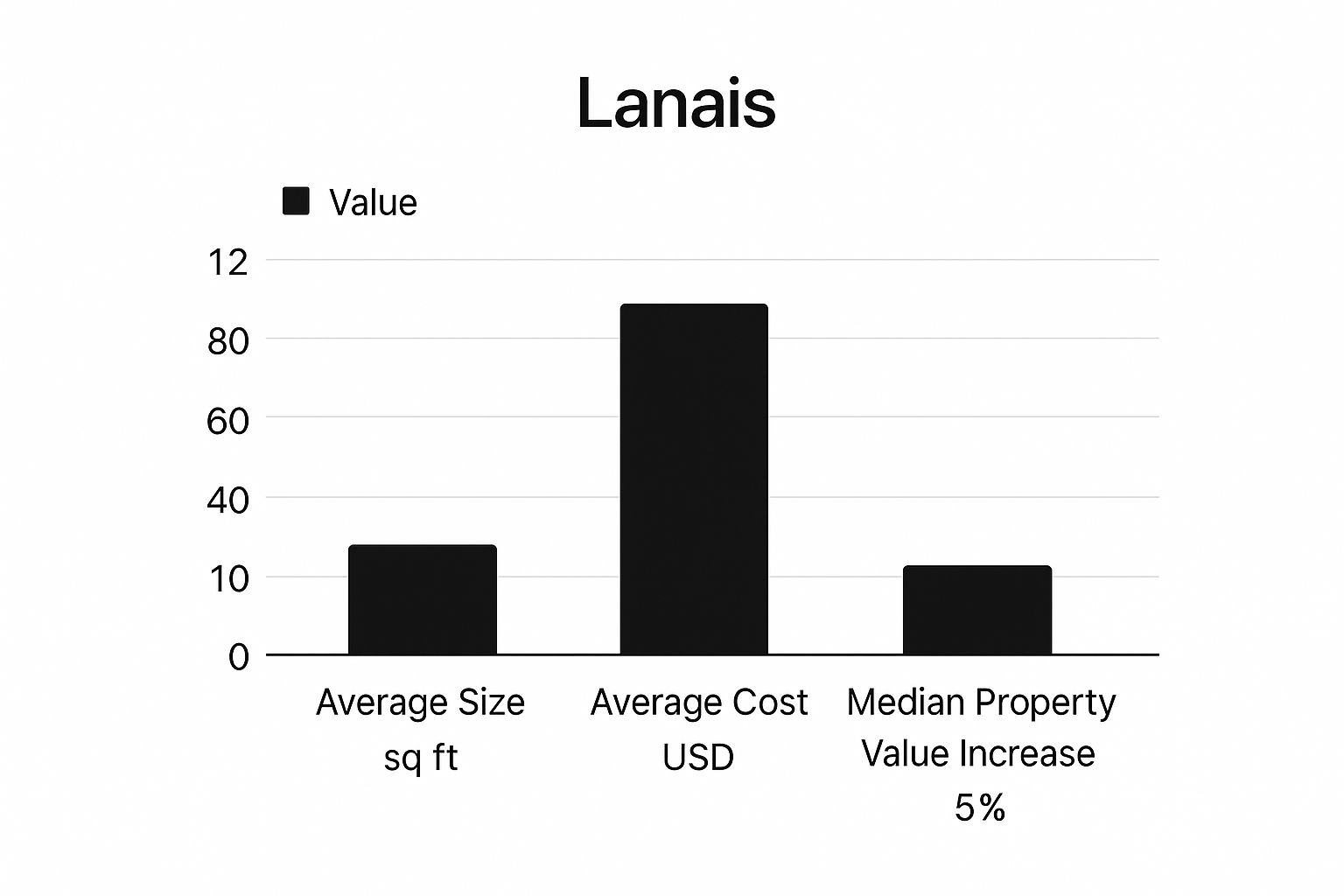

The numbers make it clear. An average-sized lanai can add a 5% median increase to your property's value. For custom home builders in beautiful areas like Cape Coral, this feature isn't just nice to have—it's a key selling point that savvy buyers look for, reflecting the latest trends in luxury living.
Still fuzzy on the differences? It's easy to confuse these outdoor spaces since the terms are often used loosely. This table should clear things up.
Lanai vs. Other Outdoor Spaces at a Glance
| Feature | Lanai | Porch | Patio | Veranda |
|---|---|---|---|---|
| Location | Back of the house, under the main roof | Front or back entrance | Adjacent to the house, at ground level | Often wraps around the house |
| Roof | Yes, part of the home's main roofline | Yes, has its own separate roof | No, typically open-air | Yes, a separate roof structure |
| Enclosure | Usually screened, sometimes with glass | Typically open, may have railings | No enclosure | Open, supported by posts or columns |
| Flooring | Continuous with home's interior flooring | Often wood, concrete, or tile | Paved with stone, brick, or concrete | Wood or tile |
| Primary Use | Outdoor living/dining room | Entryway and transitional space | Sunbathing, grilling, open seating | Shaded gallery for lounging |
Each of these structures offers a unique way to enjoy the outdoors. But as you can see, the lanai stands alone as a fully-fledged, protected living area that truly extends your home's footprint. It’s the ultimate solution for embracing the Florida lifestyle without compromise.
From Hawaiian Tradition to Florida Staple: The Lanai's Journey
You might be surprised to learn that the lanai, a signature feature of Southwest Florida luxury homes, wasn't born in the Sunshine State. Its story actually begins thousands of miles away, rooted in the elegant and practical architecture of traditional Hawaiian homes.
In its original form, the lanai was a simple, brilliant solution for island living. The Hawaiian word lanai refers to an open-sided porch or veranda, attached to a house and covered by a roof. This design was perfect for catching the gentle trade winds, offering a cool, shaded space that seamlessly blended the home's interior with the stunning tropical outdoors. You can dive deeper into the lanai's Hawaiian roots and cultural significance to see how this concept took shape.
It wasn't until the mid-20th century that this clever design philosophy made its way to the mainland, and Florida's home builders took notice. They saw a perfect marriage between the Hawaiian concept and Florida's own sun-drenched, outdoor-focused lifestyle. Builders began to adopt and adapt the lanai, evolving it from a basic porch into the sophisticated, integrated living area we know today.
What started as a simple porch became a symbol of Florida luxury. The lanai isn't just an add-on anymore; it’s a foundational element of modern home design, especially for custom builds where that effortless flow between indoor and outdoor living is everything.
So, the modern Florida lanai is a direct descendant of that original Hawaiian ingenuity. It’s been enhanced with contemporary materials and engineered to withstand our unique coastal climate, but its soul remains the same: a perfect space to live, relax, and enjoy the beauty of the outdoors.
Designing Your Ultimate Outdoor Living Space
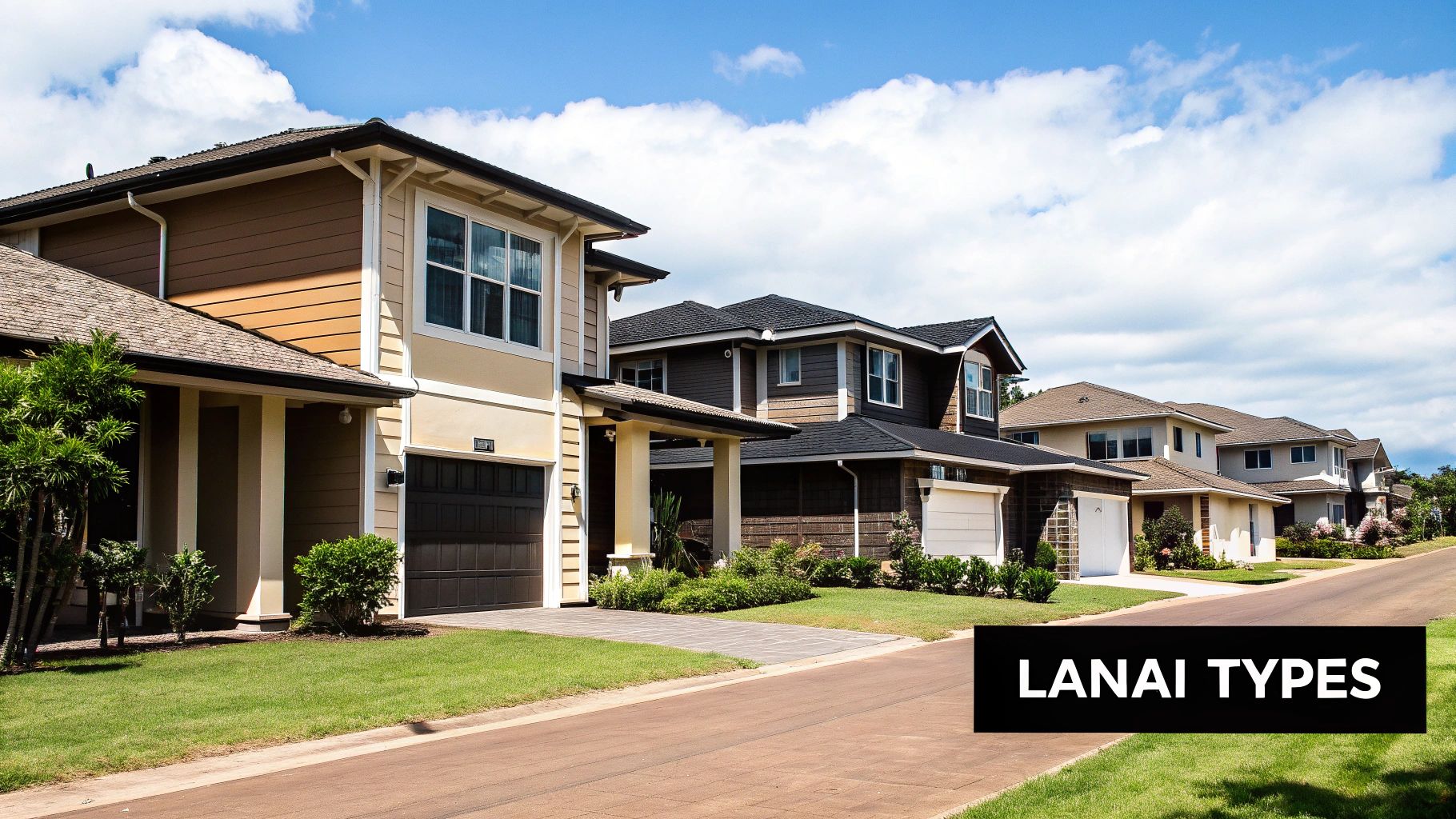

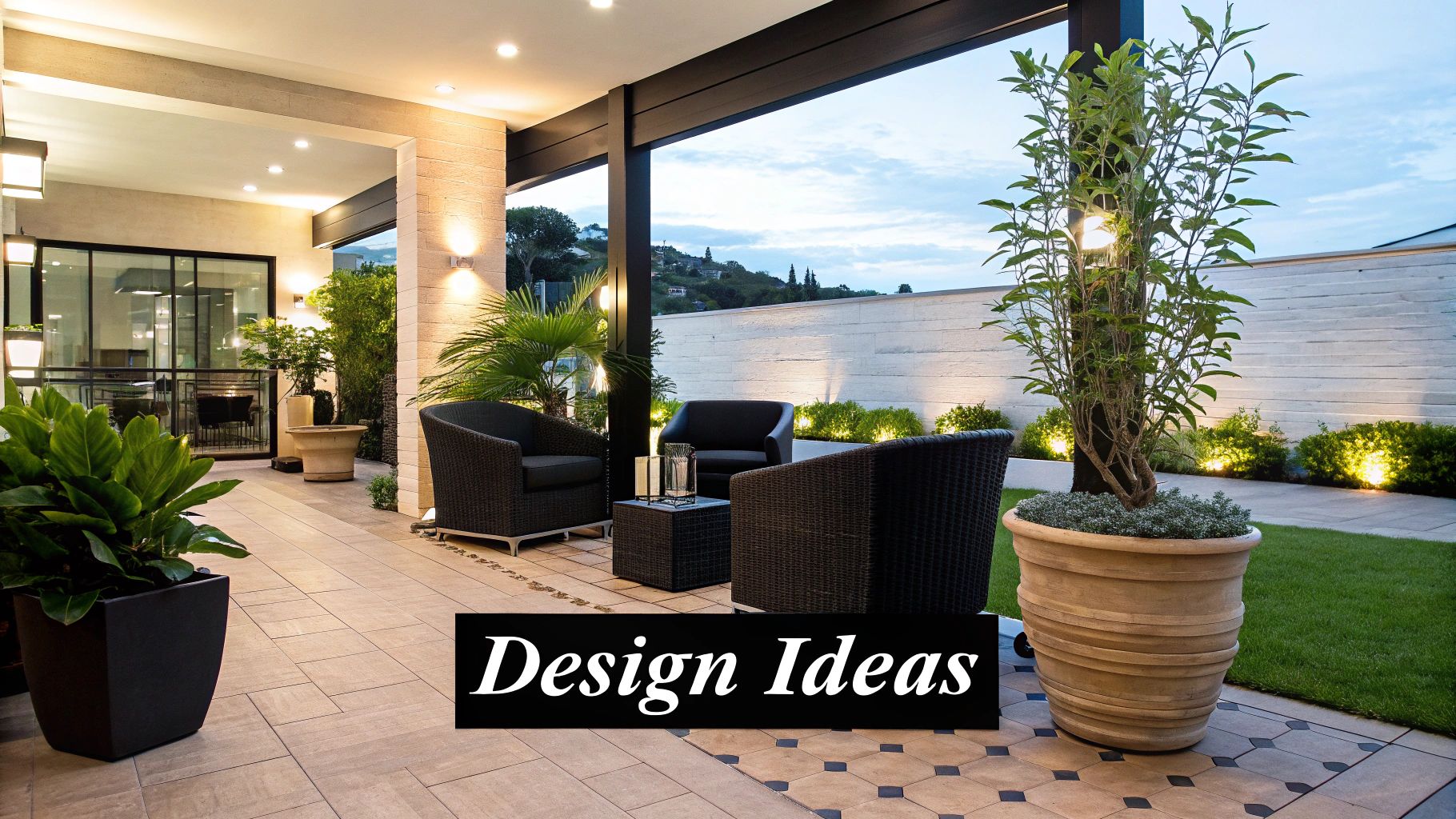
Forget the simple screened-in porches of the past. Today's lanais have evolved into fully realized outdoor living rooms. Here in Southwest Florida, custom builders are moving far beyond pouring a concrete slab; we're designing sophisticated, multi-functional spaces that often become the true heart of the home.
These modern lanais get the same level of design attention as any room inside the house. A major new builder trend is outfitting them with fully equipped outdoor kitchens—we're talking high-end grills, refrigerators, sinks, and stunning, weather-resistant cabinetry. This single design feature transforms the space from a simple patio into a prime spot for entertaining guests and sharing family meals.
Creating a Luxurious and Functional Environment
The goal now is to create a complete living area outdoors. We're intentionally blurring the lines between inside and out, making the lanai a seamless extension of the home's main living space.
Here are a few key design features that define today's luxury lanais:
- Cozy Living Areas: Think custom seating with all-weather sofas and sectionals, often arranged around a focal point like a wall-mounted, outdoor-rated TV.
- Elegant Fireplaces: A gas fireplace adds real warmth and ambiance, making your lanai usable even on those cooler Florida winter evenings. This is a highly sought-after feature in new custom homes.
- Premium Materials: Durability and design go hand-in-hand. We're seeing more elegant travertine flooring and ceilings finished with gorgeous, rich pecky cypress wood.
This evolution from a basic porch to a resort-style oasis actually has roots in the lanai's Hawaiian history. When the island of Lānaʻi transitioned from agriculture to high-end tourism in the 1990s, its namesake architectural feature became a centerpiece of luxury resort design, beautifully blending cultural heritage with modern comfort. It’s a fascinating story of how the lanai's role in connecting elegant interiors with the beauty of nature was preserved, a history you can read more about on Wikipedia.
These design choices aren't just for show—they're about building a highly functional space that can stand up to the Florida climate. If you're looking for more inspiration on how to bring all these elements together, check out our guide on custom home design ideas.
Building a Lanai That Withstands Florida Storms
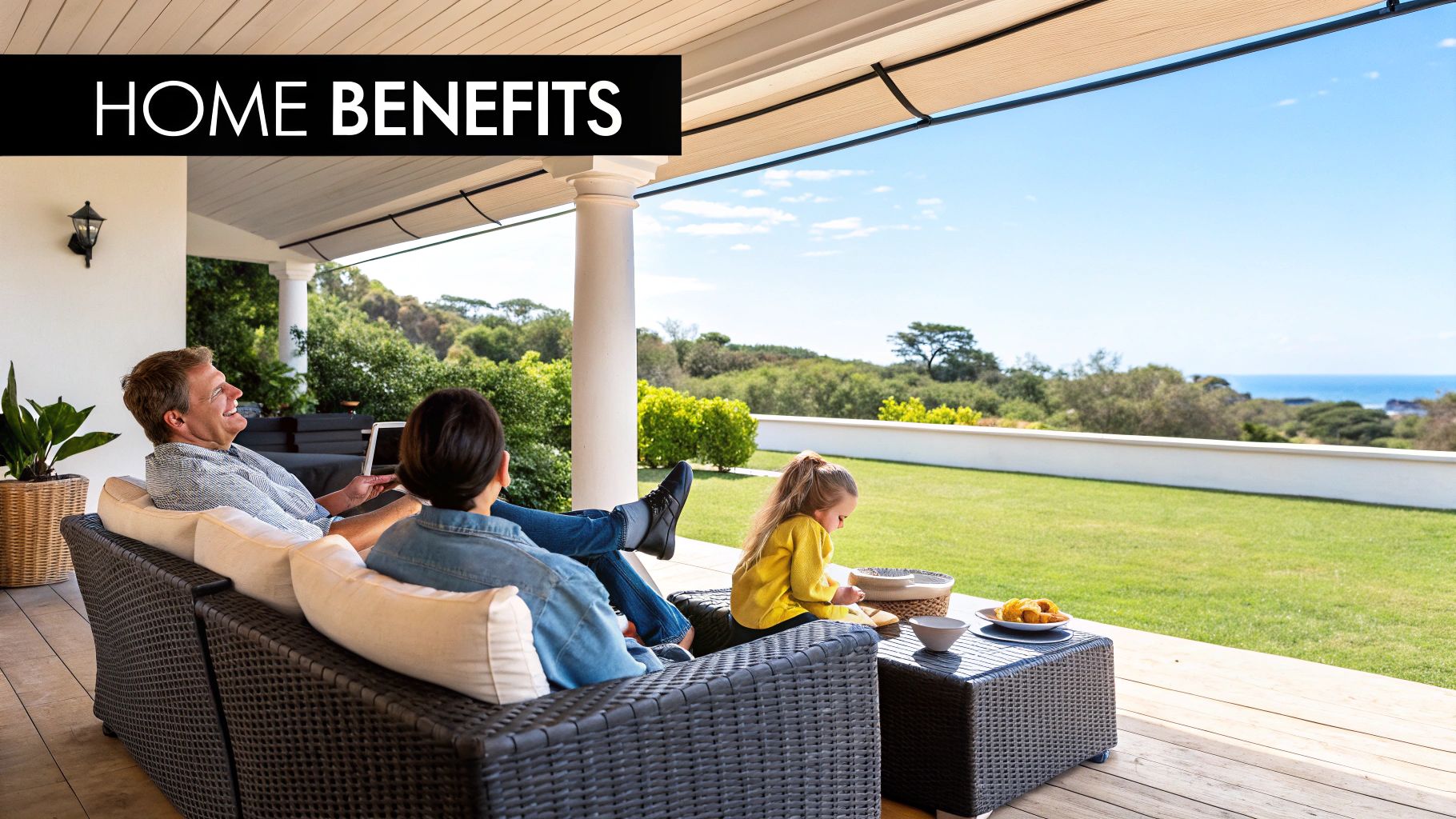
Here in Southwest Florida, a lanai's beauty is only as good as its strength. There’s a critical shift happening in new custom home construction, and it’s not just about aesthetics. It’s about building an outdoor living space that can genuinely stand up to a hurricane.
This means we’re moving past basic construction and embracing engineering specifically for storm readiness.
A truly durable lanai starts with a solid foundation, of course, taking local elevation and flood zones into account, which is a key part of planning any new build in Florida. But the real work happens above ground. As custom home builders, we reinforce the entire structure with beefed-up columns and secure roof tie-downs that go well beyond the minimum building codes.
That structural integrity is your first and best defense against the powerful winds we see in our region. When you're weighing building your custom home versus buying an existing one, this is a huge advantage—you get to ensure these critical, storm-safe features are built-in from the very beginning.
Essential Hurricane-Ready Features
Beyond the core structure, a few key components are now non-negotiable for a modern, storm-ready lanai. These are essential hurricane impact features for protecting your investment and your family.
-
Hurricane-Impact Screens & Shutters: Standard insect screens don't stand a chance against hurricane-force winds. That's why builders install high-tensile strength hurricane screens or, more commonly, motorized roll-down shutters. With just the push of a button, you can deploy a solid barrier to protect against wind and flying debris.
-
Whole-Home Generator Integration: What happens after the storm passes? Power outages can stretch on for days, making your lanai’s fans and outdoor kitchen useless. Integrating a whole-home generator ensures your refrigeration, lighting, and fans stay on, turning your lanai into a comfortable sanctuary even when the grid is down. This feature is now a top priority for new custom home buyers in Florida.
By focusing on these hurricane-impact features, a lanai becomes more than just a place for relaxation. It becomes a testament to smart, forward-thinking custom home design—a secure and reliable extension of your home, ready for whatever the Florida weather brings.
Choosing the Right Screening for Your Lanai
The screen is what puts the "lanai" in a lanai. It’s the magic ingredient that transforms a covered patio into a comfortable, bug-free living area you can enjoy all year long in Florida. But not all screens are the same. The material you pick directly influences your lanai's durability, comfort, and view.
For many, a standard insect screen does the job. But when you’re building a custom home, you have the opportunity to upgrade. We’re seeing more homeowners choose specialized options that are a much better fit for the Southwest Florida lifestyle and the latest builder trends. These screens do more than just keep the mosquitoes at bay.
Balancing Views with Durability
One of the biggest trends in new lanai design is the "picture-window" or panoramic screen. This style is fantastic. It minimizes the vertical aluminum posts, creating huge, wide-open views of your pool, the canal, or a beautiful nature preserve. It completely elevates the feeling of your outdoor space, a popular new design feature.
Of course, those large, uninterrupted spans need a stronger material to hold up. This is where specialized screens really shine:
- Super Screens: These are a must-have for active families, homes with pets, or anyone living on a golf course. They're woven from a high-tensile, vinyl-coated polyester that’s incredibly tough and resists tears from claws, kids, and the occasional stray golf ball.
- Solar Screens: Built to block a hefty chunk of the sun’s UV rays, solar screens are perfect for taming the Florida heat. They reduce glare and keep your lanai noticeably cooler, which can even help trim your energy bills.
Choosing the right screen is a key decision in the custom home building process. It’s a choice that balances aesthetics, lifestyle, and resilience against the Florida elements, ensuring your lanai is as functional as it is beautiful.
Thinking about the long-term performance of your lanai means getting familiar with your screen options. For a great breakdown of material strength and longevity, you can find helpful tips on choosing the best screen material for your lanai to make sure it’s the right fit.
Making the right call during the build is far easier than having to replace it all later on. This is just one of many important decisions you'll make when you learn about the custom home building process with an experienced builder by your side.
Frequently Asked Questions About Florida Lanais

When you're planning a custom home in Southwest Florida, you're bound to have questions about creating the perfect lanai. We hear them all the time. Let's walk through some of the most common ones, from cost to building codes, so you have the practical information you need.
How Much Does A Custom Lanai Add To A New Home's Cost?
This is a great question, but the honest answer is: it depends. The cost can swing quite a bit based on the size, materials, and design features you choose for your outdoor space.
A simple, straightforward screened lanai can be a modest investment that pays you back tenfold in lifestyle value. On the other hand, if you're incorporating popular new builder trends like a full summer kitchen, high-end travertine floors, a fireplace, and motorized hurricane shutters, that will naturally account for a more significant portion of your custom home's budget. The best way to get a clear picture is to have your builder provide a detailed estimate based on your specific design.
Are Lanai Screens The Same As Hurricane Shutters?
Not at all, and this is a critical distinction for any Florida homeowner. They serve two completely different purposes.
Your everyday lanai screens are all about comfort. They do a fantastic job of keeping bugs out while letting that beautiful Florida breeze flow through. While some heavy-duty screens are impressively tough, they are not rated for storm protection.
Hurricane shutters are a completely different hurricane impact feature. They are specifically engineered to stand up to the high-velocity winds and flying debris that a major storm can throw at your home. For this reason, most new custom homes in Southwest Florida incorporate both systems—the permanent screens for daily enjoyment and deployable hurricane shutters for essential storm safety.
Can You Add A Lanai To An Existing Home?
Yes, it's definitely possible, but it's important to view it as a major renovation. It requires professional planning and execution from a qualified custom builder.
A builder has to expertly tie the new roof structure into your existing home's roofline and pour a new foundation that meets all of today's stringent building codes. The project has to comply with every local regulation, paying special attention to things like wind load resistance and flood elevation requirements, which is critical news affecting building in Florida. It’s a complex job, but adding a lanai is an excellent way to boost your property's value and your daily quality of life.
When you build with Sinclair Custom Homes Inc, you get a partner dedicated to superior quality and integrity from the ground up. To start designing your dream lanai and custom home, visit us online to see what sets us apart.