
When you're building a custom home in Southwest Florida, the great pool debate between saltwater and chlorine really boils down to one thing: saltwater pools give you that soft-water feel and less daily fuss for a higher upfront cost. On the other hand, a traditional chlorine pool is easier on the initial construction budget but will have you playing chemist more often.
It’s a classic trade-off between upfront investment and long-term convenience. As a new design trend, the move toward salt systems reflects a broader desire for wellness and automation in modern custom homes. This decision is a huge part of your backyard design, shaping everything from how you relax to what you spend on upkeep year after year.
Choosing the Right Pool for Your Florida Lifestyle
For anyone building a new home in Cape Coral, Fort Myers, or anywhere in our slice of paradise, picking the right pool system is a foundational choice. It’s not just about keeping the water clean; it's about creating an oasis that actually works with our local climate. The intense Florida sun, the thick humidity, and even hurricane season prep all factor into how each pool type performs down here.
Here's the thing about saltwater pools: they aren't chlorine-free. It's a bit of a misnomer. They actually use a salt chlorine generator to cleverly turn ordinary salt into a steady, low level of chlorine right in the pool. This constant production is what gives the water that silky, smooth feel that's so much gentler on your skin and eyes—a key feature for homeowners prioritizing a resort-at-home experience.
A traditional chlorine pool is more hands-on. You're the one adding chlorine tablets, liquid, or granules, which can create those peaks and valleys in chemical levels. That’s what often leads to that distinct "pool smell" and potential irritation. If you're still weighing the big picture, our guide on choosing an in-ground vs. above-ground pool can help frame the overall project.
This image gives you a quick snapshot of the key differences you’ll want to consider.
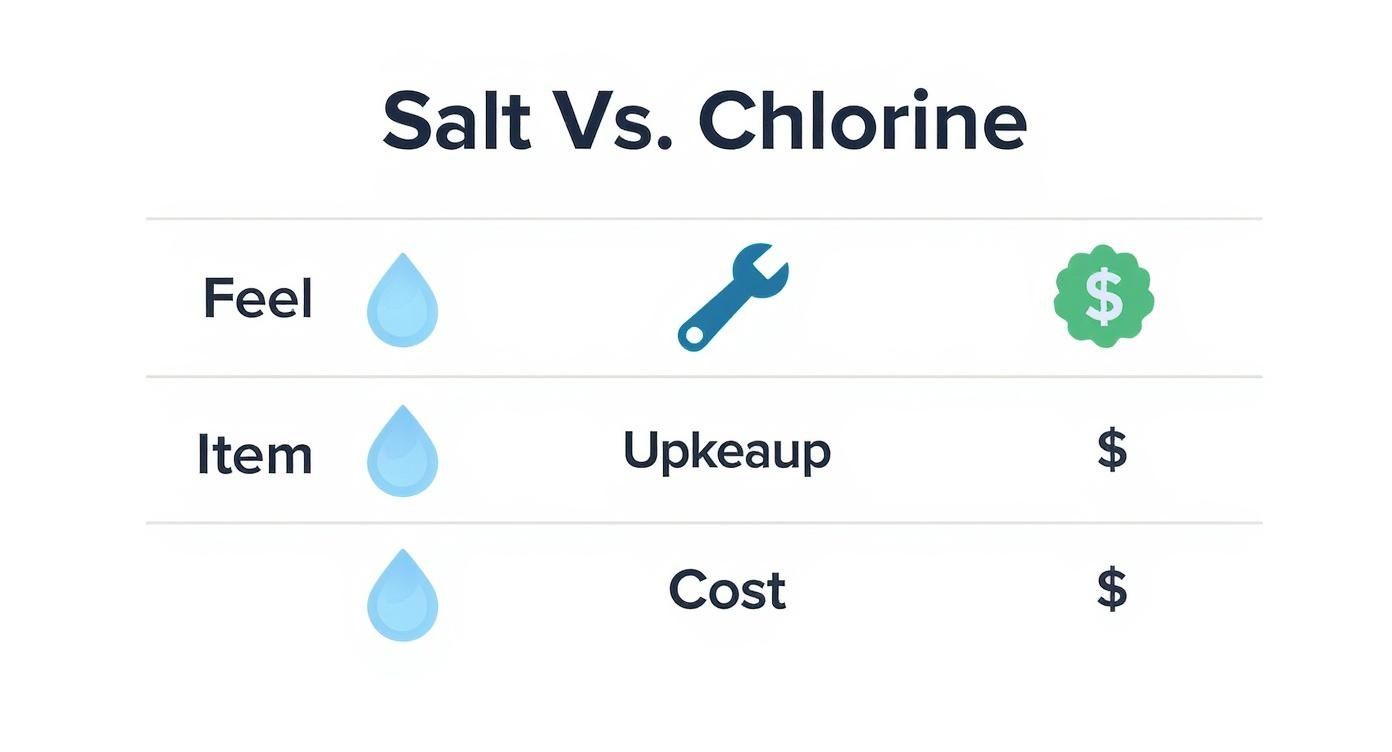
As you can see, the comfort and simpler daily routine of a saltwater pool come with that higher initial price tag—a trade-off many Florida homeowners find well worth it.
Saltwater vs Chlorine Pools Quick Comparison for Florida Homes
To get the conversation started with your builder, here is a straightforward look at what each system means for your new custom home in Southwest Florida. Think of this as your cheat sheet for the big decision.
| Decision Factor | Saltwater Pool System | Traditional Chlorine Pool System |
|---|---|---|
| Swimmer Comfort | Silky, soft water with almost no odor. Very gentle on skin and eyes. | Can cause dry skin, eye irritation, and has that strong chemical smell. |
| Upfront Cost | Higher. The salt chlorine generator adds $1,400 – $2,000+ to the build. | Lower initial equipment cost, making it easier on the construction budget. |
| Ongoing Maintenance | "Set it and forget it" chlorine production. You just add salt occasionally. | Requires weekly testing and manually adding chlorine tablets or liquid. |
| Long-Term Costs | Lower annual chemical costs, but the salt cell needs replacing every 3-7 years. | Higher, consistent spending on chlorine, shock, and other balancing chemicals. |
Ultimately, this table highlights the core difference: saltwater is an investment in convenience and comfort, while chlorine prioritizes a lower initial cost. Both will give you a beautiful, clean pool—it just depends on how you prefer to manage it.
How Salt and Chlorine Pools Actually Work
When we sit down with clients to design their new custom home, one of the first things we clear up about pools is the biggest myth out there: that saltwater pools are chlorine-free. They aren't. A saltwater pool is a chlorine pool—it just has a much smarter, gentler way of making its own sanitizer.
Getting your head around this is the key to understanding the whole salt pools vs chlorine pools debate, especially here in Florida. The choice isn't about if you want chlorine; it’s about how you want your chlorine delivered.
A traditional chlorine pool is a hands-on affair. You, the homeowner, are responsible for adding the sanitizer by dropping chlorine pucks into a feeder or pouring in liquid chlorine. This creates a constant up-and-down of chlorine levels, which works, but it’s also what causes that harsh chemical smell and can irritate your skin and eyes.
The Science of Salt Chlorine Generation
A salt system, on the other hand, is like having a mini chlorine factory running silently in your pool's plumbing. It all comes down to one brilliant piece of equipment: the salt chlorine generator, also known as a salt cell.
The chemistry behind it is a neat little process called electrolysis.
- Just a Little Salt: First, you dissolve pool-grade salt directly into the water. The amount is surprisingly small, only about 3,200 parts per million (ppm). To put that in perspective, it's roughly 10 times less salty than the ocean and feels about as salty as a human teardrop. You barely notice it.
- A Bit of Electricity: As this mildly salty water flows through the generator cell, a very low-voltage electrical current passes through a set of metallic plates inside.
- Making Pure Chlorine: This zap of electricity splits the salt molecules (sodium chloride, or NaCl) and instantly creates pure chlorine (hypochlorous acid). It’s the exact same stuff that keeps a traditional pool clean.
This fresh, pure chlorine circulates through your pool, sanitizing everything before it eventually turns back into salt. From there, the cycle starts all over again. It’s a closed-loop system that automatically keeps a steady, low level of sanitizer in the water without you lifting a finger.
For a Florida home, this is a total game-changer. Our intense sun and heat absolutely chew through chlorine. A salt system’s steady, automated production keeps your pool perfectly sanitized day in and day out, fighting off the UV rays with almost no effort on your part.
The Real Difference: Free Chlorine vs. Chloramines
To really get why a saltwater pool feels so much better, you have to know about the two kinds of chlorine in any pool: free chlorine and chloramines.
Free chlorine is the good guy. This is the active, powerful sanitizer that’s on standby, ready to neutralize bacteria, algae, and anything else you don’t want in your water. Every healthy pool needs a solid level of free chlorine.
Chloramines, or combined chlorine, are the troublemakers. They're what you get after free chlorine has done its job and bonded with contaminants like sweat, sunscreen, and body oils.
This is where it gets interesting:
- The "Pool Smell": That sharp chemical odor everyone associates with pools? That’s not chlorine—it's chloramines. It’s a sign that your pool is dirty and the chlorine is maxed out.
- The Sting: Chloramines are also what cause red eyes and itchy skin.
- The Inefficiency: Once free chlorine turns into a chloramine, it’s a far weaker sanitizer.
Because traditional pools get their sanitizer in big, periodic doses, they're much more likely to build up nasty chloramines between treatments. Saltwater pools, however, are constantly creating fresh, new chlorine. This continuous supply keeps the "free chlorine" level topped off, preventing chloramines from ever getting a foothold.
That’s the secret behind the soft, silky water and lack of harsh smells that our custom home buyers in Fort Myers and Cape Coral absolutely love.
A Florida Homeowners Upfront and Lifetime Cost Analysis
When you're designing a custom home in Southwest Florida, every dollar in the budget gets a close look. The conversation about salt pools vs chlorine pools almost always pivots from how the water feels to a hard look at the numbers. While saltwater systems usually win the popular vote for swimmer comfort, a traditional chlorine pool definitely has a lower initial cost. Let's break down the numbers, looking at both the upfront investment and the long-term commitment.
At first glance, a traditional chlorine pool is cheaper to install. The equipment is standard, no-frills stuff that doesn't need the specialized tech a salt system does. For homeowners trying to keep initial construction costs down, this is a major plus.
But the real story unfolds over the life of the pool. A saltwater pool has one big upfront cost: the salt chlorine generator. This piece of equipment typically runs between $1,400 and $2,000, and that’s before installation. It’s the heart of the whole system and the main reason for the higher initial price tag.
Breaking Down the Initial Investment
The initial cost is a huge factor in any new build. Going with a standard chlorine system means you can put that money toward other parts of your home project. It’s a straightforward, classic setup that builders like us have been installing for decades.
On the other hand, choosing a saltwater system from day one is really an investment in future convenience and lower chemical bills. Their growing popularity reflects a major new builder trend. Today, a vast majority of new pools being built in Florida are saltwater systems, a shift driven by homeowner demand for lower maintenance and a better swimming experience. People are clearly willing to pay more upfront for these long-term benefits.
As a custom home builder, our job is to show you the full financial picture. That initial sticker shock from the salt generator is just one piece of a multi-year puzzle. The true value comes out when you start projecting costs over five, ten, or even fifteen years.
Projecting Lifetime Operational Costs
This is where the financial scales start to tip in the other direction. While the upfront cost of a salt system is higher, its yearly operating expenses are usually much lower. For a detailed breakdown specific to our area, you can learn more about the cost to install a salt water pool in our dedicated guide.
Let's compare the ongoing expenses for a typical Southwest Florida pool:
Saltwater Pool Ongoing Costs:
- Annual Salt: You'll probably spend between $50 to $100 per year on 40-pound bags of pool-grade salt.
- Salt Cell Replacement: This is the big one to plan for. The salt cell, which is the part of the generator that actually makes the chlorine, will need to be replaced every 3 to 7 years. This will cost you somewhere between $300 and $600.
- Balancing Chemicals: You'll still need to buy chemicals to manage pH and alkalinity, but you'll use far less than you would with a traditional chlorine pool.
Traditional Chlorine Pool Ongoing Costs:
- Chlorine Tablets/Liquid: This is your biggest and most consistent expense, often running $300 to $800 a year. Here in Florida, the intense sun and heat just chew through chlorine, so you’re constantly adding more.
- Shock Treatments: You’ll need to shock the pool regularly to get rid of chloramines, which adds to that yearly chemical bill.
- Stabilizer (Cyanuric Acid): This is essential for protecting chlorine from the sun's UV rays, making it another recurring purchase.
When you look at it over a 10-year period, the money you save on chlorine with a saltwater pool can easily offset, and often exceed, the initial cost of the generator and the eventual cell replacement. The traditional chlorine pool, while cheaper to build, demands a much bigger annual budget for chemicals, making its lifetime cost the one that’s potentially higher.
Comparing Maintenance and Durability in a Coastal Climate
When you’re building a custom home in Southwest Florida, the real-world experience of owning a pool boils down to two things: how much time you want to spend on it, and how well it will last. The whole salt pools vs chlorine pools debate goes way beyond how the water feels. It’s a practical conversation about your maintenance routine and how your investment will stand up to our tough coastal climate.
For most busy homeowners, the big draw for saltwater is its automated nature. The salt chlorine generator just does its thing in the background, constantly making sanitizer. This "set it and forget it" vibe really cuts down on the daily hands-on work, so you're not stuck in a constant loop of buying, storing, and adding chlorine.
On the other hand, a traditional chlorine pool requires a more hands-on, weekly routine. You'll be out there testing the water and manually adding chlorine tablets or liquid to keep things balanced. For some people, it's a satisfying ritual; for others, it's a chore.
Saltwater's Corrosive Nature in Florida's Climate
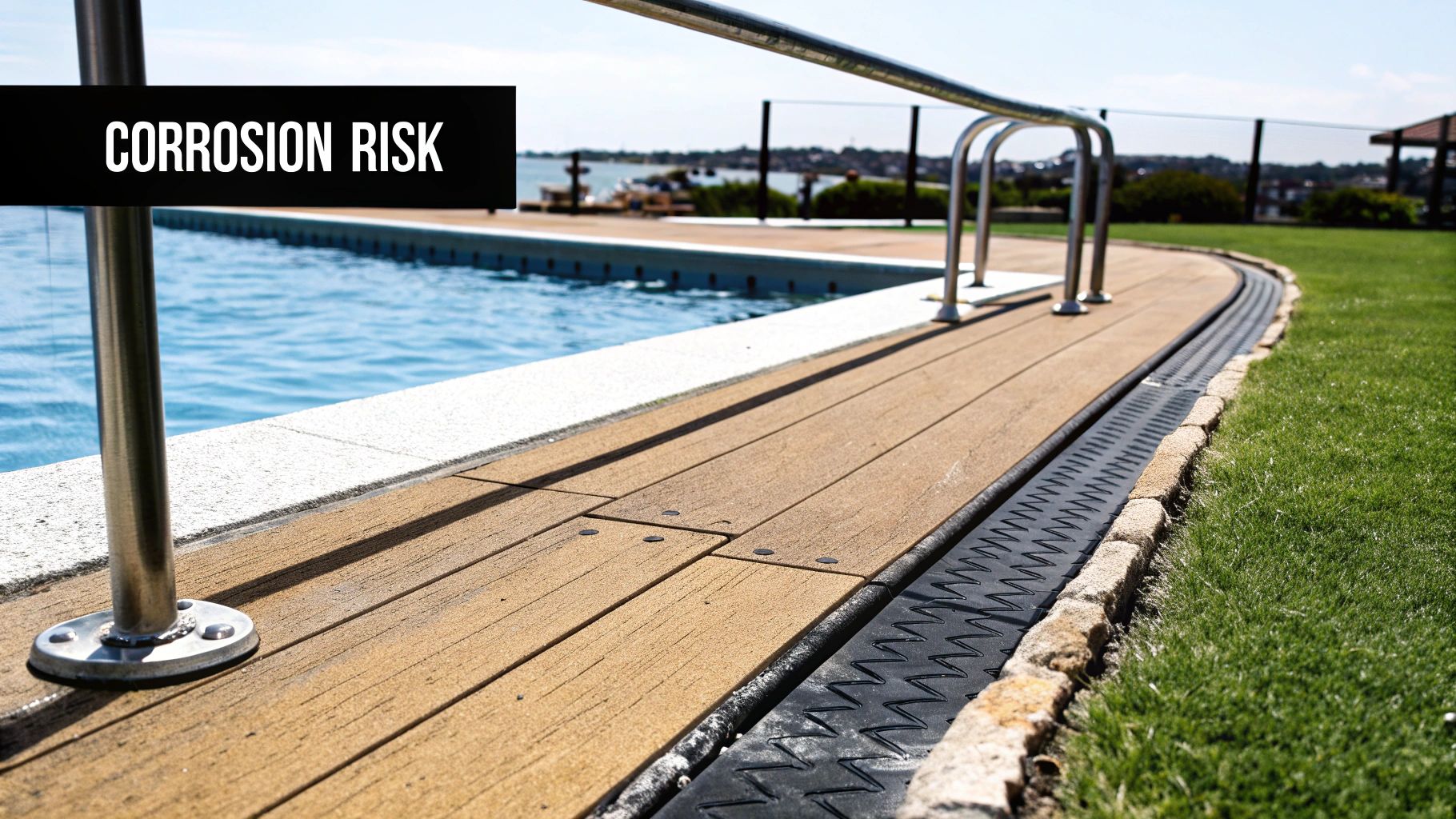
While saltwater is convenient, it brings a major durability challenge to the table, especially here with our salty air. Salt is naturally corrosive, and the splash-out from a saltwater pool will speed up the wear and tear on your deck, furniture, and fixtures. This is a crucial detail to address when designing a new pool and lanai in Fort Myers or Cape Coral, especially when considering the home's elevation and drainage plan.
The materials most vulnerable to damage include:
- Natural Stone Coping: Stones like travertine and limestone are porous and can soak up saltwater. Over time, this causes pitting and decay if they aren't sealed properly.
- Metal Fixtures: Stainless steel ladders, handrails, and lights can start showing rust spots unless they are a marine-grade (316L) quality. This is a hurricane impact feature to consider, as degraded metal is weaker.
- Automatic Pool Covers: The tracks and metal parts of an automatic cover are a prime target for salt-induced corrosion.
- Certain Pavers and Concrete: If your pavers are unsealed or lower quality, salt crystals can form inside their pores, expand, and cause them to crumble.
This corrosive effect is something we absolutely must talk about with you during the design phase. Choosing the right materials from the very beginning is the single best way to avoid expensive repairs later on.
Builder-Recommended Solutions for Long-Term Durability
The good news? With a little planning, you can absolutely have the soft water of a salt pool without wrecking your outdoor living space. As custom home builders, we’ve learned to integrate specific strategies to build a durable, salt-friendly environment from the ground up.
A well-designed saltwater pool area isn't about avoiding salt exposure—it's about building to withstand it. The right materials and protective measures turn a potential weakness into a non-issue, ensuring your backyard oasis remains beautiful for years.
Here are the key protective measures we build into our projects:
- Selecting Corrosion-Resistant Materials: We always steer clients toward marine-grade stainless steel for any metal, dense composite decking, and high-quality pavers that are rated for salt resistance. These are essential hurricane impact features for any coastal home.
- Applying Specialized Sealants: A top-notch penetrating sealant is non-negotiable for natural stone. It creates an invisible shield that stops saltwater from soaking in. Plan on reapplying it every few years as part of your home maintenance.
- Strategic Equipment Choices: When it’s time to pick a pool heater, it's vital to get one with a cupronickel or titanium heat exchanger. These metals are specifically designed to handle salt corrosion. To help you sort through the options, our guide on a pool heat pump vs gas heater gets into the details of equipment compatibility.
- Proper Drainage: It sounds simple, but ensuring the lanai is graded correctly to drain water away from your home's foundation and other sensitive spots is a powerful design feature tied directly to the property's overall elevation plan.
The move toward these systems is more than just a local trend. The saltwater chlorinator market continues to grow, pushed by the residential segment as more homeowners look for that blend of convenience and eco-friendliness that defines modern custom home building in Florida.
The Swimmer Experience: Comfort and Health
Beyond the costs and chemistry, what really matters in the salt pools vs chlorine pools debate is how the water feels when you jump in. When you're building a custom home in Cape Coral, the pool isn't just a feature—it's the heart of your backyard oasis. It’s where your family will spend countless sunny afternoons, so the experience for swimmers should be a top priority.
This is where saltwater pools really shine.
The difference is something you feel instantly. People always describe saltwater as soft, almost silky on the skin. It gives you a sense of buoyancy that’s incredibly relaxing. This isn't just in your head; it’s the result of the salt generator producing a steady, low level of pure chlorine, which prevents the buildup of those harsh chemical compounds called chloramines.
On the other hand, traditional chlorine pools can feel abrasive, especially when chemical levels get a bit out of whack under the intense Florida sun. We’ve all been there: the dry, itchy skin, stiff hair, and that unmistakable red-eye sting after a long swim.
A Closer Look at Skin and Eye Comfort
So, why does saltwater feel so much better? It all comes down to its mild salinity. A typical saltwater pool has a salt level between 2,700 to 3,400 parts per million (ppm). That might sound like a lot, but it’s remarkably close to the salinity of the human body and even our own teardrops. This is why you can open your eyes underwater without that familiar burn.
When we talk with clients about long-term comfort, understanding chlorine's impact on skin and hair is always a key point. Traditional chlorine pools, with their higher concentrations of sanitizers and chloramine byproducts, are notorious for stripping the natural oils from your skin and hair.
You know that "pool smell"? That’s not actually chlorine. It’s the smell of chloramines. The fact that you don't get that odor from a well-kept saltwater pool is a dead giveaway that the water is cleaner, healthier, and just plain more pleasant for everyone.
The new home design trend is clear: homeowners today are prioritizing comfort and wellness in every feature, making the gentle nature of saltwater a major selling point.
Wellness and a Healthier Home Environment
For our clients building custom homes in Southwest Florida, creating a healthy living space is a huge deal. A saltwater system fits right into that modern focus on wellness. One of the most overlooked benefits is simply not having to buy, store, and handle harsh chlorine tablets or liquid chlorine anymore.
Think about the practical advantages here:
- No Fumes: You can say goodbye to those potent, irritating fumes that hit you when you open a bucket of chlorine tablets.
- Reduced Handling Risks: You eliminate the risk of chemical spills on your beautiful new lanai or getting a chemical burn from direct contact.
- A Safer Space for Children and Pets: Getting rid of stored, concentrated chemicals just makes the whole backyard environment safer for everyone.
This desire for a healthier lifestyle influences every design choice our clients make, from the building materials inside the home to the water in their backyard. A saltwater pool generates its own sanitizer, offering a cleaner and more streamlined approach to pool ownership that really clicks with anyone looking to build a modern, wellness-focused home.
Making the Final Choice for Your Custom Florida Home
Alright, we’ve covered a lot of ground—from water chemistry to the long-term cost of ownership. Now it’s time to bring it all together and make the final call on the salt pools vs chlorine pools debate for your new home. This decision is about more than just equipment; it's about shaping the lifestyle you envision for your Southwest Florida backyard. Ultimately, your choice should reflect what you value most: daily convenience, your budget, or the kind of swimming experience you want to create.
It really boils down to a fundamental trade-off. Are you willing to invest more upfront for the automated, silky-smooth feel of a saltwater pool, or do you prefer a lower initial price tag and a more traditional, hands-on maintenance schedule?
Which Florida Homeowner Are You?
To help you see this more clearly, let's look at two typical homeowner profiles we frequently work with here in Fort Myers and Cape Coral. See which one feels more like you.
The "Low-Effort Luxury" Homeowner:
This family is all about convenience and creating a premium, resort-like atmosphere at home. They’ve got kids, maybe some with sensitive skin, and the last thing they want is a pool that demands daily attention. For them, paying more for a salt system is a smart investment in comfort and simplicity. The automated chlorine generation means they can spend more time enjoying the pool and less time messing with chemicals, which fits their busy lifestyle perfectly.
The "Budget-Conscious & Hands-On" Homeowner:
This person is keeping a close eye on the initial construction budget, trying to free up funds for other custom upgrades in the house. They don't mind a little routine home maintenance and actually find the process of testing and balancing the pool water each week manageable. For this owner, a traditional chlorine pool is the practical, no-nonsense choice. It delivers the beautiful backyard oasis they’ve been dreaming of without inflating the initial build cost, and they see the ongoing chemical expenses as a predictable part of homeownership.
When building a custom home, one of the most important conversations is about the true 10-year cost of ownership for each pool system. Looking at the long game, including things like replacing a salt cell or budgeting for years of chlorine, often shows that the initial price is just one piece of the financial puzzle.
Your Final Checklist Before Breaking Ground
Before you give your builder the final sign-off, run through these questions. This is your chance to have a decisive conversation that ensures your new pool is perfectly tailored to your choice and built to last in our unique coastal climate.
- To combat corrosion from a saltwater system, what specific decking and coping materials do you recommend?
- What’s the real 10-year cost of ownership for each system? I want to see the numbers, including salt cell replacements versus ongoing chlorine costs.
- If we go with salt, which pool heater models have a cupronickel or titanium exchanger that can handle it?
- How can we hook up the pool equipment to a whole-home generator so it keeps running after a hurricane?
- Are there any differences in the warranties between salt-compatible equipment and standard pool gear?
Asking these pointed questions will give you the confidence to move forward, knowing your new pool isn't just a perfect match for your lifestyle but a smart, durable investment in your custom Florida home.
Frequently Asked Questions About Florida Pools
When you're planning a new pool for a custom home here in Florida, a few questions always seem to pop up. These are the details that often tip the scales between a salt system and traditional chlorine, making sure your backyard oasis is a perfect fit for our climate and your family. We hear these all the time, so let's get you some straight answers.
Can a Saltwater Pool Damage My Home and Pavers?
Yes, it absolutely can if you don't plan for it. Salt is naturally corrosive over time, especially with porous materials like natural stone or standard concrete pavers. This is a huge consideration when we're designing a new home in Southwest Florida.
To get ahead of any issues, we strongly recommend using dense, high-quality materials for your pool deck and coping right from the start—ones specifically rated for corrosion resistance. A good penetrating sealant is also non-negotiable; it creates a protective barrier that stops salt from seeping in. Just as important is proper drainage design to ensure any splash-out doesn't pool near your home's foundation.
How Does Hurricane Season Affect Pool Choice?
Living in Florida means being hurricane-ready, and that includes your pool. After a big storm, the massive amount of rain will dilute the chemistry in either type of pool. With a traditional chlorine setup, you'll be out there manually testing and adding chemicals to get things back in balance. For a salt pool, you'll need to add more salt to bring the salinity back up before the generator can do its job.
The real game-changer is a power outage. A prolonged outage after a hurricane will shut down a salt chlorine generator, meaning zero chlorine is being produced. To combat this, many of our custom homeowners now integrate their pool equipment with a whole-home generator. This keeps the filtration and sanitation running, preventing that dreaded green algae bloom while you're focused on storm recovery.
Does a Saltwater Pool Feel Like the Ocean?
Not even close—and that's a good thing! This is probably the biggest misconception we hear. The salt level in a saltwater pool is only around 3,200 parts per million (ppm). The ocean, by comparison, is a whopping 35,000 ppm.
The salinity is actually much closer to what you’d find in human tears, which is precisely why it feels so soft and silky on your skin and doesn't irritate your eyes. You might notice a very slight salty taste, but it’s nothing like the overwhelming saltiness of the sea. It just makes for a much more comfortable and refreshing swim.
Is It Better to Install a Salt System During Construction?
Without a doubt. It is far better and more cost-effective to make this decision during the initial build. When we integrate a salt system from the very beginning, it allows us to spec the right salt-compatible materials for every component—from heaters with titanium exchangers to light fixtures and even the rebar in the concrete.
Thinking about it from day one prevents expensive corrosion problems down the road. While you can convert a pool later, it gets complicated and costly if the existing equipment wasn't designed for salt. You often end up having to replace major components like the pool heater. Planning for it upfront just ensures a seamless, durable, and perfectly integrated system built to last.
At Sinclair Custom Homes Inc, we guide you through every one of these decisions, ensuring your new pool and home are built to the highest standards for the Florida lifestyle. Let's start planning your vision today.