

When you're planning a new custom home in Southwest Florida, the real pool heat pump cost is a line item you can't ignore. For both the unit and professional installation, you should budget anywhere from $4,000 to over $7,000. But think of it less as an appliance and more as a smart upgrade that completely changes how you use your pool, extending your swim season while fitting perfectly with modern, resilient home design trends.
Your Guide to Pool Heat Pump Costs in Southwest Florida
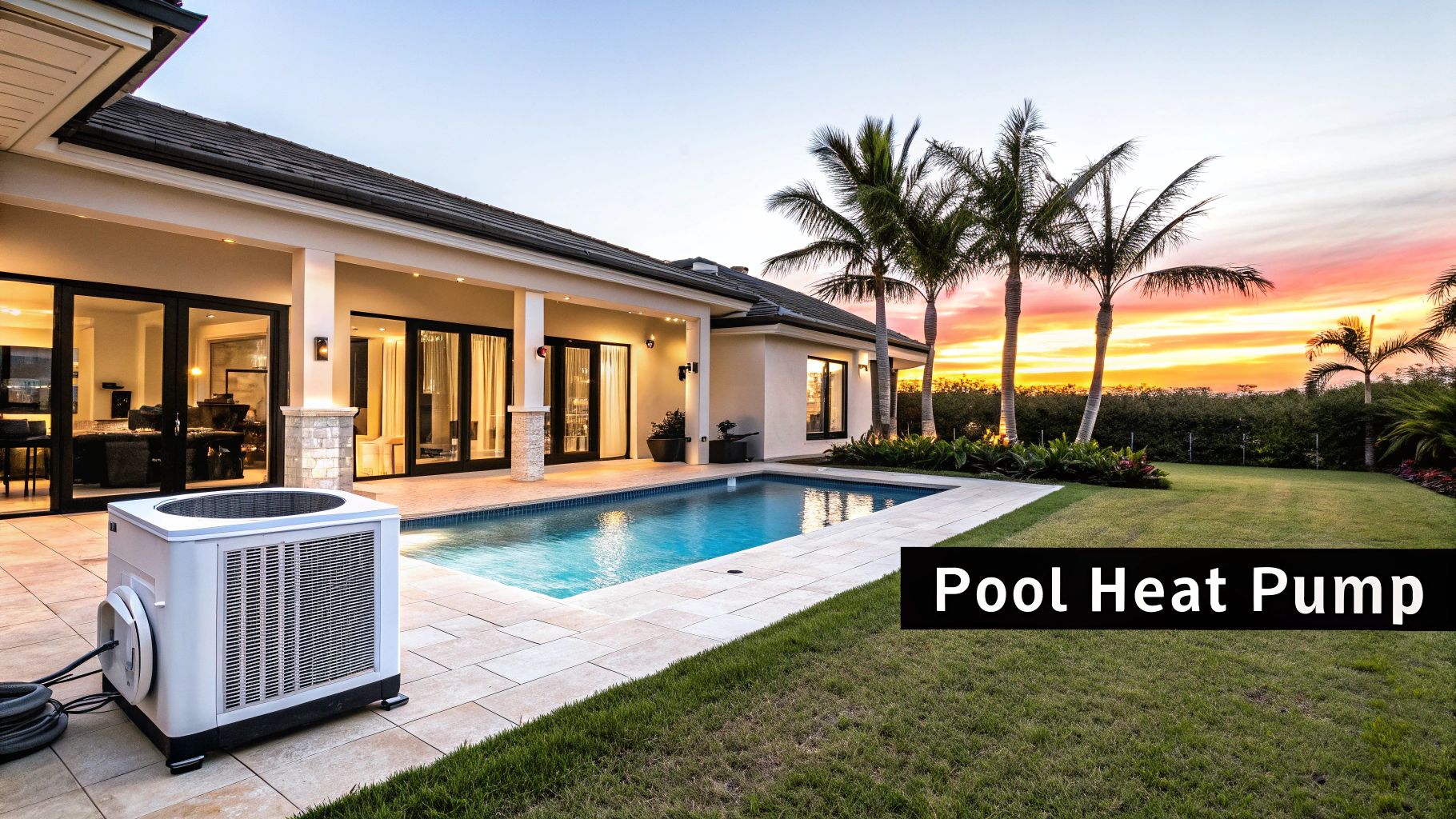
For anyone building their dream home in Cape Coral, Fort Myers, or anywhere in our beautiful corner of Florida, the swimming pool is usually the crown jewel. It’s the heart of the Florida lifestyle—a place to relax, entertain, and escape. But to truly get the most out of it all year, you need a heating solution that’s both reliable and affordable. This is where the conversation about the true cost of a pool heat pump really starts, especially as it relates to modern construction trends in our region.
This guide will give you a clear, no-nonsense breakdown. We'll cut through the noise and show you why a heat pump is such an intelligent investment in your home’s value and your family’s enjoyment. It's not just another expense on a spreadsheet; it’s a modern feature that shows a real commitment to energy efficiency and resilience—two things that are essential for new construction, especially given recent news affecting building codes and storm preparedness in Florida.
A Modern Standard for Florida Homes
In today's custom home market, forward-thinking builders and homeowners are looking beyond the bare minimum. They’re adding features that enhance daily life while also preparing for Florida's unique climate challenges. A high-efficiency pool heat pump fits right into this philosophy. It goes hand-in-hand with other critical systems like whole-home generators for storm resilience and hurricane-impact windows, creating a home that’s tough, self-sufficient, and incredibly comfortable.
We’re going to look at the complete financial picture, including:
- The upfront price of the unit and the installation fees.
- How much you’ll save in the long run compared to other heating methods.
- Why this choice aligns so well with contemporary, energy-smart building standards and new design features.
The absolute best time to decide on a pool heat pump is during the initial design phase. When you plan for it from the start, the electrical and plumbing are engineered correctly—often considering proper elevation to protect against storm surge—which helps you avoid expensive retrofits later and keeps your backyard looking clean and uncluttered.
By the end, you'll see why planning for this feature early is so important for your budget and for the system's performance. It’s a key piece of building a high-value, resilient custom home that’s designed for the way we live here in Southwest Florida.
Understanding the Upfront Investment in Your Pool Heater
When you're designing a new custom home here in Southwest Florida, the first number anyone wants to talk about is the upfront cost. For a pool heat pump, that initial investment is more than just the price on the box; it's the all-in figure that includes the unit itself, professional installation, and all the site work needed to seamlessly integrate it with your new home's design and infrastructure.
Think of it like choosing the engine for a new boat. A basic model will get you out on the water, sure. But a more advanced unit, maybe one with inverter technology, costs more upfront because it’s engineered for better performance—it’s quieter, more efficient, and saves you a ton on fuel in the long run. The initial cost of a pool heat pump reflects that same level of performance and smart engineering, a trend we see across the custom home industry.
Breaking Down the Purchase Price
The price of the heat pump itself really comes down to its size (measured in BTUs) and its efficiency, which we call the Coefficient of Performance (COP). It's simple, really: a bigger pool needs a more powerful unit to keep the water comfortable, and that power comes with a higher price tag.
While gas heaters might seem cheaper at first glance, heat pumps are the clear winner for cost-effectiveness over time, a key consideration for new builders. The initial equipment cost for a quality residential unit in Florida typically runs between $3,000 and $8,000. But here's the kicker: they deliver annual operating savings of 50-70% because their efficiency is miles ahead of old-school systems.
Several key factors will nudge that price up or down:
- Pool Size: Your pool's surface area is the number one driver. The more water you have, the more BTUs you need.
- Efficiency (COP Rating): A unit with a higher COP rating will cost more initially but will save you a bundle on your electric bill over its lifespan.
- Brand and Features: Premium brands and models with new design features—like whisper-quiet operation or a reverse-cycle "chiller" for those hot August days—will naturally be at the higher end of the range.
The All-In Cost of Professional Installation
Okay, you’ve picked a unit. Now for the installation, which is a critical piece of your total upfront investment. Getting a heat pump installed correctly in a new Cape Coral or Fort Myers custom home isn't just a plug-and-play job. It’s a professional trade that involves several key steps to make sure your system runs safely, efficiently, and meets all local building codes, including hurricane-related standards.
A seamless installation is everything. When we plan for the heater during the custom home design phase, we can integrate all the electrical and plumbing work cleanly from the start. This protects your home's aesthetic and saves you the major headache and cost of retrofitting later.
Here's a quick look at what's involved in a proper installation:
Estimated Initial Cost Breakdown for a Pool Heat Pump
This table illustrates the typical cost components for purchasing and installing a new pool heat pump in a Southwest Florida custom home.
| Cost Component | Average Price Range (Cape Coral / Fort Myers) | Key Considerations |
|---|---|---|
| Heat Pump Unit | $3,000 – $8,000 | Depends on BTU size, brand, and COP efficiency rating. |
| Labor & Installation | $500 – $1,500 | Covers licensed technician time for placement, hookup, and calibration. |
| Electrical Work | $750 – $2,000 | Cost for a dedicated circuit from the panel to the equipment pad. |
| Plumbing & Materials | $250 – $500 | Includes PVC pipe, fittings, valves, and creating a bypass loop. |
| Concrete Pad | $200 – $400 | A level, hurricane-rated pad is required by code. |
| Total Estimated Cost | $4,700 – $12,400 | Reflects the complete, professionally installed system. |
As you can see, the final price is more than just the unit. The total cost, including the unit and a full professional installation, is an important factor when you compare the overall cost to install a salt water pool and all its features.
Ultimately, this upfront investment is what buys you a decade or more of comfortable swimming and predictable, low energy bills—a smart move for any new custom home built to truly enjoy the Southwest Florida lifestyle.
Calculating Your Long-Term Savings and Energy Efficiency
The sticker price on a pool heat pump is just the first chapter of the story. The real value shows up month after month, year after year, woven right into your utility bills. This is where a heat pump stops being just another purchase and starts becoming a smart, long-term investment—a perfect fit for the sustainable and resilient custom homes we build here in Southwest Florida.
At the core of this efficiency is a concept called the Coefficient of Performance (COP). It sounds a bit technical, but the idea is actually pretty simple. Think of it as an incredible return on your energy investment.
For every dollar's worth of electricity you feed into a heat pump, it doesn't just give you one dollar's worth of heat back. Instead, it acts like a heat multiplier. It pulls in all that free, ambient warmth from our humid Florida air and transfers it straight into your pool water. This process is so effective it can deliver several dollars' worth of free heat for every single dollar you spend. This is a key trend in new home construction, where operational costs are as important as upfront expenses.
Unpacking the Power of COP
This multiplying effect is exactly what makes the long-term cost of a pool heat pump so compelling. For comparison, a standard electric resistance heater—the kind that works like a giant toaster element—has a COP of 1.0. You put one unit of electricity in, you get exactly one unit of heat out. It’s a direct, one-for-one trade.
A pool heat pump, on the other hand, is playing a completely different game. It’s not about creating heat from scratch; it’s about moving it.
By intelligently harvesting the warmth that already exists all around us, a high-efficiency heat pump can easily hit a COP that exceeds 5.0. In plain English, that means it can be 500% more efficient than a standard electric heater. That’s a game-changing number that crushes your running costs and shrinks your environmental footprint.
This chart gives you a realistic look at the typical initial investment, breaking down how the unit, installation, and electrical work add up to the total upfront price.
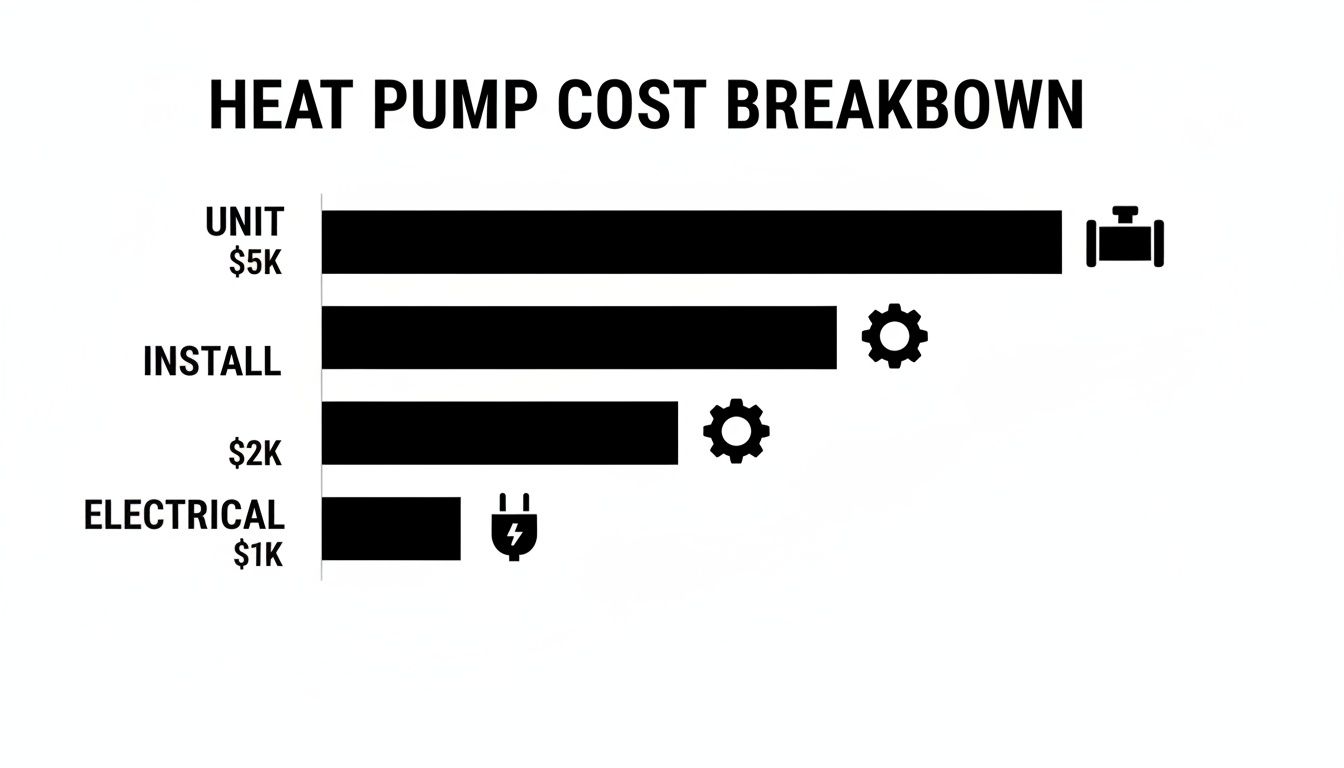
As you can see, while the unit itself is the biggest piece of the pie, professional installation and proper electrical work are critical, non-negotiable parts of a safe and effective system.
Real-World Running Costs in Southwest Florida
So, what does all that efficiency actually mean for your monthly budget here in Cape Coral or Fort Myers? The savings are huge. While every pool is different, we can get a pretty good idea of typical costs.
A well-maintained, correctly sized pool heat pump can often keep your pool at that perfect swimming temperature for somewhere between $50 and $150 per month during the season. Now, compare that to a gas heater, which could easily run you $300 to $500 per month (or more!) to do the same job. Over a decade, that's thousands of dollars back in your pocket, easily paying for the initial investment.
This is exactly why custom home builders see high-efficiency systems as a must-have in modern Florida construction. Pool heat pumps with COP ratings over 5.0 can slash your heating costs by 70-80% compared to old-school gas or electric resistance heaters. For homeowners in Fort Myers and Cape Coral, where the pool is part of our year-round lifestyle, integrating these systems when building a custom home with a forward-thinking builder means lower bills from day one and higher property value down the road. In fact, studies show energy-efficient features can boost a home’s resale price by 3-5%.
Maximizing Efficiency for Even Greater Savings
Your heat pump’s performance isn't just about its factory rating; how you use it makes a massive difference. The single best thing you can do to slash your running costs is to use a solar pool cover. Seriously.
Here’s why a cover is a non-negotiable accessory for any heated pool in Florida:
- Stops Evaporation Cold: Evaporation is the number one enemy of a warm pool. A good cover can cut it by over 95%.
- Slashes Heating Costs: By trapping all that precious heat, a solar cover can lower your pool heating expenses by 50% to 70%.
- Saves on Chemicals: It also keeps your expensive pool chemicals from evaporating into thin air, saving you money there, too.
When you use a cover, your heat pump simply doesn't have to work as hard or as long to maintain the temperature you want. This not only keeps your electric bill down but also reduces wear and tear on the unit, helping it last longer. It’s the ultimate win-win for any homeowner focused on getting the most value out of their investment.
Comparing Heat Pumps and Gas Heaters in Florida
When you're designing a custom home here in Southwest Florida, one of the biggest decisions you'll make for your backyard oasis is how to heat the pool. It really comes down to two main choices: a pool heat pump or a gas heater. Both get the job done, but they work in completely different ways, which means big differences in cost, performance, and long-term value—a key consideration in new builder trends.
For most homeowners, it boils down to a single question: do you want speed or efficiency? This is a huge deal in Florida, where our warm, humid air gives one of these options a serious home-field advantage. You can think of gas heaters as sprinters and heat pumps as marathon runners. In the race for year-round swimming, endurance and efficiency almost always win.
The Trade-Off Between Speed and Savings
A gas pool heater is a powerhouse. It works by burning natural gas or propane to heat water as it rushes through the unit—kind of like a tankless water heater for your house. This means it generates intense heat very quickly. It's fantastic if you need heat on demand, like warming up a spa for a spontaneous evening soak or getting the pool ready for a last-minute weekend party.
But that speed comes with a hefty price tag. Gas heaters are notorious gas-guzzlers. Running one consistently just to keep your pool at a comfortable temperature can easily lead to monthly utility bills of $300 to $500, sometimes even more. For anyone who swims regularly, that adds up fast.
On the other hand, a pool heat pump is built for steady, low-cost heating. It uses a little bit of electricity to pull ambient heat right out of our humid Florida air and transfers it into your pool water. Sure, it takes longer to bring the pool up to temperature—usually gaining about one degree per hour—but its running costs are a world apart, typically falling between $50 to $150 per month. For the day-in, day-out heating that extends your swim season through the cooler months, the heat pump is the undisputed champion of efficiency.
For homeowners building a modern custom home focused on long-term value and resilience, the heat pump just makes sense. It aligns perfectly with design trends emphasizing sustainability and predictable monthly expenses. While a gas heater gives you that instant gratification, the heat pump delivers sustained comfort without the sticker shock every time the utility bill arrives.
A Head-to-Head Comparison for Florida Living
Choosing the right heater means looking at the whole picture, not just one feature. We put together a complete guide on the differences between a pool heat pump vs a gas heater if you want to dive deeper, but the table below hits all the key points for Southwest Florida homeowners.
Pool Heat Pump vs Gas Heater: A Southwest Florida Comparison
When you're weighing your options, seeing them side-by-side makes the choice much clearer. Here's how the two most popular pool heaters stack up for life in Cape Coral and Fort Myers.
| Feature | Pool Heat Pump | Gas Pool Heater |
|---|---|---|
| Upfront Cost | Higher initial investment for the unit and installation. | Lower initial investment for the unit itself. |
| Operating Cost | Very low; highly energy-efficient with monthly costs of $50-$150. | Very high; monthly costs can easily exceed $300-$500. |
| Heating Speed | Slower; gradually raises temperature over hours or days. | Very fast; can heat a pool or spa in a matter of hours. |
| Best Use Case | Maintaining a consistent, comfortable temperature for daily use. | Rapid, on-demand heating for occasional use or spas. |
| Lifespan | Longer; typically lasts 10-20 years with proper maintenance. | Shorter; typically lasts 5-10 years due to high-heat components. |
| Climate Performance | Excellent in Florida; most efficient when air is above 50°F. | Operates effectively in any air temperature. |
| Environmental Impact | Low; uses renewable heat from the air, producing no emissions. | High; burns fossil fuels and releases carbon monoxide. |
At the end of the day, for how most of us use our pools in Southwest Florida—wanting them warm and ready from fall through spring—the math points straight to a heat pump. It’s a smart investment in efficiency that pays for itself over and over again through years of lower energy bills.
Maximizing Your Investment with Smart Planning and Maintenance
A high-quality pool heat pump is a major asset for your new custom home, and it’s an investment built to give you 10 to 20 years of reliable comfort. To get that full lifespan and make sure it’s running as efficiently as possible, a little proactive care goes a very long way. It all starts with understanding the unique demands of our Southwest Florida climate and getting into a simple maintenance routine.
Beyond the physical upkeep, you can also squeeze more value out of your purchase by significantly lowering the net pool heat pump cost. Many homeowners don't realize there are some fantastic financial incentives available. By pairing smart maintenance with strategic financial planning, you can ensure your heat pump delivers maximum value from day one.
Essential Maintenance for Florida Homeowners
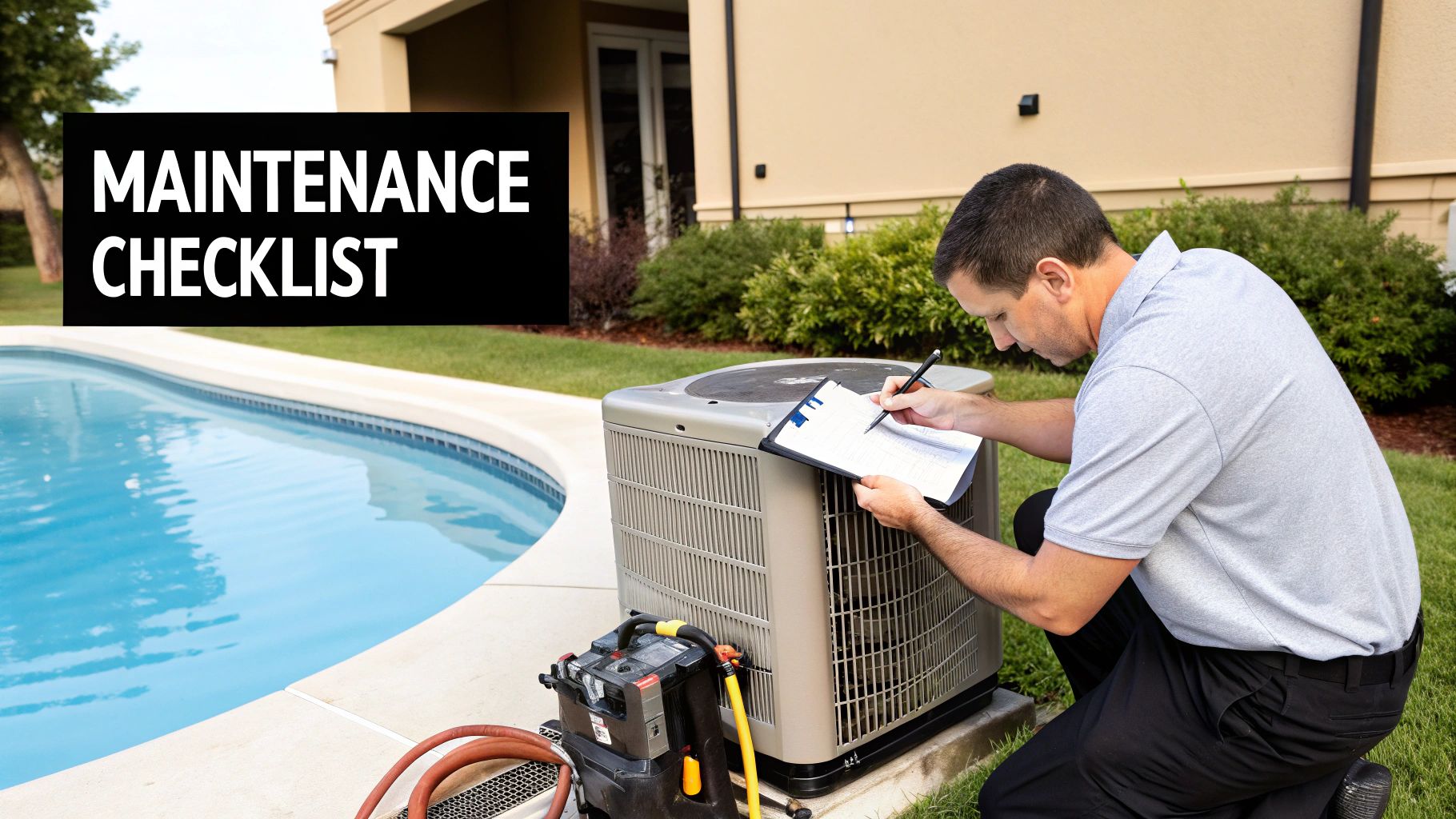
Living here in Cape Coral and Fort Myers means dealing with salt air, heavy rains, and a whole lot of plant life. Our coastal environment demands a specific approach to maintenance. Following a simple checklist can head off common problems before they start and keep your unit running at peak efficiency, which you'll see reflected in your monthly energy bills.
Think of it this way: a well-maintained unit is a key part of a resilient home, just like having hurricane impact windows or a whole-home generator that keeps you powered during storms. It’s a system you can count on when you need it.
Here’s a practical checklist to get you started:
- Keep It Clear: Make sure there are at least 24 inches of clear space around the entire unit. Trim back any nearby bushes, palm fronds, or other landscaping to allow for unrestricted airflow—this is absolutely critical for efficiency.
- Clean the Evaporator Coils: Every few months, gently hose down the coils from the outside. This simple rinse removes the dust, pollen, and salt buildup that accumulates, helping the unit "breathe" and transfer heat effectively.
- Check for Debris: After a storm, it's a good idea to check inside the unit's fan cage for leaves or twigs. Just be sure to shut off the power at the breaker before carefully removing anything that's blown in.
- Ensure Proper Drainage: The unit naturally produces condensation. You’ll want to make sure the drain holes are clear so water can escape freely and prevent corrosion.
Think of basic heat pump maintenance like changing the oil in your car. It’s a simple, inexpensive habit that prevents major, costly problems down the road and ensures you get the performance and longevity you paid for.
Reducing Your Net Cost with Financial Incentives
One of the best ways to maximize your investment is by taking advantage of programs designed to encourage energy efficiency. These incentives can dramatically cut your final pool heat pump cost, making an already smart decision even more affordable.
The biggest one out there is the federal Residential Clean Energy Credit. This tax credit allows homeowners to deduct a whopping 30% of the cost of new, qualified energy-efficient home improvements—including certain high-efficiency heat pumps—directly from their federal taxes. That’s a dollar-for-dollar reduction of what you owe, which can mean substantial savings.
On top of that, it’s always smart to check for local rebates. Utilities in Lee County sometimes offer programs to reward customers for installing energy-saving appliances. These can put a few hundred dollars back in your pocket, further chipping away at the initial expense. When you look at the big picture, a heat pump's lower lifecycle expenses—up to 60% less over 10 years compared to gas—make them a must-have for any value-driven home build. This is supported by policies like U.S. rebates that cover 30% of costs. You can dig deeper into these market trends over at Strategic Market Research.
By layering these federal and local incentives, the true cost of installing a premium pool heat pump in your new custom home becomes far more accessible, cementing its status as a wise and financially sound upgrade.
Integrating a Heat Pump into Your Custom Home Design
When you're building a custom home here in Southwest Florida, the smartest—and most cost-effective—decisions happen long before a single shovel hits the dirt. Integrating a pool heat pump is a perfect example of this.
It's tempting to think of a pool heater as just another appliance, but treating it that way is a missed opportunity. The best approach is to plan for it during the initial design phase, turning it from an afterthought into a seamless part of your home’s infrastructure.
This kind of proactive planning is what separates a good build from a great one. When your builder understands your vision for year-round outdoor living from day one, they can engineer everything to support it perfectly. That means finding the ideal spot for the equipment pad, running the dedicated electrical circuits, and laying plumbing lines before any concrete gets poured or landscaping goes in.
The Blueprint for a Flawless Installation
Thinking ahead pays off in a big way. By designing the heat pump right into the home's blueprint, you completely sidestep the headache and high costs of retrofitting later. No one will be trenching through your brand-new lawn or drilling into finished walls to run power. Everything is clean, professional, and neatly tucked away.
This level of integration also means the system performs better and looks better. A well-planned installation considers details like:
- Acoustics: Placing the unit where its sound won't interrupt conversations on the lanai or echo into bedrooms.
- Accessibility: Ensuring it's easy to get to for future maintenance without trampling over your prized landscaping.
- Elevation and Drainage: Setting the equipment pad at the proper elevation is a critical detail for any high-value custom home in Southwest Florida, helping protect expensive machinery from potential flooding during major storms.
In new construction, the goal is to make essential systems feel invisible. When a heat pump is integrated from the start, it works in perfect harmony with the home’s design, just like a whole-home generator or hurricane impact windows. It becomes a standard feature, not a bulky add-on.
Positioning the Pool as a Central Feature
Ultimately, this foresight elevates your pool from just a water feature to the true centerpiece of your Florida lifestyle. By making heating a foundational part of the plan, you’re making a clear statement about how you intend to live in your new home. This is a crucial conversation to have with your builder, as it shapes the entire scope of your outdoor living space.
Discussing your complete vision for swimming pool construction in Cape Coral FL with your builder ensures every element works together from the ground up. The pool heat pump simply becomes another expected component in a luxurious and thoughtfully designed home—ready to provide comfort and enjoyment from the moment you get the keys.
Questions We Hear All the Time About Pool Heat Pumps
When you're designing a custom home here in Southwest Florida, the details matter. A pool heat pump is one of those features that always sparks a few questions, especially when it comes to budgeting and planning. Here are the answers to some of the most common things we hear from homeowners in Cape Coral and Fort Myers.
How Much Does It Really Cost to Run a Pool Heat Pump Each Month in Florida?
This is the big one, and the answer is surprisingly affordable. For most folks, the monthly operating pool heat pump cost lands somewhere between $50 and $150.
Of course, that number will shift a bit depending on how warm you like the water, the size of your pool, and how often you're swimming. But when you stack that up against a gas heater—which can easily run you $300-$500 a month for the same comfort—the long-term savings are impossible to ignore.
Do I Actually Need a Pool Cover with a Heat Pump?
Need it? No. Should you absolutely get one? Yes. Using a solar pool cover is probably the smartest, easiest thing you can do to protect your investment.
A good cover can slash heat loss from evaporation by up to 70%. That’s huge! It means your heat pump runs less, works smarter, and your energy bills stay lower. Think of it as a small, one-time purchase that pays you back month after month.
In Florida's climate, a pool cover is your heat pump's best friend. It acts like a lid on a pot, trapping the warmth you've paid to create and ensuring the system operates with peak efficiency.
Can a Pool Heat Pump Also Cool the Water?
It sure can, and it's a feature we're seeing in almost every new custom home we build. Many of the best new units are "reverse-cycle" models that double as pool chillers.
During those scorching summer months from July through September, our pool water can feel more like a warm bath. These systems can cool it down to a perfectly refreshing temperature, making your pool the best place to be all year round. This is a new design feature that is rapidly becoming a standard in the custom home industry in Southwest Florida.
Ready to integrate the efficiency and comfort of a pool heat pump into your new custom home design? Contact Sinclair Custom Homes Inc today to discuss building a home that perfectly captures the Florida lifestyle. https://sinclaircustomhome.com