


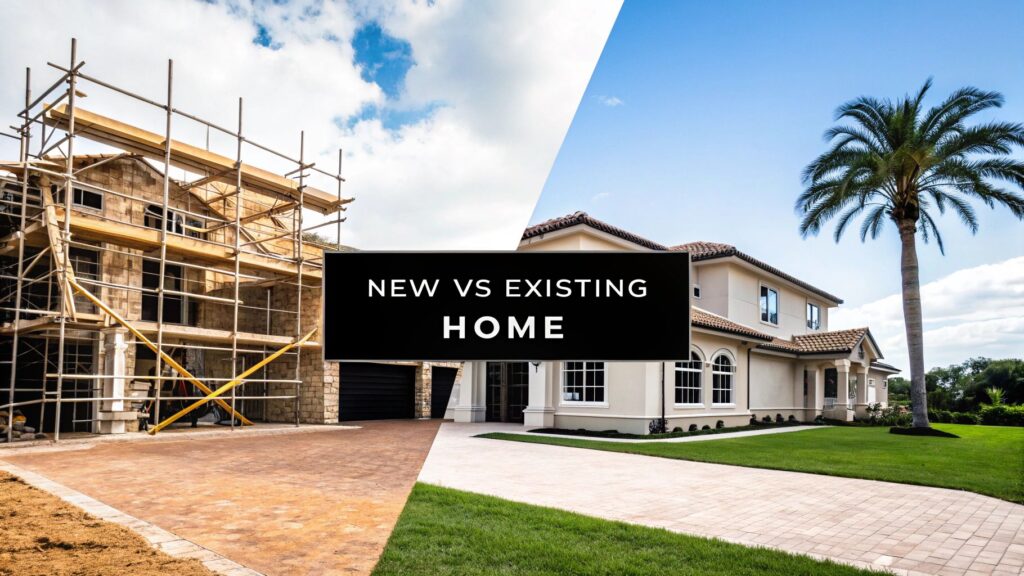
When you're deciding between a new construction vs an existing home, the choice here in Southwest Florida really boils down to one simple question: What matters most to you? New custom homes give you modern storm resilience, total control over the final product, and the latest design features. Existing homes, on the other hand, offer a much quicker path to getting the keys, but they can come with a baggage of hidden renovation costs and outdated hurricane protection.
Your priorities—whether it’s safety, personalization, or your move-in timeline—will ultimately point you in the right direction.
Key Differences in Southwest Florida Homes
Choosing a home in Cape Coral or Fort Myers isn't just about curb appeal; it's about understanding our unique local market. Hurricane seasons, new builder trends, and ever-changing design tastes have a huge impact, creating some very real pros and cons for both new builds and resale homes.
The first thing everyone asks about is cost. For years, the assumption was that new homes always came with a hefty premium. That's not really the case anymore. In fact, recent market trends have flipped the script. In mid-2025, the median price for existing homes actually crept above the median for new homes, which has pretty much closed that old price gap. You can explore the national home price history to see these kinds of market shifts for yourself.
What does this mean for you? It means building a custom home is more financially competitive than it has been in a long, long time.
A Quick Comparison
Price aside, the biggest differences come down to modern building standards and getting exactly what you want. Every new custom home must meet the latest Florida Building Codes. That means higher elevations to mitigate storm surge and serious storm-resistant features built right in—a non-negotiable advantage in Southwest Florida. An older, existing home, especially one built before the latest code updates, often needs expensive work to get it to that same level of safety.
This decision tree helps visualize the core trade-offs between cost, timeline, and how much you can truly make the home yours.
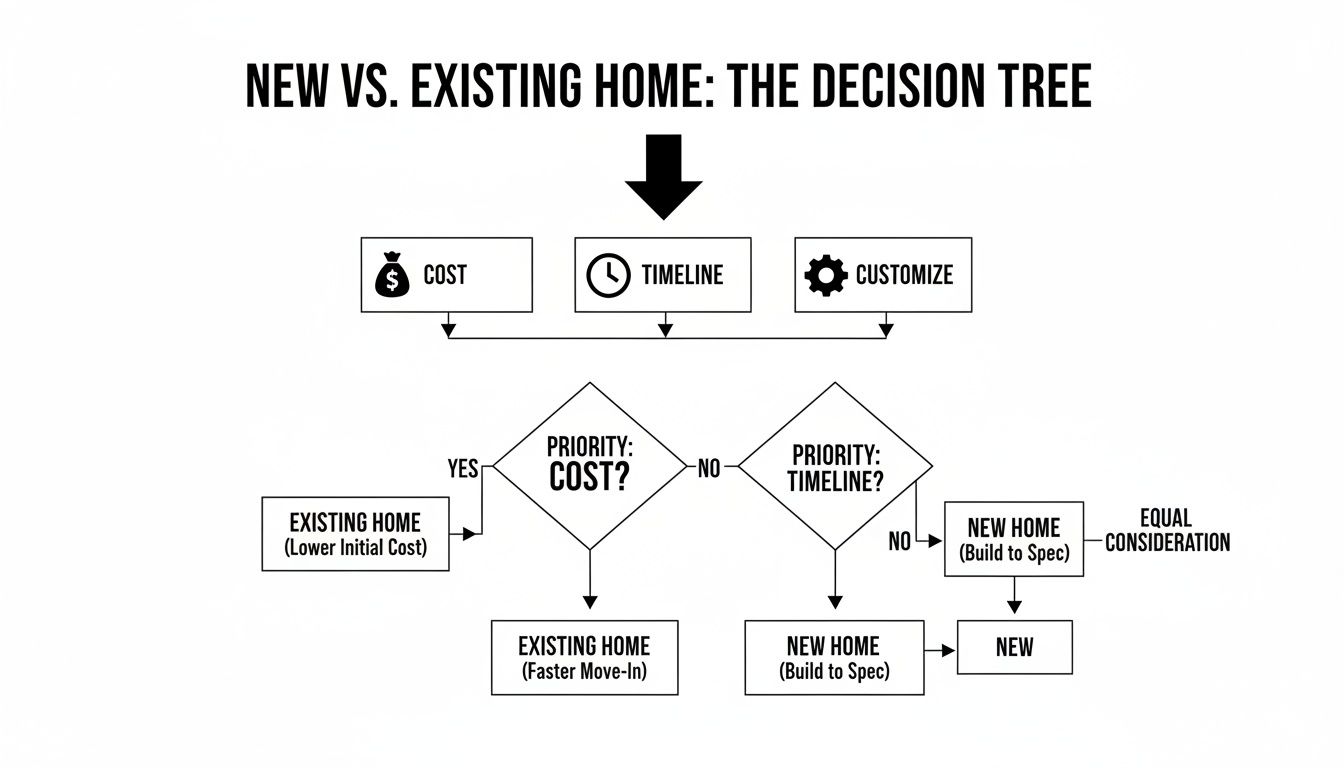

As you can see, while an existing home gets you moved in faster, new construction gives you complete control over everything—from the floor plan to the hurricane-impact windows.
To help frame the decision, here’s a quick look at the main trade-offs you'll be weighing.
New Construction vs Existing Home At a Glance
Here’s a summary comparison of the key decision factors for homebuyers in Southwest Florida. It's a high-level view to help you quickly see where each option shines.
| Criteria | New Construction | Existing Home |
|---|---|---|
| Hurricane Resilience | Built to the latest storm codes with impact windows and higher elevations. | Often needs pricey retrofits; may not meet current safety standards. |
| Customization | Full control over layout, finishes, and features like generator pre-wiring. | You're stuck with the existing structure; renovations add time and cost. |
| Timeline | A longer process (12-18+ months) from initial design to move-in. | Much faster closing and move-in, usually within 30-60 days. |
| Initial Cost | Increasingly competitive with resale; builder incentives can lower closing costs. | Sticker price might be lower, but you need to budget for immediate repairs. |
| Maintenance | Minimal upfront maintenance; everything is new and under warranty. | Potential for surprise repairs to the roof, HVAC, plumbing, or electrical systems. |
Ultimately, this table highlights the core dilemma: Are you willing to trade a longer wait time and the building process for a home that is brand new, fully customized, and built to withstand Florida weather? Or does the speed and simplicity of an existing home appeal more, even with the risk of future projects?
Customization and Modern Design Trends
When you're weighing a new construction vs. an existing home, the freedom to shape your own living space is probably the biggest difference-maker. An existing home is what it is—you inherit the layout, the finishes, and the design quirks of owners past. But new construction, especially a true custom build, is a blank canvas. You get to call the shots and create a home that’s a perfect fit for your life.
This is exactly why so many homebuyers in Southwest Florida are choosing to build from the ground up. Instead of spending months searching for a resale home that almost works, they're designing one that's perfect from day one. It's not just a local thing, either. Nationally, custom home starts jumped about 4% in the second quarter of 2025, and they now account for roughly 19% of all new single-family homes built in the last year. These numbers, which you can dig into in the U.S. Census Bureau construction reports, point to a clear trend: people want a home built for them and nobody else.
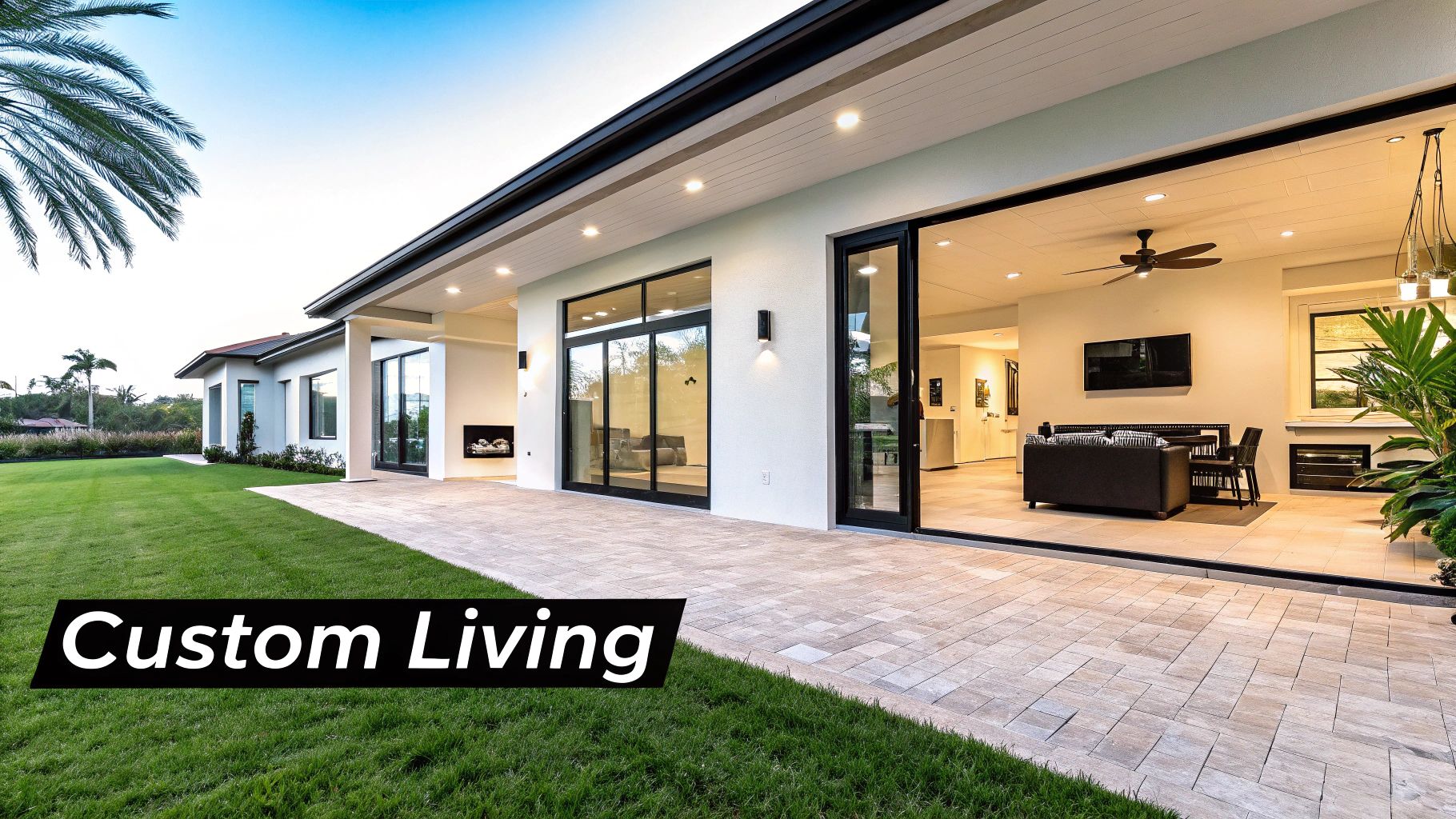

Defining Your Level of Customization
"New construction" isn't a one-size-fits-all term. The level of personalization you get can vary wildly, so it’s crucial to know what you’re signing up for, especially here in Cape Coral and Fort Myers. The custom home industry really breaks it down into three tiers.
- Speculative (Spec) Homes: A builder constructs these homes based on popular trends without a buyer lined up. By the time you see it, it's finished or nearly done, meaning you get little to no say in the design.
- Semi-Custom Homes: This is the middle ground. You'll start with one of the builder's floor plans and then pick your finishes, fixtures, and sometimes make minor layout tweaks from a set menu of options.
- Fully Custom Homes: This is where you have total creative freedom. Working with a builder like Sinclair Custom Homes, you’re involved in every decision, from the architectural style and room placement down to the doorknobs and grout color.
A fully custom home means you’re not just buying a property; you are commissioning a piece of functional art designed for Florida living. It's about creating spaces that serve a specific purpose for your family, not adapting your life to a pre-existing layout.
Integrating Modern Florida Design Trends
Life in Southwest Florida has a massive impact on how we design homes today. Long gone are the days of stuffy, compartmentalized rooms you'd find in older houses. Modern builder trends are all about open-concept layouts that effortlessly blend the indoors with the outdoors. It's not just for looks; it's a smart response to our incredible climate.
Think expansive sliding glass walls—often with high-impact ratings for hurricane season—that make the great room and the lanai feel like one continuous space. This new design feature creates a seamless flow that’s perfect for hosting a party or just kicking back and enjoying the breeze.
Home designs are also evolving to fit our families. It’s becoming common to see custom plans that include dedicated multigenerational suites. These aren't just spare bedrooms; they’re often self-contained living areas with their own bathrooms and small kitchenettes, giving aging parents or adult kids both privacy and independence.
Designing for Functionality and Resilience
Beyond just looking good, today's custom homes in Florida are built with serious thought toward practicality and safety. Smart home technology isn't an afterthought anymore; it's baked right in, letting you control lighting, security, and your thermostat for both convenience and lower energy bills.
Even more importantly, storm readiness is now part of the initial design phase. A perfect example is planning for a whole-house generator from the very beginning. Instead of trying to awkwardly retrofit one later—which is messy and expensive—the electrical systems and a dedicated pad are engineered into the home’s structure from day one. It’s this kind of proactive design that ensures your home isn't just a beautiful place to live, but a secure sanctuary when a storm is on the way.
Building Timelines and The Construction Process
When you’re weighing a new build against an existing home, the timeline is one of the starkest differences you'll encounter. On the surface, an existing home in Cape Coral or Fort Myers looks like the faster option—you can often close in 30 to 60 days. But that speed can be deceiving. What usually follows is a long, unpredictable stretch of renovations to get the home up to snuff with modern design and, more importantly, storm resilience.
Building a custom home, on the other hand, is a more deliberate and transparent journey. Yes, the timeline is longer, generally 12 to 18 months or more, but every single step is planned out. That extended schedule isn't just waiting; it covers crucial phases specific to building in Southwest Florida, like extensive lot prep, meeting new elevation requirements, and navigating our local permitting maze.
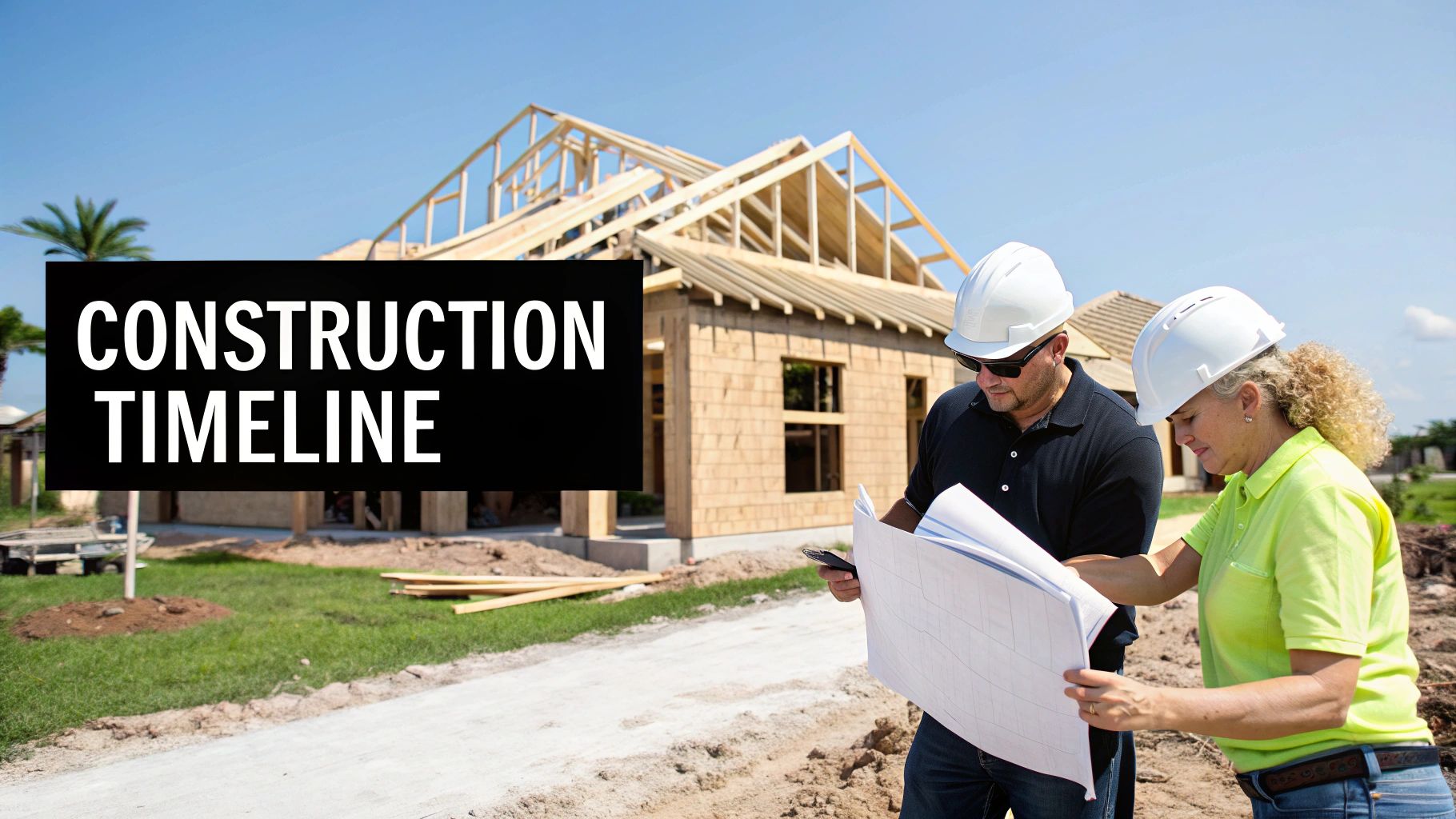
The New Custom Home Journey
Building a custom home from the ground up follows a very structured, multi-phase timeline. Each stage logically builds on the one before it, which is how we ensure every detail meets Florida’s tough building codes. It's a methodical approach that stands in sharp contrast to the often-chaotic process of fixing up an older property.
Here’s a quick look at the major phases you can expect:
- Site Selection and Preparation: This is way more than just picking a pretty lot. It involves soil tests, elevation planning to meet flood zone rules, and clearing the land—all foundational work for a resilient home.
- Foundation and Framing: Your concrete slab gets poured, and the structural skeleton of the house goes up. This is the exciting part where your floor plan starts to become a physical reality.
- Mechanical, Electrical, and Plumbing (MEP): Before any drywall goes up, we install all the guts of the home. This includes HVAC ductwork, wiring for any smart home features, and—critically—pre-wiring for a whole-house generator.
- Inspections and Approvals: Local authorities conduct multiple inspections throughout the build. They check everything to make sure it meets or exceeds code, giving you a built-in quality control that you just don't get with a resale home.
- Finishes and Final Walkthrough: This is when your design choices truly come to life, from the custom cabinetry to the flooring. We wrap things up with a final walkthrough to make sure every last detail is perfect before handing you the keys.
The new construction timeline isn’t just a waiting period; it’s an active process of quality assurance. Each scheduled phase and inspection is designed to create a home that is fundamentally sound, secure, and built correctly from the start—not patched together later.
Contrasting Renovation Realities
An existing home's timeline might seem short at first glance, but it's loaded with unknowns. A simple kitchen remodel can quickly turn into a nightmare when you find old, faulty wiring or corroded plumbing hiding in the walls. These "surprises" cause major delays and add costs that are almost impossible to budget for accurately.
For anyone looking to understand the financial side of building new, it's worth exploring construction loan details and processes.
Plus, trying to bring an older home up to today's hurricane codes is a massive project. Installing impact windows, reinforcing a roof, or meeting new elevation requirements aren't weekend jobs. They are complex, expensive renovations that can turn your house into a construction zone for months on end. To get a better handle on the full scope, you can see our breakdown of how long it takes to build a custom home.
Ultimately, the choice comes down to predictability. The new construction process offers a clear, structured roadmap to your dream home. The renovation path for an existing property, however, is often an unpredictable journey with plenty of potential detours and surprise expenses.
Cost Analysis and Financing Options
When you’re weighing new construction vs an existing home, the financial conversation goes way beyond the list price. It’s easy to look at an older home in Southwest Florida and see a lower number, but that price tag rarely tells the whole story. What it doesn't show are the potential thousands you'll need to spend getting it up to modern safety and design standards.
A new custom home gives you a much clearer financial path from day one. You aren't just buying a house; you're investing in all-new, warranty-backed systems—HVAC, plumbing, electrical, you name it. This predictability is huge. It takes away the anxiety of a sudden, budget-wrecking repair that’s all too common for owners of older homes.
Deconstructing the True Cost of Ownership
For an existing home, that sticker price is just the opening act. Updates needed to satisfy today's insurance requirements and lifestyle demands can pile up fast. A new roof, hurricane impact features like windows, or an electrical panel that can handle a whole-house generator aren't minor tweaks. They're major investments just to get the baseline resilience that’s already built into new construction.
With a new build from a custom home builder, the costs are laid out on the table. Sure, you'll have expenses like lot premiums or design upgrades, but those are choices you get to make and control. On top of that, builders often provide powerful financial incentives you simply won't find on the resale market.
These perks can make a real difference:
- Closing Cost Contributions: Many builders will cover some or even all of your closing costs, saving you a significant chunk of cash right at the start.
- Mortgage Rate Buydowns: A builder can work with their lending partners to lower your interest rate, either for a few years or the life of the loan, which means a lower monthly payment for you.
- Upgrade Allowances: You might get a credit to spend in the design center on things you really want, like premium flooring, countertops, or smart home gadgets.
The real cost of a home isn’t what you pay on day one; it’s what you spend over the first five to ten years. A new build minimizes those surprise expenses, while an older home's true cost is a constant, often unpredictable, cycle of repairs and essential upgrades.
The Shifting Financial Landscape
The market has been changing, and the old idea that "new always costs more" isn't holding up. In fact, recent data showed that in Q2 2025, existing homes were selling for about $18,600 more on average than new builds. The savings didn't stop there. Thanks to builder programs, the effective 30-year mortgage rates for new-home buyers averaged 5.27%, while existing-home buyers were looking at 6.26%.
Here’s a quick look at how the numbers stack up in our area:
Southwest Florida Cost and Rate Comparison
This table gives you a snapshot of average prices and typical 30-year mortgage rate spreads for new versus existing homes in our region.
| Region | Avg Price New | Avg Price Existing | Rate New | Rate Existing |
|---|---|---|---|---|
| Cape Coral | $455,000 | $470,000 | 5.25% | 6.25% |
| Fort Myers | $465,000 | $485,000 | 5.30% | 6.30% |
| Naples | $850,000 | $875,000 | 5.20% | 6.20% |
As you can see, builder incentives, especially those rate buydowns, are creating a serious long-term financial edge for buyers who decide to build new.
Financing Differences You Need to Know
Getting a loan for a new custom home works a bit differently than a standard mortgage. You'll typically use a construction-to-permanent loan. This loan covers the building phase and then seamlessly converts to a traditional mortgage once your home is ready. It's a structured process that provides great oversight, ensuring money is distributed at key construction milestones. If you're new to all this, our guide for first-time home buyers in Florida is a great resource to walk you through it.
Financing a renovation on an older home can be a headache. You might need a totally separate renovation loan, which brings its own set of paperwork, approvals, and general complexity. You'll have to research every component, like finding the right window installation financing options to cover critical storm upgrades. At the end of the day, the streamlined financing offered by a custom builder gives you a much cleaner and more predictable path to owning your dream home.
Energy Efficiency and Hurricane Resilience
Down here in Southwest Florida, the choice between a new construction vs existing home goes way beyond curb appeal or the number of bedrooms. It’s a practical decision about your safety and how much you'll spend on utilities for years to come. The reality is our climate demands homes that can both fend off powerful storms and stay cool without breaking the bank. New custom homes are designed for this from the blueprint up, while older homes often need a ton of expensive, piecemeal upgrades just to get close.
This isn't just a matter of opinion; it's about modern building science and Florida's ever-toughening building codes. A new custom home is a fully integrated system designed for the long haul, not just a collection of four walls and a roof.
Built-In Hurricane Readiness From Day One
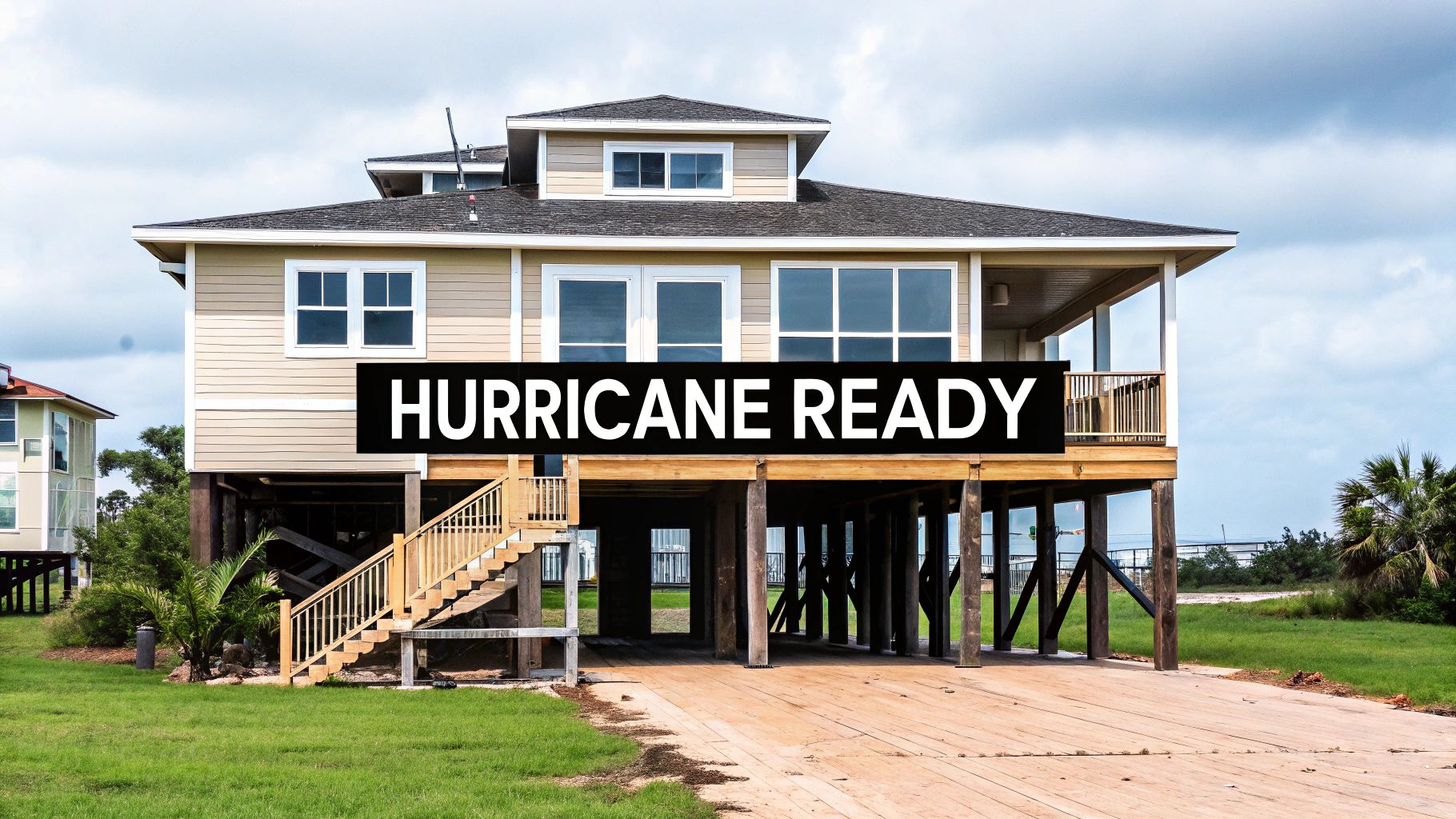
When you build a new custom home in Cape Coral or Fort Myers, hurricane resilience isn't some add-on feature—it's baked into the standard design. Every component, from the foundation to the roofline, is engineered to work together when a major storm rolls through.
This built-in peace of mind comes from critical hurricane impact features you just don't find in most older properties:
- Impact-Rated Windows and Doors: These are standard issue on new homes, meaning no more wrestling with clumsy hurricane shutters. Trying to retrofit every window and door on an older home with impact glass is one of the biggest and most costly upgrades you can make.
- Modern Roof Tie-Downs: We now use advanced straps and connectors that literally anchor the roof framing to the walls. This is what prevents the roof from lifting off in severe winds. Many existing homes were built before this was required, leaving them far more vulnerable.
- Higher Elevation Standards: Every new home has to be built to the latest flood elevation requirements, drastically cutting the risk of storm surge damage. Trying to lift an existing house is a monumental, complex, and often financially impossible project.
It all comes down to a proactive approach to safety. A new home offers a level of security that an older home, even a renovated one, can rarely match.
In new construction, storm safety is a core component of the home’s DNA. Features like generator pre-wiring and reinforced garage doors are seamlessly integrated into the initial design—a stark contrast to the costly and often disruptive process of retrofitting an existing property.
The Energy Efficiency Divide
Beyond just surviving storms, modern homes are built to thrive in our climate. The push for energy efficiency has completely changed how we build, with a huge focus on creating a sealed "thermal envelope" that keeps the cool air in and the brutal Florida heat out.
This modern approach gives you real, tangible benefits you'll see on your FPL bill every month:
- Advanced Insulation: Today's builders use superior, high-performance insulation in the walls and attic, which acts as a powerful barrier against heat.
- High-SEER HVAC Systems: New builds come with modern, high-efficiency AC units that are perfectly sized for the home, which means they run less and cost less.
- Energy-Efficient Appliances: Everything from the water heater to the dishwasher is selected for low energy use, saving you money from day one.
Trying to get an older home to this level of efficiency is a massive undertaking. You're often talking about tearing out drywall to add insulation, replacing the entire HVAC system and its ductwork, and changing out every single appliance. Those costs add up fast, turning what looked like a bargain into a long-term money pit.
When you understand the whole journey, which we outline in our guide to the custom home building process, you see how all these critical features are woven into the home from the very beginning. A new home is simply a smarter, more resilient investment for life in Southwest Florida.
Resale Value and Long-Term Investment
How will your home hold its value in the competitive Southwest Florida market? When you're weighing a new construction vs existing home, the long-term investment angle is a massive piece of the puzzle. Sure, an older home might give you a shot at "forced equity" through renovations, but a new custom build offers a much clearer path to sustained value, simply because it’s built with the modern features today's buyers are looking for.

The investment conversation here in Florida is unique. It’s not just about square footage or a pretty kitchen remodel; it’s about documented resilience and a design that’s ready for the future. A home’s ability to stand up to storms, run efficiently, and fit modern lifestyles directly impacts how desirable it is—and what someone will pay for it down the road.
The Premium on Modern Resilience
In places like Cape Coral and Fort Myers, a home’s story really matters to the next buyer. A property with a documented history of meeting the latest hurricane codes, built with impact-rated windows, and elevated above flood plains will always command a premium. New construction gives you this pristine record from day one. Every single permit, inspection, and feature is new and accounted for, which gives future buyers a huge dose of confidence.
With an older home, that history can be a bit murky. Were those new windows professionally installed to the latest code, or was it a weekend DIY job? Is the roof really up to the latest wind mitigation standards? These unknowns can make savvy buyers hesitate or come in with lower offers, as they start mentally calculating what it might cost to bring the home up to snuff.
The long-term value of a new home in Southwest Florida is fundamentally tied to its structural integrity and modern engineering. Transferable builder warranties, documented code compliance, and integrated storm features create a powerful selling proposition that older, retrofitted homes struggle to match.
Lower Maintenance and Predictable Costs
A huge factor in any long-term investment is the total cost of ownership. While an existing home might look like a deal on paper, its ongoing maintenance can eat away at your equity faster than you think. An aging roof, an inefficient HVAC system, or an old electrical panel aren't just minor headaches; they are major expenses waiting to happen. These unpredictable bills can turn what seemed like a smart buy into a financial drain.
On the flip side, a new custom home offers predictability. For the first decade or more, all your major systems are brand new and often covered by warranties. This near-zero maintenance liability means your money is going toward building equity, not funding surprise repair jobs. That financial stability is a powerful asset, both for your own peace of mind and for the home's appeal to the next owner, who will also see the value in lower ownership costs.
Future-Proof Features That Drive Demand
The trends we're seeing in custom building today are setting the standard for what buyers will expect tomorrow. Features that are becoming common in new builds will be the non-negotiables for resale buyers in five to ten years.
Think about these forward-thinking new design features:
- Integrated Generator Pre-wiring: With storms being a regular part of life here, a home that is ready for a whole-house generator is vastly more attractive than one needing a complex and pricey electrical overhaul.
- Open-Concept Indoor-Outdoor Living: Those huge lanais that flow seamlessly from the great room through pocketing sliding glass doors? That's the signature of modern Florida living, and it's a feature that's incredibly difficult and expensive to add to an older, more compartmentalized house.
- Energy-Efficient Systems: Utility costs aren't going down. Documented energy efficiency from high-SEER HVAC units and advanced insulation is a major selling point that translates directly into higher resale value.
Ultimately, when you choose to build a new construction home, you’re investing in a property designed for the future of Florida living. This alignment with what buyers want ensures your home stays relevant, desirable, and valuable in the competitive Southwest Florida real estate market for years to come.
Your Questions Answered
Deciding between a new build and an existing home in Southwest Florida is a huge decision, and it’s natural to have a lot of questions. We get it. From hurricane readiness to the true cost of ownership, getting straight answers is the only way to move forward with confidence. Here are some of the most common questions we hear from homebuyers right here in Cape Coral and Fort Myers.
New Build or a Major Renovation?
This is a big one: is it better to buy an older home and fix it up, or just build new from the ground up? The right answer really comes down to what you value most.
If you want total creative control, top-of-the-line energy efficiency, and peace of mind knowing your home is built from the foundation up to withstand a hurricane, a new custom home is hands-down the better path. You get exactly what you want, built to today’s highest standards.
On the other hand, if you've fallen in love with a specific lot in an established neighborhood and you’re prepared for the surprises that come with a major renovation, an existing home could work. Just be ready for the very real possibility of budget overruns and timeline delays as you work to bring an older home up to current Florida building codes.
What Hurricane Resilience Features Are Standard Now?
Living in Florida, this question is non-negotiable. Thankfully, new homes in Southwest Florida are built to the latest and most stringent hurricane codes. This isn’t just a suggestion; it's a requirement.
Standard hurricane impact features you can expect include:
- Impact-Resistant Windows and Doors: Forget scrambling for shutters. These are engineered to handle high winds and flying debris on their own.
- Reinforced Roof-to-Wall Connections: Modern engineering techniques are used to securely anchor the roof to the walls, creating a much stronger, unified structure.
- Higher Elevation Standards: New homes are built at specific elevations required by code to help protect against flooding from storm surge.
Many custom builders, including us, also pre-wire for whole-house generators as a standard option or a common upgrade. Anyone who has been through a Florida power outage knows this is an absolute game-changer, especially during storms.
When comparing a new build to an existing home, remember this: a new home’s safety features are designed and inspected as a complete, integrated system. Trying to retrofit an older home means you’re just adding individual pieces that weren't designed to work together.
How Do Builder Incentives Actually Affect the Cost?
Builder incentives can make a huge difference in your bottom line, and they're something you almost never see in the resale market. These aren't gimmicks; they are real financial perks that can significantly lower your total cost.
Common incentives often include:
- Closing Cost Contributions: This can save you thousands of dollars in cash you'd otherwise need to bring to the closing table.
- Mortgage Rate Buydowns: This is a popular one for a reason. An incentive that lowers your interest rate can save you a massive amount of money over the 30-year life of your loan.
- Design Center Credits: This is like getting a gift card to personalize your home. It allows you to add upgraded tile, countertops, or fixtures without increasing the final price tag.
What Are the Real "Hidden Costs" of an Older Florida Home?
With older homes, the sticker price is just the beginning. The biggest financial surprises usually come from the major systems that are out of sight, out of mind… until they fail.
Beyond cosmetic updates, you could be looking at replacing the roof to satisfy insurance requirements, upgrading the entire electrical panel to handle modern appliances (let alone a generator), or installing hurricane shutters or impact windows. That’s before you even get to potential issues like old plumbing or an HVAC system on its last legs. These "must-do" projects can easily wipe out any savings you thought you were getting with a lower purchase price.
Ready to build a home that's designed for your life and engineered for Florida's climate? The team at Sinclair Custom Homes Inc is here to guide you through every step of the custom home building process. Start your journey today.