
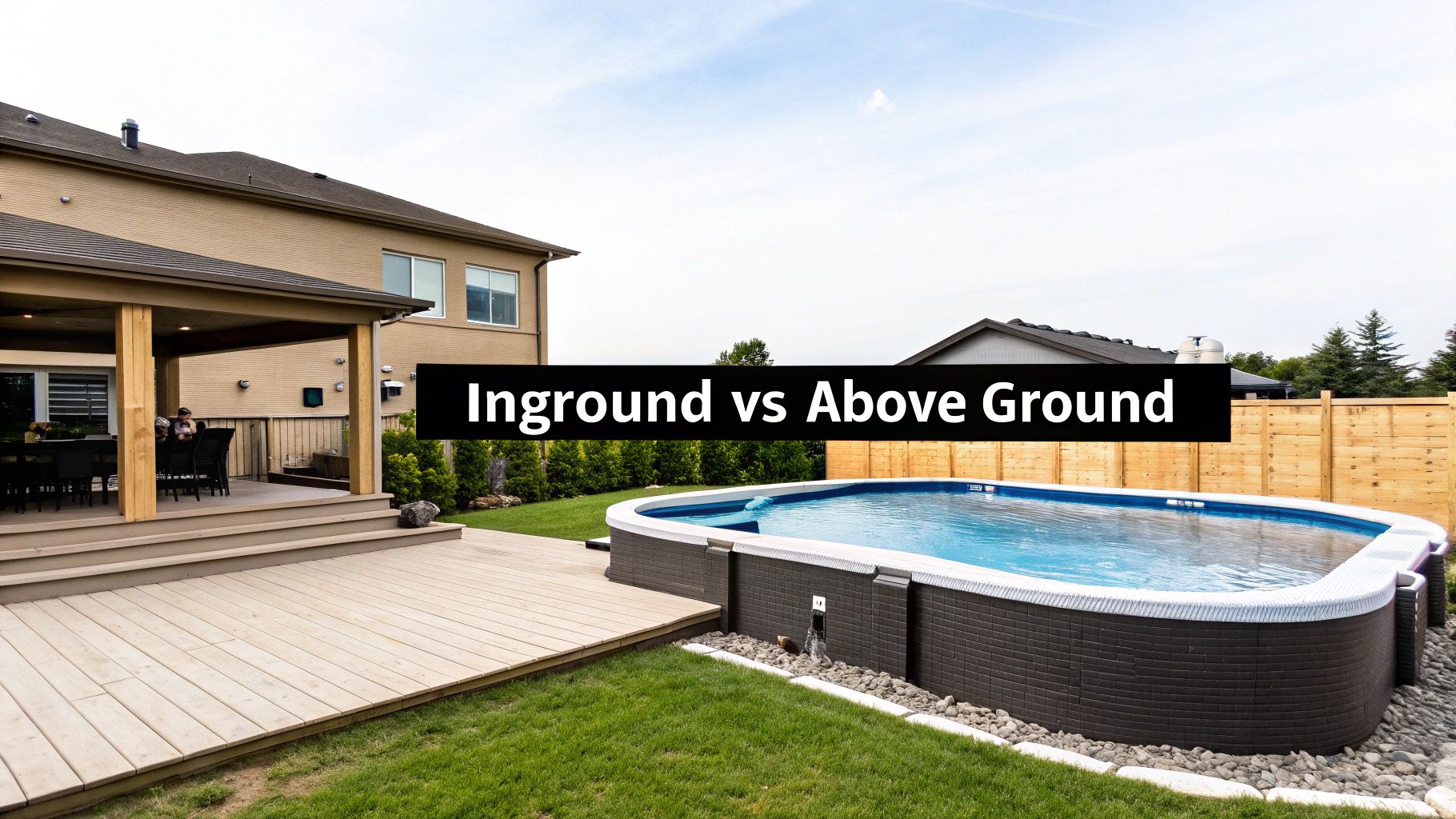
When you're building a custom home in Southwest Florida, the pool isn't just an add-on; it's the centerpiece of your lifestyle. The decision between an inground vs above ground pool is about more than just a place to swim—it's about defining your home's entire outdoor experience, long-term value, and resilience in a storm-prone region.
For a luxury new construction project, there's really only one choice: an engineered, concrete inground pool. It becomes a permanent, architectural extension of your home. Anything else, like an above-ground pool, feels temporary and disconnected from the cohesive, high-end design you expect in a custom-built home, especially in a market driven by new builder trends toward integrated outdoor living.
The Definitive Pool Choice for Your Florida Custom Home
In places like Cape Coral and Fort Myers, building a custom home means designing an entire outdoor oasis, and the pool is the star of the show. With a Sinclair Custom Home, the choice is clear from the start. An inground pool is a structural enhancement, built to the same high standards as the rest of your home and designed to withstand Florida's unique environmental challenges.
This guide focuses on what truly matters to Florida homeowners:
- Aesthetic Cohesion: How does the pool blend with your home’s architecture and new design features?
- Property Value: What is the real-world financial impact and return on investment, especially in the Southwest Florida market?
- Hurricane Resilience: Is it engineered to survive hurricane-force winds, storm surge, and comply with current Florida building codes and elevation requirements?
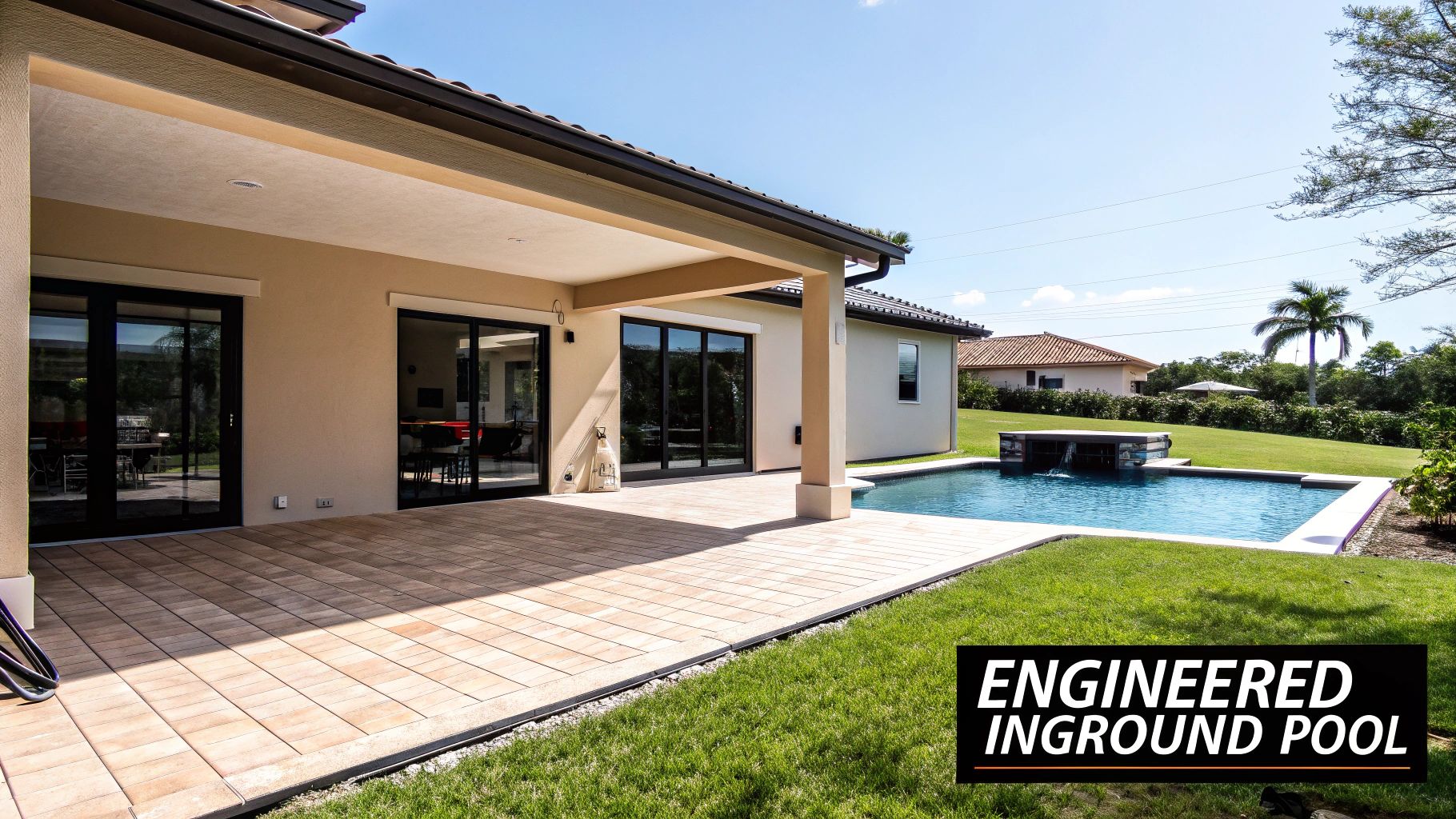
An inground pool is built into your property, designed from day one to handle Florida's intense weather and high water tables. An above-ground pool, on the other hand, is just a product sitting in your yard—vulnerable and often out of place with modern design trends. Understanding this fundamental difference is the first step toward creating the luxurious, lasting outdoor space you've envisioned. We're here to show you why a permanent, integrated pool is the only option that meets the standards of a discerning custom home client in Southwest Florida.
Inground Vs Above Ground Pool A Quick Comparison For Florida
This table cuts straight to the point, summarizing the critical differences. It's designed to help you see exactly why an inground pool is the superior investment for custom homes in hurricane-prone regions like Southwest Florida.
| Consideration | Inground Concrete Pool (Recommended) | Above Ground Pool |
|---|---|---|
| Property Integration | Becomes a seamless, architectural feature of the home. | Sits on top of the landscape, often disrupting visual flow. |
| Resale Value | Significantly increases property value and buyer appeal. | Adds little to no long-term resale value; may be a liability. |
| Hurricane Resilience | Engineered to withstand high winds and storm surge. | Highly vulnerable to damage or destruction from hurricanes. |
| Design Customization | Limitless options for shape, depth, and luxury features. | Restricted to standard, prefabricated shapes and sizes. |
| Longevity & Durability | Built to last for decades as a permanent structure. | Lifespan of 7-15 years, susceptible to wear and tear. |
As you can see, the choice goes far beyond initial cost. For a custom home designed to last a lifetime, an inground concrete pool isn't just a feature—it's a foundational part of your investment, engineered for Florida's specific challenges.
Comparing Pool Construction and Property Integration
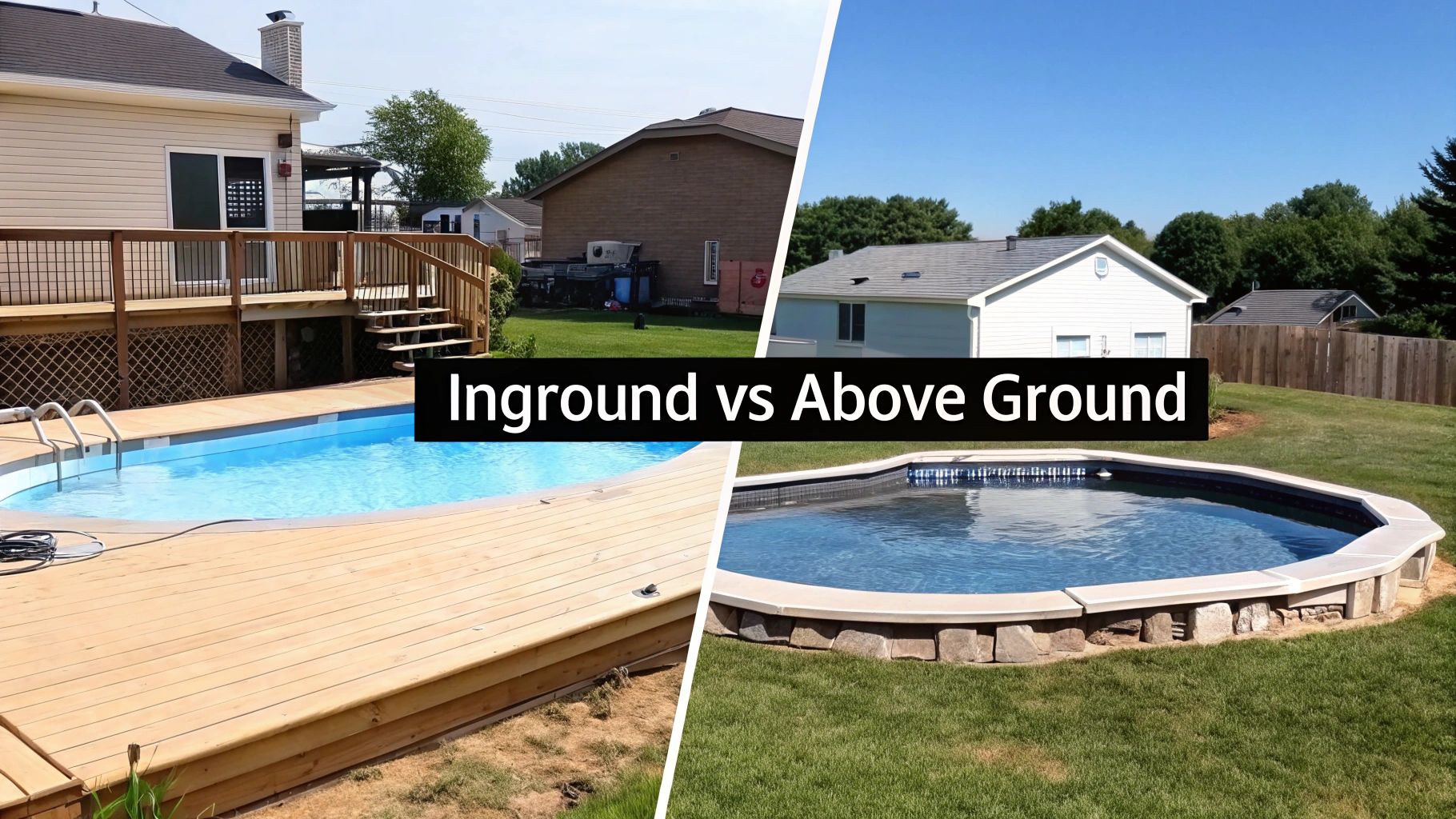
When you get down to the nuts and bolts of the inground pool vs above ground pool debate, the differences are stark. It really comes down to this: one is an architectural feature built into your property, and the other is an accessory placed on top of it. This choice says a lot about the standards you hold for your custom-built home.
An inground pool is engineered from day one to be a seamless, permanent part of your home’s structure and character. In contrast, an above-ground pool is a self-contained kit. Its assembly of metal walls and a vinyl liner is designed for speed and convenience, not for lasting performance. That temporary nature creates a visual and structural gap when set against the quality and craftsmanship of a custom home.
The Inground Pool: An Engineered Foundation
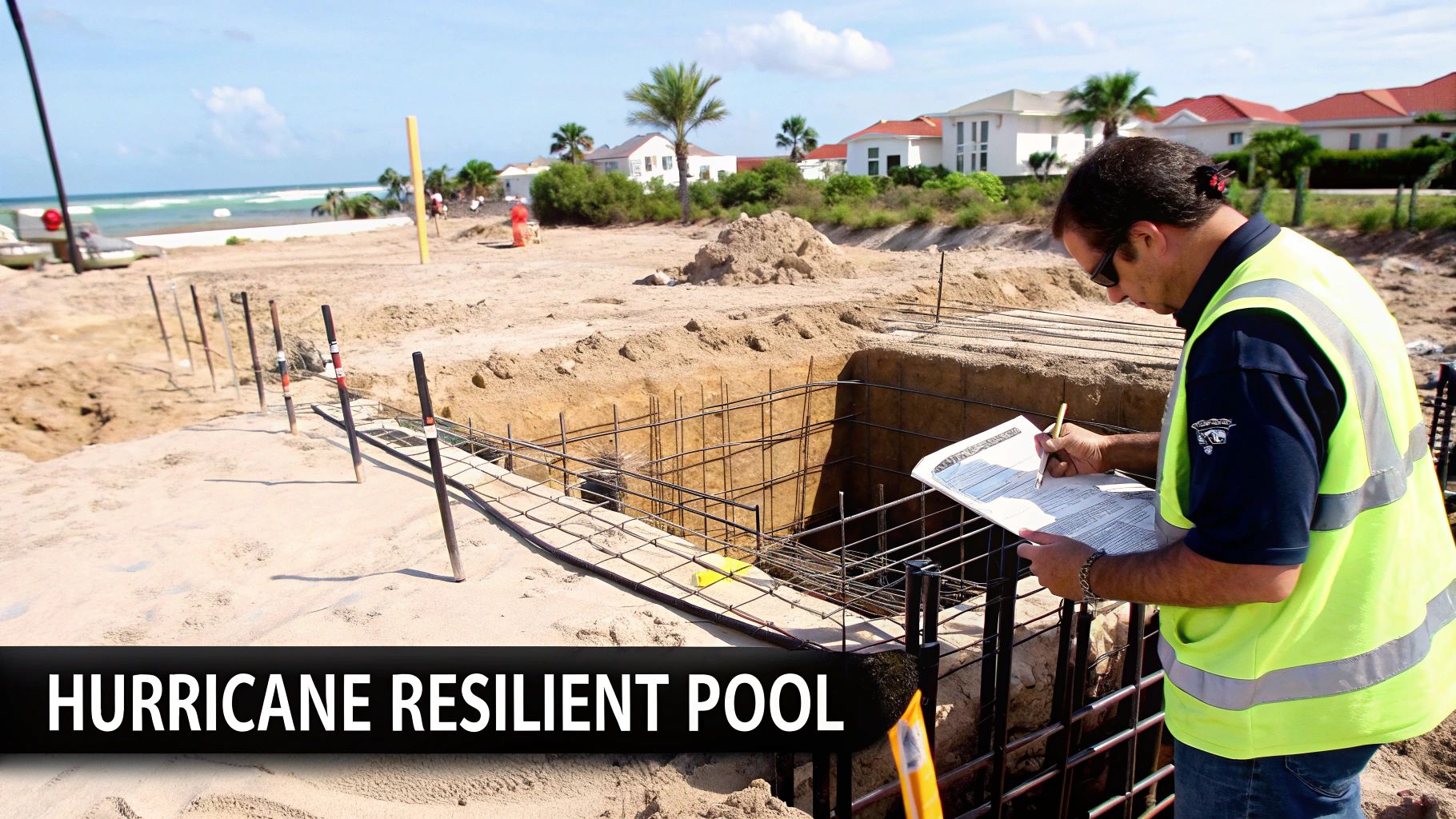
Building a concrete inground pool here in Southwest Florida is a serious engineering project. It all starts with a precise excavation—a critical first step given our region's sandy soil and high water tables. We’re not just digging a hole; we’re laying the groundwork for a massive, permanent structure that has to last, taking into account local elevation requirements and flood zones.
Next comes the skeleton: an intricate framework of steel rebar. This grid provides the immense tensile strength required to handle thousands of pounds of water pressure and withstand the subtle shifts in Florida's ground over time. The real magic happens when gunite or shotcrete, a high-velocity concrete spray, is applied over the rebar cage.
This process creates a single, incredibly strong monolithic shell. Once cured, it becomes a solid structure that is physically part of your property, built to perform for decades. You can see exactly how we achieve this level of integration by exploring our custom swimming pool construction process.
The Above Ground Pool: A Temporary Structure
An above-ground pool is put together more like a piece of outdoor furniture. It's an assembly line process using prefabricated wall panels, support posts, and a vinyl liner to contain the water. The whole structure sits on a prepared patch of ground (often just leveled sand) and relies on the weight of the water inside it to stay put.
There’s no deep connection to your property's foundation or landscape. While this makes the setup much faster and cheaper initially, it leaves the pool vulnerable. The lightweight parts are prone to weather damage, and the structure simply isn't designed to be a lasting feature of your home, especially when faced with hurricane-force winds.
A concrete inground pool is an extension of your home's foundation, built with similar structural principles. An above ground pool is an accessory placed in your yard, with a typical lifespan of just 7-15 years before major components need replacement.
This fundamental difference is why homeowners investing in their property long-term almost always choose permanent installations. Of the 8% of U.S. households with a pool, a clear majority (59%) are in-ground models, showing a strong preference for permanence and quality aesthetics. If an above-ground pool is still on your radar, don't forget essential safety features like proper fencing. This complete guide to an above ground pool with fence offers some great insights into what's required.
Financial Analysis: A Long-Term Investment Versus A Short-Term Expense
When you’re weighing the inground pool vs above ground pool decision, it’s all too easy to fixate on the initial price tag. But for a custom home here in Southwest Florida, this isn’t just a simple purchase—it’s a financial calculation with long-term consequences. Think of it this way: an above-ground pool is a short-term expense, while a professionally installed inground pool is a serious, long-term investment in your property.
An above-ground pool is an item you buy. Much like driving a new car off the lot, it starts depreciating the second it’s set up. An inground pool, on the other hand, is a permanent architectural feature you build. It’s an asset that grows in value right alongside your custom home.
The True Cost of a Florida Inground Pool
The upfront cost of a high-quality concrete inground pool in Cape Coral or Fort Myers reflects what it truly is: a major construction project. The price tag covers a lot more than just a shell to hold water.
- Engineering and Permitting: This involves creating detailed site plans that account for Florida’s unique challenges, like high water tables, sandy soil, and some of the strictest building codes in the country, including new elevation standards.
- Excavation and Site Work: We're not just digging a hole. Professional excavation is essential to create a stable foundation that will support this massive structure for decades to come.
- Structural Materials: This is the core of your investment—the steel rebar reinforcement and high-strength gunite or shotcrete that form the pool's solid, monolithic shell.
- Integrated Systems: The cost includes sophisticated plumbing and electrical systems that are built directly into your home’s infrastructure, ready to connect to a whole-home generator for post-storm recovery.
- New Design Features: This is where the investment really shines. We’re talking durable interior finishes, custom tile, and integrated features like sun shelves or spas that transform the space into a modern outdoor retreat.
- Decking and Landscaping: A huge part of the budget is dedicated to creating a cohesive outdoor living area, complete with custom pavers, coping, and professional landscape integration.
In the context of a custom home, the cost of an inground pool isn't an expense—it's an allocation of capital toward a value-adding asset. In Sun Belt states like Florida, a well-built inground pool can increase a home’s market value by 5% to 8%, making it a very sound financial decision.
Debunking the Lifetime Cost Myth
Sure, an above-ground pool seems cheaper at first glance, but its lifetime costs tell a very different story, especially with Florida’s year-round use and punishing climate. The constant exposure to intense sun, humidity, and potential storms really takes a toll on its less durable parts.
Vinyl liners in above-ground pools typically need to be replaced every 5 to 9 years, which is a significant and recurring expense. The metal or resin frames are also vulnerable to rust, corrosion, and general wear, often leading to costly repairs or a full replacement within a decade.
A concrete inground pool, however, is built for the long haul. Its maintenance costs, while consistent, are for general upkeep rather than the frequent replacement of major structural components. You can get a better sense of these expenses in our guide on the cost to install a saltwater pool. This durability makes the total cost of ownership more predictable and, frankly, often lower over the long run compared to replacing an entire above-ground unit two or three times.
Market Trends and Resale Value
The global market trends back this up. The inground swimming pool market is expanding rapidly and is projected to hit USD 9.76 billion by 2029, growing at a healthy 9.2% each year. By contrast, the above-ground market's growth is much slower, which shows you where long-term consumer and investment confidence really is. You can see the full research on global market trends on ResearchAndMarkets.com.
For a custom home in Southwest Florida, an inground pool is simply what buyers expect to see. It signals quality and a complete, luxury lifestyle package. An above-ground pool, however, can be seen as a temporary fix that a new owner might have to pay to remove, potentially detracting from your home's appeal and final sale price. The choice is clear: one is an asset that appreciates with your home, and the other is an expense that depreciates over time.
Building for Florida's Unique Climate and Regulations
Choosing between an inground pool vs above ground pool in Southwest Florida is about much more than just looks. It’s about understanding our one-of-a-kind environment and the rules that come with it. Building anything here means facing challenges you just don't find elsewhere—from brutal hurricane seasons to tricky soil and high water tables. The pool you pick has to be built to handle it all.
This is where the difference between the two becomes crystal clear. An inground concrete pool is an engineered structure, purpose-built for Florida conditions. An above ground pool, on the other hand, is a manufactured product simply placed on top of them, hoping for the best.
Navigating Florida's Tough Building Environment
Southwest Florida throws a triple-threat of engineering hurdles at any pool project: high water tables, sandy soil, and strict elevation requirements. Our groundwater is often just a few feet below the surface, which creates enormous upward hydrostatic pressure on anything buried in the ground. While an above ground pool sidesteps this problem, an inground pool has to be engineered specifically to fight back.
That's why a monolithic concrete shell, weighing tens of thousands of pounds, is the only real solution. It has the raw mass to resist that upward push and stay put. On top of that, our sandy soil doesn't have the structural integrity of clay or rock, so we need specialized excavation and reinforcement techniques to keep the pool shell from shifting or settling.
Building a pool in Lee County isn't just about digging a hole; it's a calculated engineering feat. Every inground pool permit requires detailed plans that address soil stability, water table depth, and precise elevations to ensure the structure is safe, stable, and compliant with flood zone regulations.
When you get down to it, a properly engineered inground pool is a fortress built into your property. An above ground pool is just a temporary structure sitting on a very challenging foundation.
Hurricane Resilience: The Ultimate Test
Here in Florida, hurricane resilience isn't some optional upgrade; it's a non-negotiable requirement. This is probably the single most important factor where the inground pool vs above ground pool debate has a clear winner. A modern concrete inground pool is designed to be one of the toughest structures on your property, a true hurricane impact feature.
Here’s a quick breakdown of how an inground pool is built for storm survival:
- Structural Mass: The incredible weight of a concrete pool anchors it firmly against storm surge and winds that could easily toss a lighter structure.
- Aerodynamic Profile: Since it's flush with the ground, there are no vertical surfaces for hurricane-force winds to grab onto. An above ground pool, in contrast, acts like a giant sail.
- Debris Resistance: The thick, steel-reinforced concrete shell can take a hit from flying debris that would slice right through the thin walls of an above ground pool.
An above ground pool is incredibly vulnerable in a storm. Its exposed walls are an easy target for wind, and a single puncture from flying debris can cause a total failure, unleashing thousands of gallons of water and turning the whole structure into a dangerous projectile.
Integrating for Storm Preparedness and Recovery
Being truly prepared means thinking about what happens after the storm passes. When an inground pool is integrated into a custom home's design, it becomes part of your overall recovery plan. The pool's pump, lights, and other electrical components are hardwired directly into your home's main panel.
This is a game-changer because it allows your whole-home generator to power the pool's circulation system right after a storm. Keeping that water filtered is absolutely crucial to stop it from becoming a stagnant, unsanitary breeding ground for mosquitoes and bacteria when the power is out for days.
An above ground pool, typically powered by an extension cord, just doesn't have this level of integration. Without a dedicated power source from a generator, the water goes bad quickly, creating a health hazard and a huge cleanup job at the worst possible time. This connection to your home's essential systems ensures your inground pool remains a beautiful asset, not a post-storm liability.
Designing a Cohesive Outdoor Living Space
When you're building a custom home in Southwest Florida, the debate between an inground vs above ground pool is one of the biggest design decisions you'll make. This choice truly defines the entire feel and function of your outdoor environment. A pool shouldn't be an afterthought; it needs to be a deliberate, seamless extension of your home's architectural vision.
An inground concrete pool is the ultimate blank canvas for genuine luxury design. It allows for total integration with your property, creating that unified flow between indoor and outdoor living areas that we all love. This connection is a hallmark of modern Florida home design, blurring the lines between your living room and the lanai. For more on creating this seamless transition, you can explore our guide on what a lanai is and how it enhances Florida living.
The Inground Pool as an Architectural Statement
With a concrete inground pool, the design possibilities are practically endless. It becomes a bespoke water feature, tailored specifically to your lifestyle—not just a place to swim, but the centerpiece of your own private resort.
Some of the key integrated new design features we often build include:
- Sun Shelves: Also known as Baja shelves, these large, shallow areas are perfect for in-water loungers and create a sophisticated, resort-style entry.
- Integrated Spas: A spa that flows directly into the pool creates a stunning visual and functional focal point, completely avoiding the disconnected look of a standalone hot tub.
- Infinity Edges: For waterfront properties here in Cape Coral or Fort Myers, nothing beats a negative or infinity edge. It creates a breathtaking illusion that your pool merges right into the canal or bay.
- Custom Water Features: Features like sheer descent waterfalls built into raised walls or deck jets add sound, movement, and an immediate touch of elegance.
As you weigh your options, browsing various backyard pool ideas can really help you visualize how each type contributes to the overall space. You'll quickly see why an inground pool provides a far superior foundation for a high-end, cohesive design.
The Design Disconnect of Above Ground Pools
On the flip side, an above ground pool presents some major design challenges for a high-end custom property. By its very nature, it's a structure placed on the landscape, not integrated within it. This creates a visual disruption, breaking up the clean lines and cohesive flow that define luxury outdoor living.
An inground pool is designed to complement and enhance the architecture of your home. An above ground pool often competes with it, feeling like a temporary addition rather than a permanent, thoughtfully planned feature.
While you can build decks around them to soften their appearance, they rarely achieve the seamless elegance of a paved inground pool deck. They almost always feel disconnected from the home's main living areas, forcing you to take steps up and over, which interrupts the natural movement of the space. For a property designed with precision and an eye for detail, this inherent disconnect can detract from the overall aesthetic and perceived value.
The Final Verdict for Your Custom Florida Home
After weighing every angle of the inground vs. above-ground pool debate, the verdict for a new custom home in Southwest Florida is overwhelmingly clear. Building with Sinclair Custom Homes is a commitment to quality, permanence, and lasting value. The pool you choose has to live up to that same demanding standard.
For a brand-new home, an engineered, concrete inground pool isn't just the best option; it’s the only one that truly complements the investment you’re making. It’s a permanent architectural feature, not a temporary backyard accessory. This choice ensures your entire property—from the foundation to the lanai—is a cohesive, high-end statement of quality and thoughtful design.
An Integrated Part of Your Investment
Think of it this way: an above-ground pool is a depreciating product you place in your yard. An inground pool is an appreciating asset you build into your property.
It’s a true extension of your home’s engineering, designed to meet Florida’s strict building codes and built to withstand its challenging climate—including the ever-present threat of hurricanes. Its seamless integration elevates your entire outdoor living space, creating the resort-style oasis that defines the Florida lifestyle. You simply can’t achieve this level of harmony with a structure that just sits on top of your lawn.
Choosing an inground pool is a strategic decision that aligns with the core principles of custom home building: superior materials, expert craftsmanship, and a focus on long-term value. It signals a commitment to creating a property that is built to last.
This simple decision tree gets to the heart of the matter, showing how one path leads to a fully integrated resort experience while the other results in a disconnected yard.
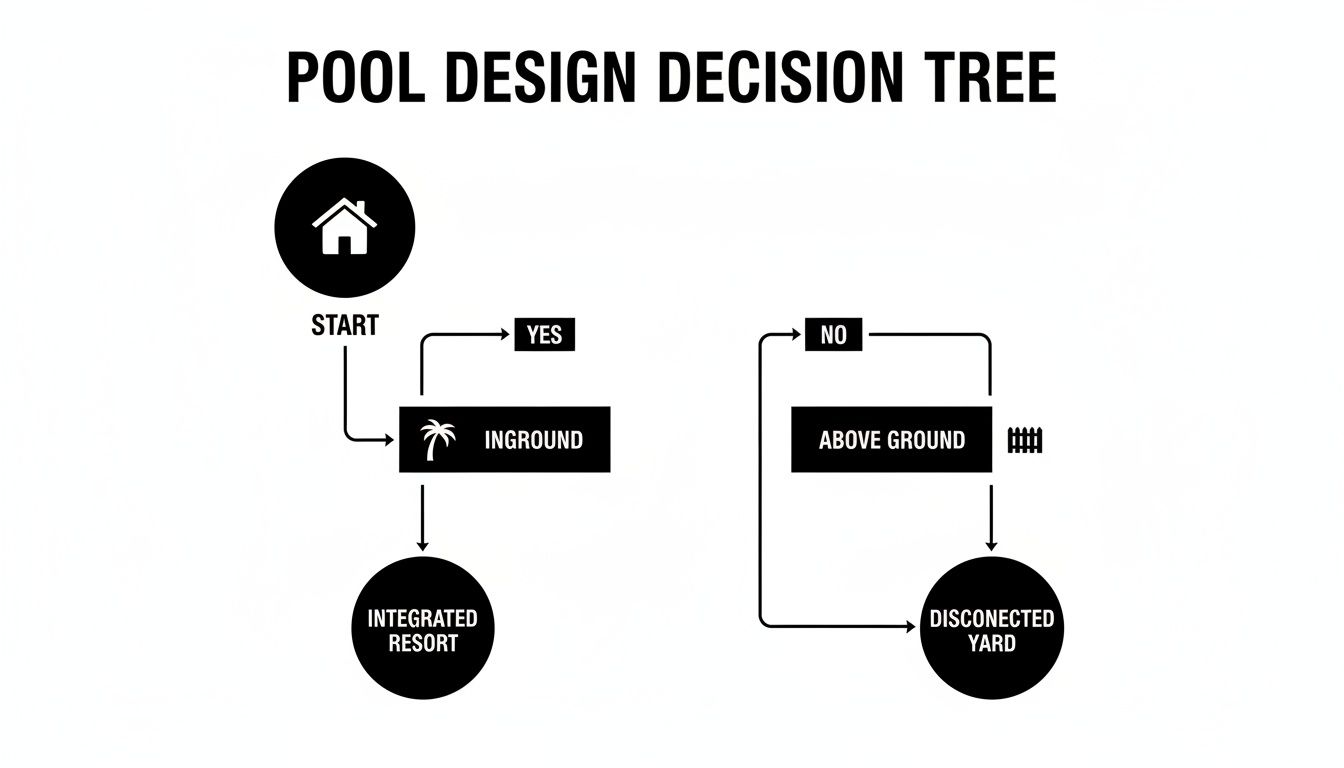
As the infographic shows, selecting an inground pool is the first step toward creating that cohesive, high-value outdoor living space you're dreaming of.
Why Settle for Anything Less Than Permanent?
Let's quickly recap the undeniable advantages that make an inground pool the definitive choice for your Sinclair Custom Home:
- Superior Aesthetic Integration: It becomes a seamless part of your home's architecture, allowing for limitless design customization that reflects your personal style.
- Significant Increase in Resale Value: In the competitive Southwest Florida market, an inground pool is a powerful asset that attracts buyers and can substantially increase your home’s market worth.
- Proven Hurricane Durability: Engineered with steel and concrete, it’s built to withstand storm surge and high winds—a non-negotiable feature in our region.
- Enhanced Lifestyle and Functionality: Features like integrated spas, sun shelves, and custom lighting transform your backyard into a private retreat for relaxation and entertainment.
Your vision for a custom home deserves more than a temporary solution. It deserves a pool that is as meticulously planned, engineered, and constructed as the home itself.
At Sinclair Custom Homes, we build homes designed for a lifetime of enjoyment. We invite you to discuss your complete vision with us, from the handcrafted cabinets inside to the luxurious, integrated pool outside. Let’s build your forever home, complete with the outdoor oasis you’ve always imagined.
Of course. Here is the rewritten section, crafted to sound like an experienced human expert in the field, aligning with the provided style and tone.
Your Florida Pool Questions, Answered
When you're planning a custom home in Southwest Florida, the pool isn't an afterthought—it's a centerpiece. Our clients always have great questions about how to best integrate a pool with their new home. Here are some of the most common ones we hear, with answers geared specifically for the custom home building process.
How Long Does It Take to Build an Inground Pool With a New Custom Home?
Building your inground pool happens right alongside your home's construction. While the pool shell itself might take 8-12 weeks to complete, the real magic is in the coordination. By planning the pool from day one, we align everything from the start—plumbing, electrical, gas lines, and landscaping—with the main build.
This unified approach is far more efficient than adding a pool down the road. It guarantees your pool’s systems are seamlessly connected to your home’s infrastructure, including important hurricane impact features like a whole-home generator for storm readiness. This method avoids the expensive, messy process of retrofitting a pool onto a property that’s already finished.
Do Inground Pools Require More Maintenance Than Above Ground Pools in Florida?
Both pools need regular care, but the maintenance conversation is totally different in Florida where we swim year-round. Modern inground concrete pools, especially when we add salt chlorinators and automated cleaning systems, can actually be surprisingly easy to manage. Their durable plaster or pebble finishes are built to handle the constant Florida sun and pool chemicals without breaking a sweat.
On the other hand, the vinyl liners you find in above-ground models are much more vulnerable to UV damage and can tear, often needing a full replacement every 7-10 years. That’s a major recurring expense that can quickly eat up any initial savings, making a well-built inground pool the more durable, long-term choice for constant use.
In a year-round swimming climate like Southwest Florida's, durability is a huge part of the maintenance equation. The robust, permanent materials of an inground pool are engineered to handle constant use and environmental exposure far better than the temporary components of an above-ground model.
Can an Inground Pool Be Built in a FEMA Flood Zone?
Yes, you can absolutely build an inground pool in a FEMA flood zone. It just requires specialized engineering and a strict adherence to local building codes—something we handle all the time as custom builders in Cape Coral and Fort Myers. The whole game is about ensuring the pool's structural integrity and getting the elevation right.
This involves a few key steps:
- Engineering for Hydrostatic Pressure: We have to design the pool shell to withstand the massive upward pressure from a high water table during a flood event.
- Elevating Equipment: All the critical electrical gear—pumps, heaters, and automation panels—must be installed above the Base Flood Elevation (BFE) to keep them safe from storm surge.
- Fortified Construction: We make sure the pool's bond beam and decking are built to meet or exceed hurricane code, protecting your investment from storm damage.
How Does an Inground Pool Affect My Homeowners Insurance?
An inground pool is a permanent structure that adds to your home's replacement value, so you can expect it to influence your premium. Florida insurers will require certain safety features to manage liability, and we include all of them as standard in our custom home and pool designs. This typically means a perimeter fence of a specific height with self-latching gates.
An above-ground pool can also affect your policy, but it's often categorized differently, maybe under "other structures." Insurers sometimes view its temporary nature and vulnerability to storm damage as a different kind of risk. For a custom home, the clear, insurable value of a permanent inground structure is usually much more straightforward for underwriters.
Your vision for a Florida custom home deserves a pool that matches its quality and permanence. At Sinclair Custom Homes Inc, we build integrated outdoor living spaces that are as durable as they are beautiful. Contact us to start planning your dream home and pool today at https://sinclaircustomhome.com.