


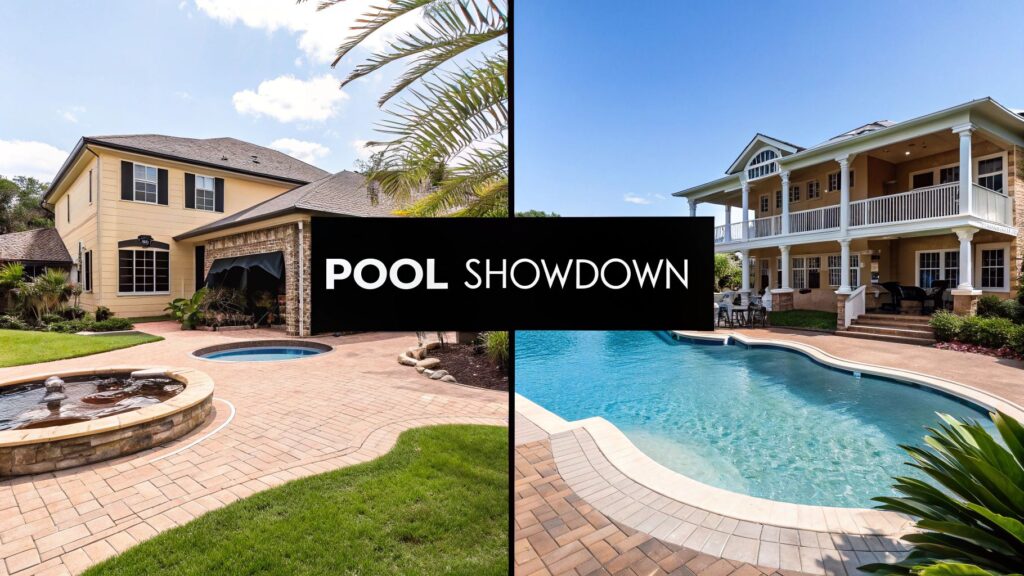
When you're building a custom home in Florida, the pool isn't just an afterthought—it’s the heart of your outdoor living space. The decision between an in-ground or above-ground pool really comes down to what you want in the long run. Think of an in-ground pool as a permanent, high-end feature that becomes part of your home and boosts its value. An above-ground pool, on the other hand, is all about flexibility and a smaller upfront cost; it’s more like personal property than a structural upgrade.
For most of the custom homes we build here in Southwest Florida, the goal is to create a beautiful, seamless outdoor oasis, and that almost always points to an in-ground pool.
Choosing The Right Pool For Your Florida Custom Home
For homeowners building from the ground up in Southwest Florida, a pool is a defining feature. It's woven into the home’s design right from the very first blueprint. So, the in-ground vs. above-ground debate goes way beyond just the price tag. It’s about aesthetics, how it will affect your property value, and—critically for us in Florida—how it will hold up during a hurricane.
This choice really boils down to two main goals: are you building for property value or for flexibility?
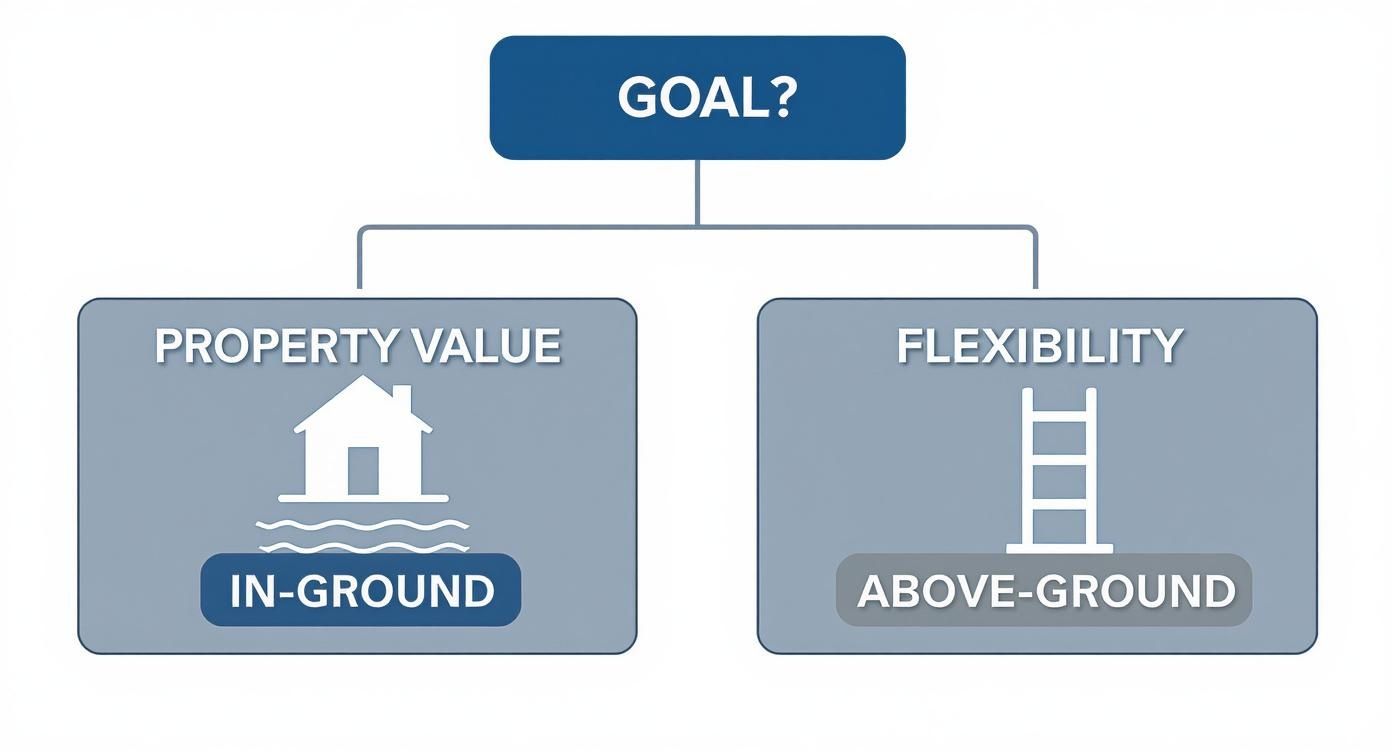

As you can see, if maximizing your home's value and creating a permanent, luxury retreat is your main driver, an in-ground pool is the undeniable winner.
Key Considerations For Custom Builds
When we're building a new home in places like Cape Coral or Fort Myers, the entire design is focused on that effortless flow from indoors to outdoors. An in-ground pool is designed as a natural extension of the house itself. It gets integrated right into the lanai, complete with features like sun shelves, infinity edges, and attached spas that define the luxury Florida lifestyle.
For custom home builders, the pool is a structural element planned right alongside the home's foundation and elevation. This integrated approach ensures proper drainage, electrical work for features like heaters and lighting, and even pre-wiring for a backup generator to keep systems running during a storm.
On the flip side, while some of the newer above-ground pools look much better than they used to, they’re still fundamentally separate from the home's structure. Getting them to feel connected requires a lot of extra, often pricey, custom decking to bridge that physical gap. That decking introduces a whole new set of maintenance tasks and hurricane-prep concerns.
To make it simple, here’s a quick rundown of how each pool stacks up for Florida homeowners.
Quick Comparison In-Ground vs Above-Ground Pools for Florida Homes
| Factor | In-Ground Pool | Above-Ground Pool |
|---|---|---|
| Home Integration | Designed as a seamless part of the lanai and home. | Sits separately; requires extensive decking to connect. |
| Property Value | A significant asset that increases your home's resale value. | Classified as personal property; adds little to no value. |
| Hurricane Resilience | Engineered to withstand wind, water, and ground pressure. | Highly vulnerable to damage from high winds and flying debris. |
| Customization | Nearly endless options for shape, depth, and features. | Limited by standard, pre-fabricated shapes and sizes. |
| Longevity | 25+ years for concrete/gunite with proper care. | 7-15 years on average for the structure and liner. |
In the end, your pool choice has to match your home’s design philosophy and your long-term financial goals. An in-ground pool is an investment in your property's lasting appeal and everyday enjoyment. An above-ground pool, while fun, is more of a temporary solution.
Analyzing the Full Cost of Pool Ownership
When you're building a custom home in Southwest Florida, it's easy to get sticker shock from a pool quote, but just looking at the initial price tag is a classic mistake. The real cost comes into focus when you consider the entire lifespan, from the day we break ground to the long-term upkeep years down the road. For anyone investing in a permanent, integrated feature for their dream home, getting a handle on the total financial picture is the only way to make a smart decision.
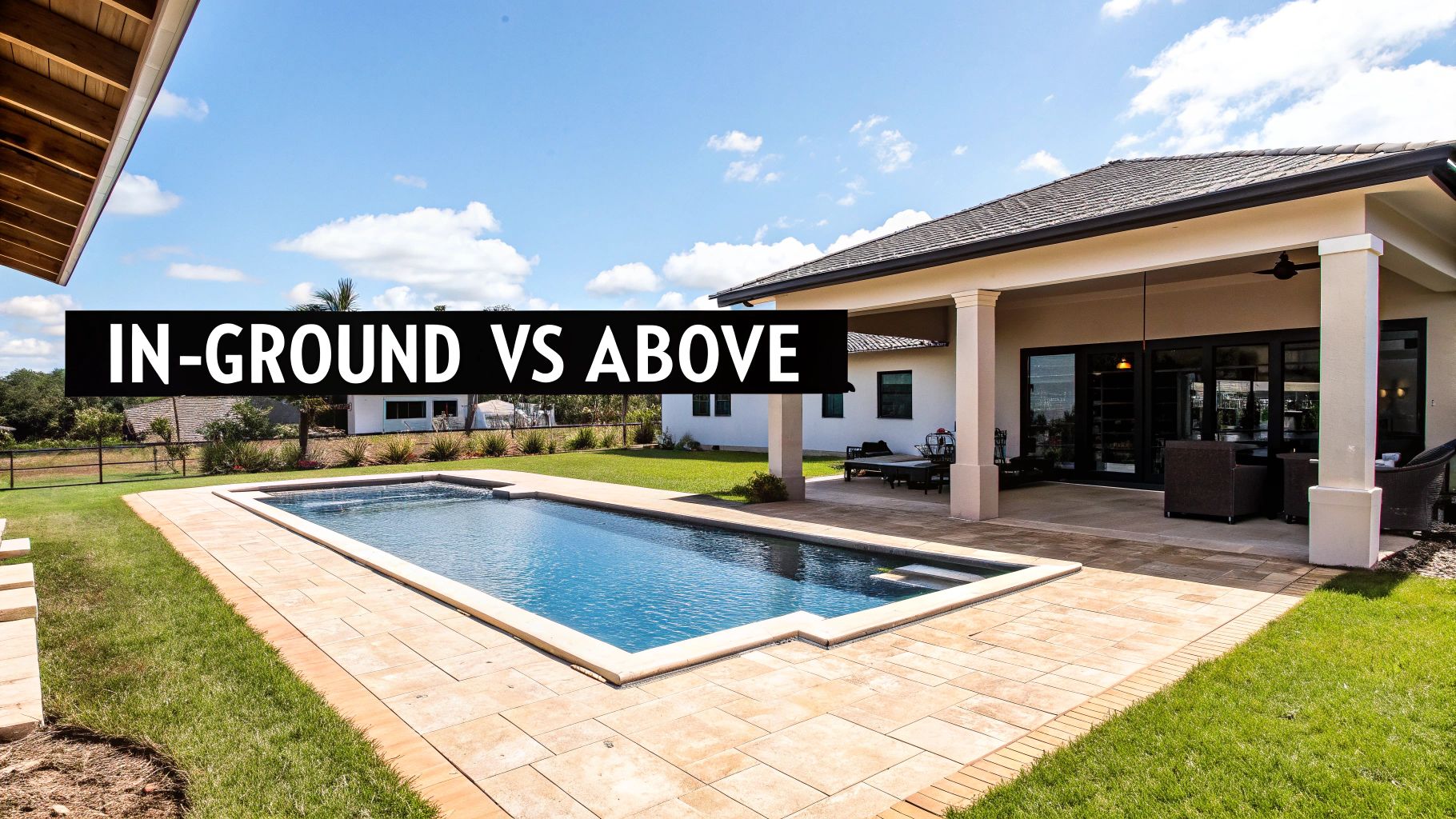

The conversation about in-ground vs. above-ground pool costs always starts with installation—that's where the numbers look the most different. In-ground pools are a much bigger, more permanent investment. Just look at the national numbers: there are roughly 6.1 million residential in-ground pools to 4.3 million above-ground models, which tells you how established they are in the custom home market. An above-ground pool might run you anywhere from $1,500 to $15,000, but a quality in-ground pool project will start around $35,000 and can easily sail past $60,000 once you start adding the features homeowners expect.
Deconstructing the In-Ground Pool Investment
That initial quote for an in-ground pool? It’s just a starting point. The real number includes several other essential pieces that are non-negotiable for a high-end Florida home.
- Excavation and Site Prep: This isn't just digging a hole. It's bringing in heavy machinery to perfectly shape the pool shell and prepare the ground, which is a major upfront cost.
- Premium Materials: In a hurricane zone, durability is everything. We use gunite and concrete because they form a resilient, long-lasting structure that can stand up to our climate.
- Custom Decking and Lanai: To get that seamless flow from your living room to the pool, you need professionally installed pavers, travertine, or cool-touch concrete. This isn't an afterthought; it's part of the core design.
- Integrated Landscaping: A pool shouldn't look like it was just dropped into the yard. Professional landscaping ties everything together, handling drainage and using strategic plantings to create a true oasis.
And that's before we even get to the fun stuff. Today, features like sun shelves, infinity edges, custom waterfalls, and sophisticated lighting systems are practically standard. They absolutely add to the budget, but they also create the stunning backyard retreat you're picturing.
The True Cost of a "High-End" Above-Ground Pool
Sure, a basic above-ground pool kit is cheap. But making it look like it actually belongs next to a custom home? That requires a whole different level of investment. The goal is to hide the fact that it's an above-ground pool, which involves more than just assembly.
You'll need extensive, multi-level decking just to bridge the height difference and make it feel connected to the house. Honestly, this custom woodwork can sometimes cost as much as the pool itself. On top of that, you still have to pay for proper site prep, like leveling the ground and running electrical lines for the pump and filter.
The whole point is to make an above-ground structure feel intentional. But that often means sinking a ton of money into custom carpentry and landscaping—which closes the initial cost gap with an in-ground pool while delivering a lot less long-term value.
Factoring in the Long-Term Running Costs
The expenses don't stop once the pool is full. Your financial commitment is ongoing, and these operational costs are a huge part of the total ownership picture.
Both types of pools need regular maintenance, chemicals, cleaning, and will eventually need repairs. The big difference is energy consumption. In-ground pools almost always have more powerful, complex equipment. If you want to get into the weeds on this, our guide on the costs of pool heaters and pumps is a great resource.
Here in Florida, you also have to think about insurance. A permanent in-ground pool is considered an "attractive nuisance" and will definitely increase your homeowner's insurance premiums. And finally, in Southwest Florida, you can't ignore hurricane season. Many of our clients choose to integrate their pool's electrical systems with a home backup generator. It’s an added expense, but it ensures your pumps and filters keep running during a power outage, saving you from a costly and disgusting water quality nightmare. It's just one of those smart, necessary costs of living the Florida lifestyle.
Navigating Florida Installation and Timelines
When you’re weighing in-ground vs above-ground pools, one of the biggest differentiators, especially here in Southwest Florida, is the time it takes to go from a design on paper to your first swim. An in-ground pool isn’t just a weekend project; it's a major construction effort that has to be woven into the schedule of your custom home build. You’re looking at a multi-month journey, typically anywhere from three to six months, from filing the first permit to passing the final inspection.
That longer schedule is packed with critical, carefully sequenced steps. It kicks off with engineering and permitting, then moves into excavation, laying steel rebar, and running all the plumbing and electrical lines. After that comes the gunite or shotcrete shell, which needs time to cure before crews can install tile, coping, and decking. The final step is applying the interior finish and filling it with water. The complexity is right up there with building the main structure of your home.
On the flip side, a high-quality above-ground pool offers almost instant gratification. Installation is usually wrapped up in just a few days, which is incredibly appealing if you’re anxious to start splashing. That speed, however, comes at the expense of a permanent, integrated backyard oasis.
Florida's Unique Site Challenges
Building a pool in Southwest Florida is rarely as straightforward as just digging a hole. We have some unique environmental hurdles that we, as local custom builders, deal with every day. These factors absolutely affect the cost and timeline of any pool project.
- High Water Tables: A lot of Florida is sitting right on top of a high water table. When we excavate for an in-ground pool, we often have to bring in specialized dewatering pumps just to keep the hole dry enough to properly form the pool shell. It’s an added layer of complexity and cost you just don’t see in most other places.
- Sandy Soil Conditions: The loose, sandy soil common in places like Cape Coral and Fort Myers doesn't offer the stability of dense clay or rock. This means the pool has to be engineered more robustly, often calling for more steel reinforcement to make sure the structure stays solid for decades to come.
- New Elevation Requirements: In the wake of recent hurricanes, new building codes are mandating higher home elevations to protect against flooding. This has a direct ripple effect on pool construction. The pool deck has to be engineered to meet the home's raised finished floor, which often requires a ton of site work, fill dirt, and retaining walls.
The Permitting Process Demystified
The journey through the permitting office in counties like Lee and Collier really highlights the core difference between these two types of pools. An in-ground pool is considered a permanent structure, meaning it’s subject to the same strict permitting and inspection process as the house itself.
Getting a permit for an in-ground pool requires detailed architectural and engineering plans, complex drainage calculations, and a series of mandatory inspections at each major phase of construction. This is what ensures the pool is safe, up to code, and properly connected to your home's electrical and plumbing systems.
Above-ground pools, on the other hand, often live in a different regulatory world. Since they’re typically classified as temporary or non-permanent, the permitting rules are far more relaxed—if they’re required at all. This is a big reason they can be installed so quickly. But be warned: any serious electrical work or a substantial deck built around an above-ground pool will almost certainly need its own permits and inspections.
Understanding what happens during the initial dig is crucial for any in-ground project. For a closer look at the groundwork, this complete guide to pool excavation is a fantastic resource. It breaks down the planning, costs, and safety involved in the foundational work that paves the way for a beautiful, long-lasting pool.
Integrating Pool Design With Home Aesthetics

Here in Southwest Florida, a pool isn't just an add-on; it's the heart of your outdoor living space. When you're building a custom home, the conversation around in ground vs above ground pool options quickly turns to how well each one fits with the overall look and feel of your property. The goal is always a seamless flow between the house, the lanai, and the landscape, and the pool is the anchor that ties it all together.
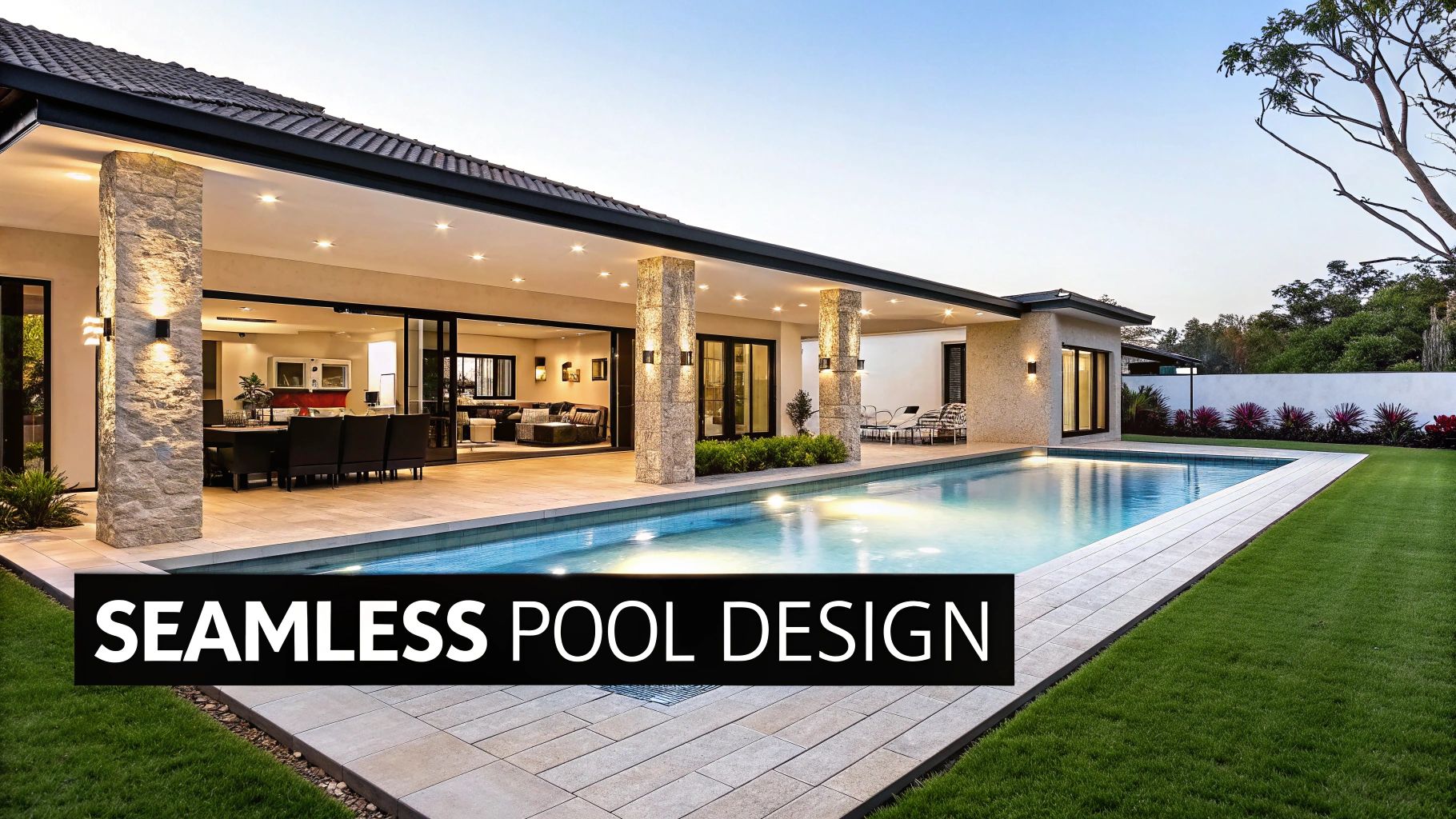
An in-ground pool is part of the architectural plan from day one. It’s designed and constructed right alongside the home's foundation and lanai, making it a permanent, organic extension of your living space. This integrated approach creates a sense of design continuity that a standalone structure just can't match.
Crafting a Seamless In-Ground Oasis
The real magic of a luxury in-ground pool is its ability to blend flawlessly into its surroundings. The trend in Florida design is all about erasing the lines between indoors and outdoors, and this is where in-ground pools shine. They become a fundamental part of the home's architectural footprint.
Modern custom homes are moving beyond simple rectangular pools and incorporating features that make the pool a true design statement:
- Zero-Entry Slopes: Often called a "beach entry," this feature creates a gentle slope from the deck into the water, just like walking into the ocean. It's a hugely popular new design element that adds a resort-like vibe and improves accessibility.
- Integrated Sun Shelves: These are large, shallow ledges designed right into the pool, perfect for setting up a couple of lounge chairs and soaking up the sun with your feet in the water. They are planned from the start to complement the pool's shape and the views from inside the home.
- Custom Water Features: From dramatic waterfalls built into raised walls to elegant scuppers and bubblers, these features are designed to enhance the home's aesthetic. They add both visual excitement and the calming sound of moving water.
Of course, the pool itself is only half the picture. Knowing the best pool deck stone options is essential for both looks and durability in our climate. The decking and coping are the visual bridge between your home's exterior and the water, pulling the entire space together into one unified design.
Elevating the Above-Ground Pool Aesthetic
While traditionally viewed as a more temporary solution, today's high-end above-ground pools have more design potential than you might think. But—and this is a big but—achieving a luxury feel takes a lot of strategic work. The main challenge is overcoming the fact that the pool is a separate, raised structure. The entire design has to focus on bridging that physical and visual gap.
For an above-ground pool to complement a custom home, the focus shifts from the pool itself to the surrounding structure. The goal is to build an environment that makes the pool feel grounded and intentional, rather than temporary.
This usually involves significant and often expensive custom additions that are built to mimic the seamless integration you get with an in-ground design.
Key Strategies for High-End Integration
To make an above-ground pool feel like it belongs next to a luxury home, builders and landscape architects have a few tricks up their sleeves. These aren't just minor tweaks; they're substantial construction projects.
- Multi-Level Decking: This is non-negotiable. Building an expansive, tiered deck that wraps around the pool and connects directly to the home’s lanai or back doors is the only way to create that continuous surface for lounging and entertaining.
- Strategic Landscaping: Cleverly placed raised planters, privacy hedges, and lush tropical plants can soften the harsh lines of the pool's walls. This helps embed the structure into the yard, making it feel less like an object that was just dropped into place.
- Sophisticated Lighting: Integrating ambient lighting into the deck, stairs, and surrounding landscape is key. Good lighting design draws the eye to the overall setting at night, creating a beautiful focal point and making the pool's structure fade into the background.
At the end of the day, while a high-end above-ground pool can be made to look fantastic, the design effort is one of creative concealment. An in-ground pool, by contrast, is designed for seamless revelation, allowing it to become a true, lasting expression of your home's unique architectural vision.
Evaluating Durability and Hurricane Resilience
If you live in Southwest Florida, you measure long-term durability in one simple way: how well does it stand up to a hurricane? When it comes to an in-ground vs above-ground pool, their performance in a major storm is one of the biggest differences you'll find. This choice goes way beyond just looks—it's about safety, resilience, and protecting your investment when the next big one spins up in the Gulf.
A modern, in-ground concrete pool is engineered from day one to be a permanent, unmovable part of your property. It’s not just a hole in the ground; it's a heavily reinforced structure built to handle incredible external forces. This is absolutely critical during a hurricane, when saturated soil can exert massive hydrostatic pressure against the pool's shell.
The Built-In Strength of In-Ground Pools
The raw strength of an in-ground pool is baked into its construction. We build them with steel-reinforced concrete (gunite or shotcrete) that creates a single, monolithic shell anchored deep in the earth. This design makes them incredibly stable against both the inward push of groundwater and the powerful uplift forces that happen during serious flooding.
Beyond ground pressure, these pools are far less threatened by high winds and flying debris. Since they sit flush with the ground, there's no exposed wall for the wind to grab onto. The surrounding deck—whether concrete or pavers—acts as another layer of protection, turning the entire structure into a fortified part of your backyard. The whole thing is planned as an integrated system during the custom home building process, making sure it works with your property’s overall drainage and structural design.
Assessing the Vulnerabilities of Above-Ground Pools
Above-ground pools are a completely different story. Their design—a structure sitting on top of the ground—leaves them dangerously exposed to a hurricane’s fury. High winds can easily get underneath the frame and lift or simply collapse the whole thing. The thin walls are also prime targets for punctures from flying debris, which is a leading cause of total failure during a storm.
For an above-ground pool, a hurricane isn't just a threat of damage; it's a threat of the entire structure becoming a massive piece of debris itself, posing a significant danger to your home and your neighbors' properties.
The market for these pools has certainly exploded, but Florida buyers need to understand the reality here. The U.S. market jumped from USD 464.5 million in 2019 to USD 529.6 million by 2023, and it's projected to hit USD 966.2 million by 2034. A lot of that growth is from frameless or inflatable models people love for their low cost and portability—two features that, unfortunately, make them even weaker in a high-wind zone.
Mitigation Strategies and Long-Term Material Health
If you own an above-ground pool, storm prep is an active, hands-on job. Most manufacturers tell you to partially drain the water to stop it from overflowing and try to secure it with hurricane straps or cables anchored into the ground. But let's be clear: these are damage control tactics, not guarantees. The pool's fundamental integrity is still at risk.
Then there’s the relentless Florida sun. An in-ground gunite pool with a quality finish is built to last for decades, shrugging off UV degradation. The vinyl liners and metal or resin frames of above-ground pools, on the other hand, have a much shorter shelf life. UV rays make liners brittle and can weaken frames over time, compromising the structure long before a storm ever shows up. When you're building a custom home meant to last a lifetime, an in-ground pool is the only option that offers the same level of permanence and resilience.
Understanding Resale Value and Property Investment
When you're building a custom home here in Southwest Florida, every major decision you make is an investment in its future. The debate over an in ground vs above ground pool is a classic example, because each one has a wildly different impact on your property's bottom line. In the competitive Florida real estate market, a pool isn't just a luxury—it's a key feature that buyers expect to see.
An in-ground pool is almost always seen as a permanent home improvement. It's a structural asset that directly adds to your property's appraised value. When it's professionally designed and integrated with your home's lanai and landscaping, it becomes a huge selling point. Appraisers treat it like a gourmet kitchen or an extra bedroom, which can boost your home’s value by an estimated 5% to 8%.

The Above-Ground Pool Dilemma
On the flip side, an above-ground pool sits in a completely different world from a real estate standpoint. It doesn't matter how high-end or well-kept it is; legally, it's considered personal property, not a permanent fixture. This is a critical distinction—it means the pool won't be included in your property appraisal and adds virtually nothing to its official value.
An in-ground pool is an investment in your home's equity. An above-ground pool is a purchase for your personal enjoyment, with little to no financial return.
This really comes into play when you decide to sell. A lot of potential buyers will see an older above-ground pool as a liability they'll have to pay to take down and haul away. It can even become a sticking point in negotiations, with buyers asking for its removal before they'll close the deal.
Long-Term Financial Impact in Florida
For anyone building a custom home in places like Cape Coral or Fort Myers, your choice of pool needs to align with your long-term financial goals. The higher upfront cost of an in-ground pool is a strategic investment in your property’s future appeal and equity. It's a permanent upgrade that pays off both in daily enjoyment and at the closing table.
At the end of the day, if you're building a custom home as a lasting investment, the financial argument is crystal clear. An in-ground pool is a value-adding asset that enhances your home’s prestige and market position. An above-ground pool, while fun for a while, is a depreciating item that doesn't contribute to your most significant financial asset—your home.
Common Questions About Florida Pool Installations
When you're planning a new custom home in Southwest Florida, the pool is a big part of the dream. But with that dream come some very practical questions. Clients building with us in Cape Coral and Fort Myers often ask about the nuts and bolts—from insurance to safety laws. Getting these details right from the start ensures your project goes smoothly.
Here are a few of the most common questions we hear.
Will A Pool Affect My Homeowners Insurance?
Yes, absolutely. A pool will definitely have an impact on your homeowners insurance. An in-ground pool is what insurers call an "attractive nuisance," which is just a technical term for something that could attract children and pose a risk, increasing your liability.
Because of this, your insurance company will almost certainly require you to increase your liability coverage, usually to a minimum of $300,000 to $500,000. They'll also insist on specific safety features, like a proper fence and self-latching gates, before they’ll cover you.
For an above-ground pool, it's a bit of a gray area. While the pool itself might not affect your policy as much as a permanent in-ground structure, any decking you build around it that makes it easy to access will raise the exact same liability flags and safety requirements.
What Are Florida's Pool Safety Requirements?
Florida doesn't mess around when it comes to pool safety. The state's laws, detailed in the Preston de Ibern/McKenzie Merriam Residential Swimming Pool Safety Act, are some of the strictest in the country for a good reason: preventing accidental drownings.
By law, your new pool has to have at least one of these approved safety features in place:
- Isolation Fencing: This means a barrier that’s at least four feet high and completely separates the pool from your home and the rest of the yard.
- Approved Safety Cover: This isn't just a simple tarp. It has to be a professional-grade cover strong enough to support the weight of an adult.
- Alarms on All Doors and Windows: Any door or window that provides direct access to the pool area must have an alarm that goes off when it's opened.
When you're building a custom home, these safety features aren't just suggestions—they are a mandatory part of the final inspection. You won't get your Certificate of Occupancy without them. Your builder's job is to integrate these requirements seamlessly into your lanai and home design from the very beginning.
Choosing between an in ground vs above ground pool means looking at these practical issues just as much as the design and aesthetics for your new home.
Building your dream home in Southwest Florida is all about getting every detail just right, and that includes the pool that will be the heart of your outdoor life. Sinclair Custom Homes Inc specializes in creating stunning, seamless outdoor living spaces that are perfectly integrated with your new home’s design. We’re here to bring your vision to life with quality, integrity, and craftsmanship you can trust. https://sinclaircustomhome.com