


Picking the right exterior colors for your new custom home in Southwest Florida goes way beyond just finding a shade you like. It's about creating a complete palette that reflects new builder trends, complements the architecture, holds up to our intense sun and coastal climate, and integrates hurricane-impact features seamlessly. A smart color scheme is a triple threat: it boosts curb appeal, showcases your personal style, and protects your investment long-term.
Understanding Your Southwest Florida Exterior Palette
Choosing exterior house colors here is a whole different ballgame. Unlike other parts of the country, our decisions are shaped by the relentless subtropical sun, the thick humidity, and the ever-present reality of hurricane season. It’s less of a purely aesthetic choice and more of a practical one that affects everything from your energy bills to the durability of your home's finish.
The latest builder trends you see in new custom homes from Cape Coral to Fort Myers are all about finding that sweet spot between beautiful and resilient. These colors must complement modern materials and structural designs built to handle Florida's weather, including higher elevation requirements and robust storm protection. If you're looking at specific materials, checking out a solid guide to vinyl siding colors can give you great ideas on how light and color interact—principles that apply to almost any exterior finish.
It's More Than Just Personal Taste
When you're building a custom home in Florida, every single choice makes a difference. The exterior color is one of the very first things people notice, and it sets the stage for your entire property. The palette has to flow with the architectural style, whether that's a sleek Coastal Contemporary or a timeless West Indies-inspired estate.
Here are the key things we always have our clients think about for a Florida home:
- Architectural Harmony: The colors should highlight, not hide, your home’s unique features, from hurricane-impact windows to custom design elements.
- Climate Resilience: Your palette must be tough enough to face intense UV rays, salty air, and high humidity without fading or breaking down prematurely.
- HOA and Community Standards: We need to make sure your dream colors also align with any neighborhood guidelines to keep the community looking cohesive.
- Natural Landscape Integration: The colors should look like they belong here, nestled among the vibrant green palms and against the backdrop of the Gulf Coast sky.
A well-chosen exterior palette is your home's first line of defense and its most prominent style statement. In Florida, this means balancing aesthetics with high-performance materials that can handle anything from a summer storm to a category three hurricane, ensuring features like generators and impact windows are seamlessly integrated.
Ultimately, the goal is to create an exterior that not only brings your vision to life but is also engineered to thrive in this environment. From the main body color down to the trim around your hurricane-impact windows, every selection works together to create a beautiful, durable finish.
Matching Colors to Florida Architecture and Materials

Before you even think about paint chips, take a good, long look at your home's bones. Your custom home’s architecture is the foundation of its color story, and the first step in choosing exterior colors is always to respect its fundamental design language, especially in the context of new design features and Florida building news.
Here in Southwest Florida, our home styles have evolved to fit the coastal lifestyle and climate. A sleek Coastal Contemporary home, with its clean lines and huge expanses of glass, feels right at home with a crisp, clean palette. Think bright whites, light grays, or sandy beiges that let the strong geometry and hurricane-rated features speak for themselves.
On the other hand, a West Indies-inspired home—with its signature brackets, wide overhangs, and louvered shutters—just begs for a softer touch. This is where you can play with sea-glass blues, gentle greens, and warm off-whites that feel relaxed and genuinely tropical.
Honoring Regional Architectural Styles
The most popular custom home styles around Cape Coral and Fort Myers each have their own color personality. If you tune into these, you'll end up with a home that feels authentic and looks like it truly belongs.
- Coastal Contemporary: This style is all about simplicity and high contrast. A go-to look is pairing a brilliant white or a very light gray body with bold, dark accents. Black or bronze hurricane-impact window frames and metal roofing are perfect for this new builder trend.
- Modern Farmhouse: We've adapted this style for Florida living, using lighter, storm-resistant materials. It still leans on classic whites and off-whites with dark accents, but we often bring in natural wood tones for front doors or porch ceilings to add a bit of warmth.
- Key West Style: Known for being vibrant and cheerful, this architecture loves pastels. You can't go wrong with soft corals, sunny yellows, and sky blues, but the key is to balance them with crisp white trim to keep the look fresh, not overwhelming.
The most successful exterior palettes don’t fight the architecture; they celebrate it. Your colors should highlight the unique structural elements of your home, from the columns on a sprawling veranda to the simple facade of a modern design.
Coordinating with Permanent Materials
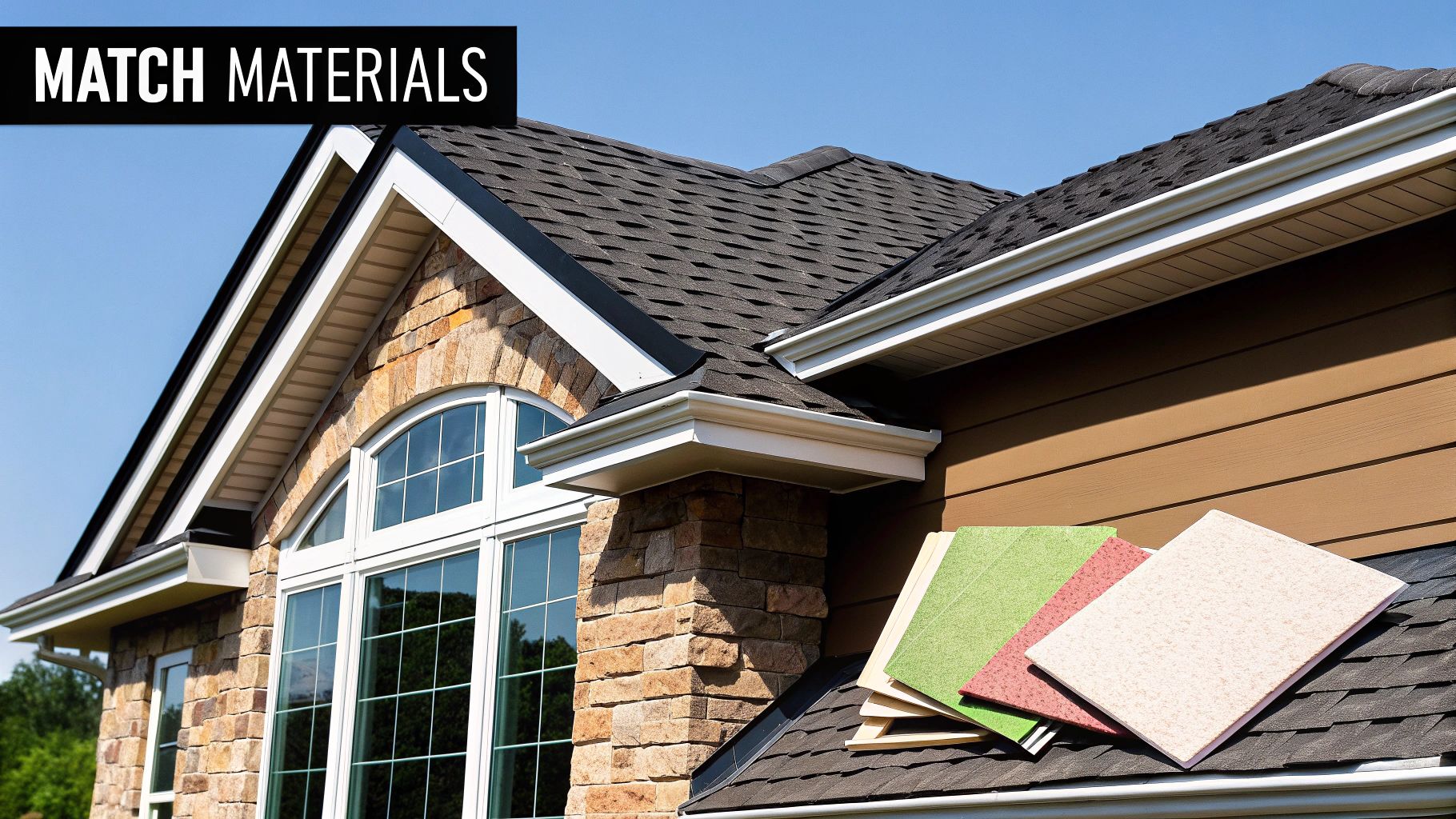
Beyond the overall style, your home has several key features that aren't getting painted. These permanent materials—your roof, any stone or brick accents, and even your driveway pavers—have their own colors and undertones. Ignoring them is one of the most common mistakes we see, and it can leave your home looking disjointed.
The trick is to identify the undertones in these fixed elements. Take a close look. Does your roof tile have flecks of terra cotta, gray, or brown? Does the stacked stone on your entry columns have warm, creamy veins or cool, blue-gray tones? These little details are your road map.
For instance, a home with a charcoal-gray standing seam metal roof and dark bronze window frames will naturally look cohesive with a light gray or greige body paint. But if your home has a warm brown tile roof and beige pavers, a creamy white or a warm tan will look infinitely better. These fixed features anchor your entire palette, ensuring every element works in harmony. It's these kinds of details that show why a builder's eye for fine, handcrafted finishes is so critical—you can see how we approach these elements in our work with custom trim and molding.
A Closer Look at Fixed Elements
Let's break down how to work with these crucial, unchangeable features of your custom home.
| Fixed Element | Color Considerations |
|---|---|
| Roofing Material | A gray or black metal roof gives you tons of flexibility for cool-toned palettes (blues, grays, crisp whites). A brown or terra cotta tile roof is going to look its best with warm tones (creams, beiges, warm greens). |
| Stone & Brick | Find the least dominant color in your stonework and use it as inspiration for your main body or trim color. This creates a subtle, professional-looking connection that ties everything together. |
| Hurricane Windows | The color of your impact window frames (usually white, bronze, or black) acts as a major accent. Coordinate your trim color with the window frames to create a seamless, polished look. |
| Driveway Pavers | Your pavers set the stage for your home's entry. Make sure your body color complements the pavers' undertones to create a welcoming and harmonious approach from the curb. |
By letting your home’s architecture and permanent materials guide your first choices, you build a solid foundation for a beautiful exterior. This turns what feels like an overwhelming task into a logical process, making sure the final result is a timeless design that feels intentional and perfectly suited to your new Florida home.
Working with Florida's Intense Climate and Natural Light
Choosing exterior colors in Southwest Florida is about more than just personal taste. It's a strategic decision shaped by our most dominant feature: the sun. The intense, year-round sunlight and our unique coastal environment are powerful forces that have a huge say in how colors look, feel, and ultimately, hold up over time.
Think of your home's exterior as a massive surface constantly absorbing energy. Darker colors, like a deep charcoal or navy blue, soak up a tremendous amount of solar radiation. This can heat up the entire building envelope, putting a heavier load on your HVAC system and driving up cooling costs during our long, humid summers. This is also a key reason why integrating features like whole-home generators is a popular trend, ensuring comfort during storms and power outages.
On the flip side, lighter colors have a higher Light Reflectance Value (LRV), which is just a technical way of saying they reflect more sunlight and absorb less heat. Whites, creams, sandy beiges, and soft pastels aren't just a classic coastal style—they're a smart, energy-efficient choice for the Florida climate. A lighter exterior literally helps keep your home cooler, a major new builder trend for energy efficiency in Cape Coral and Fort Myers.
The Sun's Daily Color Show
One of the things that catches homeowners by surprise is how a single color can look completely different throughout the day. That perfect soft gray from the paint chip might look brilliant in the morning, but by noon, the intense glare of the sun can bleach it out until it looks almost white.
Then, as evening approaches, that same gray can take on a warm, golden hue during a classic Gulf Coast sunset. This constant shift is exactly why you can never commit to a color from a small swatch viewed indoors.
- Morning Light: Typically bright and clear, this light shows colors in their truest form.
- Midday Sun: This is the harshest light. It washes out subtle undertones and makes colors appear significantly lighter than they actually are.
- Late Afternoon Light: This light casts a warm, golden-orange glow, which can make cool tones appear more neutral and warm tones feel much richer and deeper.
Your chosen color has to work in all conditions—from the blinding brightness of a Tuesday at noon to the soft, angled light of a Sunday evening. This is why testing large color samples on-site is a non-negotiable step in our custom home building process.
Durability and Fading Under UV Exposure
Beyond just heat absorption, the constant bombardment of powerful UV rays is incredibly tough on paint. Dark, highly saturated pigments are simply more prone to fading over time. A vibrant color that looks incredible on day one can start to look dull and chalky after just a few years under the relentless Florida sun.
This is where material science really comes into play. The industry is constantly innovating with more durable, long-lasting finishes. In fact, new design feature trends show a clear preference for advanced formulas that offer better color retention. The global exterior paint market was estimated at USD 35.5 billion in 2024, with much of that growth driven by homeowners investing in products that provide lasting curb appeal. For instance, industry analysis from sources like GoAsher.com shows that water-based acrylics now dominate over 77% of the market because they perform so well with the muted, earth-toned palettes popular today.
Choosing a high-quality, fade-resistant paint isn't an expense; it's an essential investment. For a deeper dive, check out our insights on selecting long-lasting exterior paint that can stand up to our challenging environment.
The Influence of Tropical Landscaping
Finally, never forget to look at the bigger picture—your home's natural surroundings. The lush, vibrant green of palm trees, hibiscus, and a well-kept lawn will cast shadows and reflect subtle colors onto your home's exterior walls.
A crisp white house might pick up faint green reflections from the surrounding foliage, giving it a slightly different cast depending on the time of day. In the same way, deep shadows from a mature oak tree or wide roof overhangs will make any color appear darker in those spots. As you narrow down your palette, you have to consider how it will live and breathe with the natural beauty that makes Southwest Florida so special.
Balancing Current Trends with Long-Term Resale Value
Choosing the exterior colors for your custom Florida home is a delicate dance. You want a home that feels current with new builder trends, but you also want to make a smart, long-term investment. While it’s tempting to jump on the latest color craze, the real key is to focus on enduring trends that boost curb appeal, not fleeting fads that can make your home look dated in just a few years.
Here in Southwest Florida, we’ve seen a clear shift toward sophisticated, understated palettes that echo our coastal environment. It’s less about bold, shocking colors and more about shades that feel timeless and upscale. These colors create a sense of calm and luxury that has incredibly broad appeal in the custom home industry.
Enduring Color Families for Florida Homes
Some color families just work here. They consistently perform well because they’re not only beautiful but also practical for our unique climate and building news. These palettes feel right at home with the region's upscale aesthetic and complement everything from Coastal Contemporary to Modern Farmhouse architectural styles.
- Warm Neutrals: Think sandy beiges, warm greiges, and soft tans. These are perennial favorites for a reason—they connect the home to the natural landscape of our beaches and create a serene, welcoming vibe.
- Sophisticated Off-Whites: We've moved far beyond basic builder-white. Today’s most sought-after choices are creamy off-whites with subtle undertones. These colors feel soft and elegant, providing a clean canvas that lets your home's architectural details and lush landscaping truly shine.
- Muted Coastal Hues: Gentle sea-glass greens and soft, airy blues are perfect for a home near the water. The trick is to keep them muted and sophisticated. Avoid overly bright or pastel tones, which can quickly look out of style.
A good rule of thumb? Ask yourself if a color palette will still look elegant and appropriate in ten years. Enduring appeal almost always beats temporary popularity, which is the best way to safeguard your home's value for the future.
This infographic breaks down the key environmental factors that make these lighter, neutral palettes such a smart choice for Florida.
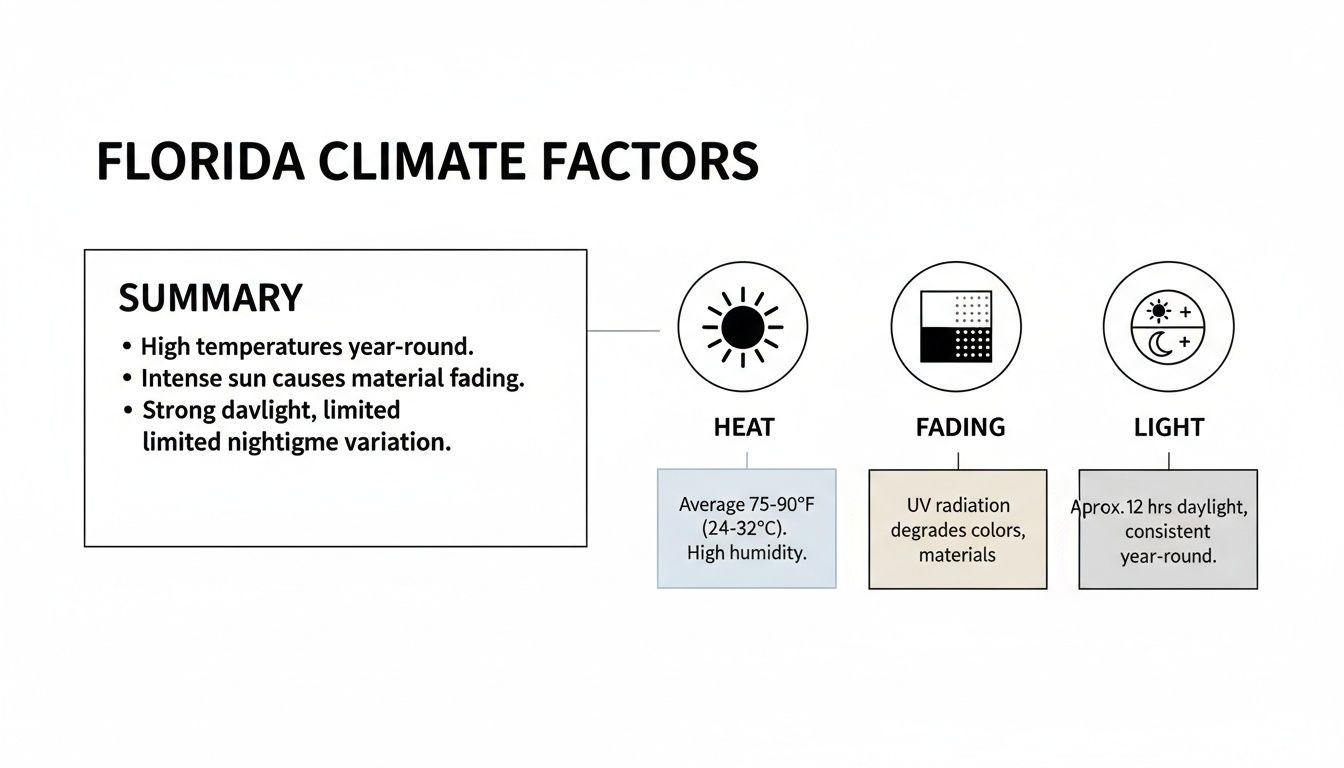

As you can see, things like heat absorption, UV fading, and our intense, year-round sunlight are critical considerations. Lighter, more reflective color schemes naturally hold up better and contribute to a more energy-efficient home, a key consideration for new custom homes in Florida.
Popular Exterior Color Palettes for Southwest Florida Homes
To help you visualize some of these combinations, we've put together a table of palettes that we see work beautifully on custom homes in our area.
| Palette Style | Body Color | Trim Color | Accent Color (Doors/Shutters) | Best For |
|---|---|---|---|---|
| Classic Coastal | Light Gray or Sandy Beige | Crisp White | Navy Blue or Teal | Creating a breezy, beach-inspired feel that’s timeless. |
| Modern Neutral | Greige (Gray + Beige) | Off-White or Charcoal | Black or Stained Wood | A sophisticated, contemporary look that is clean and versatile. |
| Tropical Retreat | Soft Seafoam Green | Creamy White | Coral or Dark Brown | Evoking a lush, island-inspired vibe with a touch of color. |
| Timeless White | Creamy Off-White | Matching Off-White | Light Gray or Natural Wood | An elegant, high-end aesthetic that makes landscaping pop. |
These palettes provide a great starting point, allowing for personalization through accent colors while keeping the overall look classic and appealing.
What Data Says About Buyer Preferences
It’s not just a local trend. National data consistently shows that homebuyers overwhelmingly prefer lighter, neutral exteriors. A 2023 survey of over 1,400 U.S. homeowners found that the top five most popular siding colors were off-white/cream, white, light gray, light brown, and medium blue.
Interestingly, that same report noted that demand for white siding has more than doubled since 2018. This shows a clear market shift toward clean, bright facades that feel modern and inviting.
This market preference is a powerful tool. Choosing colors from these popular families helps ensure your home appeals to the widest possible pool of potential buyers down the road. But this doesn't mean your home has to be boring—far from it. You can inject plenty of personality with a pop of color on your front door, shutters, or through stunning landscape design.
For some real-world inspiration, take a look through our gallery of custom home design ideas to see how timeless palettes can be personalized in beautiful ways.
Ultimately, the goal is to land on a color scheme you absolutely love that also aligns with proven principles of good design and market appeal. Working with an experienced builder who understands both new design trends and what sells in Southwest Florida is the best way to create a stunning exterior that’s both a personal statement and a sound financial asset.
How to Test Colors and Finalize Your Decision
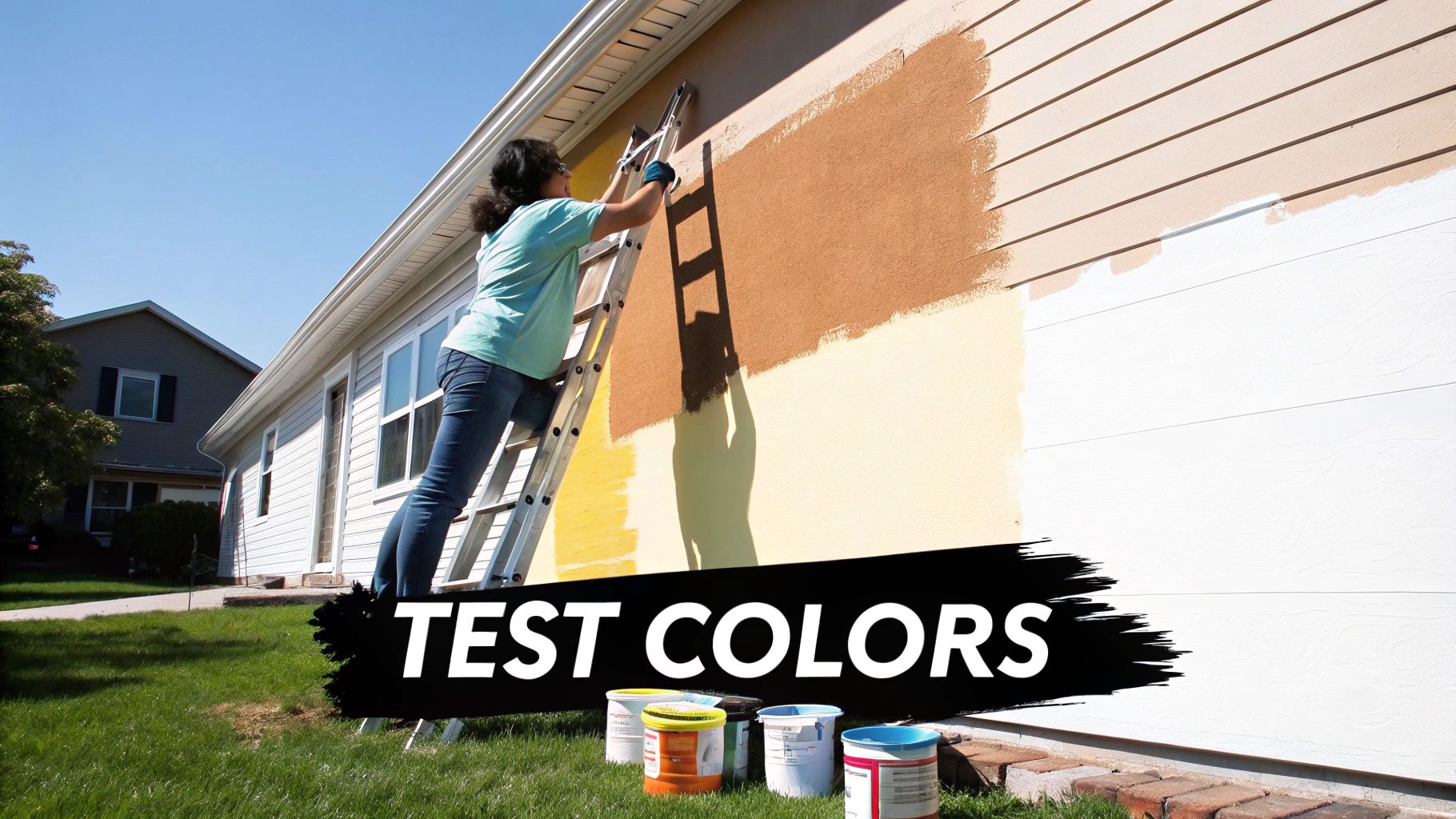
You’ve got it narrowed down to a few top contenders. Great. Now comes the single most important part of this whole process: testing those colors in the real world.
Let me tell you, one of the biggest mistakes we see homeowners make is choosing a color based on a tiny paint chip under the harsh fluorescent lights of a hardware store. Colors behave dramatically differently out in the field, especially under the intense, ever-changing Southwest Florida sun.
To avoid a costly and frustrating mistake, you absolutely have to see your top choices on your home. This means getting past those little swatches and thinking bigger. We always advise our clients to either get large, movable paint samples or, even better, purchase quarts of their final two or three choices to paint directly on the house.
This isn't just a fussy detail; it’s the only way to be sure the color you fell in love with is the one you actually get.
The Right Way to Test Your Paint Samples
Location is everything when you're testing exterior colors. You need to see how the paint reacts as the light changes throughout the entire day. A color that looks perfect in the soft morning glow might look completely washed out at high noon or take on an weird, unexpected hue during a golden sunset.
Here's the proven process we use to get the full picture:
- Go Big: Paint your samples in large squares, at least 3×3 feet. A tiny dab of paint just won't give you an accurate feel for how it will look across a whole wall.
- Test Multiple Spots: Paint a swatch on a wall that gets hit with direct morning sun and another on a wall that’s baked by the afternoon sun. If you can, add another sample in a permanently shaded area, like under a porch overhang.
- Create a Neutral Border: If you're painting directly onto an existing wall, it helps to paint a white border around your samples first. This simple trick stops the old color from visually distorting how you perceive the new one.
- Live With It: Don't rush this decision. Watch the samples for at least a few days. See how they look in the morning, at midday, on a cloudy day, and in the evening.
The goal here is simple: find a color that looks fantastic in all light, not just perfect in one. Following this process removes the guesswork and gives you the confidence to lock in your final choice.
Don't Forget the Finish
The final piece of this puzzle is the paint finish, also known as its sheen. This decision impacts not just the final look but also the durability of your home's exterior—a critical factor here in our humid, salt-air environment.
- Satin/Eggshell: This is our go-to finish for the main body of most Florida homes. It has a slight sheen that offers excellent resistance to moisture and mildew, and it's far easier to clean than a flat finish.
- Semi-Gloss: We reserve this for trim, shutters, and doors. A semi-gloss provides maximum durability against the elements. Its higher sheen also creates a subtle, attractive contrast with the body color, making all those architectural details really pop.
If you want to be completely certain before committing, professional 3D architectural rendering services can bring your vision to life before a single drop of paint is ever applied. This technology is amazing—it lets you see your entire color palette on a realistic model of your home, making sure every single element works together perfectly. By testing colors the right way and choosing the right finish, you guarantee a beautiful, resilient exterior that you’ll love for years to come.
Partnering with Your Builder for a Flawless Finish

Trying to navigate the world of exterior colors, architectural styles, and local building codes can honestly feel like a full-time job. This is exactly where partnering with an experienced custom home builder becomes your biggest advantage. A great builder doesn’t just put up walls; they guide you through the make-or-break design decisions that create a stunning home that’s built to last in Florida.
Think of your builder as your local expert and advocate. Here in Southwest Florida, that means having someone on your team who truly gets the nuances of our climate and building news. They know which paint formulas can stand up to the relentless sun, which materials meet new elevation standards, and how to integrate hurricane-impact features and generators for both safety and aesthetics.
This partnership is particularly critical when you're looking at modern design features and trends. A seasoned builder can show you which palettes best complement the clean lines of a Coastal Contemporary elevation or the welcoming charm of a West Indies-inspired design.
The Design Consultation Advantage
A detailed design consultation is the cornerstone of any custom home journey. It’s not just about picking colors you saw on Pinterest; it’s a creative session where your vision meets practical, on-the-ground expertise. Your builder brings years of invaluable experience to the table.
Here’s what this partnership looks like in action:
- Creating Material Harmony: They’ll help you select paint colors with the perfect undertones to work with your fixed elements, like a new metal roof or the specific color of your hurricane-impact window frames.
- Knowing What Lasts: They can recommend high-performance paint systems specifically engineered for our coastal environment, ensuring your home is shielded from humidity and storms.
- Building Future Value: Your builder knows the local custom home industry inside and out. They can help you land on a palette that you'll love for years and that will maintain strong resale value down the road.
Collaborating with your builder transforms the often-stressful process of choosing exterior colors from a guessing game into an exciting, creative partnership. Their expertise ensures your home’s beauty is matched only by its resilience.
Ultimately, this collaborative approach is about building a home that is both gorgeous and durable. It’s about making sure the colors you fall in love with today will look just as incredible years from now, even after weathering countless Florida summers. This synergy between your vision and your builder’s experience is what creates that truly flawless finish.
Frequently Asked Questions About Florida Exterior Colors
Once we get down to the final details of choosing exterior house colors, a few key questions always seem to pop up. Here are some quick, straightforward answers to the most common concerns we hear from our clients building in Southwest Florida.
How Do I Make Sure My Colors Are HOA-Compliant?
This is always a critical first step. Most communities, especially in places like Cape Coral and Fort Myers, have a specific palette of pre-approved colors to keep the neighborhood looking cohesive. Before you get your heart set on a specific scheme, it's absolutely essential to get a copy of those architectural guidelines.
The good news? We handle this entire process for you. As your builder, we’ll review the requirements, help you pick out a compliant palette that you genuinely love, and then submit everything for official approval. By tackling this upfront, we make sure everything is fully compliant before a single can of paint is opened, avoiding any headaches or costly changes later on.
What’s the Best Paint Finish for a Coastal Florida Home?
For Florida's humid, salt-heavy climate, a high-quality satin or eggshell finish is our go-to for the main body of a house. These finishes hold up much better against moisture and are far easier to clean than a flat finish, which can be a magnet for mildew.
When it comes to trim, doors, and shutters, a semi-gloss finish is the clear winner. It offers the best possible protection against moisture and intense UV rays, all while creating a beautiful contrast that makes your home’s architectural details pop. We only use paints specifically formulated with mildew-resistant and salt-tolerant properties to guarantee a finish that looks great for years.
Do My Hurricane-Impact Window Frames Affect My Color Choice?
Yes, a hundred percent. Hurricane-impact windows and doors are built with beefy, robust frames, which usually come in standard colors like white, bronze, or black. These aren't just temporary features; they're permanent safety fixtures, so your exterior paint palette absolutely has to coordinate with them.
Don't think of your impact window frames as just a safety feature—they're a core design element. The key to a polished, high-end look is making sure their color is intentionally integrated into your home's overall scheme.
We're seeing a lot of new builder trends pair dark bronze window frames with a light body color like an off-white or sandy beige for a striking, modern look. White frames give you a bit more flexibility, but you still need to be careful that the undertones in your paint choices work with their crisp, clean look. We'll help you pull all these elements together for a flawless design.
Ready to bring your vision to life with a team that gets the nuances of building in Southwest Florida? At Sinclair Custom Homes Inc, we blend expert craftsmanship with a truly collaborative design process to build a home that’s as resilient as it is beautiful. https://sinclaircustomhome.com