


Building a custom home in Fort Myers isn't just about construction; it's about navigating a dynamic market shaped by sunshine, coastal living, and the evolving challenges of building in Southwest Florida. Success hinges on finding a premier builder who understands the unique intersection of modern design trends, new building technologies, and robust hurricane resilience. This partner must be an expert in translating your vision into a home engineered specifically for this environment, considering everything from recent news affecting building codes to the critical importance of elevation.
Understanding the Fort Myers Custom Home Market

When you choose to build a custom home in Fort Myers, you're not just buying a house; you're creating a space that’s perfectly in sync with your life. Unlike buying resale, a custom build gives you the driver's seat for every single decision, from the slab up to the roof tiles. That level of control is a game-changer, especially in a place with such a distinct climate and architectural style.
Of course, a smooth journey requires a good map of the local market. To really get a feel for the custom home landscape, it’s smart to keep an eye on the current real estate market trends and news affecting building in Southwest Florida. These factors influence everything from lot availability to the cost of materials, directly shaping your project's budget and timeline.
Evolving Design and New Builder Trends
The aesthetic of new homes in Southwest Florida is constantly advancing. While the classic coastal vibe remains timeless, today’s top home builders in Fort Myers are infusing it with clean lines, modern functionality, and innovative features. We're seeing a push toward expansive open-concept floor plans that create a seamless flow between indoor and outdoor living spaces, often using large-format sliding glass walls to capture the quintessential Florida lifestyle.
Several key trends are defining the custom home industry right now:
- Smart Home Integration: No longer a luxury, integrated technology for lighting, climate control, security, and even automated hurricane shutters is becoming a standard expectation for convenience and efficiency.
- Sustainable and Energy-Efficient Construction: With rising energy costs, homeowners are demanding features like solar readiness, high-SEER HVAC systems, spray foam insulation, and advanced window glazing to reduce long-term operating costs and environmental impact.
- Elaborate Outdoor Living Spaces: The lanai has evolved into a true extension of the home. We’re designing and building full outdoor kitchens, resort-style pools with custom water features, and comfortable living areas complete with fireplaces and entertainment systems.
Navigating Timelines in the Current Climate
One of the most critical conversations we have with clients today is about the project timeline. The construction industry across Florida continues to face pressures from supply chain disruptions, labor market tightness, and a complex permitting environment. These factors have undeniably extended build times.
A project that might have taken 7-9 months just a few years ago now realistically requires 9-12 months from contract to completion. This represents a significant increase of 20-50%, highlighting the need for patience and a builder who excels at logistics.
Building a custom home is a marathon, not a sprint. The most successful projects are those where the homeowner and builder establish a transparent, communicative partnership from day one, setting realistic milestones together.
These extended timelines make it absolutely critical to choose a builder who is a master of project management and has solid, long-standing relationships with local subcontractors and suppliers. A well-organized builder is your best defense against unnecessary delays and is crucial for navigating the specifics of building in Southwest Florida.
Picking the right spot is also a huge piece of the puzzle. Our guide to the best neighborhoods in Fort Myers can help you pinpoint areas with established infrastructure, which can sometimes help streamline the permitting and building process. While the market has its challenges, building custom is still, without a doubt, the best way to get a home that is 100% yours, engineered perfectly for the beauty and demands of life in Fort Myers.
Designing a Hurricane-Resilient Florida Home
When you're building a custom home anywhere in Southwest Florida, "hurricane-resilient" isn't an optional upgrade package—it's the fundamental principle of safe, durable construction. The dialogue with your builder must extend far beyond meeting minimum building codes, which are often updated based on lessons learned from recent storms. You should be focused on engineering a home designed from its foundation to its roofline to withstand severe weather events.
This is all about building with foresight, providing genuine peace of mind when storm alerts begin.
This proactive approach starts with the home's structural integrity. Any expert home builder in Fort Myers will emphasize the importance of a continuous load path. This engineering method creates an unbroken chain of connections, tying the roof to the walls, the walls to the floor, and the floor to the foundation. This system works in unison to resist the powerful uplift forces of hurricane-force winds, ensuring the home remains intact.
Fortifying Your Home’s Weakest Points
A home is only as strong as its most vulnerable spots, which are almost always the windows and doors. Standard windows are simply no match for the debris and intense pressure of a major hurricane. High-impact windows and doors are a non-negotiable component of any new custom home in this region.
These are not just windows with thicker glass; they are complete, engineered systems. They feature laminated glass—two panes bonded with a durable interlayer—set within reinforced frames that are securely anchored to the home’s structure. If an object shatters the outer pane, the interlayer holds the glass in place, preventing a breach that could lead to catastrophic internal pressurization and roof failure.
Beyond openings, your roof is the home's primary shield against the elements. A builder dedicated to resilience will incorporate several key design features:
- Reinforced Roof Decking: Using thicker plywood or OSB secured with ring-shank nails at closer intervals significantly increases resistance to wind uplift.
- Sealed Roof Deck: This secondary water barrier is applied directly to the wood decking. If shingles or tiles are blown off, this layer becomes the last line of defense against massive water intrusion.
- Superior Roof Covering Attachment: It’s not just the material but how it's attached. High-wind-rated shingles or tiles must be fastened precisely to manufacturer specifications to prevent them from becoming projectiles.
Your builder should be able to walk you through a checklist of hurricane-resiliency features. The table below outlines some of the most critical elements you'll want to discuss to ensure your home is truly prepared for Florida's weather.
Key Hurricane Resiliency Features Checklist
| Feature Category | Specific Element to Discuss | Key Benefit |
|---|---|---|
| Structure & Framing | Continuous Load Path System | Prevents roof uplift and structural failure by connecting the entire home. |
| Openings | High-Impact (Hurricane-Rated) Windows & Doors | Protects against wind-borne debris and prevents dangerous pressure buildup. |
| Roofing System | Sealed Roof Deck (Secondary Water Barrier) | Stops water intrusion even if the primary roofing material is damaged. |
| Roofing System | Reinforced Decking (Thicker Plywood/OSB) | Adds significant strength to resist wind uplift forces. |
| Foundation | Elevated Foundation Above BFE | Minimizes or eliminates the risk of damage from storm surge and flooding. |
| Utilities | Whole-Home Generator with Automatic Transfer Switch | Ensures continuous power for AC, refrigeration, and medical needs. |
Having these conversations early in the design process is key. A builder who brings these things up first is a builder you can trust to protect your investment.
The Critical Role of Elevation
In a low-lying coastal city like Fort Myers, wind is only half the battle. Storm surge and flooding pose a more destructive threat. This makes your home's finished floor elevation one of the most critical decisions in the entire building process.
Building higher isn’t just a good idea; it’s a vital defense.
The Federal Emergency Management Agency (FEMA) establishes Base Flood Elevations (BFE), which predict flood levels in major storms. Recent events across Florida have shown that yesterday's standards may not be sufficient for tomorrow's storms. Building your home’s finished floor significantly above the current BFE is the smartest investment you can make.
Elevating a new home just a few feet above the required Base Flood Elevation can dramatically reduce flood insurance premiums—often by hundreds or even thousands of dollars annually—while providing invaluable protection for your investment.
You need a builder who is an expert in local topography and hydrology. They will conduct a detailed site analysis, not just to meet a required number, but to strategically position your home to manage water flow and protect its foundation for decades. To get a better sense of your area's risk, take a look at the Fort Myers flood zone map and discuss the latest recommendations with your builder.
Ensuring Uninterrupted Power and Comfort
In the aftermath of a major storm, power outages can last for days or even weeks, creating challenging living conditions. This is where a whole-home generator transitions from a luxury item to an absolute necessity for modern Florida living. Unlike portable units, a whole-home system provides a seamless, automatic solution.
The moment utility power is lost, an automatic transfer switch activates, starting the generator and restoring power to your entire house within seconds. This ensures your essential systems continue uninterrupted:
- Air Conditioning: Crucial for comfort and preventing mold growth in the oppressive post-storm humidity.
- Refrigeration: Protects hundreds of dollars' worth of food from spoiling.
- Medical Equipment: Guarantees life-sustaining power for those who depend on it.
- Security and Communication: Keeps security systems, internet, and communication devices operational.
Integrating a generator during the design phase is the most efficient approach. It allows for optimal placement of the unit and its fuel source (typically natural gas or propane) and ensures the electrical system is perfectly integrated. A forward-thinking builder who plans for post-storm reality understands what it truly means to live safely and comfortably in Fort Myers.
Your Framework for Vetting Home Builders
Picking the right partner is hands-down the most important decision you'll make when building a custom home. This goes way beyond just hiring a contractor. You’re choosing the team you’ll trust with a massive financial investment—and the team that will build the backdrop for your family's future memories.
The best home builders in Fort Myers are an open book. They operate with total transparency, have deep roots in the local community, and put quality craftsmanship before everything else. A smart vetting process is your best tool for separating the true professionals from the rest.
First things first, cover your bases with the non-negotiables: licensing and insurance. In Florida, a builder is required to have a state-certified license, which you can easily look up and verify through the Florida Department of Business and Professional Regulation (DBPR). Don't just take their word for it—check it yourself. It’s also crucial to see proof of both general liability and workers' compensation insurance. If you skip this step, an accident on your job site could become your financial nightmare.
Beyond the Paperwork to Real-World Reputation
Once you’ve confirmed a builder is licensed and insured, it's time to dig into their actual track record. A builder’s reputation around town says more than any brochure ever could. Look for builders who have been around Southwest Florida for a while. They’ll have solid relationships with the best subcontractors and know the local permitting process inside and out.
Start by diving into their portfolio. Look closely at the style and finish of the homes they've built. Does their work line up with what you're imagining? A great portfolio isn't just about one style; it shows versatility and a consistently high standard, whether it's a sleek coastal contemporary or a timeless traditional design.
But the real story comes from past clients. Don't be shy about asking for references—and actually call them. Talking to homeowners who’ve been through it all, from the first shovel in the ground to post-move-in warranty questions, gives you the kind of unfiltered insight you just can't get anywhere else.
Touring Previous Projects
Nothing beats seeing a builder’s work with your own eyes. If you can, arrange a walk-through of a recently finished home or even one under construction. This is where you get to play detective and assess the quality up close.
The little things often tell the biggest story, so pay attention to the details:
- Trim and Millwork: Are the joints clean and tight? Is the finish smooth and seamless?
- Paint Quality: Look for crisp lines where colors meet. The application should look professional, not rushed.
- Site Cleanliness: A tidy, organized job site is almost always a sign of a well-managed project.
Getting on-site helps you see a builder's commitment to quality beyond what polished photos can ever show. It’s also a great chance to observe how they manage the workflow and interact with their crew.
A builder who takes pride in their work will be excited to show it off. If they’re hesitant to let you visit a site or talk to past clients, that’s a major red flag. Don't ignore it.
Asking the Right Questions in Your Initial Interview
Think of your first meeting with a potential builder as an interview where you’re the one doing the hiring. Come prepared with a solid list of questions. This conversation really sets the stage for your relationship and helps you see if their communication style and building philosophy click with yours.
This decision tree helps visualize the path to a storm-ready home, a crucial consideration when vetting builders.
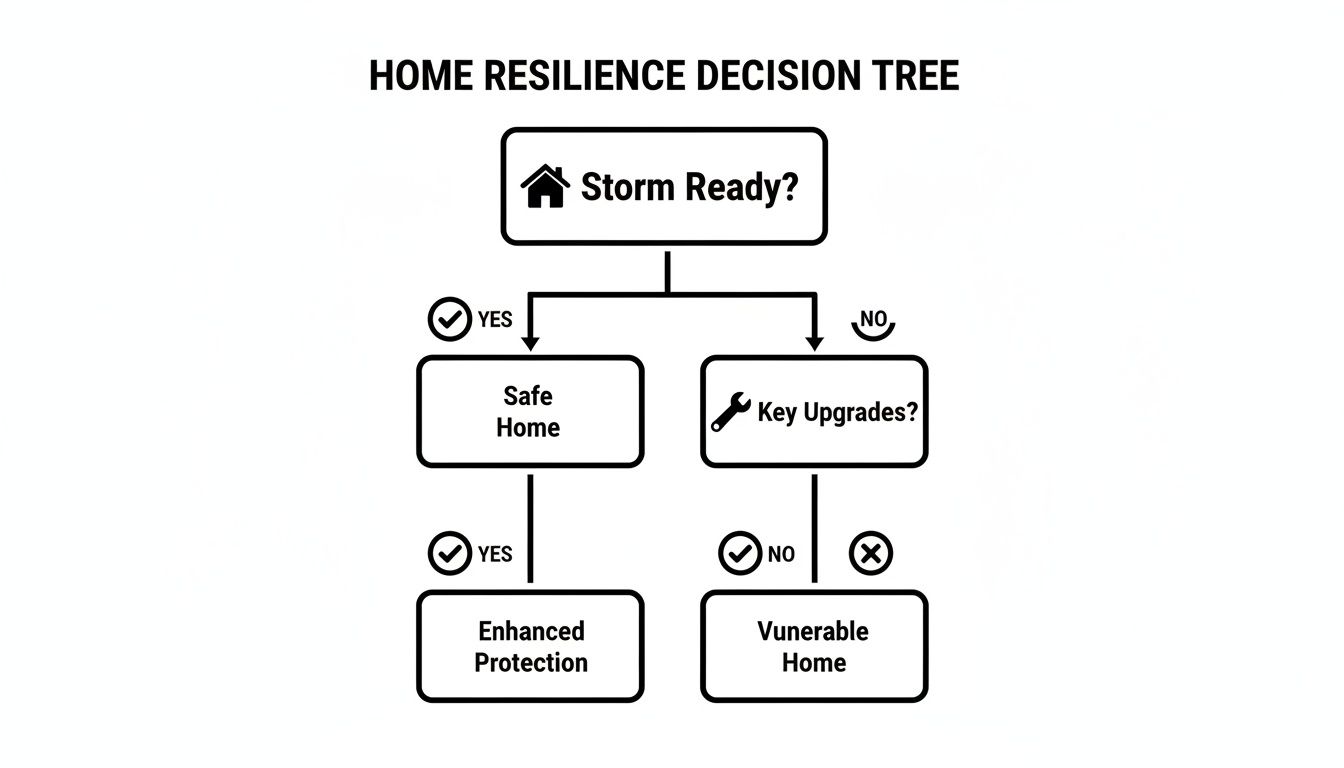

The flowchart drives home the point that creating a safe, resilient home requires deliberate choices about key upgrades—a process your builder needs to be an expert in guiding you through.
Your questions should cover everything from their design process and how they communicate to their warranty and who will be on-site every day. For a more exhaustive checklist, we've put together some great questions you should ask a potential custom home builder to make sure you've covered all the critical points.
Listen carefully not just to what they say, but how they say it. Vague answers, pushy sales tactics, or a dismissive attitude are all clear signs to walk away.
Ultimately, you’re looking for a partner who listens, gives you straight answers, and has a genuine passion for building incredible homes. This process takes time, but putting in the effort now is the best way to guarantee you find a builder who will bring your Fort Myers dream home to life with skill and integrity.
Getting Real About Budgets and Timelines in Today's Market

Building a custom home is an incredibly rewarding journey, but let's be honest—it all comes down to a solid handle on the budget and the schedule. The cost to build in Fort Myers isn't some fixed number you can pull off a website; it’s a dynamic figure shaped by everything from the plot of land you choose to the cost of lumber, labor, and local permits.
This is truer now than ever. Fort Myers has seen some serious swings in home prices recently, which makes working with experienced home builders in Fort Myers absolutely non-negotiable. You need a team that lives and breathes this market, someone who can give you accurate, up-to-date cost projections. If you want to dive deeper, you can discover more insights about the local real estate market trends to see just how much things can change.
Breaking Down the Budget for Your Custom Home
Your total investment goes way beyond just the "sticks and bricks." A pro builder will help you map out every single cost from day one, so you're not hit with painful surprises when you're already halfway through the build.
Here are the main buckets you'll need to account for:
- Land Acquisition: The price you pay for the lot itself, plus all the associated closing costs.
- Site Work & Permits: This is all the prep work before the first wall goes up. Think clearing the land, grading, and hooking up utilities. It also covers the necessary building permits and impact fees from Lee County.
- Architectural & Engineering Fees: The cost to get your vision onto paper—creating the blueprints and ensuring they're structurally sound and up to code.
- Hard Costs (Materials & Labor): This is the big one. It covers everything from the foundation and framing to your roof, windows, and all the finishes that make the house a home.
- Contingency Fund: This is your project's safety net. Plan on setting aside 10-15% of your total construction cost. It’s there for unexpected challenges or for those "you know what would be amazing?" upgrades you decide on along the way.
Setting Realistic Expectations for Your Timeline
Just like the budget, the timeline needs a dose of reality. Gone are the days of a lightning-fast seven-month build. Right now, a realistic schedule for a custom home in Southwest Florida is anywhere from 9 to 12 months—from the day they break ground to the day you get the keys.
Why the longer timeframe? A few things are at play across the state. We’re still seeing supply chain hiccups that can delay key items like trusses, windows, or that high-end appliance you have your heart set on. Plus, there’s huge demand for skilled tradespeople, from framers to electricians, which means scheduling these pros requires more lead time than it used to.
A top-tier builder navigates these waters with careful planning and strong, long-standing relationships with their suppliers and trade partners. Their skill in managing the schedule is just as crucial as the quality of the hammer they swing.
How a Proactive Builder Handles the Unexpected
No matter how buttoned-up the plan is, stuff happens. A week of torrential rain, a permit holdup at the county office, or a backordered light fixture can throw a wrench in the works. This is where a great builder proves their worth.
An experienced professional doesn't just put out fires; they try to prevent them. They build cushion days into the schedule and keep the lines of communication wide open with you. If a delay is coming, they'll be on the phone with you immediately, explaining why it's happening and what the new game plan is. That kind of transparency is what builds trust and makes the entire process feel as smooth and predictable as possible.
Defining Quality in a Custom Fort Myers Home
When you start looking for home builders in Fort Myers, you’ll hear the word "quality" thrown around constantly. But what does it really mean when it comes to a custom home designed for Southwest Florida? It's more than just a house that looks great when you get the keys.
True quality is found in the details you can see—and, more importantly, the ones you can't. It’s the difference between a home that just meets the minimum building code and one that’s over-engineered to handle our climate for decades. It’s a solid, tangible feeling that gives you peace of mind for years to come.
The Signature of Superior Craftsmanship
You can spot exceptional quality if you know where to look. When you walk through a home built by a dedicated craftsman, you'll immediately notice the details that are often rushed or overlooked in mass-produced houses.
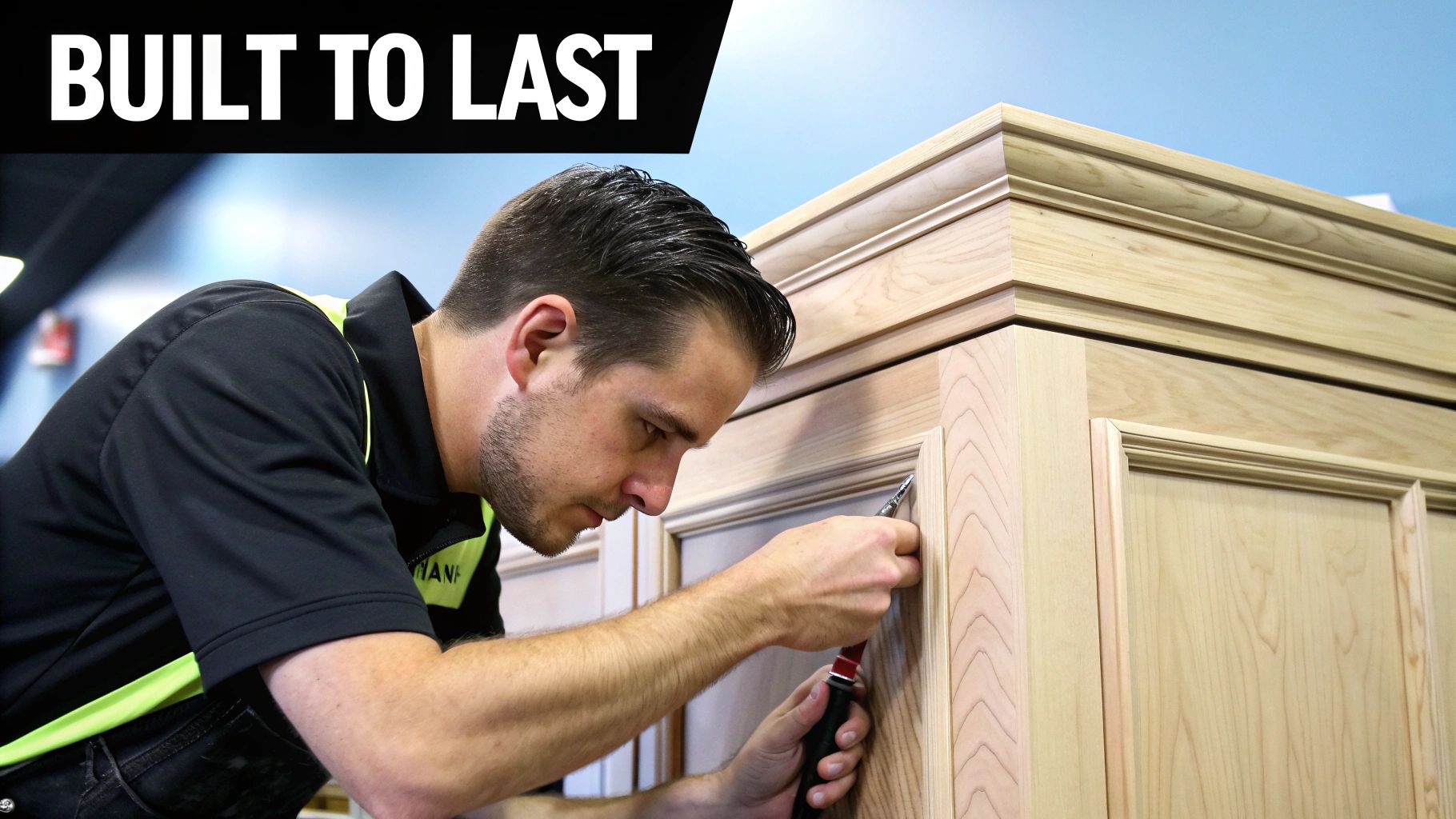
Start with the woodwork. Are the kitchen cabinets made from solid, handcrafted wood, or are they the standard particleboard boxes you see everywhere else? Check the crown molding and baseboards. The joints should be seamless and the lines perfectly crisp. Meticulous trim work is one of the clearest signs of a builder who doesn’t believe in cutting corners.
A builder's true commitment to quality is most evident in the places you don't immediately see. Over-engineered structural components, superior waterproofing behind the walls, and flawless finish work are the quiet signatures of a home built to last.
This dedication goes much deeper than finishes. A top-tier builder will use materials and techniques that go far beyond what's required, especially in a hurricane-prone region like ours. This means stronger concrete, more robust framing connectors, and advanced roofing systems that give you an extra layer of defense against wind and water. As construction technology evolves, it pays to understand the different materials that modern home builders are adopting to build safer, more resilient homes.
The On-Site Builder: A Mark of Integrity
Of all the things to look for, this might be the most important: find a builder who is personally on the job site. Every single day. In the world of custom homes, having the owner of the company directly overseeing every phase of construction is invaluable. It’s a completely different approach from the standard model, where a project manager is juggling multiple homes at once.
When the builder is physically there, you get:
- Flawless execution: They spot potential issues long before they become expensive problems, making sure everything from the foundation pour to the tile setting is done right the first time.
- Clear communication: You have a direct line to the ultimate decision-maker. No layers of management, no mixed messages—just straight answers.
- Total accountability: The builder’s name and reputation are on the line with every nail hammered and every wall painted. That level of personal investment is something you just can't put a price on.
This hands-on philosophy is exactly how Sinclair Custom Homes operates. Matthew Sinclair’s personal oversight is the guarantee that the vision for your home is executed with integrity and an unwavering focus on the details. It's what truly separates a custom builder from a production builder.
Comparing Standard vs. Custom Builder Quality
The distinction between a standard production home and a true custom home becomes obvious when you compare the materials and methods side-by-side. It's not just about a different floor plan; it’s about a fundamentally higher standard of construction.
| Feature | Standard Production Home | Sinclair Custom Home |
|---|---|---|
| Cabinetry | Typically particleboard or MDF with laminate or thermofoil finishes. | Custom-designed and handcrafted from real, solid wood for durability and beauty. |
| Trim Work | Often basic MDF or finger-jointed pine with visible seams or gaps. | Meticulous, detailed trim and crown moldings made from real wood with seamless joints. |
| Structural Integrity | Built to meet minimum required building codes. | Over-engineered with superior materials that exceed code for enhanced storm resilience. |
| Builder Involvement | Overseen by a project manager or superintendent managing multiple sites. | The builder is personally on-site daily, ensuring every detail reflects their quality standards. |
Ultimately, choosing a custom builder is an investment in craftsmanship and structural integrity that production homes simply can't offer. It’s the assurance that your new Fort Myers home isn't just beautiful—it's built with enduring quality from the ground up.
Still Have Questions About Building in Fort Myers?
Jumping into the custom home building world, especially here in Southwest Florida, always brings up a few key questions. It’s completely normal. As you get closer to choosing one of the top home builders in Fort Myers, getting straight answers is the only way to move forward with confidence. Let's tackle some of the most common things people ask us.
How Long Does It Really Take to Build a Home Right Now?
Let's be upfront: the construction world has changed a lot recently, and that's affected timelines everywhere. A realistic schedule for a custom home in our area is now somewhere between 9 to 12 months from the day you sign the contract to the day you get the keys.
This is definitely longer than the old 7-9 month standard, and it's mostly due to supply chain hiccups and a huge demand for the best skilled labor. A good, transparent builder will have this conversation with you from day one and create a schedule that realistically accounts for these modern-day variables.
What Hurricane-Proofing Features Actually Matter Most?
Building codes are the bare minimum. True peace of mind comes from building a home that's genuinely resilient. If you're going to invest in hurricane protection, these are the areas that give you the most bang for your buck:
- High-impact rated windows and doors. This is your first line of defense against extreme wind pressure and flying debris.
- A reinforced roofing system. We're talking about more than just shingles; a sealed roof deck provides a critical secondary water barrier if the primary layer is compromised.
- Proper home elevation. In Fort Myers, storm surge and flooding are massive risks. Getting your home's elevation right is non-negotiable.
And don't forget life after the storm. A whole-home generator is a game-changer. It keeps the air conditioning on, the refrigerator cold, and your security systems running. It’s about comfort and safety when you need it most.
The real goal isn't just to build a home that's compliant, it's to build one where you feel secure. Focusing on these core resilience features delivers a sense of safety that goes far beyond what any basic building code can provide.
How Do I Keep My Budget from Spiraling Out of Control?
Keeping a handle on costs comes down to two things: meticulous planning and constant communication. It all starts with a rock-solid, incredibly detailed contract that spells out exactly what's included. No gray areas, no surprises.
Next, you absolutely must have a contingency fund of 10-15% of the total construction cost. Think of it as a financial safety net. It’s there for any curveballs the project throws or for that "must-have" upgrade you decide on halfway through.
But the real secret? Pick a builder who operates with an open-book policy. If they provide regular budget updates and are always ready to have honest conversations about costs, you've found a partner you can trust.
Can I Build on a Lot I Already Own?
Absolutely. In fact, this is a specialty for any truly experienced custom builder. "On-your-lot" construction is a fantastic option for anyone who has already found their perfect slice of Fort Myers.
A quality builder won't just start digging. They'll conduct a full site evaluation to understand the land's personality—its elevation, soil type, and how it connects to utilities. This deep dive ensures your home’s design isn't just beautiful, but perfectly engineered for the ground it stands on.
At Sinclair Custom Homes Inc, we’ve always believed that the best homes are built on a foundation of trust, transparency, and an absolute refusal to compromise on quality. A great partnership is just as important as the concrete and wood.
If you’re ready to see your vision come to life with a builder who is on-site and personally invested in your project from start to finish, let’s start the conversation. Visit us online to learn more about our process.