


Picture this: you wake up, and the first thing you see are panoramic ocean views from a home that feels both stunningly designed and solid as a fortress. That’s not a dream; it’s the new reality of modern Florida stilt homes built by today's custom home industry.
These aren't just houses on posts anymore. They are bold architectural statements, thoughtfully engineered for the future of coastal living. Today’s elevated custom homes are a masterclass in blending cutting-edge new builder trends with storm-tested strength.
The Appeal of Modern Elevated Coastal Living
Building a custom home in Southwest Florida means embracing a lifestyle shaped by the sun, the water, and scenery that’s second to none. But living in paradise also means respecting its raw power. Stilt homes are the perfect answer to this challenge, a beautiful marriage of form and function designed for our unique coastal environment.
Forget the old image of rustic fishing shacks. The stilt homes of today have evolved into luxurious, resilient sanctuaries, showcasing the latest in new design features and construction technology.
This guide is all about looking past those outdated ideas. We're going to dive into how today's elevated homes are a direct response to new building trends and the absolute necessity for hurricane-resilient features. We’ll walk through everything you need to know to create your dream stilt home, from the first sketch to the final nail, focusing on what truly matters in today's market.
Key Aspects We Will Explore
- Marrying Design with Resilience: We'll show you how custom builders are using features like massive impact glass walls and inverted floor plans to give you breathtaking views without ever compromising on safety.
- Decoding Codes and Elevation: You'll get a clear understanding of the crucial role FEMA rules, local building codes, and your property’s Base Flood Elevation (BFE) play in dictating your home's height and structural needs.
- Embracing Storm-Ready Tech: Learn why new design features like whole-home generators are quickly becoming a non-negotiable standard in new construction, providing essential power and security when a major storm hits.
The modern Florida stilt home is an engineered masterpiece. It’s a structure where every single detail—from the depth of the concrete pilings to the rating on the windows—is a deliberate choice aimed at one thing: ensuring safety, longevity, and peace of mind on the coast.
This is more than just a construction project; it’s about making smart, informed decisions. By understanding the latest news affecting building in Florida, the technology behind hurricane impact features, and the trends shaping the custom home industry, you can build a home that is not only gorgeous but also secure and fully compliant.
This guide will give you the practical knowledge you need to confidently navigate the entire process of building on Florida’s beautiful—and demanding—coastline.
Why Building on Stilts Is Non-Negotiable in Florida
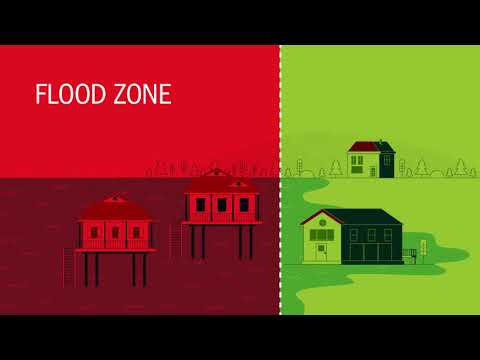
If you're building a custom home anywhere near Florida's coastline, you'll notice one thing right away: the houses are on stilts. This isn't just a quaint architectural choice or a way to get better views—though the views are a fantastic bonus. It’s an absolute necessity for survival.
The decision to elevate a home is a direct answer to the most powerful force Mother Nature throws at our coast: storm surge.
You have to think of storm surge as more than just rising water. It's a massive, relentless wall of seawater pushed inland by the sheer force of a hurricane. This wall of water, combined with high-velocity waves, can pulverize a traditional ground-level home. The pressure is immense, and it’s a force no standard foundation is built to handle. A stilt home, on the other hand, is smartly designed to just let that destructive energy flow right underneath, keeping the main living structure safe and sound.
Understanding Elevation and Flood Zones
To keep people and property safe, the Federal Emergency Management Agency (FEMA) has meticulously mapped our coastal areas into different flood zones. Each zone comes with its own rulebook for construction. Here in Southwest Florida, two zones are particularly important for any custom home builder.
- V Zones: These are the front lines. V Zones are coastal areas directly exposed to storm surge and hit with breaking waves of 3 feet or higher. The building codes here are the most stringent, demanding deep-driven pile foundations to withstand the worst of the storm.
- A Zones: These areas are still at high risk for storm surge, but they aren't expected to get battered by the same high-velocity wave action. Elevation is still mandatory, but the foundation requirements can sometimes be different.
The magic number in all of this is the Base Flood Elevation (BFE). The BFE is the height that FEMA predicts floodwater will rise to during a major storm. Building codes require that your home's lowest horizontal structural beam must be elevated at or, even better, above this BFE line.
This infographic breaks down how the key principles of a well-built stilt home all tie back to smart design, resilience, and strict adherence to these life-saving standards.
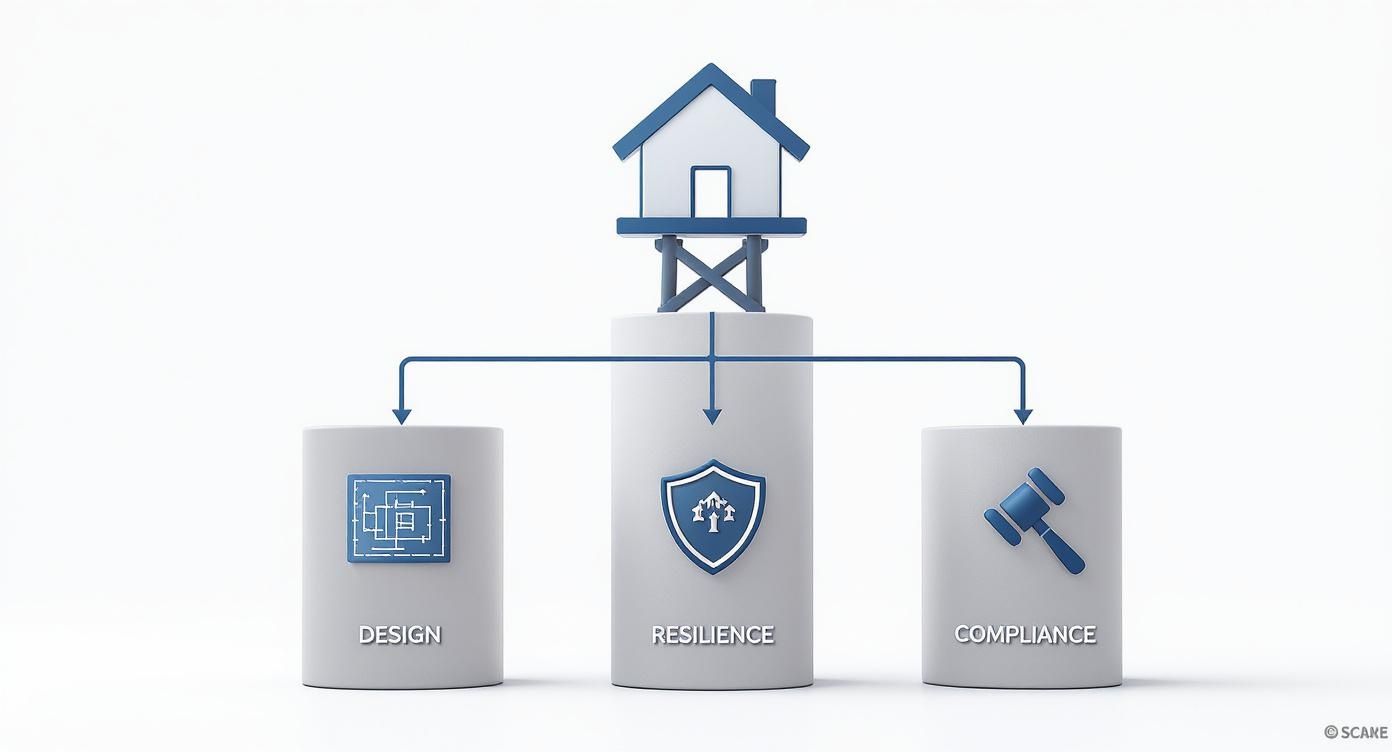

As you can see, a successful Florida stilt home isn't just one thing. It's a structure built on the pillars of intelligent design, storm-ready resilience, and absolute regulatory compliance.
Navigating FEMA's flood zone designations is crucial for any coastal construction project in Florida. These zones directly dictate not only the structural requirements for a stilt home but also have a significant impact on flood insurance rates, making them a key factor in both the initial build cost and long-term expenses.
FEMA Flood Zone Impact on Stilt Home Requirements
| Flood Zone | Primary Hazard | Foundation Mandate | Insurance Implications |
|---|---|---|---|
| Zone V | High-velocity wave action (>3 ft) | Deep-driven pile or column foundations required. No obstructions allowed below BFE. | Highest premium rates. Strictest compliance needed to qualify for coverage. |
| Zone A | Storm surge and inland flooding | Elevated on piles, columns, or solid foundation walls with flood vents. | Moderate to high premiums, but can be significantly reduced with freeboard. |
| Zone AE | Same as Zone A, but BFE is established | Must be elevated to or above the specific Base Flood Elevation height. | Premiums are directly calculated based on elevation relative to the BFE. |
| Zone X | Minimal to moderate flood hazard | Elevation not federally mandated, but still highly recommended. | Lowest premiums; often preferred risk policies are available. |
Understanding your property's specific flood zone is the first step in planning a resilient and financially sound coastal home. The higher the risk, the more robust the building requirements become, reinforcing the non-negotiable role of proper elevation.
The Smart Investment of Freeboard
Just meeting the minimum BFE is one thing, but experienced builders and savvy homeowners are increasingly adding what's known as freeboard. Simply put, freeboard is the extra elevation you build above the required BFE. So, if the BFE for a property is 11 feet, a builder might elevate the home to 13 feet, adding two feet of valuable freeboard.
Why does this matter so much? First, it’s a critical safety buffer. Storms have a habit of exceeding predictions, and that extra height can be the difference between staying dry and dealing with a disaster.
Second, and this is a big one, freeboard can lead to massive savings on flood insurance premiums. Insurance carriers love to see it. They reward homeowners who take this extra step because a higher home means a lower risk of filing a claim. It’s a win-win.
A stilt foundation is more than just a structural element; it's your home's primary defense system. Every extra foot of elevation you add is a direct investment in the long-term safety and financial stability of your property.
Today's custom home builders have also gotten creative with this elevated design. That ground-level area—which can't be used as living space—becomes prime real estate for covered parking, secure storage, or even an awesome outdoor entertainment area. These spaces are enclosed with special FEMA-compliant breakaway walls, which are engineered to collapse under flood pressure without damaging the home's main structural columns. It's the perfect blend of smart compliance and practical functionality.
Designing Your Modern Masterpiece on Pilings
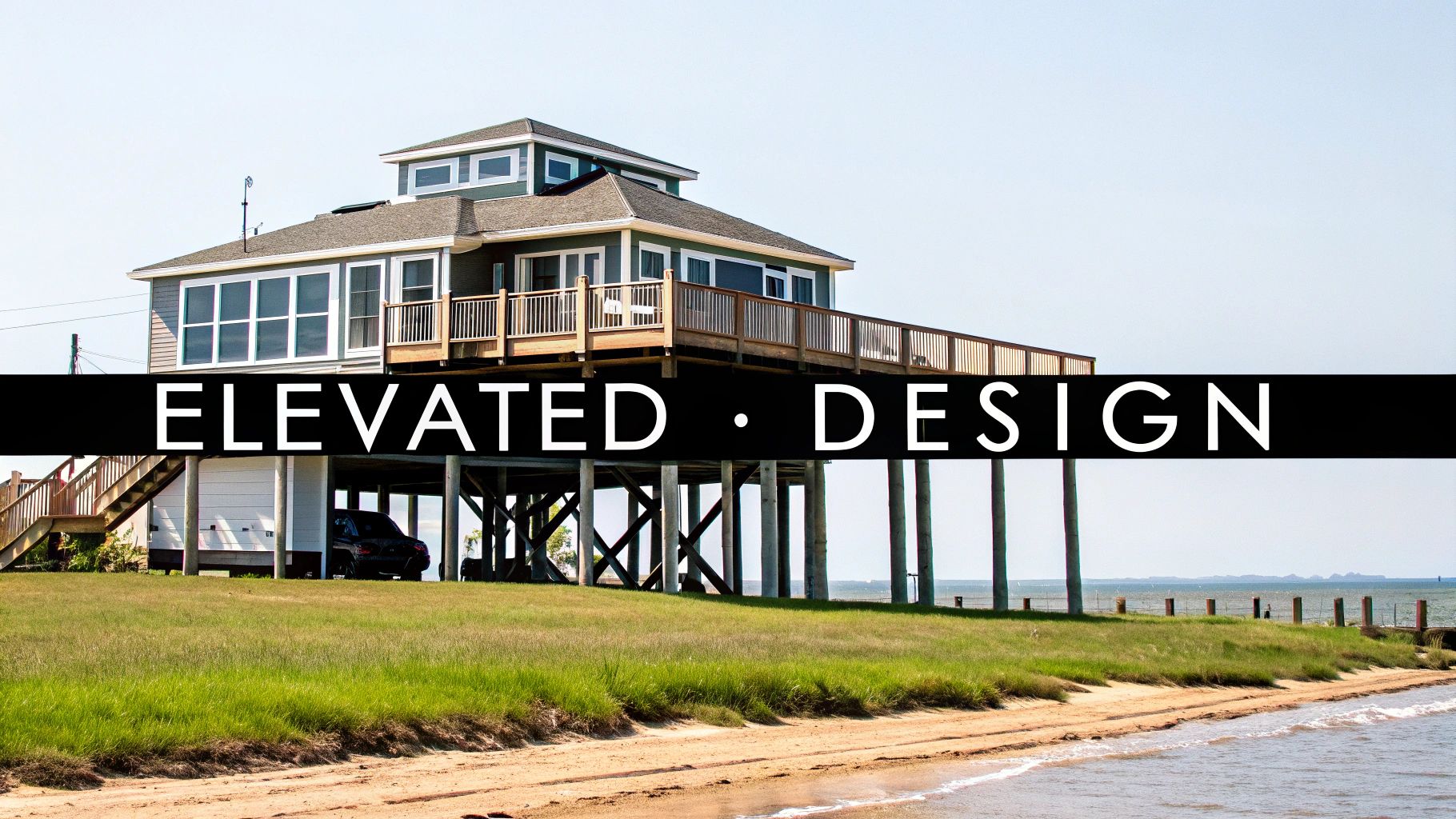

Lifting a home onto pilings started as a practical defense against storm surge, but it's evolved into so much more. Today, it’s an incredible opportunity for breathtaking architecture. Custom builders across Southwest Florida have moved far beyond the purely functional, transforming stilt homes into luxurious retreats that completely redefine coastal living.
This is where high-end design finally meets hurricane-ready engineering. The thinking is simple: the higher you build, the better the view. This one idea has sparked some of the most popular and exciting new design features in new coastal construction.
The Rise of Inverted Floor Plans
One of the smartest new builder trends we're seeing is the inverted floor plan. Forget the traditional layout where bedrooms are always upstairs. This concept flips the entire script. Your main living areas—the kitchen, great room, and dining room—are placed on the very top floor.
Why would you do this? It's a game-changer for a few key reasons:
- Unbeatable Views: This layout dedicates the best vantage point in the house to the spaces where you spend most of your time. Those panoramic water views become the living, breathing artwork of your home.
- Next-Level Entertaining: With the main living area on the top floor, it often opens right onto a sprawling lanai or even a rooftop deck. The flow for entertaining guests is seamless, all set against a stunning backdrop.
- A Private Retreat: Bedrooms are tucked away on the lower living level, creating a quieter, more private space that’s separate from the social hub of the home.
It’s a design philosophy that truly prioritizes the daily experience of living on the water, making sure those spectacular views are part of everyday life, not just an occasional glimpse.
Building on stilts elevates your perspective, both literally and figuratively. It allows architects and builders to design a home for its environment, using height to capture views and light in ways a ground-level home simply cannot.
Blurring the Lines Between Indoors and Out
To really make the most of an elevated home, modern designs focus on creating a powerful, seamless connection to the outdoors. Custom builders pull this off by installing massive walls of impact-rated glass. These aren't just windows; they're floor-to-ceiling sliding doors and picture windows that act as a critical hurricane-impact feature while framing those sweeping vistas.
This transparency creates bright, open-concept interiors that feel absolutely boundless. Multi-level lanais extend your living space right into the open air, with each floor offering a totally different perspective. As you're picturing your elevated home, think about including innovative deck enclosure ideas to create spaces you can enjoy in any weather.
The materials you choose are just as important as the design itself. Builders are leaning heavily on durable, salt-resistant finishes like composite decking, sleek stainless steel cable railings, and corrosion-resistant metal roofing that can stand up to the harsh coastal climate. You can see how these elements come together by exploring this gallery of custom home design ideas.
Smart Use of Ground-Level Space
That area underneath a stilt home? It’s not wasted space—it’s a huge functional asset. While FEMA regulations won’t let you put finished living areas below the Base Flood Elevation, this ground level is perfect for so much more:
- Covered Parking: A must-have for protecting your vehicles from the intense Florida sun and daily rain showers.
- Secure Storage: The ideal spot for lockable areas to store kayaks, paddleboards, fishing gear, and all your beach equipment.
- Outdoor Entertainment: You can set up a shaded lounge, an outdoor kitchen, or a grilling station that’s perfect for poolside get-togethers.
This entire area has to be enclosed with FEMA-compliant breakaway walls. These are clever, non-structural panels engineered to detach if floodwaters rise, allowing water to flow through without threatening the home's foundational pilings. It’s a design feature that perfectly blends practical, everyday use with critical safety compliance.
Building a Fortress to Withstand Hurricanes
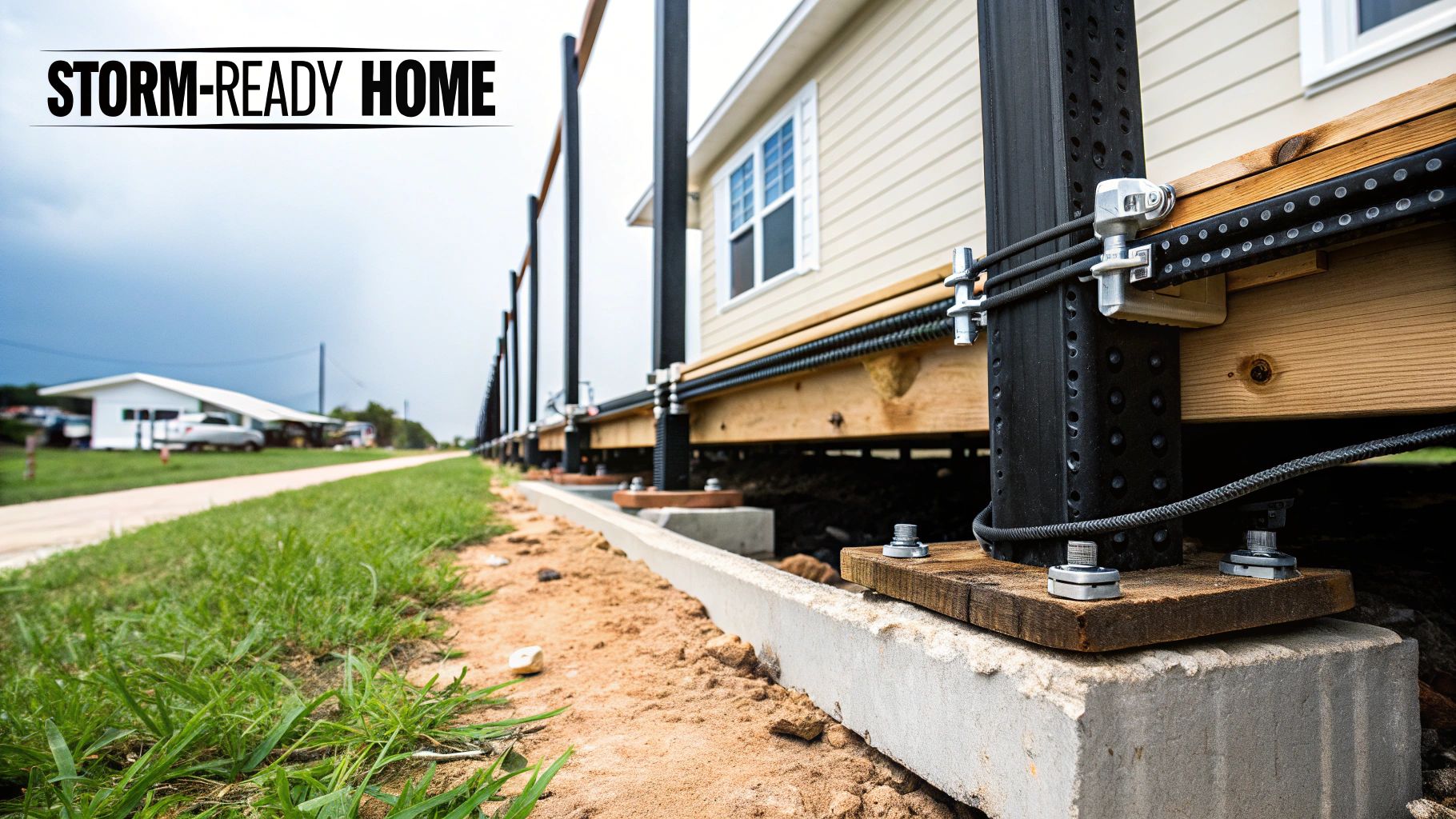
A modern Florida stilt home is much more than a house on posts; it’s an engineered fortress designed to stare down a hurricane and win. Here in the custom home world, we know peace of mind starts from the ground up. It begins with deep-driven, steel-reinforced concrete pilings that anchor the entire structure deep into the Florida soil.
That foundation is just the first line of defense in a very sophisticated system. Every single component above it is interconnected to create what engineers call a continuous load path. Think of it as a structural chain that links your home together, from the foundation all the way to the roof trusses.
And it’s not a metaphorical chain. It’s a physical system of beefy steel straps, clips, bolts, and ties. When a hurricane unleashes its fury, tremendous uplift forces try to peel the roof right off. This continuous load path ensures those forces are systematically transferred down through the walls and columns, all the way back to the pilings, and safely into the earth. It’s this seamless connection that keeps a home standing.
Non-Negotiable Hurricane Impact Features
The continuous load path works hand-in-hand with several other design features that are simply non-negotiable. For builders in Southwest Florida, these aren’t "upgrades" anymore; they're the absolute standard for a resilient home.
-
Impact-Resistant Windows and Doors: This is your home's armor. Made of laminated glass sandwiched between tough polymer sheets, they're designed to take a direct hit from flying debris at hurricane speeds. Just one broken window can cause a catastrophic pressure change inside the house, powerful enough to blow out walls and even the roof.
-
Aerodynamic Roof Designs: The very shape of your roof plays a huge part in how it handles extreme wind. Hip roofs, which slope down on all four sides, are a go-to for new builds because they are far more aerodynamic than a traditional gable roof. This smart design lets high winds flow over and around the house with less resistance, dramatically cutting down on those dangerous uplift forces.
A stilt home isn’t just elevated; it's holistically engineered for storm survival. Every detail, from the angle of the roof to the grade of steel in the connectors, works together to create a cohesive shield against hurricane-force wind and water.
To make sure all these complex parts fit together perfectly—especially in a home built to be a fortress—it's smart to consider implementing clash detection and coordination during the design phase. This process catches potential conflicts between structural, mechanical, and electrical systems before a single shovel hits the dirt.
The Essential Role of Whole-Home Generators
Surviving a hurricane isn't just about the structure making it through the storm; it's about being able to live comfortably after it passes. In Southwest Florida, widespread power outages can drag on for weeks. This stark reality has made whole-home generators a standard, essential feature in the custom home industry.
Unlike a portable generator that might power a fridge and a few lights, a whole-home system is wired directly into your electrical panel. The moment it detects a power outage, an automatic transfer switch kicks in, restoring power to your entire house within seconds.
Homeowners usually have two main fuel options:
- Natural Gas: If your property has a natural gas line, this is incredibly convenient. You get a continuous fuel supply without ever thinking about refueling, letting the generator run as long as the utility is on.
- Propane: For homes without natural gas, a large, buried propane tank is the solution. A properly sized tank can keep your home powered for weeks, ensuring your A/C, refrigerators, and any medical equipment keep running without a hitch.
A whole-home generator is a critical piece of infrastructure. It turns a potentially dangerous and miserable situation into a manageable inconvenience, letting you shelter in place with the lights on and the A/C running. For more ideas on how to integrate practical features like these, take a look at our collection of design ideas for new homes.
Learning from Florida’s Original Stilt Communities
To really get why today’s custom Florida stilt homes are built like fortresses, you have to look back in time. The story of modern coastal construction wasn’t written in a boardroom; it was written by catastrophic storms and the hard lessons they taught us. Before there was FEMA, before advanced building science, the first stilt communities were put up with little more than wood, nails, and a ton of grit.
Communities like the famous Stiltsville in Biscayne Bay or the old fishing shacks off Pasco County weren't built by engineers. They were born from a simple, powerful desire to live right on the water. They were charming, rustic, and, as it turned out, incredibly fragile. Their history is a stark reminder of why today’s strict elevation rules and hurricane-proofing aren't just red tape—they’re life-saving necessities.
A Tale of Two Storms
For years, these early stilt homes dotted the coastline, charming but shaky landmarks. Their luck ran out when major hurricanes rolled in, exposing just how weak they really were. Storms like Hurricane Betsy in 1965, which leveled much of Stiltsville, and Hurricane Gladys in 1968 were the wake-up calls Florida couldn’t ignore.
These storms proved, with terrifying clarity, that simple wood pilings and basic framing stood no chance against the one-two punch of storm surge and violent winds. The devastation was a game-changer, forcing state and federal agencies to completely rethink how we build on the coast. The era of winging it was over. The age of engineered resilience had begun.
The destruction of Florida's original stilt communities was a tragic but necessary catalyst. It forced a shift from building based on tradition to building based on science, paving the way for the robust, code-driven approach that protects homeowners today.
The Pasco County Stilt Homes: A Living Legacy
Nowhere is this lesson more real than in the story of the Pasco County stilt homes. These little cabins started popping up in the early 20th century as simple fishing getaways. But when Hurricane Gladys hit in 1968, it wiped out almost all of them. Only eight of the original homes survived. They were grandfathered in by the state, which now leases the submerged land they sit on. Today, no new stilt homes can be built there, leaving the survivors as a kind of historical monument to a bygone era. You can learn more about the history of these iconic stilt houses.
This history is the direct blueprint for how we build in Southwest Florida today. Every single feature in a new custom home—from deep-driven concrete pilings and continuous load paths to impact-rated glass—is a direct answer to the failures of the past. We now understand that a coastal home has to be designed as one complete system, engineered to handle specific, brutal forces. It’s this evolution that ensures today’s Florida stilt homes are built not just for the view, but for survival.
Navigating the Building Process and Costs
Let’s be honest: building a custom Florida stilt home is a major undertaking, both in time and financial commitment. This isn't your standard ground-level build. An elevated home brings specialized engineering, unique materials, and expert labor into the mix, all of which shape the final budget. Getting a transparent, realistic handle on these costs from day one is absolutely key to a successful project.
The foundation alone is a huge part of the budget. We're not just talking about pouring a concrete slab here; this is a complex process involving extensive site work and driving deep pilings into the ground. It all starts with geotechnical soil tests—a non-negotiable first step to see what the ground can actually support. The results of these tests tell us exactly how deep the pilings need to go and what kind of concrete to use, which is a primary cost driver.
On top of the pilings, the site prep itself can be a hefty line item. Depending on what your lot looks like now, you might need to budget for truckloads of fill dirt, grading the property for proper drainage, and clearing the land. These aren't just extra costs; they are foundational to your home’s long-term stability and code compliance.
Breaking Down the Primary Cost Drivers
The premium for a resilient coastal home goes well beyond the foundation. Think of it this way: every single component has to be tough enough to stand up to hurricane-force winds and salty air, and that naturally means higher material costs. We’re talking about more than just impact-rated windows and doors; it includes specialized steel connectors, high-performance roofing, and corrosion-resistant finishes designed for our unique Southwest Florida environment.
Then there's the skilled labor. Building an elevated home requires a crew that knows exactly what they're doing. From the crane operators hoisting massive beams into place to the carpenters ensuring every connection creates a continuous load path, that level of expertise justifiably commands a higher price than a conventional build.
Building a stilt home is an investment in resilience. The higher initial costs for specialized engineering, impact-rated materials, and experienced labor are directly returned in the form of lower insurance premiums, superior storm protection, and lasting peace of mind.
Understanding how all these pieces fit together is crucial for managing your timeline and your budget. To get a better feel for the entire journey, walking through a detailed custom home building process can shed a lot of light on each stage, from the first sketch to the final walkthrough.
Choosing the Right Builder for Your Elevated Home
Picking a builder is the single most important decision you'll make in this process. You absolutely need a partner with proven, hands-on experience building elevated homes right here in your local area. General construction knowledge just won't cut it. They need a deep understanding of coastal engineering, FEMA rules, and the local permitting maze.
When you start meeting with potential builders, come prepared with some pointed questions. A truly capable builder will welcome your diligence and give you confident, straightforward answers.
Essential Questions for a Potential Builder:
- Specific Experience: How many stilt homes have you built in this city or county in the last five years? Can you give me a few addresses so I can see your work for myself?
- Permitting Process: Walk me through your exact process for handling the complex permitting for elevated homes. What’s your relationship like with the local building department?
- Professional Network: Who are the structural engineers and surveyors you typically work with? A builder with strong, established relationships can save you from a world of expensive delays.
- Timeline and Delays: In your experience, what are the most common delays you run into with stilt home projects, and what do you do to get ahead of them?
Asking these questions does more than just get you information; it helps demystify the whole process and sets the foundation for a realistic budget and a strong partnership with your builder.
Your Questions About Florida Stilt Homes, Answered
Thinking about building a custom home on the coast naturally brings up a lot of questions. Let's dive into some of the most common things people ask about the process, costs, and lifestyle of living in a modern Florida stilt home.
How Much More Does It Cost to Build a Stilt Home?
Building on stilts is really an investment in safety and longevity. You can expect a properly engineered stilt home foundation to add 15% to 25% to your total construction cost compared to a typical slab-on-grade home built away from the water.
So, where does that extra cost come from? It's all in the specialized engineering, the required geotechnical soil testing, and the sheer cost of materials like deep-driven concrete pilings. The good news is that this upfront investment pays for itself over time. You’ll see significant savings on flood insurance, not to mention the priceless peace of mind that comes with superior protection against storm surge. For coastal living, it’s a smart financial decision.
What Is the Primary Maintenance for a Stilt Home?
Your main focus will always be the foundation and any exposed structural elements. It's a good idea to get in the habit of visually inspecting the concrete pilings for any cracks or spalling, especially after a big storm rolls through.
The salty air along the Florida coast is beautiful, but it's also incredibly corrosive. This environment is tough on metal connectors, fasteners, and your outdoor HVAC unit. Routine cleaning and preventative maintenance are your best defense to maintain structural integrity and head off expensive repairs down the road.
Can I Fully Enclose the Area Under My Stilt Home?
The short answer is no, you can't build out finished, air-conditioned living space below the Base Flood Elevation (BFE). FEMA rules are very specific here: this area is strictly for parking, some limited storage, or building access.
If you do enclose it, you have to use specially engineered breakaway walls. These are designed to literally give way under the force of floodwaters without compromising your home's main foundation. You’ll also need to install flood vents that allow water to flow through freely, which prevents immense hydrostatic pressure from building up against the pilings. It’s a critical safety feature for any home built to withstand a hurricane.
Are There Any Lifestyle Downsides to Living in an Elevated Home?
The biggest adjustment for most people is accessibility. Living in a stilt home means stairs are a part of daily life, which is a major consideration for anyone with mobility challenges or families with small children.
However, many modern custom home designs have a fantastic solution: residential elevators. We can integrate them right into the floor plan, creating a seamless connection between all levels of the home. Another thing to keep in mind is that all your utilities—plumbing, electrical, and HVAC—are housed within the elevated structure. This just means it requires careful, expert planning during the design phase to make sure everything is laid out perfectly.
Building a custom stilt home is a complex project, but it’s an incredibly rewarding one. At Sinclair Custom Homes Inc, we specialize in creating beautifully designed homes that are over-engineered for unparalleled safety and peace of mind in Southwest Florida. If you’re ready to bring your vision of coastal living to life, contact us today to start the conversation.