


Building your first home from the ground up might seem like a huge leap, but in Florida, it's more within reach than you think. It's a chance to get a home that's not just new, but truly yours—designed for your life and built with the latest features to handle whatever Southwest Florida's climate throws at it.
This guide is designed to cut through the noise for FL first time home buyers interested in new construction. We'll lay out a clear path, from figuring out financing to choosing modern design features and hurricane-impact technology. Our goal is to replace that feeling of being overwhelmed with the confidence you need to build the modern Southwest Florida home you've always wanted.
Your Path to a Custom Home in Florida
Choosing to build your own home in Florida unlocks a world of possibilities that you just can't get from buying an existing house. For many first-time buyers, the idea feels intimidating, instantly bringing to mind huge costs and endless complexity. But the reality is quite different. New construction is an opportunity to build long-term value, skip the nightmare of renovating someone else's old house, and get a home perfectly designed for the Sunshine State lifestyle.

This is especially true right here in places like Fort Myers and Cape Coral, where smart, modern custom homes are becoming the new standard. Instead of compromising on a house that checks some of your boxes, you get to design one that checks them all, incorporating the latest builder trends from day one.
Building for the Future in Southwest Florida
Deciding to build isn't just about getting what you want aesthetically; it's a smart, strategic move for your future security and happiness. The Southwest Florida real estate market has its own set of rules, from the constant battle for affordability to the ever-present need for climate resilience. Recent news affecting building in Florida only reinforces the need for stronger, smarter construction.
Building a new custom home lets you get ahead of modern challenges. You can bake in the latest hurricane-impact features, pick a lot with higher elevation to reduce flood risk, and integrate energy-efficient systems from the very beginning. It's about making sure your home is a safe, sustainable, and smart investment.
This approach just makes sense today. First-time homebuyers are a huge force in Florida's market, but they're facing serious hurdles. Nationally, the median age for a first-time buyer has climbed, a direct result of high prices and tough mortgage rates. It’s pushing people to look for better, more forward-thinking options—and building new is a fantastic solution. You can dive deeper into these homebuyer statistics and see for yourself how new construction offers a way forward.
A custom build puts you in the driver's seat on the things that really matter—features that are often expensive, messy afterthoughts in an older home:
- Hurricane Resilience: Build with impact-resistant windows and doors, a reinforced roof, and a structure engineered to meet or exceed the latest, toughest building codes.
- Storm Preparedness: Why wait for a storm to realize you need a generator? You can plan for a whole-home generator right in the design, keeping the lights on and the A/C running when the power goes out.
- Modern Design Features: Forget awkward layouts. You can create the open-concept living space, seamless indoor-outdoor flow, and new design features you actually want.
- Energy Efficiency: Install a top-of-the-line HVAC system and superior insulation from the start. Your future self will thank you every time the power bill arrives.
Financing Your Custom Build in Florida
Getting the right financing is the bedrock of your entire custom home journey. For FL first time home buyers, it’s often the one step that feels the most overwhelming.
The good news? Building a brand-new, resilient home in Southwest Florida is more within reach than you might imagine. Specialized loans and powerful assistance programs are out there, designed specifically to help turn your vision into a reality. It's time to forget the old myth that you need a massive 20% down payment—the right financial strategy is all it takes to get the keys to your dream home.
The first, most critical move you can make is getting pre-approved for a mortgage. This isn't just a suggestion; it's the action that sets your entire project budget in stone. When you get a pre-approval from a lender who specializes in new construction, you gain a crystal-clear understanding of what you can actually afford. This empowers you to make smart, confident decisions about your land, new design features, and overall home size.
Understanding Construction-to-Permanent Loans
Building a custom home from the ground up calls for a special kind of financing: the construction-to-permanent loan. You can think of it as a two-in-one mortgage.
While your home is being built, it acts as a short-term loan that pays your builder in stages (called "draws") as they hit specific construction milestones. Once the last nail is hammered and your home is complete, the loan automatically flips into a standard, long-term mortgage—just like one you’d get for an existing house.
This single-closing process is a huge advantage. You only have to go through the underwriting and closing marathon once, which saves you a ton of time, paperwork, and money on closing costs. It creates a seamless financial path from an empty lot to your move-in day.
Powerful Assistance for Florida Buyers
Florida has some truly excellent programs designed to help first-time buyers clear those initial financial hurdles. These initiatives can slash the amount of cash you need to bring to the table for your custom build.
- Florida Hometown Heroes Housing Program: This incredible program gives frontline workers—like teachers, healthcare professionals, law enforcement, and veterans—a major leg up with down payment and closing cost assistance. If you qualify, you can receive up to 5% of your first mortgage loan amount (up to a maximum of $35,000). It comes as a 0% interest, deferred second mortgage.
- Down Payment Assistance (DPA) Programs: Beyond Hometown Heroes, various state and local programs offer funds through grants or forgivable loans to cover your down payment. The Florida Assist Loan, for instance, provides up to $10,000 as a 0% deferred second mortgage.
Combining a construction-to-permanent loan with one of these assistance programs is a game-changing strategy. It makes building a modern, hurricane-resilient home a genuine possibility, even if your savings are limited.
Busting the 20% Down Payment Myth
The idea that you absolutely need 20% down is one of the biggest misconceptions in real estate, and it’s especially untrue for new construction. There are plenty of fantastic loan options available that require a much smaller upfront investment.
| Loan Type | Typical Minimum Down Payment | Key Benefit for Builders |
|---|---|---|
| FHA Loan | As low as 3.5% | Flexible credit score requirements make it accessible. |
| VA Loan | Often 0% for eligible veterans | An unbeatable option for service members building a new home. |
| Conventional Loan | Can be as low as 3-5% | Great for buyers with strong credit. |
These loan products open the door for so many FL first time home buyers. While economic headlines can seem discouraging—with nearly 64% of prospective buyers worried about rising interest rates—these low-down-payment options provide a clear path forward.
Despite market challenges, the dream of homeownership is alive and well. You can dive deeper into current homeownership trends and buyer sentiments to get the bigger picture. By partnering with an experienced builder and a knowledgeable lender, you can navigate these financial waters with total confidence.
Building New vs. Buying an Existing Home
As a first-time homebuyer in Florida, one of the first big decisions you'll face is whether to buy an existing home or build a brand-new one from the ground up. The charm of an older home can be tempting, but a custom build offers a powerful advantage, especially here in Southwest Florida. It’s a chance to create a home that truly fits your lifestyle, budget, and incorporates the latest builder trends from day one.
When you opt for new construction, you get to sidestep the costly, time-consuming renovations that often come with older properties. Instead of living with someone else's design choices and inheriting their maintenance headaches, you're in complete control. That means you get to pick the modern layout, personalized finishes, and the new design features you want, baked right into the blueprints.
Tailoring Your Home for Florida Living
The real power of building new in Southwest Florida goes way beyond just picking out countertops. It’s about building a home designed for resilience in our unique climate. Many resale homes, even those built just a decade ago, were constructed under outdated building codes that simply don't offer the same level of protection we demand today.
When you build with us, you aren't just getting a new home; you're getting a modern fortress built to the most current, stringent hurricane codes. This isn't some pricey upgrade—it's the standard. From impact-resistant windows to reinforced roofing systems, every piece is engineered to stand up to severe weather. That can mean lower insurance premiums and, more importantly, invaluable security for your family.
Building a custom home means you can be proactive about Florida's challenges. Instead of reacting to problems like storm vulnerabilities or sky-high energy bills, you can design the solutions from the very beginning.
This forward-thinking approach is a game-changer. You can strategically pick a lot with higher elevation to reduce flood risk, a huge factor in areas like Cape Coral and Fort Myers. Building new also lets you seamlessly integrate the hurricane impact features that make storm season far less stressful.
- Whole-Home Generators: Don't get caught in a power outage wishing you had a backup. We can design a whole-home generator right into your electrical system, ensuring your lights, A/C, and appliances keep running no matter what's happening outside during storms.
- Modern Energy Efficiency: A new build is your chance to install a high-SEER HVAC system, superior insulation, and even explore the massive long-term savings of integrating solar panels into new construction.
- Smart Home Integration: We can plan for a fully connected home from the get-go, with wiring for security systems, automated lighting, and other smart tech built right into the walls, not tacked on as an afterthought.
The Financial Sense of Building New
For many FL first time home buyers, the idea of a custom home can sound expensive. But it's crucial to look at the total cost of ownership, not just the sticker price. An existing home might seem like a bargain upfront, but it can come with a laundry list of hidden expenses that pop up when you least expect them.
Think about it: an aging roof, an inefficient A/C unit on its last legs, or old plumbing. These aren't just minor annoyances; they're major, unbudgeted hits to your wallet right after you've made your biggest purchase. With a new custom home, everything is brand new and under warranty. That means predictable expenses and a lot more financial stability in those crucial first few years.
To help you visualize the trade-offs, here’s a quick comparison:
New Custom Build vs. Existing Home in Southwest Florida
| Feature | Custom New Build | Existing Resale Home |
|---|---|---|
| Customization | 100% personalized to your taste and lifestyle. You pick the floor plan, finishes, and features. | Limited to existing layout. Major changes require costly and disruptive renovations. |
| Building Codes | Built to the latest hurricane and safety standards, often leading to lower insurance costs. | Built to older, less stringent codes. May require expensive upgrades to be properly insured. |
| Energy Efficiency | High-efficiency HVAC, superior insulation, and modern windows lead to lower utility bills. | Often has older, less efficient systems and poor insulation, resulting in higher energy costs. |
| Maintenance | Minimal repairs for years. Everything is new and under warranty, providing peace of mind. | Potential for immediate, costly repairs (roof, A/C, plumbing) that are not budgeted for. |
| Technology | Modern wiring for smart home features, high-speed internet, and integrated systems. | Outdated wiring may not support modern technology without significant retrofitting. |
| Timeline | Requires a longer upfront timeline for design and construction. | Faster move-in time, but you might spend months or years on renovations. |
| Initial Cost | Can have a higher initial price tag. | Typically has a lower purchase price, but total cost can increase with needed repairs. |
The decision between building and buying is a big one, with a lot to consider. For a deeper dive into the pros and cons, check out our guide on building a custom home versus buying an existing one.
Ultimately, building new is an investment in quality, safety, and a home that won't force you into expensive compromises down the road.
The Custom Home Building Process Explained

For a lot of FL first time home buyers, the thought of building a custom home feels like a giant, complicated mystery. But it’s really a step-by-step journey with clear milestones along the way. Once you understand the process, that uncertainty disappears, and you can feel confident turning your vision into a beautiful, resilient Southwest Florida home.
Think of the whole process as a partnership. We’re here to guide you through every phase, making sure you always know what’s happening, what’s coming up next, and what decisions you need to make. From the first soil tests on your lot to the final coat of paint, we manage every single step.
Phase 1: Pre-Construction and Design
This is the foundation—where your dream home starts taking shape on paper. It’s also the most important phase for planning, because the choices made here impact every single thing that follows.
It all begins with the land. In Southwest Florida, checking out a lot means more than just looking at its size and location. We do a deep dive, analyzing the lot’s elevation and its flood zone designation. These two factors are a huge deal for your long-term safety and insurance costs. This is also when we map out what the site needs, like clearing and grading, to get it ready for a solid foundation.
Once the land is set, the creative part kicks off:
- Architectural Design: We’ll sit down with you to design a floor plan that truly fits your lifestyle. This is the time to dream big—think open-concept living areas, huge lanais that bring the outdoors in, and incorporating the new design features you want.
- Selections and Finishes: Here's where your personal style really shines. You get to pick everything from the flooring and cabinets to the light fixtures and paint colors.
- Permitting: Our team takes on the headache of the permitting process. We handle submitting all the architectural plans to the local authorities in places like Cape Coral or Fort Myers to get all the necessary building permits locked down.
Phase 2: Site Work and Foundation
With permits in hand, the real work begins. This is a thrilling time when you finally see tangible progress on your property. The first order of business is prepping the site based on our initial evaluation.
Next up is the foundation, which is without a doubt the most critical structural part of your home. We pour a solid concrete slab foundation, engineered to give your home unshakable stability and support. If your home is in a flood zone, this is also when we build up the elevated foundation, or stem wall, to lift the home safely above the base flood elevation.
A properly engineered and constructed foundation is the bedrock of a resilient home. In Florida, this means ensuring it can withstand the unique soil conditions and provide a secure anchor against storm forces.
Phase 3: Framing and Rough-Ins
This is the phase where it starts to actually look like a house! The framing crew puts up the walls, lays down the floor joists, and installs the roof trusses, building the skeleton of your home. We only use high-quality lumber and advanced framing techniques designed to create an incredibly strong structure—a key part of any hurricane-ready home.
Once the frame is up and the roof is on, we move to the "rough-ins." This is when we install all the guts of the house before the drywall covers it all up:
- Plumbing: Water and drain lines are run to every spot they need to be.
- Electrical: We install all the wiring for outlets, switches, light fixtures, and any smart home systems.
- HVAC: The ductwork for your high-efficiency heating and air conditioning system is put into place.
- Backup Power: If you decided on a whole-home generator, this is when we wire in the transfer switch and dedicated circuits to prepare for storms.
The infographic below shows the different paths you can take as a homeowner, from buying an existing house to renovating or building your own custom home.
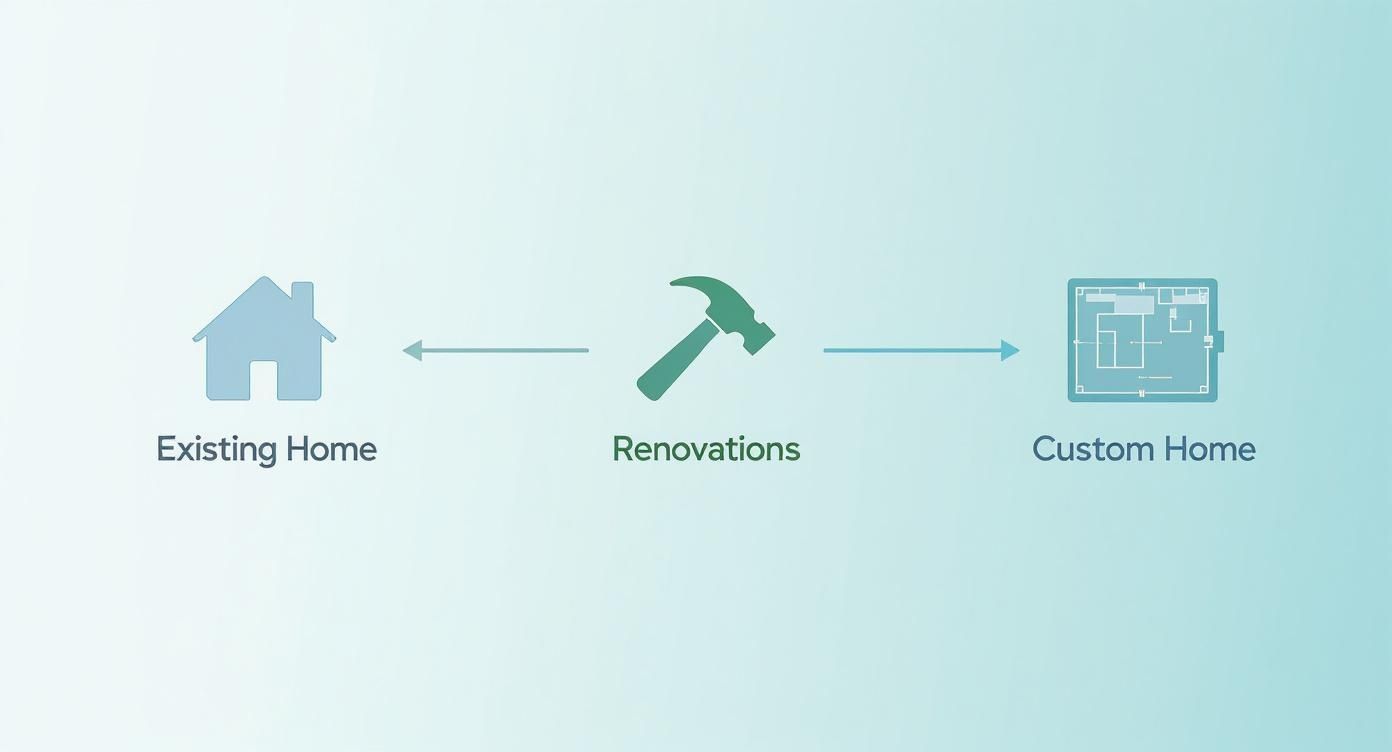

As you can see, buying a resale might seem quicker, but building new lets you skip the often unpredictable and costly renovation phase, giving you guaranteed quality right from the start.
Phase 4: Finishing and Completion
After the rough-ins pass inspection, the inside of your home really starts to come together. This stage is all about dramatic transformations, where all your design choices become a reality.
First, we install insulation in the walls and attic to create an energy-efficient thermal seal. Then the drywall goes up, gets taped and textured, creating the smooth canvas for painting. After that, the finish work kicks into high gear. Cabinets are installed in the kitchen and bathrooms, flooring goes down, trim and doors are hung, and the interior gets its final coat of paint.
At the same time, we're finishing the outside of the home with stucco, siding, or stone, and installing the hurricane-impact windows and doors. Finally, the driveway is poured, the landscaping goes in, and we put in all the final fixtures—from the faucets to the light switches.
You can get a much more detailed look at every single stage in our complete guide to the custom home building process.
Designing a Modern and Resilient Florida Home
This is where the magic really happens—the point where your vision for a new life in Florida starts taking shape on paper. Designing a custom home is so much more than just picking out paint colors. It’s about creating a space that’s not only beautiful and functional but is built from the ground up to handle the unique Southwest Florida climate. For FL first time home buyers, this is your chance to build a home that is both a sanctuary and a fortress.
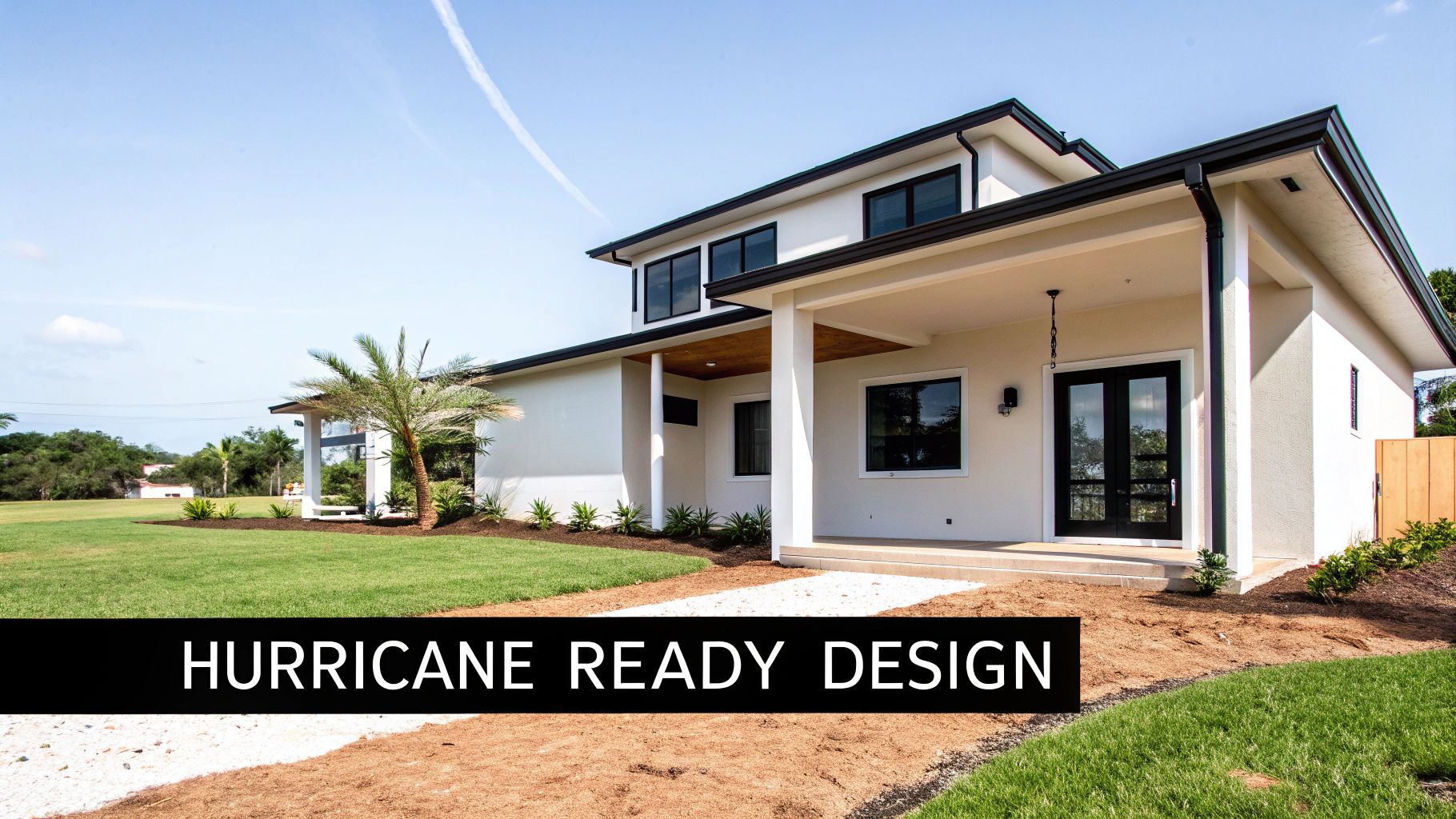
The design process is a true collaboration. We'll work together, blending popular modern trends with storm-ready engineering that’s absolutely essential here. The goal is to create a home that’s as smart and safe as it is stylish, giving you peace of mind for years to come.
Building for Resilience From the Ground Up
Let's be clear: in Florida, resilience isn't some optional upgrade; it's the very foundation of a well-built home. Recent news about storms and insurance in Florida is a constant reminder of why we need to build stronger, and thankfully, modern construction practices have risen to the challenge. We look at every single design decision through the lens of durability and storm preparedness.
A huge factor we tackle right away is elevation. In places like Cape Coral and Fort Myers, building your foundation above the minimum required flood elevation is one of the single most effective things you can do to protect your home. This one move can dramatically reduce your risk of water damage and often leads to significantly lower flood insurance premiums for the life of your home.
Beyond just height, we weave a whole suite of hurricane-impact features directly into the architecture:
- Impact-Resistant Windows and Doors: Think of these as your home's armor. They’re engineered with layers of laminated glass built to withstand debris strikes from high-velocity winds, forming a critical barrier against the storm.
- Reinforced Roofing Systems: We go above and beyond Florida’s already tough building codes, using advanced materials and attachment methods to make sure your roof stays put when the weather gets severe.
- Fortified Structural Connections: Your entire home, from the foundation right up to the roof, is literally tied together. We use a system of steel straps and connectors that create a continuous load path, designed to fight back against the powerful uplift forces of hurricane winds.
Embracing Modern Florida Design Trends
A home built like a fortress can still be absolutely stunning. The new builder trends we're seeing in Southwest Florida are all about celebrating that indoor-outdoor lifestyle while packing in smart, convenient tech.
Open-concept floor plans are still king, and for good reason. By combining the kitchen, dining, and living areas into one big, cohesive space, you get interiors that feel incredibly spacious and filled with natural light. It’s the perfect setup for family get-togethers and entertaining friends.
The most sought-after design feature in new Florida homes is the seamless transition from indoor living spaces to the outdoor lanai. Large sliding glass doors or pocket doors that disappear into the walls erase the boundary between inside and out, extending your living area into the fresh air.
Of course, when you’re designing a home for Florida, your choice of materials matters immensely. Things like flooring need to handle our humidity and the inevitable tracked-in sand. It's worth looking into the best flooring for Florida homes that can stand up to the climate while matching your personal style.
Planning for Comfort and Uninterrupted Living
True peace of mind comes from knowing your home will stay comfortable and safe, even when the power grid doesn't. That’s why we consider energy efficiency and backup power to be non-negotiable parts of the design process.
It all starts with a high-efficiency HVAC (Heating, Ventilation, and Air Conditioning) system that’s perfectly sized for your home. When you pair that with top-notch insulation and a tightly sealed building envelope, you minimize energy waste. This translates directly to lower utility bills and consistent, year-round comfort.
But the ultimate upgrade for storm security is a whole-home generator. We’re not talking about a little portable unit you have to wheel out. A whole-home generator is permanently installed and wired right into your home’s electrical panel with an automatic transfer switch.
What does that mean for you? Within seconds of a power outage during a storm, the generator automatically roars to life and restores power to your entire house. The lights, A/C, refrigerator, and any important medical equipment keep running without you lifting a finger. Planning for a generator from the start ensures it’s placed correctly, fueled properly, and integrated seamlessly for reliable power right when you need it most.
Navigating Final Inspections and Closing Day
The dust is starting to settle, the final touches are being put in place, and your new custom home is almost complete. You’ve reached the final, and most exciting, phase of the entire journey. For FL first time home buyers, this is where everything comes together—it's your chance to verify that the quality, craftsmanship, and resilience you planned for have been brought to life before you officially take the keys.
Think of this stage as a series of crucial quality checks. It’s not just one quick walk-through. A reputable builder in Southwest Florida will schedule several key inspections with you throughout the process. Each one is an opportunity to see how your home is progressing and confirm that every detail, from what's behind the walls to the final finishes, meets your exacting standards.
Your Key Inspection Milestones
Buying a resale home usually means you get one inspection, and that's it. The custom build process is totally different, offering multiple touchpoints that give you a transparent look at your home's construction. This is a massive advantage—you get to see the bones of your house and ensure every single element is built to last.
Two of the most important inspections are the pre-drywall review and the final walk-through. Each serves a distinct, vital purpose in guaranteeing the long-term integrity of your new Florida home.
-
Pre-Drywall Review: This is your x-ray vision moment. Before the insulation and drywall go up, you’ll walk through the home to see its "skeleton"—the framing, electrical wiring, plumbing, and HVAC ductwork. It's the perfect time to double-check that outlets are where you want them, inspect structural connections, and see the rough-in for your whole-home generator.
-
Final Walk-Through: This is the big one. With a detailed checklist in hand, you'll go room by room testing light fixtures, opening and closing every window and door, checking appliances, and pointing out any minor cosmetic touch-ups. We call this the "punch list"—it’s our final to-do list to make sure everything is perfect for you.
The final walk-through is more than just a formality; it's your last chance to ensure the home is 100% complete and meets the high standards you expect. It's the moment where your vision, confirmed on the blueprints months ago, is now a beautiful, move-in-ready reality.
Demystifying Closing Day
Closing day is the culmination of all your planning, decisions, and patience. This is when you sign the last documents, the funds are officially transferred, and you finally get the keys to your brand-new home. It sounds like a lot of paperwork, but it doesn't have to be a stressful experience.
A few days before you close, you'll get a document called the Closing Disclosure (CD). This five-page form breaks down all the final numbers for your loan: your interest rate, monthly payment, and the total amount of cash you’ll need to bring to the closing table. It's so important to review this document carefully and compare it to the Loan Estimate you received at the beginning to make sure there are no last-minute surprises.
On closing day itself, you'll meet with a representative from the title company to sign a stack of legal documents. Once every page is signed and the funds have been wired, the home is officially yours. Congratulations—you did it! You’re now the proud owner of a custom Florida home built just for you.
Got Questions About Building Your First Home?
If you’re thinking about building a custom home for the first time, you probably have a lot of questions swirling around. That’s completely normal. For FL first time home buyers dipping their toes into the world of new construction, getting a handle on the key parts of the process is the first step toward feeling confident.
Let's start with one of the most common questions we hear: "How long does it all take?" Every project has its own unique timeline, of course, but you can generally expect the actual construction of a custom home in Southwest Florida to take 10 to 14 months once we break ground. Before that, the pre-construction phase—which is all about design, making your selections, and getting permits approved—will add a few more months to the front end.
Financing is another big one. People often wonder if those great first-time buyer programs can be used for a brand-new build. The answer is a resounding yes! Many of Florida's assistance programs and popular loans, like FHA or VA loans, are perfectly fine to use for new construction. The trick is to find a lender who really knows the ins and outs of construction-to-permanent financing.
It All Starts With the Right Piece of Land
When it comes to picking the perfect spot to build, what matters most? You've probably got your eye on a specific area, like Cape Coral or Fort Myers, but there's a technical detail that’s even more critical: the lot's elevation and flood zone.
Building on higher ground isn't just a minor detail; it can drastically cut down your flood risk and save you a significant amount on insurance for years to come. It’s one of those foundational decisions that sets your home up for long-term resilience. Knowing what to ask a builder from the very beginning is key, which is exactly why we put together this list of great questions you should ask a potential custom home builder to help you get started.
Ready to build a home that's engineered for quality and designed for your life? Contact Sinclair Custom Homes Inc to start your custom home journey in Southwest Florida. https://sinclaircustomhome.com