Building a custom home in Southwest Florida is more than just realizing a vision; it's a significant investment in resilience, luxury, and peace of mind. In a region known for its stunning beauty and powerful weather, the difference between a good home and a great one lies in meticulous, verifiable details. New builder trends focus on seamless indoor-outdoor living spaces, dedicated multi-generational suites, and whole-home generator integration, defining the new standard of luxury living from Cape Coral to Fort Myers Beach. However, without rigorous oversight, even the most innovative designs can fall short of their potential.
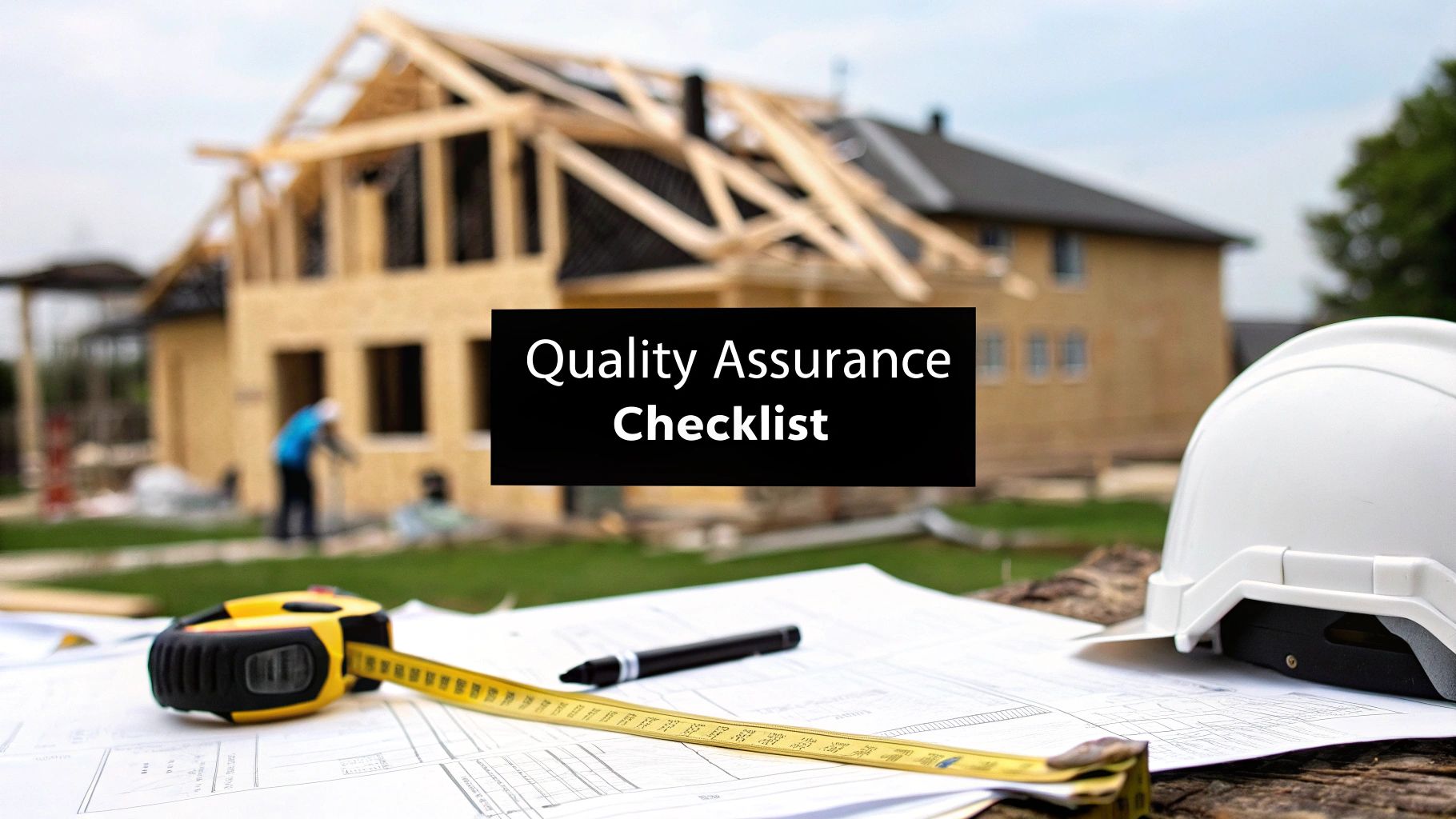
This is where a robust construction quality assurance checklist becomes your most crucial tool. It’s the framework that ensures every phase is executed to the highest standard. This includes everything from the foundation engineered to meet new elevation requirements and withstand hurricane forces to the impact-rated windows that provide security and superior energy efficiency. A detailed checklist moves quality control from an abstract concept to a series of actionable, trackable steps, ensuring that every detail aligns with the unique demands of building in Southwest Florida.
This guide provides a comprehensive, phase-by-phase checklist tailored specifically for the unique demands of building in the Sunshine State. It’s designed to ensure your builder delivers the "over-engineered" quality your family deserves for decades to come. To help you get started, we provide a detailed look into the components of effective quality assurance checklist templates for custom home builds, giving you a powerful foundation for managing your project's success and ensuring every detail meets your expectations. Let's dive into the essential checkpoints.
1. Phase 1: Foundation and Elevated Structural Integrity for Coastal Resilience
In Southwest Florida, the foundation is not just the base of your home; it’s the bedrock of its resilience against hurricanes, storm surge, and chronic soil saturation. This first phase of your construction quality assurance checklist moves beyond a simple pass/fail inspection. It is a critical verification of region-specific engineering designed to protect your investment for decades. This means ensuring the structural integrity is tailored for coastal living, a non-negotiable step in areas like Cape Coral, Fort Myers, and Sanibel, where new elevation requirements and soil conditions demand specialized attention.
Key Verification Points
The core of this phase involves confirming that every detail meets or, ideally, exceeds mandated codes. This includes:
- Finished Floor Elevation (FFE): Verifying that the home's FFE meets or surpasses the latest FEMA flood maps and local floodplain ordinances is paramount. Post-Hurricane Ian, many municipalities in Southwest Florida have adopted higher standards, making this a moving target that requires diligent oversight and confirmation before any work begins.
- Soil Compaction & Preparation: Florida's sandy, porous soil requires meticulous preparation. Your quality assurance process must include verification of soil compaction tests to ensure the ground can properly support the structure's load without shifting or settling over time. A documented dewatering plan for the excavation site is also essential to prevent water intrusion from compromising the foundation pour.
- Materials & Reinforcement: Given the corrosive saltwater environment, check that the concrete mix includes specified admixtures for enhanced durability. Before any concrete is poured, every piece of rebar, tie beam, and structural connector must be inspected and photographed to document compliance with engineering plans, especially those within the High-Velocity Hurricane Zone (HVHZ).
Actionable Quality Assurance Tips
To ensure your foundation is built for maximum resilience, implement these checks:
- Obtain Elevation Certificates: Insist on a certified elevation certificate from a licensed surveyor before the foundation pour (to verify formwork) and after it's complete. This documentation is crucial for insurance and compliance in Florida.
- Document Pre-Pour Conditions: Create a comprehensive photo log of all reinforcement steel, vapor barriers, and in-slab plumbing/electrical conduits before the pour. This visual record is invaluable for future reference and proves that hidden components were installed correctly.
- Inspect Pilings and Connections: For elevated homes, a major trend in new custom builds, personally inspect the depth, diameter, and reinforcement of all pilings. Verify that the connections between pilings, beams, and the subfloor use corrosion-resistant, hurricane-rated hardware as specified in the Florida Building Code.
2. Concrete Quality and Curing Verification
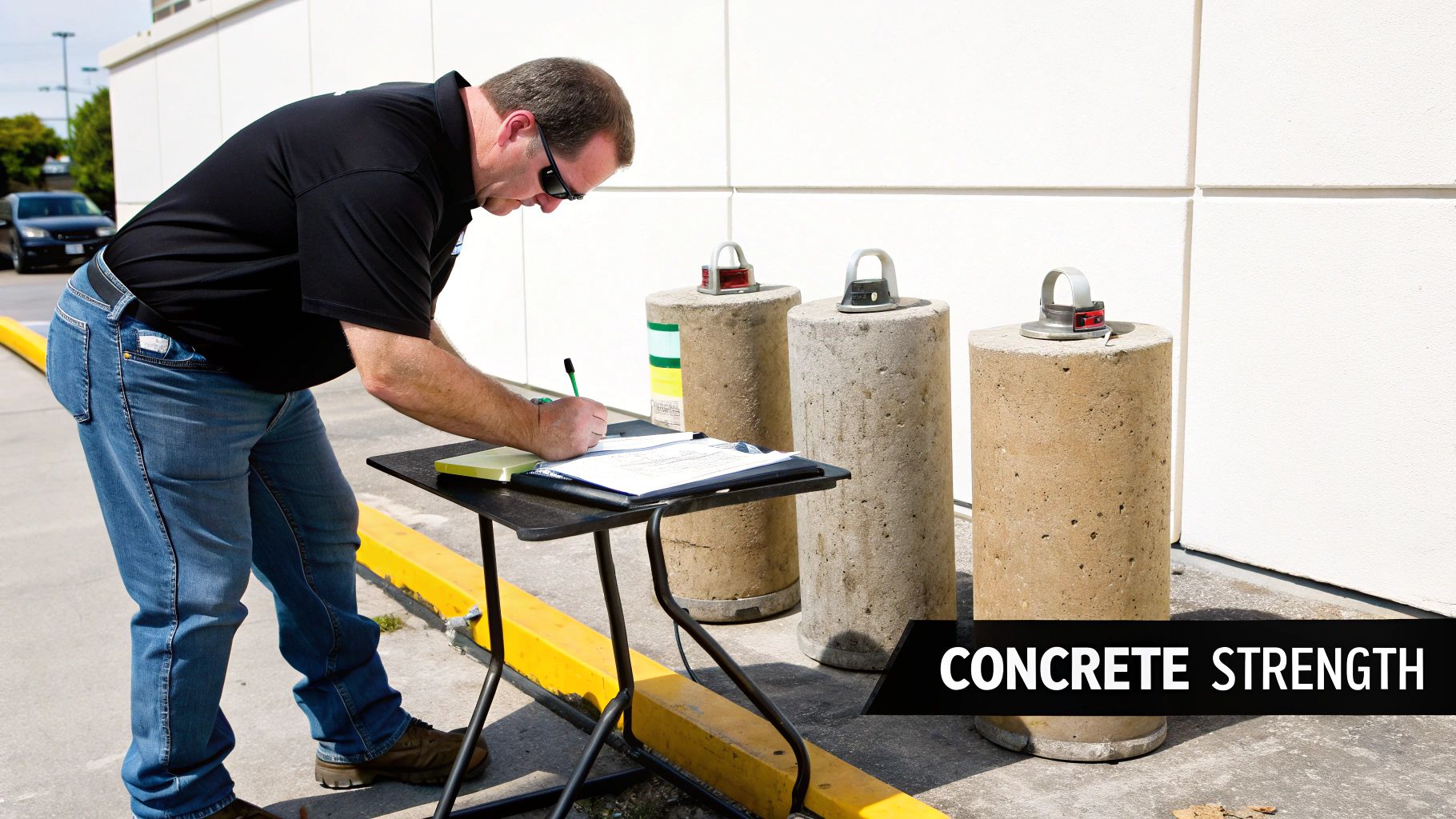
In Southwest Florida, concrete is the skeletal system of a storm-resilient home. From the foundation slab to tie beams and block fill, its strength and durability are non-negotiable. This second phase of your construction quality assurance checklist ensures the concrete placed is not just a mixture of cement, sand, and stone, but a precisely engineered material designed to withstand immense hydrostatic and wind pressures. Verifying the mix design, placement, and curing process is critical to preventing premature failure in the harsh, corrosive coastal environments of Fort Myers and Cape Coral.
Key Verification Points
This stage is about empirical data and documented proof that the concrete meets engineering specifications, which are often enhanced for hurricane-prone regions.
- Mix Design and Slump Testing: Before the pour, you must verify the concrete supplier's mix design ticket. It should specify the required compressive strength (e.g., 3000 PSI), water-to-cement ratio, and any admixtures for saltwater resistance. On-site slump tests must be conducted for each truck to ensure the concrete has the correct consistency for proper placement and consolidation.
- Compression Strength Testing: A third-party testing agency must take cylindrical samples from multiple locations within each pour. These samples are cured in a controlled environment and then subjected to compression tests, typically at 7 and 28 days, to confirm the concrete is achieving its designed strength. This is the ultimate proof of quality.
- Proper Curing Conditions: Curing is a chemical process, not just drying. The intense Florida sun and heat can cause concrete to cure too quickly, leading to shrinkage cracks and reduced strength. Your quality assurance must verify that proper curing methods, such as applying curing compounds or using wet coverings, are employed for the specified duration.
Actionable Quality Assurance Tips
To guarantee your home’s concrete structure is sound, implement these on-site checks:
- Document Every Truck: Photograph the delivery ticket for every concrete truck that arrives on-site. This creates a detailed record of delivery times, batch numbers, and mix specifications, which is invaluable for traceability.
- Monitor Weather and Temperature: Keep detailed logs of the ambient temperature, humidity, and weather conditions during and for at least 72 hours after the pour. Florida’s unpredictable weather can dramatically impact the curing process, and this data is vital if issues arise.
- Schedule Pre-Load Break Tests: Do not allow framing or other significant loads to be placed on a new slab or structure until the 7-day or 28-day compression test results (the "breaks") have been received and confirm the concrete has reached sufficient strength as per the engineer's requirements.
3. Steel Reinforcement and Fabrication Inspection
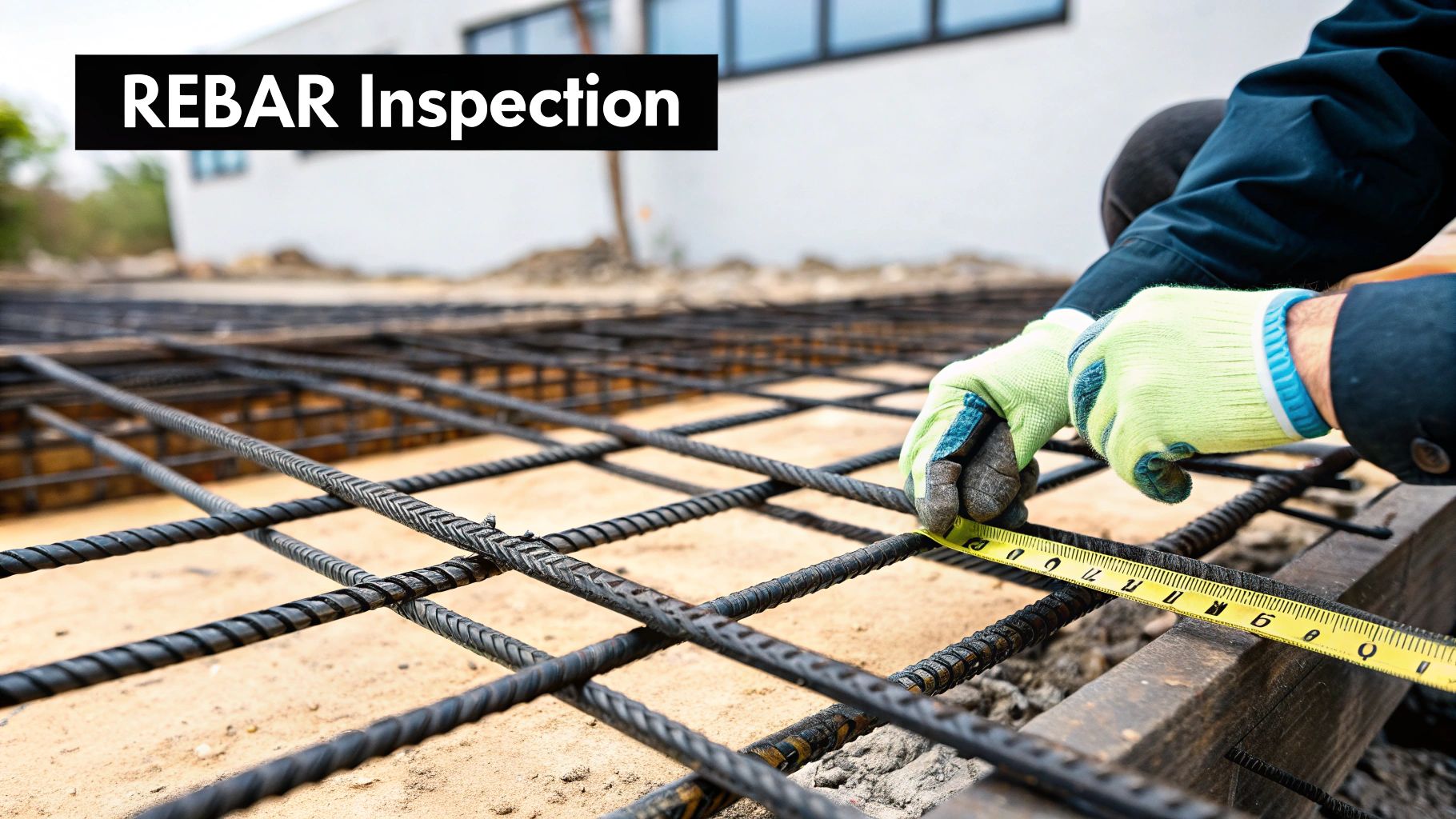
In Southwest Florida, the steel reinforcement, or rebar, within your concrete is the home's skeleton. It’s what provides the tensile strength to resist the immense uplift and lateral forces from hurricane-force winds and storm surge. This crucial step in your construction quality assurance checklist goes beyond just having steel in the concrete; it's a forensic verification that the correct grade, size, spacing, and placement of every bar aligns perfectly with the structural engineering plans designed to keep your home standing. This isn't just about meeting code; it's about building a fortress.
Key Verification Points
This phase is a non-negotiable, pre-pour inspection gate. It ensures the engineered strength specified for withstanding a Category 5 hurricane is actually built into the structure before being permanently encased in concrete.
- Placement, Spacing, and Sizing: Verify that the rebar diameter, grade (e.g., Grade 60), and precise on-center spacing in footers, tie beams, and columns match the structural drawings. In areas like Cape Coral, where concrete block construction is prevalent, this includes checking vertical cell reinforcement and lintel steel.
- Lap Splices and Clearances: Confirm that all lap splices, where two bars overlap, meet the minimum length specified by the engineer. This is critical for transferring load effectively. Also, inspect the concrete cover, the distance from the rebar to the formwork edge, to ensure it’s sufficient to prevent saltwater intrusion and corrosion.
- Anchoring and Connections: Check that all reinforcement is securely tied and anchored, with no shifting. This includes verifying the proper placement of corner bars, stirrups in beams, and connections to hurricane straps and other structural hardware. Every connection point is a potential failure point that must be confirmed.
Actionable Quality Assurance Tips
Implement these hands-on checks before any concrete truck arrives on site to guarantee the home’s structural integrity:
- Photo-Log and Measure Everything: Before the pour, create a detailed photographic record of the entire rebar grid. Use a tape measure in the photos to provide a scale reference for spacing and clearances. This documentation is irrefutable proof of compliance.
- Verify Material Certifications: Request the mill test certificates for the delivered rebar. Cross-reference these documents with the markings on the steel bars to confirm the grade and origin match the project specifications.
- Inspect Coated Reinforcement: If epoxy-coated or galvanized rebar is specified for enhanced corrosion resistance (a common feature in high-end coastal builds), inspect it carefully for any nicks, scratches, or damage from transport or handling. Any significant damage can compromise its protective coating and must be repaired or replaced before the pour.
4. Masonry and Wall Construction Verification
In coastal Florida, masonry walls are more than just partitions; they are the primary defense against hurricane-force winds and wind-driven rain. This fourth phase of your construction quality assurance checklist focuses on the structural and weather-resistant integrity of your home’s block walls. It is a meticulous review of materials and workmanship, ensuring the "bones" of your home are robust enough to withstand the severe weather common to areas like Fort Myers, Cape Coral, and the surrounding islands.
Key Verification Points
This stage confirms that every concrete masonry unit (CMU), mortar joint, and waterproofing layer contributes to a resilient and durable structure. Verification goes beyond a simple visual check.
- Mortar and Grout Quality: The strength of your wall is in its mortar. Your QA process must verify that the mortar mix design meets engineering specifications for compressive strength, especially in hurricane-prone regions. This includes confirming proper batching and mixing on-site and ensuring all cells specified for structural reinforcement are fully grouted.
- Wall Plumbness & Reinforcement: Using laser levels, confirm that all walls are perfectly plumb and straight before grouting. More critically, inspect and photograph all vertical rebar and horizontal bond beam reinforcement before concrete or grout is placed. This confirms compliance with structural plans designed for Florida's high wind loads.
- Waterproofing & Lath Installation: A block wall's defense against water intrusion relies on its exterior coatings. Your QA checklist must include a detailed inspection of the applied waterproofing membrane for complete coverage and proper thickness. For stucco finishes, verify that the lath is installed with the correct fasteners and overlaps, preventing future cracks and water entry points.
Actionable Quality Assurance Tips
To guarantee your masonry walls provide maximum structural integrity and weather resistance, implement these specific checks:
- Conduct Daily End-of-Day Inspections: Before the crew leaves each day, visually inspect the day’s work. Check for consistent mortar joint thickness (typically 3/8 inch), clean surfaces, and proper alignment. Documenting progress daily makes it easier to catch and correct errors early.
- Photograph Reinforcement and Openings: Create a detailed photo log of all steel reinforcement in the walls, paying special attention to the lintels over windows and doors and the tie beam connections. This photographic evidence is vital for proving structural compliance to inspectors and your insurer.
- Verify Waterproofing Prior to Backfill: For any portion of the foundation wall that will be below grade, you must inspect and photograph the waterproofing application before any backfilling occurs. Confirm there are no gaps, tears, or thin spots in the membrane that could compromise the home's resistance to ground moisture.
5. Electrical Installation and Safety Compliance
In Southwest Florida, a home's electrical system is its lifeline, especially when facing prolonged power outages from hurricanes. This phase of your construction quality assurance checklist is a non-negotiable safety protocol, ensuring the entire system is robust, compliant, and ready to handle modern demands, from smart home technology to emergency backup power. A key trend in new Florida homes is the integration of a whole-home generator, which requires meticulous planning and installation to function safely during a storm. This inspection verifies that every wire, breaker, and connection meets the stringent requirements of the National Electrical Code (NEC) and local Florida amendments designed for coastal conditions.
Key Verification Points
This stage focuses on verifying the integrity and safety of the entire electrical infrastructure before it gets concealed by drywall. The goal is to confirm that the system can safely manage its designed load and withstand Florida's unique environmental challenges.
- Whole-Home Generator & Transfer Switch Integration: With hurricane resilience in mind, verify the generator pad location, proper sizing of the unit, and correct installation of the automatic transfer switch (ATS). The wiring must be sized to handle the full load of essential circuits, including HVAC, refrigeration, and modern design features like elevators or pool systems.
- Corrosion-Resistant Components: Given the high humidity and salt-laden air in areas like Fort Myers Beach and Sanibel, all exterior outlets, panels, and fixtures must be NEMA-rated for wet/damp locations. Check for the use of corrosion-resistant conduits and stainless steel or properly coated hardware.
- Load Calculations & Panel Sizing: Confirm that a detailed load calculation was performed and that the main service panel has adequate amperage for all planned appliances, EV chargers, and potential future additions. The panel schedule must be accurate, clearly labeled, and accessible.
Actionable Quality Assurance Tips
To guarantee your electrical system is safe and dependable, implement these specific checks during the rough-in phase:
- Conduct a Comprehensive Rough-In Photo Log: Before any insulation or drywall is installed, photograph every junction box, wiring run, and the main panel. This visual record is invaluable for proving compliance and for any future troubleshooting or renovations.
- Verify AFCI/GFCI Protection: Document that Arc-Fault Circuit Interrupter (AFCI) and Ground-Fault Circuit Interrupter (GFCI) protection is installed in all locations mandated by the latest NEC edition. This is a critical life-safety feature that is frequently checked by inspectors.
- Insist on a Pre-Drywall Electrical Walkthrough: Walk the site with your builder and electrician to verify outlet placements, switch locations, and dedicated circuits for high-draw appliances. This is your last chance to make cost-effective changes before the walls are closed up and aligns with new builder trends for smart home pre-wiring.
6. Mechanical, Plumbing, and HVAC System Inspection
In Southwest Florida, the mechanical, electrical, and plumbing (MEP) systems are the vital organs of your custom home, dictating comfort, air quality, and operational resilience, especially during hurricane season. This phase of your construction quality assurance checklist ensures these complex networks are installed with precision, not just to code, but for peak performance in a demanding coastal climate. From Fort Myers to Sanibel, a meticulously verified HVAC system is essential for managing humidity and preventing mold, while robust plumbing is critical for both daily function and storm preparedness.
Key Verification Points
This stage goes beyond simply ensuring the AC turns on. It’s a deep dive into the system's design, installation, and commissioning to guarantee long-term reliability.
- System Sizing and Airflow: Verify that the HVAC system's capacity (tonnage) and ductwork design are based on a formal Manual J load calculation specific to your home's layout, window ratings, and insulation. Improper sizing is a leading cause of inefficiency and premature failure in Florida’s high-humidity environment.
- Plumbing Pressure and Drainage: All potable water lines must undergo a documented pressure test to confirm there are no leaks within the walls. Equally important is inspecting the slope of all drain lines (DWV systems) to ensure proper gravity-fed flow, preventing future clogs and backups.
- Component & Material Verification: Confirm all installed equipment-from the air handler and condenser to water heaters and plumbing fixtures-matches the approved submittals. This includes checking that all exterior components, like the AC condenser, are installed on an appropriately elevated slab and secured with hurricane-rated tie-downs.
Actionable Quality Assurance Tips
To ensure your home’s essential systems are built for endurance and efficiency, implement these specific checks:
- Document Commissioning Reports: Insist on a full system commissioning report from the HVAC contractor. This document provides empirical data on airflow (CFM) at each register, static pressure, and refrigerant levels, proving the system is operating exactly as designed.
- Conduct Thorough Pressure Tests: Be present for or require photographic/video evidence of hydrostatic pressure tests on water lines and leak tests on gas lines (if applicable). These tests should hold at specified pressures for a required duration to be considered successful.
- Map All Shut-Off Valves: Before the drywall is installed, create a detailed photo and video log of all plumbing and mechanical components within the walls. Specifically, map the location of every water isolation valve, which is invaluable for future maintenance and emergency shut-offs. Before systems commissioning and documentation handover, understanding the intricacies of a practical completion inspection can be invaluable.
7. Drywall and Interior Finish Quality Control
Once the mechanical, electrical, and plumbing systems are enclosed, the focus shifts to the interior aesthetic and long-term durability of your home. The drywall and finish stage of your construction quality assurance checklist is where your interior spaces take shape. In Southwest Florida's humid climate, this phase is about more than just creating smooth walls; it’s a critical checkpoint for ensuring moisture resistance, mold prevention, and a flawless substrate for luxury paints and finishes, aligning with new design features that often demand perfect surfaces.
Key Verification Points
Achieving a high-quality interior finish demands precision and adherence to specific standards. This phase verifies that the surfaces you see and touch every day are built to last.
- Proper Board Installation: Before any joint compound is applied, inspect the drywall sheets. They must be fastened securely to studs with the correct screw pattern, avoiding over-driven screws that break the paper face. Verify that moisture-resistant (green board) or mold-resistant drywall is used in all wet areas like bathrooms, laundry rooms, and kitchens as specified.
- Finish Level Specification: Confirm the specified drywall finish level (e.g., Level 4 for standard paint, Level 5 for high-gloss or critical lighting areas) is documented and understood by the finishing crew. This dictates the number of coats of compound and the degree of sanding required for a perfect surface.
- Joint and Surface Treatment: Inspect the taping and mudding process to ensure all joints, inside corners, and outside corners are smoothly and completely covered. The final sanded surface must be free of tool marks, ridges, and voids before any primer is applied.
Actionable Quality Assurance Tips
To guarantee your interior walls meet the highest standards of quality and resilience, implement these specific checks:
- Conduct a "Raking Light" Inspection: Before priming, use a bright, portable work light held close to the wall and aimed at a sharp angle. This "raking light" technique will reveal subtle imperfections, like sanding marks or uneven joints, that are invisible in normal daylight but will show through the final paint coat.
- Document Pre-Closure Moisture Barriers: Create a photo log of all installed vapor barriers and waterproofing membranes in bathrooms and kitchens before the drywall is hung. This provides undeniable proof that these critical, unseen layers are correctly installed to prevent future moisture intrusion.
- Verify Material Acclimation: In Florida's variable humidity, it's crucial that drywall sheets acclimate to the home's interior environment for at least 24 hours before installation. This simple step prevents future issues like joint cracking or "nail pops" caused by expansion and contraction.
8. Roofing System Installation and Waterproofing Verification
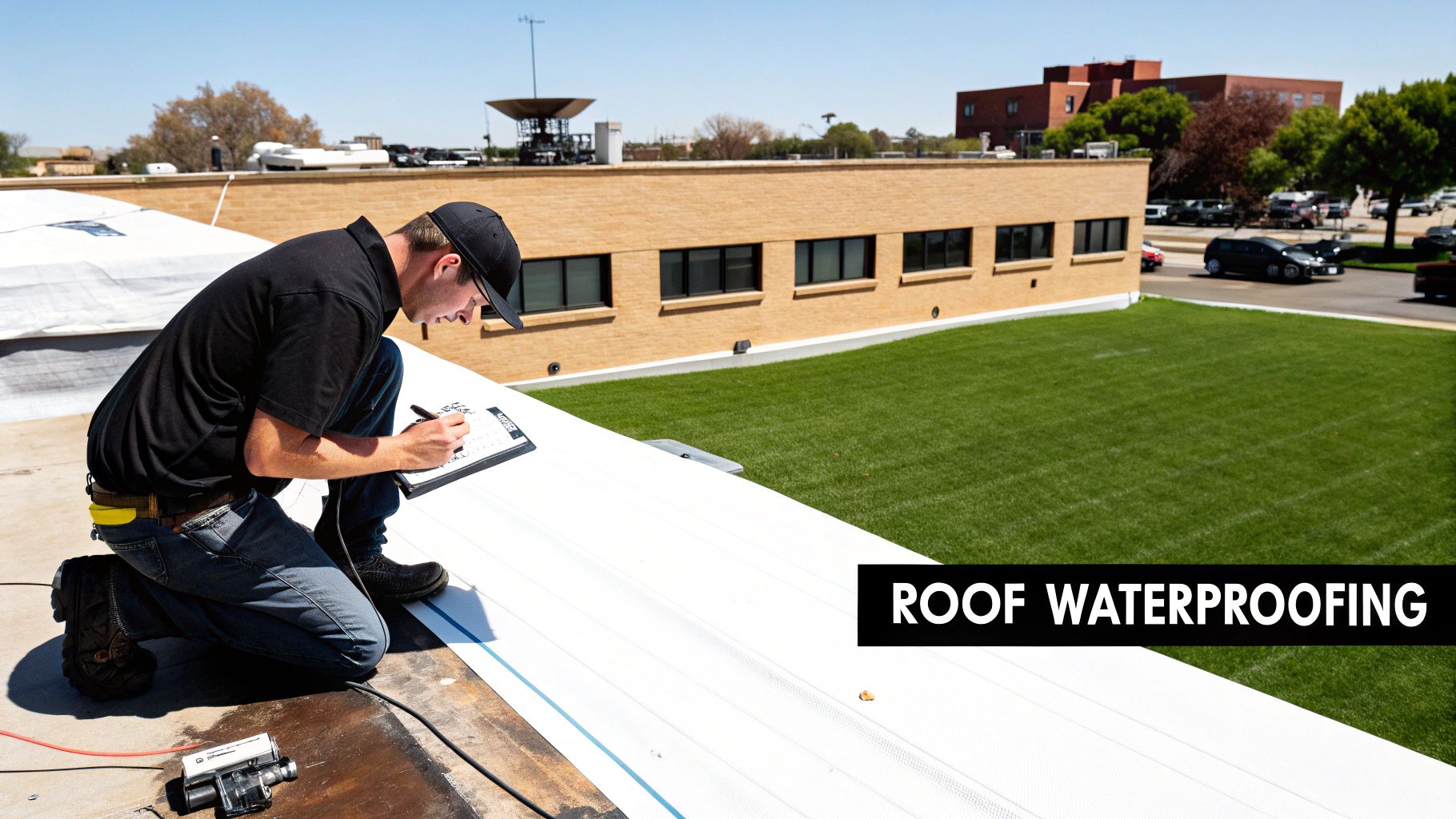
In Southwest Florida, the roof is the home's primary shield against torrential rains, intense UV radiation, and hurricane-force winds. This phase of your construction quality assurance checklist goes far beyond checking for shingle alignment; it is a meticulous verification of the entire waterproofing envelope. A single flaw in this system can lead to catastrophic water intrusion, structural damage, and mold growth, making rigorous oversight a non-negotiable part of building a resilient home in storm-prone areas like Fort Myers and Cape Coral.
Key Verification Points
The goal is to confirm that the roof is installed not just to code, but to the highest manufacturer and Florida Building Code High-Velocity Hurricane Zone (HVHZ) standards. This involves a detailed, multi-step inspection process:
- Underlayment and Dry-In: Before any primary roofing material is installed, verify the correct application of the underlayment. In Florida, this often means a "peel-and-stick" or self-adhering membrane that provides a critical secondary water barrier. All seams must have the specified overlap, and the membrane should be free of wrinkles or punctures.
- Material Installation & Fastening: Whether it’s a standing seam metal roof or concrete tile, confirm the fastening pattern matches the engineering plans. For metal roofs, this means checking screw placement and gasket compression. For tile roofs, it involves verifying the attachment method (foam, screws, or both) is rated for local wind-speed requirements.
- Flashing and Penetrations: Every vent, pipe, skylight, and chimney is a potential entry point for water. Meticulously inspect the flashing details around these penetrations. Ensure proper step flashing, counter-flashing, and sealant application are used as specified by both the roofing manufacturer and the National Roofing Contractors Association (NRCA) standards.
Actionable Quality Assurance Tips
To guarantee a watertight and storm-ready roofing system, implement these specific checks:
- Document All Layers: Create a photo log at each stage: the clean roof deck, the underlayment installation, the dry-in process, and the final roofing material. This visual evidence is invaluable for proving correct installation, especially for components that will be permanently covered.
- Conduct a Water Test: Before the final sign-off, and especially for low-slope or flat roofs, schedule a water test. This involves temporarily blocking drains and flooding the roof with water for a set period (often 24 hours) to actively check for leaks under a controlled load.
- Verify Drip Edge and Fascia Integration: Ensure a corrosion-resistant metal drip edge is installed correctly at all eaves and rakes. It must be installed over the underlayment at the rakes and under it at the eaves to properly direct water into the gutters and away from the fascia. This detail is crucial for preventing wood rot. For a deeper understanding of what a comprehensive check entails, learn more about our professional roof inspection process in Florida.
9. Door, Window, and Hardware Installation Inspection
In Southwest Florida, doors and windows are more than architectural features; they are the primary line of defense against hurricane-force winds, driving rain, and intense UV exposure. This phase of your construction quality assurance checklist is a meticulous inspection of every opening in your home's envelope. It verifies that these critical hurricane impact features are installed not just for aesthetic appeal and daily function, but to meet the stringent, life-safety standards of Florida's High-Velocity Hurricane Zone (HVHZ) regulations. This ensures your custom home in areas like Fort Myers or Sanibel is secure, energy-efficient, and weather-tight.
Key Verification Points
The goal is to confirm that the installation precision matches the high-performance engineering of the products themselves. Anything less than a perfect installation can compromise even the most expensive impact-rated window or door.
- Impact Rating & Product Approval: Verify that every window and exterior door has the proper Miami-Dade or Florida Product Approval documentation on-site. The sticker on each unit must match the plans and prove it meets the design pressures required for your home's specific location and exposure.
- Installation Integrity: Meticulously inspect the bucking, shimming, and flashing details around every frame. Proper waterproofing, using specified peel-and-stick membranes and sealants, is non-negotiable to prevent water intrusion, a common and costly failure point during tropical weather events.
- Hardware and Sealing: In our coastal, salt-laden air, all hardware must be corrosion-resistant stainless steel or have a specialized coastal finish. Check that weatherstripping creates a complete, unbroken seal and that multi-point locking mechanisms on doors engage smoothly and securely.
Actionable Quality Assurance Tips
To ensure every opening is a point of strength, not vulnerability, implement these targeted checks:
- Document Every Sticker: Before installation, take a clear photo of the NFRC and Florida Product Approval sticker on every single window and door unit. This creates an indisputable record that the correct products were delivered and installed.
- Conduct a Water Test: Before interior drywall is installed, work with your builder to perform a controlled water test on a representative number of windows, especially those most exposed to prevailing winds. This can reveal flashing or sealant errors early.
- Test Operational Functionality: Open and close every window and door fully. They should operate without sticking, dragging, or requiring excessive force. Confirm all locks, latches, and handles work correctly, and that keys are provided for all locking hardware.
10. Phase 7: Safety Systems and Code Compliance Final Inspection
This final, critical checkpoint in your construction quality assurance checklist transitions your project from a structure to a safe, legally occupiable home. It’s a comprehensive verification that all life safety systems, emergency protocols, and accessibility features are not just installed but fully functional and compliant with the latest Florida Building Code. In a post-Hurricane Ian environment, this phase also confirms that systems designed for life safety during and after a storm, like a whole-home generator and protected egress paths, are flawlessly executed. This is the last barrier before the Certificate of Occupancy (CO) is issued, making it an absolute, non-negotiable step.
Key Verification Points
The focus here is on tangible, testable systems that protect occupants. This final inspection moves beyond aesthetics to the core function of mandated safety features.
- Fire and Life Safety Systems: This involves a full operational test of all interconnected smoke and carbon monoxide detectors. For homes with fire sprinkler systems, inspectors will verify pressure tests, head placement, and alarm integration. All fire-rated doors, such as the one leading from the garage to the home, must be inspected for proper seals, self-closing mechanisms, and code-compliant hardware.
- Emergency Egress and Lighting: Every designated emergency escape and rescue opening (EERO), typically a window in a bedroom, must be verified for correct size, sill height, and ease of operation. Your quality assurance process must include physically opening each one. Additionally, all emergency lighting and illuminated exit signage, if applicable, must be tested during a simulated power outage to ensure they function correctly.
- Accessibility and Final Code Compliance: Inspectors will conduct a final review of ADA (Americans with Disabilities Act) compliance points where required, such as doorway widths and bathroom layouts if part of the home's design. This is also the stage where final checks on items like stair riser heights, handrail stability, and GFCI outlet placement are performed, ensuring the entire home meets the stringent requirements for final sign-off.
Actionable Quality Assurance Tips
To ensure a smooth final inspection and a safe home, implement these final checks:
- Schedule a Pre-Inspection Walk-Through: Arrange a "pre-final" walk-through with your builder and, if possible, the building official. This proactive step helps identify and rectify potential issues before the official inspection, preventing costly delays in obtaining your CO.
- Compile a Documentation Binder: Have a binder ready with all system test reports, hurricane-impact feature certifications, and manufacturer specifications for all safety equipment. Presenting this organized documentation to the inspector demonstrates thoroughness and can streamline the approval process.
- Personally Test Egress Routes: Do not rely solely on your builder's word. Physically walk all potential emergency exit paths, open every EERO window, and test every lock on egress doors. This hands-on verification ensures that in a real emergency, these critical escape routes function as designed.
10-Point Construction Quality Assurance Comparison
| Item | Implementation complexity | Resource requirements | Expected outcomes | Ideal use cases | Key advantages |
|---|---|---|---|---|---|
| Foundation and Structural Integrity Inspection | Very high — geotechnical and structural analysis | Structural engineers, soil tests, load testing, heavy equipment | Stable, code‑compliant foundation; reduced settlement risk | New custom homes in Florida, elevated structures, coastal zones | Prevents catastrophic failure; ensures long‑term storm resilience |
| Concrete Quality and Curing Verification | High — lab and field testing over curing period | Lab technicians, test cylinders, curing controls, temperature/humidity monitoring | Verified compressive strength and durability | Structural pours, tie beams, hurricane-resilient construction | Ensures durability; vital for Florida's harsh environment |
| Steel Reinforcement and Fabrication Inspection | High — precise measurements and material verification | Rebar inspectors, mill test certificates, measuring tools | Correct reinforcement placement and capacity; improved load distribution | High-Velocity Hurricane Zones, concrete block construction | Prevents reinforcement failures; improves seismic/wind resistance |
| Masonry and Wall Construction Verification | Moderate — visual and material testing, alignment checks | Masonry specialists, mortar testing, laser levels | Plumb, watertight walls with consistent joints and finish | Florida custom homes, exterior envelope construction | Prevents water infiltration; maintains structural integrity |
| Electrical Installation and Safety Compliance | High — code‑driven, safety‑critical testing | Licensed electricians, insulation/continuity testers, permits | Safe, code-compliant systems with generator backup | All new homes, projects with whole-home generators | Prevents electrical hazards; ensures power during storms |
| Mechanical, Plumbing, and HVAC System Inspection | High — multidisciplinary commissioning and balancing | HVAC/plumbing technicians, pressure testers, airflow balancing tools | Leak‑free, balanced systems; proper humidity control and IAQ | Custom homes, LEED projects, high-efficiency designs | Prevents water damage; improves comfort and energy efficiency |
| Drywall and Interior Finish Quality Control | Low–Moderate — workmanship and surface inspections | Finishers, bright lighting, levels and straightedges | Smooth, paint‑ready surfaces; proper moisture resistance | Interior fit‑outs, luxury homes, new design features | Cost‑effective defect correction; professional appearance |
| Roofing System Installation and Waterproofing Verification | Moderate–High — weather‑dependent, safety concerns | Roofing inspectors, drone/binoculars, flood tests, fall protection | Watertight roof, proper drainage, extended service life | New roofs in hurricane zones, low-slope and membrane systems | Prevents major water damage; preserves building envelope |
| Door, Window, and Hardware Installation Inspection | Moderate — alignment, sealing and operation checks | Certified installers, levels, weatherstripping testers | Secure, weather‑tight openings; reliable hardware operation | New homes requiring hurricane impact features, coastal builds | Improves security and energy efficiency; reduces infiltration |
| Safety Systems and Code Compliance Final Inspection | Very high — comprehensive, multi‑agency coordination | Fire/life‑safety inspectors, testing equipment, full documentation | Code‑compliant building; eligibility for certificate of occupancy | Project closeout, new construction, regulatory approval | Ensures occupant life safety; mandatory for legal occupancy |
Your Blueprint for Confidence: Partnering for Quality in a Custom Build
Navigating the journey of a custom home build in Southwest Florida, from the initial pre-construction planning to the final punch list, requires more than just a vision; it demands a structured, meticulous approach to quality. This article has detailed an exhaustive, phase-by-phase construction quality assurance checklist, transforming a complex process into a manageable and transparent roadmap. We've moved beyond generic advice, providing actionable insights into everything from verifying the new elevation of your foundation to ensuring the proper installation of hurricane impact features.
The core takeaway is this: a checklist is not about micromanagement. It is a powerful communication and verification tool that empowers you, the homeowner, to become an active, informed partner in the creation of your legacy. It ensures that the conversation with your builder is grounded in specifics, not assumptions. When you can discuss rebar spacing, whole-home generators, and HVAC load calculations with clarity, you elevate the entire project, ensuring that the beautiful, new design features you've selected are built upon a foundation of uncompromised structural integrity.
From Checklist to Lasting Legacy
In a region defined by its coastal beauty and its vulnerability to extreme weather, the importance of this diligence cannot be overstated. Your custom home is not just a dwelling; it is your family's primary defense against hurricane-force winds and storm surge. The checklist items discussed are the very elements that contribute to a resilient, "over-engineered" structure that can withstand the forces of nature unique to Florida.
- Structural Resilience: Proper reinforcement in foundations and masonry, correctly installed impact windows, and meticulously sealed roofing systems are not just code requirements; they are your peace of mind when a storm is brewing in the Gulf.
- System Longevity: Quality assurance in MEP (Mechanical, Electrical, and Plumbing) systems, including correctly sized generators, prevents premature failures and costly repairs, ensuring your high-efficiency systems function flawlessly for years, especially during storms.
- Investment Protection: A home built with an unwavering commitment to quality retains and grows its value. The flawless drywall, perfectly aligned tile, and smoothly operating hardware are tangible results of a process that prioritized excellence at every stage.
Ultimately, this comprehensive construction quality assurance checklist serves a dual purpose. It provides the technical benchmarks for a superior build while also acting as a litmus test for selecting the right building partner. The best custom home builders in Southwest Florida not only welcome this level of scrutiny but have already integrated these principles into their own rigorous internal processes. They don't just meet code; they exceed it. They don't just see a set of plans; they see a family's future home and build it as if it were their own.
Your Actionable Path Forward
So, where do you go from here? The first step is to internalize this framework. Use the checklists provided as a basis for your conversations during the builder selection process. Ask potential builders how they document these critical milestones and adapt to new building trends and local news that affects building codes. Inquire about their on-site supervision protocol and how they verify the work of their subcontractors. Their answers will reveal their commitment to transparency and quality far more than any glossy brochure.
Embrace your role as the project's most important stakeholder. This checklist is your blueprint for confidence, transforming you from a passive client into an educated and empowered collaborator. By partnering with a builder who shares this dedication to excellence, you ensure that your custom home will not only be a stunning reflection of your design vision but also a safe, resilient, and enduring legacy for your family in the beautiful landscape of Southwest Florida.
Ready to partner with a custom home builder who embodies the principles of this quality assurance checklist? For a building experience defined by integrity, transparency, and an on-site commitment to excellence, connect with Sinclair Custom Homes Inc. See how a hands-on, quality-first approach turns a detailed plan into a breathtaking reality at Sinclair Custom Homes Inc.