


For homeowners building a custom home in Southwest Florida, the question of switching a chlorine pool to saltwater isn't just about the water—it's about aligning the pool with a modern, luxury lifestyle. Is it worth integrating into a new build? The answer is a resounding yes. Saltwater systems are a key design feature that offers softer, gentler water on skin and eyes and significantly reduces annual chemical costs—a massive win in our year-round swimming climate.
Is A Saltwater Conversion A Smart Upgrade For Your Florida Home?
From our perspective as custom home builders in Southwest Florida, we see saltwater systems less as an upgrade and more as a standard feature for a luxury, low-maintenance lifestyle. This choice is part of a larger trend in new home construction towards seamless, enjoyable living. It’s an investment in your property's value and your daily enjoyment, freeing you from the constant hassle of buying, storing, and handling chlorine. In hurricane-prone areas, having a self-sustaining pool system that requires fewer stored chemicals is also a practical advantage.
Let's dive into the real numbers behind the conversion so you can see how it fits into your new custom home project.
Breaking Down The Costs And Benefits
The initial expense for a saltwater system is a key consideration in a new home budget. For Florida homeowners, the salt chlorine generator system itself typically falls somewhere between $900 and $1,900.
For an 8,000-gallon pool—a common size for custom homes in Southwest Florida—the system will cost about $1,200.
However, this upfront cost is offset by significant long-term savings. Most saltwater pool owners spend under $100 a year on chemicals, mainly for bags of salt, which cost around $12 per 40-pound bag. When you compare that to the constant spend on chlorine tablets or liquid shock, the savings add up quickly. This is why, over its lifetime, a saltwater pool is considerably less expensive. Our own guide on salt vs. chlorine pools gets into a deeper comparison of these ongoing costs.
To give you a clearer picture, here’s a quick rundown of how the two systems stack up for a typical new Florida home build.
Chlorine vs Saltwater At a Glance for Florida Pools
| Feature | Traditional Chlorine Pool | Saltwater Pool |
|---|---|---|
| Feel of Water | Can be harsh, causing dry skin and red eyes. | Silky, soft, and much gentler on skin and hair. |
| Upfront Cost | Low. Standard on most existing pools. | High. $900 – $1,900 for the salt generator system. |
| Annual Maintenance Cost | High. $300 – $800+ on chlorine, shock, and algaecides. | Low. Typically under $100 for salt and balancing chemicals. |
| Daily Maintenance | Constant testing and adding chlorine tablets/liquid. | Minimal. The system generates its own chlorine. |
| Smell | Strong "chlorine" smell (chloramines). | Virtually no chemical odor. |
| Equipment Impact | Less corrosive to pool equipment and surfaces. | Can be mildly corrosive to some metals and stone over time. |
This table shows that while chlorine pools are cheaper initially, saltwater systems are superior in user experience and long-term running costs—a critical factor for homeowners who want to maximize enjoyment and minimize upkeep.
The real value for Florida homeowners isn't just in the chemical savings. It's in reclaiming your time and enhancing the swimming experience, which are key components of the luxury lifestyle we build into our custom homes.
Beyond The Numbers: A Lifestyle Choice
Switching to saltwater is a major upgrade to your entire backyard experience. The water feels noticeably softer and far less irritating, eliminating the red eyes, itchy skin, and overpowering chemical smell.
This simple change makes the pool more inviting for daily use, a game-changer for families. As you weigh your options, it’s worth looking into all the different chlorine alternatives for pools to see what fits you best. As builders, we see this decision as part of a larger trend toward creating seamless indoor-outdoor living spaces that are built for enjoyment, not for endless upkeep. A saltwater system aligns perfectly with that vision, giving you a more natural and pleasant environment for relaxing in the Florida sun.
Pre-Conversion Checklist: Setting Your Project Up for Success
Before purchasing a salt chlorine generator, proper preparation of your current pool is essential. The success of your switch to saltwater hinges on this prep work. Think of it like priming a wall before you paint; a clean, balanced start is absolutely non-negotiable for a smooth transition.
Skipping these early steps can lead to frustrating performance issues and could even damage your new, expensive equipment right out of the gate. Let’s ensure that doesn’t happen.
Get Your Water Chemistry Dialed In
The first step is to perfect your water balance. A tip that may seem counterintuitive: don't drain your old chlorinated water. Balance it first. Starting with stable chemistry makes calibrating your new saltwater system much easier and faster.
Your mission is to hit the ideal ranges for your water chemistry before adding any salt. This prevents the new system from working overtime and helps avoid potential staining or scaling on your pool finish.
Get a reliable test kit and establish a baseline with these four key metrics:
- pH Level: Aim for a tight range of 7.2 to 7.6. A perfect pH is critical for ensuring the chlorine your new system produces can effectively sanitize the water.
- Total Alkalinity: Target 80 to 120 ppm (parts per million). Alkalinity stabilizes your pH, preventing wild swings common with Florida's heat and rain.
- Calcium Hardness: Target 200 to 400 ppm. Maintaining this level is crucial for protecting plaster surfaces and equipment from corrosion, an important consideration given Southwest Florida's water quality.
- Cyanuric Acid (CYA): Keep this between 30 and 50 ppm. CYA acts as a sunscreen for your chlorine, protecting it from being depleted by our intense Florida sun.
Adjust these levels one at a time, starting with alkalinity, then pH, and finally calcium hardness. Run the pump for a few hours after each chemical addition before re-testing.
Check Your Pool Equipment for Salt Compatibility
Not all pool equipment is compatible with saltwater. Some older components weren't built to handle the slightly corrosive nature of salt, and a thorough inspection now can prevent costly repairs later.
Your pool heater is the first place to check. Heaters with copper heating elements are particularly vulnerable to corrosion in a saltwater pool. For new builds, we select salt-compatible heaters from the start.
Next, inspect your pump and filter. Most modern equipment is fine, but look for any metal parts—like bolts or clamps—that could rust. This is a common issue with older setups.
A pro tip from years in the field: install a sacrificial zinc anode. This inexpensive part is plumbed into your system and is designed to corrode first, "sacrificing" itself to protect expensive metal components in your heater and pump. It is essential for protecting the longevity of your investment.
Start with a Spotless Pool
With your water balanced and equipment approved, the final prep step is to get the pool itself sparkling clean. You want your new salt system to focus on making fresh chlorine, not fighting off existing contaminants.
Thoroughly brush the walls, steps, and floor, then vacuum the entire pool. If you have any lingering algae, treat it with a chlorine shock and algaecide now, allowing the chlorine level to return to normal before starting the conversion. A perfectly clean start ensures your new system operates at peak efficiency from day one.
Selecting and Installing the Right Salt Chlorine Generator
The salt chlorine generator (SCG or salt cell) is the heart of your new saltwater system. This isn't just another piece of equipment; it’s the engine that will keep your water crystal clear, so selecting the right one and installing it correctly is a massive step in switching your chlorine pool to saltwater.
Think of the SCG like a home's generator. You wouldn't install an undersized generator and expect it to power your entire house during a hurricane. The same logic applies to your pool's chlorinator.
Why Oversizing Your SCG Is a Non-Negotiable in Southwest Florida
For us here in Southwest Florida, the manufacturer's gallon capacity rating is just a starting point. Our intense sun, high water temps, frequent summer deluges, and heavy pool use create a massive chlorine demand.
A unit technically sized for a 20,000-gallon pool in a cooler climate will be forced to run at or near 100% capacity all day just to keep up in Fort Myers. That constant strain will drastically shorten its lifespan.
As builders, our rule of thumb is simple: always oversize the SCG by at least 50% of your pool's actual volume. For a 20,000-gallon pool, we recommend a unit rated for at least 30,000 gallons. A bigger unit can run at a lower output (30-50%) for fewer hours, extending the cell's life and providing backup power for heavy use.
This strategy ensures your system can handle Florida's weather without stress. It's a smart upfront investment that pays for itself in reliability and longevity.
The Installation Process: Plumbing and Placement
The installation involves plumbing and electrical work. The number one rule is that the salt cell must be the last piece of equipment the water passes through before returning to the pool.
Here’s the correct equipment order:
- Pump: Pulls water from the pool.
- Filter: Catches debris.
- Heater (if present): Warms the clean water.
- Salt Cell: Turns salt into chlorine just before the water returns.
- Return Jets: Pushes clean, sanitized water back into the pool.
Placing the cell before a heater is a catastrophic mistake, as the concentrated chlorine will corrode the heater's internal components. The cell needs to be installed on a straight run of PVC with enough clearance for good flow and easy cleaning.
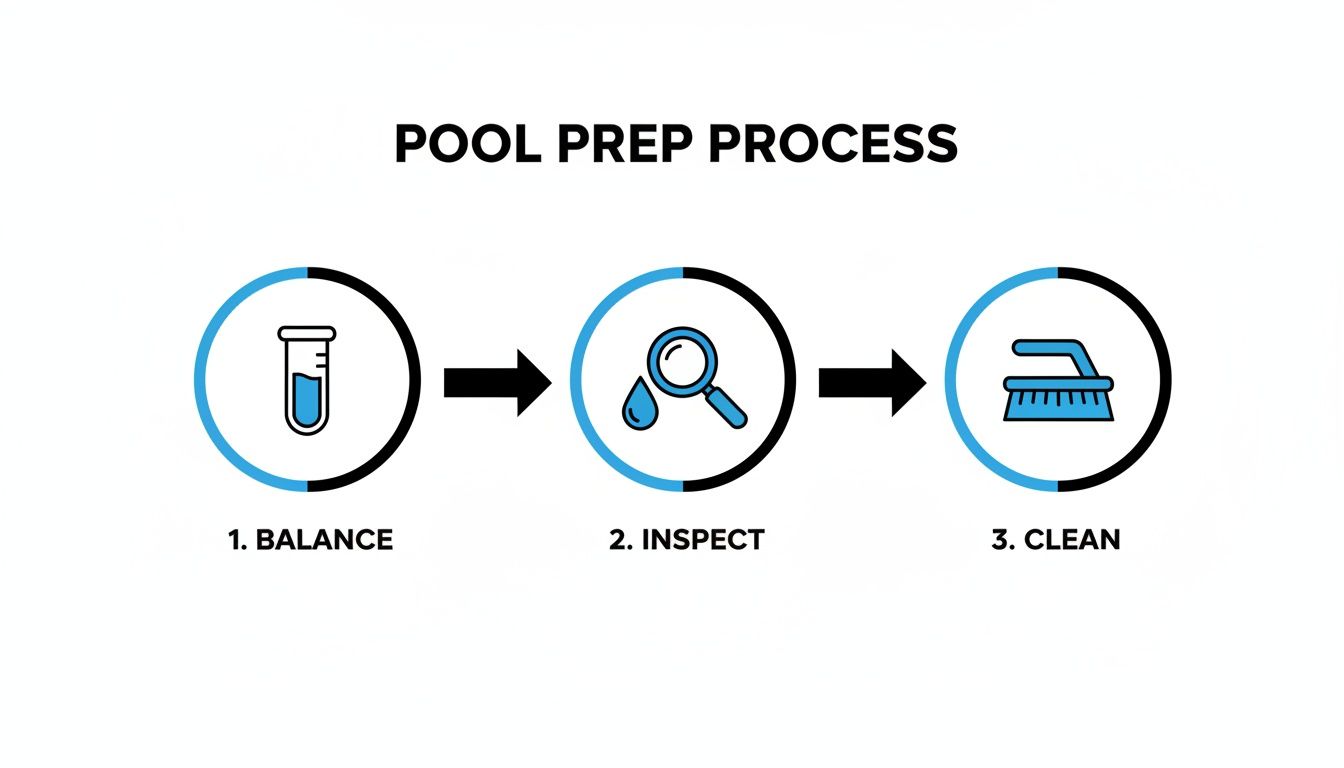

As you can see, a great hardware installation is built on a foundation of balanced water and well-inspected equipment.
The Critical Role of a Licensed Electrician
While a handy homeowner might tackle the plumbing, the electrical work is strictly for a licensed and insured electrician. This is about safety, code compliance, and protecting your home. The SCG's control panel requires its own GFCI-protected circuit breaker.
Crucially, it must be wired to sync with your pool pump, ensuring the salt cell only generates chlorine when water is flowing. If it runs while water is stagnant, a dangerous buildup of chlorine gas could occur. In our custom home projects, understanding the details of swimming pool construction in Cape Coral FL shows how these systems are integrated safely from day one. Hiring a pro guarantees your system will be safe and reliable for years.
Adding Salt and Getting Your New System Dialed In
With your new salt chlorine generator installed, it's time to transform your pool water. This process is methodical to ensure success.

Figuring Out Your Initial Salt Dose
First, calculate how much salt your pool needs based on its volume and your generator's target salinity, typically between 3,000 and 4,000 parts per million (ppm).
Here's a quick reference:
- For a 10,000-gallon pool targeting 3,500 ppm: You’ll need around 292 pounds of salt.
- For a 20,000-gallon pool targeting 3,500 ppm: You're looking at about 584 pounds of salt.
These are estimates; your water may already have some salt. Use an online salt calculator for precision and be sure to use high-purity, food-grade salt made for pools. Avoid rock salt or water softener pellets, as their impurities can stain your pool finish and damage the salt cell.
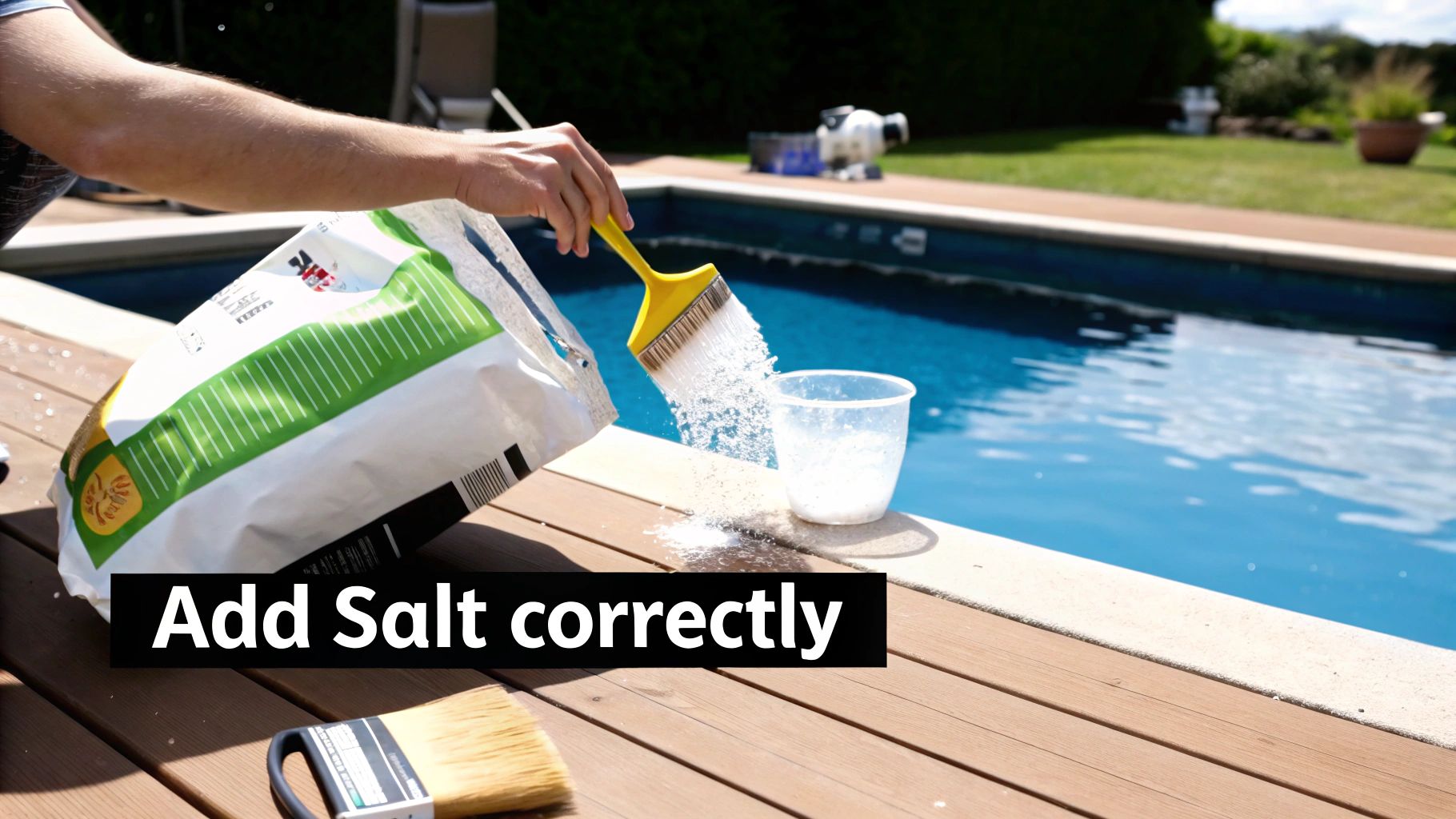
The Right Way to Add Salt
How you add the salt is critical. Don't just dump it in one spot.
Instead, follow these steps for an even mix:
- Run your pool pump to circulate the water.
- Walk around the pool's edge, pouring the salt evenly across the surface, focusing on the deep end.
- Use your pool brush to push the salt around the bottom, breaking up clumps and accelerating dissolution.
This brushing step is key to getting the salt dissolved quickly and avoiding cosmetic damage to your pool's finish.
Your number one goal here is to get every single grain dissolved before you even think about powering on that new salt generator. A little patience right now is absolutely critical for the long-term health of your system.
The All-Important 24-Hour Wait
After adding the salt, let your pump run continuously for a full 24 hours, but keep the salt chlorine generator turned OFF. This ensures the salt is completely dissolved and evenly distributed.
Turning the generator on too early is a common and costly mistake. It can cause false low-salt readings and damage the cell's delicate metal plates, shortening its lifespan. This 24-hour period is a small investment of patience that pays off for years.
Dialing in Your Water Chemistry for Our Florida Pools
After 24 hours, test the water to confirm salinity is in the target range, then you can turn on the salt generator. Now, fine-tune your water chemistry for Southwest Florida's unique challenges.
The ideal water balance for a saltwater pool is:
- Salinity: 3,000 – 4,000 ppm (or per your manual)
- Free Chlorine: 1 – 3 ppm
- pH: 7.4 – 7.6 (Salt systems tend to raise pH, so check this often initially.)
- Total Alkalinity: 80 – 120 ppm
- Cyanuric Acid (Stabilizer): 60 – 80 ppm (Slightly higher to protect chlorine from intense Florida sun.)
- Calcium Hardness: 200 – 400 ppm
Start the generator at a medium setting (e.g., 50%) and let it run for a day or two. Test your free chlorine and adjust the output until the level holds steady in the 1-3 ppm range. This initial calibration may take a week of small tweaks, but once dialed in, your system will be a reliable chlorine-making machine.
Long-Term Saltwater Pool Maintenance and Care

A common myth is that saltwater pools are "no-maintenance." While easier, they still require a simple, predictable routine. As custom home builders, we emphasize efficiency and protecting your investment. Proactive care keeps your water pristine without the constant headache of manual chlorination.
Your Weekly Maintenance Rhythm
A quick five-minute weekly check can prevent bigger issues in our Southwest Florida climate.
Your weekly to-do list:
- Test Key Water Levels: Use test strips to check free chlorine and pH. Salt systems naturally cause pH to rise, so add muriatic acid as needed.
- Clear Skimmer and Pump Baskets: This is crucial for any pool to ensure good water flow for the salt cell.
- Skim the Surface: Remove floating debris to keep the pool looking great and reduce the load on your filter.
These tasks keep things on track. To understand the chemistry behind clear water, it’s worth learning the essential steps of pool water treatment.
Monthly and Quarterly System Health Checks
Once a month, inspect the salt cell. Pull it out and check the metal plates for white, flaky calcium buildup.
Scaling is common, especially in Cape Coral's hard water. If you see buildup, clean the cell by soaking it in a mild acid solution (one part muriatic acid to four parts water). A clean cell is an efficient cell. Our detailed guide to saltwater pool maintenance covers cell cleaning step-by-step.
Every three months, test your pool's salinity. Salt levels can drop from heavy rain, backwashing, or splash-out.
The most significant long-term maintenance task is inspecting and cleaning the salt cell. A clean cell is an efficient cell. Neglecting this simple monthly check is the fastest way to shorten its lifespan and end up with cloudy water.
Budgeting for Long-Term Costs: The Salt Cell Replacement
The salt cell doesn't last forever. Plan to replace it every three to four years—a recurring expense to budget for. Despite this, the system's automated chlorine generation is a huge benefit, especially in a new custom home designed for ease of use. This technology is a game-changer in our warm climate, where preventing algae is a constant battle.
Troubleshooting Common Florida Pool Issues
Living in Southwest Florida presents unique challenges. Here’s how to handle them:
- "Low Salt" Alert After a Storm: Our summer downpours, a key factor in building codes and home elevation, can dilute pool water and trigger a "low salt" light. Test the salinity first, then add salt slowly if needed.
- Chlorine Levels Dropping in Extreme Heat: High water temperatures use up chlorine fast. Use the "Super Chlorinate" or "Boost" function for 24 hours to catch up, rather than running the generator at 100%.
- Preventing Algae During Rainy Season: Rain brings phosphates (algae food). Test phosphate levels every few months and use a remover if they are high to starve algae before it can bloom.
Your Top Questions About Saltwater Pools Answered
Even with the benefits, homeowners building a custom home in Southwest Florida often have questions. Getting straight answers is the best way to feel confident.
Will My Pool Water Taste Like the Ocean?
No. A saltwater pool's salinity is about 3,000-4,000 parts per million (ppm). The ocean is nearly ten times saltier at 35,000 ppm. The water feels incredibly soft and silky, with only a faint hint of salt.
Does Salt Wreck Pool Decks and Equipment?
Salt is corrosive, which we account for in custom home design. It can cause pitting on certain materials like natural travertine. As builders, we guide homeowners toward salt-resistant materials for coping and decking. For new construction, we recommend hurricane impact-resistant windows and doors, and similarly, we advocate for salt-resistant pool surrounds.
For equipment, the best defense is a sacrificial zinc anode. It corrodes so your expensive heater and metal parts don't have to. Rinsing your deck and furniture with a hose is also a good habit.
The soft water feel is a major luxury, but protecting your investment is just as important. Choosing salt-resistant decking materials and installing a zinc anode are small, proactive steps we take to ensure the longevity of your backyard oasis.
Will I Ever Need to Add Chlorine Myself?
Occasionally, yes. A saltwater pool is a chlorine pool with its own chlorine factory. After a huge pool party or a heavy downpour, you might need to boost it. The generator’s "super chlorinate" setting is often enough, but a manual shock with liquid chlorine offers a faster fix when needed.
How Often Will I Be Adding More Salt?
You almost never add salt. Salt doesn't evaporate. You only lose it through water loss from splash-out, backwashing, or overflow after a storm. Most homeowners in Southwest Florida add only a bag or two of salt per year, a fraction of the hassle of weekly chlorine additions.
At Sinclair Custom Homes Inc, we believe a pool should be a source of enjoyment, not endless work. Integrating a saltwater system into your custom home is one of the best ways to achieve that low-maintenance luxury lifestyle. If you're ready to build a home where every detail is engineered for quality and comfort, visit us at https://sinclaircustomhome.com to start the conversation.