


When you're building a custom home in Southwest Florida, the kind of pool you choose is a huge decision. It's not just about the water; it's about creating a backyard oasis that stands up to the elements and fits your lifestyle. The debate between salt and chlorine really boils down to a few key trade-offs in the context of new construction trends and our unique climate.
On one hand, salt systems give you that silky, luxurious water and are a popular design feature in new builds. On the other, traditional chlorine pools are cheaper to install upfront and use a straightforward, familiar system. We'll break down which one makes the most sense for building a resilient, modern home in Southwest Florida.
Choosing Your Pool For The Florida Lifestyle
In a custom Southwest Florida home, your pool is the centerpiece of your outdoor living space. The choice between a salt or chlorine system affects your initial construction budget, your long-term maintenance, and even how well your beautiful decking and fixtures hold up in our humid, storm-prone weather. It's a key decision we help homeowners make early in the design phase because it impacts everything from material selection to electrical planning.
This infographic hits on the main points people consider, like whether swimmer comfort or initial cost is their top priority.
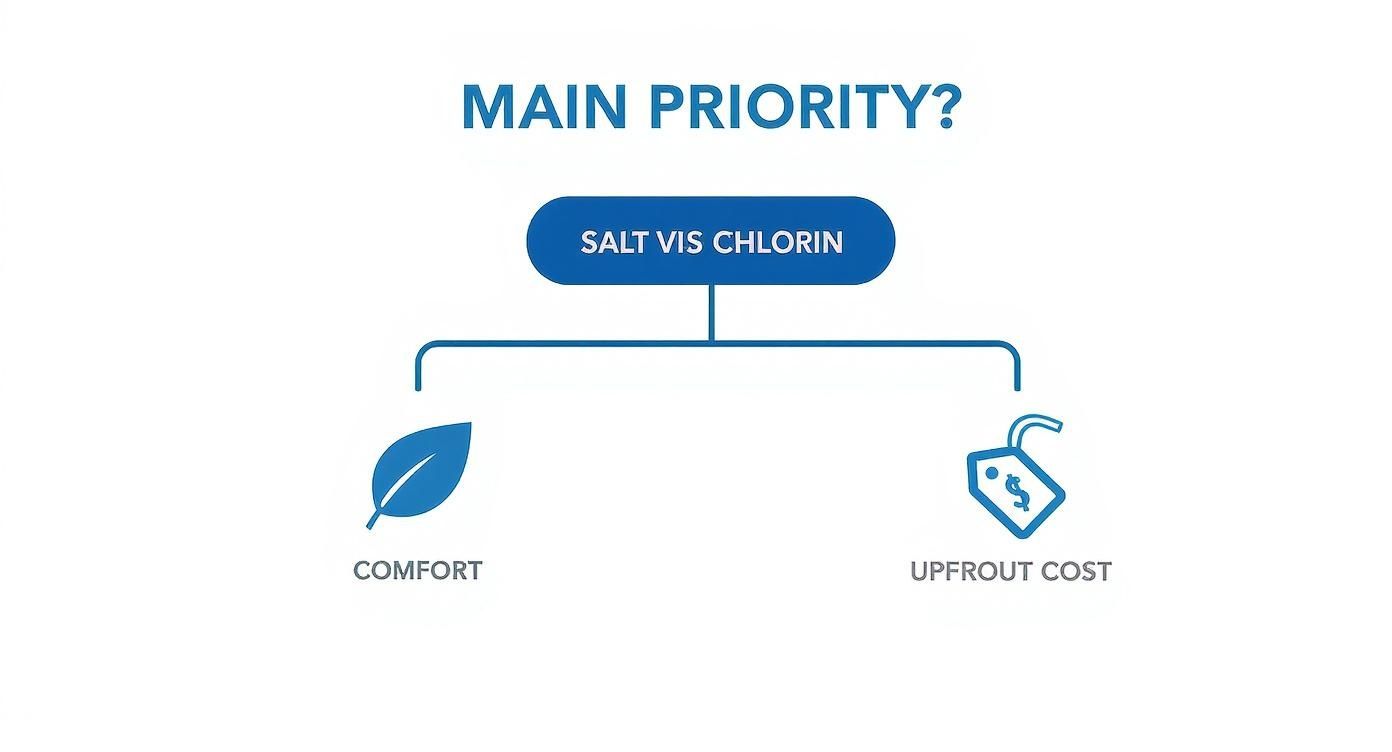

As you can see, if a gentle swimming experience and less hands-on chemical work are what you're after, salt is the clear winner. But if you're focused on keeping those initial construction costs down, traditional chlorine is hard to beat.
Quick Comparison Salt vs Chlorine At a Glance
To get started, it helps to see the main differences side-by-side. This table gives you a quick snapshot of the most important factors for any homeowner building a new pool in Florida.
| Feature | Saltwater Pool | Traditional Chlorine Pool |
|---|---|---|
| Upfront Cost | Higher because of the salt chlorine generator (SWG) | Lower initial installation cost |
| Ongoing Costs | Low annual cost for salt and cell maintenance | Higher annual cost for chlorine tablets/liquid |
| Swimmer Comfort | Soft, silky water that's easy on skin and eyes | Can feel harsh and have a strong chemical smell |
| Maintenance | Chlorine is produced automatically; cell needs occasional cleaning | Requires frequent testing and adding chemicals by hand |
| Material Impact | Salt can be corrosive to some metals and porous stone | High chlorine levels can bleach vinyl liners |
Ultimately, choosing the right system is a personal decision that depends on your budget, how you plan to use the pool, and the design of your new home. Looking at various chlorine alternatives like saltwater systems helps you think about the long-term experience you want.
If you want to see how these different pools look and feel in real life, browsing through Cape Coral, FL homes for sale with a pool can give you some great ideas and show you what other homeowners in the area have chosen.
How Salt and Chlorine Systems Actually Work
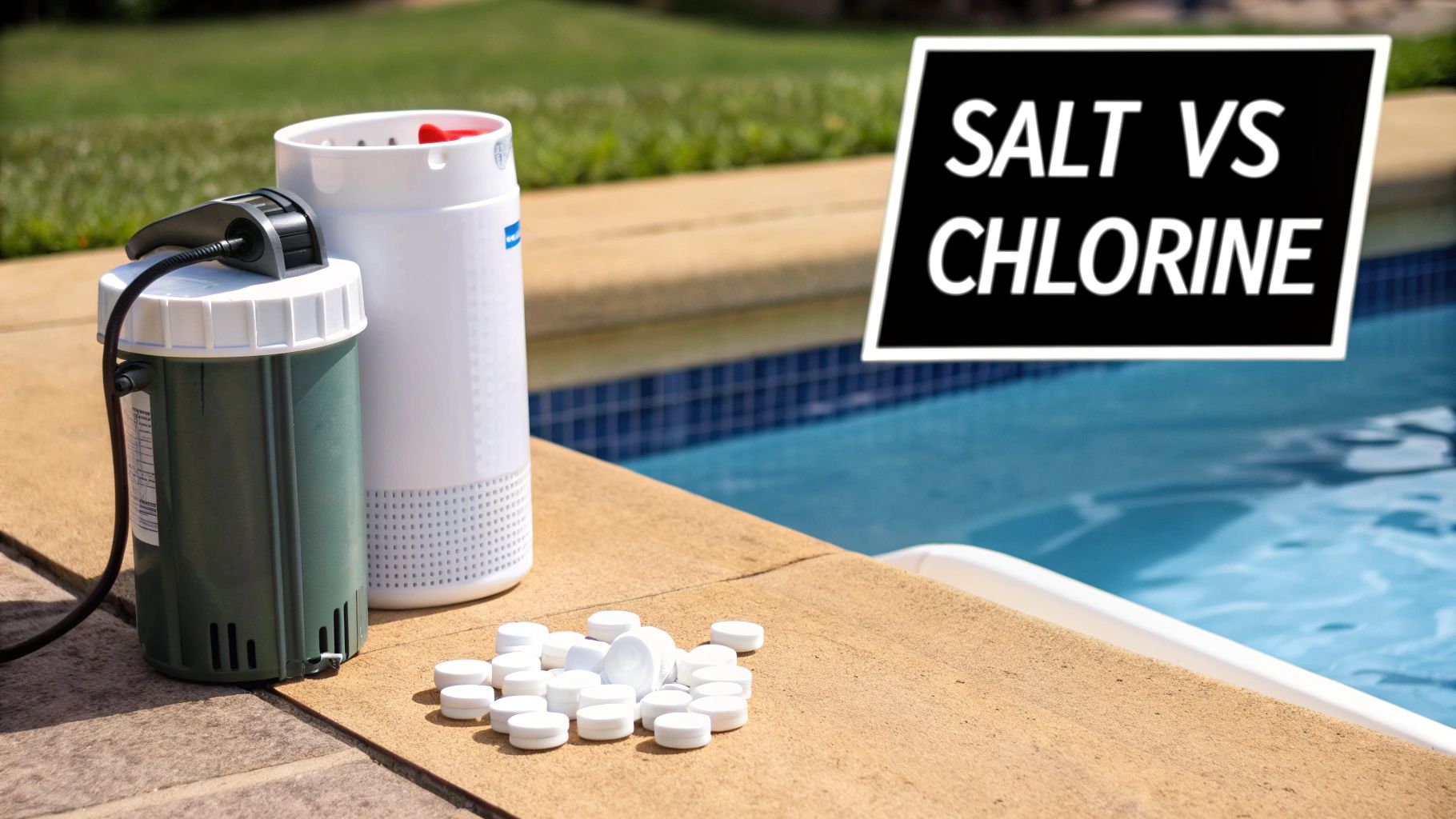

To make the right call in the "salt pool vs. chlorine" debate for your new Florida home, you first have to understand how each system actually keeps your water clean. Here’s the biggest myth we need to bust right away: saltwater pools aren't chlorine-free. They are chlorine pools—they just have a far more elegant way of producing that chlorine.
A saltwater system hinges on a clever piece of equipment called a salt chlorine generator (SWG). You start by adding simple, food-grade salt directly to your pool water until it's mildly saline. As this water flows through the generator's cell, a process called electrolysis applies a tiny electrical charge, which splits the salt (sodium chloride) and turns it into pure chlorine. The result is a steady, low-level stream of sanitizer fed right into your pool.
This automated production is a true lifesaver in Southwest Florida. Our intense sun and heat burn through chlorine at an incredible rate, making the fight against algae a constant chore. An SWG is like having a sanitizer on a slow-drip IV, maintaining perfectly consistent levels with almost no daily effort from you.
The Traditional Chlorine Approach
On the other hand, a traditional chlorine pool is a completely manual affair. With this setup, you are the chlorine generator, responsible for physically adding sanitizer to the water. This usually happens in one of three ways:
- Chlorine Tablets: These are the familiar solid pucks that you put in a floating dispenser or an automatic chlorinator, where they dissolve slowly over time.
- Liquid Chlorine: This is the quick-and-dirty method. You pour it straight into the pool for an immediate sanitizing boost.
- Granular Chlorine (Shock): These potent granules are dissolved and added to "shock" the pool, which is essential for killing contaminants after a big pool party or a heavy rainstorm.
Because this method is entirely manual, the chemical levels in your pool are constantly yo-yoing. You'll have a spike in chlorine right after you add it, followed by a steady drop-off a few days later. This creates a cycle of peaks and valleys that demands constant testing and adjustment on your part.
For a custom home owner, the choice is between an automated, self-regulating system that does the work for you and a manual system that requires consistent, hands-on management. One is a "set it and forget it" approach, while the other is a recurring item on your weekly to-do list.
A Growing Trend in New Construction
It's no surprise that the demand for automated, low-maintenance features in new custom homes has fueled a massive boom in salt system technology. The global market for salt water chlorinators is already sitting at about USD 3.7 billion and is expected to climb to around USD 6.1 billion by 2033. North America, especially pool-heavy regions like Florida, is driving this builder trend.
More and more, homeowners are choosing systems that simplify their lives and elevate their comfort. You can dig into more market insights about this growing demand for salt water chlorinators.
At the end of the day, both systems get the job done—they keep your pool clean, clear, and safe for swimming. The real difference is in the delivery. A salt system provides automated, consistent sanitation that’s perfectly suited for the demanding Florida climate, while a traditional chlorine system offers a familiar, hands-on approach with a lower initial price tag.
Analyzing the True Cost of Pool Ownership in SWFL
When we're designing a custom home in Southwest Florida, the conversation about a new pool has to go deeper than just the initial price tag. The real cost of ownership plays out over years of use, especially in a climate like ours that keeps a pool running constantly. Looking at a salt pool vs. a chlorine pool shows two completely different financial stories.
A saltwater system definitely hits the budget harder upfront. This is almost entirely because of the salt chlorine generator (SWG), a pretty sophisticated piece of tech that can add $1,400 to $2,000 or more to the initial build, not counting specialized installation. It's a number that gets your attention when finalizing construction budgets.
But once that system is humming along, the financial script flips completely. The day-to-day costs for a saltwater pool are surprisingly low.
Breaking Down the Annual Expenses
A traditional chlorine pool looks great on paper at first. Its lower initial price makes it a tempting choice for homeowners trying to keep upfront construction costs down. The catch is that this early savings gets eaten up by a steady, year-round budget for chemicals. You’ll be making regular trips to the pool store for:
- Chlorine Tablets or Liquid: This is your main sanitizer, and you'll burn through it during Florida's long, hot, and sunny summers.
- Shock Treatments: You'll need these after heavy rains, big pool parties, or to knock out any budding algae blooms.
- Algaecides and Other Balancers: More chemicals are often needed to keep the water perfectly clear and safe.
Year after year, these chemical costs for a traditional chlorine pool can easily run between $300 to $800. That number depends on your pool's size and how much you use it, but a hot and rainy summer in Cape Coral or Fort Myers will always push you toward the higher end of that range.
On the other hand, a saltwater pool’s main recurring expense is just plain, cheap salt. Most of our clients spend only about $50 to $100 per year on bags of salt to keep the salinity right. That creates a massive long-term financial advantage.
The core financial trade-off is clear: a higher initial investment for a salt system versus significantly higher and more volatile annual chemical costs for a traditional chlorine system. Understanding this is key to making a sound decision for your new Florida home.
Calculating the Break-Even Point
For many clients building with us, the big question is: when does the salt system actually pay for itself? We can figure out a pretty typical break-even point. If you're saving an average of $400 per year on chemicals, the initial $2,000 investment in an SWG system usually pays for itself in about 5 years.
After that five-year mark, the saltwater pool is just putting money back in your pocket every year. This long-term value is a huge reason why salt systems are becoming standard in new luxury homes across Southwest Florida. It just makes sense for homeowners who want features that are both enjoyable and financially smart over time.
Of course, no system is completely free of maintenance costs. The biggest future expense for a saltwater pool is replacing the heart of the SWG, the salt cell. This is the component that actually creates the chlorine, and it has a limited lifespan of about 3 to 7 years.
A new salt cell can cost anywhere from $300 to $600. While you have to factor this in, it only slightly extends the break-even timeline and doesn't really change the long-term financial picture. Even with a cell replacement every five years, the total cost of owning a salt system is still substantially lower than a chlorine pool's over a decade or more. It's important to understand the full lifecycle of your pool equipment, which is why we also go over the cost of pool heaters and pumps during the design phase.
Comparing the Real-World Maintenance Demands
When you're building a custom home in Southwest Florida, the dream is all about a poolside lifestyle—more floating, less fussing. But the day-to-day reality of pool care is where the salt pool vs chlorine debate gets real, fast. While both systems need your attention, their maintenance routines feel worlds apart, especially under that relentless Florida sun.
There's a common myth that saltwater pools are "no-maintenance." While they do automate the daily chore of adding chlorine, which is a massive time-saver, they come with their own unique checklist. That hands-off convenience is a huge part of their appeal, and the market reflects it. The global salt chlorine generator market, valued at USD 318 million, is expected to hit USD 482 million by 2032. Homeowners are clearly voting for smarter, more comfortable pool solutions. You can dig into the data behind this trend and learn more about the salt chlorine generator market growth.
A Week in the Life of a Salt Pool Owner
If you own a saltwater pool in Cape Coral, your weekly routine is less about pouring in chemicals and more about system checks and fine-tuning the balance.
- SWG Cell Inspection: The heart of your system is the salt chlorine generator (SWG) cell. It needs a regular look-over for calcium scale buildup, which can kill its efficiency. Plan on cleaning it every few months.
- Balancing pH and Alkalinity: Salt systems naturally push pH levels upward. You'll be testing weekly and adding muriatic acid or a pH decreaser pretty frequently to keep the water in that sweet spot.
- Checking Stabilizer Levels: Florida's intense UV rays eat chlorine for breakfast. Keeping your cyanuric acid (stabilizer) levels right is non-negotiable. It protects the chlorine your SWG works so hard to make.
A Week in the Life of a Chlorine Pool Owner
For the owner of a traditional chlorine pool, the routine is much more hands-on and frequent. It’s a constant cycle of testing and dosing to fight back against the heat, sun, and rain.
Picture this: a classic Southwest Florida thunderstorm just rolled through. For a chlorine pool owner, that means springing into action. Heavy rain throws the chemical balance way off, so you have to test immediately and add more chlorine or shock to head off an algae bloom.
The core difference in maintenance is predictability versus reactivity. A salt pool requires consistent, predictable system checks, while a traditional chlorine pool demands a reactive, hands-on approach to its constantly fluctuating chemical levels.
The Practicalities of Pool Upkeep
At the end of the day, keeping a pool pristine in Florida takes work, no matter the system. If you want to get into the nitty-gritty, check out our expert guide on commercial pool cleaning, which breaks down water chemistry and equipment care. The principles are just as vital for a residential pool.
The choice really comes down to the kind of work you'd rather do. Salt systems involve periodic, technical tasks like cleaning the cell and managing that steadily rising pH. Chlorine pools demand more frequent, manual labor—hauling chemicals, dissolving shock, and constant testing. For the busy owner of a new custom home, the automated nature of a salt system often just makes more sense for a lifestyle focused on enjoyment, not chores.
The Swimmer Experience: Comfort and Health
When our custom home clients in Southwest Florida are weighing the options, the debate between a salt vs. chlorine pool often boils down to a simple question: What will it actually feel like to swim in?
While the technical details and costs are important, it's the day-to-day experience that truly makes or breaks your backyard oasis. This is where a saltwater system really shines.
Saltwater pools are known for their incredibly soft, silky water. The feeling is completely different from a traditional chlorine pool—it’s much gentler on your skin, eyes, and hair. Because a salt chlorine generator creates a steady, low level of chlorine automatically, you get to skip the harsh chemical smell and irritation that so many of us associate with swimming pools.
This superior comfort is a huge win for families with kids or anyone with sensitive skin. The water feels more natural, making those long Florida afternoons in the pool that much more enjoyable for everyone.
A Focus on Health and Well-Being
That gentle feeling isn't just in your head; it comes with real health benefits. Swimmers consistently report less eye redness, no more dry or itchy skin after a swim, and hair that doesn’t feel brittle and stripped of its natural oils.
Here in Southwest Florida, the pool is the heart of daily life, often seamlessly integrated into the home’s layout as part of a beautiful lanai. Given how much time is spent in and around the water, this difference in comfort is a game-changer. You can find out more about how we design these unique outdoor living spaces in our guide on what is a lanai.
For the Florida lifestyle, where outdoor living is a year-round affair, the superior comfort of a saltwater pool often outweighs its higher initial cost. It elevates the pool from just a feature into a genuine wellness amenity for your custom home.
The Rise of Saltwater in New Construction
This preference for comfort is driving a major trend in new home construction. Homeowners are overwhelmingly choosing systems that put the user experience first.
According to research from Arizton, the global pool salt chlorinator market is projected to hit USD 1.98 billion by 2030. A staggering 58% of this growth is coming from suburban areas, where new pool buyers are choosing saltwater systems specifically to avoid skin and eye irritation. You can dive into the data yourself by reading the full research on this growing saltwater pool demand.
In contrast, the experience in a traditional chlorine pool can feel inconsistent. Since the chemicals are added manually, chlorine levels can spike, creating that overpowering "pool smell" and a much higher chance of irritation. While a perfectly maintained chlorine pool can be comfortable, it demands constant attention to avoid the harsh chemical peaks that make swimming less pleasant.
For homeowners building a luxury custom home, the automated, gentle nature of a salt system delivers a reliable and far more enjoyable experience, every single time.
Protecting Your Investment from Salt and Chemicals
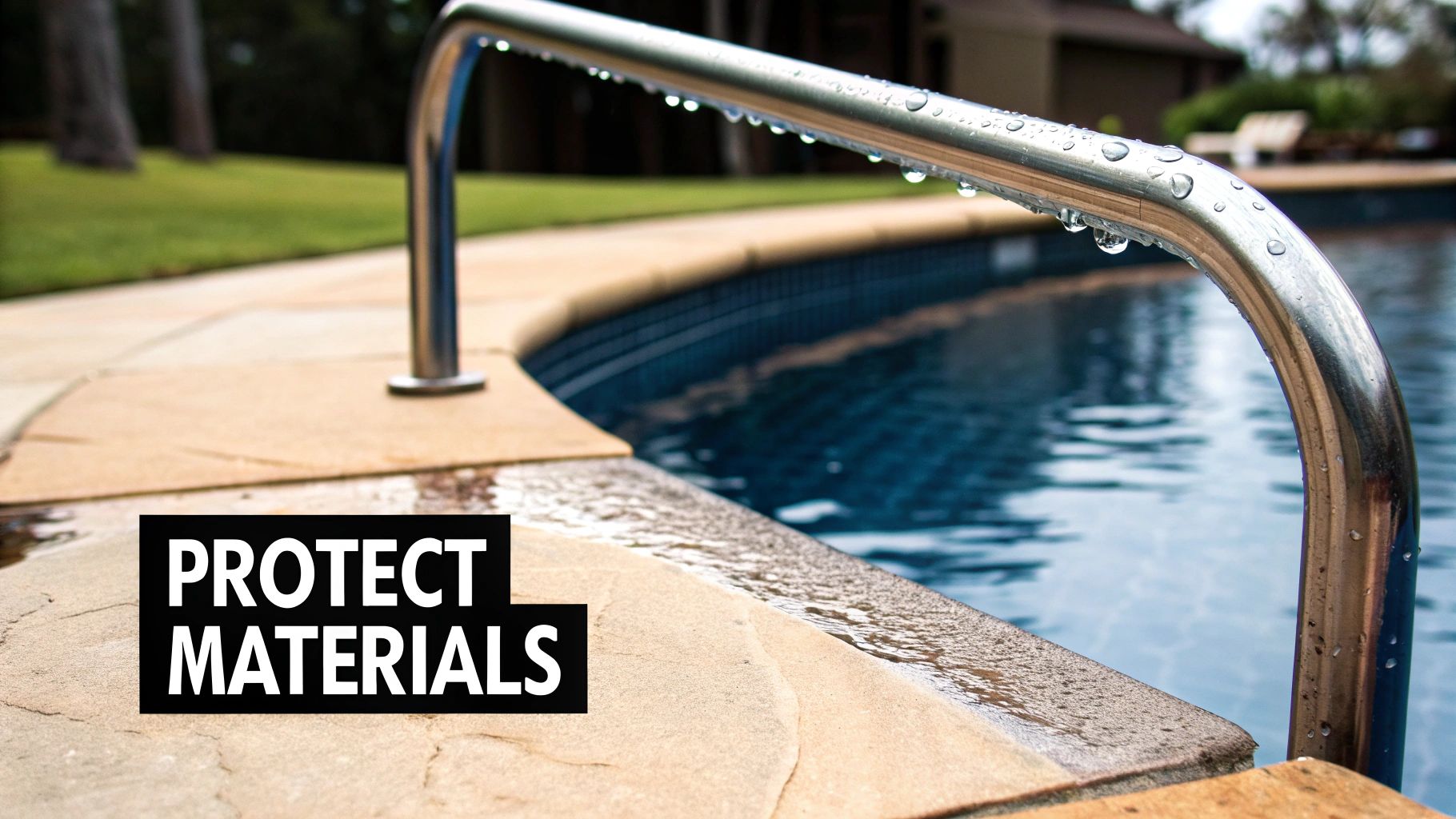
When you're building a custom home in Southwest Florida, every single material choice matters. Your pool is a massive investment, so protecting its structure, equipment, and surrounding finishes is non-negotiable. The decision you make in the salt pool vs chlorine debate will directly impact the durability of your entire outdoor living space for years to come.
Both systems pose unique challenges to the materials we use. As builders, we have to design for resilience from the very first day. It's crucial to understand how each sanitation system affects your investment to create a poolside that stands up to our climate and the daily wear of your chosen water treatment.
The Corrosive Nature of Saltwater Systems
Saltwater pools feel incredible on your skin, but don't let that fool you—the mild salinity can be surprisingly aggressive on certain materials. The constant presence of salt, both in the water and the air, creates a corrosive microclimate around your pool. It’s a factor we absolutely have to engineer against.
This effect is most obvious on metals and porous natural stones. Over time, salt will cause pitting and rust on standard stainless steel fixtures, degrade galvanized parts, and literally eat away at the surface of unsealed stone coping.
To get ahead of this, we specify materials and techniques built for harsh coastal environments:
- Marine-Grade Stainless Steel: For ladders, handrails, and lighting, using 316L marine-grade stainless steel is a must. Its higher molybdenum content gives it far superior corrosion resistance.
- Sealing Porous Stone: Natural stones like travertine and limestone are beautiful but are highly susceptible to salt damage. We apply a high-quality penetrating sealer that creates an invisible barrier, stopping salt from seeping in and causing erosion.
- Salt-Compatible Equipment: We double-check that every piece of pool equipment, from the heater to the pump, is explicitly rated for saltwater use. This prevents premature internal corrosion and, ultimately, failure.
For a custom Florida home, designing for a salt pool means thinking like a coastal builder. It requires proactively selecting marine-grade materials and protective sealants to ensure the longevity of every finish, from the coping to the smallest screw.
The Impact of Traditional Chlorine
If you go with a traditional chlorine pool, you sidestep the salt corrosion issue entirely. But, you've got a different set of material challenges to think about. The main concern here is high concentrations of chemicals, which can happen when you shock the pool or if sanitizer levels get out of whack.
Those concentrated doses of chlorine can be really harsh on certain surfaces. They lead to gradual degradation and cosmetic issues that can take away from the luxury finish of a custom pool.
Homeowners with chlorine systems should keep an eye on a few key vulnerabilities:
- Vinyl Liner Fading: High chlorine levels act like bleach, causing the vibrant colors of a vinyl pool liner to fade and turn brittle over time.
- Plastic Component Degradation: Plastic parts like skimmer baskets, return fittings, and some automatic cleaner components can become brittle and crack after prolonged exposure to chemical spikes.
- Equipment Wear: While it’s less corrosive than salt, concentrated chlorine can still wear down rubber gaskets, O-rings, and other sensitive parts inside your pump and filter system.
Ultimately, protecting your investment comes down to making smart choices from the beginning. Whether that means specifying salt-compatible materials for a saltwater system or ensuring proper chemical management for a traditional chlorine pool, the goal is always the same: build a durable, beautiful, and lasting centerpiece for your Southwest Florida home.
Questions We Hear All the Time from Florida Homeowners
When we design a custom home here in Southwest Florida, the pool is almost always the star of the show. Getting the details right from the start is critical. Here are some straight answers to the questions we hear most often about choosing between a salt or chlorine pool, specifically for our local environment.
Will a Saltwater Pool Attract Sharks to My Canal Home?
This is a popular piece of local lore, but the answer is a definitive no. Your saltwater pool will have a salinity of about 3,000 parts per million (ppm). That might sound like a lot, but the ocean is sitting at around 35,000 ppm.
The salt level in your pool is so mild that it’s completely undetectable to sharks or any other marine life. They won't even know it's there.
Can I Switch from Chlorine to Salt After My Pool Is Built?
Yes, you absolutely can convert a traditional chlorine pool to a saltwater system down the road. The process involves adding a salt chlorine generator (SWG) and dissolving pool-grade salt directly into the water.
However, from a builder's perspective, it's far more practical and cost-effective to make this choice during the initial design of your home.
As custom home builders, we always recommend deciding on your sanitation system from the very beginning. This allows us to specify salt-compatible materials—like marine-grade steel fixtures and properly sealed stone coping—from day one, heading off any potential corrosion issues before they can even start.
How Do Florida Hurricanes Affect Pool Choice?
Power outages are the biggest headache for any pool owner after a hurricane rolls through. When the power's out, your pump and filter aren't running, and that’s an open invitation for algae and bacteria. This is a problem for both types of pools.
The key difference? With a chlorine pool, you can manually add liquid chlorine or granules to keep the water sanitized until the power is back on. A saltwater pool's generator, on the other hand, is useless without electricity. A key hurricane impact feature for new custom homes is a whole-home generator. If your generator is sized to run critical systems, including your pool equipment, you’ll be in a much better position to maintain a salt pool after a storm and prevent it from turning green.
Is One System Better for My Property Value?
In the Southwest Florida custom home market, anything that adds to the lifestyle and cuts down on maintenance is a huge plus. While any beautiful pool adds value, a saltwater system is often perceived as a premium feature.
Buyers are drawn to the superior swimmer comfort and the modern, automated system. As a new design feature, it aligns with builder trends toward luxury and convenience, which can give your property a real competitive edge when it's time to sell.
At Sinclair Custom Homes Inc, we’re here to walk you through every one of these decisions. Our goal is to ensure your new pool isn't just a stunning centerpiece but also a perfect fit for your lifestyle and our unique Florida environment. Learn more about our commitment to quality and start planning the home you’ve always wanted.