


When you're building a custom home in Southwest Florida, the real difference between pool heat pumps and gas heaters is a classic trade-off: speed versus efficiency. Gas heaters give you that instant, powerful heat you want for a spa or for those times you decide on a whim to swim, especially after a storm when you're running on generator power. On the other hand, heat pumps are the marathon runners, providing a super-efficient, low-cost way to keep your pool consistently comfortable all through Florida's long swimming season, aligning with modern energy-conscious building trends.
Choosing the Right Pool Heater for Year-Round Florida Living
When we design a Sinclair Custom Home in Southwest Florida, the outdoor living area isn't just an add-on; it's the heart of the home. A heated pool makes that space a true year-round oasis, but picking the heater is a bigger deal than most new home builders realize. It affects your budget, your lifestyle, and your day-to-day enjoyment, especially in a region defined by its unique climate and building codes.
This guide goes beyond the technical specs to talk about what truly matters to our clients building new homes in Cape Coral and Fort Myers. We’re looking at the pool heat pumps vs gas heaters debate from a practical, forward-thinking perspective—what works best in our climate, what fits with modern home design, what integrates with home automation, and what delivers the resilient, energy-efficient life you want. The choice you make here will show up on your utility bills and impact your home’s overall energy footprint for years to come.
A Quick Comparison
Before we get into the weeds, let's start with the basics. Both systems get your pool warm, but how they do it is night and day. This is a critical design feature when planning a new custom build.
| Feature | Pool Heat Pump | Natural Gas Heater |
|---|---|---|
| Heating Method | Pulls ambient heat from the air and transfers it to the water | Burns natural gas or propane to directly create heat |
| Best For | Keeping a consistent temperature; major long-term savings | Quick, on-demand heating; perfect for spas and occasional use |
| SWFL Performance | Thrives in our warm, humid air | Works the same no matter the air temperature or elevation |
| Operating Cost | Incredibly low; $50 – $150 per month | High; $300 – $500+ per month |
| Heating Speed | A slow and steady temperature climb over time | Super fast; gets pools and spas hot in a hurry |
This decision isn't just about the hardware; it’s about matching the heater to how your family actually lives. Are you spontaneous swimmers who want the pool ready at a moment's notice? Or do you prefer that sustained, walk-in comfort with much lower running costs?
As we explore this further, think about how you genuinely see yourself using the pool and spa. For our clients, building a Sinclair Custom Home is about creating a space that works for you, not the other way around. To get a complete picture, it helps to understand the general pros and cons of heat pumps. This context will make it easier to see which option aligns with the over-engineered, high-quality standard we build into every Sinclair home.
Understanding How Pool Heaters Work

Before you can make the right call between pool heat pumps vs gas heaters, you need to understand just how fundamentally different these two technologies are. They both get your pool warm, but the way they do it directly impacts their performance, running costs, and how well they fit into your Southwest Florida lifestyle.
Think of it this way: one is a sprinter, built for raw, immediate power. The other is a marathon runner, designed for endurance and efficiency. This is a key conversation in the new home design process.
A gas heater works on a simple principle: combustion. It’s a pure power play. By burning either natural gas or propane, it creates intense, direct heat that’s instantly transferred to the pool water circulating through the unit.
This direct-heat method makes gas heaters incredibly fast and effective, no matter what the weather is doing. Because they generate their own heat, they can crank up your pool or spa temperature in a hurry, even on a rare cool evening here in Cape Coral. This resilience is also key during storm season; a gas heater can often run off the same propane tank that fuels a whole-home generator, ensuring your spa is ready even during a power outage.
The Power of On-Demand Heat
The biggest selling point for a gas heater is its speed. It's just like turning on a gas stove—the heat is immediate and powerful. For our custom home clients, this is perfect for a few key situations:
- Rapid Spa Heating: It can take an attached spa from the ambient water temperature to a perfect 104°F in no time at all.
- Occasional Pool Use: If you only plan on heating the pool for weekend parties or when you have guests over, a gas heater gets the job done right when you need it.
- Cold Snap Recovery: After a cool front blows through, a gas heater brings your pool back to a comfortable swimming temperature faster than anything else.
But all that raw power comes at a price. Gas combustion is inherently less efficient, which means you'll see significantly higher monthly utility bills—a major consideration for homeowners focused on long-term value.
The Efficiency of Heat Transfer
A pool heat pump, on the other hand, doesn't actually create heat—it just moves it. It works like an air conditioner running in reverse, pulling latent heat from the warm, humid Southwest Florida air that we have in abundance. Inside the unit, a compressor and refrigerant system concentrate this warmth and efficiently transfer it to your pool water.
This process is incredibly energy-efficient, a major trend in new home construction. The unit isn't burning expensive fuel to generate heat from scratch; it’s simply leveraging the ambient warmth our climate gives us for free.
For a custom home built with Sinclair's focus on energy efficiency and long-term value, the heat pump’s method is a natural fit. It aligns perfectly with building a home that is meant to be enjoyed without the constant burden of high operational costs or environmental impact.
When you're building a custom home in sunny Cape Coral, the right pool heater makes all the difference. Gas heaters are the powerhouses, often boasting outputs around 399,000 BTUs, which can raise a pool's temperature by 1-1.5°F per hour. That speed is a game-changer during Florida's unpredictable shoulder seasons, but the monthly operating costs can easily hit $300 to $500.
In contrast, pool heat pumps are all about efficiency. Their performance is measured by a Coefficient of Performance (COP), typically ranging from 3.0 to 7.0. This means for every one unit of electricity they use, they deliver 3 to 7 units of heat back to your pool. For a family in Fort Myers, that translates to a monthly heating cost of just $50-$100. You can find more great insights on heater performance over at Shasta Pool Supply.
How Each Heater Performs in Our Southwest Florida Climate
When you're building a custom home in places like Cape Coral or Fort Myers, you have to design for our unique environment. Every choice matters, from hurricane impact windows to the elevation of your finished floor. The debate over pool heat pumps vs gas heaters really comes down to how each one handles our constant warmth, high humidity, and the occasional winter cool front.
A gas heater is all about raw, straightforward power. Since it creates its own heat by burning fuel, its performance has nothing to do with the weather. It doesn't care if it's a sweltering August afternoon or a chilly January night; it will always heat your water at the same rapid pace.
This on-demand reliability is a huge plus for some homeowners. If your main goal is heating an attached spa from 75°F to 104°F for a spontaneous soak, nothing beats a gas heater. It delivers that instant gratification you want in a luxury home, making sure your spa is always ready when you are.
Heat Pumps Love Our Warm, Humid Air
A heat pump, on the other hand, works completely differently. Its performance is directly linked to the air around it, which is exactly why it’s a perfect fit for Southwest Florida. Heat pumps don't generate heat—they pull it out of the air. Our region’s abundant warmth and humidity give the unit a nearly endless supply of thermal energy to draw from.
What this means is that for most of the year, a heat pump is running at its absolute best. The warmer and muggier it is, the easier the unit's job becomes, which translates directly to incredibly low running costs. This is the smart way to keep your pool comfortable year-round, and it fits perfectly with the modern, high-performance homes we build at Sinclair Custom Homes.
A heat pump's main limitation is that its efficiency drops when the air gets cold. But let's be realistic—in Southwest Florida, this "weakness" is barely a factor. Our climate is the ideal playground for a heat pump to do its thing.
What About That 50-Degree Threshold?
Most pool heat pumps start to struggle once the air temperature drops below 50°F. In northern states, this makes them a seasonal toy. But here in Lee County, how often do we really see temperatures that low, especially during swimming hours?
The truth is, it's not a major concern for a few reasons:
- It's Rare: We just don't get many days with sustained temperatures below 50°F. When we do, it's almost always overnight during the coldest few weeks of the year.
- The Sun Bounces Back: Even after a cold night, our daytime temperatures almost always climb well above that 50-degree mark, letting the heat pump get back to work efficiently.
- Pools Hold Heat: A well-built pool, especially with a cover, retains a lot of its warmth overnight. Your heater isn't starting from scratch every single morning.
For our Sinclair Custom Homes clients, this makes a heat pump more than just a good choice—it's the most logical one for maintaining a consistently warm pool. It works with our climate, not against it, giving you reliable warmth for a fraction of what gas would cost. While a gas heater offers speed, a heat pump offers smart, sustainable performance that’s tailor-made for the Florida lifestyle.
Analyzing Upfront Investment vs. Long-Term Operating Costs
When you're building a custom home, every decision is an investment in your future. Choosing between pool heat pumps vs gas heaters is a classic case of balancing the initial sticker price with long-term value. To make the right call, we need to look at the total cost of ownership—something we at Sinclair Custom Homes believe is critical for every element of your new build, from the foundation to the roof tiles.
On the surface, a gas heater looks like the more wallet-friendly choice. The equipment and installation costs are usually lower than a heat pump's. But that initial price tag doesn't tell the full story. If your property needs a new natural gas or propane line run, that initial "savings" can disappear in a hurry.
A pool heat pump operates on a completely different financial model. It requires a higher investment upfront, but its real value shows up month after month in lower energy bills. It’s built for long-term savings and is a hallmark of modern, energy-conscious construction trends.
Breaking Down the Initial Installation Costs
As you plan the outdoor oasis for your new Cape Coral home, let's look beyond just the price of the heater itself. The installation is a huge piece of the puzzle.
- Gas Heaters: The unit might be less expensive, but the install can get tricky. Gas heaters need proper ventilation and a dedicated gas line. If that plumbing wasn't already part of the master plan for your home, adding it can drive up labor and material costs.
- Heat Pumps: These units just need a dedicated, high-amperage electrical circuit. While the unit itself costs more, the electrical work is often much easier to integrate into a new custom home build than running extensive gas lines.
This chart really drives home how the performance of each heater directly impacts your wallet over time.
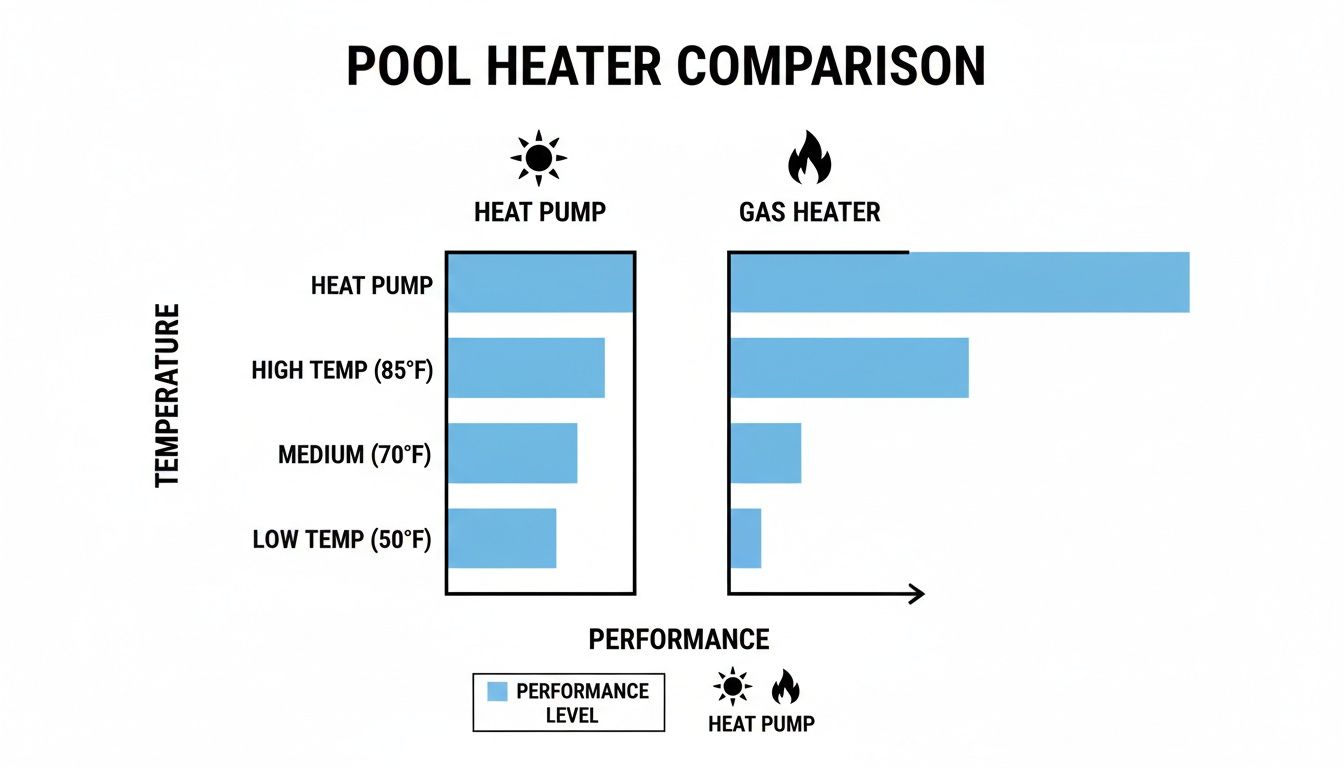

It clearly shows that while gas heaters are workhorses no matter the air temperature, heat pumps are superstars in the exact warm conditions we have here year-round. That's where their efficiency really shines.
Projecting Long-Term Operational Expenses
The real story of cost unfolds over the life of the heater. This is where a pool heat pump truly proves its worth, especially with Lee County utility rates. Gas heaters are powerful, sure, but they are thirsty for fuel, leading to some serious sticker shock on monthly bills if you use your pool often.
To give you a real-world picture, let's break down the projected total cost of ownership over ten years. The table below uses realistic estimates for a standard residential pool right here in Southwest Florida, covering everything from the purchase and installation to the ongoing energy costs. You can also dive deeper into our detailed breakdown of the pool heater pump cost for more specific numbers.
Projected 10-Year Ownership Cost for Pool Heaters in Southwest Florida
| Cost Factor | Pool Heat Pump | Natural Gas Heater |
|---|---|---|
| Avg. Upfront Cost (Installed) | $5,000 – $8,000 | $4,000 – $6,000 |
| Avg. Annual Operating Cost | $900 | $1,800 |
| Total Cost After 1 Year | $5,900 – $8,900 | $5,800 – $7,800 |
| Total Cost After 5 Years | $9,500 – $12,500 | $13,000 – $15,000 |
| Total Cost After 10 Years | $14,000 – $17,000 | $22,000 – $24,000 |
As the numbers show, the initial extra cost of a heat pump usually pays for itself in just a few years. After that breakeven point, the savings start to really add up, resulting in a much lower total cost of ownership over the unit's lifespan. For the savvy custom home buyer, that kind of long-term financial wisdom is exactly what building a Sinclair home is all about.
Installation Lifespan and Maintenance Requirements
Beyond just the numbers, the day-to-day reality of owning a pool heater is a huge factor when we’re designing your custom home. A Sinclair Custom Home is meant to be lived in and enjoyed, not constantly maintained. That philosophy drives every decision, including the equipment we spec for your pool, where the pool heat pumps vs gas heaters debate reveals some serious differences for the long haul.
The installation for each type is pretty distinct, and it's something we have to plan for right from the blueprint stage. A heat pump is basically a specialized HVAC unit for your pool. It needs its own dedicated 50-amp electrical supply at the equipment pad and plenty of open space around it to breathe and work efficiently. We also must consider its placement to comply with wind and flood zone regulations, ensuring it is properly secured and elevated.
A gas heater, on the other hand, requires a professionally installed gas line—either natural gas from the street or a connection to a large propane tank. It also has very strict ventilation requirements to deal with exhaust fumes, which limits where we can safely place it relative to windows, doors, and lanais. Neither one is necessarily more complex, but the choice absolutely impacts your home’s core electrical and plumbing infrastructure.
Comparing Long-Term Durability and Lifespan
When you invest in a custom home, you expect everything in it to be built to last. Your pool heater shouldn't be an exception, and this is where one option really pulls ahead of the other.
Mechanically, a pool heat pump is a much simpler machine with fewer harsh internal processes. It works with a compressor and refrigerant system, very similar to your home's air conditioner. With just basic care, these units are designed for true longevity.
Because they avoid the high-stress, corrosive environment of combustion, heat pumps have a much longer expected lifespan, typically lasting 10 to 20 years. This durability lines up perfectly with our "over-engineered" approach to building homes that stand the test of time and Florida's harsh climate.
In sharp contrast, a gas heater operates under extreme conditions. That internal combustion creates intense heat and corrosive byproducts that are incredibly tough on its components. This constant stress just wears the unit down, significantly shortening its functional life. You'll typically find that gas heaters need to be replaced within 5 to 10 years, meaning you could be looking at a second major purchase while a heat pump is still going strong.
A Look at Routine Maintenance Needs
The whole point of your outdoor living space is to relax, not to follow a demanding maintenance checklist. The upkeep required for each heater is a direct reflection of how it works and how long it's built to last.
-
Pool Heat Pump Maintenance: The upkeep here is minimal. It's mostly about making sure the unit has clear airflow, so you'll want to keep nearby plants and bushes trimmed back. You might also periodically rinse off the evaporator coil. It’s a very low-touch system designed for set-it-and-forget-it operation.
-
Gas Heater Maintenance: This system needs more hands-on attention. Because of the combustion process, internal parts like the burners can get clogged up with soot or debris. We strongly recommend regular professional service to check for gas leaks, ensure the ignition is working properly, and clean out those critical parts to keep it running safely and efficiently.
The lower maintenance and longer lifespan of a heat pump add up to fewer service calls and less time spent fussing with your equipment. This kind of reliability is a huge plus for our clients who just want their pool to be a source of effortless enjoyment.
Planning for the long haul is a cornerstone of smart design, and that includes understanding the complete journey of swimming pool construction in Cape Coral FL from the day we break ground to the equipment we select. The choice you make today directly impacts the time and money you spend for years to come, making the heat pump a far superior long-term investment for a low-maintenance lifestyle.
Making the Right Choice for Your Custom Home Lifestyle

Choosing between pool heat pumps vs gas heaters isn’t just a technical spec on a build sheet—it’s a lifestyle decision that will shape how you enjoy the outdoor oasis of your new Sinclair Custom Home. I’ve seen clients debate this for weeks, but the truth is, there isn't one "best" heater. There’s only the one that’s perfect for you.
The right choice comes down to how you plan to live, entertain, and use your pool and spa. It really boils down to one question: are you looking for consistent, everyday comfort, or do you need powerful, on-demand heat for spontaneous moments? Your answer will point you straight to the right solution, ensuring your pool is an asset, not a source of unexpected costs or frustration.
For the Year-Round Resident and Snowbird
If you call Southwest Florida home full-time or you’re a snowbird who spends the best months of the year here, your goal is probably a pool that’s always comfortable and ready to go. You see your pool as part of your daily life, and you value efficiency and predictable running costs.
For this kind of lifestyle, a pool heat pump is the undeniable champion.
It’s tailor-made for our climate, quietly sipping electricity to maintain that perfect swimming temperature for just a fraction of what a gas heater would cost. It just works, humming along in the background, making sure your pool is a constant source of relaxation. This approach fits perfectly with our philosophy of building smart, high-performance homes designed for effortless living.
A heat pump is an investment in your daily routine. It turns your pool from a special-occasion feature into a reliable part of your everyday health and wellness, all while keeping your energy bills surprisingly low.
For the Occasional User and Entertainer
Maybe your custom home is a vacation retreat, or you’re someone who lives for weekend get-togethers and entertaining guests. In that case, your priority isn’t maintaining a warm pool 24/7; it's about getting things hot, fast. You need to fire up the spa and have it bubbling in under an hour or heat the whole pool quickly for a party you planned this morning.
If that sounds like you, then a gas heater is the more practical choice.
Its raw power gives you the speed you need for that kind of spontaneous use. Since you won't be running it constantly, the higher operating cost is a fair trade-off for its ability to deliver heat right when you need it. It’s the perfect tool for making sure your pool is the star of the show, exactly when you want it to be. Thinking about how you'll use your space is key, just as it is when creating high-end outdoor living areas that work year-round.
The Ultimate Solution: The Hybrid System
For those of our clients who simply refuse to compromise, a hybrid system delivers the best of both worlds. This is a leading trend in custom home pool design. We often install a setup that combines a super-efficient heat pump for the pool with a powerful gas heater just for the spa.
This is an incredibly popular configuration because it gives you:
- Maximum Efficiency: The heat pump keeps the huge volume of water in your pool perfectly warm for pennies on the dollar.
- Instant Gratification: The gas heater rockets your spa up to a perfect 104°F in minutes, not hours.
At the end of the day, this is about designing a system that serves your life, not the other way around. Whether it's the steady efficiency of a heat pump, the raw speed of gas, or the incredible flexibility of a hybrid system, we integrate the right technology to match your vision. It’s a choice that goes hand-in-hand with other important decisions, like the one we break down in our guide comparing salt pool vs chlorine systems.
Your Top Questions About Pool Heating, Answered
As we get into the finer details of your custom home build, specific questions always come up. Deciding on the right pool heating system is a big one, so we’ve put together answers to the most common questions our clients ask when choosing between a pool heat pump and a gas heater here in Southwest Florida.
Can a Pool Heat Pump Get My Attached Spa Hot Enough?
This is a fantastic question. While a heat pump is a champion of efficiency for keeping your pool warm, it does its job slowly and steadily. When you want to take your attached spa from the pool's temperature up to a relaxing 102-104°F right now, a gas heater is hands-down the better tool for the job. It delivers that on-demand heat you’re looking for.
Many of our Sinclair Custom Homes clients who want the best of both worlds opt for a hybrid setup. We'll design a system using a heat pump for the pool’s day-to-day warmth and add a small, dedicated gas heater just for the spa. It’s the perfect combination: ultimate efficiency for the pool, instant gratification for the spa.
How Much Does a Pool Cover Really Matter?
A pool cover is the single most powerful tool you have for cutting heating costs, regardless of which heater you choose. It's not just a minor improvement; a good cover can slash heat loss from evaporation by up to 95%. That's a huge deal for your monthly bills and the workload on your equipment.
With a heat pump, a cover means the unit runs far less to hold your desired temperature, pushing your energy savings to the max. For a gas heater, it means all that expensive heat you’ve just created doesn’t simply vanish into the night sky. In new custom home design, we often recommend integrating an automatic pool cover—it’s a smart investment that boosts safety, keeps debris out, and pays for itself over time.
Are There Special Building Codes for Pool Heaters in SWFL?
Absolutely. Every pool heater we install must follow the Florida Building Code to the letter, especially concerning wind load and elevation requirements in flood zones. These aren't just suggestions; they are strict requirements covering everything from electrical and gas line work to proper ventilation and equipment placement. This ensures safety and durability, especially in our hurricane-prone region.
As your builder, Sinclair Custom Homes handles all the permitting and guarantees your installation not only meets but exceeds these standards. We often find that heat pumps align perfectly with the Florida Energy Conservation Code, offering great long-term value. Our team ensures your equipment is placed in the optimal, code-compliant spot on your property, properly elevated and secured to withstand storm conditions.
Ready to build an outdoor oasis that’s a perfect reflection of your lifestyle? The team at Sinclair Custom Homes Inc is here to guide you through every choice, ensuring your new home is built with unmatched quality and expertise. Contact us today to start planning your dream home.