


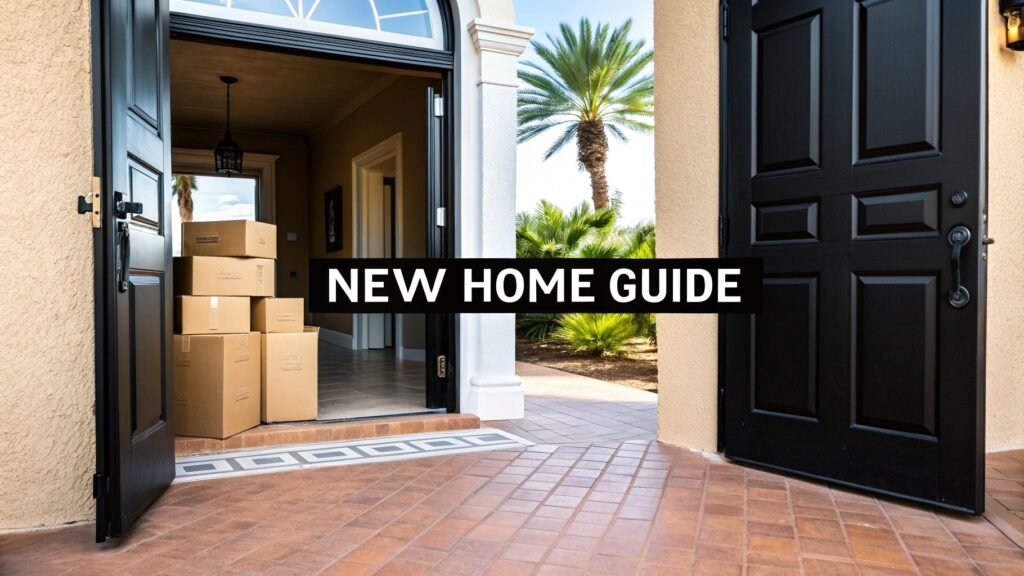
You’re finally here. Moving into your new custom home is the last, most exciting part of the journey, but it all hinges on one critical milestone: the final walkthrough.
This is your moment to meticulously inspect every inch of your property. You're ensuring everything—from the new design features like handcrafted wood cabinets to the structural integrity required in Florida—is perfect before you officially take the keys. Think of it as creating a final "punch list" for your builder to make everything just right.
Your Final Walkthrough: A Comprehensive Checklist
Don't mistake the final walkthrough for a simple formality. It’s a strategic inspection that protects your investment and guarantees a smooth start in your new Southwest Florida home. This is not the time to be shy.
Come prepared with a notepad, your phone's camera, and a roll of blue painter's tape to mark any spots that need attention. A quality custom home builder expects you to be thorough; it's the last real chance to address any issues before closing.
This process solidifies the value of your new build. Imagine unpacking in your brand-new Sinclair Custom Home in Fort Myers Beach, where every detail has been overseen to ensure unmatched quality. In a housing market where things can get a little wild—global home prices have jumped 20.6% since 2010—a superior build is your greatest asset.
In Southwest Florida, where news about building codes, elevation requirements, and insurance costs constantly affects the industry, a quality build is your best defense against future uncertainty. A Sinclair home, built with superior, energy-efficient, and storm-resilient materials, makes your home a truly sound investment. You can see more on that in this global residential price report.
Testing Systems and Functionality
Start your inspection with the bones of the house—its core systems. Don't just flip a switch and call it a day; be methodical. Test every single light fixture. Bring a phone charger along to plug into every outlet and make sure they all have power.
- Plumbing: Turn on every faucet, both hot and cold. Flush all the toilets and run every shower. You're looking for good, consistent water pressure and checking for any drips or leaks under the sinks.
- HVAC System: Crank up the heat and the A/C. Walk into each room and feel the airflow coming from the vents. Is it strong and consistent everywhere?
- Appliances: If your appliances are already installed, give them a quick test run. Start a rinse cycle on the dishwasher, turn on the oven and a stovetop burner, and make sure the microwave and fridge are powered up and working.
Running through these basics confirms that the essential functions of your home are ready for you from day one.
A thorough walkthrough isn’t about finding fault; it’s about collaboration. You and your custom home builder share the same goal: a perfect home. This final check ensures that vision becomes a reality, preventing minor issues from becoming major headaches later.
Inspecting Finishes and Custom Features
Once you've confirmed everything works, it's time to shift your focus to the craftsmanship and finishes. These are the new design features that turn a house into your home, and it’s where a builder’s attention to detail really shows.
Get down low and look at surfaces from different angles to spot any imperfections in the paint or drywall. Inspect those beautiful, custom-built real wood cabinets that are a signature of a quality Sinclair home. Open and close every single door and drawer. Do they align perfectly? Do they operate smoothly?
Examine the fine trim work and crown moldings, looking for clean lines and tight, seamless joints.
And don't forget the floors. Scan for any scratches, chips, or gaps in the tile or wood. If you have carpet, check for any stains or areas that don't seem stretched properly. This is your chance to make sure the professional-grade finishes you were promised have been delivered flawlessly. For a deeper dive on what to look for, check out our construction quality assurance checklist.
Your Move-In Day Game Plan
Moving into a new home, especially a custom build here in Southwest Florida, is about more than just muscle—it takes a smart strategy. The day you finally get the keys is the grand finale to months of planning. And with our Florida heat, an efficient game plan is absolutely crucial to protect you, your belongings, and your pristine new house.
A successful move actually begins before the first box even gets on the truck. You must confirm that all utilities—water, electricity, and internet—are scheduled to be live on or before you arrive. Trust me, walking into your gorgeous new home only to find the A/C isn’t running on a 90-degree Cape Coral afternoon is a miserable start nobody wants.
Coordinating for a Flawless Arrival
Think of your movers as partners in protecting the unique, high-end features of your new custom home. Before they show up, do a quick walkthrough and prep the vulnerable spots. Lay down some cardboard or floor runners along high-traffic paths, especially over that delicate custom tile or beautiful wood flooring. I also highly recommend adding corner guards to protect the freshly painted walls and the detailed trim work that really makes a Sinclair Custom Home special.
Clear communication with your moving crew is everything.
- Show Them the Way: Point out the safest and most direct routes for bringing in the big, heavy furniture.
- Label Everything: Have every room clearly labeled so boxes land in their final destination right away. This cuts down on the chaos and prevents a ton of extra shuffling later.
- Point Out Special Items: If you have large or fragile pieces that need extra care or specific placement, let the crew know upfront.
This little bit of proactive coordination can be the difference between a smooth day and one filled with accidental scuffs on your professional-grade paint or dings in the beautiful finishes you waited so patiently for.
Move-in day is a controlled whirlwind. Your goal isn't just to move items from point A to point B, but to do so in a way that respects the craftsmanship of your new build. A little foresight goes a long way in preventing day-one damage.
The process flow below is a good reminder of the steps you've already taken during your final walkthrough, which set the stage for this smooth move.
This simple flow—inspecting systems, documenting issues, and resolving them with your builder—ensures that by the time movers arrive, the home is truly ready for you.
To help you map out the day itself, we've put together a quick priority checklist. It breaks down the critical tasks from morning to night, making sure nothing important falls through the cracks.
Southwest Florida Move-In Day Priority Checklist
| Time of Day | Critical Task | Insider Tip |
|---|---|---|
| Morning | Final sweep of old home; grab essentials box. | Double-check that all utilities are active at the new address before you leave the old one. |
| Arrival | Meet movers; protect floors & corners. | Do a quick video walkthrough to document the home's pristine condition before boxes come in. |
| Mid-Day | Direct movers room-by-room; start with large furniture. | Unpack the kitchen essentials first. Having access to snacks and water is a game-changer. |
| Afternoon | Set up beds and basic bathroom supplies. | Assemble beds as soon as the parts are off the truck. You'll be grateful for a real bed tonight. |
| Evening | Unpack the "First 24 Hours" box; order local takeout. | Find your phone chargers and plug them in. A dead phone adds unnecessary stress. |
| First Night | Test smoke detectors; check all locks on doors/windows. | Make sure you have temporary window coverings for privacy in the bedrooms, even if it's just a sheet. |
This checklist isn't exhaustive, but it hits the high points and helps turn a potentially chaotic day into a well-managed transition into your beautiful new home.
The "First 24 Hours" Survival Kit
One of the best pieces of advice I can give any new homeowner is to pack an essentials box that travels with you in your car, not on the moving truck. This box holds everything you'll need for the first 24 hours, saving you from a frantic search through a mountain of cardboard when you're completely exhausted.
Think about what your family will need the moment you walk through the door. This isn't about unpacking—it’s about surviving and being comfortable. For a comprehensive guide, you can check out our detailed list of things needed for a new house checklist to help you build your own kit. At a minimum, a well-stocked box should have:
- Basic Toiletries: Toothbrushes, toothpaste, soap, and a roll of toilet paper for every bathroom.
- Kitchen Lifesavers: A coffee maker (non-negotiable for many!), mugs, paper plates, cutlery, paper towels, and bottled water.
- Essential Tools: A box cutter, scissors, a basic toolkit, plenty of trash bags, and an all-purpose cleaner.
- Personal Must-Haves: Daily medications, phone chargers, and a fresh change of clothes for everyone in the family.
Having these items within arm's reach lets you focus on directing the movers and getting settled, rather than digging around for a toothbrush. It truly transforms that first chaotic night into a comfortable, exciting start in your incredible new space.
Setting Up Your Home in the First Week

After the organized chaos of move-in day, that first week is all about turning a beautiful new structure into a livable, functional home. It’s less about unpacking every single box and more about getting the critical systems online and learning the ins and outs of your new place.
This is your chance to get intimately familiar with your custom build, from its high-tech hurricane impact features to its most fundamental utilities.
Before you even think about décor, let’s talk safety and control. The very first thing you should do is find your main water shut-off valve and the primary circuit breaker panel. In a Southwest Florida custom home, these are almost always in the garage or a dedicated utility closet.
Knowing these locations is completely non-negotiable. When a pipe suddenly springs a leak or a breaker trips, you need to be able to react instantly, not go on a frantic search.
Getting Your Home’s Systems Fired Up
Once you know how to shut everything down in an emergency, it's time to bring your home's sophisticated systems to life. Your custom home is packed with high-end appliances, a powerful HVAC unit, and maybe even some smart home tech. Now is the time to get them all humming.
This starts with registering the warranties for every major appliance and system in the house. Your professional-grade oven, the HVAC unit, the pool pump—everything needs to be registered to protect your investment. Your builder likely left you a packet with all the manuals and warranty cards, making this a straightforward (but crucial) task. Don't put it off. A single appliance failure just outside its warranty can cost you thousands.
Beyond the standard stuff, pay attention to the unique features of your Florida custom home:
- Whole-Home Generators: A popular and crucial trend for hurricane readiness. If you have one, that first week is the perfect time for a test run. Get comfortable with its automatic transfer switch and know how to operate it manually if needed, especially during storms.
- Impact-Rated Windows and Doors: While you won't be testing their durability (hopefully!), you should absolutely learn the proper locking and maintenance routines. These hurricane impact features are key to your home's defense system.
- Advanced Water Systems: Many custom homes in Cape Coral and Fort Myers come with specialized water filtration or softening systems. You need to understand the maintenance schedule for these right from day one.
That first week really sets the tone for how you'll live in and care for your home. Taking the time now to understand and document your home's systems will save you from expensive, reactive repairs down the road and let you truly enjoy your investment.
Create Your Home Maintenance Bible
Think of your custom-built home as an intricate machine. It has a lot of moving parts all working together to keep you comfortable and safe. To keep it running smoothly, you need an owner's manual.
Use this first week to create a centralized "home maintenance bible." This can be a physical binder or just a well-organized digital folder on your computer.
This is where you'll stash all your warranty info, user manuals, and the contact details for the subcontractors who installed key systems like your plumbing, electrical, and HVAC. It’s also the perfect place to build out a recurring maintenance schedule. In Southwest Florida, with our climate's demands, sticking to a schedule is vital.
Your initial checklist should include a few key tasks:
- Monthly HVAC Filter Changes: Your A/C runs almost constantly here. Clean filters are non-negotiable for efficiency and good air quality.
- Quarterly Smoke Detector Tests: It's simple, fast, and could save your life.
- Bi-Annual Gutter Cleaning: Essential for handling Florida’s torrential downpours and preventing water damage.
- Annual HVAC Servicing: A professional tune-up is key to making your unit last as long as possible.
This organized approach removes the guesswork from homeownership. Instead of just reacting to problems as they pop up, you'll be proactively preserving the value and integrity of your home—from its handcrafted cabinets to its over-engineered structure. It’s the foundational step to enjoying your beautiful new home for decades.
Florida Home Preparedness for Hurricane Season
Moving into a new home in Southwest Florida means embracing everything that makes this place special, including its unique climate. Hurricane season, which runs from June 1st to November 30th, is a major part of life here. Being prepared isn't just a suggestion; it's a fundamental part of responsible homeownership.
The good news? A modern custom home from Sinclair is engineered with storm resilience from the ground up. These aren't just beautiful houses—they're over-engineered fortresses built to stand up to Florida's most severe weather. Every single element, from the foundation elevation to the roof, works together as a cohesive system designed to keep you safe.
Understanding Your Home's Built-In Defenses
One of the biggest advantages of a new custom home is that the storm protection is already integrated. You aren't just buying a house; you're investing in a structure that already has state-of-the-art hurricane impact features built right in. This is a massive relief compared to older homes that often need expensive and complicated retrofitting.
These built-in defenses are what give our homeowners true peace of mind. As you put together your preparedness plan, exploring options like hurricane-proof window treatments can add another essential layer of protection to these existing safeguards.
Here’s what you should get familiar with in your new home:
- Impact-Rated Windows and Doors: These are your first line of defense. They’re built with laminated glass and reinforced frames, specifically engineered to resist high-velocity winds and impacts from flying debris without shattering.
- Reinforced Roofing Systems: Florida's modern building codes demand incredibly robust roofing. This means stronger connections between the roof and walls (known as hurricane straps) and materials designed to handle sustained wind speeds well over 100 mph.
- Secure Garage Doors: During a hurricane, the garage door is often the weakest point. Our new custom homes feature wind-rated doors with heavy-duty tracks and reinforcement to stop them from buckling under intense pressure.
Knowing these features are already part of your home’s DNA is a huge first step in being prepared.
The Generator: A Non-Negotiable Power Source
While your home is built to withstand the storm, the local power grid is a different story. A major hurricane can cause widespread outages that last for days, or even weeks. In Florida, a whole-home generator is no longer a luxury—it's a critical piece of infrastructure for your family's safety and comfort, especially in severe storms.
A professionally installed whole-home generator connects directly to your home's electrical system. The moment it detects an outage, an automatic transfer switch kicks in (usually within seconds) and restores power to crucial circuits like your air conditioning, refrigerator, and lights.
After a storm, the ability to run your A/C isn't just about comfort—it's about preventing dangerous mold growth in the oppressive heat and humidity. A generator creates a safe, livable environment while the community around you recovers, making it one of the most vital post-storm assets you can own.
Know Your Elevation and Evacuation Zone
Understanding your property’s specific risk is just as important as having physical barriers. There are two key pieces of information you need to know immediately: your home’s flood elevation and its designated evacuation zone.
The flood elevation certificate, which you received during the home-buying process, shows the height of your home's lowest floor relative to sea level. This is crucial for understanding your flood risk and is a major factor in what you'll pay for flood insurance, especially given recent news about rising insurance costs in Florida. You can learn more about how hurricane insurance costs are determined in Florida in our dedicated guide.
Your evacuation zone is set by local emergency management officials and is based on your area's vulnerability to storm surge—the rising water that is the most dangerous aspect of a hurricane. It is critical to know your zone and have a clear plan to leave if an evacuation order is issued.
Maintaining Your Custom Home's Unique Features
Getting the keys to your new home is just the beginning. The superior materials and new design features that make a Sinclair Custom Home special—especially in our tough Southwest Florida climate—need a bit of mindful care to stay looking brand new. It's all about protecting the investment you've made, making sure the quality you see today is there for years to come.
This doesn't mean you're signing up for constant, difficult upkeep. Far from it. We're talking about simple, smart routines that protect your real wood cabinets from humidity and shield your home’s professional-grade paint from that intense Florida sun.
Protecting Your Interior Craftsmanship
Florida’s humidity is no joke, and it’s especially tough on the natural wood elements that give your home so much character. The real wood cabinets we build can swell or warp if they're not cared for properly.
The secret is just being consistent. Keeping a stable indoor climate by running your air conditioner is the most important thing you can do. It’s not just about comfort; your AC is actively pulling moisture out of the air, safeguarding all that beautiful woodwork.
Here are a few simple habits to get into:
- Wipe up spills right away. Water is wood’s worst enemy. Just use a soft, damp cloth and then a dry one.
- Stick to gentle cleaners. Avoid harsh chemicals or anything abrasive. A little mild soap and water is usually all you need for a quick clean.
- Check your ventilation. Make sure the exhaust fans in your kitchen and bathrooms are doing their job, pulling out steam and moisture when you cook or shower.
These small steps make a huge difference in preventing long-term damage, keeping your handcrafted cabinets looking as incredible as the day you moved in.
Preserving Your Home's Exterior Finish
The intense Florida sun can be just as relentless as the humidity, particularly on your home’s exterior. We use professional-grade paint designed for longevity, but a little regular attention will go a long way in keeping it vibrant.
Do a quick walk-around once a year. Look for any spots where the paint might be fading, peeling, or looking a bit chalky. You’ll want to pay extra attention to the walls facing south and west, as they get the most direct sunlight.
Proactive exterior care is about catching small issues before they turn into big projects. A minor touch-up now can save you from a full repaint down the road, preserving your home's curb appeal while saving you time and money.
To keep your home looking its best and ensure specialized systems like water treatment and pools are in top shape, it's smart to call in the pros. Many of our homeowners schedule routine monthly maintenance services to have an expert handle these tasks.
A Smart Investment in a Shifting Market
Imagine the peace of mind that comes with knowing your home’s new design features and professional finishes are built to last without demanding endless work from you. In today's evolving real estate market, the value of a well-built, meticulously maintained home is clearer than ever. News that affects building in Florida, such as labor shortages and supply chain issues, is pushing more people toward established custom builders who can navigate these challenges.
In this climate, Sinclair Custom Homes provides certainty with over-engineered builds, total honesty, and unwavering support. Maintaining your home's unique features is the final, crucial step in securing that investment. By building these simple routines, you're ensuring the quality, integrity, and beauty of your custom home will endure, so you can simply relax and enjoy the incredible space you’ve created.
Answering Your Top Questions About New Florida Homes
Moving into a new home is a huge milestone. When that home is a brand-new, custom-built property in Southwest Florida, you’re bound to have questions that are specific to the region and the custom home industry itself.
Getting clear answers helps you settle in with confidence, knowing you're prepared for everything from routine maintenance to hurricane season. Let's tackle the most common questions we hear from new homeowners just like you.
What Are the Most Important Items on a Final Walkthrough Checklist?
Your final walkthrough is all about functionality and finishes. The goal is to systematically test every single thing. Flip every light switch. Turn on every faucet and shower. Run every appliance.
You’ll also want to open and close all the windows and doors to make sure they operate smoothly without sticking or catching. Get up close and inspect the paint, tile grout, and flooring for any blemishes or inconsistencies.
Bring a roll of blue painter's tape to mark any spots that need your builder's attention. For a custom home, pay extra attention to the new design features like your real wood cabinetry and fine detailed trim. Most importantly, do not feel rushed. This is your prime opportunity to have the builder correct any issues before you officially close.
How Soon Should I Prepare for Hurricane Season After Moving In?
Immediately. Hurricane season in Florida officially runs from June 1st to November 30th, but preparedness should be a day-one priority. Don't wait for a storm to be named on the news; by then, it's far too late to start gathering what you need.
Your first tasks should be to assemble a complete disaster kit, learn exactly how to use your home's hurricane impact features, like impact windows or shutters, and understand your generator in case of storms. You also need to know your official evacuation zone and home elevation. Getting your plan and supplies in place as you settle in is simply a non-negotiable part of Florida living.
Many new builder trends in Florida are centered around storm resilience. Features like integrated generators, elevated foundations, and advanced roofing systems are becoming standard because they provide immense peace of mind. Familiarize yourself with these systems so you know exactly what your home is capable of during a storm.
What Maintenance Is Unique to a New Home in Florida?
Florida's climate demands a specific and proactive approach to keep your new home in pristine condition. For starters, your HVAC system will run almost constantly, so schedule regular professional service and change the filters frequently. This is key to maintaining peak efficiency and good air quality.
The intense sun and high humidity can also be tough on exterior paint and seals, so plan on inspecting them annually for any signs of wear. If you have custom wood features like handcrafted cabinets, monitoring your indoor humidity can prevent warping and other damage.
Finally, a professional, proactive pest control plan is essential. In our warm, humid environment, it’s the best way to protect your investment right from the start.
When Is the Best Time of Year to Schedule a Move in Southwest Florida?
If you’re just thinking about comfort, the cooler, drier months from November to April are ideal. You'll avoid the peak summer heat and the daily afternoon thunderstorms that are a regular feature from June through September. It just makes the physical act of moving much more pleasant.
However, keep in mind that this is also our "snowbird" and tourist season. That can mean higher demand and potentially higher prices for moving companies.
If a summer move is what works for your schedule, the best strategy is to book your movers for the earliest possible morning slot. This allows you to beat the worst of the heat and humidity, ensuring a smoother and safer experience for everyone involved. A solid hydration plan for moving day is also a must.
At Sinclair Custom Homes Inc, we build homes designed to be enjoyed, not constantly worked on. Matthew Sinclair's commitment to over-engineered quality, from handcrafted details to storm-ready structures, ensures your new custom home is a masterpiece of integrity and craftsmanship. Start your vision with us today.