


So, is Fort Myers a good place to live? For anyone dreaming of a custom-built home, the answer is a definite yes—but you have to think like a builder. It’s about more than just a pretty house; it's about creating your own personal sanctuary that’s as resilient as it is beautiful, designed specifically for the unique environment of Southwest Florida.
Your Guide to Building a Dream Home in Fort Myers
Thinking about building a home in Fort Myers goes way beyond picking out floor plans and fancy finishes. It’s about really understanding what it takes to build a solid structure in a coastal paradise. You're not just building a house; you're engineering a home that works in harmony with its surroundings, ready to face Florida’s weather while letting you soak up its amazing lifestyle.
Every single decision matters, starting from the ground up. The lot you choose will dictate critical elevation requirements, which directly impacts your foundation design and site prep costs. Getting this first step right is your primary defense against storm surge and flooding—it's simply non-negotiable when building in this region.
Planning for Resilience and Comfort
These days, building a new home in Fort Myers is all about strength and self-sufficiency. The conversation quickly turns to the essential systems that give you real peace of mind, especially when a storm is brewing.
Some of the key things you’ll want to consider for your new build are:
- Hurricane-Resistant Features: We're talking impact-rated windows and doors, reinforced garage doors, and advanced roofing systems built to stand up to powerful winds.
- Whole-Home Generators: This isn't a luxury anymore; it's practically a standard feature. A generator keeps your AC, fridge, and other essentials running without interruption during power outages.
- Smart Home Integration: Modern builds often weave in technology for better energy efficiency, security, and convenience, which boosts your home's long-term value and makes daily life easier.
Getting a handle on these elements is the first step toward a successful build. As you start this journey, it's also smart to figure out the financing side of things. It's a good idea to explore construction loan options early on to get a clear picture of your budget and what’s possible.
To help you put all the pieces together, we've created a quick reference table. It breaks down the most important factors for building in the Fort Myers area.
Fort Myers Quick Facts for Home Builders
| Factor | Key Insight for Builders |
|---|---|
| Location & Elevation | Your lot's elevation is critical. It determines flood risk and foundation requirements. |
| Resilience Features | Impact windows, reinforced doors, and whole-home generators are essential, not optional. |
| Building Codes | Florida has strict codes for wind resistance. Your builder must be an expert in meeting them. |
| Insurance Costs | Newer, code-compliant homes with resilient features often get better insurance rates. |
| Financing | Construction loans have different requirements. Secure financing before breaking ground. |
| Builder Expertise | Choose a builder with deep experience in coastal construction and storm-hardening. |
This table gives you a great starting point for conversations with your builder.
Navigating this process takes careful planning and the right team. For a detailed look at all the steps involved, from the first design sketch to the final walkthrough, learning about the custom home building process will give you a clear roadmap. This knowledge empowers you to ask the right questions and make smart decisions with your builder, ensuring your new home is not only stunning but completely secure.
Fort Myers Custom Home Market and Design Trends

When people ask, "is Fort Myers a good place to live?" the real answer usually comes down to the lifestyle. And honestly, nothing shapes the Southwest Florida lifestyle quite like the home you live in. The custom home market here is incredibly dynamic, always adapting to what new buyers want and the unique demands of our beautiful coastal environment.
The beauty of building a custom home is that you get to weave the latest trends right into your blueprint. You're not just buying a house; you're creating a space that feels both perfectly modern and timelessly you.
One of the biggest shifts we're seeing is the complete blurring of lines between inside and outside. We're talking about more than just a simple patio; it's about making your home's outdoor space a seamless extension of the interior. Builders are getting creative with massive lanais and pocketing sliding glass doors that vanish into the walls. Suddenly, your living room and pool deck become one incredible, unified space for living and entertaining.
This integrated lifestyle is also about turning your home into a personal resort. Gone are the days of a lonely grill in the corner. Now, elaborate outdoor kitchens are a central feature, often kitted out with high-end grills, refrigerators, sinks, and plush seating areas. It’s all about creating a space where you can entertain year-round in our amazing Florida weather.
Evolving Floor Plans for Modern Life
The inside of a Fort Myers custom home is changing just as dramatically. The old one-size-fits-all floor plan is officially a relic of the past. Today's new construction shows a real understanding of how modern families actually live, work, and unwind.
A huge trend is the rise of multi-generational living. Builders are now designing homes with dedicated in-law suites or private casitas that go far beyond just an extra bedroom. These spaces often feature their own separate entrance, a cozy living area, and even a kitchenette, giving family members the perfect balance of privacy and connection.
We're also seeing a demand for dedicated, functional spaces. The need for sophisticated home offices has skyrocketed. These aren't just spare rooms anymore; they are thoughtfully designed workspaces with built-in storage and even soundproofing. In the same vein, wellness rooms—spaces for yoga, meditation, or a home gym—are becoming a popular request as people prioritize their health and well-being at home.
A home’s design should be a direct response to the owner’s lifestyle. In Fort Myers, this means creating spaces that support outdoor activity, family connection, and personal wellness, all while embracing the natural beauty of the area.
Design Features That Define Southwest Florida Luxury
Beyond the layout, certain design elements are becoming the signature of new construction in our area. These features don't just add aesthetic appeal; they improve the home's functionality and boost its long-term value.
Popular New Design Features Include:
- Resort-Style Pools: These aren't your average backyard pools. Think sun shelves for lounging in shallow water, integrated spas, dramatic waterfalls, and ambient lighting that gives you a five-star hotel vibe right at home.
- Sustainable and Natural Materials: There's a real move toward using materials that harmonize with the environment. You'll see things like natural stone accents, warm woods, and shellstone pavers that beautifully reflect our coastal landscape.
- Advanced Smart Home Technology: This is basically a standard expectation now. From automated lighting and climate control to fully integrated security systems, smart tech makes life easier. It gives you effortless control over your home's environment, which enhances comfort and saves on energy.
Bringing these incredible trends to life with quality craftsmanship all comes down to the builder you choose. As you begin your search, it's absolutely crucial to partner with experienced Lee County home builders who have a proven history of creating these kinds of high-end, lifestyle-focused homes right here in this market. Their local expertise is what ensures your vision is executed flawlessly, giving you a home that is a perfect reflection of the Fort Myers dream.
Building a Hurricane-Resilient Home in Florida
Here in Fort Myers, building a truly great home means creating a structure that's as strong as it is beautiful. The power to stand up to a hurricane isn't just an add-on feature—it’s the core principle of coastal construction. If you're wondering whether Fort Myers is a good place to live, understanding how we build hurricane-resilient homes is a big piece of the puzzle.
Building for resilience is a science, and it starts way before the first wall ever goes up. Think of it as a complete system where every single component works together to protect the entire house. If one part fails, it can trigger a domino effect that compromises the whole structure. That’s why experienced builders and modern building codes focus on creating a continuous, reinforced shell around the home.
It’s like a suit of armor for your house. Every piece, from the foundation all the way up to the roof, has to be connected and reinforced properly. This method ensures that the incredible pressure from hurricane-force winds gets distributed across the whole frame, instead of finding one weak spot to tear apart.
The Critical Role of Impact-Rated Windows and Doors
A home's most vulnerable points during a major storm are always its windows and doors. If they break, hurricane-force winds can rush inside, causing a dangerous buildup of internal pressure powerful enough to literally lift the roof off the house. This is exactly why impact-rated windows and doors are a non-negotiable part of any new construction in Florida.
These aren't just your average windows with a special sticker. Impact-rated glass is made of two panes of glass bonded together with a tough, clear plastic interlayer. If flying debris hits the window, the glass might crack, but that interlayer holds all the pieces together, preventing wind and water from breaching the home's protective envelope.
The frames are just as important. They’re built with heavier-gauge materials and anchored more securely into the home’s structure to resist being pushed in or pulled out by extreme wind. Every new custom home built in Fort Myers has to have this level of protection on all of its openings.
Superior Roofing Technology for Wind Resistance
After the windows and doors are secured, the roof is the next major line of defense. A roof failure can lead to catastrophic water damage and even structural collapse. Builders in Southwest Florida use very specific designs and materials to dramatically boost a roof's ability to resist the wind.
A hip roof, which slopes down on all four sides, is naturally more aerodynamic and stable in high winds compared to a traditional gable roof. The design helps wind flow over and around the house instead of getting caught under the eaves and creating lift.
Beyond the roof's shape, how it's fastened down is critical. Modern building codes require advanced techniques to secure the roof sheathing to the trusses and the trusses to the walls. This often involves:
- Ring-shank nails: These aren't your standard smooth nails. They have ridges that grip the wood, giving them significantly more holding power.
- Hurricane straps: These are heavy-duty steel connectors that create a continuous, strong load path from the roof all the way down to the foundation.
A home's ability to survive a hurricane is only as strong as its weakest link. A reinforced garage door, impact glass, and a securely fastened roof work in concert to create a fortress of safety and give you true peace of mind.
This integrated system is what allows a modern home to stand strong when others might not.
Why Your Garage Door is a Structural Component
Finally, let's talk about one of the most overlooked—but absolutely essential—elements of a hurricane-ready home: the garage door. A big, unreinforced garage door can easily buckle under intense wind pressure, creating a massive hole for wind to pour into the home.
Because of its huge surface area, the garage door often takes the most direct hit from the wind. If it fails, the resulting pressurization can blow out windows, doors, and even walls from the inside out. That’s why building codes now mandate wind-rated and reinforced garage doors. These doors are built with heavy-duty tracks, multiple steel reinforcement struts, and stronger rollers to handle both inward and outward wind pressures.
For anyone building a new home in Fort Myers, making sure your garage door meets these high standards is absolutely crucial for protecting your entire investment.
Mastering Elevation and Power in Coastal Construction
When you're dreaming up a custom home in Fort Myers, it's easy to get lost in the exciting details like floor plans and finishes. But to truly protect your investment, two practical factors are absolutely critical: elevation and power. If you're wondering whether Fort Myers is a good place to live, you need to understand how local builders tackle the challenges of storm surge and power outages.
Getting these two things right is the bedrock of a resilient, comfortable, and truly livable coastal home.
After a major storm, losing power is more than just a minor inconvenience. It can make your home unbearable for days, sometimes even weeks. This harsh reality has pushed whole-home generators from a "nice-to-have" luxury into a standard feature for new construction. It's become a core part of modern self-sufficiency here.
A good generator setup ensures your A/C, refrigerator, and other essential systems keep humming along, protecting your family and your home from the oppressive heat and humidity that always follow a storm. The magic behind it is the automatic transfer switch. Think of it as the system's brain. The second it detects a power outage from the utility company, it disconnects from the grid, fires up the generator, and restores power to your home—all in a matter of seconds.
Choosing Your Power Source
When you're installing a whole-home generator, your main decision is the fuel source. An experienced builder will walk you through the pros and cons of each, based on your property, budget, and what makes the most sense for you.
- Propane (LP Gas): This is a very popular choice. The propane is stored in a large, dedicated tank right on your property, giving you a self-contained fuel supply that's completely independent of municipal services, which can easily be disrupted.
- Natural Gas: If your neighborhood has it, natural gas is incredibly convenient. It provides a continuous fuel supply piped directly from an underground utility line. This means no storage tank and no need to worry about refueling, but you are still dependent on the gas grid's integrity.
- Diesel: While you see them more in commercial settings, diesel generators are workhorses—powerful and reliable. However, they do require a large storage tank, and the fuel has a shorter shelf life, which means a bit more maintenance.
Demystifying Elevation and Foundations
While a generator protects your comfort inside the home, proper elevation protects the entire structure from coastal Florida's biggest threat: flooding. The lessons from recent storms have been powerful, reinforcing the absolute necessity of building high and dry. The whole process is guided by flood maps from FEMA (Federal Emergency Management Agency).
These maps establish the Base Flood Elevation (BFE) for every specific area—that's the height floodwaters are expected to rise during a major storm. Local building codes don't just recommend, they require that the finished floor of a new home be built at or above this BFE. Smart homeowners and builders go even higher.
This practice, known as "freeboard," provides an extra margin of safety and can lead to some serious savings on your flood insurance premiums.
Building above the BFE isn't just about checking a box on a permit application; it's the single most important strategy for long-term resilience. Every extra foot of elevation you add is a direct investment in your home's safety and your own peace of mind.
To get a home up to the required height, builders rely on specific foundation types designed for our coastal environment.
- Stem Wall Foundations: A common method where a continuous concrete wall is built on a solid footer. This creates a crawl space and raises the home's first floor. The inside of the wall is then filled with compacted soil to create a stable base for the home's concrete slab.
- Piling Foundations: For homes in higher-risk flood zones or on less stable soil, this is the way to go. Builders drive heavy-duty concrete or wood pilings deep into the ground. The house is then built on top of this sturdy platform, lifting it well above potential floodwaters and often creating usable space underneath for parking or storage.
The infographic below shows how all these factors—including building requirements like elevation—connect and influence the local housing market.
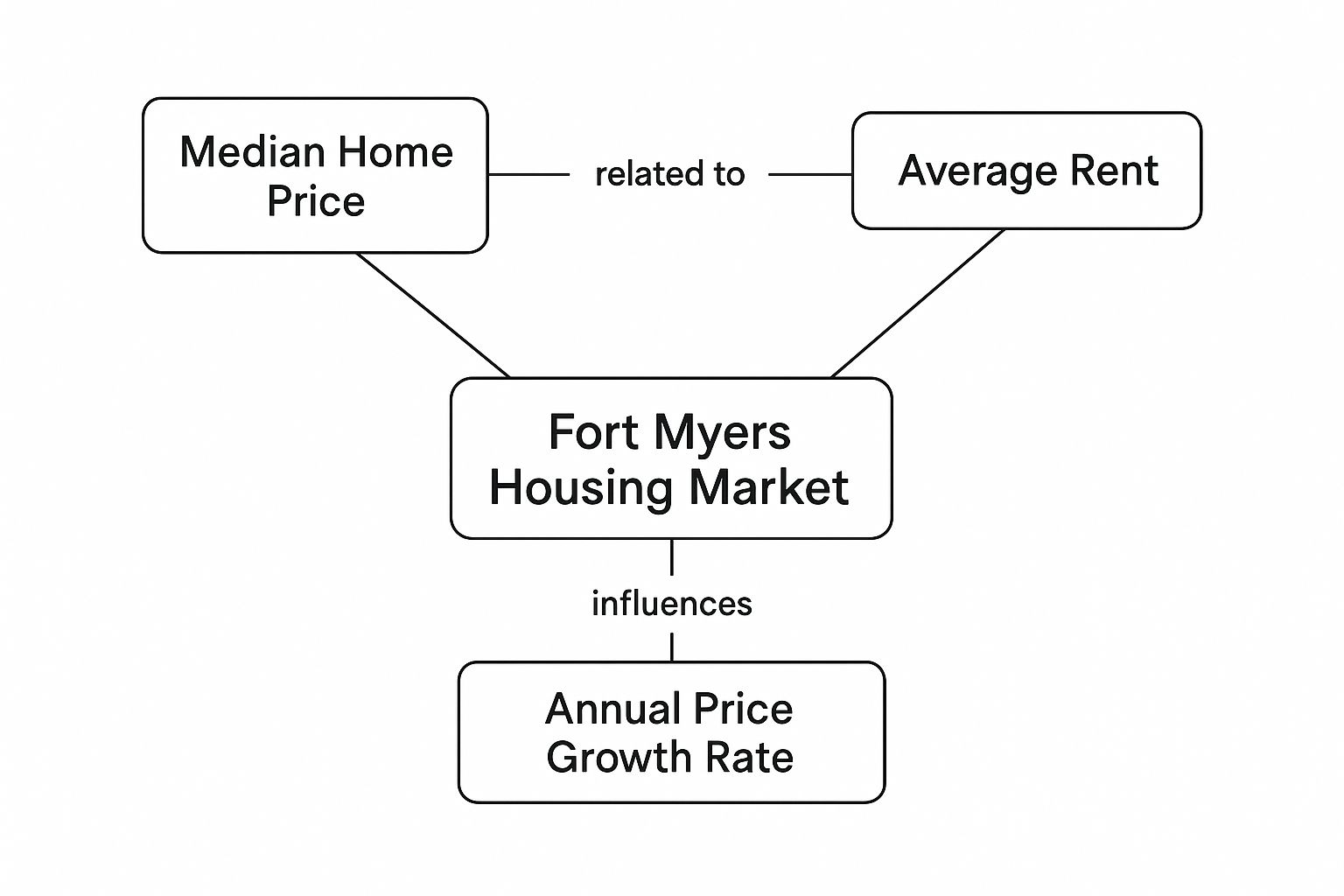

As you can see, rising prices and rents are driven by intense demand. That demand is increasingly being met by new, resilient homes built to these higher, smarter standards. Understanding these core concepts of power and elevation is fundamental to building a home in Southwest Florida that is not just beautiful, but also secure, valuable, and enjoyable for years to come.
Understanding the Cost to Build and Live in Fort Myers
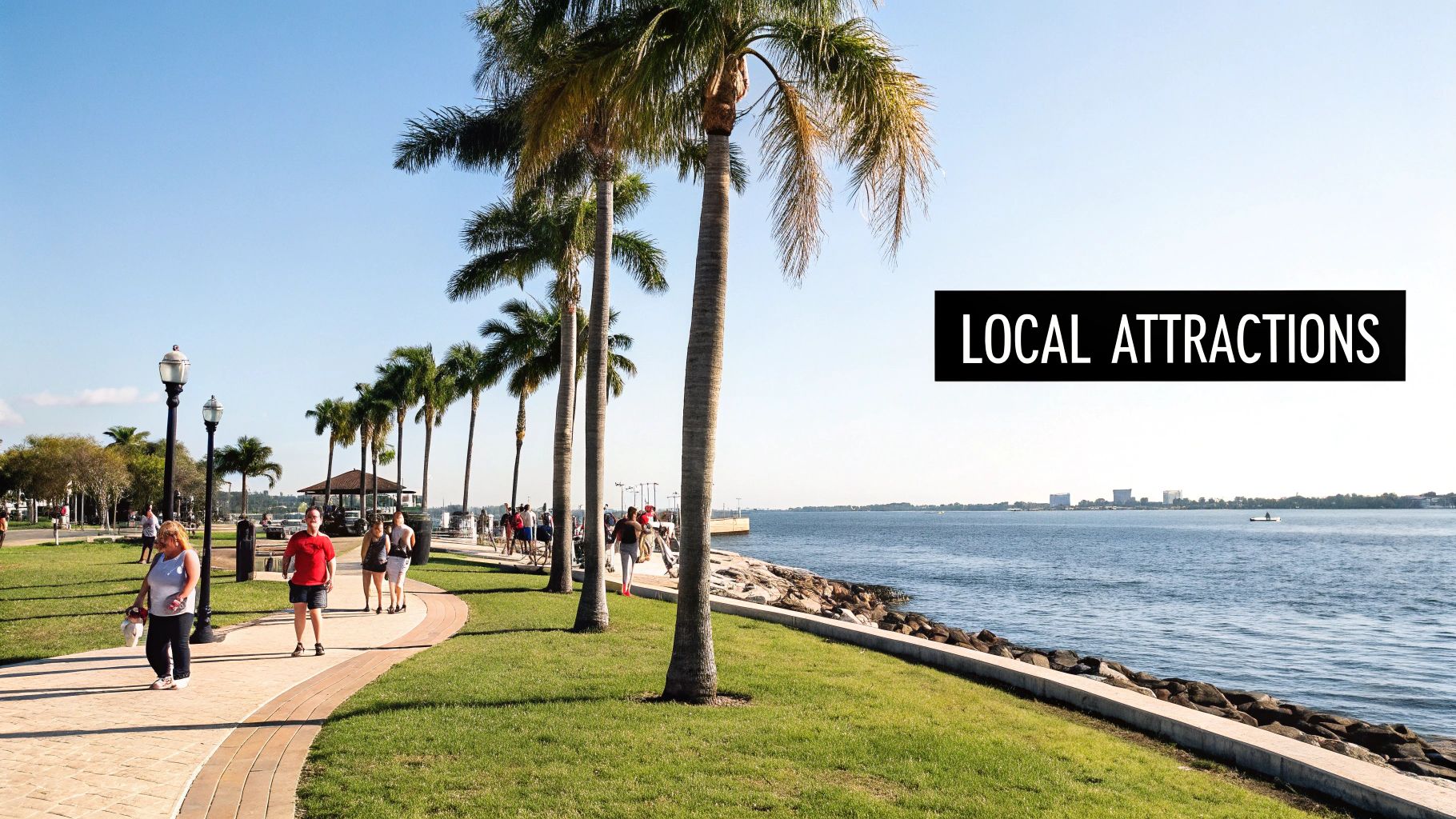
Before you can break ground, you need a rock-solid financial plan. It's the true foundation of any successful custom home project. When people ask if Fort Myers is a good place to live from a financial standpoint, the only honest answer comes from looking at both the upfront building costs and the long-term expenses of life here.
Building your dream home in Southwest Florida starts with a detailed budget that covers every single phase. The journey begins with buying land, where prices can swing wildly depending on the location. Is it a premium waterfront lot or a quieter inland parcel? That one choice will have a huge ripple effect on your total investment.
Once you own the lot, the next major line item is site preparation, and its cost is heavily influenced by the land's specific elevation requirements. Getting the site ready can involve clearing, grading, and even bringing in fill dirt to meet or exceed FEMA’s Base Flood Elevation (BFE) standards. This isn't just about ticking a regulatory box; it’s a critical investment in your home's safety and resilience for years to come.
Breaking Down the Custom Home Budget
After the land is prepped and ready, your budget turns to the house itself. From this point on, material selections and local labor rates become the main things driving the cost.
This is where your vision truly starts taking shape—but it's also where costs can get out of hand without careful management. Every choice you make, from the type of roofing you pick to the brand of hurricane-impact windows you install, directly impacts the final price tag. Working with a builder who offers transparent pricing and knows how to source quality materials efficiently is absolutely essential. The process can feel overwhelming, but our guide on how to build a custom home provides a detailed roadmap to help you navigate each step.
A well-structured budget does more than just track expenses; it empowers you to make informed decisions. It allows you to allocate funds strategically, ensuring you can afford the resilient features like a whole-home generator or higher-end impact glass that provide true peace of mind.
The Ongoing Costs of Living in Fort Myers
The financial planning doesn't just stop when the construction crew leaves. To really know if Fort Myers fits your lifestyle, you have to factor in the ongoing carrying costs.
Property taxes are a significant annual expense, calculated from your home's assessed value. You’ll also need specialized homeowners insurance. Policies in Southwest Florida are designed to cover specific risks like wind and flood damage, which can make them pricier than standard policies in other parts of the country. The good news? Building a brand-new home that meets modern hurricane codes often helps bring those premiums down.
Beyond these home-specific expenses, the general cost of living is a major consideration. As of early 2025, the cost of living in Fort Myers is about 4% higher than the national average, a figure largely driven by housing. Daily expenses follow this trend, with utility bills averaging around $219 per month and healthcare costs running approximately 11% above the national norm. You can get a more granular look at the cost of living breakdown for Fort Myers to see the full picture.
Ultimately, making a confident decision comes down to balancing the initial investment with these long-term expenses. A complete financial overview is the key to preventing surprises, ensuring your Southwest Florida dream home is a source of joy, not financial stress.
Navigating Florida's Evolving Building Codes and News
If you're thinking about building in Fort Myers, especially after recent events, you've got to keep your finger on the pulse of the local building landscape. It's a world that's constantly shifting, driven by lessons learned from past hurricanes and the latest advancements in construction. Staying in the loop isn't just a good idea—it's essential for a smooth project.

The rulebook for building in Southwest Florida isn't gathering dust on a shelf. It’s a living document, updated in response to major storms and new engineering discoveries. This is where having a seasoned local builder in your corner becomes your single greatest asset. They’re your guide through what can feel like a maze of regulations.
Post-Hurricane Legislative Updates
After a major storm rolls through, you can bet Florida's building codes will see some serious updates. The goal is always the same: build stronger, more resilient homes that can stand up to Mother Nature. The latest changes have zeroed in on wind load engineering and flood damage prevention, which directly shapes how every new home gets designed and put together.
What does this mean for your new home? It means stricter rules for how your roof is anchored to the walls or higher standards for how windows and doors have to perform under extreme pressure. For instance, the math behind wind resistance calculations might get tougher, demanding specific nailing patterns or stronger materials to keep your home intact during a hurricane.
These evolving codes aren't just red tape; they are life-saving advancements. Every update is a lesson learned from the last storm, translating directly into a safer home for your family and a better-protected investment.
Material Costs and Permitting Rules
It's not just about the statewide code. Local factors here in Fort Myers play a huge part in any new build. The supply chain is a big one right now, impacting both the price and availability of everything from basic lumber and concrete to specialty items like impact glass and whole-home generators. A builder with solid, long-standing relationships with suppliers can be a lifesaver, helping navigate these shortages and keep your project moving.
On top of that, local city and county offices are always tweaking their own permitting rules and land use regulations. These local nuances can affect everything from how far your home must be from the property line to new environmental protections. A builder who stays actively involved with the local building departments can see these changes coming, heading off potential delays before they start.
All of this ties into your budget. It’s helpful to know that Florida's overall cost of living index is 102, which is just 2% above the national average, and Fort Myers lands right in that ballpark. Higher costs for things like healthcare and utilities are the main drivers. But while costs are a bit elevated, they're still much more manageable than in a major hub like Miami, striking a nice balance for families and retirees.
For a deeper dive into how the numbers stack up, you can check out a full breakdown of Florida living expenses. Putting this economic reality together with the latest building news gives you the complete picture you need to make a smart decision.
Questions You Should Be Asking a Fort Myers Home Builder
If you're thinking about moving to Fort Myers, especially if you're planning to build from the ground up, you're going to have questions. It's only natural. Getting into a builder's mindset means asking the right things before any contracts are signed.
We’ve put together some straightforward answers to the questions we hear most often from people looking to build a custom home here in Southwest Florida. Think of this as your starting point for moving forward with total confidence.
How Long Does It Really Take to Build a Custom Home?
From the first design sketch to handing you the keys, building a custom home in the Fort Myers area generally takes 12 to 18 months. But that's not a hard-and-fast rule. A few local factors can definitely stretch that timeline out.
Things like getting permits approved by the city, the sheer complexity of your design, and the inevitable weather delays during our rainy season can add time. The availability of specialty materials can also play a role. A builder who really knows the lay of the land can often see these hurdles coming and navigate around them more smoothly.
A little secret from the inside? The pre-construction phase is often what dictates your entire timeline. Finalizing the design, getting architectural plans stamped, and securing all those permits can take months before a single shovel of dirt is moved. A solid, communicative partnership with your builder is the key to keeping things on track from day one.
What Are the Biggest Headaches When Building Here?
The challenges of building in Fort Myers are almost all tied to our beautiful coastal environment. First and foremost, a builder has to be an expert in elevation and water mitigation. This isn't just a suggestion; it means following FEMA's Base Flood Elevation (BFE) requirements to the letter and often involves significant site prep to make sure water goes where it's supposed to.
Second, staying on top of the Florida Building Code is a full-time job. It’s constantly being updated with more rigorous standards for wind resistance and storm protection. Your builder absolutely must be current on the latest engineering specs for everything from the roofing system right down to the impact windows.
Lastly, there's the supply chain. Getting your hands on specialized materials like hurricane-rated garage doors or whole-home generators requires solid relationships with suppliers. Without them, your project can easily get stuck in limbo waiting for a single part.
Building a home that’s not only gorgeous but also built to withstand the unique demands of this area requires a partner who lives and breathes this stuff. At Sinclair Custom Homes Inc, Matthew Sinclair brings a level of quality and hands-on experience to every single job site that is second to none. If you're ready to build a home with integrity and superior craftsmanship in Southwest Florida, visit us online and let’s start the journey.