


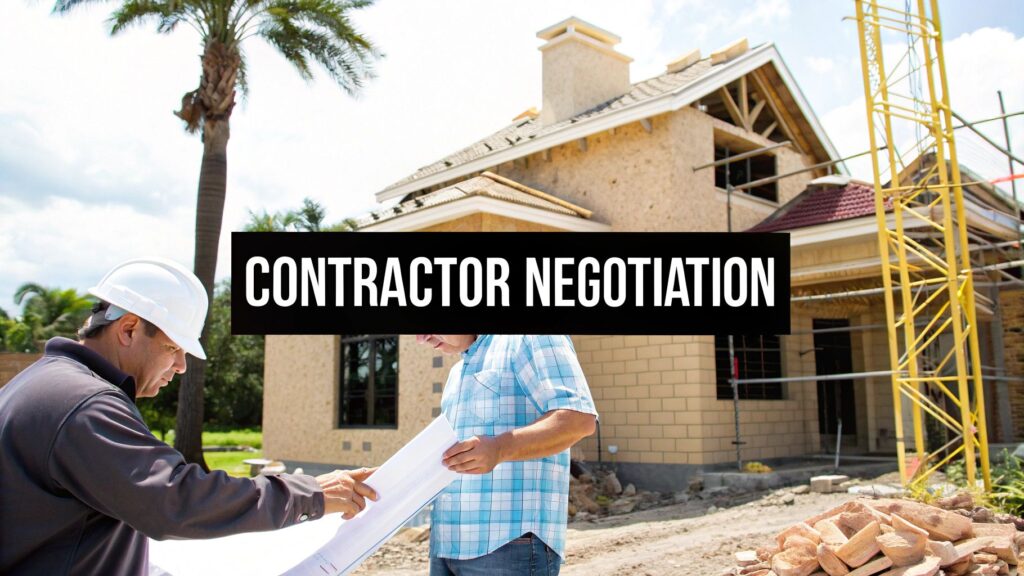
If you think negotiations start when you sit down with a contractor, you're already behind. The real work—the stuff that gives you leverage—happens long before you ever shake hands. Especially here in Florida, building a custom home means planning for things other places don't even think about, like hurricane impact features, whole-home generators for storm resilience, and site elevation in flood zones.
Walking into that first meeting with a rock-solid, well-researched plan is the single most powerful tool you have.
Your Pre-Negotiation Blueprint for a Florida Home
The secret to getting what you want for a fair price isn't about being a bulldog negotiator. It’s about preparation. Here in Southwest Florida, a vague wishlist just won't cut it. Your power comes from showing up as an educated partner who gets the unique demands and costs of building a resilient home in this area, incorporating new design trends and builder innovations that add long-term value.
This homework phase is your chance to turn your dream into a detailed, actionable plan that contractors can actually put a real number on. This isn't just about picking out tile; it's about defining the very bones of your home. Get this part right, and you'll be able to talk specifics with confidence.
Crafting a Florida-Specific Scope of Work
This document is your project's bible. It needs to be incredibly detailed to shut down any "gray areas" that lead to surprise costs down the road. For a new build in Cape Coral or Fort Myers, this scope of work has to be specific to our local realities.
- Hurricane Impact Features: Don't just write "impact windows." Specify the exact design pressure (DP) ratings you need for every single window and door. Discuss emerging trends like reinforced garage doors and advanced hurricane strapping systems that go beyond basic code requirements.
- Whole-Home Generator Integration: Thinking about a generator for storm season? Plan it now, not later. Decide on the concrete pad location, the automatic transfer switch, and exactly which circuits it will power—from the AC to the refrigerator. Baking this in from the start is massively cheaper than retrofitting it after the drywall is up.
- Site Elevation and Drainage: Building in Southwest Florida is a constant battle with water. Your plan must account for the required base flood elevation (BFE) and include a smart drainage plan to handle our torrential summer rains. News about changing flood maps and rising insurance costs makes this a critical, non-negotiable part of the plan.
Think of your scope of work as the constitution for your project. It removes the guesswork for the builder and gives you a clear, itemized basis for their bid. This is how you negotiate from a position of strength.
Vetting Contractors and Building a Realistic Budget
Once your plan is solid, it’s time to find the right people and get a handle on the money. Florida's construction market can be a rollercoaster, with material and labor costs swinging wildly based on demand, supply chain hiccups, and, of course, hurricane season.
Do your due diligence. Verify every potential builder's state license and make sure they have proper general liability and workers' compensation insurance—no exceptions. Go beyond the paperwork. Look at their recent projects in your area to see the quality of their work and how well they know the current building codes, especially recent changes that affect building in Southwest Florida.
Understanding how to manage all these moving parts is crucial. In fact, strong home construction project management is what ties this all together and keeps your project from going off the rails. This blueprint isn't just about planning; it's about setting yourself up to enter every conversation as a well-prepared stakeholder, not just a customer with a wish.
How to Analyze and Compare Contractor Bids
Getting a few contractor bids in hand is the easy part. The real work—and where you build all your negotiating leverage—starts when you sit down to figure out what those numbers actually mean.
It's tempting to just scan for the lowest price, but trust me, that's a classic rookie mistake. A suspiciously low bid often hides vague allowances, cheaper materials, or an incomplete scope of work that will blow up your budget with expensive change orders down the road.
Your goal here is simple: turn each bid into a crystal-clear document so you can make a true apples-to-apples comparison. This means you've got to dig into the line items and question everything, especially the details that are unique to building here in Southwest Florida.
Before you can even compare bids effectively, you have to do your homework.
As you can see, a solid blueprint, a realistic budget, and thoroughly vetting your potential builders are non-negotiable first steps. Without this groundwork, you're not really comparing proposals; you're just looking at numbers on a page.
Beyond the Bottom Line
Never, ever assume all bids are for the exact same project, even if you provided a detailed scope. One builder might quote standard asphalt shingles while another prices a hurricane-rated metal roof. Another common one is the AC unit—one bid might include a basic system, while another specifies a high-efficiency model built to handle Florida’s brutal humidity.
You have to be a detective. Look for these kinds of inconsistencies:
- Material Specs: Check the specific brands, models, and quality levels for big-ticket items. We're talking impact windows, roofing materials, HVAC systems, and even the rebar and concrete specs for storm resilience.
- Allowance Games: Allowances are notorious for being intentionally lowballed to make a bid look more attractive. The numbers for tile, countertops, and light fixtures are often just placeholders. Ask for the real-world costs of the finishes you actually want, including popular new design features like large-format tiles or waterfall countertops.
- Labor Costs: See a massive difference in labor costs? That's a red flag. It could mean one contractor is using less-skilled (and cheaper) subs or is cutting corners somewhere else to make their numbers work.
Pro Tip: Don't just look at the final number—live in the details. Questioning a vague line item for "site work" could reveal one contractor properly budgeted for the truckloads of fill dirt needed for your flood zone elevation, while another missed it entirely. That's a five-figure surprise you don't want.
To make this easier, use a checklist to organize the details from each bid side-by-side. It forces you to look at every component and spot where the numbers don't line up.
Florida Custom Home Bid Comparison Checklist
| Item/Service | Contractor A Bid | Contractor B Bid | Contractor C Bid | Notes & Questions |
|---|---|---|---|---|
| Permits & Impact Fees | Are all local/county fees included? | |||
| Site Prep & Fill Dirt | Is elevation to current FEMA standards priced in? | |||
| Foundation (Slab/Stem Wall) | Concrete PSI? Rebar schedule? | |||
| Framing (Lumber/Trusses) | Type of wood? Hurricane strapping included? | |||
| Roofing Material | Shingle vs. Metal? Manufacturer & warranty? | |||
| Impact Windows & Doors | Brand? Model? DP rating? | |||
| HVAC System | Brand? SEER rating? Tonnage? | |||
| Plumbing Fixtures | Brand & collection specified, or allowance? | |||
| Electrical (Generator Prep) | Transfer switch included? Outlet count? | |||
| Insulation (Spray Foam/Batt) | R-value? Open-cell or closed-cell foam? | |||
| Drywall Finish Level | Level 4? Level 5 smooth? | |||
| Cabinetry Allowance | Per linear foot? Custom or semi-custom? | |||
| Countertop Allowance | Per sq. ft.? Material type (quartz/granite)? | |||
| Flooring Allowance | Per sq. ft.? LVP, tile, etc.? | |||
| Painting (Interior/Exterior) | Number of coats? Paint brand? | |||
| Pool & Lanai Cage | Included? Size, features, equipment? | |||
| Landscaping Package | Sod, irrigation, native plants included? | |||
| Contingency Fund | What percentage is built in? |
This checklist helps you ask the right questions and ensures you understand exactly what you are paying for with each builder.
Questioning Unclear Terms
A good, professional contractor will have no problem with you asking questions. In fact, they should welcome it. Use your analysis to start a conversation and get clarity on anything that seems fuzzy.
Ask them to walk you through their assumptions. For example, if one builder's foundation cost is way lower, ask, "Can you explain how you're addressing the sandy soil conditions common in Cape Coral for that price?"
This deep dive isn't about nickel-and-diming or finding the absolute cheapest bid. It's about understanding the value each builder brings to the table and, most importantly, finding a partner who is transparent, thorough, and professional.
For more on what to look for in a great builder, check out our guide on how to choose a home builder. This process is foundational to negotiating a fair deal—one built on clarity and trust, not just the bottom-line cost.
Negotiating a Contract That Protects You
You’ve sorted through the bids and picked your builder. Fantastic. Now, we get to the single most critical step in this entire process: hammering out the contract. This document is your shield, your rulebook, and the one thing that will protect your investment. Don't just skim it—every single word is on the table for discussion.
Let me be blunt: in Florida, a builder’s standard contract is written to protect one person—the builder. It’s your job to turn it into a balanced agreement that works for both of you. This is where you map out all the "what-ifs" before they morph into wallet-draining emergencies.
Key Clauses to Scrutinize
Some parts of a contract just matter more than others. I’ve seen it time and again. Recent industry data confirms that limitation of liability and pricing terms are the biggest sticking points in construction agreements. In fact, these two issues dominated contract talks in more than half of all deals this year.
It's no surprise that businesses focusing on systematic negotiation see nearly 43% greater bottom-line growth. This tells you exactly where your focus should be: lock down the financial framework before you get bogged down in the small stuff.
Here’s where to aim your magnifying glass:
- Payment Schedule: Whatever you do, never agree to a payment schedule based on dates. Tie every single payment to a physical, verifiable milestone. For example, a check is cut only after the foundation is poured and passes inspection, or after all the hurricane impact windows are installed and sealed. No progress, no pay.
- Warranties: You need to know exactly what’s covered and for how long. The standard is usually a one-year warranty for workmanship. That's a good start, but dig deeper. Ask for clarity on pass-through warranties for big-ticket items like your HVAC system or roof—those should come with much longer manufacturer warranties.
- Lien Waivers: This is a non-negotiable. Insist on a clause requiring your general contractor to provide lien waivers from every subcontractor and major supplier as they get paid. This is your proof that they’ve been paid, and it prevents a sub from slapping a lien on your property because your GC didn't pay them.
A fair contract isn’t about winning; it’s about clarity. It ensures both you and your builder have a clear, agreed-upon roadmap for the entire project, minimizing disputes and keeping everyone aligned.
Florida-Specific Contract Provisions
Building a home in Southwest Florida comes with its own set of curveballs. A generic, off-the-shelf contract just won't cut it when you’re dealing with our climate and volatile market.
Make sure your contract specifically addresses these local realities:
- Material Price Escalation: The cost of materials like concrete or trusses can shoot up without warning. Your contract needs a clear process for this. It should define who pays for increases up to a certain percentage and demand documented proof—like supplier invoices—for any price hikes.
- Hurricane and Weather Delays: Be specific about what counts as a legitimate weather delay. A named hurricane shutting down the state is one thing; a typical Florida afternoon thunderstorm is not. The clause needs to spell out how delays are documented and how they affect the project timeline, especially during storm season.
- Subcontractor Performance: Your agreement is with the general contractor, period. The contract has to make it crystal clear that they are fully responsible for the quality and timeliness of all their subs' work—from the electrician wiring your generator to the crew building your lanai cage.
Knowing how to negotiate is all about preparation and knowing what to ask for. To really hone your skills and secure the best terms, it pays to study up on powerful contract negotiation strategies. Think of a well-negotiated contract as your project's best insurance policy.
Mastering Change Orders and Unexpected Costs

Let’s be realistic: even the most perfectly planned custom home build is going to have some surprises. It’s just the nature of the beast. Maybe a supply chain issue delays your specific tile, the excavation crew uncovers an old foundation nobody knew about, or you're inspired by new design features you see in a magazine halfway through the build.
The goal isn't to avoid every single change—that's impossible. The real skill is learning how to manage them so they don't blow up your budget and timeline. This is where change orders come in, and getting them right is a crucial part of your negotiation strategy.
The best way to handle change orders is to prepare for them before the first shovel even hits the dirt. Your contract needs a rock-solid change order clause. This is your most important tool. It should state, in no uncertain terms, that no extra work will begin or be billed for until a written change order is signed by both you and the builder. This one simple rule prevents those dreaded "surprise" invoices and keeps you firmly in the driver's seat.
The Anatomy of a Bulletproof Change Order
A quick "yeah, go for it" on the job site is a recipe for disaster. I can't stress this enough: every single change, no matter how minor it seems, has to be documented in writing. A proper change order isn't just a scribble on a notepad; it’s a mini-contract that lays out the new plan with complete transparency.
You should insist that every single change order form includes these key pieces of information:
- A Detailed Description: What, exactly, is being added or changed? Be specific.
- Itemized Cost Breakdown: A clear, line-by-line list of all new material and labor costs. No lump sums.
- Schedule Adjustment: How will this change affect the final completion date? Will it add a day? A week?
- Signatures: Official sign-off lines for both you and your contractor, complete with the date.
Following this process turns what could be a heated argument into a straightforward, documented business decision. Proper construction change order management is fundamental to keeping your project on track and making sure everyone is on the same page about costs.
Essential Changes vs. Optional Upgrades
Here in Florida, the ground itself can throw you a curveball. You might hit a pocket of muck soil that needs extra engineering for the foundation, or the crew could find old plumbing lines that weren't on any survey. These are what I call essential changes. They’re non-negotiable issues that have to be addressed, and this is precisely what your contingency fund is for.
On the other hand, deciding mid-project that you want to upgrade to a Sub-Zero fridge or swap out the approved hurricane shutters for a different style is an optional upgrade. You are 100% in control of these choices. Your job is to weigh the added cost and potential delay against how much you really want the change. And you need to do that before you sign anything.
When a bigger, unexpected issue requires a formal modification to the contract, it's good to know the process. For instance, learning how to write an addendum ensures any major changes are legally sound and attached to your original agreement. This protects both you and your builder from any confusion down the road. By treating every single change with this level of seriousness, you maintain complete financial control from start to finish.
Communication Tactics and Contractor Red Flags
Think of your negotiation as a living thing. It doesn't just end once you've both signed on the dotted line; it keeps evolving right through to the final walkthrough. The entire construction process is really just one long conversation, and how you manage that dialogue with your builder will make or break your project.
Good, clear communication is the most important tool you have. It's what keeps the project on schedule and, more importantly, on budget. This means getting into a rhythm with updates, holding productive site meetings, and putting every important conversation in writing. Just as crucial is learning to spot the subtle signs that something isn’t quite right. Catching these early warnings lets you tackle issues head-on before they blow up into bigger, more expensive problems.
Building a Bulletproof Communication Plan
Your main objective here is to kill any and all ambiguity. A quick "yeah, we can do that" on a loud job site is bound to be forgotten or remembered differently by two people. A solid communication plan needs structure and a paper trail.
- Schedule Weekly Site Meetings: Get a standing weekly meeting on the calendar to walk the site with your contractor. This is your best chance to see the progress for yourself, ask questions on the spot, and sort out any issues face-to-face.
- Create a Written Paper Trail: This is non-negotiable. After every single important chat or site meeting, send a quick follow-up email. Just summarize what you talked about and any decisions that were made. This simple habit creates a priceless record of the project’s history.
- Track Progress Visually: Your smartphone is your best friend here. Snap photos and take videos all the time. It’s especially critical to do this right before the drywall goes up, so you have a visual record of where all the plumbing, electrical, and structural bits are.
When you negotiate with contractors, the biggest risks almost always come from fuzzy communication. Your detailed scope of work is your first line of defense, but it doesn't stop there. Industry data shows that a shocking 60% of construction disputes are born from poorly defined project details—a mess you can avoid by demanding clarity from day one.
Recognizing Subtle Contractor Red Flags
Problems rarely just pop up out of nowhere. They usually start as small, easy-to-miss signs that something is off. Learning to spot these contractor red flags early is one of the most valuable skills you can have as a homeowner managing a project.
Keep your eyes peeled for these warning signs:
- Evasive or Vague Answers: You ask for a specific delivery date for hurricane impact windows and get a foggy answer like, "We're on it." Don't let that slide. Push for specifics. A true professional can and will give you firm dates and details.
- Persistent Blame-Shifting: A contractor who is always blaming subcontractors, suppliers, or the weather for delays might just be a poor manager. Sure, things happen, but a constant pattern of pointing fingers is a major red flag.
- Premature Requests for Funds: If your contractor starts asking for the next payment draw before a milestone is actually finished, it can signal serious cash flow trouble. Your payment schedule is your leverage—never pay for work that hasn't been completed to your satisfaction.
- Poor Site Management: A job site that's always a mess, disorganized, or looks unsafe says a lot. It often reflects the contractor's general lack of professionalism and attention to detail in all other aspects of the job.
The stakes are incredibly high. Construction industry disputes can drag on for an average of 14 months, and recent global construction dispute trends show the average value of these conflicts hitting $42.8 million. Staying engaged and learning to spot these red flags is the best way to protect both your timeline and your wallet.
Common Questions We Hear About Contractor Negotiations
Even with the best game plan, getting to the finish line on a contract negotiation can feel a bit daunting. We get it. Homeowners building a custom home in Florida often bump into the same questions right before it's time to sign on the dotted line. Let's tackle some of the most common concerns we hear every day.
How Much Can I Realistically Negotiate a Contractor's Price?
Let's be direct: the idea of slashing tens of thousands of dollars off a custom home quote just isn't realistic. A bid from a reputable builder is mostly hard costs—the real price of lumber, concrete, and skilled tradespeople—and there's not much wiggle room there.
The only real flexible area is the contractor's own profit and overhead margin, which usually lands somewhere between 10% and 20%. But trying to chip away at that core number is a risky game; it can make a builder cut corners, and nobody wants that. A much smarter approach is to look for savings elsewhere. We can talk about swapping out material selections, like choosing a different brand of impact windows that has similar ratings, or we can adjust the allowances for new design features. That's where you can find some serious savings without touching the quality of the build itself.
Is a Fixed-Price or Cost-Plus Contract Better in Florida?
This is a huge question, and the honest answer is: it depends entirely on your personal comfort with risk. Neither one is inherently "better" for a Florida home build; they just assign the financial risk to different people.
- Fixed-Price Contract: This gives you budget certainty, which is a massive relief for many homeowners. The trade-off? A good contractor has to build a healthy contingency into that fixed price to guard against Florida’s notorious material price spikes, especially after major storms when demand surges. You might pay a little more for that peace of mind.
- Cost-Plus Contract: This model can feel more transparent and might even end up being cheaper if costs stay low. The catch is that you, the homeowner, are on the hook for any cost overruns on materials or labor. Given the news about supply chain volatility affecting Florida, this can be a riskier proposition.
It really comes down to your own risk tolerance. If having a solid, predictable number is your absolute top priority, a fixed-price contract is probably your best bet.
What Should I Do if a Contractor Pressures Me to Sign?
This is one of the brightest red flags you'll ever see. A true professional—a builder who is confident in their work and their pricing—will never, ever pressure you to sign a contract right then and there. They know building a custom home is a massive financial and emotional commitment.
Never sign a contract under pressure. High-pressure sales tactics are a clear sign that something is wrong. A trustworthy builder will give you plenty of time to review the contract, encourage you to have a real estate attorney look it over, and patiently answer every single question you have.
If a contractor tries to rush you with a "special price" that expires in 24 hours, take that as your cue to walk away. That's not how professionals do business.
It's also worth noting that the negotiation field itself is changing. New builder trends and technologies are popping up, with some reports suggesting AI can shorten contract lifecycles by 39%. In fact, about 23% of organizations are already using it for in-depth risk analysis. What does this mean for you? It means contractors may come to the table with more data than ever, making your own preparation all the more important. You can dig into more of these negotiation statistics on procurementtactics.com.
Building a custom home in Southwest Florida is about more than just bricks and mortar; it’s about finding a partner you can trust. Here at Sinclair Custom Homes Inc, we build our business on transparency, quality, and a collaborative spirit that always puts your vision first. If you’re ready to build a home with integrity, contact us today.