


Before you even whisper the words "custom home builder near me" into a search bar, the real work begins. This is the foundational stuff—turning those daydreams into a solid plan and figuring out a budget that makes sense for Southwest Florida. We're not just talking about square footage; we're talking about hurricane-impact windows, generators in storms, and meeting crucial elevation standards. If you skip this part, your first meetings with builders will feel like you're speaking two different languages.
Getting Your Vision Straight for a Southwest Florida Home
Honestly, the most critical part of this whole journey happens long before you meet a builder. It happens with you, a notepad, and maybe a good spreadsheet. This is where your dream home stops being just a collection of cool ideas and starts becoming a real, buildable plan.
Building in places like Fort Myers or Cape Coral is a different ballgame. It's not just about getting the look right; it's about building a home that stands up to our unique climate—beautiful, sure, but also tough. The latest trends in the custom home industry aren't just about aesthetics; they're about resilience and smart living.
Think about how you actually live. Are you picturing an open-concept great room with massive pocket sliders that disappear, creating a seamless flow out to the lanai? That's the quintessential Florida lifestyle. Or maybe your must-haves are more specific: a quiet home office, a separate in-law suite for family, or a true chef's kitchen built for entertaining. Get it all down on paper.
Turning Vague Ideas into a Real Plan
To give a builder a clear picture, you need to nail down some specifics. Think through these elements that really define a home here:
- Your Style: Are you leaning towards that clean, coastal contemporary look? Or is a classic Mediterranean vibe more your speed? Each one has different costs and material needs. New design features often include lighter color palettes and natural materials to create a sense of airy, open living.
- The Core Spaces: How do you want the home to feel? Open layouts are king here, but don't forget about the need for private, quiet zones. Lock in your ideal number of bedrooms and bathrooms.
- The "Extra" Rooms: What about a home gym, a dedicated media room, or even a pet-friendly mudroom with its own washing station? List out every single feature you're hoping for.
- Outdoor Living is Everything: Down here, your backyard is just another room. You need to plan for the pool, the outdoor kitchen, maybe a fire pit—and the landscaping that ties it all together. This space is key to the Southwest Florida lifestyle.
Think of your project's vision statement as your North Star. It's the one thing you can always refer back to, ensuring you and your builder are always pulling in the same direction.
Budgeting for a Home That Can Weather the Storm
Your budget isn't just one big number for construction. A smart financial plan for this area must include costs that are unique to building in places like Cape Coral, Fort Myers, and Naples. Overlook these, and you’ll find yourself in a world of hurt later.
Make sure your budget has line items for:
- Land & Prep: The price of the lot itself, plus any costs for clearing, fill dirt, and grading.
- Permits & Fees: These can add up fast, and they vary a lot between Lee and Collier counties.
- Design & Engineering: The pros who draw up the plans don't work for free.
- Construction: The obvious one—labor and all the materials.
- Florida-Specific Features: This is non-negotiable. You have to budget for impact-rated windows and doors, a seriously robust roof, and a whole-home generator for when the power goes out during storms. These hurricane impact features are a baseline requirement, not a luxury.
Know the Local Rules Before You Start
Finally, you can't build here without deep local knowledge. Our building codes are tough for a reason—they're designed to keep your family and your investment safe. Getting a handle on these rules early on saves you from huge, expensive headaches down the road.
We're talking about things like zoning laws (what you can legally build where) and HOA guidelines (which can dictate everything from your paint color to your mailbox).
But the big one is elevation requirements. This is all about flood protection. Recent news and changes in FEMA flood maps have made this even more critical in Southwest Florida. A great custom builder will know the Base Flood Elevation (BFE) for your specific lot and will design the home to sit safely above it. Doing this right not only gives you priceless peace of mind during hurricane season but can also dramatically lower your flood insurance premiums for years to come.
Once you have all this figured out, you're not just a dreamer anymore. You're an informed client, ready to find the right builder to make it all happen.
How to Find and Vet Reputable Home Builders
Once you've got a solid plan in hand, the next exciting step is finding the right custom home builder. This goes way beyond a quick online search. It’s about finding a true partner who gets the unique demands of building in Southwest Florida and can turn your vision into a beautiful, structurally sound home.
The road from blueprint to reality is a long one, and your builder is the most important ally you'll have. A great builder brings more than just construction skills to the table; they have deep local knowledge, trusted relationships with the best subcontractors, and a commitment to quality that you can see in every little detail.
Looking Beyond the Online Search
A quick Google search is a decent place to start, but the best, most in-demand builders are often found through more reliable channels. These resources give you a level of pre-vetting that you just can't get from a search engine.
First, check out the member lists of local industry groups. The Cape Coral Construction Industry Association (CCCIA) and the Lee Building Industry Association (Lee BIA) are fantastic resources. Builders who are active members are usually more invested in their local reputation and dedicated to staying on top of the latest Florida building codes and new builder trends.
Next, get in your car and take a drive. Tour new communities or look at individual projects built by names that have caught your eye. Nothing tells you more about a builder's quality than seeing their finished work up close. Pay attention to the details—the fit and finish, the quality of the materials, and the overall craftsmanship.
Creating Your Builder Shortlist
The goal here is to narrow down the massive field to just three or four builders who feel like a great fit for your project's scope, style, and budget. This is where you start to dig in, moving from first impressions to hard facts.
The custom home building market in Florida has been surprisingly resilient, driven by strong demand. It's less sensitive to mortgage rate hikes and more responsive to things like stock market performance. In fact, over the last year, custom housing starts hit about 184,000 homes, a 2% increase from the year before. This stability means the best builders are often busy, which makes your vetting process that much more important.
This is where all that prep work you did pays off.
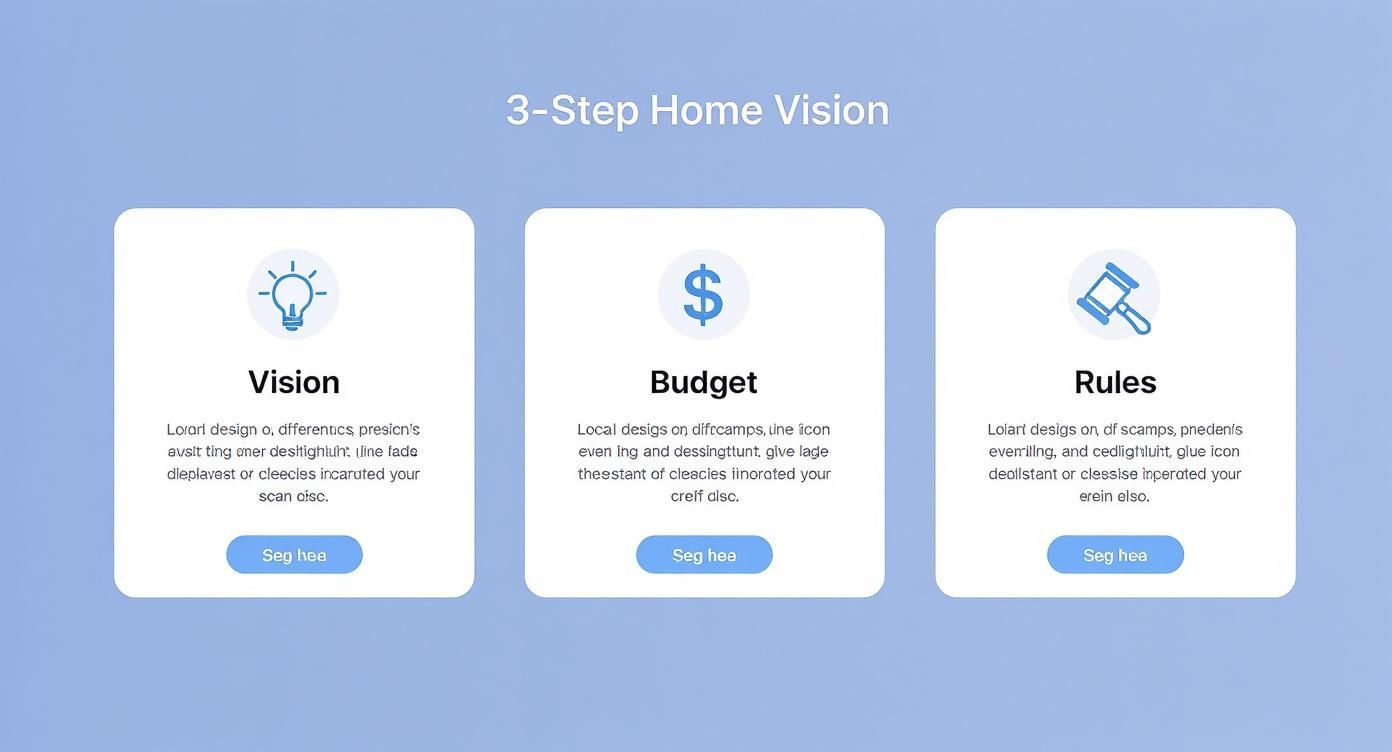

Having a crystal-clear vision, a realistic budget, and a good grasp of the local rules empowers you to have much more effective conversations with potential builders.
The Critical Vetting Checklist
Before you schedule a single meeting, it's time to do some homework. This due diligence is non-negotiable and will be one of the most important things you do to protect your investment.
- Verify State Licensing: In Florida, you can easily check a contractor's license online through the Department of Business and Professional Regulation (DBPR) portal. Make sure their license is active and doesn't have any complaints against it.
- Check for Adequate Insurance: Your builder absolutely must carry both General Liability and Workers' Compensation insurance. Ask to see their certificates of insurance and confirm they're up to date. If they don't have this, you could be held liable for any accidents that happen on your property.
- Assess Financial Stability: A builder's financial health is crucial. While you can't ask to see their bank statements, you can ask for references from their main suppliers and subcontractors. A builder who pays their partners on time is almost always a sign of a well-run, stable business.
Don't be shy about asking for this information. Any professional, reputable builder will have all of this ready to go and will respect you for being thorough. It shows them you're a serious and prepared client.
Reading online testimonials is a good start, but talking directly to past clients is infinitely better. Ask the builder for a list of homeowners they've built for in the last 1-2 years. Call them up and ask about the builder’s communication, how transparent they were with the budget, and how they handled the inevitable hiccups that pop up during construction. This kind of firsthand feedback is pure gold.
For a deeper dive into what makes a great partner, take a look at our guide on how to choose a home builder.
Asking the Right Questions During Builder Interviews

Your interviews with potential builders are, without a doubt, the most important conversations you’ll have during this entire journey. This isn’t just a quick Q&A session. Think of it as a deep, collaborative discussion to see if their expertise, communication style, and company culture are the right fit for your family.
This is your moment to look past the glossy brochures and get to the heart of how they really operate. Finding the right custom home builder near me boils down to finding a partner who can answer tough, specific questions with both confidence and total transparency.
Going Beyond the Basics
Any builder is ready for the standard questions about their price per square foot or general timeline. But to truly get a feel for who you're dealing with, you need to dig deeper—especially here in Southwest Florida. Our local environment throws curveballs that builders from other areas simply don't understand.
Let’s talk about building for resilience. Start with questions that hit on the core challenges of our climate:
- Hurricane Preparedness: How do you build to exceed the minimum Florida Building Code for high-wind zones? Ask about specific hurricane impact features they recommend beyond just windows, like reinforced garage doors and secondary water barriers on the roof.
- Material Sourcing: With our constant humidity and salt-filled air, what specific exterior trim, fasteners, and house wrap do you use to fight off premature decay and corrosion?
- Elevation and Site Work: What’s your experience building on lots that need significant fill to meet new FEMA Base Flood Elevation (BFE) requirements? How do you engineer proper drainage and ensure soil compaction is done right?
A builder’s ability to talk specifics on these topics is a direct reflection of their real-world, hands-on experience in our market. If you get vague answers, that’s a huge red flag.
Discussing Their Process and Technology
The construction world is moving fast. New builder trends and technology are constantly emerging. The global market is projected to jump from $15.78 trillion to $16.45 trillion in just a single year, largely because of new building methods and technology. You want a builder who is on top of these changes, not one stuck in the past.
Ask about the tools they use to keep your project on track. Do they use project management software? Will you get access to a client portal where you can see daily progress photos, approve selections, and monitor the budget in real time? This isn't a luxury anymore; this level of transparency is becoming the standard and it’s essential for your peace of mind.
You also need to nail down their process for change orders. Changes are almost a guarantee in a custom build, but the way they are handled can make or break your budget and schedule. A true professional will have a clear, written process for pricing, approving, and documenting every single change to the original plan.
Questions About Their Team and Relationships
A builder is only as good as their crew of subcontractors. The quality of your drywall, the safety of your electrical work, and the integrity of your plumbing all depend on the long-term, trusted relationships your builder has built over the years.
Probe into their network with direct questions:
- How long have you been working with your go-to plumber, electrician, and roofer?
- What’s your process for quality control? How do you inspect their work at each critical stage?
- Are you willing to provide references for your key trade partners?
The answers here will tell you a lot about the stability and loyalty of their team. A builder who is constantly chasing the lowest bid and cycling through new subcontractors is a recipe for inconsistent quality and headaches down the road.
Beyond these home-builder-specific questions, you might also find some helpful general advice in these crucial questions to ask any service provider.
To help you organize your thoughts and compare builders apples-to-apples, we've put together a simple checklist.
Builder Interview Comparison Checklist
Use this checklist to score and compare potential custom home builders based on their answers to key interview questions specific to Southwest Florida.
| Question Category | Key Questions to Ask | Builder A Response/Score | Builder B Response/Score | Builder C Response/Score |
|---|---|---|---|---|
| Local Expertise | How do you exceed code for hurricane resistance? Explain your approach to moisture and corrosion control. | |||
| Process & Comms | What project management software do you use? Can I see a sample change order? | |||
| Team & Subs | How long have you worked with your main electrician and plumber? What's your QC process for their work? | |||
| Past Projects | Can I speak with your last 3 clients? Can I visit a home you have under construction? | |||
| Licensing/Insurance | Can you provide a copy of your license and certificates of insurance (General Liability & Worker's Comp)? | |||
| Warranty Info | What does your warranty cover and for how long? What is the process for submitting a claim? |
This tool will help you cut through the sales pitches and focus on what really matters: competence, transparency, and a proven track record.
Your goal is to gather enough solid information to make a decision you feel truly confident about. For an even more comprehensive list, check out our guide on great questions you should ask a potential custom home builder. By preparing thoughtful, region-specific questions, you transform from just another client into a well-informed partner in creating your dream home.
Diving Into Contracts, Timelines, and Warranties
You've done the interviews and finally picked your builder. That's a huge step! But now comes the part where we get into the nitty-gritty: the paperwork. The contract is way more than just a formality—it’s the single most important document that protects your investment and makes sure you and your builder are perfectly aligned.
A solid contract from a trustworthy custom home builder leaves zero room for misinterpretation. It needs to clearly map out the scope, timeline, and cost. Think of it as the constitution for your project. Understanding it inside and out is non-negotiable.

Cracking Open the Building Contract
Before you even think about signing, you need to go over every single line with your builder. It’s also a smart move to have an attorney who specializes in construction law give it a once-over.
The custom home industry is a massive part of the Florida economy—it's projected to hit $166.9 billion in revenue this year, with a 2.9% annual growth rate over the last five years. With that kind of money changing hands, a detailed, fair contract is your best friend for a smooth build. You can learn more about the home building industry's economic impact to see just how significant it is.
Make sure your contract has these key pieces nailed down:
- Detailed Scope of Work: This part has to be exhaustive. I mean everything—from grading the lot and pouring the foundation to installing the very last doorknob and final coat of paint.
- Material Specifications: Don't settle for vague phrases like "builder-grade fixtures." The contract must list the exact make, model, and even the color of major components like your windows, roofing, appliances, and flooring, including all specified hurricane impact features.
- Payment Draw Schedule: This is all about when the builder gets paid. Payments should always be tied to completing specific, verifiable stages of construction (like the foundation is poured, framing is up, or drywall is finished), not just random dates on a calendar.
- Allowances: For things you haven't picked out yet, like light fixtures or tile, the contract will list an "allowance." This is essentially a budget for that item. Make sure you understand exactly how overages or savings on these allowances are handled.
Navigating Florida Timelines and Delays
Building a home here in Southwest Florida has its own unique rhythm and challenges that absolutely affect the timeline. A realistic schedule from a builder is a great sign of experience; an overly optimistic one is a big red flag.
The permitting process alone in Lee and Collier counties can be a slow grind, sometimes taking months before a shovel even hits the dirt. Once you start building, our summer rainy season means frequent afternoon shutdowns, which can easily add days or weeks to the schedule.
Here's a pro tip: Don't underestimate supply chain issues right now. Things like custom trusses, high-end appliances, or specific impact-rated windows can have lead times stretching for months. A seasoned local builder stays on top of industry news affecting Florida and will order these critical items way in advance to keep things moving.
What Your Builder's Warranty Actually Covers
Finally, let’s talk about warranties. Most reputable Florida builders offer a "2-10" home warranty, which gives you different levels of coverage over time. It's so important to understand what this does—and doesn't—include.
A standard 2-10 warranty is broken down like this:
- Year 1 Coverage: This is the "bumper-to-bumper" part, often called the workmanship warranty. It covers defects in both materials and labor for almost everything in the house, from little drywall cracks to a cabinet door that won't close right.
- Year 2 Coverage: During the second year, the warranty typically narrows to cover defects in your home's major systems. We're talking about your plumbing, electrical, and HVAC systems.
- Years 3-10 Coverage: This is the long-haul coverage, and it's for major structural defects only. This is for the big, serious stuff—issues with the foundation, load-bearing walls, or roof framing that threaten the structural integrity of your home.
Read the warranty paperwork carefully. You need to know the claims process and what's excluded. Things like normal wear and tear or damage from not doing basic maintenance usually aren't covered. A transparent builder will walk you through all these details, making sure you have total peace of mind.
Integrating Resilient Design and Modern Florida Features
Building a custom home in Southwest Florida isn’t just about getting the look right; it's a masterclass in blending beautiful design with sheer, unyielding strength. The real goal is to create a sanctuary that’s not only a joy to live in but is also engineered to stand up to our unique coastal climate. This is where a top-tier custom home builder really shows their value, guiding you through the essential features that define a modern, resilient Florida home.
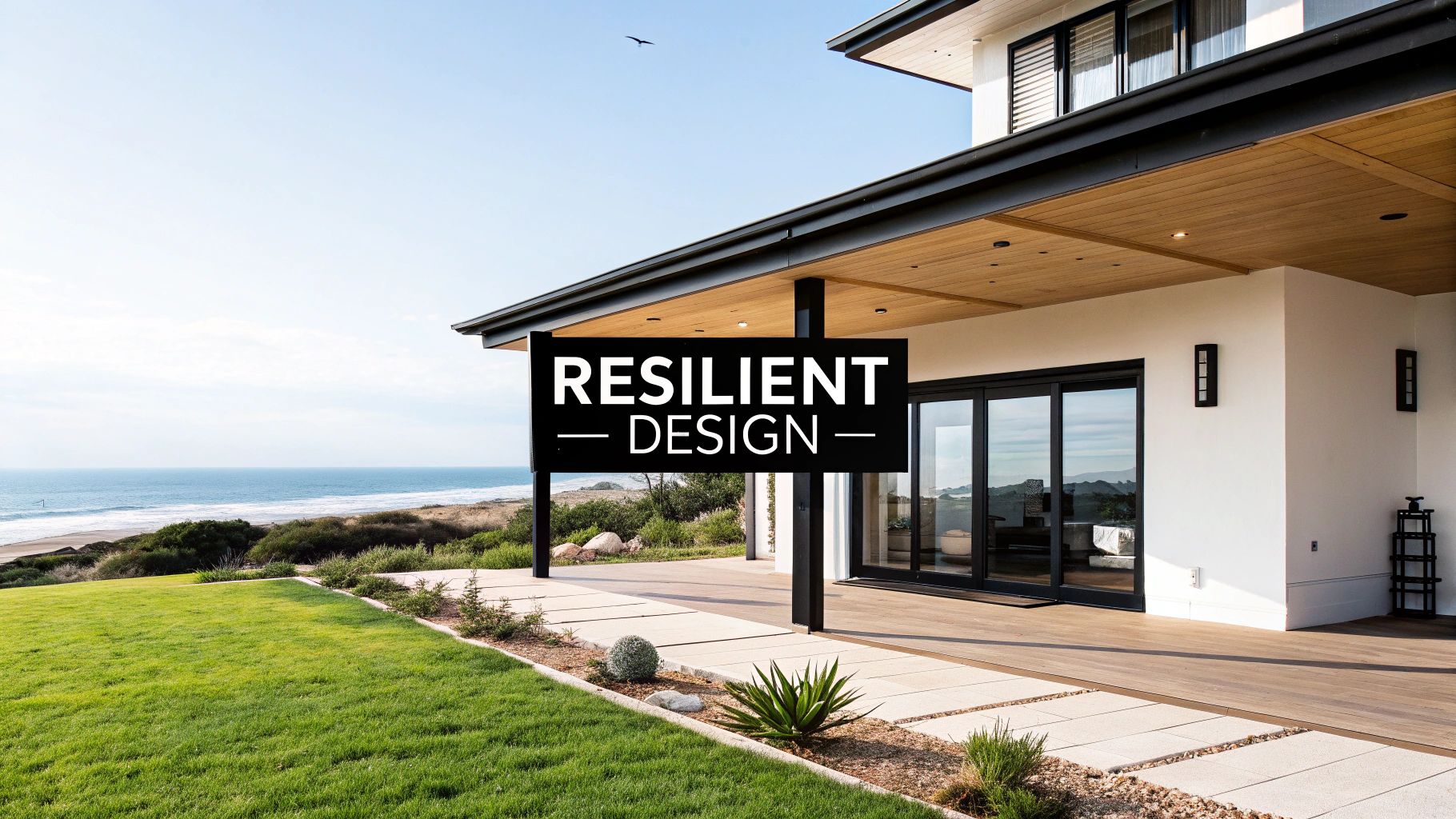
The conversation has moved far beyond simple curb appeal. We’re talking about a holistic approach that marries popular architectural styles with the robust engineering needed to weather our storm season with confidence.
Blending Architectural Trends With Functionality
The new design features everyone wants right now in places like Fort Myers and Cape Coral are all about open, light-filled spaces that flow right into the outdoors. Coastal contemporary is still king, known for its clean lines, huge windows, and natural textures. We’re also seeing a lot more modern farmhouse designs, which mix that rustic comfort with sleek, modern touches.
Inside, the new builder trends are just as focused on lasting beauty.
- Expansive Pocket Sliding Doors: These are a must-have for modern Florida living. They let entire walls vanish, merging your great room with the lanai to create one massive indoor-outdoor space.
- Durable Flooring: Luxury vinyl plank (LVP) is the hands-down winner here. It gives you the high-end look of hardwood but is 100% waterproof and incredibly tough against scratches and humidity—perfect for our climate.
- Smart Home Integration: From automated storm shutters you can close with a tap on your phone to intelligent thermostats, technology is making our homes safer and more efficient.
If you want to dive deeper into what's popular, check out some of the latest design ideas for new homes that are popping up across our region. And when you're thinking about sustainability, exploring high-efficiency solutions like Geothermal heating and cooling systems can make a huge difference in your home's long-term performance and utility costs.
The Cornerstones of a Fortified Florida Home
While the design features are the fun part, true peace of mind comes from the structural bones of the house—the things you can't always see. A fortified home isn’t an upgrade; it’s a flat-out necessity here. It's a whole system of hurricane impact features working together to protect your family and your investment when a major storm hits.
It starts with the roof. A hip roof, where all sides slope down towards the walls, is naturally more aerodynamic and handles high winds far better than a traditional gable roof. That design choice alone can often lead to some pretty significant discounts on your homeowner's insurance.
Building to code is just the starting line. A truly resilient home is built beyond the code, using superior materials and construction methods that are proven to hold up under hurricane-force conditions.
Another non-negotiable? Impact-resistant windows and doors. The technology has come a long way. Modern impact glass uses a tough, transparent interlayer laminated between two panes of glass. If debris hits it, the glass might crack, but that interlayer holds everything together, keeping wind and rain from getting inside your home.
Powering Through the Storm and Rising Above the Water
Losing power for days—or even weeks—is a hard reality in Florida after a hurricane. That’s why a whole-home generator has gone from a luxury item to an essential piece of infrastructure. These units are permanently installed, hooked up to your home’s natural gas line or a large propane tank, and kick on automatically the second the power goes out.
We’re not talking about just keeping the fridge cold. A whole-home unit is designed to power everything: your air conditioning, security system, and all your appliances. Having a generator in a storm provides safety, comfort, and a sense of normalcy when things are chaotic outside.
Finally, where you build on your lot is just as important as how you build. Your builder needs a deep, practical understanding of local elevation requirements, specifically the Base Flood Elevation (BFE). Building your home’s finished floor well above that BFE line is one of the single most effective things you can do to protect it from storm surge. It's a critical decision that provides security and can drastically lower your flood insurance premiums for as long as you own the home.
Common Questions We Hear About Building a Custom Florida Home
Building a custom home in Southwest Florida is a unique adventure, and it naturally comes with a lot of questions. As you start looking for the right "custom home builder near me," you're going to bump into challenges specific to our climate, building codes, and costs.
Let's cut through the noise. Here are some straightforward answers to the questions we hear most often, so you can move forward feeling confident and clear.
How Much Does It Really Cost Per Square Foot to Build Here?
It’s the million-dollar question, isn't it? The truth is, the cost to build in Southwest Florida has a huge range, typically falling somewhere between $250 to over $500 per square foot.
So what causes that massive swing? A lot of it comes down to your lot. A waterfront property in Naples is a completely different ballgame than an inland lot in Cape Coral. Beyond location, the complexity of your design and the level of your interior finishes drive the final number. Think high-end appliances, custom cabinetry, and intricate tile work.
And here in Florida, we have our own special cost factors: extensive lot prep, meeting strict flood zone elevation requirements, and the big one—hurricane-rated impact windows and doors. Never, ever accept a bid without a detailed, line-item budget. You need to know exactly where every single dollar is going.
What Is a Realistic Timeline from Start to Finish?
Patience is key. It’s smart to plan for 12 to 18 months from the day you break ground to the day you get your keys. But honestly, don't be shocked if the whole process, from initial design to moving day, stretches closer to 24 months.
Why so long? The pre-construction phase alone can easily eat up six to eight months. This is where all the behind-the-scenes magic happens: architectural design, engineering, and the dreaded permitting process.
Local permitting, especially in counties like Lee and Collier, can be notoriously slow. Once you finally start building, you have to account for predictable delays (hello, summer rainy season!) and the unpredictable ones, like supply chain hiccups for trusses or appliances. A builder who knows this area will have already factored these potential bumps into their initial timeline.
Your builder's experience with the local permitting offices is invaluable. A team that knows the system and has strong relationships can often navigate the bureaucracy more efficiently, saving you time and frustration.
How Can I Be Sure My Home Is Truly Hurricane Ready?
This is non-negotiable in our part of the world. Just meeting the minimum Florida Building Code is the absolute baseline—it’s not the gold standard. A truly hurricane-ready home is built by someone who specializes in fortified construction.
This means creating a continuous load path, which is a fancy way of saying the roof is securely connected all the way down to the foundation. This ensures the house acts as one solid unit against ferocious winds.
But it doesn't stop there. True readiness means installing top-tier, impact-rated windows, garage doors, and entry doors. Talk to your builder about specific upgrades, like a sealed roof deck that adds a secondary water barrier. And for life after the storm, a reliable whole-home generator isn't a luxury anymore; it's an essential piece of your home's infrastructure that keeps you safe and comfortable.
What’s the Biggest Mistake People Make When Choosing a Builder?
This one is simple, and we see it all the time: choosing a builder based only on the lowest price. An unusually low bid is the biggest red flag you'll ever see. It almost always means one of three things: corners are about to be cut, cheap materials are being used, or you're going to get slammed with a mountain of "change order" costs down the road.
The other critical mistake? Failing to personally call at least three of the builder's most recent clients. Don't just read testimonials online. This is the single best way to get an unfiltered, honest opinion on their communication, budget transparency, and whether they actually deliver on their promises and stick to a schedule.
Ready to turn your vision into a reality with a builder who prioritizes quality, integrity, and hands-on management? The team at Sinclair Custom Homes Inc is here to guide you through every step, ensuring your new home is built to last.
Start the conversation about your custom Florida home today.